Begin Again (Arrival review)

Sometimes artists are misunderstood, and sometimes it’s just a case of poor translators. Or maybe those artists are operating on another level of language?  A love language if you will. Oooh foreshadowing…

I personally would like to think that our attempts to understand the alien are important and when a film does well at the box office, more so when it’s a film which is about the other, it’s time to stand up and take notice. And reframe some thoughts.

Another first contact film you say? Well, I say it’s the best one.

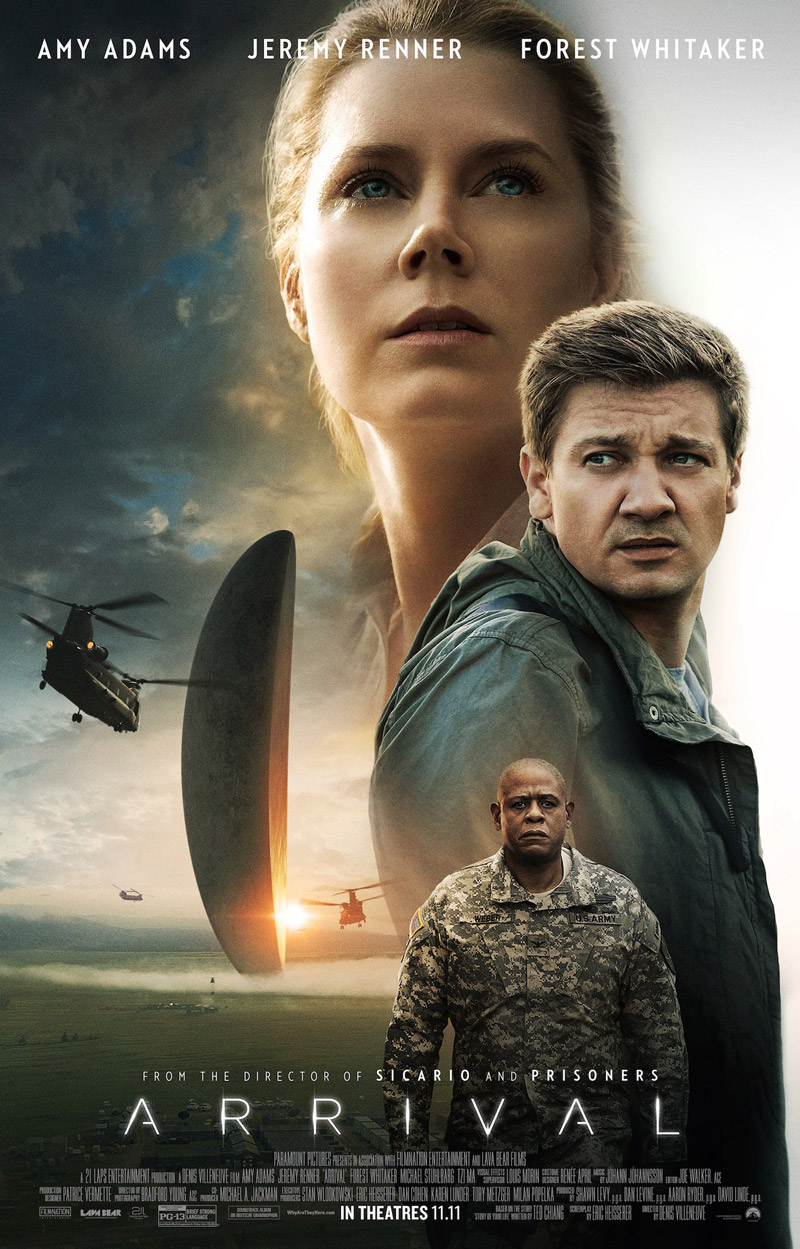
Arrival (2016)

Cast: Amy Adams, Jeremy Renner, Forest Whitaker
Director: Jeff Nichols
released on blu-ray February 7, 2017
********* 10/10
arrivalposter

IMDB: 8.1
Rotten Tomatoes: 94%, Audience Score 82%
The Guardian: ****/*****


Denis Villeneuve is a French Canadian director. Yay for Canadian content! He’s a pretty swell guy too. I’ve reviewed one of his films before, but this time I think he has a shot at real international success: if you consider the Academy Awards a big deal that is. And since I wrote that review he also started development on the new Dune movie, so yeah. Cool guy. Cool cool cool.

Arrival is a story about aliens. Well, on the surface anyways.

Linguist Louise Banks (Amy Adams) relives the childhood of her daughter, who has just died of cancer. Fast forward to Louise in the midst of a university lecture, when twelve spacecraft land across the Earth. U.S. Army Colonel Weber (Forest Whitaker) enlists Louise to aid physicist Ian Donnelly (Jeremy Renner) in decipher the alien language to find out the purpose of their visit.

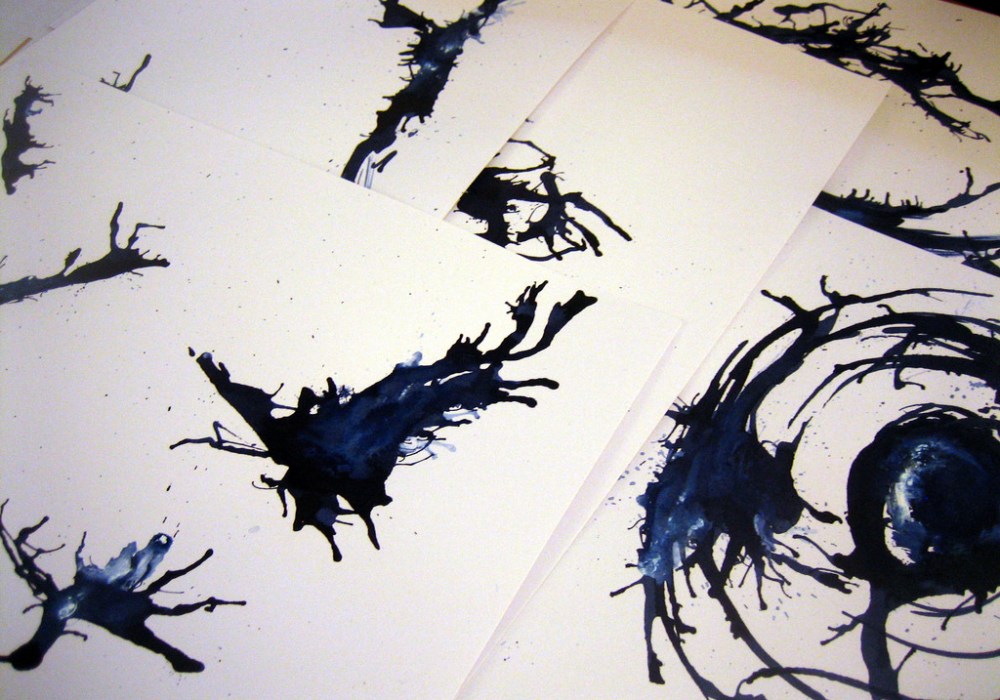
Visiting the spacecraft of the “heptapods” the scientists discover that the aliens have an advanced circular language which is communicated via ink flares and in which whole thoughts appear in ink circles within seconds, regardless of the complexity of the sentence. Louise also beings to dream of her daughter and the father.

When Louise unravels that the aliens want to “offer weapon” to them, similar translations of “use weapon” are uncovered at other spacecraft sites. Certain countries like China respond by closing off global communications, while other prepare for an attack. Louise further argues that weapon might mean tool in this case. Some US soldiers plan to bomb the spacecraft and succeed.

After an explosion goes off which almost kills Ian and Louise, Ian determines that the circular symbols relate to time, and that the twelve alien sites are each sharing part of the technology.

China prepares for war, and Louise finds her way back to the aliens. They explain that she has been seeing the future and that their tool AKA language allows humanity to change their understanding of time. They offer this gift in exchange for help 3000 years into the future. Louise returns to camp but has a vision of the future wherein the UN has implemented the language and the Chinese general who ordered the attack on the heptapods is thanking her for turning him around.

She was able to do this by calling him on his personal mobile in the present, while he shows her his number in the future – she convinces him of the truth in the present by repeating the same whispers of his wife’s dying words to her in the future. This is when we learn that Ian is the father of Hannah and the husband of Louise. It just hasn’t happened yet. Ian admits his love for Louise, while Louise knows the reason they eventually split up is because Louise knows Hannah will die.

Despite this future knowledge, when Ian talks about babies with his wife, she agrees to it.

Pros: The plot twists are original, the story is realistic, and the tone is gripping. The idea of language is carried throughout the film, and somehow we are taken right along with it, to a very satisfying conclusion. Amy Adams is a showstopper in this film.

Cons: At times the moodiness and melancholy are a bit much to take in. You need to be completely relaxed and willing to sit still for the full runtime in order to enjoy the payoff. The details are key in this story and Villeneuve is relying heavily on them. It’s a thinking persons’s scifi.

Runtime: 1 hour 56 minutes

Points of Interest: The ink circles were created by Montreal artist Martine Bertrand. Yay Canadian content! It is also the artist’s son who created Hannah’s drawings. The movie is based on a short story titled Story of Your Life by Ted Chiang.

It might seem obvious at this point what Arrival is about. Aliens. Well no, actually. It’s about time and the relationships between people define our sense of time. Language is merely an activator towards that resulting outcome, and once we can appreciate another language, we open ourselves up to visiting and revisiting themes of our lives, and in some cases, becoming available for new ones.

theories Summarized

I cannot say enough good things about this film. I have to admit when I first sat down to watch it, I was a little bit tired and disappointed at how slowly paced it was, but then on a second viewing, starting over, which I find a tad ironic now, I was able to settle into Villeneuve’s dirty sci-fi and appreciate the thoughtfulness. And I kept thinking about it all week, which is what a good movie should have you do. The arrival of this realization was worth the wait.

Tim!

Mama’s Boy, and Girl (Mother Mother, No Culture review)

We gotta cut the strings sometime baby. We can’t rely on our mothers to coddle us forever, growing up just won’t happen otherwise.

This week’s album review salutes those movers of culture.

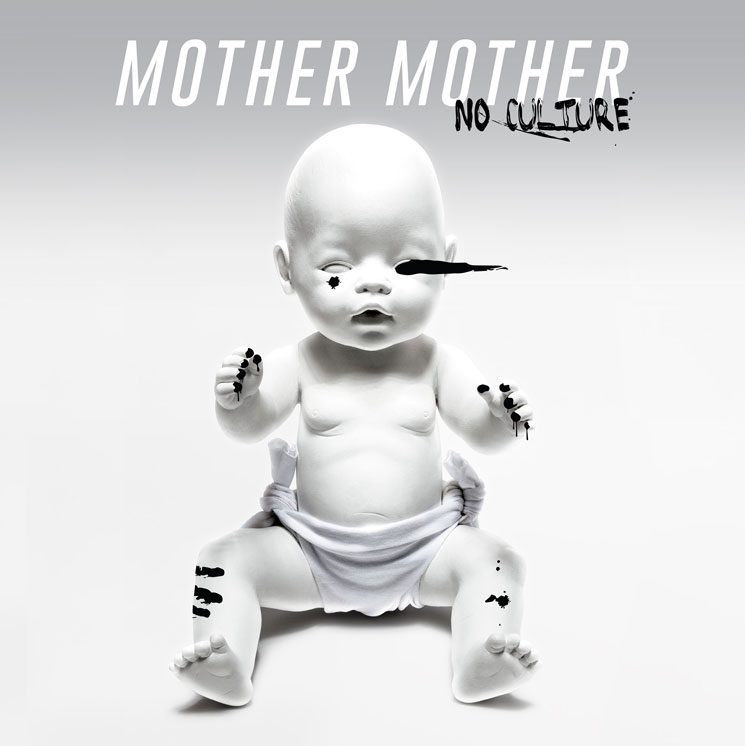
Mother Mother – No Culture
released February 10, 2017
******** 8/10

mothermotherculture

Mother Mother are a Canadian rock group from Vancouver Canada. Yay for Canadian content! Founded by Ryan Guldemond and sister Molly Guldemond when Ryan was in the midst of music school and yearning to start a vocal-driven band that focused on pop. They have released a total of six studio-length albums to-date, four of them with the Last Gang imprint, with the fifth album Very Good Bad Thing and the sixth album No Culture on Universal Music Canada.

I’ve been a fan of Mother Mother since I first saw them live back in 2013 during Sonic Boom at Northlands. They were busy promoting The Sticks, and Infinitesimal was a hot summer track that I loved.

Then came Very Good Bad Thing and more success for the quintet – at this point they were able to climb even higher on the Canadian charts.

If I were to hazard a guess, I would say that No Culture just might be the album that lands them a no. 1 album in Canada and does some breakout work in the American markets. But now I’ll have to back that up with some insights into the the record, I guess. Well, let’s start with the themes explored. This is the first album that Ryan wrote all on his lonesome with the intent of injecting himself into the mix rather than a persona or general ideas. In fact, it was a solution to his own battle with drugs and alcohol, written while he carved up some time in a cabin in the woods fighting his way back to sobriety.

The album has a strong mix of flow-state songs and anxiety inducing numbers. But it’s incredibly emotionally honest, vulnerable and allows the listener the opportunity to interpret what is being presented as they would like. An exploration of how identity often feels very different in isolation then it does when we are out in the public eye OR rather when we presenting ourselves to the world.


The album features ten tracks which all have that strong vocal-based sensibility, but in particular my personal favourites are Luck Stuck, Baby Boy, No Culture, and Everything Is Happening.

Opener track Free is notable for its strong percussion and anthemic like qualities. Quickly followed up by Love Stuck (the second single) and The Drugs (the first single) which both maintain that stadium quality, very upbeat with sharp hooks and strong vocals.

When we head into the rest of the album it doesn’t maintain this pace, but the intensity shows up in other ways – Back In School is an ode to pop punk, Mouth of the Devil plays with some dark tones and unified vocals, while Family is a sentimental power ballad.

Also title track No Culture is kind of brilliant.

It focuses on the problems which all artists that work against within the realm of pop music face, the challenge of all style-no substance. And the track makes a lot of allusions to scavengers/predators, while exaggerating how Mother Mothers critics view them. It’s definitely a highlight of the album, which makes up for weaker tracks like Letter and Worry. And I say that knowing that Mother Mother are capable of making slower tracks work for them, Everything Is Happening is one of my favourite songs remember? And how could it not be? They make a reference to the cyclical nature of music and David Bowie.

As a means of praise, and in the style of repetition, I’ll simply write this – keep on, keeping on.


As I close up this review, I recall something my first LT partner used to say to me on occasion when she was upset with my decisions, and which I now can see for the gas-lighting techniques that they are, that I made said decisions just to please my mom. She believed that I had no culture of my own, but that’s just not true, and Mother Mother it’s not that way for you. Either.

The Theory of Everything (Defining Logos)

Throughout my life I’ve heard the same mantra over and over again.

Many people state that the english language is intuitive for native speakers, but very difficult to learn when you already have another language or two under your belt. Not counting all of the weird cultural idioms that have developed over the centuries, and the regional dialects that exist inside of countries like England, the United States, Australia, and Canada. But what about the differences across states, provinces, and cities? Not to mention the fact that the english language is full of grammatical problems, oh so very many problems – the kind that can drive a professional writer into a state of madness.

maxresdefault

And not the shit-kicking kind of madness which induces literal pitfalls from Gerard Butler, but brain madness from literary pitfalls that are more worse than a brain freeze but less worse than a lobotomy.

0b033a0c03e7b4a6cb9f8dd553b5d53d

But now you’re probably thinking about what a lobotomy would feel like aren’t you? But that’s not really what this post it going to be about.

Well not literally, anyway.

No, I wanted to dig in a bit more, and poke around with a word that is near and dear to my heart, the word LOGOS. You’ll see why shortly. If we consider the words etymology, which I just get a kick out of writing, but more on that later, you’ll begin to see where the opportunity is for you to think about the principles of language differently as a creative professional.

Origin Stories

The study of the origin of words can be a downward spiral all to itself, but let’s take a tour of the word LOGOS. The word has Greek origins, and is one of those words with numerous English word equivalents, all having their own meanings – thought, speech, meaning, reason, proportions, standard, logic, order, wisdom, truth, and word (of all things), as well as a few others.

When we layer in the field of philosophy, LOGOS brings life and order to the known universe. Taking the mythical, the unknown, the fantastic and making applying a principle of organization guided by state of change.

And as someone with Christian roots, it’s compelling to learn that the term became significant in Christian doctrine to define the role of Christ within the created world. I mention this not because I want to go down the road of religion, spirituality, et al., but because as creators ourselves it is important to figure out how we order and shape our own personal created worlds. Do we created self-contained universes that only materialize once? What about sharing stories across works? Or what happens when you intertwine a series of work with yet another and bring a new level of connectedness through the broader framework?

Ultimately, what I’m really looking to share is that in the beginning was the LOGOS, and the LOGOS was with THE CREATOR, and the LOGOS as THE CREATOR.

Rubric Cube

Of course, none of this development is going to come to you easily dear readers – I can guarantee you that much. Defining something so complex as the direction you should be headed in takes time, but I think there are ways to arrive at the destination while maintaining enjoyment of the journey. As Aristotle defined in his Ars Poetica concerning the three modes of persuasion. LOGOS is an appeal to logic, PATHOS is an appeal to emotions, and ETHOS is an appeal to ethics.

Not one of these methods is more or less relevant than the other, but we have to start somewhere. And defining LOGOS is a good place to start. In the future I will spend some more time demonstrating how to articulate a LOGOS using my own art practice as an example, but PATHOS and ETHOS will definitely factor is as well.

It’s all important in the development of your creative voice, at least that’s my theory.

theories Summarized

Having said all of this, that doesn’t mean that the definition of LOGOS is fully and complete resolved yet, and much like the English language, it’s not the pack leader for most the difficult ideological concept (or language) in the world either. And did you know that Russian, Japanese, Mandarin, and Arabic all hold some difficult aspects that make them strong candidates? Fun tidbit right?

I’m just about out of theories for now my friends, but come back tomorrow for an album review of 2x mothers.

Tim!

Pants On Fire (Sam Harris)

There are moments when I’m sitting over there, in my easy chair, philosophising about the next big theory of the arts, where I contemplate, and others where I instead sit down with a good book and consider another perspective – ever hear the expression one man’s truth is another man’s lie? Well if you haven’t then you might still be open to learn something.

There are a lot of idioms out there about the concept of truth, dear readers. If the truth be known… a grain of truth, ain’t it the truth, bend the truth, fact is stranger than fiction, the gospel truth, honest to goodness, the naked truth, the moment of truth, truth will out, and the list goes on.

Sometimes the truth is even hard to swallow.

The truth is, when you are putting together all of the facts, reality bites. But that doesn’t mean you should share a bald faced lie either. Well, at least that’s what the author of this month’s 5 L’s Of Language would have you believe.

No No No No, Baby No No No No, Don’t Lie

Sam Harris is a best-selling author and neuroscientist, not to be confused with a neurologist, which people sometimes think he is. And he also believes that if a decision came down to a matter of ethics it would be his responsibility to share that reality with you, otherwise he would be making a lie of omission, which should bear the same weight as a commissioned lie.

Harris is something of a heavyweight when it comes to atheism. Sharing ranks with Richard Dawkins, Daniel Dennett, and Christopher Hitchens, he has been called one of the Four Horsemen of the New Atheism. An advocate for separation of church and state, a strong critic of religions, and a critic, Harris chooses to focus his ideas on science and secularism. His list of books includes:

  • The End of Faith: Religion, Terror, and the Future of Reason (2004)
  • Letter to a Christian Nation (2006)
  • The Moral Landscape: How Science Can Determine Human Values (2010)
  • Lying (2011)
  • Free Will (2012)
  • Waking Up: A Guide to Spirituality Without Religion (2014)
  • Islam and the Future of Tolerance (2015)

The Very Worst Part Of You, Is Me


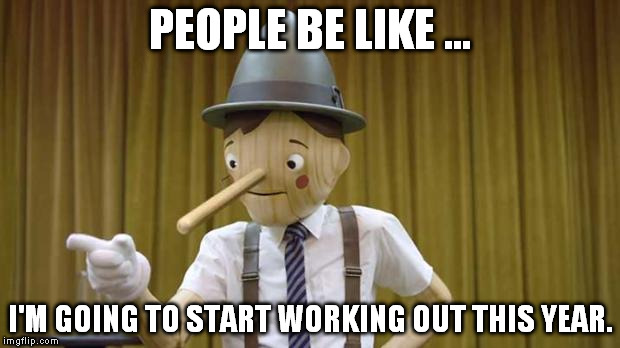
Have you figured out which book I read yet my friends? I’ll give you a hint, Pinocchio would probably be an expert at navigating a series of unfortunate events which stem from this practice.

phjvb

That’s right I read through the book Lying. Which is pretty much just a hard cover essay that was a breeze to get through, but a little bit harder to digest, given what Harris is recommending in his thesis.

Effectively Harris states that we should all line up with his own personal philosophy of honesty at all times. This means avoiding lies when confronting serial killer child murderers, overweight spouses, and even coworkers. The only people who really seem to be exempt are spies, but they live a hollow life after all, one which is for a purpose far grander than they are capable of seeing. So white lies, lies of omission and everything else are unacceptable.

Which is where the essay is ultimately flawed, but interesting. I would agree with Harris that we should avoid white lies whenever possible, but there are some circumstances which are far beyond the scope of certain groups (read: poor people, discriminated minorities etc). And dealing with people with failing health is far more complex than the feelings of the ill versus the feelings of those who are left behind. Not all have the benefit of choosing who they interact with, but perhaps there are some lessons within.

Blame It On Your Heart


Don’t get me wrong, I was thankful for this gift. My parents bought it for me this past Christmas because they know how much I love to read a good critical essay or philosophy book. And this book got me thinking, you see creative cuties, I have this theory that the reason why one man’s truth is another man’s lie, and I’ve spoken about it before. It’s a consequence of this ability we all like to believe we have, called common sense. Harris is a victim of wrong thinking, but his heart is almost in the right place.

If only he could get a broader perspective, maybe then his opinions might make more sense – at least, that’s my theory.

Tim!

Tender and Resilient (Loving review)


Sometimes its the long and silent fights which are the most beautiful and real ones. Tales of genuine masculine tenderness and feminine resilience which best showcase what love and humanity should aspire to.

This is loving.


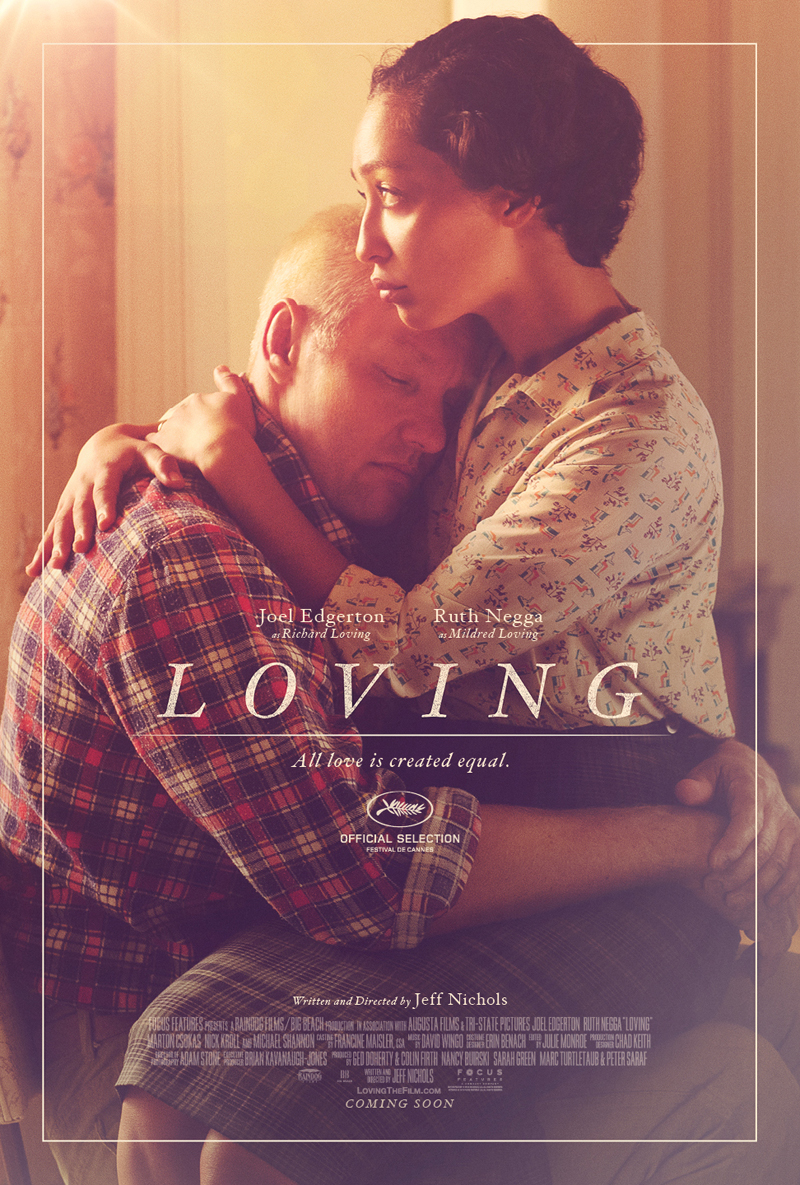
Loving (2016)

Cast: Joel Edgerton, Ruth Negga, Michael Shannon, Marton Csokas, Sharon Blackwood, Nick Kroll
Director: Jeff Nichols
released on blu-ray February 7, 2017
********* 9/10

loving_onesheet

IMDB: 7.1
Rotten Tomatoes: 89%, Audience Score 77%
The Guardian: ****/*****


Jeff Nichols is an American director and writer. He has a really clear sense of timing and genre. Having directed just five films in the past ten years, his track record is quite good and ranks him in with the best and brightest of his generation. Something that I particularly enjoy about his films is that he likes to use one of my favourite actors, Michael Shannon, in each film he directs.

Loving is Nichols most recent film, and it focuses on the relationship between an interracial couple, Richard and Mildred Loving, who struggle to fight against the state of Virginia in the validity of their marriage; this of course is a true-to-life story which happened in the 1950s when miscegenation was considered to be a taboo thing.

Richard Loving (Joel Edgerton) is a white man who works in construction in Caroline County, Virginia. He is in love with Mildred Jeter (Ruth Negga), a black woman with whom they share a mutual group of friends. When they learn Mildred is pregnant, the couple decide to marry, but go out of state to Washington, D.C. because of Viriginia’s anti-miscegenation laws. After the marriage Richard buys some land near Mildred’s family and promises to build a home.

When someone snitches on the Lovings, Sheriff Brooks (Marton Csokas) arrests them for breaking the law, they plead guilty, and are sentenced to one year in prison. However, the judge suspends this decision, on condition that they not return to Virginia together for at least 25 years. So the Lovings move to Washington until Mildred begs Richard to return to Caroline County, so that Richard’s mother (Sharon Blackwood) can deliver their first child. Arrested a second time, the lawyer is able to clear the charges one more time.

Mildred and Richard have two more children and stay in Washington for some time. Mildreds frustration with city life grows, and she writes to the attorney general for help, who directs them to the American Civil Liberties Union. Bernard S. Cohen (Nick Kroll) is assigned and believes they can take their case to the Supreme Court, and effectively remove anti-miscegenation laws nationwide. After an accident with one of the their kids, the Lovings move back home silently and live in a remote area of the state while the case moves along. Profiled by Life magazine at one point, photographer Grey Villet (Michael Shannon) captures them in an intimate moment. When the state of Virginia refuses to set aside the laws, Cohen appeals to the federal Supreme Court.

In an-ever-so subtle way, Mildred learns over the phone from Cohen that the Supreme Court unanimously has deemed that interracial marriage is legal in all states. The story closes with the Lovings at home and some titles which tell of how Richard died in a car accident in 1975, but that Mildred never remarried and lived in the house Richard built for her until her death in 2008.

Pros: This is very affecting story told delicately and choosing to intentionally focus on the relationship of the couple rather than the messy court battles. That is not to say that Nichols ever lets us forget the real endurance of time the Lovings face as they look for a resolution. Negga and Edgerton embody what a successful marriage looks like.

Cons: For all of the excellent performances, set design and cinematography, the film does lack an emotional gut-punch in the middle and at the end. Something similar to the initial conviction and arrest portrayed would have helped engage our emotions better.

Runtime: 2 hours 3 minutes

Points of Interest: Ruth Negga is a child of a mixed marriage. Nichols was able to get the details of the story directly from the Nancy Buirski documentary The Loving Story (2011) and much of the dialogue comes from the documentary which itself featured real-life footage of the Lovings.

This film is incredibly particular in what it shares with the audience. We see how their gaze holds upon each other in each instance, how carefully and comfortably they hold hands and embrace each other, the natural fit of their relationship even against all of the challenges they face in the simple act of loving.

There is one last thing I really want to emphasize here dear readers. And it is understated in the film. That thing is how despite the clearly demonstrated sanctity and privacy of a relationship which both Richard and Mildred want (and should have), they are willing to take that relationship into the public in order to fight for injustice, but whenever possible they request for opportunities to stay in their home and remind us they won’t bother anyone if they are left to their own devices. A tale of true loving.

Tim!