10 Tips For A Good Time (Concert Etiquette)

As is the fashion with Timely Thursdays, dear readers, today is going to be a shorter post.

This might be a little selfish on my part, but the reason I’m doing this is because I’m watching The Offspring and guests perform live at The Shaw Conference Centre this evening. In fact, while you are reading this post, and through the power of mobile phone technology, I am already at the building and in line buying my merchandise.

You see, I’ve loved The Offspring for many, many years, and their music is the kind of music which I can really appreciate – it has a combination of satire and sincerity, something which I’m sure we can all agree is difficult to pull off, whether in music or other art forms.

If you want a little back story on the lead up to tonight’s events, I’ve got the link right here for you.

And so today I wanted to write about what it’s like to go to a concert, for those who don’t attend them regularly or maybe don’t know realize what you can do at a concert.

I’ve come up with a short list of things you can do to ensure you see you favourite musical acts for a reasonable price AND have a good time.

  1. Signing up for online newsletters and Facebook pages of bands and local venues gets you mobile updates on concert dates and related info.
  2. Encourage friends to come along and buy from reliable sources (the venue, the band or an authorized ticket website). It’s safer and more fun.
  3. Select a method of delivery that makes sense (etickets, will call, hard copies) and avoid auctions to avoid fake tickets and high prices.
  4. Plan ahead – Check the weather forecast. Get a good nights sleep the night before. Organize your departure time with your friends to save gas, avoid traffic, and find parking.
  5. Only bring the appropriate supplies (tickets, ID, money, phone) and dress for the occasion (warm if outside, light if inside)
  6. Expect to be checked by security. Smaller bags are better for the process (and lighter over the course of the night) and no outside food or drinks. You’ll be asked to throw them away anyway.
  7. Exceptions – some bands prohibit phones (pictures), and smoking is usually prohibited. Observe the rules and listen to the security and staff on hand.
  8. Show up early if you want to buy merchandise and/or see the opening acts. This gives you the most options of merchandise too, buying late in the night probably won’t work, and the booths make close before the show ends.
  9. Enjoy the show, but understand your exit strategy. Some people leave early to avoid the crowds at the end of the night. It’s better to plan ahead and see it all IMHO.
  10. Finally, proceed from the venue carefully and consciously. Depending where you are the local police and security may have adjusted the traffic patterns.

And that’s all the theories I’ve got tonight friends! I’m gonna put my earplugs in, but I’ll catch you in a couple of days, with something rather stimulating.

Tim!

… Son of A (Catalogue Your Artwork, Please)

You know what one thing I hate more than so many other things in the world is?

The boring-ass menial labour involved in executing administration, no matter WHAT kind I am tackling and how it relates to my life.

XVbPWGh

Now hate is a strong word, and I generally don’t subscribe to hate in other areas of my life, because it’s the path to the dark side – plus it’s incredibly toxic for your mental health. But it really is a bitch to do certain types of simple and tedious planning & execution, well, for me anyway. But I know that a lot of other creative types struggle with it as well. Especially when we already know what needs to happen, and just don’t want to do it.

That’s kind of what cataloguing my art work feels like. One gigantic painful never-ending process of taking pictures, uploading files, labelling said files, and then storing them somewhere (usually an external hard drive)

Interestingly enough, I’ve already done a pretty good job of it over the years, which is the biggest hurdle, in truth. Getting a system in place – coming up with names for each piece, the dimensions, material used, and the year (sometimes even the month) the work was completed. That’s the first step to a successful inventory.

But in order for that to happen, you have to do one of two things…

  • Take photos of everything shortly after completion and then label accordingly on the file name OR
  • Make notes on the back of the work immediately (year, medium, title), for when you CAN get around to photography

Remember that post I wrote last week about the Allegory of the Collage series I’ve been working on for the past decade or so?

Well I was really good at recording those key details of the pieces in the series, especially at the beginning, but then I lost my stride for a bit, and figured “no big deal, I have a good memory, especially when it comes to my own art, I’ll be able to come back and write the year on these drawings,” which was true at the time.

But another year passed, and I was submitting new drawings in the series for art exhibitions, luckilyI had the foresight to write down those names too, and immediately take photos! But after that point in time, I totally lost track of the work completed in subsequent years, as second time. Until last last year, when I decided to start making the collages again, and began the process of marking the details directly on the back of each piece.

So I have two gaps in the work created, I think some of it was made in 2007, and the rest between 2009-2011, but I cannot be sure. Which sucks.

635732968399435411-485495411_1210936779_tumblr_lh3v8bzTCz1qc6cffo1_500_answer_1_xlarge

I can make a bunch of excuses for why this happened, but it doesn’t really matter because, whatever the excuse is, I still don’t know where to place about 25 of the pieces. And that sucks, because I don’t really want to guess, but in order to properly catalogue the work online, I need to have those details.

I mention this for two reasons.

First, I need the work digitized for a post I’ll be writing on Pinterest in coming weeks (which was supposed to be written a posted tonight, until I ran into the above issues)

Second, I’m going to show you in detail why it’s important to do an inventory of your work, and how to accomplish this exactly.

If you don’t have a studio inventory, you’ll be kicking yourself in a few years, and as painful as it is for me to workaround a problem of 25 images, imagine how much it would suck to do this with hundreds of pieces? Don’t fret though, this isn’t meant to scare you straight out of the studio. This is an education; it’ll get better, I promise.

For now, get started by taking photos of all of your work, including the title, the materials used, the dimensions of the piece, and the year it was made. I sound like a broken record, I’m sure, but trust me on those points. Then either store the images on your computer, a hard drive or find a place on the cloud.

I’m personally toying with Flickr option at the moment, but I’ll give you an update when I have an ideal solution, or two.

But what do you think? Have you already organized your work? How did you do it? Please leave some comments below and I’ll have some more theories tomorrow!

Tim!


The New Anti-Heroes On The Block (The Big Short review)

The financial crisis of 2007-2008 was no laughing matter. A lot of people lost their jobs, homes, and hope because of the short-sided greed of those in much higher positions of wealth.

It threatened the potential collapse of the largest financial banks, which some feared would send us into a new dark ages, and was eventually prevented by monetary aid of national governments.

In brief, it was fucked up.

The aftermath was that we experienced a global recession for four years, and even now businesses are hesitant to share wealth and distribute resources as readily as they were before. This Theatrical Tuesday entry looks at the “heroes” who saw it coming, and how they dealt with it.


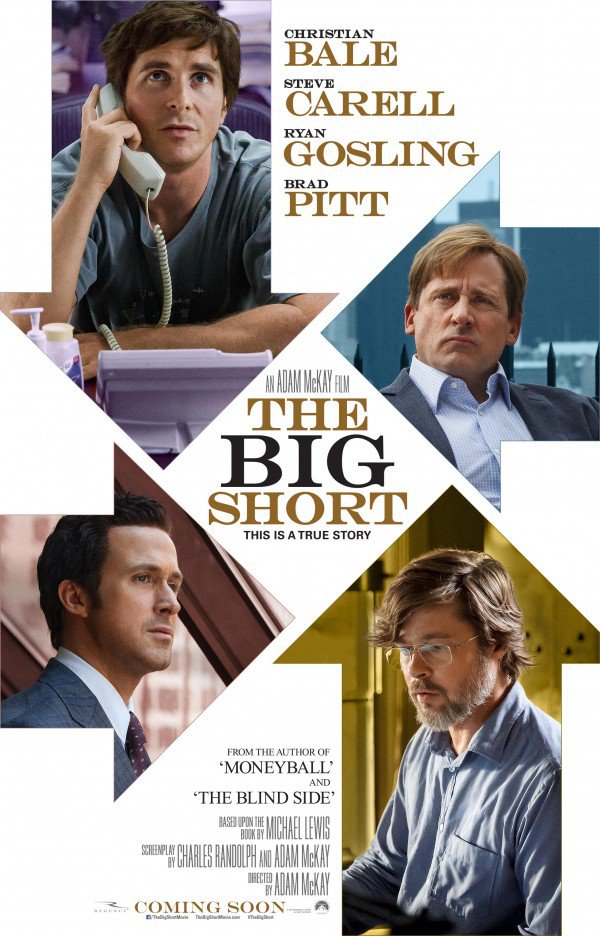
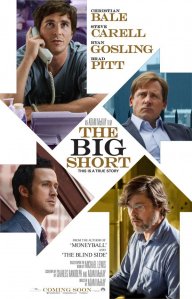
The Big Short (2015)

Cast: Christian Bale, Steve Carell, Ryan Gosling, Brad Pitt
Director: Adam McKay
released on blu-ray March 15, 2016
********* 9/10
The-Big-Short-600x936

IMDB: 7.8
Rotten Tomatoes: 88%, Audience Score 88%
The Guardian: ****/*****

Adam McKay is an American film director, producer, screenwriter, and actor. Known for his comedic chops, he has directed both Anchorman movies, Talladega Nights, Step Brothers, and The Other Guys, which are were all lead by his creative partner, Will Ferrell.

The Big Short is the first film McKay has directed which doesn’t star Will Ferrell, and while it is considered a more dramatic story, it has a lot of his typical satire elements, which fit nicely in the McKay fabric.

Taken from Wikipedia and edited,

In 2005, eccentric hedge fund manager Michael Burry (Christian Bale) discovers that the U.S. housing market is extremely unstable, being based on subprime loans that are high risk and providing fewer and fewer returns. Predicting that the market will collapse sometime in the second quarter of 2007, he realizes that he can profit from this situation by creating a credit default swapmarket, allowing him to bet against the housing market. He visits several major banks and investment dealers with this idea; these firms, believing that the housing market is secure, accept his proposal. This earns the ire of Burry’s clients who believe that he is wasting their money and demand that he stop his activities, but he refuses. As the predicted time of the collapse approaches, his investors lose their confidence and consider pulling their money out, but Burry places limitations on withdrawals, much to his investors’ anger. However, the market collapses just as he predicted and he produces 489% profits from the plan.

Trader Jared Vennett (Ryan Gosling) hears of Burry’s actions from one of the bankers Burry dealt with, and soon realizes that Burry’s predictions are likely true. He decides to put his own stake in the credit default swap market. A misplaced phone call alerts hedge fund manager Mark Baum (Steve Carell) to his plans, and Baum is convinced to join Vennett. The two discover that the impending market collapse is being further perpetuated by the sale of collateralized debt obligations (CDOs), groups of poor loans that are packaged together and given fraudulent AAA ratings due to the conflict of interest and dishonesty of the rating agencies.

When Baum attends the American Securitization Forum in Las Vegas, he interviews CDO manager Mr. Chau (Byron Mann), who has created synthetic CDOs, making what is described as a chain of increasingly large bets on the faulty loans. Baum realizes, much to his horror, that the scale of the fraud will cause a complete collapse of the economy. Baum’s business partners convince him to go through with the credit default swaps, profiting from the situation at the banks’ expense.

Eager young investors Charlie Geller (John Magaro) and Jamie Shipley (Finn Wittrock) accidentally discover a prospect by Vennett and also decide to become involved in the credit default swaps. Since they are below the capital threshold for an ISDA Master Agreement needed to pull off the trades necessary to profit from the situation, they enlist the aid of retired banker Ben Rickert (Brad Pitt). The three visit the Mortgage Securities Forum in Las Vegas, where they manage to successfully make the deals. Shipley and Geller are initially ecstatic, but Rickert is disgusted by their essentially celebrating an impending economic collapse and soon-to-be-lost lives. The two are horrified, and take a much more emotional stake in the collapse by trying to tip off the press and their families about the upcoming disaster. Ultimately, they profit immensely, but are left with their faith in the system broken.

How this movie manages to be both detail oriented and funny, while approaching a still raw subject, is kind of amazing, and what is more impressive is the fact that it does this while featuring an ensemble cast.

Pros: Steve Carell has a fantastic turn as neurotic and disenfranchised hedge fund manager Mark Baum. Christian Bale, Ryan Gosling, and Brad Pitt do okay too. Also the Margot Robbie bit, that kind of pokes fun at The Wolf of Wall Street was hilarious.

Cons: The movie runs a little long, and the slow start featuring fourth-wall breaking pieces feels strange at first, but then the movie tosses that out, speeds up really quick, and crams a lot in towards the end.

Runtime: 130 minutes

Points of Interest: No special effects were used for Michael Burry’s glass eye. That is all Christian Bale, and kinda mesmerizing. The character Mark Baum is based on real-life money manager Steve Eisman. This is the second Michael Lewis book that Brad Pitt has helped produce and acted in. The first was Moneyball.

This is both entertaining and engaging, with the heroes of the story being flawed and real, because they are based on real people and adaptations of real people who were involved in the housing crisis of 2008. The fact that The Other Guys is a McKay movie makes a lot of sense, as that movie features the same types of villains as this one.

The fact that The Big Short depicts it’s leads as heroes is a bit ridiculous if you ask me. It assumes that these men actually did something for the greater good. Yes, they dealt with danger, adversity, and their personal reputations to expose and react to the impending housing crisis, but most of them profited from it.

Michael Burry and Mark Baum “kind of” walked away, but they made a lot of money in the process. And even Brad Pitt’s financial guru pariah got something out of it.

I read a review that said you’ll leave the movie feeling angry, and that is true, but I get a sick feeling in my stomach when I think that we get excited about people making money in a situation when so many lost out. Something to chew on.

No more theories today, friends. Come back on Wednesday for some Wisdom.

Tim!

The Scientific Method (Kendrick Lamar, Untitled Unmastered review)

Whatever happened to experimenting? From the time we are children to our early years as adults, we are constantly experimenting to figure out how life works and where our place in it is.

The sciences seem to have taken hold of this idea and kept it for themselves, but the reality is that experimentation belongs in the arts just as much, if not more so.

And I’m going to use this week’s Melodic Monday entry to prove it!


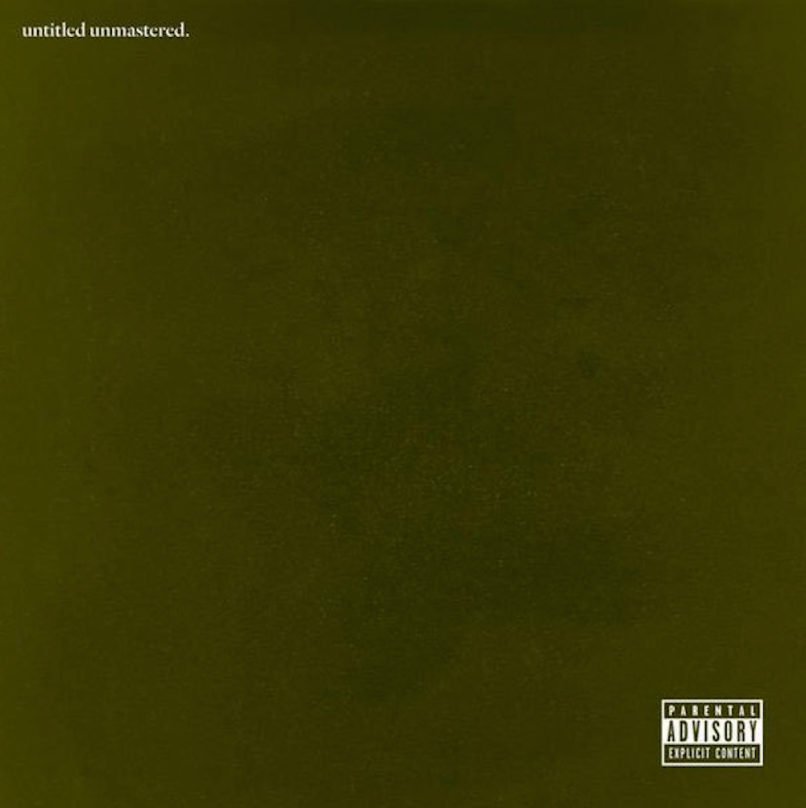
Kendrick Lamar – Untitled Unmastered
released March 4, 2016
******** 8/10

kendrick-lamar-untitled-unmastered-stream-album-listen

Kendrick Lamar (Kendrick Lamar Duckworth) is an American rapper from Compton, California. He has been rapping since he was a teenager, and started with the name K-Dot, which allowed him to release a mixtape that eventually got him signed with indie label TDE.

His first studio album came out in 2010, and then he got signed to Aftermath/Interscope in 2012 which saw the release of good kid, m.A.A.d. city.

He currently has 7 Grammies and a bunch of other awards to top it off. All thanks to last years release To Pimp a Butterfly, which came out almost exactly a year ago (I’m off by a couple of days, cut me some slack, please and thank you).

As a newbie myself to the freshness and layering of sound that is K-Dot, I’ve learned rather quickly that it is almost inevitable that I will under-appreciate his efforts, his perspective and his aspirations. But that won’t stop me from listening to untitled unmastered.

It’s essentially a prelude to To Pimp A Butterfly. Kendrick Lamar is telling us with the album title that he is borderless, capable of achieving anything, and that he has no masters. But he himself is humbled by aspects of being black which he doesn’t understand.

That’s why he pulls from so many different genres and ideas, sampling them all to better appreciate and incorporate them into himself.

It’s fucking scary. As a white man with little to no idea of what he must be experiencing as he navigates these waters, I can only imagine how much energy K-Dot has to drum up to approach these  album.

All of the tracks reference previous outings, from performances on Jimmy Fallon (untitled 8)  and The Colbert Report (untitled 3), to a three part jam session which takes places over a three period (untitled 7). It’s fun and intellectual hip-hop like this that always has a place in my collection.

Lamar has told twitter followers that this is a bunch of demos, and you get that sense. But you almost feel guilty listening to it, because it’s so much damn fun. This is an amazing mixture of hip-hop, funk, soul, jazz, spoken award, and dare I say it, subversive music.

I read somewhere recently that jazz is on the way out and that while it originated as Black music, it’s meant for everyone. I really hope that it isn’t and I have a suspicion that while jazz may not appear to be popular right now, it’s always been a musical genre that inspired deviation, experimentation and energy – If Kendrick Lamar, an artist who is helping to redefine hip-hop, uses jazz in his recording sessions, and to inspire his studio releases, I think we need to take note and learn from it. Just a theory.


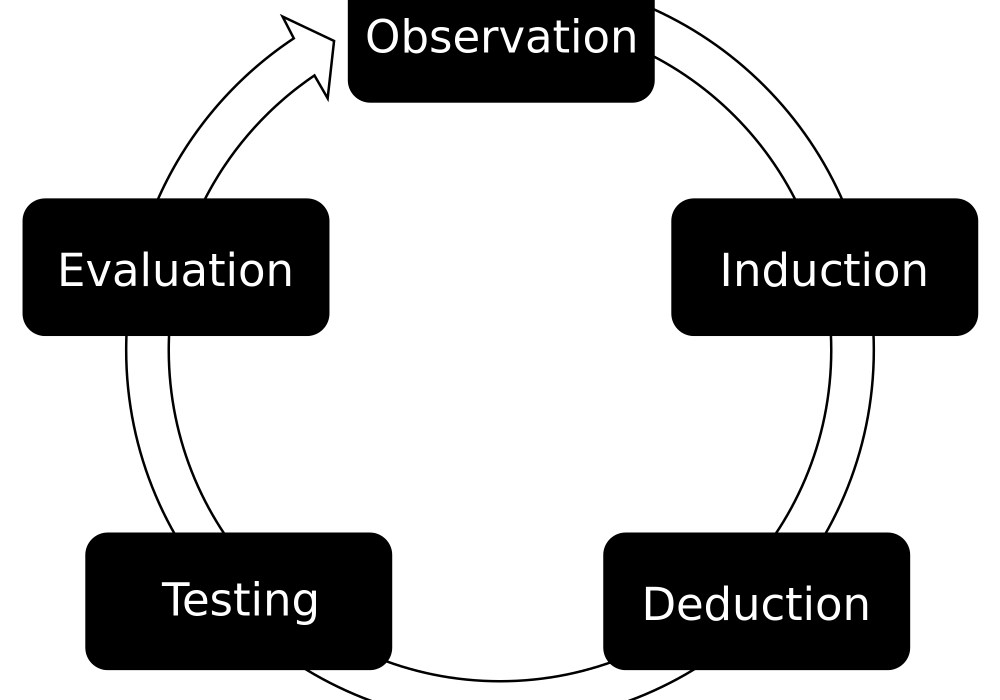
In the scientific method, experiments are done with metrics and models to find out if a hypothesis is true or not. Kendrick Lamar, knowingly or not, is constantly testing out the theory that jazz is dead, and every time he does, he proves that that is not the case. In fact, people love it all the more. As a personal advocate for theories, I believe that untitled unmastered represents empirical evidence for the value of jazz.

You need to listen to this album. I’m not going to give it a 10/10 though, because it’s not a studio release. It’s something different, but manages to still achieve a good grade regardless.

What do you think? Is my body of evidence corrupt? See you tomorrow for some theories on economics.

Tim!


Who Ya Gonna Call? (Cross Talk Ep. 3)

Spring is officially here dear readers! And that means it’s time for change, warmth, and appreciation. The circle of life, in all of it’s perfection. Death and rebirth.

If you want another less literal example, in the form of a metaphor, it’s like a phoenix rising from the ashes.

h0k7a

Frankly, it just feels good to step out of your home after a long winter; to remove those extra layers, and start spending time in nature – Maybe with a cool drink? Watching new life form from old, colour stem from the bland. Activity starts to peak all around and we get excited for the future.

How convenient then that this month’s Cross Talk episode is all about remakes in film. That’s right, we’re going to explore the depths of the film industry and discuss the supposed epidemic of movie remakes, how valuable they are, and whether or not Hollywood should give up the goose and get back to creativity.

As often is the case with assumption, there is a general sense from movie goers, that studios will cash in on successful franchises more often then they will venture outside and make a bet on a dark horse. That and the assumption that the general populace hates remakes.

Which is why Chris and I have decided to embrace the season and the hot topic of remakes with our atypical blend of humour, passion, and comfortability. We will ease you right in, much like a newborn, inviting you into the blossoming garden.

Okay, we’re sick of the spring metaophors timotheories!

All right, I can take a hint! I’ll dial it back. But not before I make a quick phone call to a beloved franchise that is about to hit *69 on everyone’s landline. #yeahiwentthere

Sure, Spider-man’s new costume is #hype right now, but what about the new Ghostbusters trailer, holy Moses that is getting a ton of internet hate. Especially as it relates to straw-men of gender and race. You’ll want to watch this episode for our thoughts on that pop culture gem alone.

I’ve included a direct link to the full video for you here, but as always the real action is just below for your convenience. If you want to jump right into the Ghostbusters debate, look for the 12:30 mark, otherwise, please sit back and enjoy Episode 3 of Cross Talk!

I’m out of theories for now, but please check back tomorrow for an untitled and unmastered album review. Something completely original, in other words. Please comment, subscribe and share this with you friends. We want to hear your feedback!

Tim!