Turn It Down Already! (The Essence of Listening Skills)

I’ve struggled to accept this fact for almost the whole of my life, but for the most part, we are bad listeners. Communication problems are often at the heart of the issues most of us deal with – at the office, in the car with the kids, over dinner with our spouse, and pretty much everywhere we go.

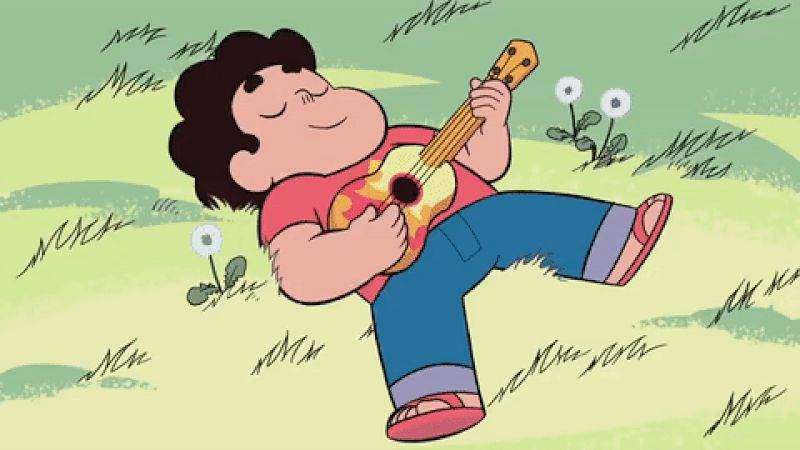
Listening skills should NOT be a latent talent that only a few of us possess, something that is mocked or worse, both of those things. We need beacons of light to demonstrate the awesome prowess of listening, and I know examples exist – I’m looking at you Steven Universe, and your genius creators for one!
Why You Are A Bad Listener

I’m not going to pretend to know what makes people into bad listeners, but I can tell you that there are behaviours out there, which I am just as guilty of as the next person, that contribute to bad listening, and even moreso, bad communication. I’ve gone over the basics of communication already, and I’ve even dedicated some efforts to addressing the ever-so-subtle interpersonal communication, but stopping behaviours can be just as important as starting up new ones, dear readers.

Have you considered that you think of yourself too much, for starters? We all do it, we think of how information is going to impact us, but when you only focus on your own challenges, it just won’t jive in good listening. On top of that, your mind can wander from one topic to the next if you don’t concentrate, and when you do focus on what’s being said, you risk getting caught up in the topic, and completely missing the point at hand. Also, being distracted by other things can make it worse – deadlines, illness, problems in other life arenas all vie for your attention. You need to do yourself a favour and put a pint in it until the chat is over.

And we haven’t even considered how nurture, in the eternal struggle between nature, screwed the pooch on your listening training growing up. What, you say? There was training on listening skills? Well not exactly, etiquette isn’t a universal truth shared with all students.

Of course if someone decides to start cutting you down, you might get defensive, and that’s when you fail to hear what has been shared. On the opposite side of the equation are the helpers who assess a problem, and attempt to fix, without an invitation. And so Mr. Fix-it stops properly listening.

The Types of Listening Skills

Now that you’ve gotten a good dose of where we fail to listen, I think it might be a good time to address what kinds of listening you will need to apply to improve your social standing.

Critical – this for is when you need to evaluate information and either formulate a solution, an opinion or make a decision.

Appreciative – listening for the sake of personal growth and enjoyment. Movies, music and theatre all come to mind.

Discriminative – you need to determinate a dialect, members in a group, if a conversation is amicable or turning violent and a host of other nonverbal cues related to someones feelings.

Relationship – listening to understand someone, whether they need to vent or not, you have to show your support by retaining the details and feeling what they feel.

Comprehensive – focus on the speaker and the message they are sharing, in order to take direction and then apply it to your own role.

How To Become An Artful Listener

Ultimately, if you want to become an excellent listener you are going to have to learn how to be present. This is not a metaphor for becoming a present, but it is a gift nonetheless.

Forbes wrote a great article on the 10 key steps to skillful listening, and the brilliant thing about this post is that while you may need to practice one or all of these steps to get better, you can totally fake it till you make it, because so many of us are terrible at listening already.
But what are the steps you ask?

  1. Face the speaker and maintain eye contact
  2. Be attentive, but relaxed
  3. Keep an open mind
  4. Listen to the words and try to picture what the speaker is saying
  5. Don’t interrupt and don’t impose your “solutions”
  6. Wait for the speaker to pause to ask clarifying questions
  7. Ask questions only to ensure understanding
  8. Try to fell what the speaker is feeling
  9. Give the speaker regular feedback
  10. Pay attention to what isn’t said – to nonverbal cues

You’ll notice that these steps all relate to the previous symptoms of bad listening AND simultaneously recognize the 5 types of listening skills we need to employ. On top of that, the author suggests that at the end of your conversation, to summarize any actionables and agreements that were made.

It might not feel comfortable at first, but over time it will become second nature to you. And lastly, while I didn’t spell it out above,you need to create a receptive environment for listening – turn off all the digital distractions and refrain from bad habits like yawning, frowning or fidgeting.

theories Summarized

Silence might be golden, but it is not guarantee of authenticity. Fool’s gold can look just as valuable to the untrained eye. The skilled person takes on listening as an active skill which will always need to exercised to maintain your health and wealth. It shouldn’t be a mere theory that there is gold in them hills, let’s get out there and level the playing field folks!

And that’s all the wisdom I’ll dole out today.

Tim!

Art Tricks, Money Traps (Work-Life Balance)

We did it dear readers. We finally got through it.

We made it to the end of my series on the Wellness Factors of Life, AKA addressing the OECD index, or if you prefer, the Postconsumers series. What started out as a wild bid on my part in considering how to live a life with less and yet fuller than you could ever imagine, is now closing out with a topic more then fitting – work-life balance. The last factor that can directly effect your over-all state of being in this world of ours.

Because let’s face it, the average global citizen doesn’t even realize they have a creative component of who they are. Creativity that should be nurtured like all of the other things.

Your creative spark absolutely needs to be considered, and it connects quite well with areas of health, spirit, work, family/friends, environment, and personal fulfilment. When all of these things come together, your life will sing with excellence. Or maybe it’ll all fall apart if you ignore any one of those things for too long.

Yikes, that is a depressing thought to fathom. But I’ve been there creative cuties, and yes I may share that story in full one day. The story which led to one of my greatest theories on the importance of pursuing your purpose, it could be a campfire theory even, but not today is not that day friends.

I’ve got a different kind of wisdom to impart.

But first, let’s put a cap on that pen, and bring out the fundamental of life once more.

The Bare Knuckle Necessities

I’m going to make a bold statement.

You cannot achieve the perfect balance of life:
career (work),
spirituality (spirit, creativity),
space (home, studio, environment),
relationships (romantic, family, friends),
health (exercise, meditation, reading),
and fulfillment (hobbies, recreation)

All of these are noble pursuits, and completely attainable, but most definitely not all at once, and never more then two or three at a time. I know you’ve tried to accomplish this on your own, and you may have even fought against the theory because you wanted to disprove it. But like many idioms, adages, and metaphors of life, life hits back, over and over.

It’s not about besting life friends, it’s about taking it all in, giving it your best shot at a few areas at a time, and then continuing onward.

So for you that might mean getting a grip on health, and career for quite a while. At least until you’ve seen some positive gains and have set up some new healthy habits for yourself. I’m not going to devolve this post into going over theories I’ve discussed before on health, productivity and habit setting, but those topics do exist on timotheories.com. This is about you being okay with striving for progress in certain areas, and then moving into progress in other areas.

Automation Station

Effectively you are creating rhythms and routines for yourself that your body, mind, and soul will be grateful for. Think about it for a minute, we are so comfortable falling into the same shitty habits every day after work? Ever wonder why we do that? Hint: it’s not because we want to.

Instead of beating yourself up because you didn’t do everything on your list today, focus on a few things to accomplish each day and follow through on them. Once the systems are in place to make those good decisions a reality every day (usually after a 90 day commitment), you will eventually create your own ideal, and balance will now have a new meaning.

It becomes less about having everything in equal measure, and more about shifting attentions on these areas of wellness as needed. So put the time in, build your lists, schedule tasks, and make one concrete action towards your area of focus each day. As Rocky says, that’s how winning’s done.

For me, what that means right now is making art every week, and marketing my business. Those are two simple things, but I’ve been neglecting them for relationships, work, and health. It’s time to focus back on the art and my own purpose.

theories Summarized

Artists of all stripes have to face the same pressures of work-life balance as do those that ignore the creative path. There is nothing wrong with going one way or the other, but when you make art, never assume your failings at balance are due to the pursuit of creativity – we all struggle with this. Skill, determination and a commitment to improvement are essential in moving towards success within the arts, as is true of any field.

The difference is that your path is not set in stone, therefore the risks and rewards are much greater. But I have a theory that you already know what you need to chase.

Tim!

I Think We Need To Take A Break (Cross Talk Ep. 18)

I’m gonna keep the preamble short this time creative cuties – Sometimes franchises get stale.

And if I can be so bold as to use an analogy, franchises can very easily become like all relationships. If both parties don’t look past their differences, accept that the things they may have once loved now have a capacity for irritation, and focus on appreciating and nurturing the things that they generally DO like, then the relationship will experience fatigue.

What I’m basically saying is that you cannot change someone, that person has to decide to change on their own. But when you communicate about the things that bother you in a loving manner with no intent of changing the person, then there is room for growth.

635959344460903075-1462849219_rule-1

After all, likes and dislikes are completely subjective, so that hair twirling which you “hate” may be completely endearing to someone else. Movies are complicated, okay?

A movie franchise which always leads in with the same soundtrack and repeats similar themes over and over again can be really good, but only if you appreciate those qualities. When it starts to get stale, it might be time to move on or potentially appeal to reason by spending your money on franchises which keep it interesting.

Which is why today, Chris and I explore what we think some franchises are doing right, what others continue to do despite not growing in other ways, and how others completely miss the mark and wonder why they are so lonely. It might be an exhaustive effort but this is what franchise fatigue does to us.

And because we know there are a few elephants in the room, we’re just gonna get the superheroes and space adventurers out of the way immediately – Because let’s face it, they are low hanging fruit.

This is episode eighteen of Cross Talk, and dammit if I ain’t proud of all the franchise staples we were able to come up with in under twenty five minutes. Now it’s your turn to take a breather, settle in with your favourite snack and meditate as we bring up some interesting theories on how to combat these challenges…

I am #sorrynotsorry for the relationship analogy, because I think all relationships take work and I have this great theory about how we can learn from people in addressing this topic. But if you watch the video you’ll see what I mean. Another day, another theory realized my friends.

Please comment, subscribe, and share this video with friends. We want to hear your feedback!

Tim!

The 5 Love Languages (Gary D. Chapman)

Wednesday is typically a day for wisdom here on timotheories, as you know, dear readers.

It’s the day I share ideas from famous artists, motivational pieces of art, give suggestions on things you can do to make your life more fulfilling, and sometimes I dole out my own theories of global wisdom. For example, on one post in particular, I decided to construct my own reading list and then I came up with a catchy theme to describe the different types of books I would draw from to grow and shape my own journey. Like Liu Kang.

liu_kang

I even called it The Reading List. Not like Liu Kang.

Which makes perfect sense to me, even if it is a bit obvious. Like Liu Kang. But then as mentioned I took the post a bit further and came up with a conceptual framework to flesh out the types of books I would be reading going forward.

I called that concept the The 5 L’s of Language, not to be confused with the name of a book called The Five Love Languages, and which is authored by one Gary D. Chapman. Who happens to be this week’s featured author.

Just in case you forgot, this is what The 5 L’s of Language look like –


I will read one book a month from the 5 groupings below, slowly expanding the number of books read so that I reach the point of 5 books a month. A book for each group

  1. LIFE – Biographies/Art/Music
  2. LOVE – Classic Fiction/Non-Fiction/Graphic Novels
  3. LEARN – Business/Leadership/Self-Help
  4. LABEL – Philosophy/Sociology/Psychology
  5. LEET– The Internet

If you haven’t figured it out just yet, the topic o’ the day is LEARN. As In you need to learn your own unique primary love language as well as how the other four work. You do this so that you can properly love yourself, a romantic partner, and even manage other relationships better, whether you are single, married, a child, teenager, or even just a man.

Gary D. Chapman, Five Kinds of Love

Gary D. Chapman has authored at least five books related to the concept of five love languages and co-authored two books on the languages of apology and appreciation. He originally came up with the idea of The Five Love Languages after looking into twelve years worth of his own notes on common patterns he witnessed when counselling couples. He asked a very simple question – when someone feels unloved by their spouse, what do they want from them? And thus five categories of answers emerged.

If you can learn to appreciate the difference between words of affirmation, physical touch, acts of service, quality time, and gift giving, then you’re working towards a rather positive and generous view of love and how to share it.

I bet you’re hoping for more of a definition of each term, so that you can go out and apply these ideas ASAP. Well, okay, but I recommend that you read the book first, and then run a legit profile through Chapman’s website.

With that mentioned here is a quick overview of each language –

  • Words of Affirmation: spoken affection, praise, or appreciation.
  • Acts of Service: actions, rather than words, used to show and receive love.
  • Receiving Gifts: giving gifts that are meaningful.
  • Quality Time: expressing affection with undivided attention.
  • Physical Touch: sex, holding hands, hugs – affection via touch.

As you get comfortable with the languages friends, you’ll learn which of the five is most important to you, and then you begin to implement the philosophy into your own life.

For example, if your primary love language is “quality time” like me, that means you should spend time for yourself on meaningful activities, whether those activities include another party or two is up to you, but if you make art, you’ll like enjoy doing it on your lonesome. Or if physical touch is important to you, maybe you spend time in dance classes, making theatre with friends or regularly hugging your friends and family. But that’s just a theory.

Tim!

Red VS Blue! (How Environment Effects Creativity)

I’ve said it before, and I’ll definitely say it again after this post… but throughout human history creativity has often been thought of by the masses as a gift from another world, not something that comes from the brain and which can be developed and cultivated.

I bet you thought I was making a reference to TMNT, nah, I would never do that.

Michelangelo's_comical_scream

Moving right along; as a creative person I’m sure that this concept of creative influence is both fascinating and horrifying for you, because you want to succeed and get support to accomplish your creative goals, but if anyone can be creative, then that means you are no longer a special snowflake.

And I’ll let you decide which one fascinating, and which one is horrifying.

But what if I told you that your environment can be controlled in such a way as to effect your creativity either positively or negatively? What would you do? I bet most of you would jump at the chance to make subtle shifts in how your environment operated.

For instance, did you know that colour can elevate different kinds of creativity? According to this study, red can promote analytical aspects of memory retrieval and proofreading, whereas blue is good for brainstorming and innovation. Also in the same study, researchers have uncovered a correlation between noise levels, distraction, and types of work done – moderate noise and high noise produce more abstract processing vs low noise, but high noise impairs information processing, so moderate noise is the sweet spot for creativity, something which I touched upon in a previous post.

The most interesting thing about this study, of course, is that it demonstrates the correlation between creativity and improvement.

Another article I found recently references other aspects of life which can impact creativity. This is another one which Professor Juliet Zhu has looked into, and is a huge advocate for. Apparently dim lighting vs bright lighting an produce different results. Believe it or no, dim lighting has a positive association with abstract thinking and creativity.

cave-painting

Maybe that’s why cave painting started us off on this creative pathway in the first place?

But the article goes on to demonstrate that temperature and space make a difference too. Choose a cool setting for simple tasks and a warm place for complex ones. Clutter creates less self-control (binge eating for example), whereas organization creates self-regulation and persistence, both useful in their own situations. And that latter topic also happens to be something I’ve written about previously.

Still another article I read described the importance of writing out ideas by hand, which helps with idea generation, learning, and memorization. And apparently taking walks and working in rooms with high ceilings helps to promote creativity too.

But what you may not have considered is the importance that comfort can play in creativity both physical and mental. Having a space which has both small areas of intimacy and large open areas can stimulate different kinds of thought. And of course, you also need to be able to experiment and fail at projects. No one is capable of perfection, but surrounding yourself with individuals that do not support risk-taking stifles creativity quite a bit, so do what you can limit those kinds of interactions.

Jim Rohn said it best with the following quote

You are the average of the five people you spend the most time with.

It is imperative that you consider your relationships carefully, and to be closely surrounded by positive, supportive people who want you to succeed, and it’s also necessary to have critics. Though I suspect we can touch on that last point in a lot more detail and so I shall save it for another day.

What did you think of that theory? Does your environment fit the conditions above? Have I missed anything? Please leave some comments below, like and share this post, and of course please subscribe to my blog for more stimulating ideas about the arts.

Tim!