They’re Creepy and They’re Kooky (Tokyo Ghoul review)

Japanese culture is ripe with interesting examples of fantasy, science fiction, drama. And most importantly it’s always visually appealing no matter what the subject matter being tackled. This week’s review doesn’t hold back.

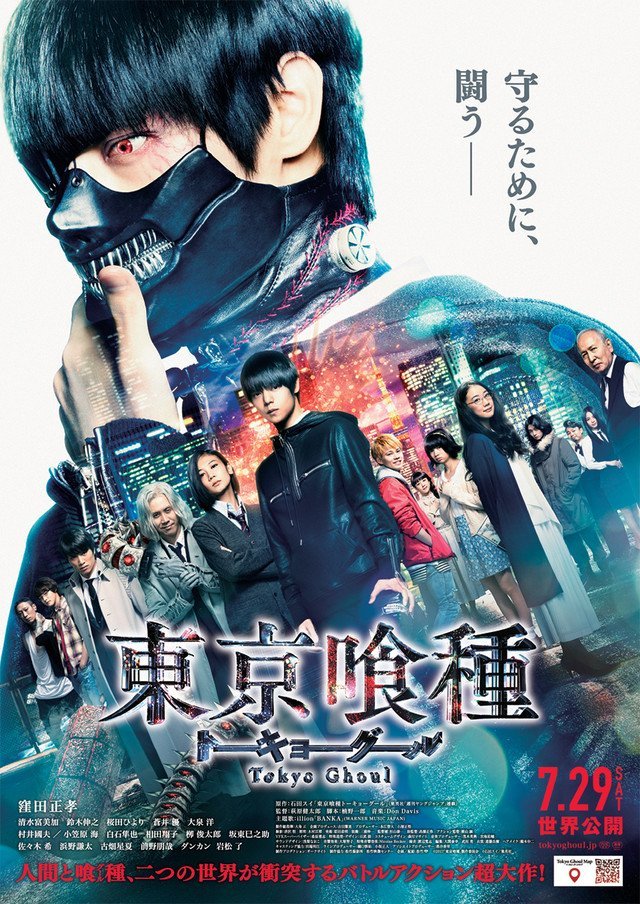
Tokyo Ghoul (2017)

Cast: Masatak Kubota, Fumika Shimizu, Nobuyuki Suzuki, Hiyori Sakurada, Yu Aoi
Director: Kentaro Hagiwara
released on blu-ray April 3, 2018
****** 6/10
IMDB: 5.9
Rotten Tomatoes: 83%, Audience Score 68%
The Guardian: N/A

Now, I don’t have very much information about this live-action film’s director, Kentaro Hagiwara, as he has managed to avoid appearing all over the internet with a solid measure of success. Thus I am resigned to believe he is something of a ghoul himself, hidden in a secret society and only emerging for brief periods of time to prove his existence.

Which is why I’m not going to assume that this is his first time directing, but I will grade the movie as if it were. So let’s talk about this adaptation of the hit manga by Sui Ishida.

Special thanks to Claudio for the IMDB summary (I corrected some grammar) –

In Tokyo, the shy student Kaneki Ken () finally lands a date with this beautiful girl Kamishiro Rize (). While in a lonely park, she does a gender-reversal on the classic monster movie and attacks him because she is in fact, a flesh-eating ghoul. Luckily, Kaneki escapes after a freak accident that kills Rize, but he soon learns that he has become a ghoul himself in an emergency organ transplant that happened while unconscious from his wounds. He then befriends a group of peaceful ghouls and tries to live his new life with them. However, they are hunted down by relentless two police officers from the Ghoul Division in charge of eradicating ghouls from their district.

My initial impressions after I watched this movie were pretty harsh. While I really liked the premise of an alternate reality where monsters were real and far more complicated then their appearance, I struggle with the CGI used to create this fantasy world. It constantly takes you out of the story, where literally any other distraction could take place and become more engaging.

It’s great to see an assimilation story for the contemporary age, and one that takes what could have easily been a horror film, and turned it into more of a supernatural drama. Lots of cliche ideas about families being found anywhere, and the importance of acceptance for people other then ourselves, but none of the major characters are presented as particularly complex, so the story then suffers.

Pros: It’s visually intense, unnerving and while the CGI itself is difficult to watch, they don’t replace the importance of a good story about mythological creatures that live in modern times.

Cons: It’s almost as if there is an expectation that the story adhere closely to its roots, which appears to be in conflict with the directors much more interesting vision. The primary character played by Masatak Kubota rarely emotes in the right moment.

Runtime: 1 hour 59 minutes

Points of Interest: The musical score is composed by Don Davis, who also did the music for The Matrix trilogy. The director has cited Kill Bill: Vol. 1, District 9 and The Last Samurai as major influences for the film.

If you can get past the bad CGI and the shallow characterizations, this is a very entertaining fantasy movie with some great commentary on social issues, including hierarchy in Japanese culture. The challenges that Kaneki (Masatak Kubota) face as he learns to accept his new lot in life are compelling, and might have been better accomplished with less fights.

theories Summarized

With all of that said, do I think you should run out and get a copy of this flick? No, I think it’s an acquired taste. But, I also recognize that exposure to films from other cultures can be incredibly satisfying, and give context to a broader film discussion. A timotheory if you would.

Now, this week’s Watch Culture video review is a little bit kooky as well, but I can endorse this movie over and over again. Super Troopers is one of my favourite comedies from the early 2000s and a potential spiritual successor to some of the classic Mel Brooks and Monty Python films of the 1970s and 1980s. If you haven’t seen it before, give our review a once over, and I bet we can change your mind.

And of course, please let me know what you thought of both reviews, like and share the video, and subscribe to the channel (and email) if you haven’t already. With even more theories in the pipeline, you’ll have content to chew on for days.

Tim!

Smoldering Fire (Thor: Ragnarok review)

I know some people are wondering how much longer the Marvel comic book movie train is going to run, but personally I think they are just starting to get into the great stuff that comic books are made of.

And Thor: Ragnarok proves that point.

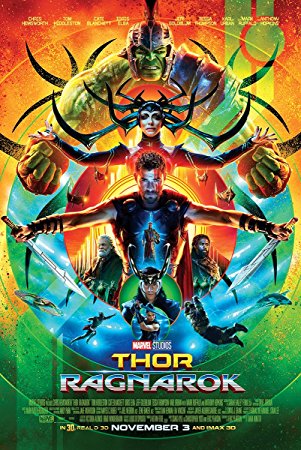
Thor: Ragnarok (2017)

Cast: Chris Hemsworth, Tom Hiddleston, Cate Blanchett, Idris Elba, Jeff Goldblum, Tessa Thompson, Karl Urban, Mark Ruffalo, Anthony Hopkins, Benedict Cumberbatch
Director: Taika Waititi
released on blu-ray February 20, 2018
********** 10/10

IMDB: 8.0
Rotten Tomatoes: 92%, Audience Score 87%
The Guardian: ****/*****

Taika Waititi, sometimes known as Taika Cohen, is from New Zealand. He is a director, writer, actor and comedian. I first heard about his work with the 2007 gem Eagle VS Shark, but he also directed Boy, What We Do in the Shadows (check out Mike’s Watch Culture video for a great review!), Hunt for the Wilderpeople, and most recently, Thor: Ragnarok.

So he is comfortable making comedies, injecting comedy into things which are typically not comedic, and he has even been nominated for an Academy Award for his directorial debut, Two Cars, One Night.

Waititi makes odd films, and so it should be expected that Thor: Ragnarok would be a bit out there. And boy is that statement true in this case.

Special thanks to IMDB user Blazer346 for the synopsis.

Four years after defeating the Dark Elves and two years after the fight in Sokovia, Thor (Chris Hemsworth) now finds himself trapped on the other side of the universe on the wacky planet of Sakaar. Meanwhile, a new threat rises as the evil Hela (Cate Blanchett), Goddess of Death takes over Asgard and plans to conquer the universe. In order to get home, Thor must compete in a gladiator match against the defending champion of the Grandmaster (Jeff Goldblum). Little does Thor know is that the champion is his old friend and fellow Avenger, the Incredible Hulk (Mark Ruffalo). Teaming with Hulk and his deceptive brother Loki (Tom Hiddleston), Thor must return home to Asgard in time to stop Hela and prevent the approaching Ragnarok, the apocalyptic destruction of Asgard.

This is a film which refuses to take itself seriously, no matter what is happening. Oh, Asgard is about to be destroyed by a fire demon whose sole purpose is to obliterate the planet? No problem. Oh, he achieved that result? Let’s move on. The irreverence isn’t actually an issue though, because Waititi recognizes the ludicrous nature of pairing all of these Marvel characters together, and infuses Hemsworth’s Thor with a much needed dose of self-deprecation.

From the outset, it’s tongue-in-cheek, and consequently we are able to accept many of the plot holes, the emphasis on CGI sets, and the odd cast of characters.

Pros: The blue rock monster, scene stealer, Korg (voiced by Waititi) adds another level to the humour, but even Dr. Strange, The Hulk, and Loki get in on the fun. I’ve seen this film three times now, and it’s all still incredibly entertaining. It does the job as an action flick, but shines as a comedy, better then Ant-Man even.

ConsAt the end of the day though, this film is pretty inconsequential to the arc being set up for Avengers: Infinity War. Yes, *spoiler alert* Thor and his Asgardians run into a foreboding ship at the end of the film, which is likely Thanos, there isn’t much emotional weight to the loss of Odin nor to the introduction of Hela, who by all accounts should be badass.

That said, I love the 1980s mix n’ match feel of the flick, and Jeff Goldblum fits in perfectly with the setting of Sakaar. The heart of the film comes in the way these characters intersect with each other in such a weird setting. And while the heavier emotional pieces are set aside for the most part, you can’t help but feel connected when Thor pairs up with Loki for a game of “Get Help.”

Runtime: 2 hours 10 minutes

Points of Interest: .Waititi has admitted that almost 80% of the film was improvised, and even the line “he’s a friend from work” was offered up to Hemsworth from a Make-A-Wish child who visited the set that day and suggested that relationship. Chris Hemsworth’s older brother Luke Hemsworth plays Thor in the play within the film.

It’s a film heavily inspired by 1970s and 1980s science fiction fantasy, which might be another reason I loved it so much. Thor was born out of that time and his adventures have always been super strange. Even better that his connection to Earth this time be established WITH Dr. Strange, whose own comic and film were a nod those eras.

theories Summarized

Hitting the same narrative beats in a superhero movie is a common trope nowadays, and most Marvel flicks are a victim of this way of thinking. But luckily for us, we saw a glimpse of a potential future with Thor: Ragnarok, and I also think with Black Panther. I have this theory that superhero movies have a fair bit more longevity to them, and if Marvel continues to take chances on their directors, as they have with writers over the years, then this might not be the Ragnarok of the MCU.

And to freshen things up, I’ve decided to do a Watch Culture video on another classic superhero story from the 1980s, the much beloved, and reverrd Akira. This is the film that legitimized anime in western culture, and so if you have never seen it, spend a few minutes with me and I’ll explain why it’s awesome.

So please let me know what you thought of my review, like and share the video, and subscribe to the channel if you haven’t already. I anticipate that our content will continue to grow much like the Marvel cinematic universe. A well considered theory on my part.

Tim!

Earn The Power of Self-respect (Bryan Lee O’Malley)

There was a time when I loved comic books, so much that I would buy new ones impulsively just to continue to round out my collection, get lost in the stories, and hold onto something I thought was real. Ironic given that I was enjoying fantasy stories.

But the thing is, just because I loved comic books, doesn’t mean I should have sworn them off for good, and then burned all of my copies in a fire of cleansing. Literally. I literally burned them all. Because I thought I was addicted. Read: WTF was I thinking. Yeah, I’m gonna come back to that story some other time. You don’t just get the good stuff right out the gate friends. You should know how the carrot dangle works by now.

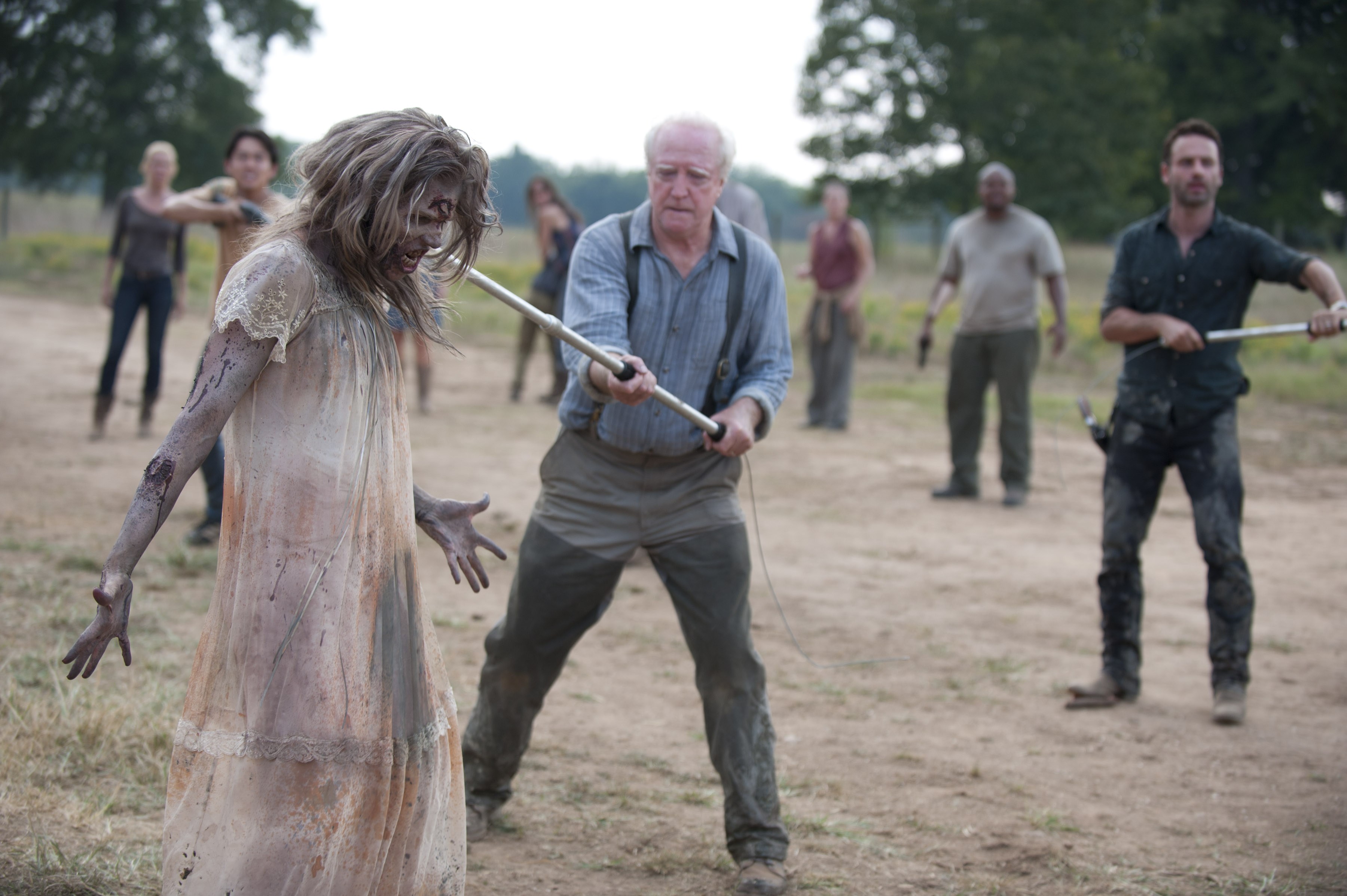
(Foreground) Hershel Greene (Scott Wilson) - (Background L-R) Andrea (Laurie Holden), Glenn (Steven Yeun), Lori Grimes (Sarah Wayne Callies), Carol (Melissa Suzanne McBride), T-Dog (Robert 'IronE' Singleton) and Rick Grimes (Andrew Lincoln) - The Walking Dead - Season 2, Episode 7 - Photo Credit: Gene Page/AMC

Yes, I’m watching The Walking Dead, and no I don’t care that I’m at least 4 seasons behind everybody. I’ll catch up quick. Like The Quick and the Dead.

Anyways. I was trying to make a point about indulgence.

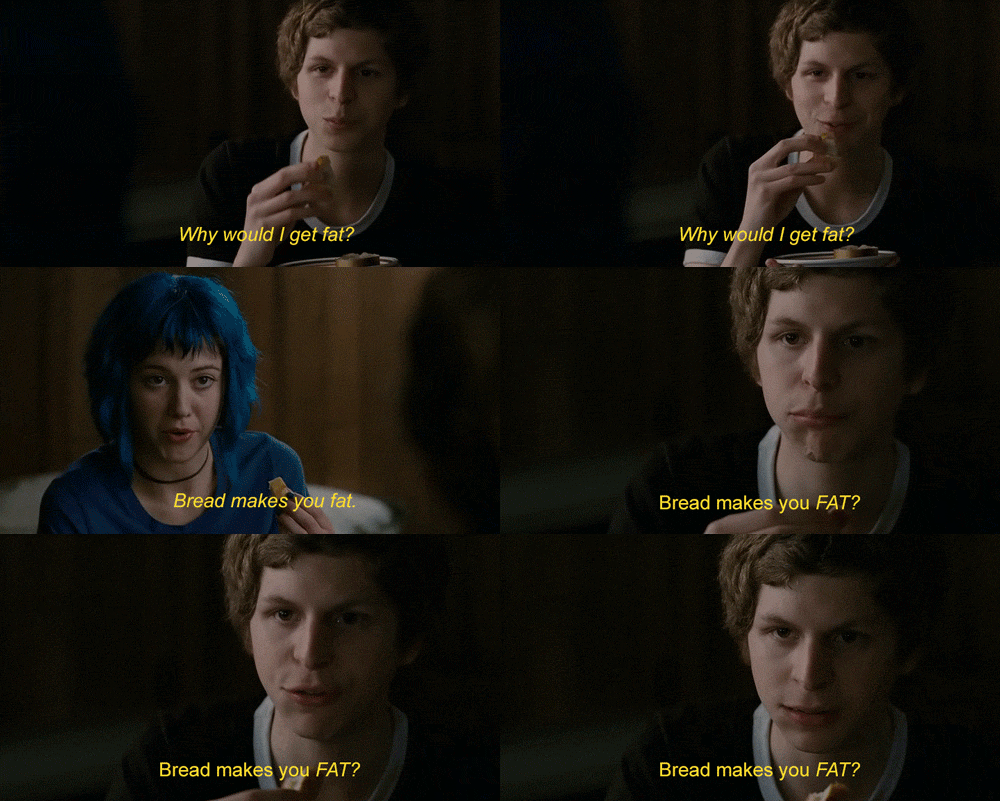
Consumption of even the seemingly healthy things you love the most can cause you to gain weight my dear readers. Physical weight, emotional weight, spiritual weight, whatever. You name it, and someone has overindulged on it.

tumblr_nrvoahglkc1u1rvk2o1_500

And it’s important to enjoy the things you love, because if you don’t, nothing else will probably fill that void. Romantic and platonic relationships are important in life for connection, but without purpose, and entertainment, which often go hand in hand if done correctly, you might as well be a zombie.

Layers.

Which is consistent with the them of today’s spotlight author. That’s right, I’m sharing another post on the The 5 L’s of Language, because I know you need nutrition, and I promised to read the book I bought for my sisters birthday and which she wanted me to read so we could talk about it. So I did it Katrina, and I enjoyed Seconds. I really did.

But before I dig in too deep, we should run a quick refresh of what The 5 L’s of Language are all about –

I will read one book a month from the 5 groupings below, slowly expanding the number of books read so that I reach the point of 5 books a month. A book for each group

  1. LIFE – Biographies/Art/Music
  2. LOVE – Classic Fiction/Non-Fiction/Graphic Novels
  3. LEARN – Business/Leadership/Self-Help
  4. LABEL – Philosophy/Sociology/Psychology
  5. LEET– The Internet

I might be beating you over the head with this concept, but even I need a reminder now and then, and if The Devil is in the details, lets make sure we are thorough to avoid conviction. Today we are looking at Bryan Lee O’Malley and his particular brand of creativity which often shines right through in his illustrations, writing, and sometimes music. O’Malley authored the Scott Pilgrim series after all, and thus the theme at hand is LOVE. Because graphic novels.

Bryan Lee O’Malley vs the World

O’Malley doesn’t take himself too seriously. Well, at least not anymore. When he dropped out of film school and decided to create his first graphic novel, Lost at Sea back in ’03, it didn’t go over well with anyone. Especially not his friends. They were expecting him to put together something fun and irreverent, because that’s how he views life and that’s how his interviews come off when you read a bunch of them in a row.

But then he wrote Scott Pilgrim’s Precious Little Life and seemingly exploded over night, even gaining the attention of film studios. Which is how Scott Pilgrim vs the World got made.

He makes art that combines video games, martial arts, romance, manga, and music all together in a sort of collage of pop culture. I immediately got what he was going for, because I grew up with all of those things around me. Almost to the point that I felt like it was a chronicle of my own fantasies. Which is impressive.

Scott Pilgrim, Seconds, and now Snotgirl, all have that manga look to them. But where Scott Pilgrim focused on martial arts and video games, Seconds was more about food culture and folklore. It was definitely a step away from the Scott Pilgrim books, movie, and video game. Seconds was definitely more mature than I initially expected too, though it was a shorter book, so it didn’t have time to run into the details and explore as many characters.

My point with this post is this friends. Make things that you love, because Bryan Lee O’Malley did, and even though he found a huge opportunity, I’m willing to bet a loaf of bread that he would’ve been happy no matter what success he got once he took a second attempt.

Check out his website here for more information, and this interview for some insight.

I’m out of theories for today, but check back tomorrow when I give you my own update. Should be a good one.

Tim!

A Short History of The World (Comics, Comic Strips, Comic Books)

I think I’ve gone too far this time, dear readers. I decided to write about a topic which is far more complex and grand then I could possibly fit into the space of these 1000 words or less. And I also feel that I’m too close to it really give you an objectively focused and emotionally restrained tone.

Now to be clear that does not mean I haven’t given 110% effort here, but this is something which is close to my heart and heavily influenced my childhood decision to pursue art. Rhyme not intentional, but convenient.

I’ve written topics before which have used this model of art making in their framework, but it’s a little bit real for me friends and how this medium is starting to show up everywhere. Hell, It’s a little too surreal.

tumblr_ly2xi5uNDN1qeuuopo5_r2_250

tumblr_ly2xi5uNDN1qeuuopo3_250

tumblr_n1cr8e2pww1ql4e6oo4_250

Comics were originally thought to be a form of escapism for youth and definitely not something that could become entrenched in popular culture. Yet here we are.

History of Comics

Twenty years ago, there was almost no interest in the academic community to look at comics, but colleges and universities are now making real efforts to work with people in the industry and to study the impact the medium has had on culture. With a format that asks us to consider both text and visual information simultaneously, comics are literally sequential art. They use panels to help with pacing, while speech balloons and captions help with dialogue, private thoughts, character background, and even sound effects.

And the history of comics has been varied in different cultures as well. For instance, in Europe, Japan, and the United States, comics got their start in newspaper publications and books as secondary entertainment, in what eventually was known as a strip.

But now we have an assortment of formats to choose from. Gag cartoons and political cartoons are often single panel pieces, followed in length by the comic strip. Comic books, also known as comics, are multi-page books that are bound with staples. Collected editions of comics can come in trade paper backs, in both softcover and hardcover, and graphic novels are self-contained stories that were published in a limited run or as a one-shot. Lastly, web comics. Web comics are stories that exist first on the internet, and have no size or page limitations. Some web comic artists even incorporate animation and sound into their work.

And of course when you travel overseas… you can see Japanese manga, European bandes dessinees and fumetti or Korean and Chinese manhwa and manhua. It’s a lot to wrap your head around.

Comics Terminology

Which reminds me, did you know that there is a whole language of terms for comics? The layout is made up of panels, and the panels contain spaces which are culled the gutter. Rows of panels can also be called a tier, while an image that takes up half the page or more is called a splash page. A splash page is usually set up to emphasize a story point and gain attention, while an image that takes up two pages is called a spread.

As already mentioned, the speech bubble is used to contain character dialogue and even it’s shape let’s the reader know whether thoughts are said aloud or internally AND can even be used to indicate tone. Captions on the other hand are separated from the rest of the page and often give narration or information about the story. Sound effects are demonstrated with words that sit in the panel, and are colourful for effect.

When we consider the concepts used to engage with the reader, we cannot forget that it is the reader’s responsibility to perform closure and combine all of the panels together in their head, which means that it is the responsibility of the comic creators to capture key moments in the story, also known as encapsulation.

Roles & Responsibilities

Comic creators can have a few roles, specializing in specific aspects of creation or depending on the scale of the production, they may take on everything. For instance, they could be a writer, who handles plot, dialogue, and pacing. Or they could be an artist/cartoonist, which can be further subdivided into roles of pencilling, inking, and colouring. Lastly, the letterer fills in the blanks for speech bubbles and sound effects.

Defining Comics

Much like film and it’s big sister, literature, the definition of comics is not perfectly linear. It is an ever-expanding form, and with the variations across culture and over history, we’ve not quite nailed down what comics should look like. I would say this though, it’s an important crossover medium, that allows the reader to explore a relationship with traditional mediums of both literature and visual art, and I personally believe that we can all gain a stronger appreciation of both forms by spending time with comics. If films serve as our global cultures version of the campfire story, then the comic is a cave painting set in isolation and used for reflection. It’s not something which is only for children, there are lots of great books adults should read – I’ve got a convenient list for your reference.

I’m definitely going to come back to comics from time to time, as I think this medium is rich and full of opportunity, after all, the cave paintings are starting to move over to the campfire, so why not spend some time in reflection, friends? It’s just a theory, but I bet you’ll get something from it.

Tim!

Set The Stage (Akira review)

I grew up on a lot of interesting anime cartoons. Dragon Ball Z, Samurai Pizza Cats, Sailor Moon, Pokemon, Digimon, Yu-Gi-Oh, and lots of live-action Japanese themed shows like Mighty Morphin’ Power Rangers and Super Human Samurai.

The one thing in common with most of these shows though, is that they didn’t really have an audience over here until the early 90’s, when I was a kid, because we just didn’t know the art existed. Thankfully we have a particular movie to thank for ushering in this culture before globalization was a thing.

Hence we are starting off this years movie reviews with a classic…


Akira (1988)
Cast:Cam Clarke, Jan Rabson, Lara Cody, Tony Pope, Lewis Arquette, Michelle Ruff, Bob Buchholz
Director: Katsuhiro Otomo
rereleased on blu-ray November 12, 2013
****** 8/10

90cc8eb2abbefc0696f94407f2c26701

IMDB: 8.1
Rotten Tomatoes: 87%, Audience Score 90%
The Guardian: *****/*****

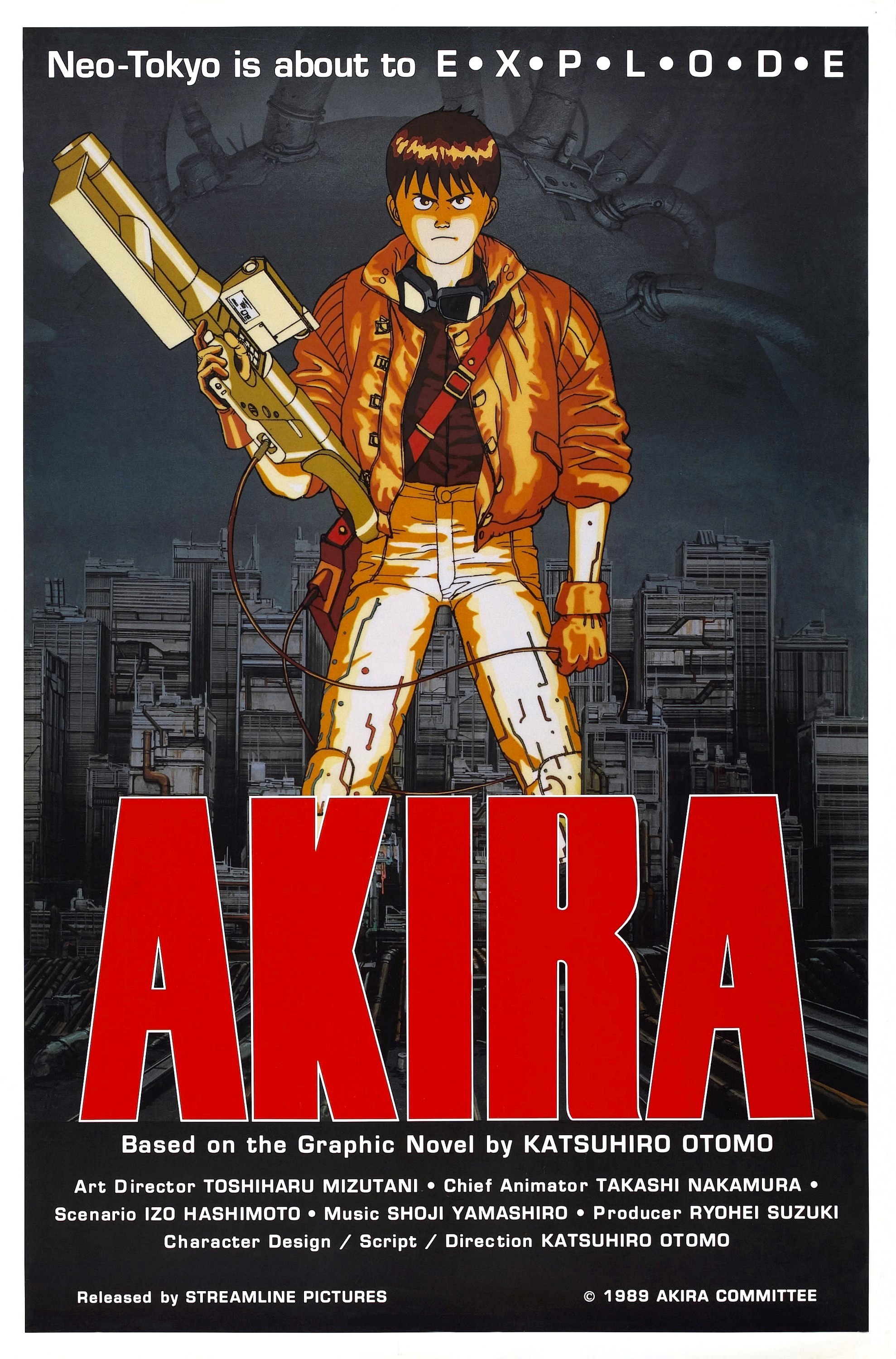
Akira was a groundbreaking animated film (or anime) which was directedby Katsuhiro Otomo. Akira the movie is a variation on it’s manga namesake which was also written by Otomo.

The movie focuses heavily on the first half of the book, and takes key elements from the second half in order to tighten the story up and fit it in a two hour window.

But is it any good?

On July 16, 1988 we see an atom bomb destroy Tokyo.  Roughly 30 years the resulting WWIII, a Neo-Tokyo has been built and is both beautiful and desolate. The Capsules gang is hanging out at a bar and getting ready to take on the Clowns. Kaneda (Cam Clarke), is the leader of the group and heads outside where Tetsuo (Jan Rabson) is admiring his red bike.

After meeting, they chase the Clowns through the city, eventually knocking most of them out. Tetsuo loses control of his bike during this fight and is abandoned when the police show up.

Elsewhere a man is wounded and leading a small green skinned child through the streets. He shoots a dog during this run and is gunned down by the police. A building collapses and the crowd disperses, revealing a mustached man and a young lady named Kei (Lara Cody), who are are split up.

Meanwhile, the Capsules continue to fight the Clowns. During this Tetsuo gets into it with one Clown in particular and beats on him. When Tetsuo looks up, he sees the green person standing in his path and narrowly misses him, causing a crash and explosion. Tetsuo is unconscious and Kaneda and friends arrive to see the green person leave. Another green person in a hoverchair tells the fleeing person there is no escape and a tall military man, Colonel Shikishima (Tony Pope), emerges from a helicopter, picks up Tetsuo, while the Capsules are taken into custody. The Colonel then leaves with the two green children.

At the police station, Kaneda and his gang are interrogated, but eventually released. Kaneda notices Kei and arranges to have her released as well. It turns out she is part of a terrorist group, but teases him for flirting with her.

At the hospital Tetsuo is examined by  Doctor Onishi (Lewis Arquette), who realizes that Tetsuo has similar psychic potential to Akira, a young esper like the green children. Akira caused the explosion 30 years prior. Shikishima is informed by Onishi that Tetsuo is the key to solving the problem of Project Akira, a secret mission that was organized by an underground terrorist group. However, Shikishima is not convinced and will kill Tetsuo if he gets out of control.

Tetsuo wakes up and heads back to school. The rest of the Capsules are chatting with their girlfriends about the fight, the arrest and their messed up hideout. Kaori (Michelle Ruff), is concerned about her boyfriend, Tetsuo. He decides that they should run away and they steal Kaneda’s bike. But Kaneda and the others see this.

The bike eventually stalls. Then Clowns appear and assault Kaori. Luckily Kaneda and the others show up just in time. Tetsuo, is upset about being rescued yet again. And decides to beat on a Clown who is on the ground already. Tetsuo then gets an intense migraine and hears the word “Akira.” Military people suddenly appear and Doctor Onishi has Tetsuo taken back to the hospital. The gang is visibly confused.

Almost simultaneously we see another building explode and a group of men flee the scene. Kaneda then sees the mustached man and Kei fleeing. He follows her as the police close in. Kaneda then aids Kei in her escape and is taken to the terrorist headquarters where the leader, the mustached man named Ryu (Bob Buchholz), reveals the plan to capture the first green esper child has failed. He wants to capture the newest government subject, Tetsuo. Kaneda has been listening in and explains that he and Tetsuo are friends, he can help them out.

There is a lot more to it, and I’m not stopping to avoid spoilers – the statute of limitations on spoilers is a year or two tops, and this movie is over 25 years old. I’m stopping because there is a lot of plot left and your appetite should be whet by now.


Pros: It is so tightly packed with plot, action, and interesting ideas, it was incredibly ambitious for it’s time. And it still holds up today. You’ve got cyberpunk visuals aplenty too.

Cons: Because it moves at such a quick pace, is content heavy, and visually dense. If you don’t pay close attention it can feel rushed and you’ll lose interest.

Runtime: 124 minutes

Points of Interest: It cost over a million dollars to re-dub and layer in a new soundtrack when the film was rereleased in 2001. There have been talks of putting together a live-action version of the film, but it’s been difficult to get it off the ground.

If you enjoy The Matrix series, Kill Bill and many other sci-fi action films, this is the anime that brought these ideas to western culture and influenced the makers of those movies. The plot is great, the visuals are stunning, and it is just as interesting today.


Sure there have been other brands like Studio Ghibli that offer anime in a digestible format, but if it had not been for Akira, we wouldn’t have seen the darker and more mature side of animated film. When CGI is the hot topic of the day, anime continues to let us see hand drawn art come to life.

My hope is that we learn from the eastern culture and begin to marry the 3D content with the traditional 2D artwork and move forward with awesome stories.

Similar to what the big studios are doing by reintroducing practical effects into film and combining it nicely with computer effects. *Cough* Star Wars The Force Awakens *Cough*. Our eyes enjoy it better.

And that’s all I’ve got to say about that folks. I hope you take some time to check this classic out.

Have a good night, and I’ll see you tomorrow for some wisdom.

Tim!