Turn It Down Already! (The Essence of Listening Skills)

I’ve struggled to accept this fact for almost the whole of my life, but for the most part, we are bad listeners. Communication problems are often at the heart of the issues most of us deal with – at the office, in the car with the kids, over dinner with our spouse, and pretty much everywhere we go.

Listening skills should NOT be a latent talent that only a few of us possess, something that is mocked or worse, both of those things. We need beacons of light to demonstrate the awesome prowess of listening, and I know examples exist – I’m looking at you Steven Universe, and your genius creators for one!
Why You Are A Bad Listener

I’m not going to pretend to know what makes people into bad listeners, but I can tell you that there are behaviours out there, which I am just as guilty of as the next person, that contribute to bad listening, and even moreso, bad communication. I’ve gone over the basics of communication already, and I’ve even dedicated some efforts to addressing the ever-so-subtle interpersonal communication, but stopping behaviours can be just as important as starting up new ones, dear readers.

Have you considered that you think of yourself too much, for starters? We all do it, we think of how information is going to impact us, but when you only focus on your own challenges, it just won’t jive in good listening. On top of that, your mind can wander from one topic to the next if you don’t concentrate, and when you do focus on what’s being said, you risk getting caught up in the topic, and completely missing the point at hand. Also, being distracted by other things can make it worse – deadlines, illness, problems in other life arenas all vie for your attention. You need to do yourself a favour and put a pint in it until the chat is over.

And we haven’t even considered how nurture, in the eternal struggle between nature, screwed the pooch on your listening training growing up. What, you say? There was training on listening skills? Well not exactly, etiquette isn’t a universal truth shared with all students.

Of course if someone decides to start cutting you down, you might get defensive, and that’s when you fail to hear what has been shared. On the opposite side of the equation are the helpers who assess a problem, and attempt to fix, without an invitation. And so Mr. Fix-it stops properly listening.

The Types of Listening Skills

Now that you’ve gotten a good dose of where we fail to listen, I think it might be a good time to address what kinds of listening you will need to apply to improve your social standing.

Critical – this for is when you need to evaluate information and either formulate a solution, an opinion or make a decision.

Appreciative – listening for the sake of personal growth and enjoyment. Movies, music and theatre all come to mind.

Discriminative – you need to determinate a dialect, members in a group, if a conversation is amicable or turning violent and a host of other nonverbal cues related to someones feelings.

Relationship – listening to understand someone, whether they need to vent or not, you have to show your support by retaining the details and feeling what they feel.

Comprehensive – focus on the speaker and the message they are sharing, in order to take direction and then apply it to your own role.

How To Become An Artful Listener

Ultimately, if you want to become an excellent listener you are going to have to learn how to be present. This is not a metaphor for becoming a present, but it is a gift nonetheless.

Forbes wrote a great article on the 10 key steps to skillful listening, and the brilliant thing about this post is that while you may need to practice one or all of these steps to get better, you can totally fake it till you make it, because so many of us are terrible at listening already.
But what are the steps you ask?

  1. Face the speaker and maintain eye contact
  2. Be attentive, but relaxed
  3. Keep an open mind
  4. Listen to the words and try to picture what the speaker is saying
  5. Don’t interrupt and don’t impose your “solutions”
  6. Wait for the speaker to pause to ask clarifying questions
  7. Ask questions only to ensure understanding
  8. Try to fell what the speaker is feeling
  9. Give the speaker regular feedback
  10. Pay attention to what isn’t said – to nonverbal cues

You’ll notice that these steps all relate to the previous symptoms of bad listening AND simultaneously recognize the 5 types of listening skills we need to employ. On top of that, the author suggests that at the end of your conversation, to summarize any actionables and agreements that were made.

It might not feel comfortable at first, but over time it will become second nature to you. And lastly, while I didn’t spell it out above,you need to create a receptive environment for listening – turn off all the digital distractions and refrain from bad habits like yawning, frowning or fidgeting.

theories Summarized

Silence might be golden, but it is not guarantee of authenticity. Fool’s gold can look just as valuable to the untrained eye. The skilled person takes on listening as an active skill which will always need to exercised to maintain your health and wealth. It shouldn’t be a mere theory that there is gold in them hills, let’s get out there and level the playing field folks!

And that’s all the wisdom I’ll dole out today.

Tim!
Pants On Fire (Sam Harris)

There are moments when I’m sitting over there, in my easy chair, philosophising about the next big theory of the arts, where I contemplate, and others where I instead sit down with a good book and consider another perspective – ever hear the expression one man’s truth is another man’s lie? Well if you haven’t then you might still be open to learn something.

There are a lot of idioms out there about the concept of truth, dear readers. If the truth be known… a grain of truth, ain’t it the truth, bend the truth, fact is stranger than fiction, the gospel truth, honest to goodness, the naked truth, the moment of truth, truth will out, and the list goes on.

Sometimes the truth is even hard to swallow.

The truth is, when you are putting together all of the facts, reality bites. But that doesn’t mean you should share a bald faced lie either. Well, at least that’s what the author of this month’s 5 L’s Of Language would have you believe.

No No No No, Baby No No No No, Don’t Lie

Sam Harris is a best-selling author and neuroscientist, not to be confused with a neurologist, which people sometimes think he is. And he also believes that if a decision came down to a matter of ethics it would be his responsibility to share that reality with you, otherwise he would be making a lie of omission, which should bear the same weight as a commissioned lie.

Harris is something of a heavyweight when it comes to atheism. Sharing ranks with Richard Dawkins, Daniel Dennett, and Christopher Hitchens, he has been called one of the Four Horsemen of the New Atheism. An advocate for separation of church and state, a strong critic of religions, and a critic, Harris chooses to focus his ideas on science and secularism. His list of books includes:

  • The End of Faith: Religion, Terror, and the Future of Reason (2004)
  • Letter to a Christian Nation (2006)
  • The Moral Landscape: How Science Can Determine Human Values (2010)
  • Lying (2011)
  • Free Will (2012)
  • Waking Up: A Guide to Spirituality Without Religion (2014)
  • Islam and the Future of Tolerance (2015)

The Very Worst Part Of You, Is Me


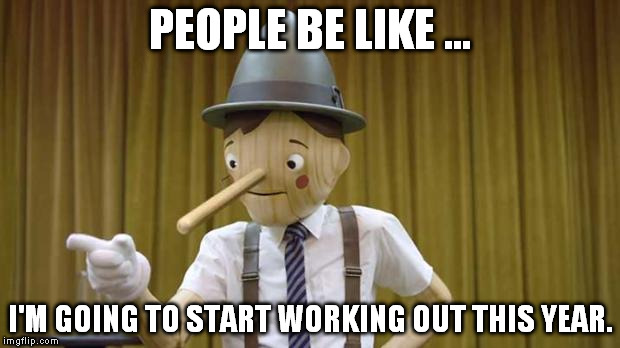
Have you figured out which book I read yet my friends? I’ll give you a hint, Pinocchio would probably be an expert at navigating a series of unfortunate events which stem from this practice.

phjvb

That’s right I read through the book Lying. Which is pretty much just a hard cover essay that was a breeze to get through, but a little bit harder to digest, given what Harris is recommending in his thesis.

Effectively Harris states that we should all line up with his own personal philosophy of honesty at all times. This means avoiding lies when confronting serial killer child murderers, overweight spouses, and even coworkers. The only people who really seem to be exempt are spies, but they live a hollow life after all, one which is for a purpose far grander than they are capable of seeing. So white lies, lies of omission and everything else are unacceptable.

Which is where the essay is ultimately flawed, but interesting. I would agree with Harris that we should avoid white lies whenever possible, but there are some circumstances which are far beyond the scope of certain groups (read: poor people, discriminated minorities etc). And dealing with people with failing health is far more complex than the feelings of the ill versus the feelings of those who are left behind. Not all have the benefit of choosing who they interact with, but perhaps there are some lessons within.

Blame It On Your Heart


Don’t get me wrong, I was thankful for this gift. My parents bought it for me this past Christmas because they know how much I love to read a good critical essay or philosophy book. And this book got me thinking, you see creative cuties, I have this theory that the reason why one man’s truth is another man’s lie, and I’ve spoken about it before. It’s a consequence of this ability we all like to believe we have, called common sense. Harris is a victim of wrong thinking, but his heart is almost in the right place.

If only he could get a broader perspective, maybe then his opinions might make more sense – at least, that’s my theory.

Tim!

Better Than Your Parents Had It (Education)

Another post on the OECD index and inspired by postconsumers.com timotheories? Wow, haven’t you farmed this land enough yet?

Well… No, dear readers. Technically I still have to cover off the following – education, environment, governance, health, life satisfaction, safety and work-life balance. So we’re only a third of the way in! Plus, I could write at length about all of these topics and how they relate to being a good global citizen as well as a participant in your local community (and how it relates to the arts). This is a good thing, the website is called timotheories after all, it’s all about the curating the arts and connecting seemingly disparate theories together while having fun.

And this one is sure to be a good post. Education is one of MY FAVOURITE TOPICS. Ever. Period.

The Parents Broken Dream

One of the things I’ve learned as I transitioned from being a child into an adult, and as I recount experiences I’ve had with parents, my own and others, is that every parent wants to provide their children with a life better than they had growing up.

I’m not sure if this is one of those impulses ingrained in our brains OR if it’s a social conditioning similar to the idea that we need to have a good education and a stable job in order to have a good life, but it’s out there in the ether as a theory for success. I mean, life is hard, one minute you are living the dream and the next you are blindsided at 4pm on some idle Tuesday but an event that never crossed your troubled mind.

You can thank Baz Luhrmann for that tidbit. Back to my point.

0ejnefu

The economic privilege of the baby boomer generation is well behind us, dear readers. Baby boomers grew up with all kinds of benefits (free educations, established unions, more vacation time, company cars and trips) that generation x, millenials, and whatever comes next can only dream about. This is a major consequence of rising house prices. House prices in the 1970s and 1980s were incredibly low and the earnings on selling those houses has been significantly more lucrative for those families than what singles and young families could hope for today. On top of that, many retiring boomers are leaving behind debts and living on reduced pensions without any savings to back their lifestyles up.

If addressing gender and ethnic privilege are key tenements of politics today, we need to add in generational privilege as well. Skiing (spending the kids inheritance) is a thing of the past.

Investing In The Future

I hope you can see where this post is headed, and if you’re a futurist, like me, than you’ll appreciate the witticism, of that heading. For those of you without the blessing and/or curse of a dry sense of humour, investing in the future is never done. It’s an act of commitment to a process, not an effort towards a goal.

the-future-now

This is incredibly important in the face of a changing world creative cuties. When you make art you are expected to focus on the details, to see the bigger picture, or to pull from both camps. Effectively learning when to use your macro and micro lenses takes time, and an investment in the process, but as you gain skills you will gain confidence and see how your contributions to society are relevant.

This article from Forbes goes over it quite well, but I’m going to summarize it quick for you –

  1.  You need an authentic and personalized network of contacts. Yes social media connections factor into this bucket, but I’m referring to mentors and professionals you rely on for key advice. Who is your career expert? Who do you go to for construction and mechanical advice? And who is your health guru? Do you have someone you can go to for general advice? Spending time each day reaching out to these people is important – it gives you a support system. Plus it feels good to help others and will teach you invaluable things about people.
  2. Live outside your comfort zone, always. Whether it’s learning to wake up early, going out to a social event once a week, or finally starting that book of songs you’ve been dreaming about for years, tapping into your vast potential yields some fantastic dividends.
  3. Get your secondary business going. Maybe you weren’t expecting to have two jobs, maybe you hate the idea of doing more than your 40+ hour work week. But let’s be honest, you are more than your job and you definitely have skills that are being underutilized. You need to make practical use of your cooking skills, your computer programming skills, your animal husbandry (awesome word choice timotheories!), I could go on. You’re not out to get rich and famous, its to continue to develop your skills and to challenge yourself.
  4. Active and critical thinking. This one comes naturally to me, I can’t help it. I think a lot about a lot of different things. If we could visually showcasing what thinking, reading, and using our minds does for our mental capacity, I’d get compliments on my brain all the time. This is not arrogance, because we all think. But we need to think actively about the future, goals, how to improve relationships and solve problems. Don’t settle for your situation, think about how to change it – then go for it.

theories Summarized

In brief, education is important. And while I suspect your instinct was that I was headed towards a post about academic learning and certification, I should be clear and state that that kind of education has absolute value, but it’s not the only way to invest in the future and given how economic dynamics are changing, we need a new game plan. That’s my theory anyway.

Tim!

Alienating Film Critics (Cross Talk Ep. 12)


Film criticism is one of my favourite skill sets, but it’s been a hard won battle to acquire it. Even more so to know when to use it.

Let me explain something dear readers – I haven’t always felt the love when I have shared my opinions on film. Even now I don’t always getting excited when an opportunity comes up to discuss what makes for good pacing, why certain actors are better role models, and why cataloguing films is a helpful practice when hosting your party.

I think it’s predominantly because of a perception on criticism in general that I’m cautious when talking about movies. I also think this is a safe place to make a generalization that almost no one wants to be corrected when it comes down to it – we would much rather be told that our work is excellent and well received. No matter what medium we choose to create in.

9083244097_5d44793865_z

It’s important to contribute to the world, but as the saying goes there is a time and a place for it. It doesn’t matter if you are discussing sex, politics, religion or business, everyone has an opinion and it won’t always line up with the other person (or people) in the room. The arts are not removed from this either.

And that’s okay.

It just means learning to read the room.


Which is why we decided to focus on film criticism in general for this week’s episode of Cross Talk. We are going to explore some of our own experiences as film critics andtalking with other critics, ways that people alienate each other when it comes to film, and how to bridge the gap to create a healthier environment. Because the reality is that criticism is here to stay, and I believe that it’s a useful tool both for protecting your time and for experiencing great content. Which is why it’s time to consider how you can alienate others with a critical approach to film, both as an expert and a casual participant.

This is episode twelve of Cross Talk. We are going to make some mistakes, have some laughs, and getting incredibly personal with this conversation. Which reminds me, Cross Talk is exactly that, a conversation about film (and potentially other mediums), it’s a way for us to take the heady academic thoughts on this art form and bring it back into the realm of the everyday, because it’s not just professionals that consume this content. We all have a stake in it.

I’m about theoried out for now friends, but I’ve got a Halloween themed album review lined up for your tomorrow. I think you’ll enjoy this one, it’s a thriller. Otherwise, please comment, subscribe, and share this video with friends. We want to hear your feedback!

Tim!

That Old Familiar Feeling (Art School)

There was a time not too long ago when September would roll around and my thoughts turned towards school and a year full of promise.

Ever the optimist, but a little slow on the realism, somehow every school year start felt like it was going to be the year that would make my life all the better and thrust my person into a new and more adventurous lifestyle. In this fantasy world everyone of my pursuits went right and all of my experiences were opportunities realized.

I never got to that place at any point, dear readers. It was a child’s dream.

Not during elementary school, not during junior high school, not during high school, and also not during post-secondary.

The closest I ever felt to that point of arrival was in post-secondary, but I think it was mostly due to limited contact with the general public and maximum contact with substance abuse AKA critical thinking and alcohol. I blame that line of thinking on my lack of experience at the time and my stubbornness in not seeing things as they were, but rather as I wanted them to be. You see, I spent a lot of effort thinking about things, and considerably less time trying things.

I should clarify myself here.

I had a great many experiences that were very positive, some that were less positive but which yielded good lessons, but ultimately I did not push myself nearly as hard as I could have in order to become a functioning member of society as quickly as I should have. I realized this in my third year of university and made great efforts to land volunteer work that I could use to get myself a “day job”  after I was finished. But what about friendships, industry contacts, and meeting someone who I could be in a fantastic relationship with.

You see friends, life is a series of events that should be viewed at much like school, we all need to learn lessons, but some lessons come easier than others. And so you need to look inward to determine what skills you are lacking in.

Whether it’s home and personal care, life-management/organization, education, professionalism, transportation, and finally conscientiousness which is the area I admittedly still need to spend some time on.

With that said – let’s agree that September should always be a time for self-reflection, and for that reason alone I feel that it should replace New Years Eve as a time of making resolutions.

As creative professionals, we should resolve to work on ourselves always, because creativity is needed in this world and no one teaches you how to nurture that quality, but I definitely have some theories about how to do so.

Tim!