Why Keanu Was Born To Play John Wick (Cross Talk Ep. 23)


I think it’s safe to say that when you really start to watch a lot of films like me (read: five new ones a week), themes show up in patterns, actors run across movies, and tropes abound. This means that when the world is asking for more live action Disney adaptations, we offer you insight into the process of death. In this case, we is Me, myself and Irene.

Just kidding, there isn’t much in the way of death in that movie.

But it’s not like Jim Carrey can’t act in movies that feature death – The Number 23 is an interesting example, for instance. It’s a terrible movie to be sure, but it explores ideas of murder, death, and mental health in quite a hot mess. If you haven’t seen it, I’m actually going to stick my neck out and suggest you give it a shot. It’s super messed up.


So yeah, death is a great theme to explore in film. That being said, it’s way too obvious to focus in on death scenes that show up in movies, and definitely, definitely not films with the word death in their title.


Death, Death, Die, Die


Which is why Chris and I decided this week was a perfect time to continue our exploration of themes that defy genres and to deviate completely from the obvious examples of death in film. Instead, we pay special attention to three of our favourite movies about death, featuring the return of Mike Dadural. Mike’s choice features a lot of violence in it –

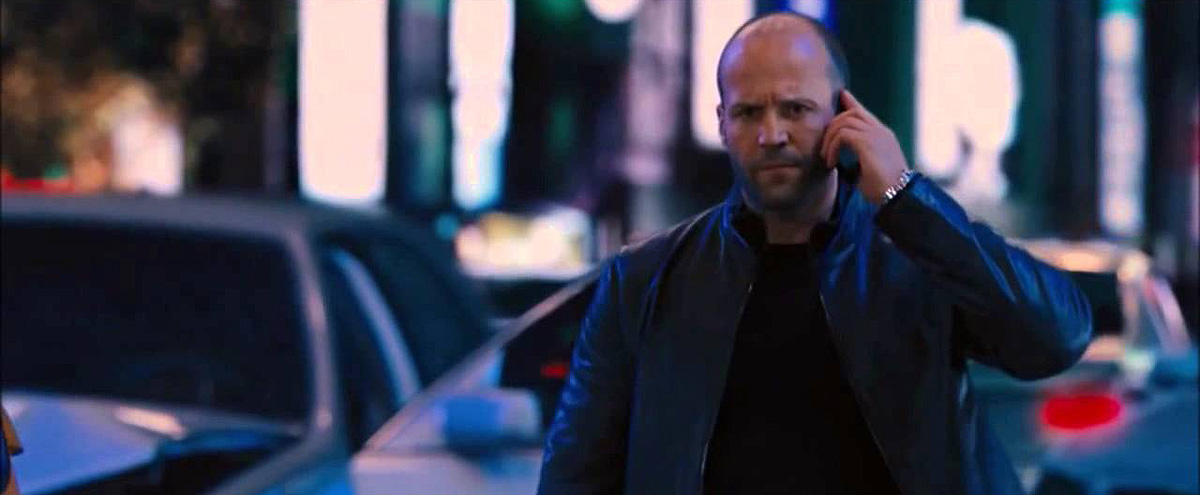
A sweet story about a man that loved and lost, then somehow inadvertently pissed off a russian gangster. That gangster retaliated by stealing his car, and straight up murdering the bereaved’s new puppy. A puppy which was purchased by a dying wife that knew such a gift would help in healing.

That movie is John Wick. And it is likely the swan song of Keanu Reeves career. Plus we talked about a movie from the 90s about med students that go legally dead and bring each other back to life. AND we talk about an Oscar bait Will Smith movie that includes at least seven pounds worth of vital organs before a planned suicide.

This is episode twenty three of Cross Talk. This is death as a part of life.

Man we have good chemistry, it’s like Mike was born to play this role. Bad pun? Yes. The truth? Double yes.

But what did you think of the episode? Any comments on how we can do things differently? Would you have chosen the three films that we did? We really do want you to join in on the conversation and let us know what you thought!

Please comment, subscribe, and share this video with friends. As always, be excellent to one another!

Tim!

Spoilers Ahead (The Fate of the Furious)

I really do love The Fast and the Furious.

The original movie, with all of it’s flaws, is a clear derivation from the equally ridiculous Point Break, and all of the challenges that came with telling a story about a cop gone native.

The story was simple – Brian, as played by the late Paul Walker, was an undercover cop investigating street racers in hopes of uncovering a group of thieves that committed larceny using their cars. Dom, played by Vin Diesel, was the head of one of these gangs, and because of their mutual love of street racing, and Brian’s interest in Dom’s sister Mia, a friendship was born.

One of the things that haters of these kinds of movies seem to forget is that all films are stories. Some of us just happen to prefer certain story themes over others. But all good stories function well at both exaggerating and limiting elements of a tale in hopes of constructing a narrative that affects you on a personal level. I stand by the statement that these are good films.

The original The Fast and the Furious spoke to me not only because of the chemistry between it’s two male leads, but because of how the cinematography was handled, as not once did any shot remain static. Additionally, the attention to crafting relationships with dialogue, as well as the semi-plausibility of it all were essential – I could imagine an undercover cop falling in love with the sister of a suspect, and becoming friends with that suspect and his crew because the cop related to them at some level.

We Ride Together, We Die Together

Each of the subsequent films worked to build on this formula of bonding and added in details to flesh out the stories of Brian O’Connor and Dominic Toretto. Turning them from friends into brothers. This is where the mention of “family” in parodies later becomes brutally apparent. That said, family is what has made these films interesting, the glue that binds them together. Brian gave Dom a 10 second car at the last minute of The Fast and the Furious out of respect and love, but also because another of his best friends, Roman Pearce, was a criminal that he couldn’t/wouldn’t help. In 2 Fast 2 Furious we learned more about Brian’s past, which helped us better appreciate the first film.
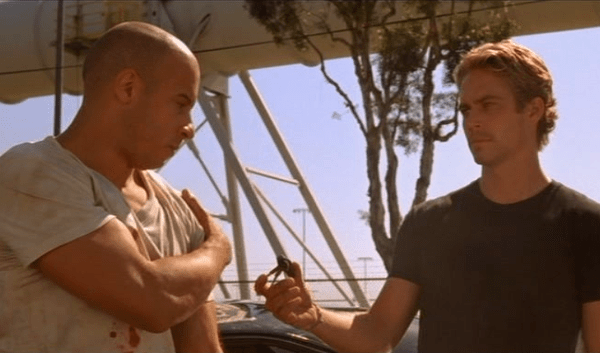
Throughout the series Brian realized that family beats out everything, and it became the backbone of his purpose in the stories. Dom served as the father figure that would bring everyone together, and would fight for his loved ones at all costs.

As the franchise evolved, the action sequences and set up for each story became more elaborate, partly because of fan expectations, but also because of a theory I have which demonstrates the heroic nature of the protagonists. They could achieve the impossible, but most importantly, they were at the core, a group of misfits bound by love. They started out as street racers, but were really superheroes underneath it all. This is why when Paul Walker died mid-production of Furious 7,  I had hidden reservations about the future of the franchise.

This Time It Ain’t Just About Being Fast

But when the first trailer for The Fate of the Furious came out, I was still stoked.

Charlize Theron was cast, and I heard rumours that Helen Mirren was a last minute addition. I even did a Facebook live post while I watched the trailer. And as time went on, I enjoyed each of the subsequent trailers that cropped up. Maybe they had found a way to move on without Paul Walker.

After all, the series had managed to progress from robbery and street racing, to drug dealers, to heists, to fighting against international terrorism, why would this film be any different?

Well for a few reasons.

Without going into great detail about the plot of this film, I’ll start by saying that I was glad to go see it, and director F. Gary Gray has done the series justice in terms of cinematography and action sequences, on top of that we get to see the most dramatic portrayal of Dominic Toretto to date.

But it doesn’t have quite that same balance without the glue that is Brian O’Connor. Luke Hobbs, played by Dwayne Johnson, is way too big of a star to properly co-share the screen time with Dom, and adding in former villain Deckard Shaw (Jason Statham), just feels dirty and wrong. Lest we forget that Deckard killed Han and several military types en masse as revenge for what happened to his brother Owen.
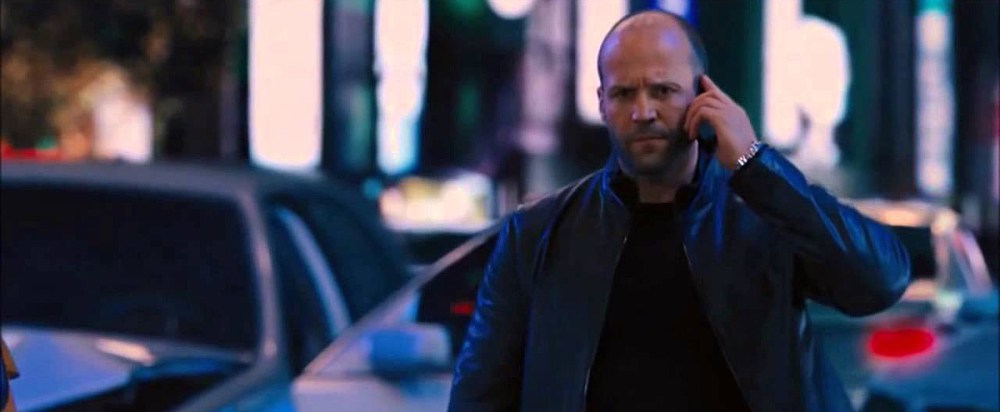
Deckard then becomes a sort of goofy trigger-happy member of the team in the last act, which, while entertaining, drove me completely nuts. Why couldn’t one of the other members of the team seen more screen-time, like Roman, Tej or Letty? Heck, I’d even have been happier to see more Ramsey, but less Ramsey as object of competition between Roman and Tej.

theories Summarized

In brief, F8 loses some of the charm and brotherhood that made The Fast and the Furious feel like home to me, though to be clear, Dom never really does turn his back on family, in fact, the twist is too good. It perfectly fits with his character. But, if this is a set up for what ends up being a satisfying trilogy conclusion to the Fast franchise post Paul Walker, I hope it’s all worth it.

It could just be a theory, but maybe Scott Eastwood could replace Paul as the new guy with good hair?

Tim!
Dum De Dum Dum Dee Da (David Deida)

I’m blue da ba dee da ba die, da ba dee da ba die, da ba dee da ba die.

When I was a boy, I thought that was a cool song. But when I was a boy, I thought a lot of things were cool, and boy was I wrong. Luckily for all of us, I grew up, and along the way I learned a few things about desire, love, spirituality, and work.

And thankfully, I am no longer blue. Because who wants to be blue when you can be green? (read: my True Colors test results).

Pursuing knowledge, gaining insights, becoming closer to the truth of the matter. These are the things that those of us with “masculine” energy should chasing after at all times.

Worldwide Trainings

I first decided to pursue personal enlightenment back in 2007, just after I had graduated from University, but before I had really settled into any discernable sort of full-time work. I’ve read books on science, philosophy, business, psychology, sociology, history, biography, and the ever popular self-improvement. Now I’ll admit, the first few years of reading were purely based on whimsy, recommendations from friends, and whatever I came across.

But one summer in 2010, a friend of mine lent me a copy of this book by David Deida, and I realized that I knew little to nothing about anything beyond what I could see.

You see, David Deida is an American author and life coach who specializes in books about relationships between men and women as they relate to each other through spirituality and sexuality. At this point, Deida is an interntational bestselling author with many of his books being published in various languages.

He is also known for hosting workshops on spiritual growth and intimacy, and is one of the many founding associates at the Integral Institute. Some of his more popular books on human spirituality include The Way of the Superior Man, Finding God Through Sex, and Blue Truth and the autobiographical novel Wild Nights.

And back in 2010, he taught me something about women, that I’ll never forget.

Superiority Complex

I decided to reread The Way of the Superior Man this month because I know what my purpose in life is, but oh so many of us refuse to acknowledge it.

Coming to terms with the notion that you may be doing everything wrong in your life is hard to accept, but Deida teaches that it is only when we are in moments of quiet reflection that our purpose presents itself. And it will do this over and over again if we need a refresher, all we have to do is sit in quiet reflection. In fact, it needs to be more important than any relationship you will ever have with a woman, and if you stick to your purpose, the woman you are with will be all the more attracted to you.

Deida has jam packed his book full of tidbits such as this, and while at times it seems overwhelming to read, it slowly starts to make more and more sense.

Masculine energy is about consistency, while feminine energy is constantly moving, it is life itself. He goes on to explain further that no matter what gender we are, we all have both kinds of energy, a sort of yin an yang of sexual identity. Where it gets complicated is in understanding that as a man, in a relationship with a woman (which can easily apply to gay men and women as well as sexual identities) it becomes your responsibility to provide the masculine energy so that the woman may focus on feminine energy, where balance is created in the differences.

Ideas of masculine energy leading the relationship, living according to a persona code, seeking freedom at all times, and seeking challenges constantly are some of the things that Deida expects of an evolved male.

That means learning to enjoy the drama in a relationship, working on your sexual identity and skill-set, while living outside of your personal comfort zone. What that means is allowing the woman in your life to communicate with you. Talk about the problem, but do not seek to solve it. Have fun, bring humour to the situation without making fun of her, and love her as she is.


theories Summarized


I could spend a lot more time outlining the details of this book, but that would betray it’s intent. It’s about spending time with the ideas contained therein, reflecting upon them, and then introducing them into your own life. I’ll leave you with this thought – You need to be both erect and at peace simultaneously, so that she may crush you with emotion, dance, and sexuality. And that’s no theory.

Tim!motiv

Too Old To Be A Kid, Too Young To Be A Man (A Monster Calls review)

Why is the stories from our youth always seem to have the most impact on us as adults? They leave a legacy all their own and one which compounds over and over again, creating ripples in the lives of those around us.


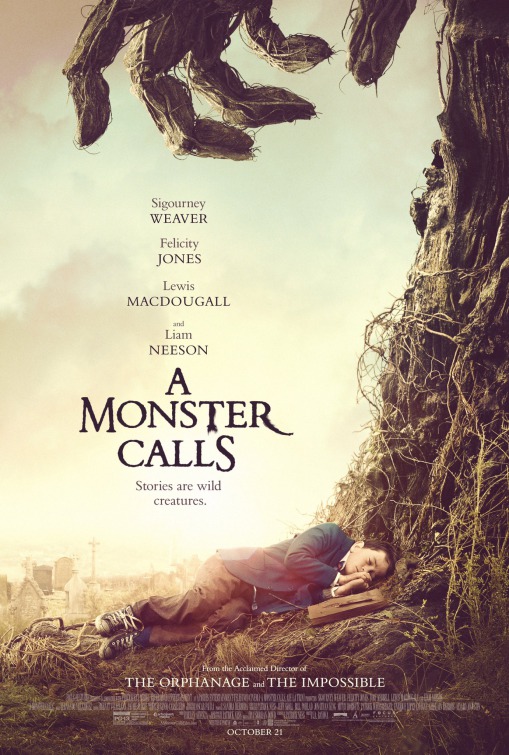
A Monster Calls (2016)

Cast: Lewis MacDougall, Sigourney Weaver, Felicity Jones, Toby Kebbell, Liam Neeson, James Melville
Director: J.A. Bayona
released on blu-ray March 28, 2017
********* 9/10

IMDB: 8.0
Rotten Tomatoes: 82%, Audience Score 88%
The Guardian: ****/*****

Juan Antonio García Bayona, better known as J. A. Bayona, is a Spanish film director. He is the guy responsible for The Orphanage, The Impossible, and now A Monster Calls. Which should probably have been called The Monster. Just saying. Anyway, he is now set to direct the fifth instalment of the Jurassic Park film series, Jurassic World II.

Bayona is now going three for three, so I’d say it’s a safe bet that this is a heartfelt and glowing review. Just look at the plot, if you don’t believe me. Taken from Wikipedia…

Young Conor O’Malley (Lewis MacDougall) must face his mother’s (Felicity Jones) terminal cancer, his strict grandmother (Sigourney Weaver), his estranged father (Toby Kebbell), and his school bully, Harry (James Melville). One night at 12:07 a.m., Conor encounters the tree-like Monster (Liam Neeson), who tells Conor it has come to relate three true stories, after which Conor will tell the Monster his own story, the truth behind his nightmare. They continue to meet at 12:07 to tell the stories.

First story

An old king who has lost his entire family, save a young grandson, remarries a beautiful young woman. He dies before the prince comes of age, and many believe the queen poisoned the king. Not wanting to hand the kingdom over to the prince in a year, she plots to marry the prince and remain queen. The prince runs away with a farm girl he loves. They stop and sleep under a yew tree (the Monster), but in the morning he finds the young woman murdered. The prince tells the villagers that the queen, a witch, must have done it, and they rally to overthrow her. The monster awakes and joins the mob. Before the commoners can reach the queen, the Monster carries her away to a far-off land where she lives out the rest of her life in peace. Though she was indeed a witch, she did not kill the young woman or the king. The prince had murdered the young woman in order to inspire his people to back him into overthrowing the queen.

Second story

An apothecary follows old traditions and beliefs, using herbs and brews to cure ailments. His business becomes less popular as a local parson tells his congregation not to accept the apothecary’s old ways. When the parson’s two daughters become sick, the parson asks the apothecary to save their lives after all other resources are exhausted. When the apothecary asks why he should help a man who has turned people away from his skills and denied him the yew tree, his best source of healing ingredients, the parson promises to give him the tree and deliver the parishioners to him as customers. Yet the apothecary says that he cannot help, and the girls die. The Monster awakens from the yew tree to destroy the parson’s house and raze it to the ground as punishment.

While the apothecary was a greedy man, he was a healer and would have saved lives, including the girls’, if the parson had allowed him his way of life. The parson was a man of belief, but was willing to discard his beliefs when they were in the way. The healing traditions followed by the apothecary require belief in order to work; without the parson’s, the apothecary was unable to treat the two girls. Belief is half the cure.

Third story

A man was invisible because no one ever saw him. Tired of this, he summoned the Monster to ensure people would take notice.

Fourth story

Conor must confront his nightmare to tell the fourth story. His mother has been pulled to the edge of a cliff by a sudden collapse of the ground, and Conor must hold her hand to save her from falling. Eventually, his grip fails and his mother falls. The Monster forces Conor to confess the truth: Conor loosened his grip on purpose. While he could have held on longer, he let go in order to stop the pain of having to hold on. Conor ultimately understands the complexities of human beings, and that though he doesn’t want his mother to die, he understands it is inevitable and something he must accept, and that he wants the experience to be over.

After this, Connor returns, with the Monster by his side, to comfort his mother one last time, and she dies at 12:07. He returns home with his grandmother, who becomes caring towards him and gives Conor a room of his own, a room that used to be his mother’s. In the room he finds his mother’s old art book, which depicts the characters of the stories that have been told by the Monster, and a drawing of his mother as a child with the Monster.

Sad, thoughtful, and penetrating, A Monster Calls tells a story that we can all relate to, or at the very least, one which means something for the kid in all of us. I don’t know about you, but films which feature the loss of a parent always get me tearing up, but whether that is true for you or not, I can say with damn near perfect timing that Lewis MacDougall has the acting chops necessary to get you to feel the pain of bereavement. It simply is worthwhile.

Pros: The message is accessible, ushering away the monsters of youth with wonderment and fateful stories. Even the darkest moments of the film are made brighter by the authenticity of it’s narrative. Lewis MacDougall shines.

Cons: It can be a struggle to see Sigourney Weaver as a grandmother, and the bullies of the film feel more like pieces to be moved then real characterizations.

Runtime: 1 hour 48 minutes

Points of Interest: Liam Neeson appears as Conor’s grandfather in the photo of Conor’s mother as a little girl being carried by her father. The sixth time that Liam Neeson has voiced a CGI character –  three times as Aslan in the Chronicles of Narnia franchise, Phango in Khumba, and Good Cop/Bad Cop in The Lego Movie.

Too old to be a kid, too young to be a man. That’s how this films opens on the story of Conor, who is watching is mother die of a terminal illness. Where the fantasy intersects with reality is the beauty of this story, and it reminds me of the widely underrated film, Bridge to Terabithia, which also took advantage of childhood fantasy as a device for growing up amidst personal tragedy.

theories Summarized

The stories the Monster tells are really and truly for Conor’s sake, to aid him in his healing. It’s all beautiful and symbolic given that the Monster is a yew tree (known for it’s healing properties), while the Monster and the stories he tells are in fact derivative of Conor’s mothers own childhood drawings.

Most of all there is something moving in knowing that Conor doesn’t understand everything yet, and that might not ever, and the theory that monsters aren’t always what they seem.

Tim!

Thank You For Not Smoking (The Chainsmokers, Memories… Do Not Open review)

Maybe I’m just getting old now, and so I’m more impatient when it comes to my musical choices… But there is probably a reason I don’t go deep diving for nostalgia. It usually leaves a bad taste in my mouth, and I’d rather see the person or place as they are now.

Oh well, time to review a formula that works. Against artMan do.


The Chainsmokers – Memories… Do Not Open
released April 7, 2017
**** 4/10

The Chainsmokers are an American duo of DJ and producer that have previously focused on EDM and now make pop music. Andrew Taggart and Alex Pall first broke out in 2014 with the smash single #Selfie, which blew up on charts all over the world.

In late 2015 they released their first EP, Bouquet, which featured single Roses, which is definitely more of a slow burner. Late last year they put forth a follow up EP called Collage, and it had even more singles that built up some steam for duo, but relied less and less on their instrumentation – Closer, Don’t Let Me Down, and All We Know.

Memories… Do Not Open is a vast departure from the EDM machine that has produced so many club worthy singles in the past couple of years. For instance, Andrew Taggart sings on a number of these tracks, and it’s pretty meh #TBH. Now I don’t want you to completely misunderstand, and think I hate The Chainsmokers. After all, there are some catchy hooks through this album, and I enjoy the occasional drift away from auto-tune and foray into more classical forms of melody, but there isn’t a lot of meat to these tracks. Take the ho-hum jam that is Break Up Every Night; it features a ridiculous lyric in the statement “She wants to break up every night, then tries to fuck me back to life. How can I help it if I like the way she makes me feel it?”,  not exactly the lyrics that dreams are made of.

Gone are the days of fun and satire, replaced by two guys who want to be taken seriously as artists, but yet never do anything to demonstrate hard work has been put in to accomplish their goals.

I think the best parts of the album are when Emily Warren and Coldplay feature in on Don’t Say and Something Just Like This, respectively. But I could get my fix of those two artists on their own albums, so it’s not redemptive by any means. What bothers me though is that billions of people have listened to this and enjoyed it. Narcissism seems to have found a new voice in Taggart and Pall.

I have to wonder if we are entering a new era of vapid and self-congratulatory music, because the oozy quality of supermodel women in their videos, their fuckboy next door charm, instagram filtering everything, and blocking fonts seem to represent the casual “intelligence without wisdom” tone of this decade.

This is the kind of pop music we deserve with world leaders like Donald Trump in power. It kind of makes me want to take up chainsmoking, and that’s not a good thing.

theories Summarized


So I totally wasn’t expecting that review to come out of my fingertips, if I’m being honest. I thought I was going to have more nice things to say, and that I’d focus on the upbeat melodies and soulful lyrics, but this is not good music, it reflective of a lot of people’s personas in the moment, shuffling along, on autopilot, hoping that the next six months pass already, becoming bad memories.

Tim!