Hail Mary (Father John Misty, Pure Comedy review)

Unforgettable. That’s what many of us wish to be. But if we’re all important, then none of us are.

And that’s quite the joke.


Father John Misty – Pure Comedy
released April 7, 2017
********* 9/10
Joshua Michael “Josh” Tillman, sometimes known as J. Tillman, and especially in this case, as Father John Misty, is an American singer/songwriter and instrumentalist. He’s been making albums since 2003, with the first eight being under the moniker of J. Tillman. This is the third outing of Father John Misty, preceded by the album I Love You, Honeybear; an affecting and self-dissecting grand gesture that is both smart and heart.

So it makes sense that Pure Comedy would simply raise the up stakes and let us walk on through into themes like post-apocalyptic landscapes, religion, pop culture, and politics. And it does. Hard. Hardcore even.

And maybe it’s my undying love of 90s bands like Harvey Danger, The Presidents of the United States of America, Weezer, Tonic, Jimmy Eat World, Semisonic, Everclear and Third Eye Blind, but doesn’t this guy sound like he could fit right in with those blokes? Without sounding like he was doing the recording itself in the 90s of course. But maybe it’s the confessional nature that really draws me in and makes me want to sit down and pray with him.

With a runtime at about 80 minutes, it’s almost impossible to sit through this in one go (read:meditating for the win), and even more difficult to break it up into separate ideas, though I am going to give it a shot.

Tillman is not alone in his criticisms of world views, namely the problems with our planet and the people that inhabit it, but his dark humour calls back to comedians of the 1970s like Peter Sellers and Monty Python. He wants to be seen as a patron saint of satire, but he is willing to self-efface to earn that mantel. At it’s centre point is the dark and sometimes funny Leaving L.A. It isn’t the best song on the album, but it definitely serves the purpose. The comedy of errors that we call life.

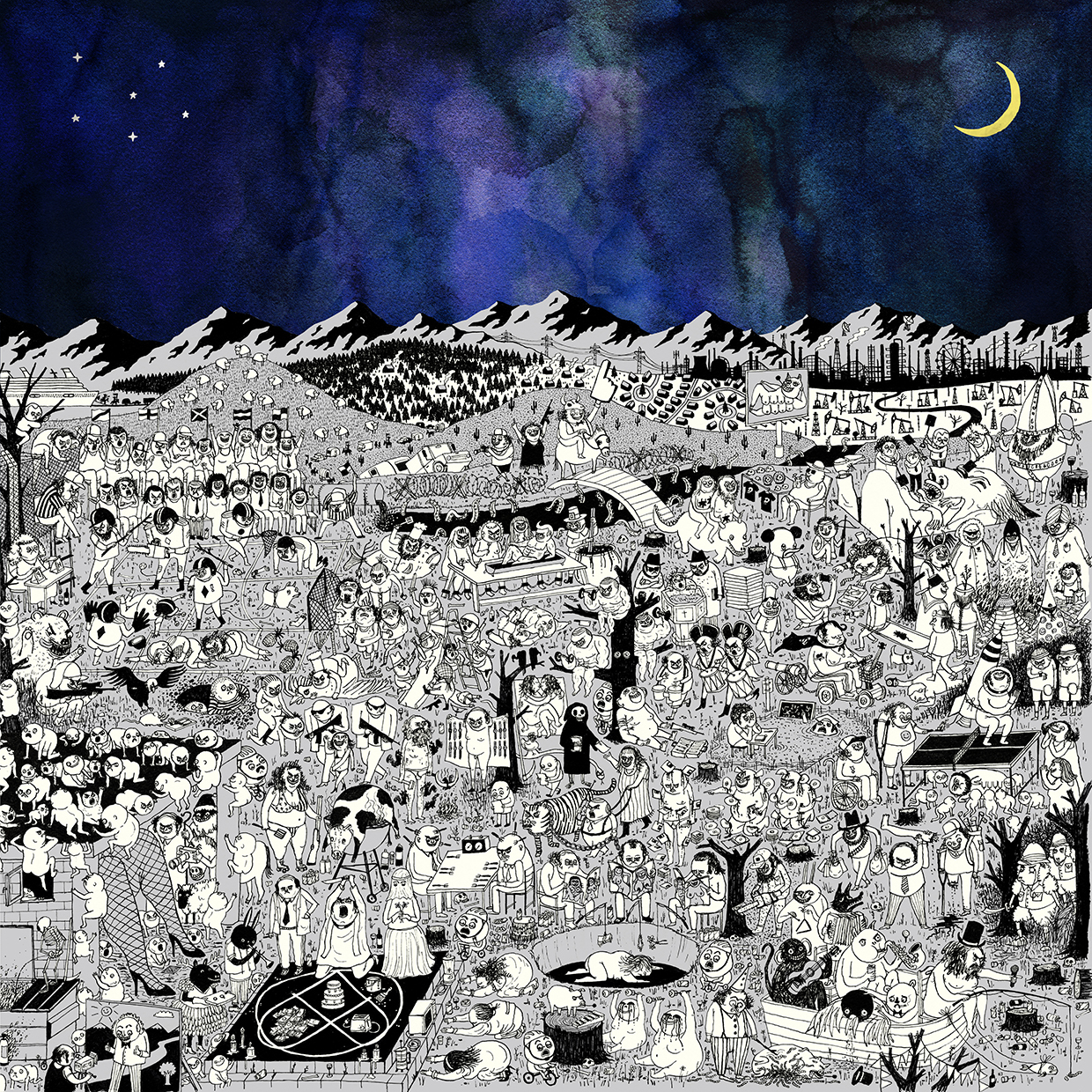
I can personally appreciate the health mix of existential though dashed into this record, because Tillman is no stranger to exploring themes within Pure Comedy. Both an epitaph to the process of art and a lover letter to making music, there is way to much complexity going on here to digest in my ever-so-brief review of it. Take a look at the album artwork for instance, a shining example of the detail involved in a life lived full.  We will likely never experience all of the same things as another person, but that doesn’t mean Birdie can’t try to describe utopia for us.

A criticism without judgment, Pure Comedy is a sermon Father John Misty should be proud to share.

theories Summarized

In listening to this record, I cannot help but think of The Comedian from the graphic novel Watchmen. Toward the end of his days The Comedian unravelled a global plot to change the world. One which would involved the slaughter of millions so that billions could united together against a common, if not fake, threat. It’s all a joke he said, just before he was murdered.

The real joke is that Josh Tillman hasn’t even begun his decline yet – this might just be pure gold.

Tim!

Your Stoicism Entryway (The Shins, Heartworms review)


Start each day knowing that the world is full of indifference, ill-will, selfishness, and a ton of other vices. Next, accept that each of us is affected by our environment, and not effected by it.

How we perceive the thing is much more powerful then the thing itself. The world will always be this way, which is why a certain kind of music could be popular ten years ago, and yet feel less interesting now.


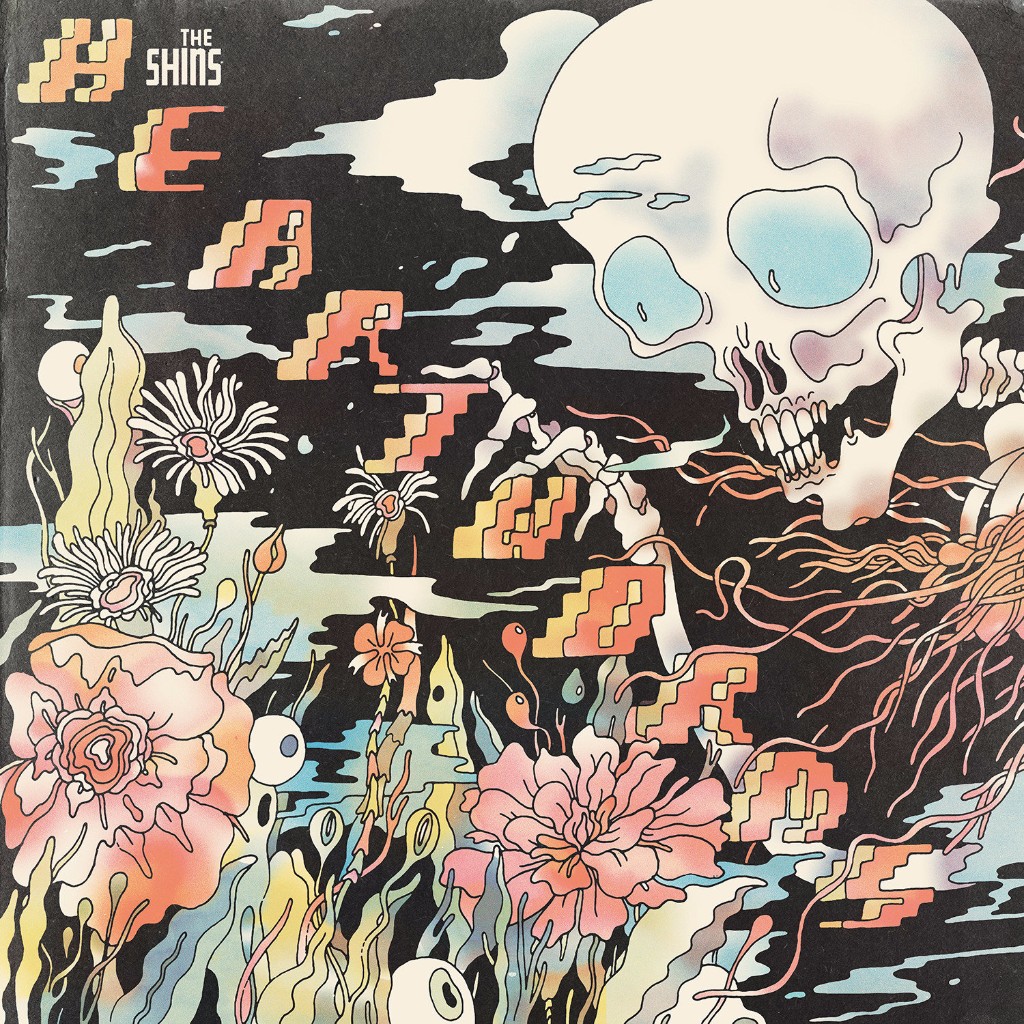
The Shins – Heartworms
released March 10, 2017
******* 7/10


The Shins are an American indie rock band that have been playing together for just over 20 years. I own the bands first two records Oh, Inverted World (2001) and Chutes Too Narrow (2003) which I promptly picked up after listening to New Slang during it’s brief moment of spotlight in the film Garden State.

A few years later the dudes put together their third album Wincing the Night Away, which was a huge commercial success, and even earned them a Grammy nod.

I missed them when their fourth album came out, but I didn’t think to call or write, so I don’t have any strong feelings about it either way, but I can say most assuredly that The Shins fifth offering, Heartworms, is just as good as I was hoping it would be. And maybe a bit too comfortable for convention.

Does anyone remember when indie rock was the next big thing?

Death Cab For Cutie, Stars, Feist, Arcade Fire, The Strokes, Modest Mouse, Vampire Weekend, The Killers, et. al.

These were our champions in the 2000s, and The Shins were right at the centre of it all. Belle and Sebastian, The Black Keys, and Weezer too. Actually, I could probably list another twenty bands pretty quickly, but my point is this, when we look back in another ten years, people will be emulating the looks of these bands, and karaoking hard to their sweet tunes.

Sure indie rock has been around since the 1980s, (read: The Smiths), but The Shins are a picture perfect example of the sound captured at the height of it’s popularity. And Heartworms is no exception.

Which is probably why James Mercer dumped all of his bandmates in favour of something new on the last album. And then owned it fully for this outing. Name for You starts things off right with a higher note then we’re used to, but he doesn’t discard that tempo and brings it back a short one song later in Painting a Hole. We get excited listening to the lyrics while the instrumentation keeps things on track.

Cherry Hearts feels like it could be a late addition to the Sixteen Candles soundtrack or inside a more current addition in the movie Sing Street.

Fantasy Island is just good fun. And frankly I could make little anecdotes about each song along the way, which is how I feel that Mercer tackled this album from the outset. And that’s where it’s not quite punchy enough, it feels like each song was both captured in a moment and painstakingly crafted to sound that way. But thematically it can be a challenge to accept this as another other than a solo project finally realized in full. The Shins are James Mercer, and James Mercer is The Shins, good or bad.


Indie rock changed the game. Not in the sense that it forced anything political or social to happen, but that we collectively agreed that it was good music for a time, and now we are experiencing a shift away from thoughtful and whispy lyrics, saturated by striped down instrumentation, and heading back towards the glitz and glamour of the pop music. And that’s okay.

While that doesn’t mean that The Shins are less interesting, only that the larger public feel differently, I do agree that Mercer has run the course on some of his ideas, exploring things more fully is good, but where is the broader message at the centre of it all? Where is the stoicism?

That’s the theory I want to hear.

Tim!

Cruisin’ California (Weezer, white album review)

The most interesting thing for many a youth is finding that coveted summer album they can play for the months ahead and be the cool kid, who knows what’s up.

Thankfully I can count myself among that crowd this summer. I may be giving away the results of this week’s album review a tad early, but dammit if I care. I am so happy to have this album review under my belt, so I can just get ahead with enjoying this record.

So here we go!


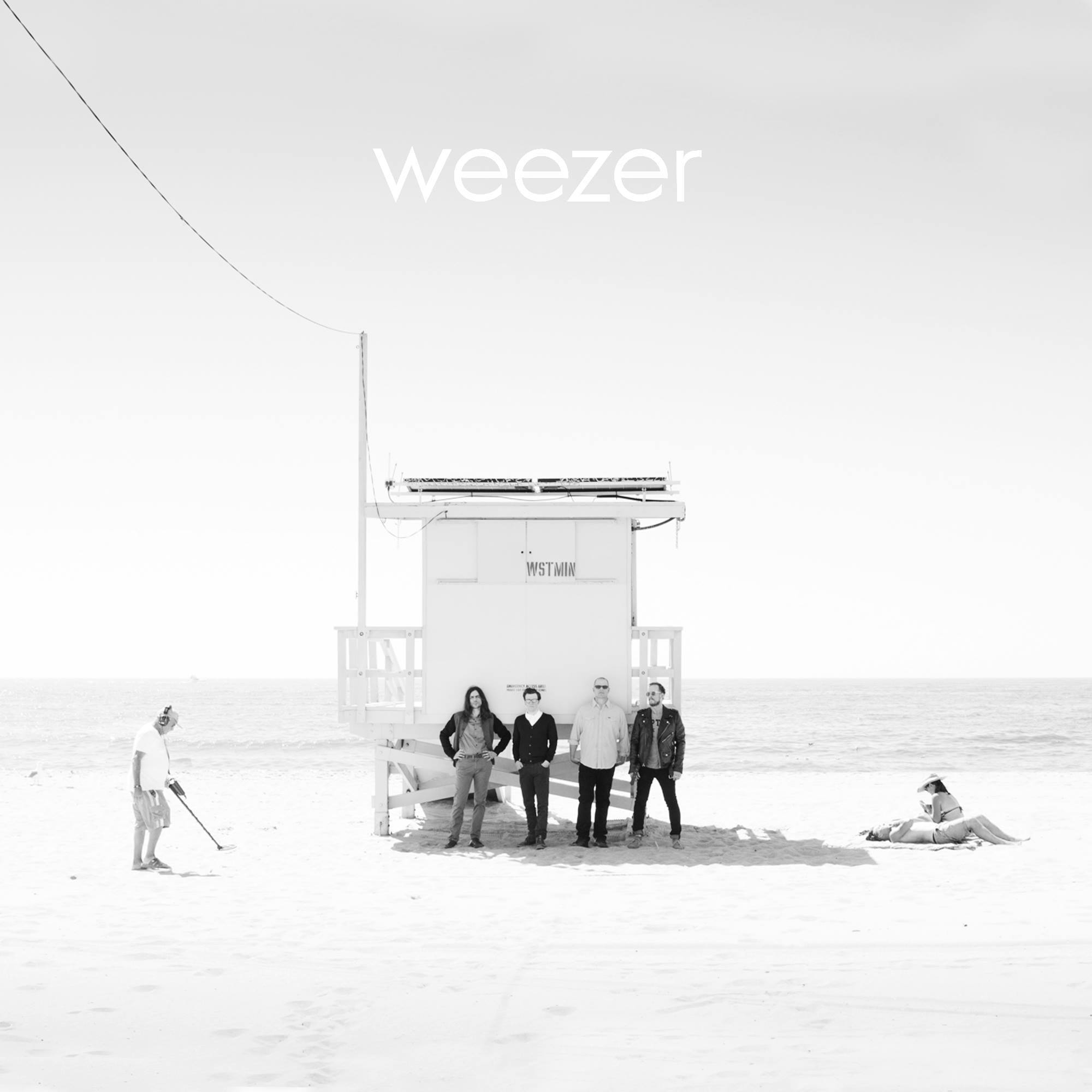
Weezer – Weezer (White Album)
released April 1, 2016
******** 9/10

Weezer_white_album

Weezer is an American alternative rock band with emo, power pop, pop punk, and alt rock influences. They are originally from Los Angeles and consist of Rivers Cuomo (lead vocals, lead guitar), Patrick Wilson (drums), Brian Bell (rhythm guitar, backing vocals, keyboards), and Scott Shriner (bass, backing vocals, keyboards). 

This is their fourth self-titled album, affectionately known as the white album, and is preceded by the red album (2008), then the green album (2001), and the blue album (1994). But in fact, this is their tenth studio album, so don’t be confused by the naming, IF you are a new fan to the band.

Weezer have an interesting history, as is often the case with well-established musical acts. I myself was introduced to them from a fairly very young age, around the time that I was early in my high school year and when the green album was making the rounds. This was also in an age before the internet and self-promotion was the norm. Artists still used the radio and MTV to get attention for airplay. Then kids would hit the record store for vinyl and/or CDs and fall in love proper with the band of the day.

However, in Canada we had something called Much Music instead and so I was listening to the Much Music Big Shiny Tunes compilation albums to learn about cool new music. My friends helped too, but to be honest, I liked to explore when it came to music AND I was also happy to follow the advice of mentors along the way, so I deviated from the rap game a bit and explored the rock genre too. At this time, Big Shiny Tunes 6 was THE hot new thing, and Hash Pipe was featured on the track list.

And boy was that ever a good song… Seriously though.

Which leads me back to this album. You see, a lot of people will agree that the blue album, and the green album were brilliant albums, definitely the career moments for Weezer, and they are finally starting to accept Pinkerton as genius too. Pinkerton came between those two albums.

Then they released a couple more albums, and finally the red album, which wasn’t as good, but had me convinced it would be because of the self-titled nature of it. Then they released four more albums between 2008-2014 and people started to pay attention again. Everything Will Be Alright In The End was a return to form and got people excited about the band again.

But is the white album any good?

Well in short, yes. And the reason is that Weezer made an album where every single song is just as good as the previous one. In exactly the same way that the blue album and the green album were constructed. You see, as I mentioned already, we are now in the era of self-promotion and a level playing field (for the most part), when it comes to airplay and exposure. When Weezer was phoning it in and releasing albums with 2 or 3 good singles and a lot of fill, other bands were playing local venues, sharing their music online, and interacting with their fan base through emerging social media.

The white album is a redemption album. And like the blue album, which was an opportunity for a Californian act to make a name for themselves, or like the green album, a place for a band to reform and reinvigorate after a break from the scene (and a supposed failure in Pinkerton), the white album is about Weezer caring through the entire effort to produce something of merit.

I can’t tell you which song is my favourite, because like any good album, I cannot single out one track on this record for you to listen to. You need to hear it all. It’s inspired by California and definitely has a surfer vibe, which is what Weezer is good at.

So check out these music videos (1 2 3 4 5) and pick up this album. As a long time Weezer fan, and a music fan in general, I’m telling you that it’s worth it!


I will say this about one track of the album in particular. Endless Bummer is a fitting ending song for the white album. Because you’ll know the album is closing out, and that’s kinda sad. But no so sad that you can’t just put the album on repeat and start it all over again.

As I said above, I was so happy when I put this album on, because it meet my expectations of an album, and it was a personal triumph because I’ve been hoping for this Weezer album for years now. It probably deserves that 9, and in my heart I want to give it a 10 because I’m just that happy with it, but I’ll keep it at a 9 for you fine folks. That’s how serious timotheories is about it’s theories on the arts.

Until tomorrow, when we review another return to form, via the movie route, I’m out of theories for now friends.

Tim!