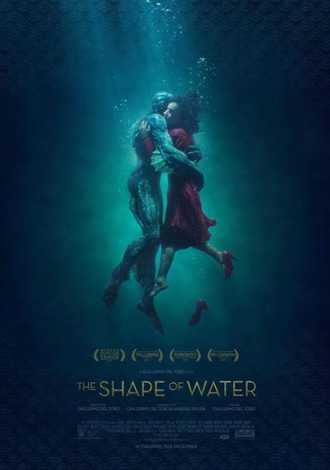
The Shape of Water, A Filet or A Flop? (Cross Talk EP 35)


This should be a fairly straightforward post.

I’ve already written a fairly in-depth review on the movie The Shape of Water – and I made my love of the film known pretty clearly there. But too be perfectly honest, Chris doesn’t care for the movie, and I value his opinion a lot, so we decided it would be fun to put together a deep dive episode on the movie and talk about our differing opinions. Which as some of you know, is one of the reasons why I started Cross Talk in the first place.

To discuss movies, music, board games etc. and present topics in a more meaningful way then your average review or criticism video.

Don’t get me wrong, there are lots of great channels out there where the presenters have a degree in film criticism, others where the reviews are purely based on if the movie is enjoyable or not, and still others where the film is dissected and all of the symbolism is put on display. But that’s not how people really talk about movies necessarily.

When you are chatting about a movie like The Shape of Water with your friends, you’ll get lost in incidental details like the way the government facility looked, or the musical score choices, or whether Doug Jones did a better job playing Abe Sapien, the Faun, the Pale Man or  “the Asset.” And if you’re a movie geek like us, you might even start entertain interesting theories about why the movie is a fairy tale, and not an alternate reality where mermen exist.

Or maybe you’ll point out how there are so many more movies that do star-crossed lovers in a better way, with more compelling characterizations. And you’ll get passionate about it. Wondering why an amazing film like Get Out only got attention for it’s screenplay.

And so this is episode thirty five of Cross Talk.

theories Summarized

Do you think my theory about Giles having invented the majority of the story is right? Or am I completely off the rails with this one dear readers? Chris has a better appreciation of why I relate to the story so well now, but maybe I’m projecting, and the movie isn’t anything more then what you see on screen.

In that case, maybe the submerged bathroom scene is completely ludicrous.

But that doesn’t mean the film isn’t worth talking about, we managed to fill a 20 minute space talking about it, and you didn’t even see all of the outtakes we have! Until next time, please like and share the content! And subscribe to the mailing list if you haven’t yet. I’ve got a blue review on Jack White coming up tomorrow!

Tim!

In Love With The Shape Of You (The Shape Of Water review)

Join us for a very special film review on this week’s episode of Watch Culture.

I say this because I’m about to drop some knowledge on why The Shape of Water holds a special place in my heart, so much so that I’ll also be running a deep dive on Cross Talk with Chris later in the month (read: sooner).

The Shape of Water (2017)

Cast: Sally Hawkins, Octavia Spencer, Michael Shannon, Richard Jenkins, Michael Stuhlbarg, Doug Jones
Director: Guillermo del Toro
released on blu-ray March 13, 2018
********* 10/10

IMDB: 7.5
Rotten Tomatoes: 92%, Audience Score 74%
The Guardian: ****/*****

Guillermo del Toro is a Mexican film director, screenwriter, producer and novelist. His films have a strong fantasy element running through them, often using dark themes and gothic backdrops to convey both subtle and overt messages about human nature. Some of his more mainstream films are Pacific Rim, Blade II and the two Hellboy adaptations, but he also dabbles in spanish language focused stories like The Devil’s Backbone and Pan’s Labyrinth.

Looking back, his most recent film before The Shape of Water was Crimson Peak, a strong indicator and launching point toward fairy tale narratives.

Special thanks to Huggo for the IMDB summary.

1962 Baltimore. Elisa Esposito (Sally Hawkins), found abandoned as a baby with scars on her neck, has been mute all her life, that disability which has largely led to her not having opportunities. Despite being a bright woman, she works a manual labor job as a cleaner at a military research facility where she has long been friends with fellow cleaner, Zelda Fuller (Octavia Spencer), who often translates her sign language to others at the facility. And she has had no romance in her life, her major emotional support, beyond Zelda, being her aging gay artist neighbor, Giles (Richard Jenkins), the two who live in adjoining apartment units above a movie theater. Like Elisa, Giles is lonely, his homosexuality complicating both his personal and professional life, the latter as a commercial graphic artist. Elisa’s life changes when Colonel Richard Strickland (Michael Shannon) brings a new “asset” into the facility, Elisa discovering it being a seeming mixed human/amphibious creature found in the waters of the Amazon. Secretly visiting with the creature, Elisa is immediately drawn to him, and despite he having a violent side as part of his inherent being, the two find a way to communicate with each other and end up forming a bond with each other. Elisa has to decide what to do when she discovers that although the reason for bringing the creature to the facility is to test the possibility of him being sent into space, Colonel Strickland, who has always had antagonistic feelings toward the creature, ultimately wants to kill him, this following the systematic torture he has inflicted on him. Elisa may have to balance her feelings on wanting to be with the creature against what may be the greater benefit to him of being set free back into the wilds of the water. Complicating matters are that the Soviets are also aware of the creature, they having a secret agent who has infiltrated the facility.

Smarter people then I have reviewed this film to death already.

So I won’t pretend to impart the same learnings as them in my review of this film, but I will acknowledge that there is some derivation at work here. As Chris will rightly point out in his own thoughts on our upcoming Deep Dive; this is a story that effectively borrows from other films. The Beauty and the Beast story arc is the bones of this film, it also throws in homages to monster movies (Creature from the Black Lagoon), musicals (Shirley Temple, That Night in Rio) and biblical stories (The Story of Ruth).

But where the brilliance comes in is in altering the arcs of these stories. The beast doesn’t transform to be loved, the creature from the black lagoon doesn’t die AND gets the girl, the mute girl and her two minority friends save the day, and love of the arts is celebrated.

That said, even if you don’t know these things, this film challenges the notion of fearing the other – it fights fear with love, and I think it smartly uses Giles (an artist), as a narrator of this ideal, in a time when those ideas couldn’t even exist in popular culture. Giles is a closeted homosexual, someone who dreams and imagines how things could be, and I have a theory that a lot of the film actually happens in his mind.

Pros: It carefully crafts all of it’s themes and ultimately tells a universal story of acceptance, love, and celebrating what is, rather then what should be. del Toro is at his personal best, and he poses some great questions.

Cons: While beautiful to behold, and universally clear in the truths it wants to share, to fully appreciate the story, you might actually need to love all of the things it references – the subtle historical shifts at play. And if you want character nuance, the characterizations could be frustrating to watch.

Runtime: 1 hour 55 minutes

Points of Interest: Guillermo del Toro wrote lengthy backstories for each of the major characters, giving them each the option to use the information or ignore it. Some opted to take the direction, while some, like Richard Jenkins, refused it. The poem at the end of film has been paraphrased from works by Persian poet Rumi and his predecessor Hakim Sanai.

I really do see why Chris struggles with this film. And believe it or not, I’m not picking apart his thesis before he’s had a chance to defend himself, but rather I want to show you that his perspective is key in understanding my own theory.

The derivative themes, the abstracted characterizations, and the reliance on style as a vehicle for the underlying substance are important. If we consider that the whole story is told from the perspective of an artist character (Richard Jenkins) who has had to hide so much of himself in a time and space of persecution and judgment, then I think the story takes on new meaning. Not to mention the fact that his chosen form of expression, painting, is being supplanted by photography in advertising. Giles loves musicals, lives above a theatre that shows biblical films, and draws the creature he does not understand lovingly. He wants to see a fairy tale realized because his own story did not come through as he wished.

Additionally, he is the most detailed of the characters, which is often how we see ourselves, as opposed to how we simplify others in our own life stories.

theories Summarized

I think The Shape of Water is an amazing film, and to be honest, I haven’t even given you the full expression of my thoughts on it yet, but I believe that the upcoming Cross Talk deep dive episode will reveal even more about it. A fairy tale for adults is an amazing thing to behold, indeed.

If you want another fairy tale for adults, then you should check out this video review of 2010’s Scott Pilgrim VS the World, an anti-thesis to rom-coms told from the perspective of a video game geek. It’s a blast to watch, and whether you grew up between the 1980s to 1990s or not, the nostalgia callbacks are insightful.

So please let me know what you thought of our review, like and share the video, and subscribe to the channel if you haven’t already. There are even more theories coming up next week, y’all come back now.

Tim!
Pants On Fire (Sam Harris)

There are moments when I’m sitting over there, in my easy chair, philosophising about the next big theory of the arts, where I contemplate, and others where I instead sit down with a good book and consider another perspective – ever hear the expression one man’s truth is another man’s lie? Well if you haven’t then you might still be open to learn something.

There are a lot of idioms out there about the concept of truth, dear readers. If the truth be known… a grain of truth, ain’t it the truth, bend the truth, fact is stranger than fiction, the gospel truth, honest to goodness, the naked truth, the moment of truth, truth will out, and the list goes on.

Sometimes the truth is even hard to swallow.

The truth is, when you are putting together all of the facts, reality bites. But that doesn’t mean you should share a bald faced lie either. Well, at least that’s what the author of this month’s 5 L’s Of Language would have you believe.

No No No No, Baby No No No No, Don’t Lie

Sam Harris is a best-selling author and neuroscientist, not to be confused with a neurologist, which people sometimes think he is. And he also believes that if a decision came down to a matter of ethics it would be his responsibility to share that reality with you, otherwise he would be making a lie of omission, which should bear the same weight as a commissioned lie.

Harris is something of a heavyweight when it comes to atheism. Sharing ranks with Richard Dawkins, Daniel Dennett, and Christopher Hitchens, he has been called one of the Four Horsemen of the New Atheism. An advocate for separation of church and state, a strong critic of religions, and a critic, Harris chooses to focus his ideas on science and secularism. His list of books includes:

  • The End of Faith: Religion, Terror, and the Future of Reason (2004)
  • Letter to a Christian Nation (2006)
  • The Moral Landscape: How Science Can Determine Human Values (2010)
  • Lying (2011)
  • Free Will (2012)
  • Waking Up: A Guide to Spirituality Without Religion (2014)
  • Islam and the Future of Tolerance (2015)

The Very Worst Part Of You, Is Me


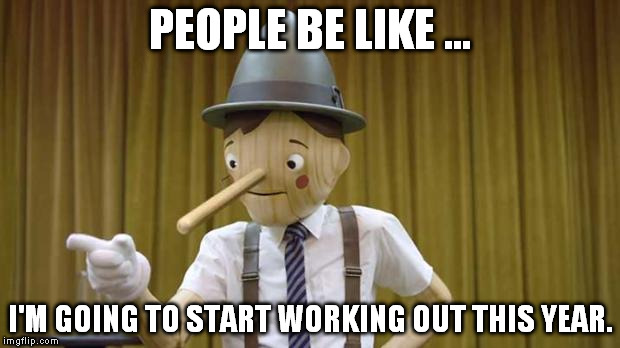
Have you figured out which book I read yet my friends? I’ll give you a hint, Pinocchio would probably be an expert at navigating a series of unfortunate events which stem from this practice.

phjvb

That’s right I read through the book Lying. Which is pretty much just a hard cover essay that was a breeze to get through, but a little bit harder to digest, given what Harris is recommending in his thesis.

Effectively Harris states that we should all line up with his own personal philosophy of honesty at all times. This means avoiding lies when confronting serial killer child murderers, overweight spouses, and even coworkers. The only people who really seem to be exempt are spies, but they live a hollow life after all, one which is for a purpose far grander than they are capable of seeing. So white lies, lies of omission and everything else are unacceptable.

Which is where the essay is ultimately flawed, but interesting. I would agree with Harris that we should avoid white lies whenever possible, but there are some circumstances which are far beyond the scope of certain groups (read: poor people, discriminated minorities etc). And dealing with people with failing health is far more complex than the feelings of the ill versus the feelings of those who are left behind. Not all have the benefit of choosing who they interact with, but perhaps there are some lessons within.

Blame It On Your Heart


Don’t get me wrong, I was thankful for this gift. My parents bought it for me this past Christmas because they know how much I love to read a good critical essay or philosophy book. And this book got me thinking, you see creative cuties, I have this theory that the reason why one man’s truth is another man’s lie, and I’ve spoken about it before. It’s a consequence of this ability we all like to believe we have, called common sense. Harris is a victim of wrong thinking, but his heart is almost in the right place.

If only he could get a broader perspective, maybe then his opinions might make more sense – at least, that’s my theory.

Tim!

Brightest Day, Blackest Night (Festival of Lights, Candy Cane Lane)

Ah winter has finally arrived, and it looks like it won’t be leaving any time soon! I was nervous for a bit there. Thought we were going to witness another Super El Nino equivalent to the one we had back in 1997. That year we didn’t know what to do, when the snow simply would not stick around until New Years.

But that famous Edmonton snow is here now folks! Rest easy.

The snow is everywhere, and with it the cold of winter combined with the limited daylight make for an interesting combination. One which can have depressing effects if you don’t know how to combat it.

The time of year when both heat and light is precious.It’s somewhat regrettable how we yearn for cold in the summer and heat in the winter, when we should instead be celebrating the possibilities of the current season.

Which is why we could benefit from a lesson from Rome.

The Romans had no issue with this concept of seasons and prepared for the winter solstice with vigour. Saturnalia was an ancient Roman holiday held in service of the Roman god Saturn. It was a period of merrymaking and is the unofficial predecessor of the Christmas holiday (read: feasts, rest from work, servants are served, dinner clothes, gift-giving, and toy gifts for children). If you aren’t familiar with Roman mythology, Saturn was a god that represented agriculture and ruled the world for a time. A time which the Romans called the Golden age, when the earth was filled with food and labour was non-existent.

The Augustan poet Vergil had this to say of Saturn,

He gathered together the unruly race [of fauns and nymphs ] scattered over mountain heights, and gave them laws … . Under his reign were the golden ages men tell of: in such perfect peace he ruled the nations.

Unfortunately, there is not a lot of information about the holiday Saturnalia which comes from one particular source. The best known work that provides the most detail on the event was written by Macrobius. In it, he refers to Saturnalia as a festival of light which leads up to the winter solstice. Candles are used everywhere to represent truth and knowledge and merriment is the order of the day.

I thought that the acknowledgement of Saturn’s dominion and care-taking of other species was particularly interesting, especially in light of (future bad pun) the timely event I’m going to share with you today dear readers.

You see, and this isn’t a new theory, there are many accomplished philosophers and intellectuals out there that believe humans take their moral cues from whatever appears to be higher in power and influence than themselves, whether it be law, principles, or spiritual. Thus, even though Saturn and Saturnalia have disappeared from the forefront of mythology and belief for several centuries, the themes present still exist to this day.

Which is why I think the Festival of Lights put on by the Edmonton Valley Zoo is a fascinating event that mirrors those ideas of bounty, dominion, care taking, truth, and knowledge just ahead of the Christmas season and in time with Saturnalia.

Okay maybe not really, but I had you going there for a while didn’t I?

Truthfully, the Festival of Lights is a staple of the Edmonton holiday season, much like Candy Cane Lane, the Citadel’s Christmas Carol, and the Festival of Trees. And no matter what your belief system, I think we can all agree that whatever the roots or reasons of these types of traditions, what is most important about this time of year is thinking of others and your place in the world.

This year the Festival of Lights took place between December 4-13 between the hours of 5-9 PM.

Wait, hold up timotheories, are you saying that this event already came and went? Why yes, dear readers, I am. But I wouldn’t ever share something timely with you that was no longer relevant. That’s just silly.

No, fortunately for you, I heard from How To Douglas, that there is a special one shot of the Festival of Lights this Sunday, December 20th from 5-9 PM. So why don’t you come check it out? The Edmonton Valley Zoo can be found at 13315 Buena Vista Road, and you will definitely enjoy all of the art installations, the lights, and the night sky. Sometimes they feature a skating rink and snack stand.

And if you are disappointed by that fare, you should also check out Candy Cane Lane, which is located at 148 Street between 100 Avenue to 92 Avenue Edmonton, Alberta, Canada.

These types of events only come around once a year, and showcase some incredibly creativity on the part of the home owners and patrons that organize them. If you haven’t been before, check them both out. And if you have, and it’s been a little while, please go and support your local community!

That’s all I’ve got this week folks! 7 more sleeps until Christmas, and one more week until I take a bit of a hiatus. So please check out next week’s articles or spend some time getting caught up on posts you’ve missed.

Tim!


Licensed To Steal (Artist As Collector)

I’ve been thinking about what I should write for today pretty much all of my waking hours this past week.

Sometimes I chew on a theory for months (anticipating the date to share it with you), other times the theory appears in a flash of light. And sometimes theories just work themselves out naturally in the moment and I kind of surprise myself with the results.

It’s a similar experience that many artists have when they create work. Nothing happens perfectly, but relying on moments of inspiration is incredibly draining and risky in terms of output. That is why it is so incredibly important to set up a routine and a space that works for the individual, so that bursts of creativity can happen naturally and “seemingly” spontaneously and the disciplined efforts can cover of those moments of creative silence.

It really is amazing that our unconscious minds are working in our favour though when you stop to think about it.

We organize information, experience, and our interests to produce something special, and if we do it correctly, we create a work of art which looks and feels unique, whatever the source of inspiration.

The reason why I’ve been thinking about this process today is because I have this theory that all good artists steal ideas (not an original idea either), but the best ones steal from everyone and everything in their lives. They do this because of an honest appreciation for life and an attachment for what already exists in the world.

To put it simply, every artist is a collector. On the surface it could appear that they store objects, but the reality is that they have enduring love for the object(s) which house much more than the literal contents we observe in passing.

This TED Talk by Austin Kleon details the point quite well.

Nothing is original. All art, from the bad to the great, references what came before it.

So why do critics sometimes comment as if we should operate in a vacuum? I’m not entirely sure. I think it is likely that nuanced truths are harder to swallow than obvious ones, if I am being perfectly honest. Which can be a full blown topic for another Stimulating Sunday.

But that is not what today is about.

Today is about the theory of artist as collector. And the inspiration for today’s post is from a very talented artist who I am sure you have heard of at one point or another, whether you like their work or not.

Here is a sample of my favourite song from the record.

Walking through a crowd
The village is aglow
Kaleidoscope of loud heartbeats
Under coats
Everybody here wanted something more
Searching for a sound we hadn’t heard before
And it said

Welcome to New York
It’s been waiting for you
Welcome to New York
Welcome to New York
Welcome to New York
It’s been waiting for you
Welcome to New York
Welcome to New York

It’s a new soundtrack I could dance to this beat, beat
Forevermore
The lights are so bright
But they never blind me, me
Welcome to New York
It’s been waiting for you
Welcome to New York
Welcome to New York

I’ve highlighted particular lines because I think they are especially relevant for the topic at hand.

This song is from the album 1989 by Taylor Swift. Yes, that’s right.

But that’s not what I was listening to on the drive home to Edmonton from my girlfriend’s parents home in Lacombe today. I was listening to Ryan Adam’s cover album, also titled 1989, with the exact same number of tracks, with almost identical lyrics, in the same song order.

Let’s break this thing down for a minute.

3F70F73E42A17886E4E31E44764B96FB201410916283289

Taylor Swift, who is incredibly talented, let Ryan Adams, who is also incredibly talented, “steal” her work and create his own version of it.

In fact, she gave her instant approval, when he asked. She is a genius.

If you think about it for a second, there have been reviews claiming he did a better version of her work, and that he made it more meaningful.

I call bullshit on that. But not for the reasons that lots of people are.

He was a vehicle that proved how powerful her lyrics really are to everyone, whether people choose to see it or not, is a completely different matter.

This is especially important to note for those who don’t listen to her music and pass if off for cookie cutter pop. Taylor Swift is an incredibly talented songwriter. Period.

And, she gracefully pointed that out with her title track, without being a jerk about it.  Let me illustrate – while we might all be “searching for a sound we hadn’t heard before,” 99% of the time, the sound already exists. It’s because someone loved it, and made art about it, that we can appreciate it the new art. 1989 by Ryan Adams is a great album, but it wouldn’t exist without 1989 by Taylor Swift, and Taylor’s is definitely the better album because she made something “original” without making it obvious what she “stole” from to get inspiration.

And she understands that sharing is caring.

My girlfriend, who is a super fan of Taylor Swift, realized this brilliance of TSwift years ago, I’m finally starting to see it myself. I hope that other creative types make that leap sooner than later, and I also hope that everything I just stole from makes this post worthwhile. And that’s all of the theories I’ve got for tonight.

What do you think? Leave comments!

Tim!