Turtle Soup (Teenage Mutant Ninja Turtles: Out of the Shadows, review)

Sometimes life throws you lemons, and so you make lemonade. Other times it throws you lemons and you plant a lemon try, because who has time to make lemonade? That was a throwback to yesterday’s post if you didn’t catch it, but also applies to the story of the day folks.

I have a friend that’s been making lemons for a little while now, but they finally started to get productive and dig themselves out of a pretty deep hole.


Teenage Mutant Ninja Turtles: Out of the Shadows (2016)

Cast: Megan Fox, Will Arnett, Laura Linney, Stephen Amell, Tyler Perry, Brian Tee
Director(s): Dave Green
released on blu-ray September 20, 2016
*** 3/10
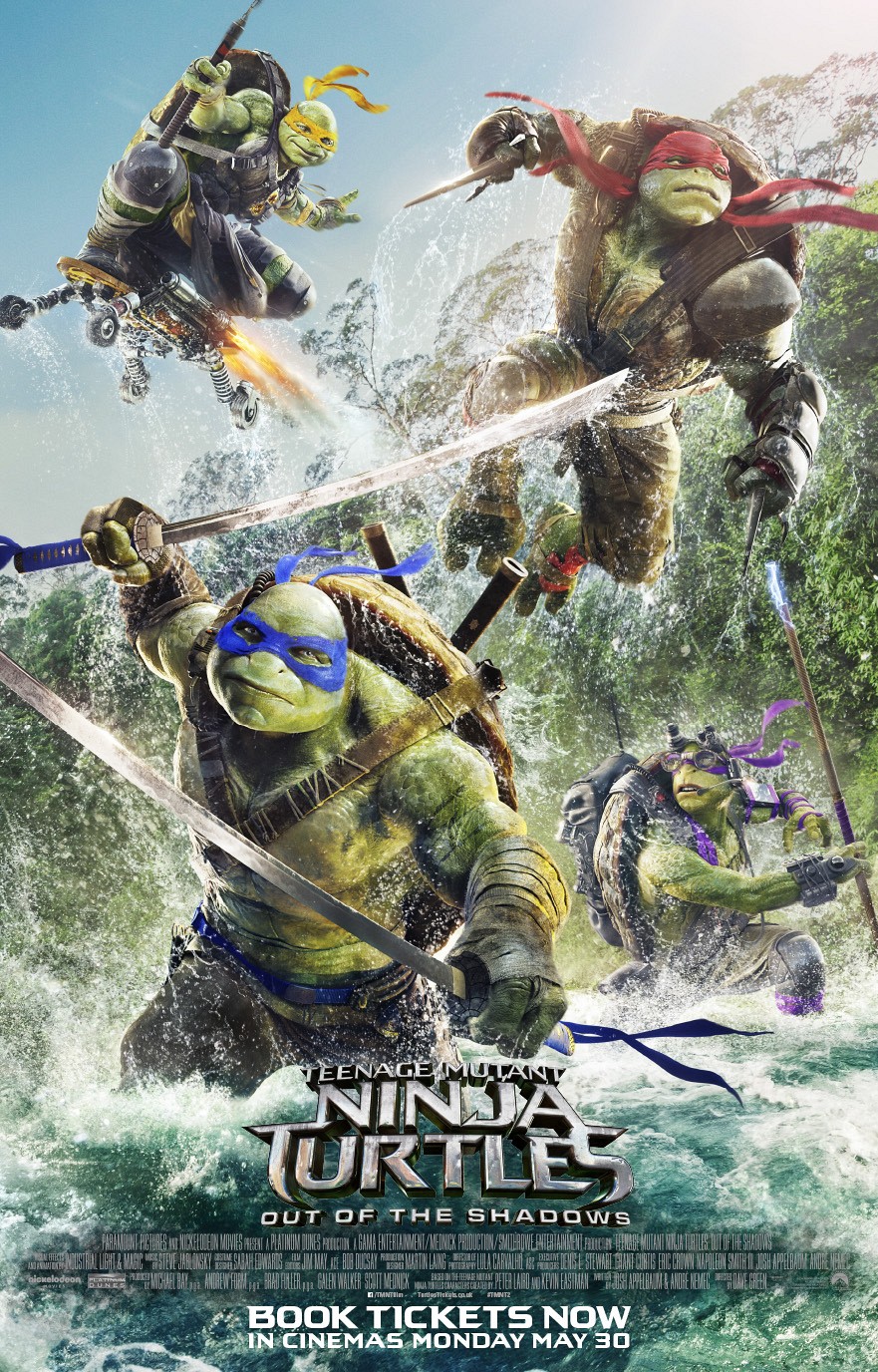
teenage-mutant-ninja-turtles-water-poster

IMDB: 6.1
Rotten Tomatoes: 38%, Audience Score 50%
The Guardian: */*****


David Green is an American film and music video director. He has directed Earth to Echo, and most recently, Teenage Mutant Ninja Turtles: Out of the Shadows.

It’s going to be hard to give this movie any positive accolades because it basically ripped off large parts of TMNT 2: Secret of the Ooze, though it did introduce better henchmen in Bebop and Rocksteady, which I’m personally thankful for.

It’s a tale as old as time, four heroes are living in squalor because they cannot accept the recognition they deserve, instead giving it to a minor character who abuses the praise. However, the heroes are then given a second chance to demonstrate their prowess, and after some challenges which include in-fighting over leadership and what course should be taken, the group bands together and takes down an even greater foe. This time they have the opportunity to be seen as the true heroes they are, but they decide to stay where they are, preferring to keep their secrecy.

That’s the shortest and nicest summary I could have come up with for TMNT: Out of the Shadows. Because quite frankly, it’s a hot mess.

I personally thought the turtles were less creepy this time around, both in their presentation and with the flirtations against April, which allowed me to invest in them as characters, but where the crew improved upon the turtles, the supporting cast doesn’t help much at all.

For instance, April O’Neil (Megan Fox) gets less screen time, but when she does show up onscreen, it’s usually to help move the plot forward/feature as a sex object. But Dr. Baxter Stockman (Tyler Perry) is an oddball scientist and cameraman Vern (Will Arnett) makes almost no connecting jokes. Also the inclusion of Krang feels somewhat shoehorned in, and we never get to connect the dots over why he wants to leave Dimension X nor why Earth is a great choice to migrate to.

Pros: The action scenes are more fun, the turtles banter is more relevant, and I cannot emphasis this enough, they are WAY less creepy to look at.

Cons: The story is bland, the supporting cast is painful to watch, and the ending just doesn’t make sense. Need I say more?

Runtime: 1 hour 52 minutes

Points of Interest: The mutagen in this film is purple, much like that from the 1987 cartoon, which had a whole host of varieties. This is the first live-action TMNT to feature Krang.

While it is pretty obvious I didn’t love this movie, I will admit that it felt a lot closer to the heroes in a half shell that we know and love than the bastard child of 2014. I will also caution parents of small children to share the other movies and cartoons with their offspring if they are going to watch this movie, because it’s not okay to only call them Leo, Donnie, Raph, and Mikey. Those turtles are much more interesting then Michael Bay gives kids credit for. Seriously, there will be shell to pay.


As mentioned numerous times already, this is not an excellent film by any means. It doesn’t improve on anything already canon in the TMNT universe nor does keep up with the continuity proper. However, it does appear to be the case that the franchise is making a u-turn after many months off course. So with that said, I can suggest you watch this movie if you really like TMNT. Otherwise, it’s probably best left in the shadows.

Tim!

A Short History of The World (Comics, Comic Strips, Comic Books)

I think I’ve gone too far this time, dear readers. I decided to write about a topic which is far more complex and grand then I could possibly fit into the space of these 1000 words or less. And I also feel that I’m too close to it really give you an objectively focused and emotionally restrained tone.

Now to be clear that does not mean I haven’t given 110% effort here, but this is something which is close to my heart and heavily influenced my childhood decision to pursue art. Rhyme not intentional, but convenient.

I’ve written topics before which have used this model of art making in their framework, but it’s a little bit real for me friends and how this medium is starting to show up everywhere. Hell, It’s a little too surreal.

tumblr_ly2xi5uNDN1qeuuopo5_r2_250

tumblr_ly2xi5uNDN1qeuuopo3_250

tumblr_n1cr8e2pww1ql4e6oo4_250

Comics were originally thought to be a form of escapism for youth and definitely not something that could become entrenched in popular culture. Yet here we are.

History of Comics

Twenty years ago, there was almost no interest in the academic community to look at comics, but colleges and universities are now making real efforts to work with people in the industry and to study the impact the medium has had on culture. With a format that asks us to consider both text and visual information simultaneously, comics are literally sequential art. They use panels to help with pacing, while speech balloons and captions help with dialogue, private thoughts, character background, and even sound effects.

And the history of comics has been varied in different cultures as well. For instance, in Europe, Japan, and the United States, comics got their start in newspaper publications and books as secondary entertainment, in what eventually was known as a strip.

But now we have an assortment of formats to choose from. Gag cartoons and political cartoons are often single panel pieces, followed in length by the comic strip. Comic books, also known as comics, are multi-page books that are bound with staples. Collected editions of comics can come in trade paper backs, in both softcover and hardcover, and graphic novels are self-contained stories that were published in a limited run or as a one-shot. Lastly, web comics. Web comics are stories that exist first on the internet, and have no size or page limitations. Some web comic artists even incorporate animation and sound into their work.

And of course when you travel overseas… you can see Japanese manga, European bandes dessinees and fumetti or Korean and Chinese manhwa and manhua. It’s a lot to wrap your head around.

Comics Terminology

Which reminds me, did you know that there is a whole language of terms for comics? The layout is made up of panels, and the panels contain spaces which are culled the gutter. Rows of panels can also be called a tier, while an image that takes up half the page or more is called a splash page. A splash page is usually set up to emphasize a story point and gain attention, while an image that takes up two pages is called a spread.

As already mentioned, the speech bubble is used to contain character dialogue and even it’s shape let’s the reader know whether thoughts are said aloud or internally AND can even be used to indicate tone. Captions on the other hand are separated from the rest of the page and often give narration or information about the story. Sound effects are demonstrated with words that sit in the panel, and are colourful for effect.

When we consider the concepts used to engage with the reader, we cannot forget that it is the reader’s responsibility to perform closure and combine all of the panels together in their head, which means that it is the responsibility of the comic creators to capture key moments in the story, also known as encapsulation.

Roles & Responsibilities

Comic creators can have a few roles, specializing in specific aspects of creation or depending on the scale of the production, they may take on everything. For instance, they could be a writer, who handles plot, dialogue, and pacing. Or they could be an artist/cartoonist, which can be further subdivided into roles of pencilling, inking, and colouring. Lastly, the letterer fills in the blanks for speech bubbles and sound effects.

Defining Comics

Much like film and it’s big sister, literature, the definition of comics is not perfectly linear. It is an ever-expanding form, and with the variations across culture and over history, we’ve not quite nailed down what comics should look like. I would say this though, it’s an important crossover medium, that allows the reader to explore a relationship with traditional mediums of both literature and visual art, and I personally believe that we can all gain a stronger appreciation of both forms by spending time with comics. If films serve as our global cultures version of the campfire story, then the comic is a cave painting set in isolation and used for reflection. It’s not something which is only for children, there are lots of great books adults should read – I’ve got a convenient list for your reference.

I’m definitely going to come back to comics from time to time, as I think this medium is rich and full of opportunity, after all, the cave paintings are starting to move over to the campfire, so why not spend some time in reflection, friends? It’s just a theory, but I bet you’ll get something from it.

Tim!

Red VS Blue! (How Environment Effects Creativity)

I’ve said it before, and I’ll definitely say it again after this post… but throughout human history creativity has often been thought of by the masses as a gift from another world, not something that comes from the brain and which can be developed and cultivated.

I bet you thought I was making a reference to TMNT, nah, I would never do that.

Michelangelo's_comical_scream

Moving right along; as a creative person I’m sure that this concept of creative influence is both fascinating and horrifying for you, because you want to succeed and get support to accomplish your creative goals, but if anyone can be creative, then that means you are no longer a special snowflake.

And I’ll let you decide which one fascinating, and which one is horrifying.

But what if I told you that your environment can be controlled in such a way as to effect your creativity either positively or negatively? What would you do? I bet most of you would jump at the chance to make subtle shifts in how your environment operated.

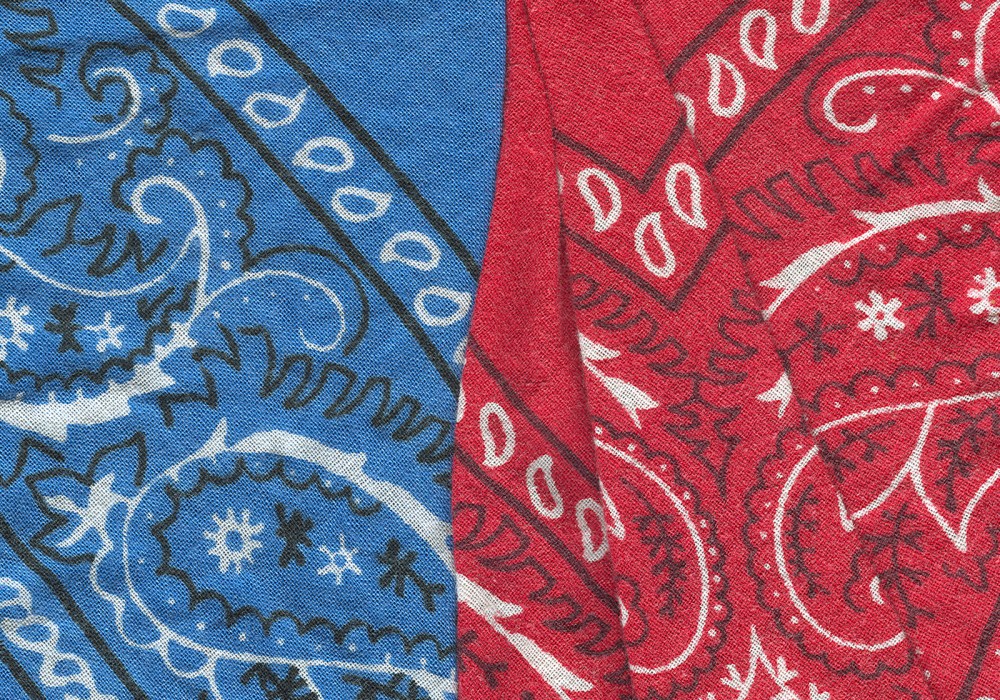
For instance, did you know that colour can elevate different kinds of creativity? According to this study, red can promote analytical aspects of memory retrieval and proofreading, whereas blue is good for brainstorming and innovation. Also in the same study, researchers have uncovered a correlation between noise levels, distraction, and types of work done – moderate noise and high noise produce more abstract processing vs low noise, but high noise impairs information processing, so moderate noise is the sweet spot for creativity, something which I touched upon in a previous post.

The most interesting thing about this study, of course, is that it demonstrates the correlation between creativity and improvement.

Another article I found recently references other aspects of life which can impact creativity. This is another one which Professor Juliet Zhu has looked into, and is a huge advocate for. Apparently dim lighting vs bright lighting an produce different results. Believe it or no, dim lighting has a positive association with abstract thinking and creativity.

cave-painting

Maybe that’s why cave painting started us off on this creative pathway in the first place?

But the article goes on to demonstrate that temperature and space make a difference too. Choose a cool setting for simple tasks and a warm place for complex ones. Clutter creates less self-control (binge eating for example), whereas organization creates self-regulation and persistence, both useful in their own situations. And that latter topic also happens to be something I’ve written about previously.

Still another article I read described the importance of writing out ideas by hand, which helps with idea generation, learning, and memorization. And apparently taking walks and working in rooms with high ceilings helps to promote creativity too.

But what you may not have considered is the importance that comfort can play in creativity both physical and mental. Having a space which has both small areas of intimacy and large open areas can stimulate different kinds of thought. And of course, you also need to be able to experiment and fail at projects. No one is capable of perfection, but surrounding yourself with individuals that do not support risk-taking stifles creativity quite a bit, so do what you can limit those kinds of interactions.

Jim Rohn said it best with the following quote

You are the average of the five people you spend the most time with.

It is imperative that you consider your relationships carefully, and to be closely surrounded by positive, supportive people who want you to succeed, and it’s also necessary to have critics. Though I suspect we can touch on that last point in a lot more detail and so I shall save it for another day.

What did you think of that theory? Does your environment fit the conditions above? Have I missed anything? Please leave some comments below, like and share this post, and of course please subscribe to my blog for more stimulating ideas about the arts.

Tim!