Folding Paper Into Shape (In This Corner of the World review)
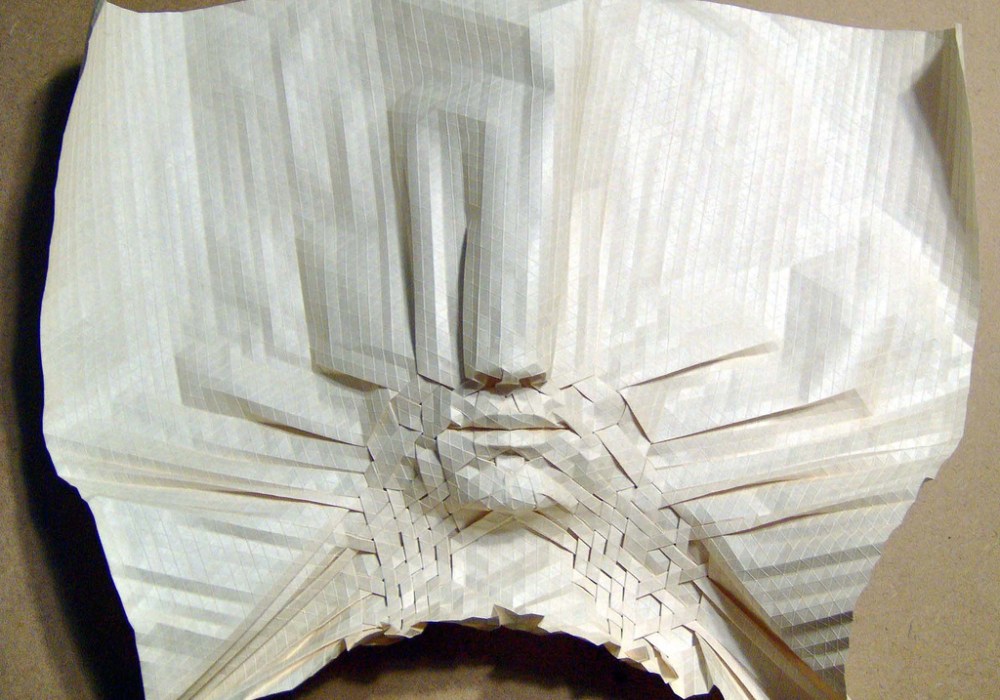
Paper is such a beautiful substance. Capable of so much expression, but entirely dependant upon communication and engagement support from whoever it interacts with. This film is like paper in all of it’s glory.
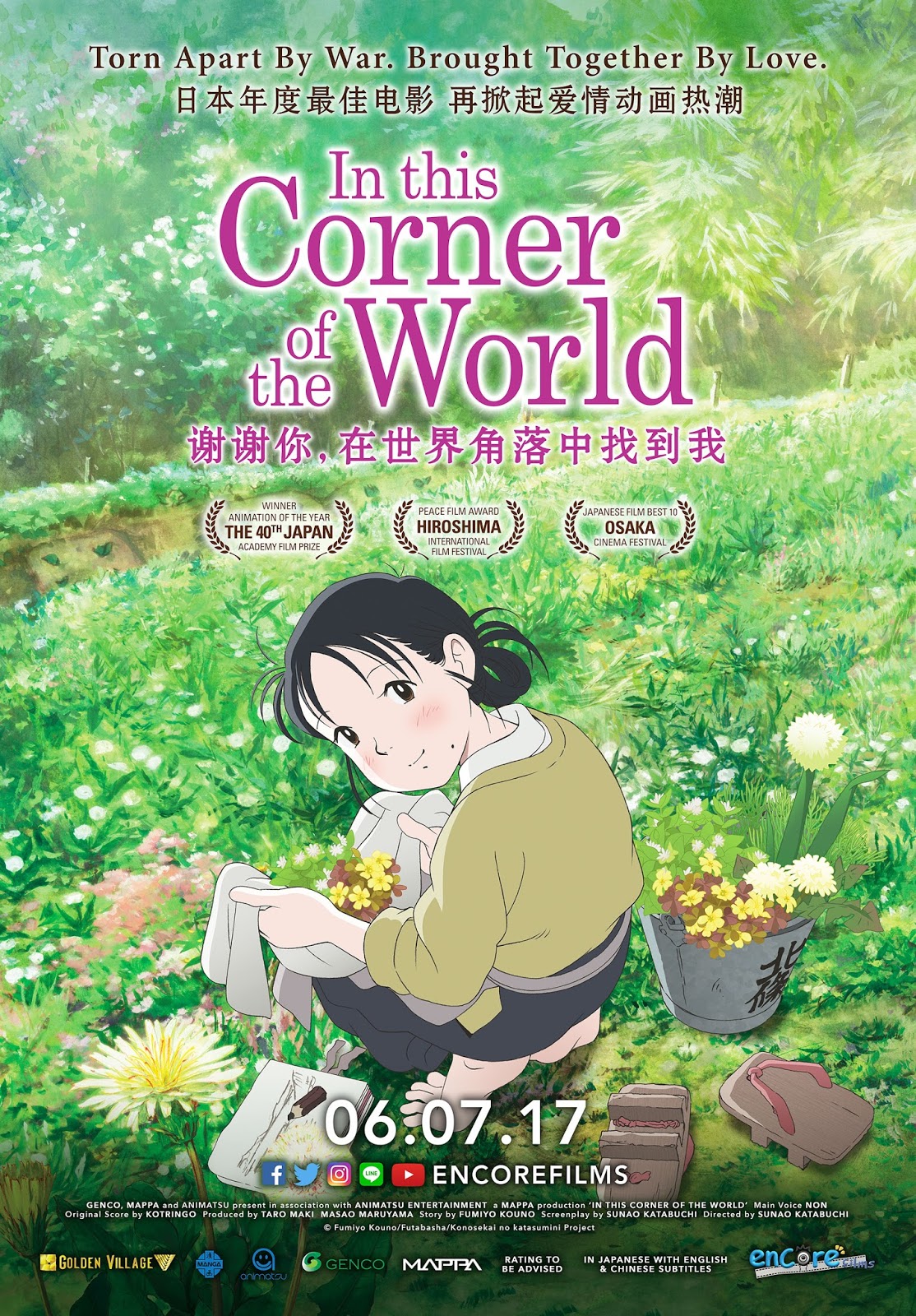
In This Corner of the World (2016)
Cast: Yoshimasa Hosoya, Laura Post, Jason Palmer, Todd Haberkorn, Rena Nounen
Director: Sunao Katabuchi
released on blu-ray November 14, 2017
********* 9/10
IMDB: 7.9
Rotten Tomatoes: 98%, Audience Score 95%
The Guardian: ***/*****
Sunao Katabuchi is a Japanese director, writer and voice actor of anime film, with over 30 years of experience in both film and television production. Having been active since the mid 1980s, Katabuchi is best known for his work on Kiki’s Delivery Service, Black Lagoon, Mai Mai Miracle, and most recently In This Corner of the World. He is married to fellow director of anime Chie Uratani, and keeps a fairly modest life outside of the lime light.
In This Corner of the World was co-written by Katabuchi and his wife, but he did take upon full directorial duties for this film. It is set in between 1930s-1940s Japan, focusing on areas of Kure and Hiroshima. It is a brilliantly executed film that depicts how war changes the traditional culture of Japan through the eyes of house-wife Suzu. While it might seem quite mundane in it’s depiction of life in a generational home, the emotional weight of what takes place during those years demands a complete cross-section.
Courtesy of Wikipedia…
A young woman named Suzu, who is innocent and loves drawing, lives in a seaside town called Eba in Hiroshima City. In 1944, 18-year-old Suzu, working for her grandmother’s small family business of cultivating Nori (edible sea weed), is told by her parents that an unknown young man has come to propose marriage to her. The man, whose name is Shūsaku, lives in Kure City, a large naval port city 15 miles away from Hiroshima City, as a navy civilian. Suzu decides to marry him and moves to join Shūsaku’s family in Kure. As Suzu adjusts to her new life in Kure, the threat of the Pacific War slowly begins to encroach on the daily lives of the townspeople.
Suzu, as a young housewife in a Tonarigumi,[c] takes turns overseeing food distribution and attends training against air raids. Like other Japanese housewives, she makes women’s trousers fit for emergency evacuation by cutting traditionally designed clothing, such as kimonos, into parts. As officially allocated food becomes scarce, Suzu looks for any way to feed her family, picking edible plants and trying recommended recipes. The family build the air-raid shelter in the garden. Her daily lives are full of humorous and lovely episodes.
The family house of Suzu & Shūsaku is located on a hillside in the suburbs of Kure, with a view of the Japanese Naval Fleet in the harbor, including the largest battleships, Yamato and Musashi. One day, as Suzu draws pictures of floating warships, the military police accost her and come close to accusing her of espionage. In December 1944, a navy sailor named Tetsu comes to visit Suzu: he was a childhood friend of hers, and he has been assigned to the Japanese cruiser Aoba, which is stationed in Kure. Understanding it might be Suzu’s last chance to see Tetsu alive, Shūsaku leaves them alone to talk without a chaperone. The next spring, Shūsaku is drafted by the Navy and temporarily quartered with troops in Otake City, 40 miles away from Kure.
In July, urban areas of Kure are firebombed, and most of the city burns. Suzu is nearly killed by a U.S. low-level strafing run, but saved by Shūsaku. Like many other Japanese, Suzu is unable to avoid tragedy; in addition to the death of her brother Yōichi, Suzu loses her niece, Harumi, and her right hand, which she describes as an “irreplaceable” part of her body due to its dominance. As she suffers from depression, Suzu debates returning to the relative safety of her hometown (Eba) in Hiroshima City in time for the local summer festival on August 6; when she is unable to see a doctor, however, she decides to stay an extra week in Kure.
Soon, Suzu learns what has occurred in Hiroshima City; a new, devastating bomb has fallen on the town, destroying countless citizens and buildings in Hiroshima City. For a while, Suzu is unable to enter or get information about her hometown.
A few days later, in a radio address, the Emperor of Japan announces the end of the War. Soon, the times begin to change rapidly: US occupation forces, no longer the enemy, come to Kure and provide food for its citizens. Suzu visits her grandmother Ito’s family house in Kusatsu,[d] a rural town to the west of Hiroshima and out of the affected area, to see her sister Sumi, who took refuge from deserted Hiroshima and is the only survivor of Suzu’s family. Sumi informs Suzu of the fate of their parents; Sumi herself has fallen seriously ill from the radiation left behind by the atomic‐bomb radiation. Shūsaku, who returns from his naval service, meets with Suzu by chance in a deserted area of Hiroshima and tells her that he has found a new job. They come across a little girl, a war (atomic bomb) orphan struggling to survive in the ruins after losing her mother, and adopt her into their home in Kure. Suzu regains her passion for life slowly, with the courage and affection of her friends and family. As the credits roll, their adopted daughter is shown growing up in Suzu & Shūsaku’s family home, sewing clothes with her own hands, aided by Suzu in peaceful post-war Japan.
It is an affecting and carefully constructed story which does an excellent job of showcasing Suzu’s life before and during the second World War. I’ll admit that it is challenging to watch the story and not immediately predict how it will impact Suzu, knowing she is from Hiroshima, but that doesn’t make the events any less significant, or emotional.
Pros: Beautifully animated, with deliberate detail drawn upon from historical photographs and documentation, including those families that live on the hills above the city. The daily routines of the family are entertaining and painful to observe with the change.
Cons: As much as I hate to say this, the film does seem to drag on, it might be because the plot is so plain in construction without much detail of goings on a national or international scale. But it intriguing to see how the surrender of Japan feels through Suzu’s eyes – one of anger rather then relief.
Runtime: 2 hours 10 minutes
Points of Interest: The movie was inspired by a graphic novel, and there is an extended cut of the film in the works which hopes to expand upon the details of supporting characters and Suzu’s own feelings about her unique circumstances in time.
What I also enjoyed about this film so much was the relationship established between realistic animation and more expressive surreal moments. This is intentional as Suzu is herself an artist and a daydreamer. It might seem trivial, but when a film can capture the essence of a character through other tools then dialogue, it’s a huge win in my books.
theories Summarized
Movies don’t always have to be full of astounding visual effects, violence or ambient sound to produce a result. For a film to be gentle and unfocused like it’s protagonist Suzu is as much of a conscious decision with consequence as giving an unfeeling assassin or a zany pirate the microphone. I didn’t know I wanted to hear this story, but I’m glad I gave it a chance. Otherwise I would have missed a historical drama that happens to be animated.
That said and speaking of paper, we need to do an about-face and get back into the realm of comedy ASAP because Andre and I have an amazing review to make on the cult classic Office Space. Seriously such a funny movie. It’s so funny that both of us cracked up at several moments as we fumbled our way through it. Watch it!
Tim!



 timotheories