Turn It Down Already! (The Essence of Listening Skills)

I’ve struggled to accept this fact for almost the whole of my life, but for the most part, we are bad listeners. Communication problems are often at the heart of the issues most of us deal with – at the office, in the car with the kids, over dinner with our spouse, and pretty much everywhere we go.

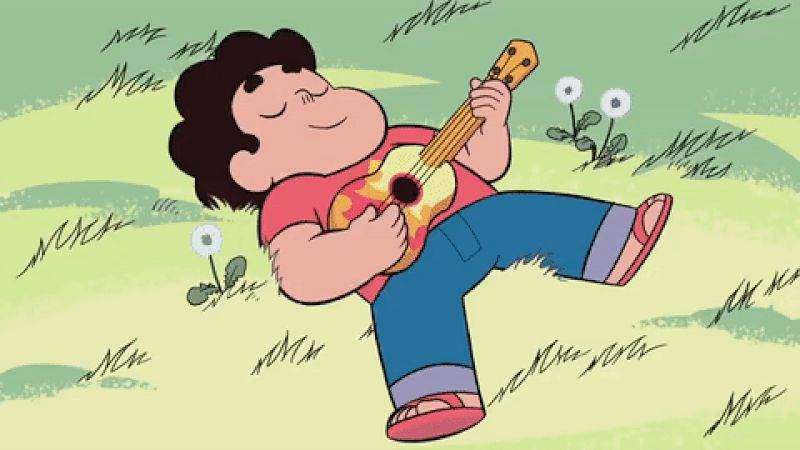
Listening skills should NOT be a latent talent that only a few of us possess, something that is mocked or worse, both of those things. We need beacons of light to demonstrate the awesome prowess of listening, and I know examples exist – I’m looking at you Steven Universe, and your genius creators for one!
Why You Are A Bad Listener

I’m not going to pretend to know what makes people into bad listeners, but I can tell you that there are behaviours out there, which I am just as guilty of as the next person, that contribute to bad listening, and even moreso, bad communication. I’ve gone over the basics of communication already, and I’ve even dedicated some efforts to addressing the ever-so-subtle interpersonal communication, but stopping behaviours can be just as important as starting up new ones, dear readers.

Have you considered that you think of yourself too much, for starters? We all do it, we think of how information is going to impact us, but when you only focus on your own challenges, it just won’t jive in good listening. On top of that, your mind can wander from one topic to the next if you don’t concentrate, and when you do focus on what’s being said, you risk getting caught up in the topic, and completely missing the point at hand. Also, being distracted by other things can make it worse – deadlines, illness, problems in other life arenas all vie for your attention. You need to do yourself a favour and put a pint in it until the chat is over.

And we haven’t even considered how nurture, in the eternal struggle between nature, screwed the pooch on your listening training growing up. What, you say? There was training on listening skills? Well not exactly, etiquette isn’t a universal truth shared with all students.

Of course if someone decides to start cutting you down, you might get defensive, and that’s when you fail to hear what has been shared. On the opposite side of the equation are the helpers who assess a problem, and attempt to fix, without an invitation. And so Mr. Fix-it stops properly listening.

The Types of Listening Skills

Now that you’ve gotten a good dose of where we fail to listen, I think it might be a good time to address what kinds of listening you will need to apply to improve your social standing.

Critical – this for is when you need to evaluate information and either formulate a solution, an opinion or make a decision.

Appreciative – listening for the sake of personal growth and enjoyment. Movies, music and theatre all come to mind.

Discriminative – you need to determinate a dialect, members in a group, if a conversation is amicable or turning violent and a host of other nonverbal cues related to someones feelings.

Relationship – listening to understand someone, whether they need to vent or not, you have to show your support by retaining the details and feeling what they feel.

Comprehensive – focus on the speaker and the message they are sharing, in order to take direction and then apply it to your own role.

How To Become An Artful Listener

Ultimately, if you want to become an excellent listener you are going to have to learn how to be present. This is not a metaphor for becoming a present, but it is a gift nonetheless.

Forbes wrote a great article on the 10 key steps to skillful listening, and the brilliant thing about this post is that while you may need to practice one or all of these steps to get better, you can totally fake it till you make it, because so many of us are terrible at listening already.
But what are the steps you ask?

  1. Face the speaker and maintain eye contact
  2. Be attentive, but relaxed
  3. Keep an open mind
  4. Listen to the words and try to picture what the speaker is saying
  5. Don’t interrupt and don’t impose your “solutions”
  6. Wait for the speaker to pause to ask clarifying questions
  7. Ask questions only to ensure understanding
  8. Try to fell what the speaker is feeling
  9. Give the speaker regular feedback
  10. Pay attention to what isn’t said – to nonverbal cues

You’ll notice that these steps all relate to the previous symptoms of bad listening AND simultaneously recognize the 5 types of listening skills we need to employ. On top of that, the author suggests that at the end of your conversation, to summarize any actionables and agreements that were made.

It might not feel comfortable at first, but over time it will become second nature to you. And lastly, while I didn’t spell it out above,you need to create a receptive environment for listening – turn off all the digital distractions and refrain from bad habits like yawning, frowning or fidgeting.

theories Summarized

Silence might be golden, but it is not guarantee of authenticity. Fool’s gold can look just as valuable to the untrained eye. The skilled person takes on listening as an active skill which will always need to exercised to maintain your health and wealth. It shouldn’t be a mere theory that there is gold in them hills, let’s get out there and level the playing field folks!

And that’s all the wisdom I’ll dole out today.

Tim!

Sigourney Weaver Approved (Finding Dory review)

Voice acting might not be getting the respect it deserves from the general public. Voice actors are the backbone of animated films and television, as well as great resources to be used in marketing and documentaries. And yet, you have to be a talented actor in order to achieve any measure of success at it.

If you think about it, voice actors don’t have other actors to use in framing their delivery, nor do they have sets and props to build a setting. And they don’t necessarily need to have a unique voice, but it does help to have a broad vocal range in really selling a feeling.

Take the voice actors in this weeks featured film review. Most of these men and women know how to hold a room.


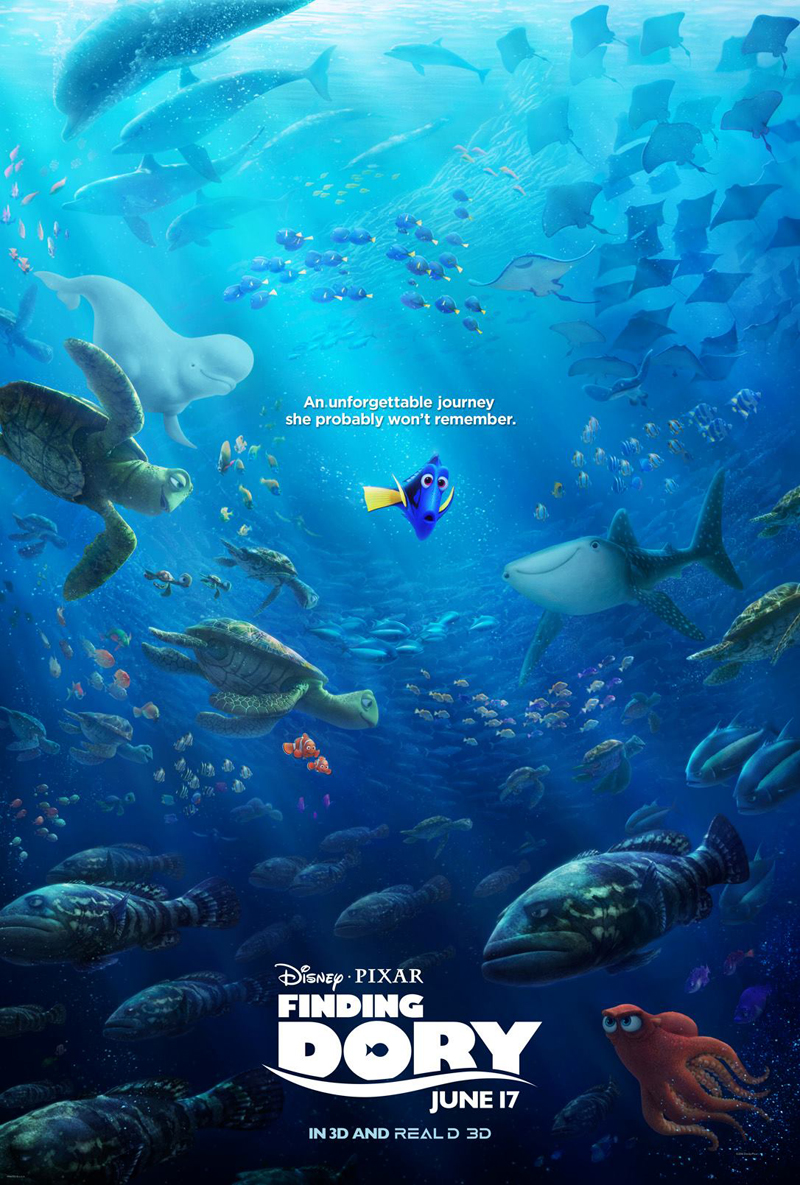
Finding Dory (2016)

Cast: Ellen DeGeneres, Albert Brooks,  Ed O’Neill, Kaitlin Olson, Hayden Rolence, Ty Burrell
Director: Andrew Stanton, Angus MacLane
released on blu-ray November 15, 2016
****** 6/10

1ca12fbc26201b2cc403bf7d8a70171d

IMDB: 7.6
Rotten Tomatoes: 94%, Audience Score 86%
The Guardian: ****/*****


Andrew Stanton has had his share of director opportunities within his career at Disney Pixar – A Bug’s Life in 1998 as co-director, Finding Nemo in 2003 with Lee Unkrich as his co-director, WALL-E in 2008, his first live action film with John Carter in 2012, and now Finding Doy with Angus MacLane as his co-director. He also co-wrote all three Toy Story films and Monsters, Inc. Angus MacLane on the other hand, is primarily an animator who has just started to tread water (excuse my pun) in the shoes of director.

The question of course, is “do we really need a Finding Nemo sequel?” Without giving too much away too quickly, I will say this; Finding Dory is a beautiful if not unnecessary attempt at continuing down the line of thought that Finding Nemo already presented us with.

The film introduces us to a young Dory (Ellen DeGeneres), who is already suffering from short-term memory loss, worried that she’ll forget her parents, and that they’ll forget her at some point. Eventually she does get lost, but cannot get the help she needs to get back to her family, because of her memory failings, and so years later Dory is still lost and unable to recall her family. We are given a short sequence that showcases her first interaction with Marlin (Albert Brooks) and how they work together to find his son Nemo (Hayden Rolence). The movie takes us on a journey for Dory to find her family, which begins when Dory begins to pick up fragments of memories she didn’t know she had.

With the statement “Jewel of Morro Bay, California” on her lips and Sigourney Weaver’s voice in her head, Dory swims away after from home after an altercation with a squid puts Nemo at risk and Marlin at odds with her. Marlin and Nemo eventually realize that Dory is lost and go looking for her.

And so we witness two separate paths unfold one for the father and son, and a separate one for Dory, each meeting a host of new characters, like Hank the septopod (Ed O’ Neill), along the way in what one can easily describe as a typical quest story. And while there are many funny moments that lead up to the inevitable, if not somewhat obvious, conclusion, there is also a fair amount of CGI magic and good old fashioned heart.

Pros: This is a character story, focusing specifically on the personal challenges of Dory, identity, family, an array of characters with disabilities and how they deal with them. Its in those moments of mental exploration that Finding Dory is the most interesting.

Cons: The story does run very similar parallels to the original, which makes it difficult to see it as a pure sequel rather than a clone of what preceded it. On another level, ironically, it often feels like you are supposed to feel a certain feeling rather than organically fall into it.

Runtime: 1 hour 37 minutes

Points of Interest: This is the second time that Pixar has made a movie with no major antagonist, with the first film like that being Inside Out. The real reason Hank has only seven tentacles is because the animators realized a little too late that they could only fit seven on his body. His backstory was rewritten to account for the missing limb.

As I’ve already mentioned, Finding Dory is a fun sequel, albeit one that is often feels like an extended cut of Finding Nemo, and full of the same thematic ideals. It is very smart and has a great concept, but we’ve already been there, done that. It felt great over a decade ago, and is still entertaining today, but it’s not quite the same experience. And the animation is incredible, moreso than Finding Nemo even. But I wouldn’t put it up for animation of the year or as an animated classic.


If you want to become a voice actor, it helps to have some standard acting credits under your belt already, but the most important thing to consider is practice, practice, practice. Developing your talent over time is essential to a good delivery. If you pay very close attention to Ellen DeGeneres in this film, she manages to give a nuanced performance, and yet we never see her face, we only see Dory the royal blue tang fish. Its a testament to her ability to emote and why the film is entertaining, even if a bit derivative.

But what do you think, dear readers? Am I off the mark on this theory? Was Finding Dory an amazing film, continuing the great legacy of Disney Pixar rather famously?

Tim!