Post-Apocalyptic Triangulation (Z for Zachariah review)

People are sick. They have an odd fascination with the end of the world as we know it. EOTWAWKI for short. But the problem with the EOTWAWKI is that it’s been done so many time in film, music, visual art and literature now, that we don’t really react to it as viscerally as we should.

I blame it on summer blockbusters, but that’s just my theory. Now, where it gets interesting is when we start to explore movies that deal with the subtleties of what could happen both during and post. Today’s review is about the later.


Z For Zachariah (2015)

Cast: Chiwetel Ejiofor, Margot Robbie, Chris Pine
Director: Craig Zobel
released on blu-ray October 20, 2015
******** 8/10
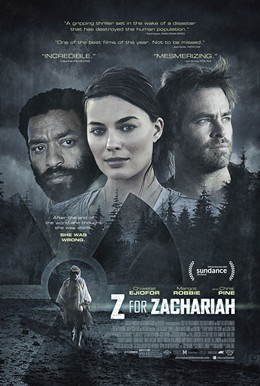
Z_for_Zachariah_poster

IMDB: 6.0
Rotten Tomatoes: 79%, Audience Score 45%
The Guardian: ***/*****

Craig Zobel is an American director, who got his start as a co-founder of the animated web series Homestar Runner. If you don’t know anything about Homestar Runner, you need to go check it out right now. Stop reading this review and watch some episodes of the show. Start with the back catalogue first, especially the Strong Bad Emails. Done? Good.

How weird is it that the guy who made that show is making serious movies now? I find it very unsettling, especially considering how much I enjoyed Z for Zachariah. And the fact that Zobel also directed Compliance, a 2012 movie about the strip search prank call scam that happened in the United States in the early 2000s.

Z for Zachariah is the story of a woman named Ann (Margot Robbie) who has survived nuclear war. She is living on her family farm in the middle of a valley – which has somehow been sheltered from the fallout, with the exception of water that comes over the falls from the mountains. She has a good routine which involves feeding both her and her dog, tending the land, and enjoying music and books.

One day a stranger (Chiwetel Ejiofor) enters the valley in a radiation suit. He was working in a government bunker and avoided the initial attacks, but has definitely been effected by the radiation and loneliness from searching for survivors. When he stumbles upon Ann’s valley, he immediately goes to the falls to clean himself, but Ann jumps out and warns him of the radiation. The man gets sick, and she cares for him until he is well, asking God that he might live. We learn his name is John Loomis, and both Ann and John begin to trust one another.

At one point John suggests that they build a waterwheel to divert the water and generate power, however because it would require a break down of the community church that Ann’s father built, she is reluctant to do so, and John drops the subject. Their chemistry and sexual tension increases over time as well, and just as the relationship is about to blossom another stranger shows up. His name is Caleb (Chris Pine) and he has a different perspective on how events should play out than John.

This is where the story gets interesting, a love triangle forms between the three characters, with conflict between John wanting Ann for himself, wanting her happiness, distrust for Caleb and Ann caught in the middle. We get to witness the full range of emotions that each character has about the other two, without a ton of dialogue. In some ways, it simplifies the plot, but in others it sets the story up for a rather poignant ending, which I won’t ruin because I think it’s worth saving.

Pros: It is a very thoughtful story, albeit somewhat slow in it’s pacing. But with the decision made, it allows the viewer the opportunity to really mull over what has been seen and wonder whether characters are committing deeds out of love or self-love.

Cons: The movie struggles with knowing when to speed up and really make a choice about it’s message. We are left to fill in a few of the gaps ourselves.

Runtime1 hour 38 minutes

Points of Interest: Based upon a book by Robert C. O’Brien, the love triangle is not in the original story, which only featured Ann and John.

This is a nuanced and interesting take on the post-apocalyptic film. Chiwetel Ejiofor gaves a nuanced performance and makes you question his character though he is set up as the sympathetic male lead from the start. Margot Robbie of course delivers with a range of emotions and her obvious naïveté as a young woman who doesn’t know what to do. She pulls it off well. And of course, Chris Pine is always charming and interesting with his devil-may-care attitude. While Z for Zachariah s not quite the same thing as the book, Zobel manages to construct an interesting story all the same.


This post-apocalyptic movie is definitely a slow go, but it does ask the question – what if you had all the time in the world? What would you do? And then what would you do if all of a sudden there was a possibility that you had to suffer as a third wheel in an infinite loop? Zobel manages to expose these shifts in power and opportunity, never revealing what each characters true motivations are. I doubt you’ll catch many Z’s after watching this one, but that’s just a theory.

Tim!
First Order of Business (Brad Fehr interview, Intuition)

Intuition is both mysterious and incredibly powerful. It’s also really difficult to write about.

Seriously, dear readers.

I probably spent a good three hours online trying to find a way to articulate what I wanted to write as a thematic jumping off point for this interview topic, but then I decided to instead go with my gut, which just felt right. And so here we are, left with a raw and wriggling post about my own love/hate relationship with intuition.

You see, dear readers, I’ve always been a proponent for using intuition, because it can gave you great insight about people, ideas, and places however problematic they are. It straddles the line between philosophy and psychology, and depending on how you view the internal world versus the external world, it can sync quite nicely. Frankly, we all use it whether we admit it or not. And did I mention that it can also lead us to great creative breakthroughs and forging fast friendships with those we “just click with?”

Step-Brothers-Did-we-just-become-best-friends

The same can be said of romantic relationships, sometimes everything just falls right into place, and that person you flashed a smile at that one time quickly becomes the person you join giblets with.

littlemermaid6d22a5abc1c3169f5e7f3fa39df4af53

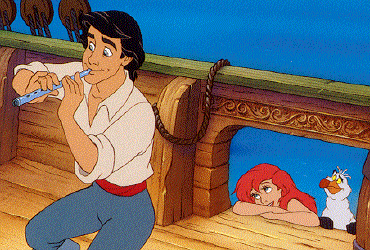
Come on, that visual reference was funny. You should just laugh, it’s Sunday.

After all, our intuition is always there, and some of us of even rely on a visual element to our intuition, which means that those of us with this ability are likely to become artists and manifest life via symbols, images, dreams or patterns.

Which is exactly what today’s interviewee is all about. Taking existing patterns, models and visions, and applying his own unique perspective to it. Or as he so eloquently put it for me when we first spoke, his straight white CIS male perspective. Which is pretty apt considering the subject matter he works with.

Brad Fehr is an up-and-coming artist who is in the process of finishing his undergrad, but don’t let that fool you into assuming a role for him. He dabbles in painting, philosophy and videography and is comfortable switching back and forth between formats rather easily. He makes art which finds similarities between dead ideas and current ones, and then applies cultural norms to investigate what is at stake.

His comfortability with the interview theme is rather refreshing, and the time just flew by for me in discussing his views on art, life, and what it all means. I suspect you’ll want to head straight to the video from here, so I won’t drone on. Enjoy episode 10 of timotheories interviews, featuring Brad Fehr.

As always, if you want to check out more timotheories interviews or the Cross Talk series please visit our YouTube channel.  And please, please, please share this post and of course subscribe to both the blog and channel!

Please also check out Brad’s Instagram account to see his portfolio and to contact him for creative services.

Lastly my sincerest thanks to Brad for being bold, brilliant, and bemused. See you tomorrow with an album review that’s features America and love.

Tim!

Flower Power (The Cult, Hidden City review)

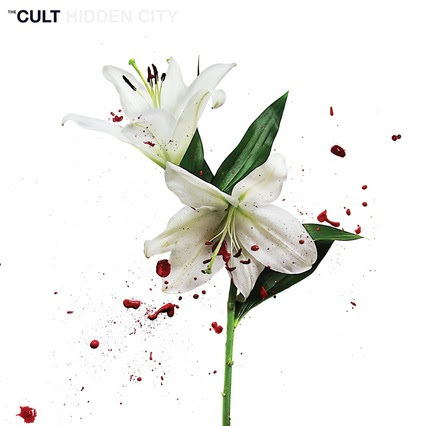
Lilies have a few symbolic purposes in culture. From Greek culture in particular, the lily represents birth and motherhood, and also sexuality. In Christian symbolism, it stands for chastity, innocence, and purity. When we get into the esoteric, we can combine the symbols of purity, innocence and fertility together, and then add in vulnerability and freedom of identity.

This week’s album is made by a musical group known for their love of exploration and consideration of the details, I wonder which symbols their lilies represent?


The Cult – Hidden City
released February 12, 2016
******* 7/10

the-cult-hidden-city

The Cult are a British rock group which have been reunited twice since forming in 1983. Touted as a post-punk and goth-rock band since their inception, they are famous for the singles She Sells Sanctuary and Rain.

The group gained enough traction to enter into North American markets by the end of the 1980’s and kind of did things at their own pace after that point.

Hidden City is the 10th studio album by The Cult, and the third in a “spiritual trilogy” produced by Bob Rock.

I’ve always been a fan of The Cult since I first discovered them in my teenage years. This was well after they had already broken up once and were on their way to another split, but GTA: Vice City introduced a 90’s kid to popular music from the 1980’s, which I’m thankful for. And so  not content to collect the anthology, I eventually decided to buy Best of Rare Cult; a compilation of selected songs from the Rare Cult box set, which had been released in the fall 2000.

Maybe I’m fortunate for this decision or maybe not, but Hidden City features the energy of that compilation album and some of their more experimental artistic decisions.

For instance, Dark Energy is an incredibly appropriate high energy opener, laced with helpings of both mysticism and spirituality, something to get you excited and remind you why The Cult has a cult following, so-to-speak. How convenient for them!

In Blood features soft beats and dreamlike lyrics, while Birds of Paradise takes this further and really heightens the emotional pull.

Hinterland feels like an anthem for spiritual awareness but upon closer inspection I think it’s also an admission of guilt by Ian Astbury to the problems of ignorance and following routine in an age of connectivity and political intrusion.

But that’s the thing about The Cult. The surface and the core aren’t always the same and they play with this idea throughout the record.

Avalanche of Light has a great chorus and reminds me the major reason why this album exists in the first place. The Cult are exploring the intimate and the unknown – Hidden City is a metaphor for us. The tools may be guitars, drums, and microphones, but the result is still the same, a record by The Cult which features goth-rock like tracks Lilies and Deeply Ordered Chaos, which share in the metaphors of life.

You should check out the audio video for Dark Energy and the music videos for Deeply Ordered Chaos and Hinterland to get a taste for the album, but if you like The Cult, goth-rock or are looking for a place to test the waters of hard rock, Hidden City is a good place to go spelunking.


At albums end, I have to admit I’m not perfectly sold on the perfection of these tracks, but this is a damn good record either way. I’m inclined to theorize The Cult is pulling all of those lily symbols in and out of their songs, but I’ll let you be your own judge, after all, you have your own Hidden City to look after.

See you tomorrow for another shadowy review, this time it’ll be a movie.

Tim!