Arm Chair Philosophy (Vince Staples, Big Fish Theory review)

Philosophy is a wonderful thing. Rich, compelling, and full of room to experiment, because there isn’t one world view per se.


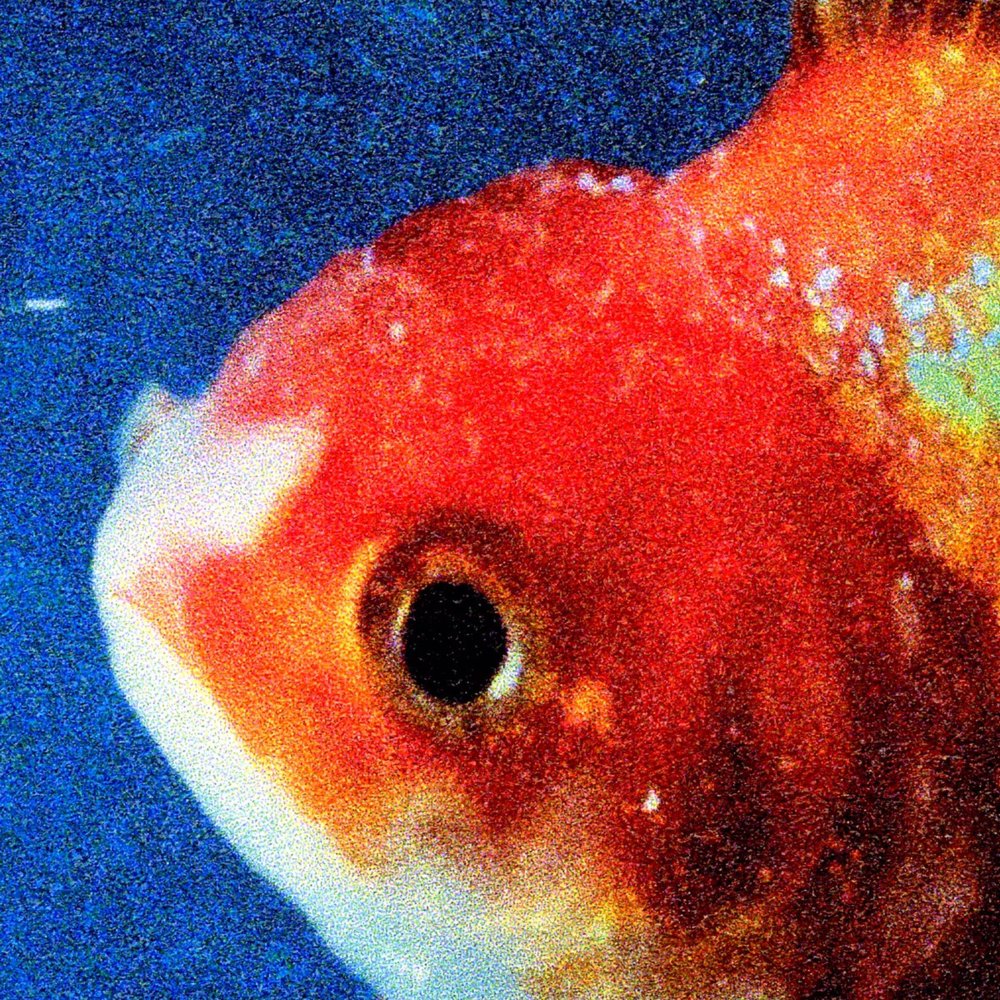
Vince Staples – Big Fish Theory

released Jun 23, 2017
******* 7/10
Vincent Jamal Staples, better known by his stage name, Vince Staples, is an American rapper and member of the hip hop group Cutthroat Boyz. He has also been associated with Odd Future and gained attention by making appearances on their albums as well from a mixtape he worked on with Mac Miller, Stolen Youth.

Staples debut album, Summertime ’06, was already released two years ago, which is why his sophomore effort, Big Fish Theory, has a lot to say for itself and about this new renaissance of hip hop, EDM and pop. Much like his contemporaries, Kanye West, Kendrick Lamar, Drake, and Childish Gambino (who is supposedly leaving music behind), Staples is perfectly comfortable with living in the weirdness of our generation. That means producing a record which could be ethereal and amelodic or one that combines sounds of the past to propel us into the future. Big Fish Theory is the later.

And I have to wonder if calling upon his previous skills as a documentarian, celebrating a self-proclaimed posthumous guardianship of Amy Winehouse, who features on Alyssa Interlude, and his hyperawareness of his own mortality/celebrity are the driving factors of Staples’ successes here or merely a perk when listening to the record.

The weirdness shows throughout the whole album, and might be best demonstrated in one of the later songs, Party People. Staples raps about how you can either move to the music if it hits you right OR you can sit there in your depression swimming with thoughts and a heavy heart, after all, the world is dark for some of us. This is not your baby sisters hip hop, nor is it aunties or grandpas. These beats are different then pretty much anything I’ve ever heard, and it works well, most of the time.

Not only that, but Vince Staples is happy to push his collaborators into the backdrop and have them as part of the song rather then front and centre, in fact he even pushes himself into a minor role on one of the songs. Kendrick Lamar fits nicely inside Yeah Right, an attack on the chest-puffing of most rap tracks. And there are definitely blink and you might miss it appearances from Juicy J, ASAP Rocky, Kilo Kish, Ray J, Ty Dolla Sign, and Damon Albarn.

The challenges with this album come in on the structure and organization of the songs, which can be heard best when you listen to tracks like Crabs In A Bucket, Love Can Be…, and Ramona Park Is Yankee Stadium. The questions I have immediately are around the experimentation. Exploration is awesome, but do these really compliment Staples cadence and content? It’s interesting for sure to have the bird calls, sirens, and whistling winds, but where is this going? Crabs In A Bucket sets the stage for a complex album, but it doesn’t feel like his strongest work, for sure.

That said, there are some really surprisingly fun tracks like 745 and Rain Come Down that intrigue despite shortcomings. Tonally these suit Staples well and the melodic choices sync up well with the speed at which he lays down his lyrics, but the best parts come from the verses and his rapping.

It is an experimentation of electronic music and hip hop, the kind of thing which metal-hip hop hybrid groups of the 1990s tried to accomplish but never really pulled off. And maybe that’s because those artists were metal first and hip hop second. Vince Staples confidence is so much more convincing.

Pros: Big Fish, the aforementioned Yeah Right and Party People are absolutely necessary on this album. An exploration of suicidal thoughts, the nature of hip hop, and what needs to happen next, Big Fish Theory is conscious hip hop, even if it isn’t labelled as such.

Cons: Rain Come Down is a little off in its warbling and takes the album into weird territory just as Big Fish Theory ends, much like how Crabs In A Bucket has a shaky start, it’s the middle of this record that does best.

Runtime: 36 minutes

Points of Interest: Influenced by house music and Detroit techno, Big Fish Theory calls up avant-garde electronica, funk, industrial music and a host of other sounds to afford Vince Staples with the creative expression he needs to transcend his environment. That Def Jam supports this sort of experimentation is fantastic, despite how discomfiting it is for most hip hop fans.

When music separates itself from it’s environment for even a second, acknowledges the world around it, and then zooms back in, it’s often a pleasing experience, and luckily for us world weary philosopher Vince Staples shared his Big Fish Theory with us.

theories Summarized

Keeping an open mind and heart is a wonderful philosophy and I hope Staples inspires other musicians to continue this trend. Yes, there will be blips in the road along the way, but how wonderful it is that we can have some good hip hop and EDM combined together for once, rather then remixes and overdubs. And that’s my personal big fish theory.

Tim!

Grey Matter (Governance)


Decision making is hard, dear readers.

And sometimes implementing an easy decision really is the wrong thing to do, while implementing the complex decision turns out to be the right one. Unfortunately for all of us, life is not quite so simple as those black and white principles, and even Luke Skywalker is probably going to realize that going grey is the most pragmatic solution. But don’t take my word for it, read this theory about why jedi and sith are likely old news, and that by Episode IX’s end, we’ll likely see a new type of force user emerge victorious.

I hold that this theoretical decision making on Skywalkers part will come down to good governance. We cannot have light without dark, and if you increase one over the other, the secondary element must evolve in kind. But when we combine elements of light and dark, the contrasts give way for subtle shifts in grey and a much stronger range of tonality.

I personally believe this applies to how governments should operate as well. Well as much as I can say in 1000 words or less.

When public funded institutions conduct their public affairs and manage public resources in a responsible and effective way, they are enacting good governance. Those actions cannot be conducted only out of selfish needs nor can the patrons be so altruistic that they never stand up and fight for their people.

But what is governance anyway?

According to wikipedia, governance refers to

all of the processes of governing, whether undertaken by a government, market or network, whether over a family tribe, formal or informal organization or territory and whether through the laws, norms, power or language.

That means working with many different people of many different functions to organize and operate all of those functions in a way that benefits those people.

Not Just A Liberal’s Fancy-Free Dream

What this means to me is that we HAVE TO work together to ensure everyone’s voice is heard, and that decisions are made which always put safety and welfare FIRST and which are for the aid of as many constituents as possible. Good government operates as a sum of it’s parts, the light, the dark, and everything in between. The grey matter of the body.

As an example of support by representation, The Canada Council for the Arts exists primarily to ensure the Canadian people are given a range of public art projects regularly, by investing in the arts through grants and services which bolster the broad range of cultures which make up Canada.

That and they help to raise awareness for the arts too.

But this is just one example of many types of programs which exist in modern day governments, and which are key to the success and development of our communities in a state of global communication.

Programs exist for the disabled, for impoverished, for sports, and for education.

f7ffd2e906b1cf8e344ff12cb78190eadefbb587ac86531cd6000a183e67911f

But, and I hesitate to share this, there is this notion out there that a great many conservative supporters like to say fairly often – creative types are bleeding hearts, and successful ones are supposedly so far removed from the real world that they cannot see the forest for the trees – but I strongly disagree with this notion.

And I don’t share this point lightly, because it is true that we can’t all be movie stars and music geniuses, a great many of us live our lives in the working class, and that ain’t so bad. But good governance should see through classism and recognize the issues at hand first and foremost, no matter what voice an issued is raised with.

Ashton Kutcher – Smart Cookie and Model Citizen

I originally planned for this post on governance (inspired by the Postconsumers response to the OECD index) to be about how artists can uniquely contribute to our communities in the voting process, and where supporting local initiatives and pitching in in ways other than with our pocket money DO make a difference… But then I ran across a tweet about Ashton Kutcher this morning.

In case you aren’t familiar, Ashton Kutcher got his start as a professional model before eventually breaking out into television and film as an actor, and then working his way into investment opportunities as a venture capitalist. He’s been involved in numerous startups over the years including Skype, Foursquare and Airbnb. He’s a smart cookie, though he plays a dummy on TV.

Probably the most impressive thing about him though, is that in 2009 he established an international human rights organization called Thorn with now ex-wife Demi Moore. It’s goal is to address the sexual exploitation of children and human trafficking on a global scale. I mention this because in the tweet that twitter user shared, the author acknowledged how ludicrous it was that Kutcher had to defend his profession as an actor before he could address a US senate committee on the successes of the software his company has developed to fight human trafficking.

He then explains how his technology will helps save thousands of lives, and how investing in it is necessary for us to commit to good governance.

I’m going to share a clip of his speech because I cannot do it more justice than Mr. Kutcher did himself.

theories Summarized

When we practice good governance, we are using our grey matter appropriately. And my hope is that by recognizing all human beings have the capacity for light, dark, and grey actions in-between, that creative professionals are not limited by their hearts, rather their strengths of language allow them to communicate what good governance is. At least, that’s the theory anyway.

Tim!