I Could Get Used To This (Cross Talk Ep. 17)


You may or not be familiar with a band called The Veronicas. I wasn’t initially, not until I stumbled across a Virgin Records store in New York City back in 2006. I intentionally hit up the store hoping to find some local New Yorkers on the rise, thinking I could beat the fame train and know some “cool” music ahead of my Edmonton hipster friends back home. I grabbed  Arctic Monkeys and the Veronicas, amongst a couple other picks.

I When I left the store, I immediately popped the Veronicas into my CD player, because people still had them at this time, and was pleasantly surprised to discover that I had landed across a couple of Australian identical twins that made a healthy mix of pop music. Electro, punk, rock, dance, prog, you name it, these chicks mixed with it.

Suffice to say, it was not my typical fare at the time. I was listening to mostly hip hop, punk rock, and the occasional foray into indie rock. Mostly because of my hipster friends.

I had some preconceived notions.

cpa-dog

Thankfully those notions didn’t hold me back for too long, and before I knew it, I was a The Veronicas fan. After all, pop music can be just as powerful as any other form of music, especially when artists explore the genre and bring something new to the table.

Which is why today, Chris and I explore the importance of looking at films you expected not to like, but ultimately did, so that we can break down some of these weird ideologies, get outside of our realms of influence, and experience excellent films. Examples for us as two white dudes that grew up in the 80s, watching animated movies and romantic comedies, but even within genres we are “supposed to” like, there are examples which break the mould.

I’d give you some direct examples, but I think it’d be best if you just watched the episode, reader readers.

This is episode seventeen of Cross Talk, and we at the timotheories team know that you’ll enjoy it. It’s an excellent topic and one that I’m personally stoked to share with you. So grab some popcorn and some candy, and figure out with us how to challenge these stereotypes! Plus Chris looks crazy in that preview thumbnail, so I fully expect that will serve as satisfactory clickbait.

Before I wrap up my thoughts on this post, I just want to remind you all of how important you’re support of this website is for me. I operate timotheories out of my own pocket, and exchanging ideas with creative professionals like you are one of the major reasons why this thing even exists in the first place.

So thank you.

Another day, another theory realized my friends. I look forward to hearing your feedback on the episode, and I’m so ready to dig into this week and share some reviews on the new Train album, the blu-ray release of Queen of Katwe, some thoughts on Facebook, and a digital download of my experience at a concert.

As The Veronicas, like to say, I could get used to this.

Please comment, subscribe, and share this video with friends. We want to hear your feedback!

Tim!

Empire State of Mind (Environment)

I have probably played way to much Magic: The Gathering and other fantasy based games growing up my friends, because I always want to equate myself with a particular element of nature and just run in the general direction of that thing to better equip myself for the stresses of life. According to astrology and palmistry fire seems like the natural choice, while other personality tests and chinese zodiac results lead to that of the earth. So I guess that means I’m geared for the life of the country AND the city, but not so much high up or near water.

Whatever that means.

To be honest I think that we should make decisions about our physical environment based upon our interests and what inspires us. So if you need to be out in nature in order to be creative, do so, and what that natural environment looks like to you is also relevant, then seek it out.

Today, we go over the importance of your habitat, climate, scenery, terrain or surroundings.

Your Friendly Neighbourhood

That’s right friends, a new month,  a new post inspired by the OECD index which I was initially led to in the first place by the folks at Post Consumers. But this time dear readers, I have decided to focus on the importance of environment for artists and give you some options to consider in your quest towards health, wealth, and happiness. Because while frugality and conservation of resources are important for the planet, your mental space needs to be taken into account too.

Yes, believe it or not, if you look out for yourself and a lot of other things begin to fall into place.

i5tvtvm

But what does that look like, you ask?

Well, like anything in life that depends on what you are about. So why don’t I give you the rundown of some things to consider, via a handy list, and you can decide for yourself if you’re on the right track to health, wealth, and happiness.

Welcome To New York, It’s Been Waiting For You

Before we get too far along, I need to clarify something. While I do think that New York city is a great place to live, and while my subject headings in this post so far are really hinting at NYC as a one stop shop, that’s just not true. And no, I’m not leading you towards Los Angeles either.

Instead I want you to look over some questions and the corresponding key words, and think on what kind of creative professional you need to be. All of these factors will help lead you towards an answer, and lead you towards creating a sustainable lifestyle.

  1. Is it important to you to attend parties? Think street parties, exhibitions, murals, fairs, and citywide events.
  2. What about a structured living situation? This could include open-concept loft apartments, industrial towns, and attending art museums as well as galleries.
  3. Does the place you live in need to be warm all the time? A daily does of street performers, dancing, food eaten outdoors, curbside coffee shops, and urban graffiti go a long way.
  4. Could you experience a wide variety of activities and room for contemplation? Where does live music, onsite food trucks, post-secondary education, libraries or urban sprawl fit in?
  5. Would economic stability be essential? If you like quirky shops, breweries, cheap rent, and post-grad couture.
  6. How organic is your palette? Farm-to-table, organic groceries, yoga, countryside views… Do those terms grab your attention?
  7. Are you inspired by other mediums? If film, audio recording, performance, and site specific works are your thing, consider your location.
  8. Does interacting with your immediate space matter? For when you need to make guerilla art, partake in festivals, induce public art participation, and convert odd spaces.
  9. When do you choose to collaborate? Artist run centres, art collectives, creative clubs, and meet-ups are all options.
  10. Who do you collaborate with? Whether musicians, hippies, hipsters, scensters, hip-hop lovers, electronic record spinners, cowpokes , entrepreneurs, writers, theatre artists, photographers, and techies all have their homes too…

While not comprehensive, these are all great factors to consider in the much larger picture that is the artistic environment which you call home. I can dedicate a lot of time to any number of these aspects, but you need to start somewhere after all.

theories Summarized

Well creative cuties, have you got your terrain locked down yet? I hope you spend some time with this one because we all need to work in spaces which are inspiring, comfortable and accessible. Like so many of these themes that tie into the OECD, environment has value. It may be my theory, but it should be yours too. That’s it for now, I’ll see you tomorrow with a timely update.

Tim!


Posh and All That (Cafe Society review)

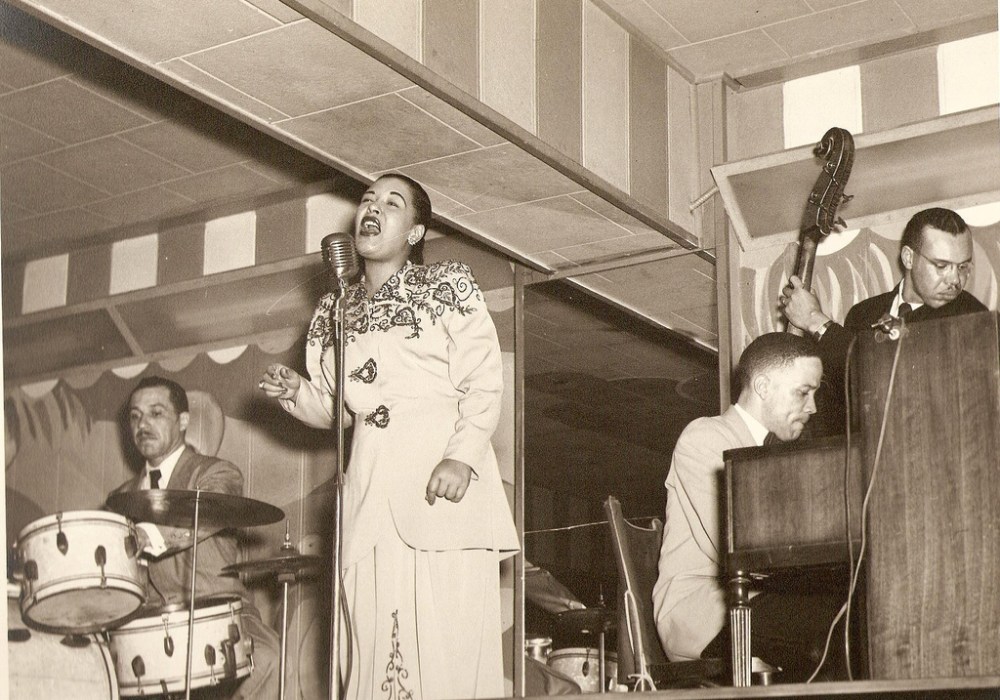
Cafe Society was a New York city nightclub opened in the late 1930s in the midst of Greenwich Village. It featured mostly African American talent and was intentionally set up to challenge the ideals of the rich club goers of that era.

It was set up as a place for political events, fundraisers and considered to be a staple of liberal ideals. But what about the movie that took it’s name?


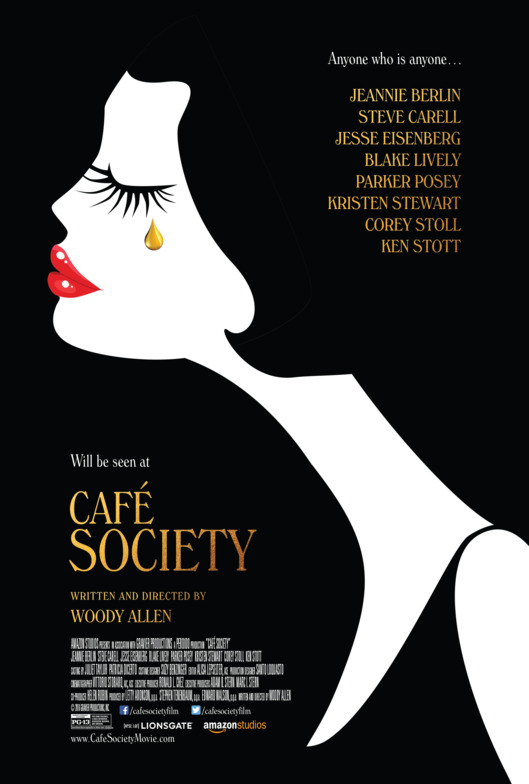
Cafe Society (2016)

Cast: Jesse Eisenberg, Kristen Stewart, Steve Carell, Blake Lively
released on blu-ray October 18, 2016
******* 7/10

21-cafe-society-nocrop-w529-h835

IMDB: 6.8
Rotten Tomatoes: 69%, Audience Score 62%
The Guardian: ***/*****


Ah Woody Allen. An American actor, comedian, film director, and sometimes theatre director. He’s eighty years old and has been making movies for fifty years. Just consider that for a second, fifty years worth of movies and forty-eight turns at directing. And I think I’ve seen somewhere between ten to fifteen of them all by myself.

Cafe Society is his most recent foray into the world of film and ironically or not, it’s a movie about the film industry.

Set in 1930’s Hollywood, we are quickly introduced to Phil Stern (Steve Carell) one of the most prominent agents in the business. At a party he takes a phone call from his sister Rose (Jeannie Berlin), who tells him that her son is moving to LA from New York and that he wants to find a job working with Phil.

Bobby Dorfman (Jesse Eisenberg) lives with his family in town, and is the youngest of his two siblings. His sister Evelyn (Sari Lennick) is a schoolteacher who is married to intellectual Leonard (Stephen Kunken), while brother Ben (Corey Stoll) is a renowned and murderous gangster. The family turns a huge blind eye to Ben’s criminal proclivities.

When Bobby initially arrives in town, he attempts to make an appointment on several occasions but is completely ignored by his uncle for several weeks before Phil finally decides to see him. When they do discuss the possibility of a job, it resolves with Phil deciding to get his nephew in with some pseudo-bullshit type arrangement. He then asks another secretary of his, Vonnie (Kristen Stewart) to show Bobby around town.

Of course Bobby is instantly smitten with Vonnie, but when he asks her out, she tells him she is dating a journalist named Doug. We later learn that Doug is in fact a codename for Phil, and that Vonnie is having an affair with Phil behind his wife’s back. Phil claims to love Vonnie, but is unable to leave his wife, and breaks it off with her at the one year mark, just as Vonnie has given a letter from Rudolph Valentino to him. When Vonnie confides the breakup story to Bobby she leaves out no detail, with the exception of Phil’s false identity.

Bobby and Vonnie slowly begin a romance, and Bobby plans for them to leave to New York and get married.

At this point Phil decides to leave his wife and confides in Bobby that his mistress even gave him a letter from Rudolph Valentino. Once Bobby pieces it all together, he confronts Vonnie, and she decides to leave him and instead marry Phil.

Years later, Bobby is a successful nightclub owner, which is a front for his brother Ben’s criminal activities. Bobby meets and marries Veronica Hayes (Blake Lively). And things continue on positively, until one day Phil and Vonnie come to town.

But that’s all I’ll say about that.

Pros: Kristen Stewart delivers as Vonnie, the set pieces and cinematography are gorgeous, and though the story is somewhat stale and obvious, that’s not to say it isn’t entertaining.

Cons: At many points that film feels like an autobiography of Woody Allen as portrayed by Jesse Eisenberg. The self-indulgence is ever present and the drama can’t seem to find a way to properly raise the stakes

Runtime: 1 hour 36 minutes

Points of Interest: This is the first digitally captured Woody Allen movie ever. And it’s the first time Woody Allen has narrated a movie since 1987’s Radio Days.

It all feels all too familiar, Allen draws on his hometown experiences, referencing the perspective of a New Yorker, covering off the challenges of being Jewish, reflecting on the plight of the neurotic, and even addressing the facade that is Hollywood film culture. Cafe Society appealed to the artist in me, and I’ve said it before, but I’m a sucker for Woody Allen’s introspective nature. Is it for everyone? No. But it is entertaining enough for most.

Cafe Society the movie never quite reaches the same aspirations as the club on which it was based – it asks questions, and considers it’s timeframe, but it is a story driven by emotions and nostalgia for an aesthetic. It never reaches a place of self-awareness, effacement or even acknowledgement. But dammit if it isn’t full of beautiful people and places. This really is an excellent role for Kristen Stewart, and if you like Woody Allen, even when he’s lazy, you’ll drink from this cup.

Tim!

Cold Kickin’ It Live (Brooklyn review)

I’ve never truly experienced homesickness. In all of the vacations I’ve taken, roadtrips I’ve been on, and visits with friends and family, I’ve only ever been away for a couple weeks at most.

That true sense of longing has never set in.

And so it’s difficult for me to understand what it feels like to be a fish out of water, but the beauty of film, is that sometimes, it can relay these feelings perfectly.


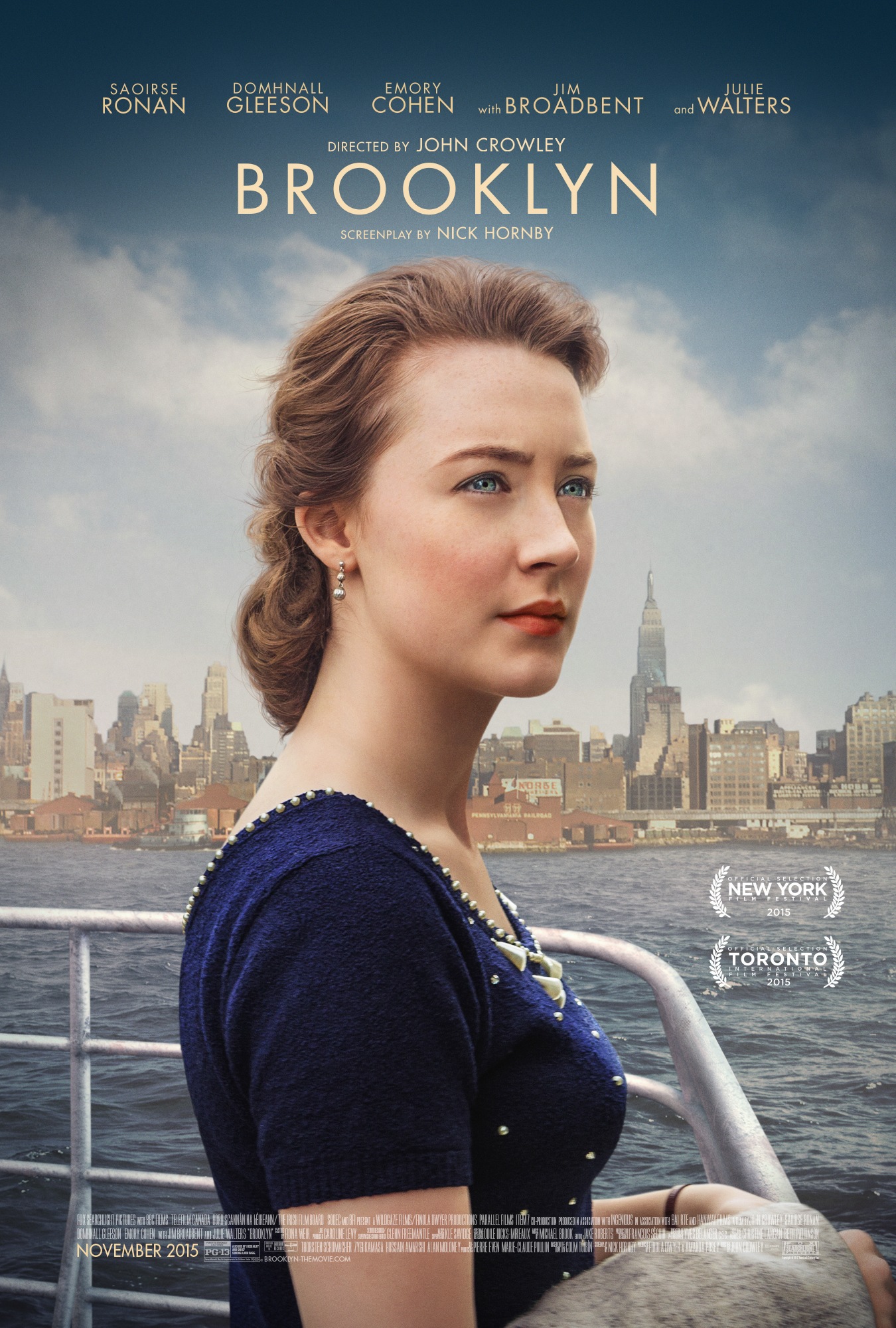
Brooklyn (2015)

Cast: Saoirse Ronan, Emory Cohen, Domhnall Gleeson
Director: John Crowley
released on blu-ray March 15, 2016
******** 8/10

Brooklyn_1Sheet_Mech_7R1.indd

IMDB: 7.5
Rotten Tomatoes: 97%, Audience Score 89%
The Guardian: ****/*****


John Crowley is an Irish television, film, and theatre director, who is best known for his first film Intermission. He has directed a handful of other dramatic films, and has slowly worked his way through theatre to film, which he believes was a natural progression.

Though his films have not seen a wide international release audience, Crowley has a strong understanding of human relationships, and the complex emotions that relate to special circumstances.

And that’s where Brooklyn shines…

Taken from Wikipedia and edited,

In 1952, Eilis (pronounced EH-lish) Lacey(Saoirse Ronan) is a young woman from Enniscorthy, a small town in southeast Ireland. She works weekends at a shop run by the spiteful Miss Kelly (Brid Brennan). Eilis’s older sister Rose (Fiona Glascott) has arranged for her to go to the US to find a better future. She departs but begins to suffer from seasickness and food poisoning and ends up being locked out of the toilet by her cabin neighbors. The woman in the bunk below her, an experienced traveler, helps her, giving her advice and support for Eilis’s entry to the US and life in Brooklyn, the new home to many Irish immigrants.

Eilis lives at an Irish boarding house where she dines each night with the landlady and her fellow residents, all young women. She also has a job at a department store but is shy and quiet when interacting with customers, earning the gentle scolding of Miss Fortini (Jessica Paré), her supervisor. Her letters from her sister Rose, back in Ireland, give her homesickness. She is visited by Father Flood (Jim Broadbent), a priest who arranged for her job and accommodation, and he tries to help by enrolling her in bookkeeping classes. At a dance she meets Tony (Emory Cohen), from an Italian family, who is quickly interested in her and becomes her boyfriend. With these developments, Eilis begins to feel more comfortable in New York, although she is slow to return Tony’s declaration of love.

Father Flood informs Eilis that Rose has died suddenly of an undisclosed illness. After a trans-Atlantic phone call with her mother reveals that she is struggling to cope, Eilis decides to return home for a visit. Tony insists that if she is leaving they must get secretly married first. They enter a civil marriage without telling family and friends. Back in Ireland, everybody seems to be conspiring to keep Eilis from returning to Brooklyn. Her best friend is getting married a week after her scheduled return journey, and her mother has already accepted the invitation on her behalf. She is set up on dates with eligible bachelor Jim (Domhnall Gleeson), who is about to inherit property. She takes her sister’s place as a bookkeeper on an emergency basis. Eilis starts to feel that she now has the future in Ireland that did not exist when she left and stops opening the letters she receives from Tony.

Miss Kelly, her former employer, meets with Eilis and says she has learned that she is already married. Eilis is reminded of the small-town mentality she had escaped, where there are no secrets. She informs her mother of her marriage and that she is leaving for Brooklyn the next day. On the crossing, she plays the role of the experienced traveler, offering words of guidance to a first-time émigrée. The film ends with Eilis and Tony reuniting and happily embracing.

This is well-scripted story that features subtle character shifts, emotional weight with intelligence, and an elegance to the backdrops. Crowley does an excellent job of showcasing how Eilis feels both at home in Ireland, as she grews in America, then again back at Ireland, and finally at the change when she returns to America, her new home with a new life.

Pros: This is an incredibly understated film which does an excellent job of evolving Saoirse Ronan’s character from timid little sister into career-oriented and capable. Yes there is romance in it and it feels integral, but surprisingly, that is not the driving force of her story.

Cons: Because it has a slow start, and is harkening to an era of film gone by, it can be a little difficult to digest for some. And the conflicts are never incredibly dramatic.

Runtime: 111 minutes

Points of InterestSaoirse Ronan was born in New York, but her parents are Irish, so she was raised in Ireland – this is her first time using her natural accent in film. Emory Cohen was the only American on set, which is odd given the film setting.

The entire film is beautifully shot, with excellent set pieces, costumes and characterizations. And though it’s already been said, this story really does work perfectly because of Saoirse Ronan’s efforts. It makes sense that she was nominated once before for an Academy Award (Atonement), because she can make everyone around her laugh, cry, or contemplate rather easily.

I couldn’t help myself while thinking about buying this movie, then while watching it, and finally as I write this review. But it has to be said – I finally get what The Beastie Boys meant when they sing the lyrics “no sleep till Brooklyn,” a song often describing as a rant about that New York borough.

Whether Eilis was terrified of leaving Ireland for Brooklyn or terrified of being away for so long, I bet that she just could not sleep on that boat ride. But that’s just my theory. What do you think?

Tim!