The Watchlist: Revelations – Adapting Movie Goals for a New Decade

Introduction

Hello, dear readers! 

We did it.

A comeback AND renewed commitment to creativity! 

We’ve gotten through the comeback story series, I’m back on the horse, and it turns out this wasn’t just some weird cathartic digital vomit I blasted across social media. 

I’ve even been including the very professional, career-minded LinkedIn when I publish new content. Yes, LinkedIn. When I first started this blog, broadcasting these reflections onto that space wasn’t on my radar. But now, I’m fully committed to my dual role of marketer by day and artist by night, so I’m going to continue to post there, and share the journey across all platforms. 

Also also. Please keep an eye out for an upcoming post on using LinkedIn as an artist, which will include creative business strategies, and related tangents that will work great for you, wherever you’re at. And please remind me in the event that I get sidetracked by The Fast and the Furious part 11 news or something equally ludicrous in the coming months and don’t follow through on this promise.
Okay. So all that aside, I do need to emphasize the bigger plan in place, in case you are just joining us, and because it informed this week’s post. 

I’m going to be slowly revisiting old content with the new lens that is timotheories 2.0.

That means sharing pop culture insights, art theories, practical skills for artists, creative ideas for enthusiasts, and personal reflections from my world that can help to drive it all for your benefit. Nothing groundbreaking if you’ve been following along since the start (thanks, Mom), but the key difference with timotheories 2.0 is to provide detailed practical content that genuinely serves you, rather than a glorified Xanga site. 

Tell me you’re a millennial, without telling me you’re a millennial amirite?

To recap, in the final chapter of my comeback story, Building a New Path, I shared how my vision for timotheories has shifted from merely curating content to actively creating a community-driven space for exploring creativity and development. With new goals in mind, I’m seeing each pillar of timotheories as an investment towards a larger purpose—whether those pillars are more interviews, better content channels, networking, education programs or channelling other great existing projects like The Watch List to encapsulate a point.

Why The Watch List?

Some context.

We really should go over the origins of The Watch List to give those joining in today a proper background – initially, I wanted to watch some cultural staples as a prerequisite to talking about it films and so I set some goals back in 2014 to help me get from movie fan to film aficionado.

My first goal was clear-cut: assemble a lineup from IMDb’s Top 250 films, supplement it with the Top 1001 Movies You Must See Before You Die, and complete a sizable cross-genre exploration, hitting either the top 25 or top 50 entries of each genre “as defined by popular aggregators”. I gave myself a little grace, by crossing out movies I had already seen. Interestingly enough, and I didn’t share this at the time of the first post, but even then, The Watch List had quickly evolved from a static checklist into something much more layered—an immersive journey into narratives that I believe are pivotal to our cultural consciousness.

And because reviewing content on YouTube was super cool in 2014, I had serious aspirations to talk about a lot of movies.

The Watch List was the third post I ever wrote, and I naively thought it was really accessible and cool, but I also never shared my personal version of it. My list of culturally significant films that I wanted to slowly work through, “to better understand the cultural zeitgeist” has never seen the light of day, so how could I really share insights from it. A little pretentious on paper, and the name was even moreso on the nose, but I leaned into it internally. 
Looking back on the post now, it’s pretty clear I was still figuring out my voice. I didn’t fully explain my thoughts on why I made this project for myself and how it would serve others, and then about a year later in 2016, I did an update post, neatly titled The Watch List redux, that expanded some ideas, but still didn’t really hit the heart of the topic.

In that time away, my watch list has grown into something a lot more personal: both from how I use the data to decide what to watch and what the contents of the list means to me personally. 

I feel a bit better now, but let’s talk about the living document that is my watch list. 

A Living Movie Project 
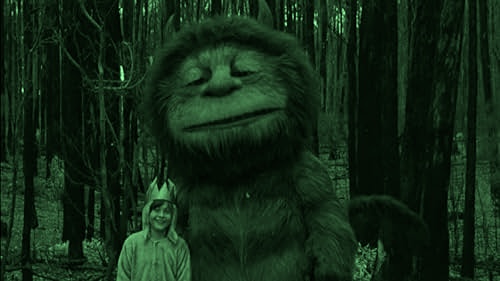
If you really wanted to, you could also call this section Turning the Reel: The Watch List Continues, which is one of the things I’ve been mulling over as I’ve been putting together this post on a listless Wednesday night.

The project didn’t just grow numerically as I added new inspiration source; it grew in personal and artistic significance. 

Watching films became a chance to see beyond the plot or the technical craft, to consider what these stories reveal about human values, aspirations, and struggles. And if I was considering enough of the human experience in the scale of the project. For example, did I have enough women directors in the list? Was I avoiding war films unconsciously?

I slowly added in films, but where I created categorizations, would be through a keyword or phrase coded under the “Reason” column I inserted unceremoniously into the list. Keywords like 1001 Movies, Richard Linklater or Disney made for quick searches and also considerations on what to add in, and sometimes if I had too much of something in the mix.

To me, each film is an expression of art and a statement simultaneously, so themes like empathy, resilience or societal critique emerge by the end and linger long after the credits roll.
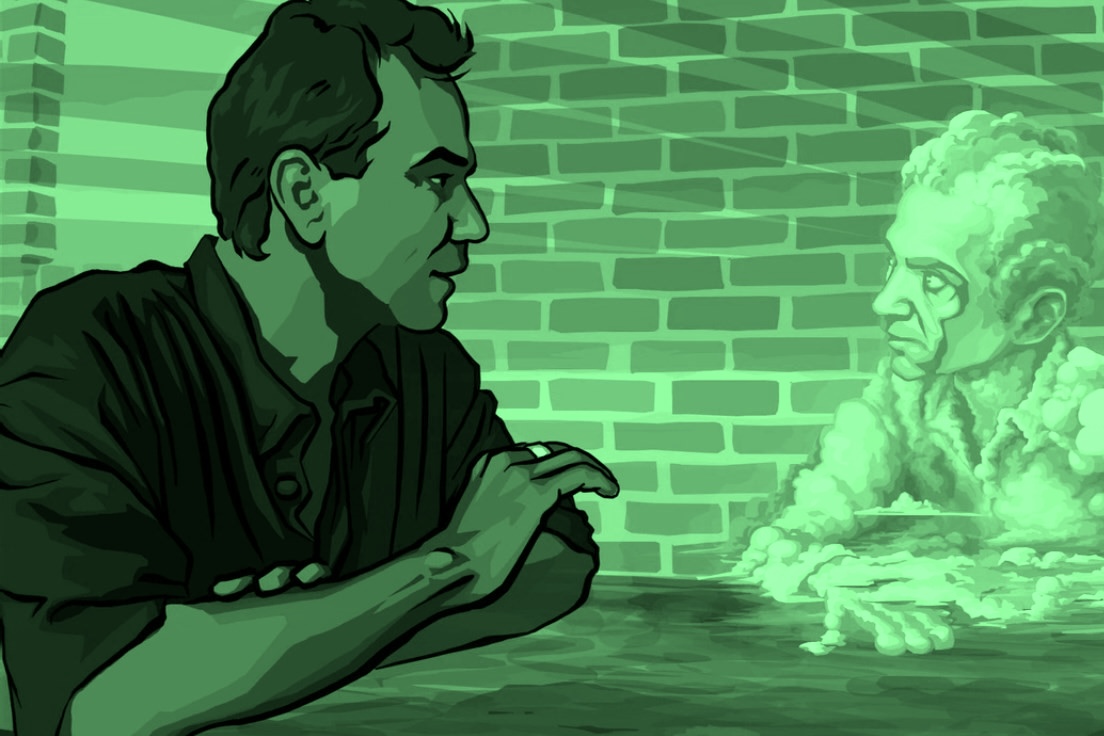
I haven’t shied away from abstract or international films either. Through these films, I’m discovering nuances of human behaviour and finding meaning in the blend of art and life—a meaning that I want to actively share with the timotheories community. 

And I started to set some personal rules for the list too.

Learning Through Layers

While I initially set out to watch everything on the list as quickly as possible, that proved to be harder than I thought it would be. 

Then as I progressed through the list, and significant changes came like the closure of Canadian media darling HMV and further pushes towards digital consumption, I dug my heels in and decided to start curating my own collection of movies at the same time. 

Because I clearly hadn’t set enough rules for myself. 

  1. Buy a brand new release every week, 
  2. In addition to expanding my collection during major sales days (ie Black Friday and Boxing Day). I would plan to add 50-100 movies through crazy deals and discounted prices

What happened behind the scenes is that it subtly re-directed my attention away from the initial goal, because I wasn’t just buying movies from that list now. And as I am wont to do, I thought about what to pick up a lot, and actively.

As I mentioned already, I expanded the list to include all films that had touched the 1001 Movies to Watch reference books from its inception through to the current year. Which effectively grew the list by another 3-400 movies. Then I went on a bit of a Top 10-50-100 bender online and would add choices from YouTuber critics I really admired. Adding more choices, and ballooning my to-buy list at the same time.

Past me thought this was reasonable and felt this would keep me on pace to still get through the list within an eight-ten year period, even if I was technically starting from ground zero at this point. Reflecting upon the numbers in that Watch List redux post, I recognized that if I wanted to get through the list in a year, I’d need to watch at least 18 movies a week. So instead I set a different goal of watching three movies a week, one new release, and two from my unwatched pile.
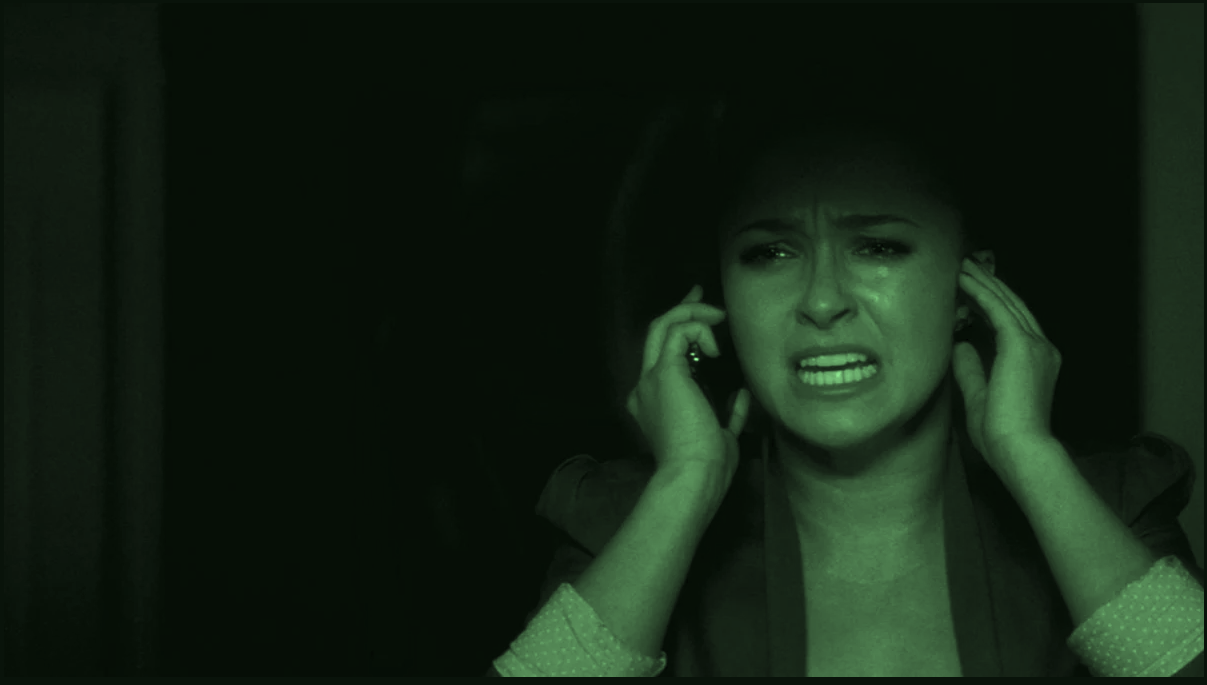
Insert example excerpt from my brain – should I make space in October to always buy and watch horror films to broaden my already deep catalogue of experiences?

Effectively, my curation process influenced my watching decisions, and it was informed by both the original list as well as themes/directors/critics that I wanted to get input from. 

Archetypes and Insights for the Community

Originally, I talked about the significance of archetypes, and why viewing a movie watch list was a great way to accomplish this investigation. 

Certain genres I might have overlooked as a kid, like film noir or historical dramas, had become spaces where I could observe and appreciate the evolution of movie making over time. The Watch List stopped being race to accomplishment but a journey in reflection, where each film watched adds a layer of growth, both as an artist and as a member of a wider, shared creative experience.

The Watch List isn’t just about what I watch and my expectation that you meet me where I’m at; it’s about what we all take from these moving pictures.

By sharing my reflections through timotheories and social media, the project becomes a collective experience, inviting fellow creators and art enthusiasts to join in discussing the insights we uncover. It’s my way of connecting the dots between storytelling and the human experience, fostering a community that values culture, creativity, and the narratives that unite us.

What’s Really Changed Since 2016

If it isn’t obvious yet, I still haven’t got through the list. 

Believe it or not, it actually grew even larger, but I’ve also become more vigilant about keeping track and really curating the list. 
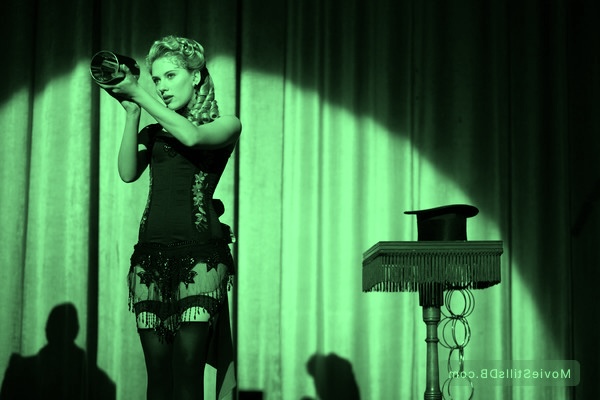
What this means is that I’ve added columns to the list for various “prestige” categories. Yes IMDB and 1001 Movies are there, but now in the mix are Criterion movie entries, Academy Award Best Film Winners, Turner Classic Movies, and stats from the ever-popular aggregator Rotten Tomatoes. And so the list ballooned to over 2300 options to experience. 

Now you may be wondering, are these really the factors of the cultural significance of a film? No, I don’t think exclusively so, but they are fun considerations, and when I inevitably do share the overall look and feel of my collection, it might better inform your own film watching journey. 

Fun fact.

My personal collection is now sitting at about 2400 movies, of which I currently have 50 unwatched copies. And my to buy list is at about 500 movies. I genuinely think a Watch List addendum is overdue.

I mention this specifically because of the 2300ish movies in my Watch List, I’ve only seen about 600 of them. And that’s ten years later. It’s kind of wild to think I have physical copies of movies totalling almost 2500, but I still have 1700 movies left to watch from my original list. And if you were to ask my wife, I’ve become almost militant in my commitment to collect and watch movies I add throughout the year.

This practical approach I’ve developed for tackling the list, now that’s become so large, reinforces that this isn’t just a race to collect ‘em all, but an intentional experience I have in my everyday.

Yes, I’ve tacked on several layers of complexity along the way, but this list has become truly comprehensive, and I think much more considerate than whatever factors the writers of the Top 1001 Movies to Watch Before You Die came up with.

And most importantly, I’ve learned to appreciate a different pace: one that allows time to sit with and experience how these films have shaped my worldview and approach to artmaking. 

A Journey in Reflection and Growth

As we’ve gathered, it’s been a few years since my last big update on The Watch List, and while my movie-watching pace might not have hit the “18 movies per week” I flippantly imagined back in 2016, this journey has continued to evolve in unexpected ways. 

The project, originally conceived as a two-three year exploration of roughly 1,100 films, has become a more layered and meaningful pursuit than I could have predicted and I genuinely believe that I’m now halfway though the list -the passion and commitment I’ve exercised has my personal collection at 2400 films deep now and counting.

As we know, life doesn’t always go according to plan. The tally may not be moving as quickly as originally envisioned, but the richness of the experience grows with every watch. With each film, I find new nuances in human behavior, motivation, and the blending of art and science in storytelling.

In 2016, I set goals of watching a new release each week, burning through my backlog from Black Friday and Boxing Day hauls, and fitting in at least one IMDb “Top Genre” movie. It turns out, balancing that with work, other creative projects, and life’s curveballs was a bigger challenge than anticipated! Now, while I still try to average one Watch List film a week, I’ve embraced a more flexible approach that allows room for deeper dives, reflection, and even sharing insights back here or through social media.

Staying Motivated & Next Steps

Another heading that could’ve easily been called Project Timeline. 

Let’s do a little math.
If I buy 100 of those movies from that list each year, it will take me 5 years to get through the list – in the meantime, I will likely still be buying 1 new release a week. I also made a caveat that if nothing good shows up in the brand new, I will acquire another movie from the to buy list. If I really want to be effective, I can add another layer to the plan. 

If I watch one movie a week from The Watch List, that isn’t in the bought pile or new release pile, after five years I will have gotten through another 250 movies, plus whatever naturally get picked up from sales, digital marketplaces and thrifting. What I’m hoping will happen is that I can then hammer through the remainder of the list within a five year period. Realistically I am looking at another 10 years with this project, starting from today. 

For those who’ve been following along (or are maybe new to this journey), your encouragement, suggestions, and occasional movie recommendations have really helped keep The Watch List feeling fresh. If I were to revisit the initial goal and then update it, Its now not about completing a list but about continuously learning through a dynamic catalog of movie stories and their attributed criteria.

Will I finish all the movies on The Watch List this year? Not bloody likely (read: the neverending story). But one thing is certain—this list has proven to be an ongoing exploration of storytelling, and I’m excited to see where it takes me next.

But here’s another consideration, I think a call for feedback from the community could really make this feel interactive and introducing collaboration ties in nicely with my commitment to building community through projects like The Watch List.

theories Summarized

In summation, The Watch List is more than a catalog of must-watch films; it’s become a project that mirrors the broader mission of timotheories: combining culture, creativity, and community to share insights on the human experience.

What began as a list of culturally significant films to get through, has evolved into a journey that explores storytelling’s role in shaping human values, understanding, and making connections.

I started with ambitious goals but found value in slowing down and watching with purpose, learning that this project is about exploration as much as completion.

This project is now part of a shared experience where I get to reflect on films, share insights, and learn from others. The Watch List isn’t just about what I watch but what we all take from these moving pictures.

From sharing updates here to discussing these films on platforms like LinkedIn, The Watch List is now a tool to connect, inspire, and grow within a community of creators, thinkers, and art lovers.

And speaking of curating art things, you should absolutely check out this past week’s episode of Confer Culture. This one is a new topic format for Chris and I, we decided to branch out into music and each share our Top 10 Albums of all-time. Please give it a list(en) and let me know what you think!

As always, I’m open to your feedback, critiques, or just a nudge to keep watching and writing. Thanks for being part of this journey, and let’s keep turning the reel together! Till next time, creative cuties.


Tim!

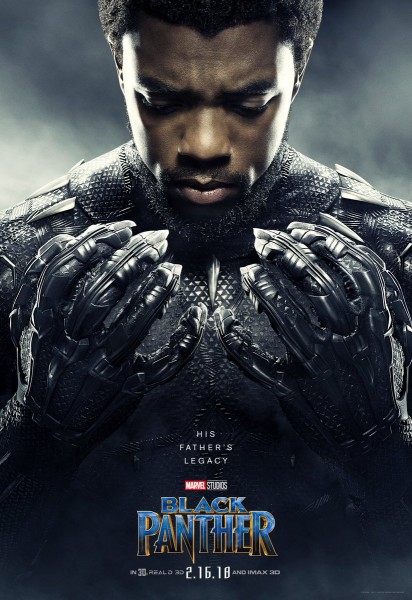
Wakanda For Real (Black Panther review)

I find it supremely satisfying to learn that a well-made movie, about a comic book character, and an origin story no-less, is at the top of this list both critically and commercially.

That the character is a black superhero appeals to me as both an artist (and an outlier) and because I think we’ve seen more then our share of white superheroes for some time now.


Black Panther (2018)

Cast: Chadwick Boseman, Michael B. Jordan, Lupita Nyong’o, Danai Gurira, Martin Freeman, Daniel Kaluuya, Letitia Wright,  Winston Duke, Forest Whitaker, Andy Serkis
Director: Ryan Coogler
released on blu-ray May 15, 2018
********** 10/10

IMDB: 7.6
Rotten Tomatoes: 97%, Audience Score 79%
The Guardian: ****/*****

Ryan Kyle Coogler is an American film director, producer, and screenwriter. He is best known for crafting stories that put minority characters and their cultures into the spotlight. He has directed three films, Fruitvale Station, Creed, and now Black Panther, all of which feature Michael B. Jordan in a prominent role. He will also be directing the Creed sequel which releases later this year.

Black Panther is currently the highest grossing film in history directed by an African American, a critical success and an overwhelming commercial success with an insane opening weekend box office of $202 million, beaten out only by two of the three Avengers films, Jurassic World, The Force Awakens, and The Last Jedi.

Special thanks to an anonymous Editor for the IMDB summary of the film –

After the events of Captain America: Civil War, King T’Challa (Chadwick Boseman) returns home to the reclusive, technologically advanced African nation of Wakanda to serve as his country’s new leader. However, T’Challa soon finds that he is challenged for the throne from factions within his own country. When two foes (Andy Serkis) (Michael B. Jordan) conspire to destroy Wakanda, the hero known as Black Panther must team up with C.I.A. agent Everett K. Ross (Martin Freeman) and members of the Dora Milaje (Danai Gurira), Wakandan special forces, to prevent Wakanda from being dragged into a world war.

This is a film which upends a lot of stereotypes we’ve come to expect in movies. With an almost entirely black cast, each character is developed with great detail, and so there is someone for everyone to identify with, effectively eliminating any oversimplification of motives, interests and abilities. Wakanda is so much more technologically advanced then anywhere else in the world, in fact, they make James Bond movies look silly, which is demonstrated when T’Challa visits Seoul.

And let’s not forget that Shuri is the most brilliant scientist, and that the Dora Milaje are the most bad ass of the bad ass warrior guards I’ve seen in any movie really.

Pros: It’s beautiful to look at, with meticulously created sets, character backstories, lots of supporting cast that work well together, and well directed, despite it’s long runtime. Michael B. Jordan sings as Killmonger, making him one of the best villains, it not a serious contender for number one.

Cons: The fighting and action is such a formula now that it’s difficult to really appreciate it in light of all of the political discourse taking place over the length of the film. Chadwick Boseman takes a backseat to Michael B. Jordan.

Runtime: 2 hours 14 minutes

Points of Interest: The name “Wakanda” comes from the Wakamba tribe of Kenya, also known as the Kamba. Martin Freeman and Andy Serkis both starred in The Hobbit movies, and were affectionately known on set as the “Tolkien White Guys”. In one of the areas where Wakandan glyphs move on translucent walls, one wall is blue and has “4” written on it, an homage to the Fantastic Four, where the Black Panther and Ulysses Klaw made their debut appearances.

Not only is it the best looking Marvel movie yet, the soundtrack is excellent on it’s own, and it can knowingly function as it’s own film, with very little involvement from other Marvel Studio movies. Plus the politics. Thank God for the political subtleties of this story.

theories Summarized

So there you have it, all of my thoughts and feelings about the Black Panther movie, which I believe is a very important movie in the MCU and am very thankful has gotten so much praise from minority groups, considering how well made it is. I hope that means we will see even more minority character representation in the MCU movies going forward – perhaps even a Sam Wilson Captain America?

I also thought it would be a good idea to release a Watch Culture video about Captain America Civil War to coincide with this Black Panther review! After all, we wouldn’t have gotten a Black Panther movie if this one hadn’t preceded it, plus it’s an amazing representation of comics in general.

Lastly, please let me know what you thought of both of these reviews on love, like and share the video, and subscribe to the channel (and email) if you haven’t already. Lots more theories to come!

Tim!

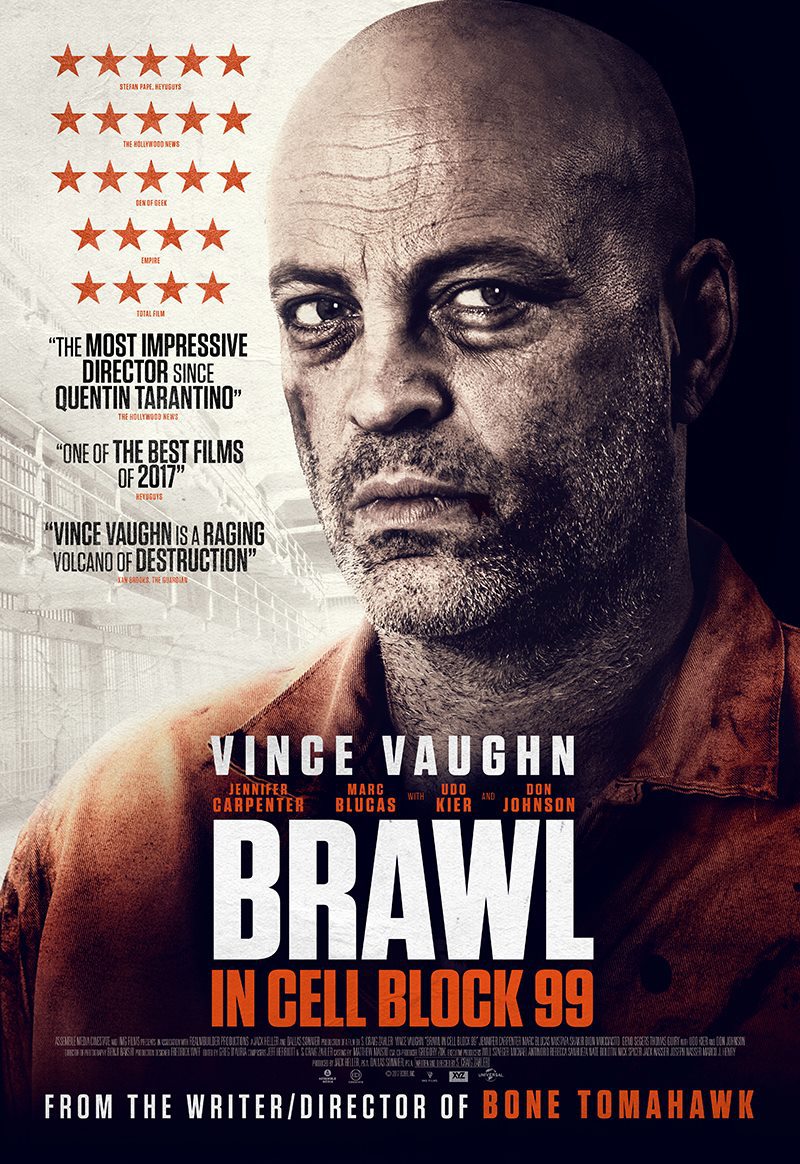
I’m In Your Face (Brawl in Cell Block 99 review)

As a child of the eighties I had the great misfortune to have missed out on grindhouse cinema. Sitting in a theatre all day, watching raw  and wriggling film seems like an excellent way to spend your time, but alas I will never get to have that experience. If only there were movies out there that could recreate that grit…


Brawl in Cell Block 99 (2017)

Cast: Vince Vaughn, Jennifer Carpenter, Don Johnson, Marc Blucas, Dion Mucciacito, Udo Kier
Director: S. Craig Zahler
released on blu-ray December 26, 2017
********** 10/10

IMDB: 7.2
Rotten Tomatoes: 92%, Audience Score 74%
The Guardian: ***/*****

Steven Craig Zahler, known sometimes as S. Craig Zahler and also as Czar when performing, is a director, screenwriter, cinematographer, novelist, and musician.  He has written novels in a number of genres, most notably within the western, crime and science fiction arenas, and his work as a drummer, lyricist, and singer for Realmbuilder has garnered success with metal enthusiasts. In short, Zahler is a man of many talents.

Brawl in Cell Block 99 is his second film, but his first film (Bone Tomahawk) received critical acclaim and a positive response from the general public. I think this can be attributed to his broad interests and his ability to fuse genres together in an appealing way.

But best of all, he has managed to take an actor like Vince Vaughn, play to his comedic strengths and infuse a fresh perspective to his talents which allow a grindhouse crime film to work in a satirical state of Trump presidency.

Courtesy of Wikipedia

Bradley Thomas (Vince Vaughn), driving a tow truck with a car in tow, pulls into the auto garage lot he works at. Soon after he arrives, he is laid off. He gathers his personal items from a locker and departs the garage in his car. As he arrives home, he sees his wife, Lauren (Jennifer Carpenter), sitting in her car in front of their house, using her cellphone. He approaches her and demands to see her phone, which she gives to him. As he is scrolling through it, Lauren admits to him that she has been seeing someone else. Bradley instructs her to go into the house, which she does. He then violently dismantles her car with his bare hands. When done, he enters the house to speak to Lauren about why she made the decision to cheat on him. Once the discussion ends, Bradley decides to forgive Lauren and to do more than just make ends meet. He makes the decision to return to drug dealing, a life he previously left behind.

Eighteen months later, Bradley and a pregnant Lauren living in a larger, more expensive home. Bradley’s boss, Gil (Marc Blucas), gives him a new assignment. Bradley is to go with two men to pick up a shipment. Bradley does not trust the two men, but is urged by Gil to do the job, as it will lead to more money and more business. During the job, Bradley and the two men pick up the shipment by boat. As they drop the boat off at the pier, one of the two men takes one of the bags and heads to the car as Bradley ties up the boat. Bradley takes the other bag, dumps it in the water for a later retrieval, and instructs them to do the same with their bags but they knock him down & run off with one of the bags. Suddenly, the police show up and engage in a firefight with the two men. Bradley has a chance to leave, as the police have not spotted him. But, aware that the deal was that no one was supposed to be harmed, he decides to stop the two men. One is killed by the police and the other is knocked out by Bradley. Bradley is taken into custody and ultimately sent to a medium security prison.

On the second day of his incarceration, he is visited by the Placid Man, (Udo Kier), who informs Bradley that he works for the boss of the two men that were killed in the shootout. He tells Bradley that Lauren has been kidnapped and that, unless he kills an inmate named Christopher Bridge, limbs of his unborn child will be surgically removed and sent to him. Bradley decides to take the job. The Placid Man tells Bradley that the inmate is in cell block 99 inside Redleaf correctional facility, a different maximum security prison.

Bradley picks a fight with a guard, brutally breaking his arm. As he is restrained and being taken away, Bradley fights with the other guards, until he’s overpowered and transferred to Redleaf. There, he meets Warden Tuggs (Don Johnson), who subjects Bradley to a cavity search outside of the prison entrance. Bradley is put into a horrible cell, where the toilet is clogged with feces. The smell being so overwhelming, Bradley is forced to take off his undershirt and wrap it around his nose. Eventually, he is able to go outside for yard time. When a fellow inmate informs him that Christopher Bridge is not located in this section of the prison, Bradley fights some fellow inmates and consequently is thrown into Cell Block 99.

Bradley is forced to wear a belt that gives him electric shocks at a push of a button, as punishment for the fight. His cell in block 99 is lined with broken glass. Bradley devises a plan and takes the lining from his shoes and puts them between his body and the belt to minimise the shocks. The plan works, but he accidentally kills one of the guards when he slams a door on his face when he tries to escape. Bradley locks the other guard in his cell. Bradley goes and meets with the boss of the men who he assaulted earlier (revealed to be the man who hired Bradley for the initial job that landed him in prison). Bradley fights with his henchmen, leading to him stepping on the back of one of the men’s heads and dragging it across the pavement, leaving that man’s face disfigured, with his skull showing. Bradley fights another henchman and slams his foot down on that man’s face, brutally dislodging his jaw, killing him. Bradley grabs the boss and takes him back to his cell. Bradley takes the man’s phone and calls The Placid Man to negotiate for Lauren’s freedom. Warden Tuggs arrives at the entrance to block 99, but Bradley threatens to kill the remaining guard, if he and any other guards comes in. Lauren is delivered to Gil, who in turn, kills The Placid Man. Bradley then speaks to Lauren for the last time, as well as sharing a few words with their unborn child.

After knowing Lauren is safe, Bradley grabs the boss and places his head over the crude squat toilet hole and stomps on his head, decapitating him. The captured guard runs from the cell, and Warden Tuggs enters into the cell. Accepting his fate, Bradley gives one last look at Tuggs, before Tuggs shoots Bradley twice, once in the chest and once in the head. The screen fades to black as we hear the third gunshot and Bradley’s body hit the floor.

It’s a simple premise taken to excess. A film that by all accounts shouldn’t exist, and yet macho ultra violence still features heavily in modern cinema. Quentin Tarantino should probably hang up his hat now, because Zahler is willing to take risks with his characters that Tarantino has taken since Pulp Fiction. Bradley is certainly mild-mannered at the start of the film. He takes losing his job like a champ, but when he learns his wife is cheating on him, a tiger beneath is hinted at, and so we see that there is so much more to his personal history and an inhuman kind of strength held at bay.

It’s not until the second act that we really see the full extent of Bradley’s abilities, but it is completely necessary to humanize him first, so that both the satisfaction as he moves towards his goal and irksome consequences of his actions stick with us after the curtain has lowered and the lights have dimmed on the blood-soaked floor of this epic.

Pros: Vaughan’s character is grounded in emotion and a loyalty to his family, and so the violence becomes intelligent played to accentuate the fantasy of a blue collar worker acting out.

Cons: For all of the detail and intentionally cheap practical effects, it isn’t always clear what the message of the film should be. But then again, wasn’t that true of most grindhouse films of the seventies?

Runtime: 2 hours 12 minutes

Points of Interest: …

It’s amazing to see Vaughn in such an intimidating role, because it also feels like he is invested in the role after a decade of being type-cast in loser man-child roles. I really enjoyed a lot of films that came out in 2017, with La La Land, Get Out, Logan, The LEGO Batman Movie and Baby Driver at the top of that list… but this seems to be the sleeper hit of the season, and one I’m glad to have stumbled upon.

theories Summarized

I’m not sure what the future holds for Vince Vaughn or for S. Craig Zahler for that matter, but I honestly can say that I hope both of them continue to make these kinds of intelligently constructed and entertaining worlds. Stories like Brawl in Cell Block 99 have a message within them, and that is one of quality over quantity.

That said, it seemed like a good time to share another of my favourite films with you in this week’s Watch Culture episode. A fun and quick overview of 2015’s The Gift, starring Joel Edgerton, Jason Bateman, and Rebecca Hall, with Edgerton in a first-time directorial role as well. It’s really quite excellent, and the film is top shelf too. But I’ll leave that final decision up to you. And as always… Comment! Like! Subscribe!

Tim!

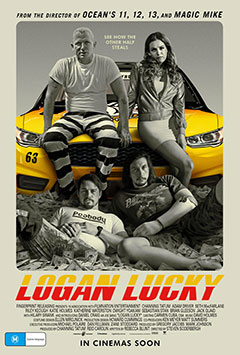
Dear Diary, Jackpot (Logan Lucky review)

Sometimes greatness is thrust upon us, whether we are willing to accept it or not. I often think of this adage when I watch an exceptionally brilliant piece of cinema, one that takes its time to prove itself. This weeks movie review is an excellent example of a great movie hidden within the context of its time.

When everyone is complaining about entrenched politics, Steven Soderbergh has proven that judging a book by its cover can be fatal.


Logan Lucky (2017)

Cast: Channing Tatum, Adam Driver, Daniel Craig, Riley Keough, Farrah Mackenzie, Katie Holmes, Seth MacFarlane
Director: Steven Soderbergh
re-released on blu-ray November 28, 2017
********* 9/10

IMDB: 7.1
Rotten Tomatoes: 93%, Audience Score 76%
The Guardian: ****/*****

Steven Soderbergh is an American director, producer, and screenwriter. His debut film, Sex, Lies, and Videotape garnered huge attention for him in 1989, and ever since then, he has gone to great success with titles like Erin Brockovich, Traffic, the Ocean’s Eleven remakes, Side Effects, and Magic Mike. Soderbergh has also produced and been  involved in a host of other commercial and critically successful movies.

Logan Lucky marks a return to directing for him after a four year hiatus, and I think with this gem, he has proven that he still has a good handle on filmmaking. It’s actually quite a brilliant story.

Courtesy of Wikipedia

Jimmy Logan (Channing Tatum), a blue collar laborer whose once promising football career was ruined by an injury, is laid off from his construction job at the Charlotte Motor Speedway. While visiting his ex-wife Bobbie Jo (Katie Holmes) to pick up their daughter Sadie (Farrah Mackenzie) for a beauty pageant, he learns that Bobbie and her new husband intend to move to Lynchburg, making it even harder for him to visit.

Angry, Jimmy goes to a bar run by his brother Clyde (Adam Driver), an Iraq War veteran who, on account of losing part of his left arm, wears a prosthetic hand. Max Chilblain (Seth MacFarlane), a pretentious British businessman & NASCAR team owner, and his friends arrive and insult Clyde before getting in a fight with Jimmy. Meanwhile, Clyde sets fire to their car with a molotov cocktail. On his way out, Jimmy yells “cauliflower”, which Clyde recognizes as an old code word from when they used to commit crimes as young boys. Next day, Jimmy explains his plan to rob the Speedway, exploiting his knowledge of their pneumatic tube system for moving money.

Clyde agrees to the plan, and he and Jimmy recruit Joe Bang (Daniel Craig), a convicted safecracker, as well as Joe’s dimwitted brothers Sam and Fish (Brian Gleeson and Jack Quaid), and their own sister Mellie (Riley Keough). They plan to break Joe out of prison and return him as soon as the heist is complete before anyone notices. Clyde gets sent to prison on a minor charge. Mellie, Sam, and Fish infest the Speedway’s main vault with cockroaches, forcing it to be cleaned and allowing them to measure it. While gathering supplies, Jimmy meets former schoolmate Sylvia (Katherine Waterston), who runs a mobile clinic in desperate need of donations; Sylvia provides Jimmy with a tetanus shot and the two strike up a conversation. Later, Jimmy learns that construction at the speedway is being finished ahead of schedule, forcing them to commit the heist earlier, during the much busier Coca-Cola 600 race on Memorial Day weekend.

Joe and Clyde arrange for the prison’s inmates to stage a riot, the lockdown hiding their absence. They escape through the infirmary and exit the prison by hiding under a delivery truck. Mellie meets them with Bobbie’s husband’s stolen sports car, and drives them to the Speedway. Meanwhile, Sam and Fish destroy the main generator with an explosive, forcing all vendors to switch to cash. Joe improvises an explosive from bleach, gummy bears, and a dietary salt substitute to detonate the main pneumatic pipe, and the crew begins vacuuming the money. The staff notice smoke coming out of the tubes, and security guards are dispatched to investigate, but a diversion set up by Jimmy and one of Clyde’s bar patrons prevents them from discovering the heist. Complications arise when Clyde loses his prosthetic hand during the vacuuming, and he and Joe are spotted by Chilblain and his sponsored NASCAR driver Dayton White (Sebastian Stan) while making their way back to prison. Nevertheless, the job is a success, and Jimmy makes it to his daughter’s pageant just as she performs a rendition of his favorite song, “Take Me Home, Country Roads”. Jimmy abandons the money and anonymously alerts the police so they can retrieve it.

FBI agent Sarah Grayson (Hilary Swank) investigates the heist but – due to the unwillingness of the prison authorities to disclose the extent of the riot, the refuting of Chilblain’s eyewitness account by White (disgruntled as he crashed during the Coca-Cola 600 due to his drinking some of Chilblain’s energy drink as part of the sponsorship deal), and the Speedway administration’s satisfaction with their insurance settlement – the case is closed after six months. Joe is released and returns to his old home where, prompted by a red shovel, he finds part of the money buried by a tree in his yard. During the heist, Jimmy purposely separated several bags from the rest of the loot and sent them to the local dump with the regular trash. The rest he returned to throw off any potential investigations. Jimmy also retrieved Clyde’s prosthetic hand from the vacuum machine. Now working as a Lowe’s salesman and with a house he bought next to his daughter’s, Jimmy happily reunites with his family at Clyde’s bar, where they and the rest of the gang share drinks. Sylvia also arrives and shares a kiss with Jimmy. Clyde doesn’t recognize one of the patrons, who turns out to be Grayson.

What is absolutely brilliant about this movie was revealed to me upon my second viewing of this film with my parents.

They are avid movie watchers, and my dad has probably seen more movies in his lifetime then I have albeit spread out over years of casual watching. So when they both told me that this movie surprised them because they weren’t expecting it to be entertaining, it confirmed a theory I have about a bias many people have – Just because a movie has a slow start, with seemingly boring and simplistic characters, does not mean that it will be a “bad movie.” In fact, the cast of this film demonstrated perfectly how a caper flick should work. If you are watching the flick with the expectation you know what is happening, but are inevitably surprised at how the protagonists pulled off the job, and then movie explains it smartly, you as an audience get to share in the accomplishment. In that case it’s been executed properly. Period.

Pros: It’s a stylish movie, but not for obvious associations of style – these are salt of the earth southern Americans, who have dry humour, and a subtle confidence in their own identities. And consequently the stakes are never raised to distract, because it’s not how these people carry themselves. We get to identify with the principal leads because they act like how we might act at any given moment.

Cons: When the dust clears and all of the mad-cap moments have been revealed, I have to wonder if there were too many one shot characters helping orchestrate the heist behind the scenes. That reminded me too much of Oceans 11 and took me out of it.

Runtime: 1 hour 58 minutes

Points of Interest: This is the first film Soderbergh has directed since his announcement to retire from film. The movie ends on a seemingly ambiguous note, but stops on Clyde’s prosthetic hand, indicating the Logan Curse might not have been lifted, after all.

theories Summarized

There is a newscast scene towards the film which dubs the robbers as Ocean’s 7-Eleven. I thought this was a fitting description of the film for people who haven’t seen it yet, and clever bit of self-depreciation on Soderbergh’s part. But that doesn’t mean this movie should be dismissed as just a riff on what has come before. It stands all on it’s own, and has heart, much like the anthemic Take Me Home, Country Roads, which dovetails the story nicely.

Ultimately, I think that what really matters about this film is that it does what it promises intelligently, without putting on airs. And maybe I’m seeing more there then the average filmgoer, but you can tell me if my theory pans out.

Oh and that reminds me! Speaking of tolerance, heart, and disarming movies… Chris and I totally have a recommendation for a great movie to watch with the whole family, one that’ll put a hop in your step. Pun intended.

Tim!

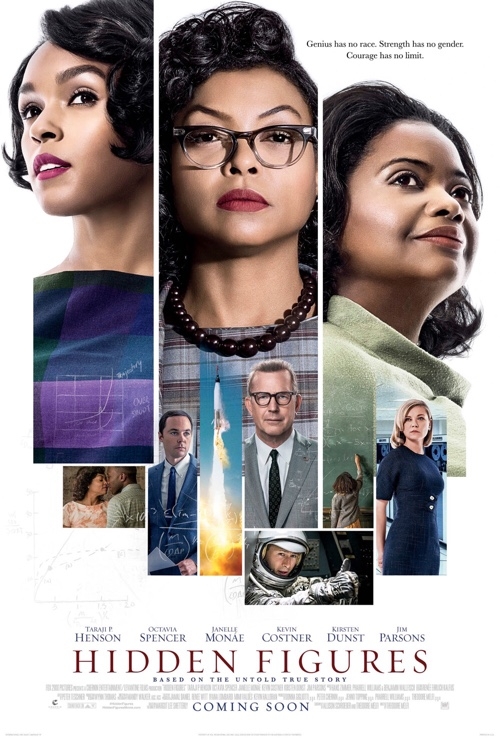
A Figure Of Speech (Hidden Figures review)

When given the space to work, we are capable of incredible things. So how is it that skin and gender are still considered barriers to greatness?


Hidden Figures (2016)

Cast: Taraji P. Hensen, Octavia Spencer, Janelle Monae, Kevin Costner, Kirsten Dunst, Jim Parsons, Mahershala Ali, Aldis Hodge, Glen Powell
Director: Theodore Melfi
re-released on blu-ray April 11, 2017
******* 7/10

IMDB: 7.8
Rotten Tomatoes: 93%, Audience Score 93%
The Guardian: ****/*****

Theodore Melfi is an American director, producer, and writer of whom I could dig up very little information on. Melfi has only recently stepped up into the role of director, with the Billy Murray film St. Vincent being his first time at the helm, and Hidden Figures as his second outing.

Luckily for us, his involvement with the film industry has been a fairly measured one, which began in 1998, on a whim, by helping raise money for the film Park Day. So humble and full of admiration for this story is Mefli that he turned down the opportunity to direct Spider-Man: Homecoming over Hidden Figures…which blows me away, personally.

That mentioned, what follows is a very brief overview of the film, and to give a sense of how it unfolds.


Set in 1960s America, and taking place near Cape Canaveral, we watch the stories of mathematician Katherine C. Johnson (Taraji P. Hensen) (formerly Goble), engineer Mary Jackson (Janelle Monae) and computer supervisor Dorothy Vaughan (Octavia Spencer) as they work for NASA during the space race to put a man into orbit around the Earth. Taking place at NASA primarily, we watch these human computers fight for equal rights as both women and minority figures on campus.

All three woman are in the midst of proving themselves to their peers, and especially outperforming many of them, much to the shock of the average NASA scientist, like lead mathematician Paul Stafford (Jim Parsons), head supervisor Vivian Mitchell (Kirsten Dunst) and floor director Al Harrison (Kevin Costner), though Harrison is not portrayed with prejudice, only as stern in his approach to success.

We also see into these women’s lives and watch them address family matters and challenges associated with romantic relationships. For instance, Goble eventually enters into a romantic relationships with the recently returned Colonel Jim Johnson (Mahershala Ali), who initially repels her with an ill-made comment about women and mathematics.

Based on true stories surrounding these three legendary women who helped John Glenn (Glen Powell) up until his launch date, Dorothy Vaughan, Mary Jackson, and Katherine Johnson truly are well deserved pillars for any of us who struggle with gender, race, and professional boundaries but have a desire to to bring something good into the world.

A familiar story of triumph over adversity, Hidden Figures offers a unique slant in the tone being set with the content and the performances that drive the action forward. All three arcs work well together, with a little more time being spent on the growth of Katherine Johnson and her supporting cast-mates. It never holds your hand on the issues of the day, but instead faces them indirectly so that you can might better glide through a key moment in history.

Yes, it is incredibly heart-warming and very much an easy to digest movie, but the fact that it is able to look at crucial women in the history of NASA without pandering too heavily to us, is a very odd thing to experience.

Pros: An uncomplicated story which gives some well merited screen time to people that did great things for humanity. It also does well to elevate the profiles of Hensen, Spencer and Monae; with Monae stealing the show every turn she gets.

Cons: I can’t help but wonder if a story about great people deserves greater treatment for its characters and more details coming through each scene… And if it has any real staying power in coming years.

Runtime: 2 hours 7 minutes

Points of Interest: The coffee brand used in Katherine’s work area is significant, it was Chock Full o’Nuts, which was one of the first corporations to hire a black executive at a VP level. The man Chock Full o’Nuts  hired was retired baseball legend Jackie Robinson, the first person to break the color barrier in professional baseball. Also, the set used for Dorothy Vaughan’s house is actually an historic house in Atlanta, where civil rights pioneers Ralph Abernathy and Martin Luther King met.

Hidden figures manages to entertain and showcase great performances from its three leads, but I have to wonder if the feel-good angle was the right way to to go with this story.

theories Summarized

Overall, Hidden Figures is an excellent film from an entertainment perspective and does great work in highlighting the efforts of those black women who made major contributions to the space race happening during the Cold War. Odd that echoes technological advancement and racism throughout it’s story in a time when that is exactly what we seem to be experiencing a lot of of.

And man do I ever wish that was only a theory, but we really do need to be vigilant in the face of these injustices.

Tim!