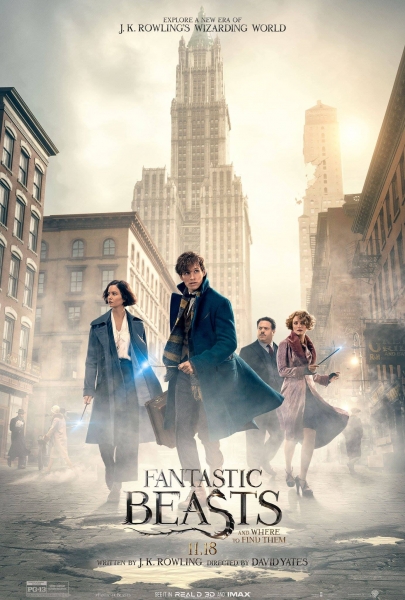
Prequel Fever Dreams (Fantastic Beasts and Where to Find Them, review)

When exploring new ground, sometimes we have to stumble in order to improve upon what preceded us. And other times we pave the way for greatness, where does this movie fit into the mix?


Fantastic Beasts and Where to Find Them (2016)

Cast: Eddie Redmayne, Katherine Waterston, Alison Sudol, Dan Fogler, Colin Farrell, Samantha Morton, Ezra Miller
Director: David Yates
released on blu-ray March 28, 2017
******* 7/10
IMDB: 7.5
Rotten Tomatoes: 73%, Audience Score 80%
The Guardian: ****/*****


David Yates is an English filmmaker who has directed both feature length and short films, as well as a host of television shows, television films, and mini-series. Yates rose to prominence after helming the last four Harry Potter films, and has won quite a few accolades in his time, including six BAFTA awards. Since then, he has gone on to direct the visual stinker known The Legend of Tarzan, and since then… Fantastic Beasts and Where to Find Them.

But was it any good?

I think that we can fairly safely state that Yates has a good record with J.K. Rowling adaptations, but I have to wonder if the hype train and guiding hand of Rowling didn’t have a lot to do with his previous successes. Whereas FBAWTFT draws on Harry Potter mythology without having much true direction of it’s own.

That being said, it IS an interesting film, without ever really standing on it’s own two legs. It’s more entertaining for fans of Harry Potter than the average film goer.

In the mid 1920s British wizard and magizoologist Newt Scamander (Eddie Redmayne) has come to New York en route to Arizona.

He encounters the New Salem Philanthropic Society, run by Mary Lou Barebone (Samantha Morton), which believes magic is real and bad. During the presentation, one of Newts creatures escapes from his briefcase and on his way to recover the Niffler, Newt bumps into another no-maj and aspiring baker, Jacob Kowalski (Dan Fogler). As a consequence, they swap cases.

Demoted Auror Tina Goldstein (Katherine Waterston) watches all of this, and then arrests Newt as an unregistered wizard. She takes him to the Magical Congress of the United States of America (MACUSA) headquarters, they discover the baked goods inside, and Newt is released. At Jacob’s tenement apartment, several creatures escape from Newt’s suitcase.

Tina and Newt track down Jacob and suitcase, wherein Tina introduces them to Queenie (Alison Sudol), her mindreading sister. Queenie and Jacob hit it off instantly but American wizards can’t be with no-majs.

We then learn Newt has an Obscurus, a parasite that develops inside magically gifted children if they suppress their gifts. Newt then persuades Jacob to help search for the missing creatures. MACUSA officials arrest them and give them the death sentence, thinking Newt and compay are responsible for a mystery creature killing in the city. Director of Magical Security Percival Graves (Colin Farrell) accuses Newt of conspiring with dark wizard Grindelwald, but Queenie and Jacob rescue them and they escape.

Graves approaches Credence Barebone (Ezra Miller), Mary Lou’s adopted son, and offers to free him from his abusive mother. Credence needs to find an Obscurus in turn. But Credence is the Obscurus’ host, and a strong one at that, as most hosts die before ten years of age.

Newt finds Credence, but is then attacked by Graves. Each side tries to coerce Credence to them, but aurors arrive and disintegrate the boy. Graves admits to unleashing the Obscurus, as he is Grindelwal in disguise. He wants to expose the magical community to the world. Luckily Newt has a Thunderbird, which can use rainfall over the entire city to erase all no-maj memories. Jacob must participate in this cleanse as well, and Queenie kisses him goodbye.

The movie ends with a secret gift from Newt to Jacob allowing him collateral to open his bakery, Newt leaving for Europe to write his book, and Queenie eventually seeking out Jacob regardless of the law.

As I mentioned already, it’s an interesting film, and definitely a welcome deviation from the Harry Potter franchise, but the plot feels thin in places, and it’s protagonists don’t seem overly invested in the larger problem of wizard prejudice and wizard terrorism. They are happy to collect their creatures until someone tells them otherwise.

Pros: It is an original story with interesting characters and headed by a rising star in Eddie Redmayne. The pace is nice and slow at the start, letting us explore the magic of this universe from a new perspective.

Cons: The action seemingly comes out of nowhere towards the end, and the stakes are raised almost inconsequentially. There are almost too many good things going on, and yet it is frustrating to learn this is not a stand-alone film, but a set up for a new franchise.

Runtime: 2 hours 13 minutes

Points of InterestThe name New Scamander appears on the Maurader’s Map in Harry Potter and the Prisoner of Azkaban. It was originally supposed to be a trilogy of movies, but has now been confirmed as a five part series.

Eddie Redmayne and friends breath fresh new life into a franchise which I can honestly say I thought was finished. And I’m fairly happy with the results. Granted, I’ve seen New York in film far too many times at this point to be excited about a 1920s fantasy version of the city, but all the same, it’s fun to see the wizarding world of Harry Potter expand outside of the United Kingdom.

theories Summarized

This is a movie definitely worth it’s salt, given how difficult it is for prequels to get off the ground these days, but I will do you one better with a my review coming next week. A story for the ages, and my theory on how it attracted both fans and newbies will be a good one.

Tim!

Empire State of Mind (Environment)

I have probably played way to much Magic: The Gathering and other fantasy based games growing up my friends, because I always want to equate myself with a particular element of nature and just run in the general direction of that thing to better equip myself for the stresses of life. According to astrology and palmistry fire seems like the natural choice, while other personality tests and chinese zodiac results lead to that of the earth. So I guess that means I’m geared for the life of the country AND the city, but not so much high up or near water.

Whatever that means.

To be honest I think that we should make decisions about our physical environment based upon our interests and what inspires us. So if you need to be out in nature in order to be creative, do so, and what that natural environment looks like to you is also relevant, then seek it out.

Today, we go over the importance of your habitat, climate, scenery, terrain or surroundings.

Your Friendly Neighbourhood

That’s right friends, a new month,  a new post inspired by the OECD index which I was initially led to in the first place by the folks at Post Consumers. But this time dear readers, I have decided to focus on the importance of environment for artists and give you some options to consider in your quest towards health, wealth, and happiness. Because while frugality and conservation of resources are important for the planet, your mental space needs to be taken into account too.

Yes, believe it or not, if you look out for yourself and a lot of other things begin to fall into place.

i5tvtvm

But what does that look like, you ask?

Well, like anything in life that depends on what you are about. So why don’t I give you the rundown of some things to consider, via a handy list, and you can decide for yourself if you’re on the right track to health, wealth, and happiness.

Welcome To New York, It’s Been Waiting For You

Before we get too far along, I need to clarify something. While I do think that New York city is a great place to live, and while my subject headings in this post so far are really hinting at NYC as a one stop shop, that’s just not true. And no, I’m not leading you towards Los Angeles either.

Instead I want you to look over some questions and the corresponding key words, and think on what kind of creative professional you need to be. All of these factors will help lead you towards an answer, and lead you towards creating a sustainable lifestyle.

  1. Is it important to you to attend parties? Think street parties, exhibitions, murals, fairs, and citywide events.
  2. What about a structured living situation? This could include open-concept loft apartments, industrial towns, and attending art museums as well as galleries.
  3. Does the place you live in need to be warm all the time? A daily does of street performers, dancing, food eaten outdoors, curbside coffee shops, and urban graffiti go a long way.
  4. Could you experience a wide variety of activities and room for contemplation? Where does live music, onsite food trucks, post-secondary education, libraries or urban sprawl fit in?
  5. Would economic stability be essential? If you like quirky shops, breweries, cheap rent, and post-grad couture.
  6. How organic is your palette? Farm-to-table, organic groceries, yoga, countryside views… Do those terms grab your attention?
  7. Are you inspired by other mediums? If film, audio recording, performance, and site specific works are your thing, consider your location.
  8. Does interacting with your immediate space matter? For when you need to make guerilla art, partake in festivals, induce public art participation, and convert odd spaces.
  9. When do you choose to collaborate? Artist run centres, art collectives, creative clubs, and meet-ups are all options.
  10. Who do you collaborate with? Whether musicians, hippies, hipsters, scensters, hip-hop lovers, electronic record spinners, cowpokes , entrepreneurs, writers, theatre artists, photographers, and techies all have their homes too…

While not comprehensive, these are all great factors to consider in the much larger picture that is the artistic environment which you call home. I can dedicate a lot of time to any number of these aspects, but you need to start somewhere after all.

theories Summarized

Well creative cuties, have you got your terrain locked down yet? I hope you spend some time with this one because we all need to work in spaces which are inspiring, comfortable and accessible. Like so many of these themes that tie into the OECD, environment has value. It may be my theory, but it should be yours too. That’s it for now, I’ll see you tomorrow with a timely update.

Tim!


Visionary Storytelling (Byron Martin preview interview)


Every good project tells a story.

A story about goals, its members, deadlines, and what is required for completion. It also requires management to understand the story they need to tell, and to deliver it with gusto. Also, a REALLY good story follows a proper story arc, no matter if it’s an urban myth, a made-for-TV movie, a comic book or a stage play. Heck, even an improvised musical follows an outline to get to where it needs to be.

When you are in theatre (or any professional setting), you have the same kinds of responsibilities as any other business operator. You set a budget, plan out the year, and set meetings to ensure everyone is onboard as things happen.

No matter what you might think, communication and teamwork are at the centre of it. When you have a vision, and you bust your ass to see it happen, time movies along quite quickly. Every self-made business person will tell you this…

Learning to coordinate others and juggle the program is at the centre of it.

If you look at it in a very simple way, there are really seven major steps to consider as the process unfolds.

  1. Define project goals.
  2. Have daily, weekly, monthly deliverables.
  3. Set and then celebrate project milestones.
  4. Build an annual budget.
  5. Assign team members.
  6. Produce progress reports.
  7. Assess risks.


It seems like an easy set list, but not everyone is up for the task. Marrying a vision to an agenda is essential.

Byron Martin has a big vision for the Edmonton arts community, and while some of the projects his theatre company Grindstone Theatre puts on, like Henry V, might start out with conversations at a local pub, he’s learned to keep track of his ideas and commit to his vision with a myriad of tools.

He has intimately committed these steps to his vision and can do them without consciously thinking about it, and he has fun at the same time. Another good friend of mine, Byron Martin is a much needed presence in the Edmonton theatre scene.

I hope you enjoy this preview of our chat.

Yes, I am out of theories for the day friends, but I’ve got a vision for 2017 and this upcoming full length Byron Martin interview is a part of it. For now let’s focus on the good things which have been shared, and the exciting possibility of another week with Gord Downie.

That’s right, I just might have another album review coming which features the Tragically Hip frontman. But that could just be a theory.

Tim!

Origami That’s Fun And Easy (Kubo and the Two Strings review)

Sometimes a movie does something new, using something old, and reminds you why you love the format so damn much. That’s what this weeks’ movie review is all about, duality, memories and recognizing the importance of story.

It’s kind of baffling that I would get so excited about a good story, but it really is integral in any art form.


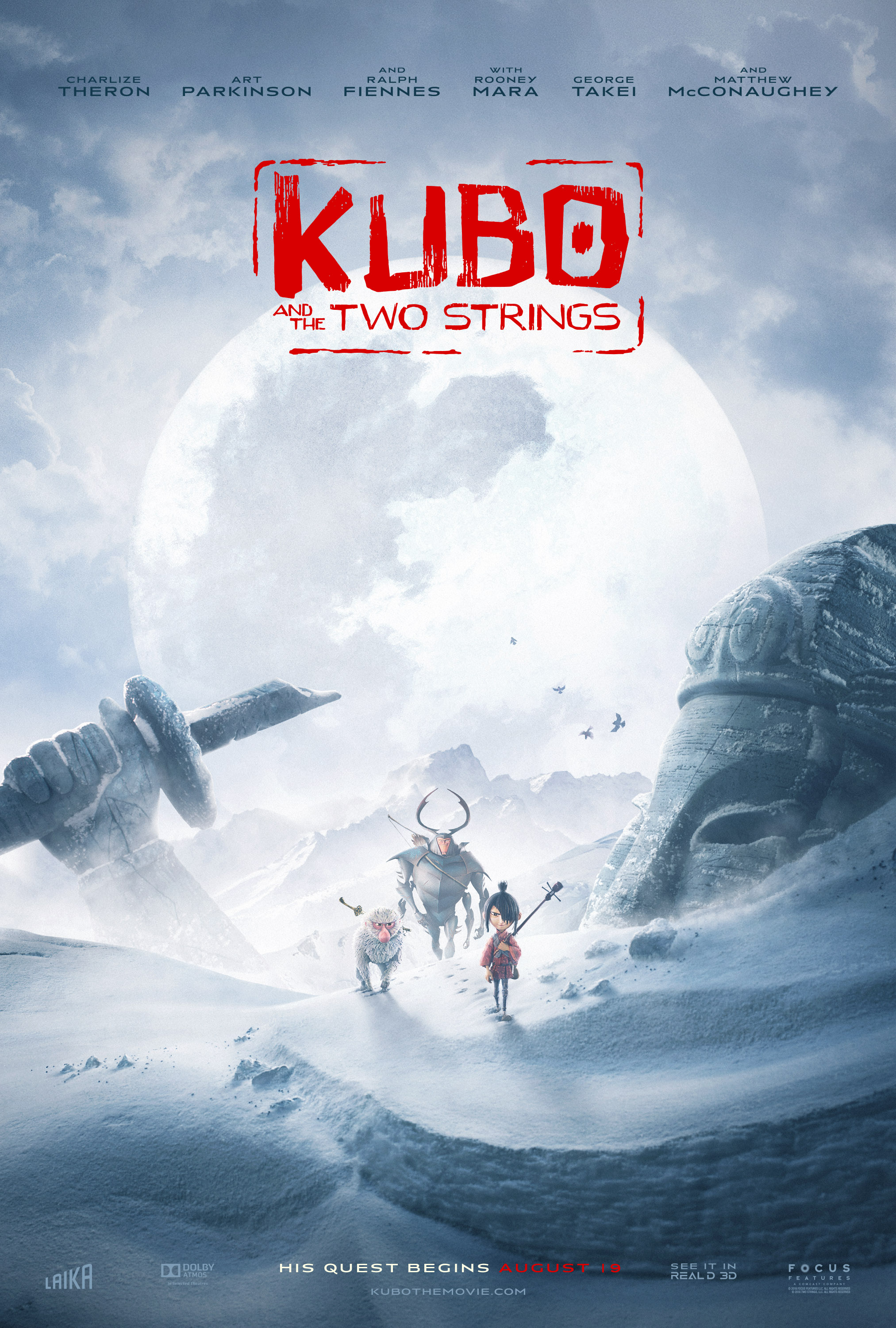
Kubo and the Two Strings (2016)

Cast: Charlize Theron, Art Parkinson, Matthew McConaughey, Ralph Fiennes, Rooney Mara, George Takei
Director: Travis Knight
released on blu-ray November 22, 2016
********** 10/10

the-ice-fields

IMDB: 8.0
Rotten Tomatoes: 97%, Audience Score 87%
The Guardian: *****/*****


Travis Knight is an American animator, producer and known for his work as lead animator for Laika Entertainment. And now he is known for directing Kubo and the Two Strings, which is his directorial debut.

Since 2005, Knight has been essential to the stop motion animation of the Laika team, wearing several hats and contributing to both CGI and stop-motion animation for its productions. Namely feature length films such as Coraline, ParaNorman and The Boxtrolls. He also serves as a member of Laika’s board and was recently nominated for Best Animated Feature on his work for The Boxtrolls.

But what do I think, you ask? Well, this is an amazing film dear readers. Brilliantly animated, with excellent voice acting, and an original story.

Kubo (Art Parkinson) is a one-eyed boy who lives with his sick mother, Sariatu (Charlize Theron), in a cave atop a mountain. He tells stories to the local villagers by magically invigorating origami through his three string shamisen. His favourite story is about a warrior named Hanzo who goes on a quest to fight the Moon King. Kubo must head home before sunset each day or her Sisters (Rooney Mara) and his grandfather the Moon King (Ralph Fiennes) will come for his remaining eye.

One day, Kubo attempts to communicate with his father, the deceased Hanzo… Nothing happens and he becomes angry, staying out past sunset. Sariatu’s Sisters arrive and attack Kubo, but his mother defends him, and impassions him to find Hanzo’s armour. When Kubo awakens the next day he learns that his little wooden monkey charm has been given life by his mother’s magic. Monkey tells him that his mother is dead and that he needs to move to survive. One of Kubo’s origami has come to life in the form of a little Hanzo, and during the quest they find an amnesiac named Beetle (Matthew McConaughey), a cursed samurai apprentice of Hanzo’s that has taken the form of a beetle. He offers his services to Hanzo’s son.

The first leg of the quest has the three battling a giant skeleton for the sword unbreakable. Next, Kubo uses magic to create a boat of leaves and the expedition sails across Long Lake for the breastplate impenetrable. Beetle and Kubo dive in to retrieve the breastplate. One of the Sisters attacks and Monkey manages to defeat her, but is badly wounded in the process. Kubo realizes Monkey is his mother reincarnated.

Monkey reveals that originally she and her sisters were meant to kill Hanzo, but she fell in love with him, which incensed her family. Kubo dreams and is greeted by Raiden, a blind old man who shows him the location of the helmet invulnerable, the final piece of armor. They head to his father’s damaged fortress, but are ambushed by the remaining Sister, she reveals Beetle is Hanzo, whom the cursed. Beetle is killed, and Monkey sacrifices herself. Two strings of the shamisen are broken in the process Kubo learns his village’s bell is the helmet, breaking the last string and flying back home.

He takes the helmet, but Raiden appears, now the Moon King. He wants Kubo to become blind and immortal like him. Kubo refuses and fights the Moon King, but loses badly. Shedding the armor and re-stringing his shamisen, Kubo uses its magic to recruit the spirits of the deceased villagers, proving memories are more powerful. The spirits shield him engulf Raiden in their magic. The Moon King is defeated, becomes human, and has no memories of his past. The remaining villagers and Kubo create a positive new identity for him. Kubo then communes with his parents spirits and sets their lanterns afloat.

Pros: The themes of spirit, memories, and death are strong, delivered with great emotional care. The animation slowly pulls you into this story, and once you are there it’s impossible not to appreciate the depth of characterization and inspiring message.

Cons: If you like your narrative delivered to you in direct terms, quickly establishing roles and character arcs, this film will not serve it up to you on a silver platter.

Runtime:  1 hour 41 minutes

Points of Interest: The boat sequence took 19 months to shoot, and the entire film consists of at least 145.000 photographs turned into a stop-motion film. The two strings of the film’s title is a theme of duality featured throughout: Mother and father. Night and day. Life and death. Creativity and destruction.

It’s refreshing to see an animated family film that features a prominent and mystical quality to it. A film that prefers to be driven by narrative first and then demand for visual quality, and as a consequence achieve something rare in cinema. An engaging story that pretty much any age group could enjoy thoroughly, but you have to be prepared to listen to it.

Let’s consider something for a second. Have you ever seen origami used so effectively in an animation that is about stories within stories? Kubo is a storyteller that uses song, performance and paper to make stories. That he and his cast of characters are made of the same materials is a point not to be trivialized, these forms can be understand by any age group or culture for that matter. And it makes the use of magic seem that much more significant. I loved this movie, and I hope you take the time to go see it for yourself creative cuties. I’m out of theories for now, but rest assured, I’ll be back tomorrow with something about what’s coming.

Tim

Every Little Thing She Does is Magic (Magic!, Primary Colours review)

I don’t like the police, but I do like The Police. A British new wave reggae rock band that were fairly active between the mid 70s to mid 80s. I blame it on the way that our traffic laws are set up in Canada.

Actually I have no reason to hate the police. I just wanted to make a reference that transitioned well in to today’s album review.


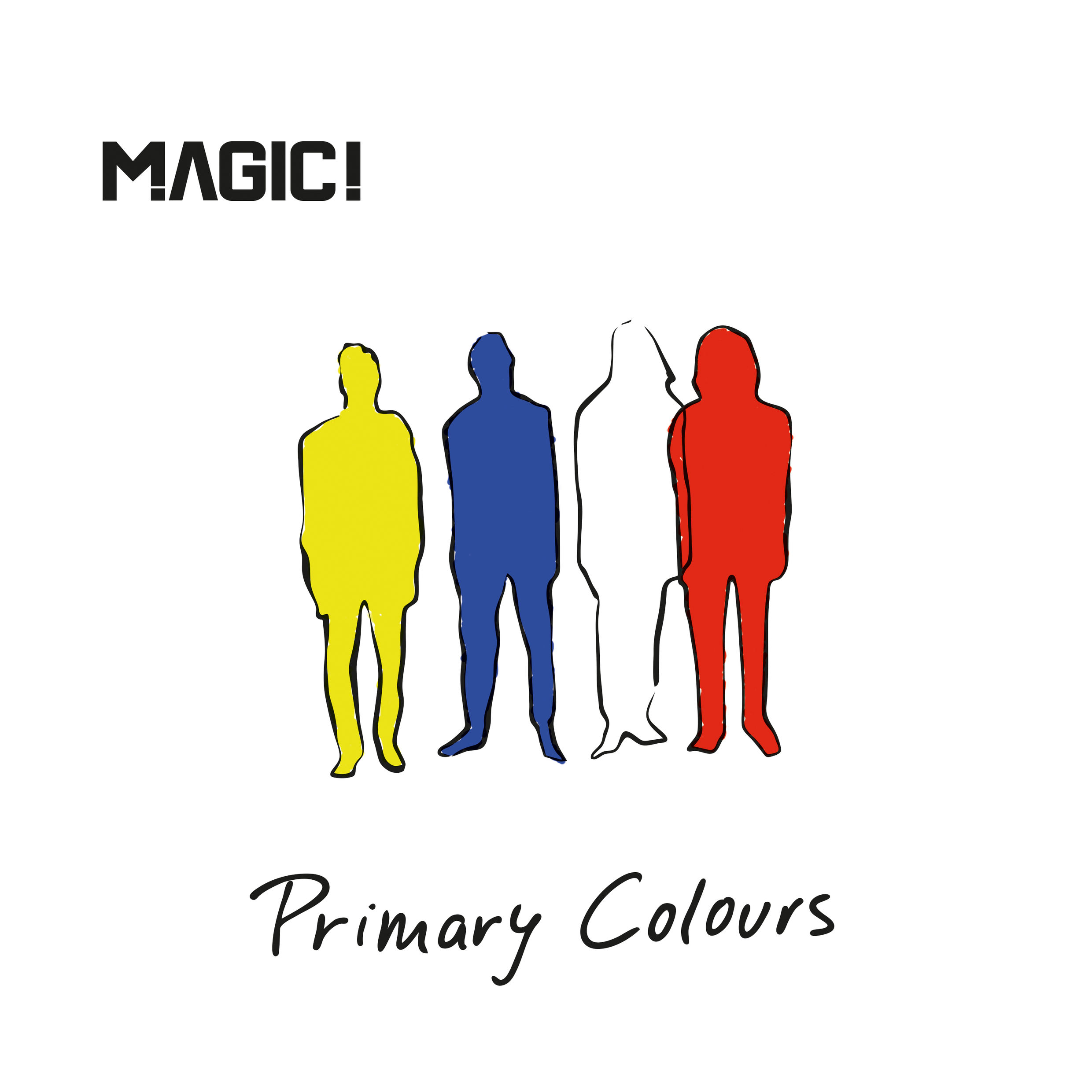
Magic! – Primary Colours
released July 1, 2016
****** 6/10

MAGIC-Primary-Colours-2016-2480x2480

Magic! are a Canadian reggae fusion band out of Toronto. Yeah for Canadian content! Headed by Nasri Atweh (vocals and guitar), Mark Pellizzer (guitar), Ben Spivak (bass), and Alex Tanas (drums), Magic! have been active since 2012, and released their debut studio effort Don’t Kill The Magic in 2014. Primary Colours is their second series in the music scene.

Known for their single Rude, which went to number one in numerous countries (read: seven), Magic! takes inspiration from The Police and Bob Marley. In case you have no idea what Rude sounds like, I’ll drop some lyrics down for you –

I’m gonna marry that girl, marry her anyway. Marry that girl, yeah, no matter what you say.

Or better yet, I’ll link you to the song itself.

Now, when it comes to Primary Colours, I think it’s pretty obvious that Magic! know how to please the masses. They are setting up singles and knocking them across the park like nobody’s business. Precision, bangin’ drums, catchy hooks, and the occasional appropriate cameo makes this a summer album worth at least a few spins in your music player.

This all hinges on the idea that Magic! are experts when it comes to good times and smooth tunes. Its hard to single out one song in particular that encapsulates this, but Red Dress does oddly mimic Rude and how! The number of trumpets, saxophones, and general horniness is enough to make you skank across the dance floor. And maybe to the toilet bowl.

On the positive side Atweh has a clean and likeable voice and his range carries us through several highs and lows of the album. I would say for sure that the title track, Primary Colours, Gloria, and Lay You Down Easy are some of my favourite songs on this record.

But no matter your taste for reggae fusion, you’ll have a good time listening to the whole thing and you’ll definitely enjoy the production value, because as I hinted at previously, the band is made up of professional songwriters who have all written singles for other famous acts. This now reminds me of my R.City review. But I don’t want to get derailed, so let’s sum up.

This fab four are always writing, and are a production house in terms of material. What that means for us is that the tone of Primary Colours is consistent and enjoyable no matter if they are singing about cuckolds, God or anthems. I’d give these a foundational grade for a sophmore effort.


I also am not a fan of Bob Marley, but I blame that particularly on the over-commercialization of his image in colleges and smokeshops. That and an association with cannabis as integral to his Rastafari faith. It became less about the music and more about a message.

Now, Magic! do have a message, but because they are still forging their path, it’s a non-issue, enchanting even.

Tim!