From Renovation Chaos to Creative Clarity: My Comeback Story

Part I: The Hiatus (OR More Affectionately, I Hate This)

Introduction:

Hey everyone, it’s Tim. Remember me? 

Yes it’s been a minute or 3,153,600ish of them, give or take 4320 minutes, but who’s counting right? And come on, that shouldn’t matter, because I’m back and with a new lease on life!
For those of you who’ve read my content before, you’ll remember that the tone I go for is a combination of humour and heart, with a dash of humility. So in the spirit of my previous blog posts from years ago, and like so many artists before me, I wanted to take some time to justify explain why I took a break from creating timotheories content before I got back into making it with regularity again. 

For starters, it wasn’t ever supposed to be a permanent stop, just a pause. Back in September 2017, I bought a bi-level house with the intention of renovating it into a two-unit rental property. A few months later, in November of that year, my girlfriend and I got engaged. 

My genius plan looked like this. 

  1. buy the house, renovate it, rent both units
  2. propose to the girl, marry the girl
  3. sell her townhouse, buy a primary home together, grow our family
  4. look for a new job, secure new job, quit old job
  5. focus on building timotheories and related properties
  6. profit

Steps 1 and 2 were going to happen concurrently, but as you’ll read below (LOL) that never happened. And like a great sweeping cliche, slowly, my focus shifted away from content creation, and by June 2018, I had fully stopped. 

I know what you’re thinking, this sounds like a you problem, and yes, this hiatus was never intended to be a black spot on my creative bingo card, but life has a way of steering us off course, and I found myself grappling with a series of events that demanded my undivided attention and energy. 

Luckily for you, I’m pretty confident this story will serve you, so be my guest, and let my pain and experience be fuel for you, wherever you are in your creative journey; you relate to it or better still, you learn from it. 

And now it’s time for me to expand. Fortunately, I’ve neatly broken things up into three parts, the triforce of experience, if you will. 
Personal, Professional and Emotional forces.

The Triforce of Personal Reasons:

The first plan was straightforward: get the permits approved, hire a contractor, attend my younger brother’s wedding in August 2018, get married in November, and start renovating the house in 2019. 

But life happened, and the contractor I hired delayed the renovations, doing very little work, before I had to inevitably fire him in May 2019. 

For context, I needed him to do many many things (separating the units, creating a proper back entrance upstairs, a subpanel, a new utility room for the basement, lighting the basement, a basement kitchen, etc.) Naively I believe that what I was promised would happen – that the whole project would take 6 months max. And in the time he worked on it, nothing stayed within costs or time or quality. So he had a triforce too, a triforce of mediocre general contracting. But he completed about 15-20% of the work in that time, so I guess I can give him that? But $2000 to paint a 250 sqft kitchen, seemed a little bonkers. You’d think that was the straw that broke the camels back… but it wasn’t.

After a few more problems, we parted ways, and then my dad and I took over to finish construction, hiring sub-trades wherever it was needed to complete the permitted work. Looking back now, there is no way it would have been done within six months, but because of these delays and incredibly awful timing, it dragged on for nearly three years, finally finishing in November 2021. And you’d think that was the only real challenge, and so obviously, I could have kept writing, and like, just suck it up. But in fact, it took another six months to handle the paperwork of what we would accept in a contract, how to find renters, vet them, and then eventually secure our first renter by July 2022.

So that all sounds pretty straightforward right? Ok move on already Tim, tell us how this helps us and stop complaining.

Sure, but I think I need to spend a few sentences elaborating on why the renovation to convert that bilevel house into two units tested me to my limits.

What started as an exciting venture quickly turned into a daunting ordeal. 

Yes, the contractor we initially hired delayed the renovations, barely making progress before I had to make the tough decision to fire him in May 2019. And I explained that part already. What I didn’t explain very well was that, we had to re-do the basement renos the contractor started – when it came to the basement, the technical expertise went out the window. He ripped up the lighting, opened walls, and just left construction debris literally everywhere, but that wasn’t the worst part.

Anyone with any experience getting city permits approved, will tell you, there can be odd bylaws to navigate, but me, a marketer by day and an artist by night, could see that I wasn’t going to get approved for shoddy work on fire safety.  

The contractor literally threw pieces of drywall up to creating the looking of ceiling for the utility room, overtop of the ducts, not securing anything with screws, taping mud or a plan, and said, “this should pass.” 

Looking back, I sometimes wonder if he threw his common sense up there too. 

So yes, I fired his ass. And I’m fortunate my dad is a retired journeyman carpenter, because after that point I needed help to take out the wall for the existing laundry room, remove the ducts, put up the drywall correctly, close up the wall, and finish framing the walls in the room, so it could become a kitchen.

Then many, many other things needed to be done, but I can write a whole series of blog posts on that process, and it to be honest, it doesn’t serve the story or you, so we’ll cap it there.

Long story short, the house renovation was more than just a physical challenge; it was a mental and emotional marathon. Every delay, every setback, chipped away at my confidence and enthusiasm. It wasn’t just about renovating a house anymore; it was about proving to myself that I could overcome these obstacles. The bureaucratic permit red tape, the financial strain, and the constant pressure to meet deadlines were overwhelming. I had financial obligations paying off a house all by myself in addition to completing the renos, and there were countless days when I questioned whether I had made a huge mistake, whether this dream was worth the toll it was taking on my mental health and personal life. They were some dark times.
But lets ignore the dark timeline for now, and fast forward ahead to the point with that first renter secured – we were now half way to filling the two unit property. In June 2022, and with some income finally coming in, we listed our townhouse, because I was confident we could now both afford to pay into a mortgage on our primary residence, and quickly (read: luckily) we found a buyer in the middle of a sellers market, forcing us to search quickly to find a new home ourselves by the end of August 2022. 

And we succeeded. Yay.

And that was it. It’s September of 2022 and I’m finally writing a blog post, immediately upon settling into the house. Back to timotheories, back to purpose. 

Kidding, life had more plans for us. Fast forward another 24 months Tim, you rube. 

Realistically, the past 2 years have been about getting our new house and finances in order. Despite these challenges, we secured a second renter for our rental property by February 2023 and managed to handle rising costs on everything (thanks inflation) in part because we both secured new jobs by the end of 2023. For me it really was life changing money, because I got a pay increase that allowed me to stop the “credit card debt to stay afloat” strategy – so yeah, that was smart of me to leave a financially draining gig.

In short, the stress of buying and selling properties, coupled with the ongoing renovations, was immense. However, we managed to navigate this tumultuous period, and the last 18 months have been focused on settling into our new house and making it a home.

Throughout this period, financial stability was a constant concern. The renovation project to get a passive investment property significantly strained our finances. Missteps, like ordering kitchen cabinets too early and then cutting them to meet code OR dealing with unexpected utility code requirements, stretched our budget and patience to their limits. We had to take out lines of credit, putting a dent in our savings and initial investment. 

But as I mentioned, despite these financial hurdles, we managed to secure a second renter for our rental property by February 2023, and by the end of 2023, we found new jobs that helped us handle the rising costs. And really, really, I need to write a post about the significance of a good solid job as a creative.

Now, would I go through it again? With Mysticque for sure, she is my wife/life, but I honestly don’t think many other women I’d dated before her, could’ve rose to the challenge.

The Triforce of Professional Reasons:

This next piece of my triforce didn’t hit me quite as hard in terms of ideas to write about – its just math, as I like to say in my board game group. Also, it’s pretty clear to me, and hopefully to you too after reading it over, why I needed a change here. 

Professionally, I had stayed with the same company for nearly 17 years, and I was feeling stuck. Yay, another cliche. 

I justified staying with one company, for financial stability, to support our couple goals of buying and renovating properties to turn into rentals. Go mtk properties, go! However, I hadn’t moved into a new position a full 4 years by the time all rental activity was said and done. Even if I had started looking right way, I was already 2 years in, so why the hesitation, I kept asking myself.
I knew better than this, there have been many people wiser than I who have stated that if you must work for someone else, you have to keep up with costs of living, so get yourself promoted or move on, and I was 2 years ripe. I don’t hold to this idea precisely, but theres truth in it. Know your worth.

Ironically, staying with this company was not even giving me financial stability anymore because my earnings weren’t keeping up with my aspirations, let alone having a family. But more insidiously, this supposed job safety net I convinced myself I had, prevented me from fully taking care of myself. I was worrying about money all the time, I wasn’t exercising, I wasn’t taking care of my mental health or my spirit.

A small anecdote, to further drive the point home: My wife reminds me often and often unintentionally, of the endless home projects we need to tackle, which makes it difficult to find energy for my creative passions.  

The monotony of my professional life in pre 2024 contrasted sharply with the chaos and demands of my personal life, creating a weird sense of imbalance that left me feeling unfulfilled. But I just said to myself repeatedly, its fine, its only for the time being, and then I proceeded to become a walking contradiction – I would get irritated constantly because things weren’t moving along fast enough with the renovations, the house search, the job search, etc, etc.

My job, while stable (purely in routine), became a source of frustration. Staying in the same company for almost two decades created a sense of stagnation. While avoiding the risk of a new job seemed like it was essential for supporting our renovation projects and other financial goals, it came at a personal cost. The safety net that my job provided also acted as a cage, preventing me from fully exploring my creative passions and taking care of myself.
And because hindsight is a cruel one, I probably could have changed jobs in the time it took to finish the renovations, easily.

The Triforce of Emotions:

Ho boy, emotions. A word that a younger me would have shied away from at any opportunity. When I was a kid,  I had convinced myself that people didn’t see my emotions, and that may have had something to do with how I responded to my environment as a boy, and so a lot of the time I didn’t claim to have any real feelings. Because it was easier to say that, then admit I really cared about a lot of things. I just didn’t have great strategies at processing and sharing my feelings.

I know now, going into my fourth decade, that I feel things deeply, a lot of times more than most know. I might not share those feelings unless prompted to do so, but I really do care a lot, I get a lot of happiness out of helping others grow in their creativity.

So it bothers me to write this next part out.

Initially, pausing timotheories was a relief. It freed me from the stress of maintaining a rigorous and self-imposed content schedule. But as time went on, the anxieties and mental health issues I hoped to avoid only grew worse. I let go of healthy habits, gaining weight, growing listless, and losing my sense of purpose. I became reactive, rather than proactive, in my life decisions. The reason d’etre that once fueled me seemed to dim, replaced by a sense of emptiness and disconnection.

Some might write that off as too emotional of a thought, or emo as the kids used to say. But I really don’t care if my emotions bother people – they bring out some of the best parts of me, and even when our emotions are a lot to process, we learn from them. Which is why this next part is important to share.
The initial relief I felt when I paused timotheories was fleeting. I hoped to find peace and balance. Instead, the lack of a creative outlet only exacerbated my anxieties and mental health issues. The weight of unfinished projects and unmet expectations grew heavier, and this is the real reason I found myself slipping into unhealthy habits. Being creative fuels me, it drives me forward and gives me strength. I have a lot of ideas constantly pouring through me and not expressing them doesn’t shut it off. It still produces a creative result – the difference is that I’m not controlling the flow, it seeps out instead, much like a teenager coursing with hormones. 

I’ve written before about the significance of discipline, but I think we often unconsciously dismiss the root of why discipline matters. Sure it improves the activity or skillfulness in execution, but more importantly, it refines us as a human, molding our identity into something more than what natural talent affords. 

I’m paraphrasing Bruce Lee here, but any master of any discipline would agree with the sentiment to fear the person who has practiced one kick ten thousand times over the person who has tried ten thousand different kicks once.

When you give your ideas purpose and focus them on habits that matter, your life improves, and for me I have to give due attention to those creative callings, which need habits. I sincerely hope this is the last time I have to relearn that lesson.

Conclusion – theories summarized:

Now that I’ve just set a personal record for a blog post length, on what has been the longest re-introduction posts I’ve ever done, I hope it’s a one and done situation. 

A sincere thank you for reading through what I’ve shared so far of this story; it really does mean a lot, and it will go a long way to hear that you follow along as I continue this series. Please comment below if you made it to the end!

Now astute reader, you might have noticed this was a Part I, there are definitely a few more parts coming, but I’ll try and time them to once a week while I get the momentum back. I used to do this little creative flourish at the end of my posts that I called “theories summarized.” I want to keep doing that, and I will make a more concerted effort to drive a point home going forward. I mention this, because this conclusion is going to run a tad longer than past ones.

So… Part I was a bit of back story on what I’ve been up to – despite the renovation setbacks, the delays in professional and personal goals, and then including health issues, family struggles, and personal losses, I kept pushing forward. Reflecting on these past years, I realize that creativity is essential to my well-being, it forms the completed triforce of meaning for me, and I’m ready to embrace it once again. See what I did there? I fit it all together, like a glove. 
If you want to read more about this story and learn about the adjustments I made while I worked through things in anticipation of my return to content making, please check back in a couple of days from the date of this posts publish date, because I do have Part II coming. Which will time very nicely with the release of the next weekly Confer Culture podcast.

Confer Culture you say? Yes that’s right, I am back to podcasting baybee, and will eventually add video to the mix in the forseeable future, but to start things a bit slower, I’ll be cohosting with my bestest mensch Chris Murphy on his brainchild Confer Culture.

Chris also took a bit of a hiatus from podcasting too. Episode I of the reboot is already up and we talk about all the things art and pop culture. Episode is titled Confer Culture ‘24.

So with all that shared, I’m done creative cuties, glad to be back. 

Tim!

Grey Matter (Governance)


Decision making is hard, dear readers.

And sometimes implementing an easy decision really is the wrong thing to do, while implementing the complex decision turns out to be the right one. Unfortunately for all of us, life is not quite so simple as those black and white principles, and even Luke Skywalker is probably going to realize that going grey is the most pragmatic solution. But don’t take my word for it, read this theory about why jedi and sith are likely old news, and that by Episode IX’s end, we’ll likely see a new type of force user emerge victorious.

I hold that this theoretical decision making on Skywalkers part will come down to good governance. We cannot have light without dark, and if you increase one over the other, the secondary element must evolve in kind. But when we combine elements of light and dark, the contrasts give way for subtle shifts in grey and a much stronger range of tonality.

I personally believe this applies to how governments should operate as well. Well as much as I can say in 1000 words or less.

When public funded institutions conduct their public affairs and manage public resources in a responsible and effective way, they are enacting good governance. Those actions cannot be conducted only out of selfish needs nor can the patrons be so altruistic that they never stand up and fight for their people.

But what is governance anyway?

According to wikipedia, governance refers to

all of the processes of governing, whether undertaken by a government, market or network, whether over a family tribe, formal or informal organization or territory and whether through the laws, norms, power or language.

That means working with many different people of many different functions to organize and operate all of those functions in a way that benefits those people.

Not Just A Liberal’s Fancy-Free Dream

What this means to me is that we HAVE TO work together to ensure everyone’s voice is heard, and that decisions are made which always put safety and welfare FIRST and which are for the aid of as many constituents as possible. Good government operates as a sum of it’s parts, the light, the dark, and everything in between. The grey matter of the body.

As an example of support by representation, The Canada Council for the Arts exists primarily to ensure the Canadian people are given a range of public art projects regularly, by investing in the arts through grants and services which bolster the broad range of cultures which make up Canada.

That and they help to raise awareness for the arts too.

But this is just one example of many types of programs which exist in modern day governments, and which are key to the success and development of our communities in a state of global communication.

Programs exist for the disabled, for impoverished, for sports, and for education.

f7ffd2e906b1cf8e344ff12cb78190eadefbb587ac86531cd6000a183e67911f

But, and I hesitate to share this, there is this notion out there that a great many conservative supporters like to say fairly often – creative types are bleeding hearts, and successful ones are supposedly so far removed from the real world that they cannot see the forest for the trees – but I strongly disagree with this notion.

And I don’t share this point lightly, because it is true that we can’t all be movie stars and music geniuses, a great many of us live our lives in the working class, and that ain’t so bad. But good governance should see through classism and recognize the issues at hand first and foremost, no matter what voice an issued is raised with.

Ashton Kutcher – Smart Cookie and Model Citizen

I originally planned for this post on governance (inspired by the Postconsumers response to the OECD index) to be about how artists can uniquely contribute to our communities in the voting process, and where supporting local initiatives and pitching in in ways other than with our pocket money DO make a difference… But then I ran across a tweet about Ashton Kutcher this morning.

In case you aren’t familiar, Ashton Kutcher got his start as a professional model before eventually breaking out into television and film as an actor, and then working his way into investment opportunities as a venture capitalist. He’s been involved in numerous startups over the years including Skype, Foursquare and Airbnb. He’s a smart cookie, though he plays a dummy on TV.

Probably the most impressive thing about him though, is that in 2009 he established an international human rights organization called Thorn with now ex-wife Demi Moore. It’s goal is to address the sexual exploitation of children and human trafficking on a global scale. I mention this because in the tweet that twitter user shared, the author acknowledged how ludicrous it was that Kutcher had to defend his profession as an actor before he could address a US senate committee on the successes of the software his company has developed to fight human trafficking.

He then explains how his technology will helps save thousands of lives, and how investing in it is necessary for us to commit to good governance.

I’m going to share a clip of his speech because I cannot do it more justice than Mr. Kutcher did himself.

theories Summarized

When we practice good governance, we are using our grey matter appropriately. And my hope is that by recognizing all human beings have the capacity for light, dark, and grey actions in-between, that creative professionals are not limited by their hearts, rather their strengths of language allow them to communicate what good governance is. At least, that’s the theory anyway.

Tim!

Better Than Your Parents Had It (Education)

Another post on the OECD index and inspired by postconsumers.com timotheories? Wow, haven’t you farmed this land enough yet?

Well… No, dear readers. Technically I still have to cover off the following – education, environment, governance, health, life satisfaction, safety and work-life balance. So we’re only a third of the way in! Plus, I could write at length about all of these topics and how they relate to being a good global citizen as well as a participant in your local community (and how it relates to the arts). This is a good thing, the website is called timotheories after all, it’s all about the curating the arts and connecting seemingly disparate theories together while having fun.

And this one is sure to be a good post. Education is one of MY FAVOURITE TOPICS. Ever. Period.

The Parents Broken Dream

One of the things I’ve learned as I transitioned from being a child into an adult, and as I recount experiences I’ve had with parents, my own and others, is that every parent wants to provide their children with a life better than they had growing up.

I’m not sure if this is one of those impulses ingrained in our brains OR if it’s a social conditioning similar to the idea that we need to have a good education and a stable job in order to have a good life, but it’s out there in the ether as a theory for success. I mean, life is hard, one minute you are living the dream and the next you are blindsided at 4pm on some idle Tuesday but an event that never crossed your troubled mind.

You can thank Baz Luhrmann for that tidbit. Back to my point.

0ejnefu

The economic privilege of the baby boomer generation is well behind us, dear readers. Baby boomers grew up with all kinds of benefits (free educations, established unions, more vacation time, company cars and trips) that generation x, millenials, and whatever comes next can only dream about. This is a major consequence of rising house prices. House prices in the 1970s and 1980s were incredibly low and the earnings on selling those houses has been significantly more lucrative for those families than what singles and young families could hope for today. On top of that, many retiring boomers are leaving behind debts and living on reduced pensions without any savings to back their lifestyles up.

If addressing gender and ethnic privilege are key tenements of politics today, we need to add in generational privilege as well. Skiing (spending the kids inheritance) is a thing of the past.

Investing In The Future

I hope you can see where this post is headed, and if you’re a futurist, like me, than you’ll appreciate the witticism, of that heading. For those of you without the blessing and/or curse of a dry sense of humour, investing in the future is never done. It’s an act of commitment to a process, not an effort towards a goal.

the-future-now

This is incredibly important in the face of a changing world creative cuties. When you make art you are expected to focus on the details, to see the bigger picture, or to pull from both camps. Effectively learning when to use your macro and micro lenses takes time, and an investment in the process, but as you gain skills you will gain confidence and see how your contributions to society are relevant.

This article from Forbes goes over it quite well, but I’m going to summarize it quick for you –

  1.  You need an authentic and personalized network of contacts. Yes social media connections factor into this bucket, but I’m referring to mentors and professionals you rely on for key advice. Who is your career expert? Who do you go to for construction and mechanical advice? And who is your health guru? Do you have someone you can go to for general advice? Spending time each day reaching out to these people is important – it gives you a support system. Plus it feels good to help others and will teach you invaluable things about people.
  2. Live outside your comfort zone, always. Whether it’s learning to wake up early, going out to a social event once a week, or finally starting that book of songs you’ve been dreaming about for years, tapping into your vast potential yields some fantastic dividends.
  3. Get your secondary business going. Maybe you weren’t expecting to have two jobs, maybe you hate the idea of doing more than your 40+ hour work week. But let’s be honest, you are more than your job and you definitely have skills that are being underutilized. You need to make practical use of your cooking skills, your computer programming skills, your animal husbandry (awesome word choice timotheories!), I could go on. You’re not out to get rich and famous, its to continue to develop your skills and to challenge yourself.
  4. Active and critical thinking. This one comes naturally to me, I can’t help it. I think a lot about a lot of different things. If we could visually showcasing what thinking, reading, and using our minds does for our mental capacity, I’d get compliments on my brain all the time. This is not arrogance, because we all think. But we need to think actively about the future, goals, how to improve relationships and solve problems. Don’t settle for your situation, think about how to change it – then go for it.

theories Summarized

In brief, education is important. And while I suspect your instinct was that I was headed towards a post about academic learning and certification, I should be clear and state that that kind of education has absolute value, but it’s not the only way to invest in the future and given how economic dynamics are changing, we need a new game plan. That’s my theory anyway.

Tim!

One Hit Wonder (Communication Is Key)

Communication is a pain in the butt. Well, that’s what I used to think a long time ago. Being an artist, I was set up to be a recluse, because artists were outcasts. And it was a loneliness I chose.

That was what I told myself anyway.

When you are in your teenage years, and even early 20s, it can be incredibly convenient to look at the world in black and white. If you don’t fit in, it’s because you shouldn’t, so rebel, rebel, rebel. Hell it’s a rebel yell.

hqdefault

You know, I know adults who still do this. Walk around with a very limited view of things and an expectation that you either accept the “truth” they are hawking or they judge you and separate themselves from you. It’s a result of seeing the world the way you want to, and not the way it actually is.

I’m going to share a nugget with you, all you cute and wonderful and dear readers of mine. The truth is that nobody cares what you do with yourself and your time. People aren’t trying to get in your way, they are doing what they can to live their life (exist), escape their life (survive), or fulfill their life (thrive). I like to call it the EST models of life.

You want to thrive, trust me.

This is why it’s so incredibly important to follow the basic principles of communication. Anyone can do it. That’s right, we are reviewing another one of the key 10 skills to invest in. Artists can learn these skills, and everyone really should.

Communication is key.

Let’s recap. In a time when texting, email, and social media are the new favourites, try to use the phone more often. It saves on countless back and forth. And speaking of back and forth, be concise in your emails. Respond to calls and emails as quickly as you can, and when you can’t do that, set up a regular time to respond to your contacts.

But we’ll go over this in more detail because I have at least 200 words left to write. Ever heard of the 7 C’s of Communication? No, well it’s a fantastic way to keep your communication on point.

  1. Clear – it’s important to define you purpose for communication, and keep the number of ideas to a minimum. For example, one idea per sentence. In a three line email, that’s a maximum of 3 ideas, capiche?
  2. Concise – Get rid of all the filler words in your life. And don’t repeat yourself. Ever.
  3. Concrete – You have to explain why people should care, that means using some MF emotion, passion, and keeping focused.
  4. Correct – Oh this one’s a lot of fun. Make sure that you keep your communication error-free. And don’t use big words to make a statement. You can use relevant words, but don’t swim in pomposity.
  5. Coherent – Remember when we were talking about clarity in point no. 1? Well you need to keep all the points in a communication relevant, otherwise people get overwhelmed. One topic per meeting, phone call or email.
  6. Complete – Your message needs a call to action (when required) and details to keep the audience informed.
  7. Courteous – Be friendly in your communication. Tell the truth and be open-minded. The book How To Win Friends and Influence People comes to mind.

And there you have it, I’ve just given communication to an artist who needs it. No greater gift for you fine folks on a wisdom Wednesday. That’s all she wrote though folks. I’m out of theories for the moment. I’ll see you tomorrow with something rather timely.

Tim!

Living With Less (Becoming A Minimalist)

Remember that “2nd ever” timotheories interview I did with Andrew Wedman a while back?

Well, I’ve been thinking a lot about Andrew’s outlook on life and business. His attitude is pretty straightforward – do more with less. As we make our way through this stressful season, it occurs to me that a lot of my normal stress revolves around managing the stuff in my life VS the people in my life VS the pursuits of my life. Christmas just escalates it.

Each of these areas can be managed, thus today’s post is in dedication of the pursuit of purity!

We are all faced with the challenge of whether to pursue more material and social wealth than we currently have. The challenge isn’t openly shared, as this topic isn’t the right type of macabre for most and the simplest truths are often the most difficult to see. Simply put, if we made this widely known, retailers and publications would be bad at their jobs.

People only really learn when they are ready to. I can say this confidently from personal experience.

As Art Buchwald once said,

The best things in life are not things.

Or to put it more bluntly, Tyler Durden said,

We buy things we don’t need, with money we don’t have, to impress people we don’t like.

Let me elaborate.

I was fortunate to grow up with the environment and opportunities I did. We all choose to either blame others or our situation for our stock in life OR we accept our beginnings and work to change what is possible, accepting responsibility for our own life.

For instance, I learned some interesting things when I was growing up. Because my parents determined that one of them should stay at home during the day while my sister, two brothers and I all made our way through primary education, I learned that there was a difference between material wants and basic needs of life. This was because while my parents owned their home outright, and we had enough to cover food, utilities and school costs, there wasn’t a lot of money in the bank for extras.

That didn’t mean I missed out on simple pleasures, but I simply had a stronger appreciation of them when I did have sweets and toys. Now what I didn’t immediately realize as a youth, but figured out years later was that it may well have hurt my pride and felt embarrassing when we couldn’t afford to go on trips or we didn’t have a collection of stuff to entertain ourselves with and had to interact with those who did (and judged), but there is an incredible burden that comes with having too many objects in your life.

I learned this by the process of moving away when I was 23. I first moved from home with my family of 6 to 1 bedroom apartment with my girlfriend at the time, then moving into a larger 3 bedroom a couple of years later with my girlfriend and sister, then having more room after my sister moved out.

Where the lesson came in was when I lost my job, and decided to move back home.

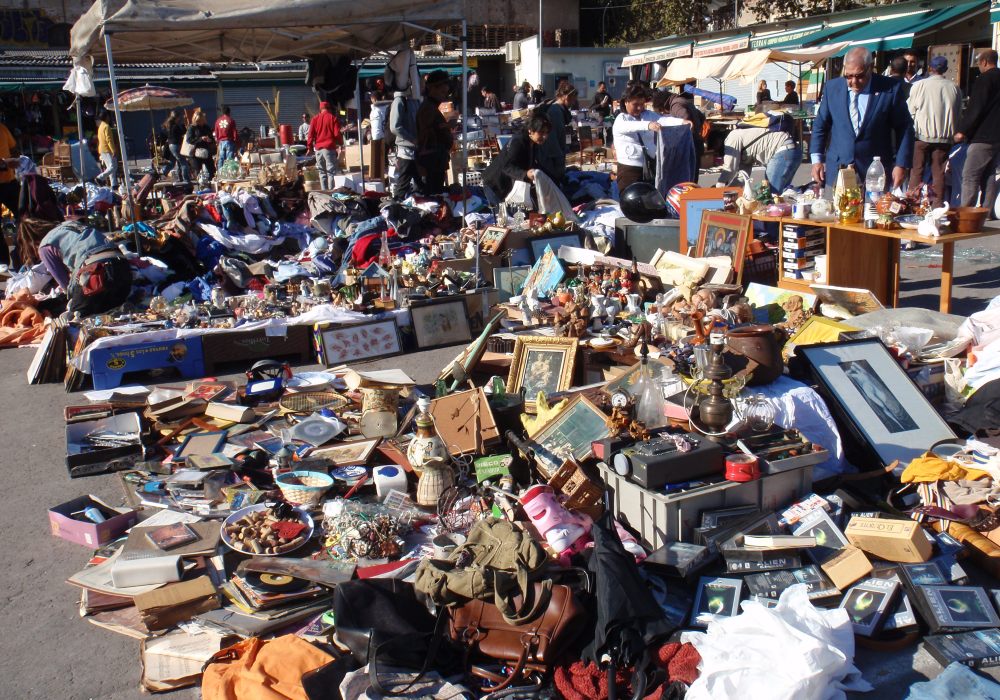
I had a lot of stuff at that point. A whole house of stuff. While my sister and one brother didn’t live there any more, moving home with enough stuff to fill a 15′ x 25′ room was tough. And that was after I got rid of a dining table, a living room suite, a bedroom suite, lots of old art, and countless trinkets.

Sharing space with people while having personal objects to watch out for is problematic. You’ve invested money into those possessions and you have to protect your investment, but who really has time to enjoy and manage 1000s of objects, no matter what they are?

It becomes a burden.

This is why it is important to define your space and dedicate your efforts to a specific area of life. As soon as you do this, you realize what is important to you, and having hot topic technology or whatever doesn’t pull at you as easily.

Heck, I collect movies, music, and books, and people sometimes question my collection. That’s a good thing. No one in their right mind should collect as much of that stuff as I do. I do it because I need to to accomplish my goals. The truth is this, of course I cannot possibly look at all of these things simultaneously or even regularly, but I’ve set up my space so that those objects serve as a directory of ideas and reference for my art. Because those objects fuel my life purpose they provide value for me. But if I started collecting trinkets, kitchenware, clothes and sports equipment (for example), then I would lose my focus.

Check out this article from the blog Becoming Minimalist for more information on the concept.

Thus end’s today’s post on managing objects. Do you think you too much stuff? Is your stuff preventing you from making your art? Leave some comments and let me know what you think of this theory.

Tim!