Love On Repeated Viewings (Cross Talk Ep. 20)

Do you believe in love at first sight? Or should I walk by again?

Some people swear by the theory that true love happens once in a lifetime, that love conquers all, that we can fall in love instantaneously, our one and only special someone is always nearby, and a host of other dreamy ideals.

But while we all love to hear a good story about someone reconnecting with an old friend and it working out, that is definitely the exception and not the rule. The rule is pretty much this, love is based on chemistry. Not the intangible ethereal substance which connects one person to another via romance, but literal chemistry based on biological sciences. We tend to be attracted to that which we already know and what we are like ourselves.

Like attracts like.
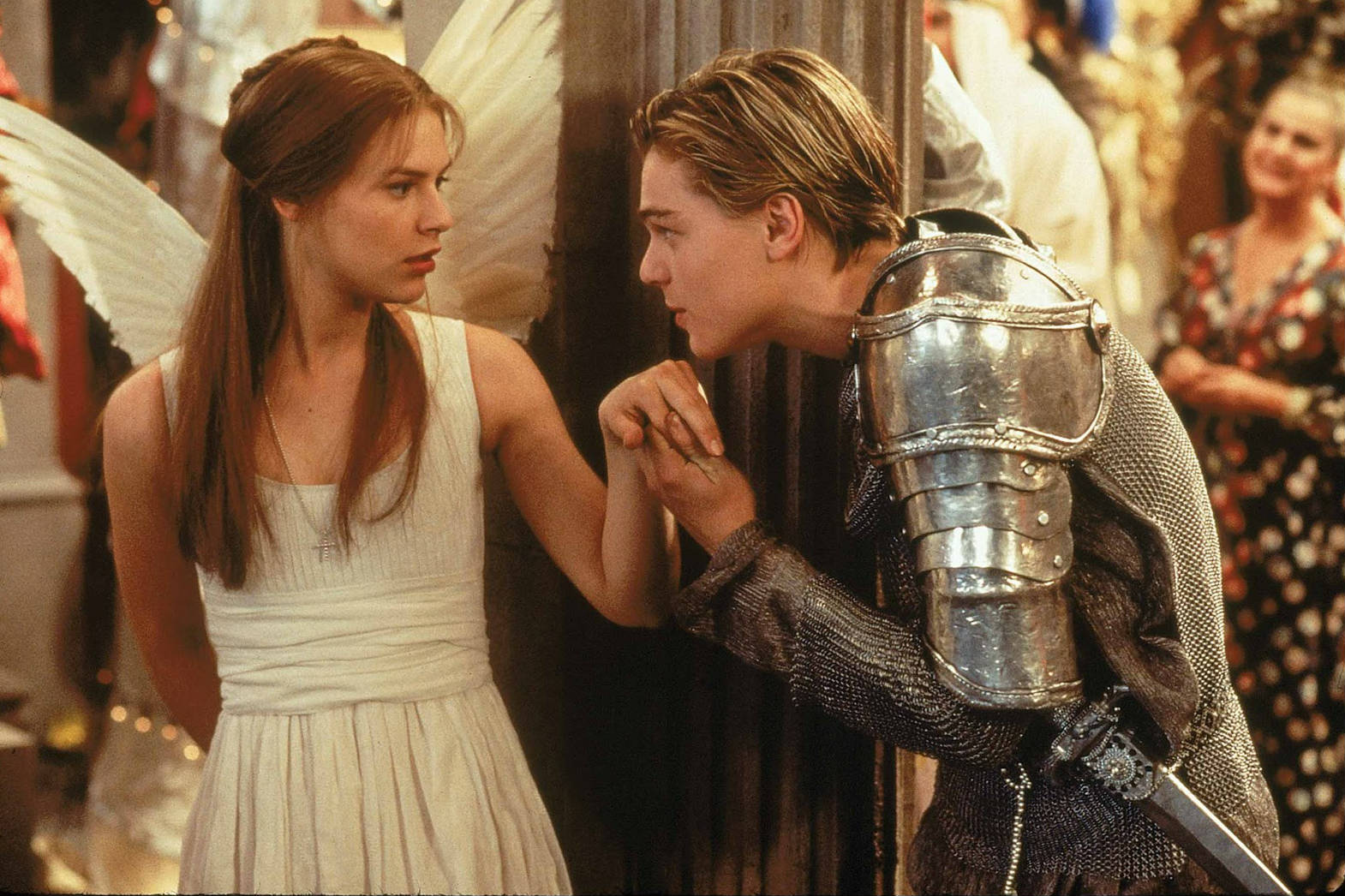
So if you spend more time understanding what initially attracts you to someone in the first place, you’ll be better equipped for companion love over a lifetime.

Art, Love, and Time Travel

Film does a great job of demonstrating the power of love, both within it’s themes and as a vehicle of interest. For instance, I love some films immediately, but others need a few sit downs before I really engage with them, still others are enjoyable at first but lose their lustre over time, and some will never have my attention.

But today we want to discuss the films which are better representations of enduring and companion type love, films which get better on subsequent viewings and which enrich you over time. These films can be instantaneous winners, slow burn thinkers OR surprising dark horses, but no matter how they hit you, they’re better on a second viewing.

One of the more impassioned debates Chris and I have had in a little while, but rightly so, we’ve discovered that aesthetics, love, and time travel often demand a second viewing before you’ll be committed fully.

Episode number twenty of Cross Talk is surely our best one yet. But don’t take my digital word for it, click on the video and see for yourself. Otherwise you might never learn what two movies got Chris up in arms over my sidewinder commentary!

Enjoy creative cuties!

I bet you weren’t expecting such a huge list of movies in a short twenty minutes were you? You’ll probably have to go back and watch this one again to really experience it all, at least that’s my theory anyway…  But honestly, what did you think of our choices? Would you have suggested something different? Who do you think won the debate? Please join the conversation and let us know what you thought!

Please comment, subscribe, and share this video with friends. We want to hear your feedback!

Tim!

Pants On Fire (Sam Harris)

There are moments when I’m sitting over there, in my easy chair, philosophising about the next big theory of the arts, where I contemplate, and others where I instead sit down with a good book and consider another perspective – ever hear the expression one man’s truth is another man’s lie? Well if you haven’t then you might still be open to learn something.

There are a lot of idioms out there about the concept of truth, dear readers. If the truth be known… a grain of truth, ain’t it the truth, bend the truth, fact is stranger than fiction, the gospel truth, honest to goodness, the naked truth, the moment of truth, truth will out, and the list goes on.

Sometimes the truth is even hard to swallow.

The truth is, when you are putting together all of the facts, reality bites. But that doesn’t mean you should share a bald faced lie either. Well, at least that’s what the author of this month’s 5 L’s Of Language would have you believe.

No No No No, Baby No No No No, Don’t Lie

Sam Harris is a best-selling author and neuroscientist, not to be confused with a neurologist, which people sometimes think he is. And he also believes that if a decision came down to a matter of ethics it would be his responsibility to share that reality with you, otherwise he would be making a lie of omission, which should bear the same weight as a commissioned lie.

Harris is something of a heavyweight when it comes to atheism. Sharing ranks with Richard Dawkins, Daniel Dennett, and Christopher Hitchens, he has been called one of the Four Horsemen of the New Atheism. An advocate for separation of church and state, a strong critic of religions, and a critic, Harris chooses to focus his ideas on science and secularism. His list of books includes:

  • The End of Faith: Religion, Terror, and the Future of Reason (2004)
  • Letter to a Christian Nation (2006)
  • The Moral Landscape: How Science Can Determine Human Values (2010)
  • Lying (2011)
  • Free Will (2012)
  • Waking Up: A Guide to Spirituality Without Religion (2014)
  • Islam and the Future of Tolerance (2015)

The Very Worst Part Of You, Is Me


Have you figured out which book I read yet my friends? I’ll give you a hint, Pinocchio would probably be an expert at navigating a series of unfortunate events which stem from this practice.

phjvb

That’s right I read through the book Lying. Which is pretty much just a hard cover essay that was a breeze to get through, but a little bit harder to digest, given what Harris is recommending in his thesis.

Effectively Harris states that we should all line up with his own personal philosophy of honesty at all times. This means avoiding lies when confronting serial killer child murderers, overweight spouses, and even coworkers. The only people who really seem to be exempt are spies, but they live a hollow life after all, one which is for a purpose far grander than they are capable of seeing. So white lies, lies of omission and everything else are unacceptable.

Which is where the essay is ultimately flawed, but interesting. I would agree with Harris that we should avoid white lies whenever possible, but there are some circumstances which are far beyond the scope of certain groups (read: poor people, discriminated minorities etc). And dealing with people with failing health is far more complex than the feelings of the ill versus the feelings of those who are left behind. Not all have the benefit of choosing who they interact with, but perhaps there are some lessons within.

Blame It On Your Heart


Don’t get me wrong, I was thankful for this gift. My parents bought it for me this past Christmas because they know how much I love to read a good critical essay or philosophy book. And this book got me thinking, you see creative cuties, I have this theory that the reason why one man’s truth is another man’s lie, and I’ve spoken about it before. It’s a consequence of this ability we all like to believe we have, called common sense. Harris is a victim of wrong thinking, but his heart is almost in the right place.

If only he could get a broader perspective, maybe then his opinions might make more sense – at least, that’s my theory.

Tim!

Haters Gonna Hate (Address Negativity with Board Games)

I am a big fan of memes. I always try to inject them into my conversations whenever I can.

Cultural idioms like memes are awesome because they provide us with quick references in our conversations or whatever media we are consuming at the time. In Western culture we are so fortunate to be able to receive both visual and written information in a multitude of ways, though I do recognize there are diverging viewpoints on the inherent value of this variety of options. Probably one of my favourite examples is sending a meme to a friend when texting. With a couple of quick key strokes you can share a picture (with text) that gets your point across infinitely quicker than the written word.

And we will need to keep that in mind for today’s topic, because I want to talk about board games. Yes, board games.

Did you know that board games have been around throughout history? Reaching as far back as 3500 BC in Egypt. For real.

Maybe this is simply my personal experience and opinion, but I have always thought that board games are really entertaining because they are both fun and challenging – a great way to connect with others, have some laughs, and potentially learn something about yourself at the same time. Many board games involve both luck and strategy. What I find most interesting about them though is that there are varying amounts of randomness involved.

The polarizing effect of this randomness in gaming has resulted in many variations on existing board game formats and the invention of new ones as well, and especially with the significant growth witnessed in the gaming community since the beginning of the 21st century, there are now copious options when choosing a game to play.

But what does this have to do with memes, dear readers?

I’ve played my share of games (at one time in my life, I was participating in weekly game nights on both Tuesdays AND Thursdays), and I’ve noticed a few things both inside the gaming community and outside of it – haters gonna hate.

Some people like board games, and some really really DON’T. And within the community, when it comes to the luck/randomness factor of board games, some people love randomness and some people really really DON’T.

In case you don’t already know, the phrase “haters gonna hate”, is a vehicle for the idea that no matter what you do, and where you are, you will always run into people who disagree with you and will try to knock you back. Not necessarily because they are envious, but because they simply disagree with your lifestyle choice. So why bother fighting the haters? Accept that they exist, and learn to ignore their taunts.

And here is an interesting fact: the phrase “haters gonna hate” first showed up in popular culture in the lyrics of a song called “Playas Gon’ Play” by 3LW in early 2000.

You should check it out.

It’s catchy and relevant for good life habits. Also, I think there is a neat little correlation between the rise in popularity of board games and the invention of the phrase.

So what should you do about haters if you like to play board games? Or if you have any interest that you are pursuing and are running into opposition? This list below covers it off nicely. See this for Tim Ferriss interview for reference.

1. Focus on your fans

2. Don’t apologize and don’t respond

3. Don’t try to please everybody

4. If you’re doing it right, people WILL be negative

5. Learn to enjoy criticism and be thought foolish

6. Don’t retaliate

7. Take it in stride and keep moving

What it comes down to is really simple, if you like randomness in your board games, then that is perfectly acceptable for you, as there are tons of boardgames out fulfill those needs. Card decks which are pulled form, spinners and timers, and the most common, the six-sided die, are all great examples of that luck attribute.

But if you don’t like those elements, there are a great number of strategic games and social games that employ different methods.

If you want to learn more, boardgamegeek.com is a fantastic resource for this.

I am tapped out on the theories for now, but remember, haters gonna hate. Do not let that stop you from pursuing your interests. What kinds of struggles have you run into recently in the creative arenas? I want to know, so send me an email or leave a comment!

Tim!