
Turn It Down Already! (The Essence of Listening Skills)

I’ve struggled to accept this fact for almost the whole of my life, but for the most part, we are bad listeners. Communication problems are often at the heart of the issues most of us deal with – at the office, in the car with the kids, over dinner with our spouse, and pretty much everywhere we go.

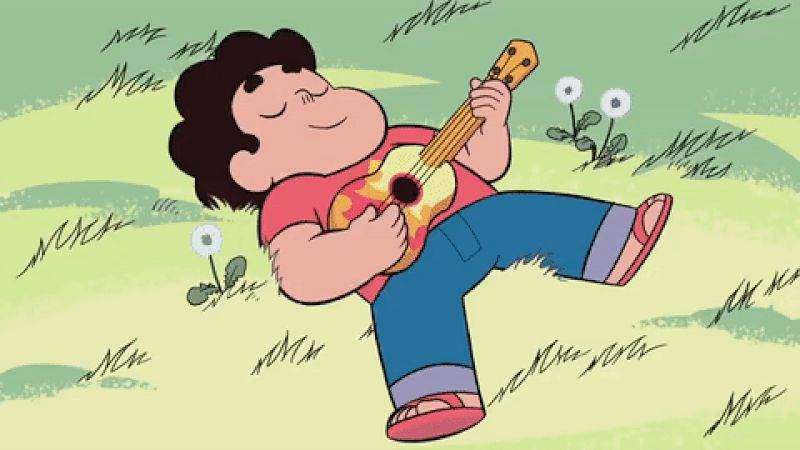
Listening skills should NOT be a latent talent that only a few of us possess, something that is mocked or worse, both of those things. We need beacons of light to demonstrate the awesome prowess of listening, and I know examples exist – I’m looking at you Steven Universe, and your genius creators for one!
Why You Are A Bad Listener

I’m not going to pretend to know what makes people into bad listeners, but I can tell you that there are behaviours out there, which I am just as guilty of as the next person, that contribute to bad listening, and even moreso, bad communication. I’ve gone over the basics of communication already, and I’ve even dedicated some efforts to addressing the ever-so-subtle interpersonal communication, but stopping behaviours can be just as important as starting up new ones, dear readers.

Have you considered that you think of yourself too much, for starters? We all do it, we think of how information is going to impact us, but when you only focus on your own challenges, it just won’t jive in good listening. On top of that, your mind can wander from one topic to the next if you don’t concentrate, and when you do focus on what’s being said, you risk getting caught up in the topic, and completely missing the point at hand. Also, being distracted by other things can make it worse – deadlines, illness, problems in other life arenas all vie for your attention. You need to do yourself a favour and put a pint in it until the chat is over.

And we haven’t even considered how nurture, in the eternal struggle between nature, screwed the pooch on your listening training growing up. What, you say? There was training on listening skills? Well not exactly, etiquette isn’t a universal truth shared with all students.

Of course if someone decides to start cutting you down, you might get defensive, and that’s when you fail to hear what has been shared. On the opposite side of the equation are the helpers who assess a problem, and attempt to fix, without an invitation. And so Mr. Fix-it stops properly listening.

The Types of Listening Skills

Now that you’ve gotten a good dose of where we fail to listen, I think it might be a good time to address what kinds of listening you will need to apply to improve your social standing.

Critical – this for is when you need to evaluate information and either formulate a solution, an opinion or make a decision.

Appreciative – listening for the sake of personal growth and enjoyment. Movies, music and theatre all come to mind.

Discriminative – you need to determinate a dialect, members in a group, if a conversation is amicable or turning violent and a host of other nonverbal cues related to someones feelings.

Relationship – listening to understand someone, whether they need to vent or not, you have to show your support by retaining the details and feeling what they feel.

Comprehensive – focus on the speaker and the message they are sharing, in order to take direction and then apply it to your own role.

How To Become An Artful Listener

Ultimately, if you want to become an excellent listener you are going to have to learn how to be present. This is not a metaphor for becoming a present, but it is a gift nonetheless.

Forbes wrote a great article on the 10 key steps to skillful listening, and the brilliant thing about this post is that while you may need to practice one or all of these steps to get better, you can totally fake it till you make it, because so many of us are terrible at listening already.
But what are the steps you ask?

  1. Face the speaker and maintain eye contact
  2. Be attentive, but relaxed
  3. Keep an open mind
  4. Listen to the words and try to picture what the speaker is saying
  5. Don’t interrupt and don’t impose your “solutions”
  6. Wait for the speaker to pause to ask clarifying questions
  7. Ask questions only to ensure understanding
  8. Try to fell what the speaker is feeling
  9. Give the speaker regular feedback
  10. Pay attention to what isn’t said – to nonverbal cues

You’ll notice that these steps all relate to the previous symptoms of bad listening AND simultaneously recognize the 5 types of listening skills we need to employ. On top of that, the author suggests that at the end of your conversation, to summarize any actionables and agreements that were made.

It might not feel comfortable at first, but over time it will become second nature to you. And lastly, while I didn’t spell it out above,you need to create a receptive environment for listening – turn off all the digital distractions and refrain from bad habits like yawning, frowning or fidgeting.

theories Summarized

Silence might be golden, but it is not guarantee of authenticity. Fool’s gold can look just as valuable to the untrained eye. The skilled person takes on listening as an active skill which will always need to exercised to maintain your health and wealth. It shouldn’t be a mere theory that there is gold in them hills, let’s get out there and level the playing field folks!

And that’s all the wisdom I’ll dole out today.

Tim!

Like Waves Hitting The Sand (Non-verbal Communication)

People often use silence as a way to collect their thoughts, while exhibiting control over a situation. And for many generations past, the strong and silent type was a kind of man to be emulated. He was quiet because he didn’t want to dominate conversations with words, he did this with presence and quiet affirmations shown through physical expression. It made him appear aloof and powerful.

Which is probably why so many male characterizations in popular culture showcase exactly this kind of male figure. If I were to ask you what a strong and silent type looked like, I’m sure that you could list at least a half a dozen examples from movies, music, and films, and if I took a decent sample sized survey that number would expand indefinitely. For me, video games will always be a great source of fodder for this trope. I must’ve played more than my fair share of games until I finished university, and after that point, I kind of lost interest in the hobby.

Fortunately for this post, I happen to know just a little more than your average citizen when it comes to video games – through grace or burden I’ll never know, but I’ll take it as a positive. And with that knowledge comes pattern recognition.

I Like To Move It, Move It

While every video game needs a good and vocal bad guy, it also needs an even better good guy. One who is basically mute. Maybe this is to turn that hero into an every man, and help make his story into ours, because we feel his feelings and make up reactions for him as we play the game. Maybe it was simply a limit of technology. But either way… whenever I think of the strong silent type, my mind doesn’t run to James Bond or Johnny Cash. No, I think of heroes like Mario, Link, and even Samus (read: surprise twist, Samus is a woman).

These heroes are selfless, sure of themselves, and deemed credibile within their chosen field.

I should be careful though not to put on a display demonstrating silence being golden, because there are some downsides. Conversely, this type of approach also makes men (read: everyone) appear distant, evasive, and uncomfortable with their environment. This happens because deep voices and higher volumes generally indicate confidence. Even when we should know better; that not all loud and proud people are in the right automatically.

Some of it comes down to nonverbal communciation too. And so I’m just sitting here wondering, do you remember that first time when I talked about the importance of communication?

Let’s Get Physical

Today I want you to consider that the pitch, speed, tone and volume of your voice is just as important in communicating your position as is the word choices you make. And in case you didn’t already know, hand gestures, facial expressions, posture, stance and proximity all matter in communicating the idea(s) you have at hand.

On top of that… eye movement, physical contact, and your appearance factor into a conversation too.

You see dear readers, this is because nonverbal communication is a lot more than the meaning of language, it focuses on the behaviours associated with message delivery. Learning to read body language is huge in gaining additional information about the hidden meanings of verbal communication.

Which is why I think this short article on non-verbal confidence in the workplace might just get you started right.

I’m not expecting you to become an expert in the matter over night, but a short list never hurt either.

  1. Good eye contact.
  2. A confident handshake
  3. Effective gestures
  4. Dressing the part
  5. Authoritative posture and presence
  6. Appropriate facial expressions
  7. Initiating interactions
  8. Appropriate voice tone
  9. Giving your full attention
  10. Responding to others’ nonverbal cues

Again this is just a short list, so if you want more meat, continue through to the article I linked above, but really consider these things dear readers, you reveal much more of yourself through body language then you even know, so want not get a leg up on the competition?

theories Summarized

And now that we’ve essentially covered three of the basic types of communication, we only have one more to go. A personal favourite of mine – interpersonal communication. If you thought this last topic was interesting, just wait for the insights we have in store next week. And I’m out of theories for now.

Tim!

Who Am I? (Finding Your Personal Identity)

One of the biggest questions of life is, who am I?

Questions of “why am I here”, “where am I going?” and “what am I supposed to do?” are functions of that larger question, but important in identifying YOU as both an individual and a global citizen of the world.

Do a quick Google search and you’ll find that everyone has tried to answer the question, from religious and spiritual leaders like the Pope and the Dalai Lama, to business leaders like Oprah, Forbes, and Tony Robbins. And while I agree that when it comes to the larger picture, each leader has something to contribute to the conversation, I’m going to ask you to ignore all of that for a moment.

Think about yourself and your goals.

What kind of creative type are you? A dancer? A photographer? A fashion designer? A sculptor?

The reason why I want you to think to focus on your creative interests first and foremost, is that no matter what your cultural identity has been labelled as and what your life experience has led up to this point, you came to this website because of your creative passions. That is what is unique to you – your driving motivation. And timotheories is all about digital curating at heart. The arts drive the engine of timotheories, so that is what connects us together.

A wise person once told me that you have to separate the chicken shit from the chicken salad, you can only accomplish that by looking inward and paring down the outside world to what you want at personal level.

4e91a989778c99887f88a13f98b9ab6329c6787d0c4f2cbcc23e03d8b24f3ee7

We at timotheories understand that it is difficult to reconcile all the various personal and political considerations of life, but if making art is what drives you and what you always come back to, you need to build your identity outward starting with that which gives you motivation. Now let’s consideration motivation.

Think about yourself and your motivations.

I’ve heard numerous theories about motivation but my favourite one is about the levels of motivation. I’m paraphrasing quite heavily from the original source (which I cannot for the life of me find) but I’ll break it down for you anyway, as the concept is very accessible.

You will need to satisfy all of these conditions in order to stay on purpose.

  1. When you don’t want to at all. You need to have a reason to create from a very selfish standpoint when you are in your lowest moments. The instant gratification of being better. Whether it’s to be more attractive to potential partners, to look cool around your peers, or to get recognition from people you want to be. That day-to-day motivation is key.
  2. When you do want to. This is the time when everything lines up perfectly in your week and you have energy to be creative. You know that paying the bills and being a functioning member of society are important – You want to contribute because it feels good to make the work. Use that motivation to be disciplined in your approach. Fit in as much as you can with your routine.
  3. When you feel inspired. The average person would call this true motivation, but it is fleeting. This is when you pour every spare moment into your craft. The natural high comes in and your spirit, moral compass, heart or whatever you want to call it, are driving you. You need to encourage this and align your creativity with your belief system. Focus on how you feel about your ideals and fuse your creative energy (different from regular energy) with it.

Once you begin this process for yourself and commit to the foundational steps of defining your creative motivations, you can also separate the chicken shit from the chicken salad.

And that my friends is the tip of the identity iceberg, which we will dig into over the coming months. Otherwise, I am out of theories for the day! I hope you’ve had an excellent weekend and I’m looking forward to this weeks Melodic Monday, Theatrical Tuesday, Wisdom Wednesday, and Timely Thursday posts. You won’t want to miss’em! I promise.

Tim!