Am I The Only One Around Here Who Gives A Shit About The Rules? (Anger Management)

Almost two years ago, I wrote a post entitled The Secret Genius (Attitude is Everything).

It was a Wisdom Wednesday topic I wanted to broach about the importance of both vision AND application in becoming the “you” that you want to be in life. And yes, factors of genetics, ambition, effort, personality and environment are all to be considered when you decide to change your attitude and become the master of your destiny.

Without regurgitating the entire article, I’ll simply state that genius can be cultivated, and geniuses cultivate their curiosity by learning new things, visiting unfamiliar territory, and asking a lot of questions. Or to put it in Dean Keith Simonton’s words – geniuses tend to be open to experience, introverted, hostile, driven and ambitious. Also, geniuses can find patterns where others won’t (Erika Andersen on Malcolm Cowley).

It’s a compelling argument, and something about taking ownership of your life and putting together the pieces, is very appealing to me on a personal level. But there is some required reading in-between the lines too here. In order to be a successful “genius” a positive attitude is essential in relation to your personal motivation and when communicating your ideas. But what I didn’t discuss in that article I wrote two years ago, is that controlling your emotions is just as important of a component when you finally decide to commit to the house rules.

Don’t Look Back In Anger

It can be difficult to admit when you are lacking in a quality. I myself struggle with my emotions, daily. I’m not an emotive person by nature, but I am an emotional person. I feel things deeply and though I operate from a place of analysis, knowledge, and conceptualization, my second-most dominant motivator in life is meaning, significance and compassion.

What this has meant for me is that as I grew into adulthood, I learned to communicate through the lens of my own experience, but often accomplished it by either denying my feelings or holding them at arms length.

In reality I still had the emotions, and when they did surface, they would often come out as anger. I cannot begin to describe all of the reasons why I believe anger is the emotion I gravitate towards in expressing myself, but even more frustrating is the impact it can have on my loved ones. While I may not truly feel angry at the time I am addressing my emotions, it doesn’t mean those people don’t feel the heat from my internal process, and more often then not, those feelings come from a place of victimization.

As I wrestle with my feelings, I go through the entire emotional gamut, often landing at a place of compassion and understanding. But the emotional violence that I and my audience endure is difficult to wrestle with.

Last night Mysticque and I had a good long chat about the way I process new information, my emotional reactions, and how it effects her, and I came to the realization (with her help), that I do this so often, that I am not even aware of it’s impact on my life – I want to be clear that I while I start off this way, it never finishes with the same feelings, because I do process the feelings.

However, I have decided to make a conscious effort to become better in touch with my emotions and express them in a more balanced and moderate manner.

Which is why I am going to take responsibility for my anger going forward.

Anger Is As Anger Does

In a world where anger is often seen as a negative characteristic, it can be difficult to see it for what it is – potential unfulfilled.

We can channel anger into productivity, and we can use it as a source of personal power. But that means recognizing you have anger, and that you are not a master of it. Yet.

If you move through your feelings, you can prevent emotional toxic buildup, but anger needs an output to be constructive, just like any other dangerous tool. Proceed with caution! Exercise, meditation, creative writing, art making, and even driving can become major contributors to releasing anger; because they give the anger purpose and focus it.

Additionally, your mental head space needs to be receptive to change. If you can identify the source of the anger and why you were triggered, you can begin to separate yourself from your emotions and choose when to engage them. By looking at your past history with key events, people, and topics, as an outsider looking in (by literally viewing it as a story) you can learn how to let go and focus on the present.

And one other thought – it is completely up to you to make this change. No one can do it for you, because this is a paradigm shift. Yes, YOU can learn to access and express your anger in a healthy way. Yes, YOU can choose to see that anger doesn’t have to be a destructive force, but a warning signal that something is wrong when you feel it, and also a tool for appropriate self-defence when expressed.

theories Summarized

I still have a long way to go in my mastery over anger. But even the smallest act of saying out loud to someone I trust that this is a challenge in my life, means that I can move forward and look at the situation differently. Anger is a tool to be used in both recognition and implementation, just like any other dangerous object.

A theory to consider, at the very least.

Tim!
The Price To Not Pay Is Steep (Health)

Holistic health has been on my mind as of late dear readers.


You see, I have this theory that there is a strong connection between art, healing, and health. And I think holistic health holds the key to that connection.

Holistic health is a type of healing process which considers the whole human being and not just the body parts and/or symptoms. As we strive towards optimal health and wellness, considerations of the body, mind, spirit, and emotions are all relevant.

I like to believe that we can address each of those aspects of ourselves with some basic activities. For the body, there is exercise. When it comes to the mind, reading things and a variety of things covers it off, emotions are founded in both positive relationships and pursuing our passions, but spirit is the most difficult to address.

To put it simply, I think that art is key to addressing the spirit, and if we ignore this part of ourselves, we suffer all the more for it.

Medicine For The Heart


The interesting part of this theory is that there is evidence out there which suggests a healing connection between art and the spirit, but it is not given nearly as much research as other disciplines, but it certainly can provide value. The point we need to consider most in this discussion is that each of us is drawn to different forms of art, so what heals me might not heal you as easily. And I think that has to do with our preferred learning styles.

  • Visual learners prefer two dimensional forms of art like drawing, painting, and photography.
  • Kinesthetic learners should look towards performance arts, like dance, magic, and theatre.
  • Auditory learners are best served by music, writing, and narration.

Now, outlining the reasons why I think art has the power to heal our spirit will take up far more time than a single post can give, so rather than diving deeply into it today, I will share a few of my favourite videos on the power of art for affecting the spirit.

Namely this one.


And also this one.

And definitely this one.

Health Matters

If it hasn’t been made clear yet, the aim of this post is to address health as it relates to the OECD index, making this the eighth entry in the Wellness Factors of Life series inspired by Postconsumers.

Artists matter, and I know in my heart of hearts that I will always advocate for the arts, no matter where I am or whatever the context that I am making the argument in. But timotheories isn’t just about me, it’s also about providing you with the resources you need to fight the good fight. As art makers, art facilitators, art collectors, and art enthusiasts, each of us has a responsibility to share with the world the merits of working on creative projects, from economics, to health, to politics, to entertainment, you creative cuties know that art has the power to heal. Physically, mentally, emotionally, and spiritually.

The spirit is the key in all of this.


theories Summarized

It is absolutely essential to reconsider the notion of the starving artist, and start to consider the notion of the starving souls who do not support the arts nor make room for creativity within their lives, it takes time to establish yourself creatively, no different than any other specialization.

Doctors, engineers, lawyers, scientists, politicians, professors, and teachers, I’m looking squarely at you.

So let’s invest in art, because it’s good for us.

And yes, I am theoried out for the night, so I’m gonna settle into bed with a good book, after a night of exercise, writing, and communicating with my lovely girlfriend, and know that I met all of my wellness needs. Another day, another theory satisfied.

Tim!

Death From A Thousand Papercuts (Self-help Books)

Self-help guides are everywhere. You cannot move within 30 links on the internet without hitting one. On top of that, there are over 240,000 self-help books available for purchase on Amazon. And I’m sure that many of them are fantastic, well-reviewed and considered best sellers.

But the thing is, none of these books are really essential reading. Almost all of them have the same ideas to express to you. You can summarize most of these ideas pretty easily and rather quickly if I’m going to be frank with you, dear readers. I read this great article a couple of years back and decided to summarize it’s summary of this idea for you. So which is greater the summary of self-help books or the summary of the summary of self-help books?

17ce985b6237d681590d240a6d200a13facd9034e3ece501a61bf3a1f7f6db56

I guess you’ll find out pretty quick won’t you?

12 Lessons From Self-help Books

No martter what the topic, there are commonalities for all tips of self-help and this list of 12 points should do the trick in laying it all out for you, the ever efficient consumer of information.

  1. You are in control of your emotions and can change how you feel. No one else can do it for you.
  2. Mirror successful people. If you follow the habits of the leader, you will adopt them and transcend your current lifestyle.
  3. The law of attraction is real. You bring into your life what you spend your time thinking about. So think on good things OR use affirmations to get you there
  4. Be present and avoid thinking about the past or future. With presence you stop worry and avoid anxiety.
  5. Leave your comfort zone. You need to evolve and grow through discomfort.
  6. Procrastination is bad – Have goals and to-do lists, work on what matters to get what you want.
  7. Accountability for your actions. Own the things you can influence and work to enforce them when good OR change them when bad.
  8. Value your unique qualities. Never compare yourself to others, instead compare your past self to who you are now.
  9. Treat yourself. Have fun, enjoy things you care about. Life experience is important.
  10. Have gratitude. Life is full of problems, but you turn them into opportunities.
  11. Positive self-talk. I can do this. Tell yourself that every time you have doubt.
  12. Visualize what you want. Visualization is a commonly recommended technique with positive self-talk. It is becoming increasingly popular in therapy as psychologists use imagery to not only work through problems, but change behavior. The basic aim is to see in your mind what you want. Advanced visualization incorporates sight with taste, smell, touch, and sound of having achieved your goal.

Should You Read Self-help Books?

With all of that said, you’re probably wondering if you should even read self-help books now. Well friends, I’ll be the first to admit that as I get older, my memory doesn’t seem to be improving, and in some cases, like for instance if I don’t get enough sleep, I definitely don’t remember things that I should.

So you know what they say right? Well no, no you don’t.

Seriously? I just made that point above and you’ve already forgotten it?

The point is this, motivation is temporary but discipline helps us with ingraining new ideas into our being, if you follow a pattern for more then 30 days it begins to take root and turn into a habit, but 90 days its your primary mode of function.

Even once you know the summary of all of these great books, it doesn’t mean you have the practice down to a science. And let’s be honest, the reason why the knowledge is so frequently referenced is because it is pretty useful for anyone really. After all, just because you read a summary, it doesn’t mean you had a moment of enlightenment, sitting with an idea helps in that process. But that’s just a theory.


Tim!


Homecoming (Leon Bridges, Coming Home review)

To be brief, I personally believe the most awesome power of music is that it can address specific emotions. And particular kinds of music have the ability to draw up those feelings in ways that no other kinds of sound can. Soul music easily comes to mind in this regard.

As a white man, with a mixed ethnicity of european countries, I have little in the way of understanding the totality of soul music. As its origins are tied into the lives, successes, challenges and dreams of black people, especially from the United States.

But I can appreciate the quality of the music and the basic human emotions that those artists put forth. Fortunately this week’s review comes from an artist who can properly address the genre.


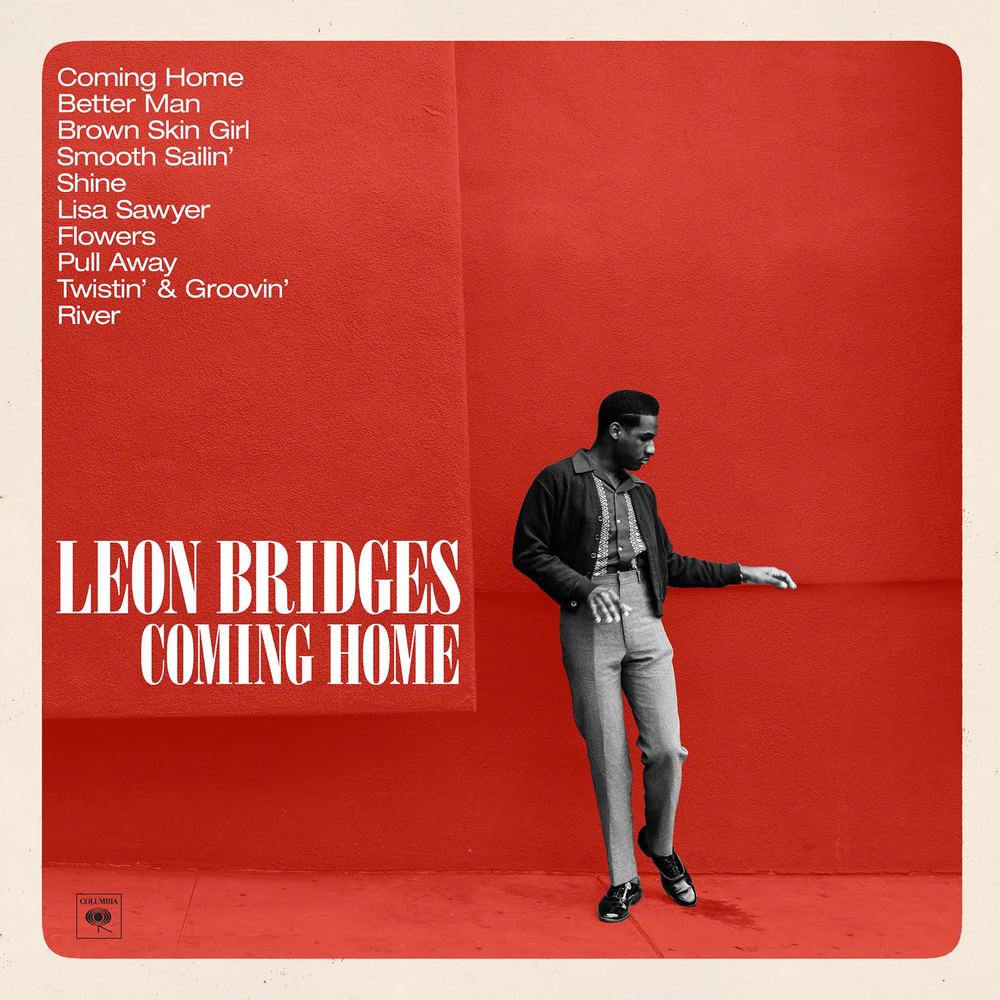
Leon Bridges – Coming Home
released June 23, 2015
******* 8/10

leonbridgescominghome

Todd Michael Bridges is better known by his stage name, Leon Bridges. He released his first studio album Coming Home under Columbia in the summer of 2015 after playing in local clubs in and around Fort Worth in the USA. A chance meeting with White Denim’s Austin Jenkins is what pulled things into focus though.

Bridges’ music is 1950’s and 60’s inspired soul, with elements of gospel, R&B and blues thrown in for good measure.

He is only 26 years young and has experienced a meteoric rise from washing dishes and playing at open mics, to releasing a couple of singles to Soundcloud, Spotify and other streaming sources in 2014/early 2015, to working his first album to be released in time for summer.

This was almost a year ago.

And this might also be obvious if you’ve heard the title track Coming Home, which was one of the singles from the album, but this record was put together with vintage equipment and using local musicians that White Denim collaborate with. If you need to reference the rich back catalogue of soul music to get a feel for his sound, Otis Redding and especially Sam Cooke come to mind. And Bridges purposefully dresses the part which means if you snuck a vinyl copy of this album in with some records from that era, it wouldn’t look out of place.

Yeah, yea, timotheories that is all well and good, but what does the album sound like? And is it any good?

Well, in a word, yeah.

If you enjoy a good combination of guitar, drums, piano, saxaphone, female back up vocals (and who doesn’t), along with smooth sounding lyrics set to ballads, and relaxed storytelling, then Coming Home will feel just like home.

I decided to buy this album on a whim. I was inspired by the cover art and I’m a sucker for a good crooner (read: yesterday’s post about marketing), which is the vibe I got, so if that’s an indication of the quality of the record, great, but for you non-believers, let’s continue on.

One of the perks of writing a review on an album that has been out for a little while is that I get to lend my spin to the review process without the urgency element and draw from the wealth of information already available. Drawing a parallel between myself and Bridges, I have choosen to become comfortable with a set of creative rules (some might say limitations, and they’d be wrong) so that I can best exemplify what it is I want to put out there in giving you useful feedback on music. Which is an important point to make about Bridges – comfortability.

Yes, Leon Bridges wears “vintage” clothes and echoes all the common pieces of the genre, but dammit if he isn’t authentically expressing his love of music and soul in particular. He is comfortable in and snuggles up close to the genre

Which is why I gave it an eight. This is an incredible piece of soul music, from a technical standpoint. I can’t fully commit though, because Bridges doesn’t either.

You see, dear readers, Bridges isn’t of the time period this music beckons from and he doesn’t have the same urgency and exhaustive energy behind the albums. At least that’s the impression I get. I suspect with time he will improve incredibly.

For now, I recommend the listen to the album we do have and you should definitely check out these tracks to get you started 1 2 3 4.


In short, yes Leon Bridges is a talented musician and yes he should keep singing soul music because he is damn good at it, but whether he has fully captured the essence of the emotional genre remains to be seen. My hope and belief is that he will improve with age, and so I’ll add this album to my collection.

But what do yo think? Is my theory on point? Comment! Subscribe! Share! I’ll see you tomorrow with something theatrical.

Tim!

Emotional Exposure (Improv Classes)

Have you ever been stumped for something to say in conversation? I think it is fairly safe to state that we all have, but imagine if you were in the middle of a dialogue and just did not have a choice to pause for a moment and collect your thoughts. What if you were in a situation where no matter what, you were expected to come up with something interesting and/or entertaining to say without missing a beat. What would you do?

Well, dear reader, I have consciously put myself into circumstances where that is exactly what I will be uncovering for the next 7 weeks. I am going to learn about the art of improvisational theatre! For those unfamiliar, improvisational theatre, usually called improv by those who follow it, is an act of executing or of composing a performance without any previous preparation.

In fact, I have already begun my own journey, as I completed the second improv class just this afternoon! I happen to be taking musical improv as well, but we will save that for a later post…

So why would I sign up for improv if I am a visual artist and confirmed introvert? Is that what you want to know friend? I firmly believe that we should purposefully look for opportunities to challenge ourselves and grow beyond the comfort zones everyone becomes guilty of living within. One way to do that is by becoming vulnerable and going after new pursuits.

Adding on to that idea, my improv instructor spoke of the importance of vulnerability in the first class last week, and while I admit that I did not write down what he said specifically of the topic or which author he drew his reference from initially, it was a profound point that was made – I will come back to the reason I personally found the point so important in a moment, but first I want to describe the topic of vulnerability within theatre in greater detail.

After spending some time reading on the subject of vulnerability on my own this week, I came across this article which goes over the topic with consideration and which I believe retains the thrust of what I learned that first day. Below is a snippet for those who don’t wish to read the linked article, but would like some context.

Vulnerability is not good or bad, it is simply real. Some kinds of vulnerability feel awesome and some feel terrifying. All vulnerability is profoundly experiential and memorable. The more we learn how to nurture our vulnerability, the more intimacy we can experience and the safer and happier we are likely to be in the world.

Actors need to access vulnerability in order to portray their character authentically. When this vulnerability does not transpire, the audience will often use words like “wooden” or “lacking” to describe the characterization they see on stage. Adding on to that idea, one of the major reasons why actors get paid in the first place is because a great majority of people are not comfortable with their emotions but can definitely appreciate when someone achieves those emotions in art. We usually say things like “I can totally relate to that” or “I’ve been there.”

For those of use who are not in the performing arts, there are other major benefits from becoming vulnerable and thinking actively. For example, we can better respond to those around us when we are communicating because we become invested in a giving way, without giving up. Many of the warmup exercises and improv games my classmates and I have been learning teach this notion consistently. Whether it is recognizing the energy of individual members, accessing the energy of the troupe or simply saying “yes” to what is happening on stage, we work on becoming better communicators.

Now back to me: the reason I personally found this concept of vulnerability so vital is that I am acutely aware of how challenging it can be to connect with other people and how rewarding it can be once that starts to happen. What is exciting about learning improv is that opportunity to use body language and become more aware of it in other people.

On top of that, the techniques we are learning force us out of our comfort zones, and pit me against my own worst enemy – My desire to formulate my thoughts perfectly before stating what I want to say. There is no time for that in an improvised play. You will not get to learn your lines because you have to make them up as you go! This is yet another way that the arts can help to improve life and allow us to have fun at the same time.

What sorts of quirks do you have that you want to work on? Tell me about them in the comments! Or send me an email!

That’s all the theories I have this time around.

Tim!

Go back

Your message has been sent

Warning
Warning
Warning
Warning

Warning.