Two Piece Band (Royal Blood, How Did We Get So Dark? review)

It’s important to make music that you care about dear readers. And it’s essential to listen to music that fires you up inside. And man does this music ever do that for me.


Royal Blood – How Did We Get So Dark?

released Jun 16, 2017
******** 8/10
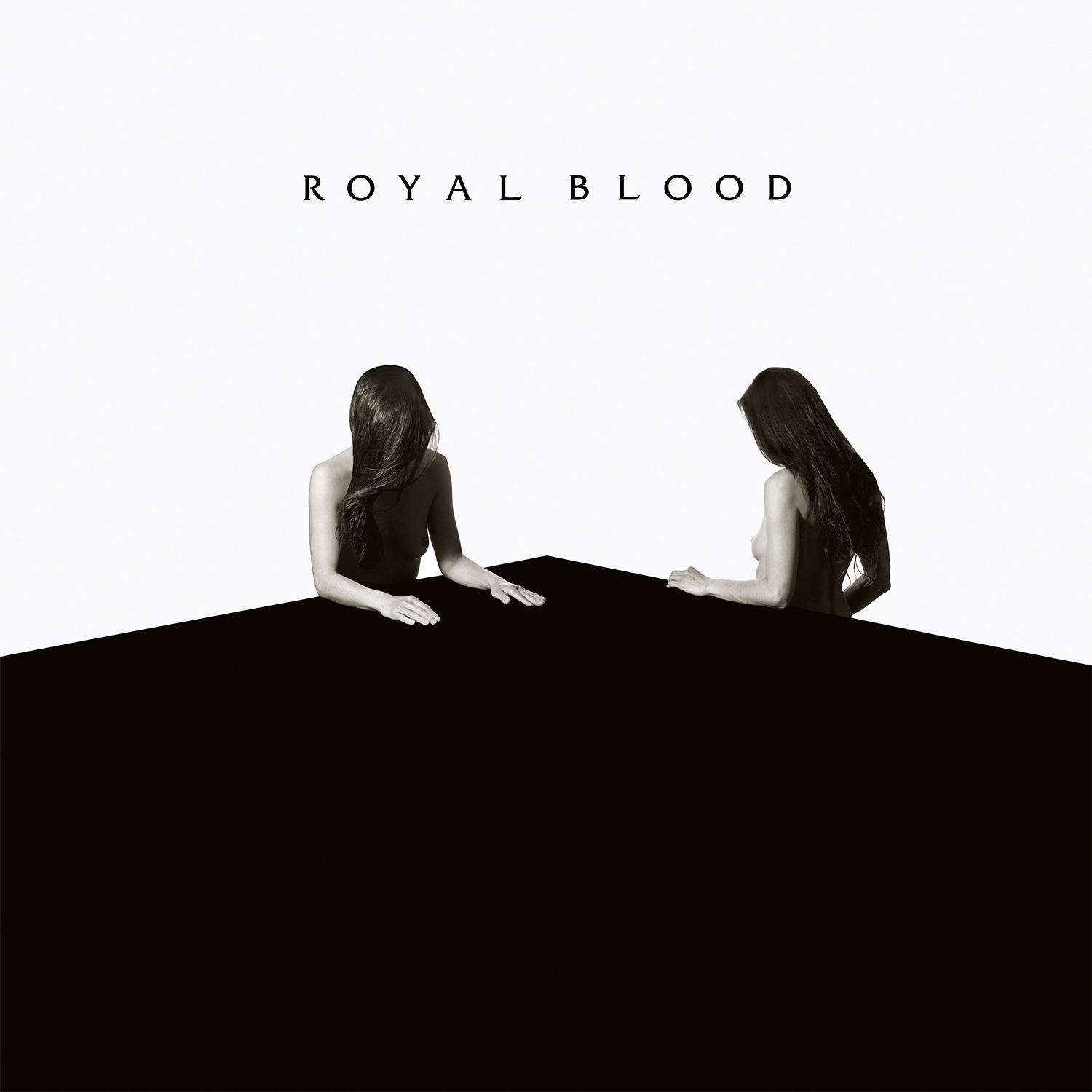
Royal Blood are an English rock and roll duo, comprised of vocalist and bassist Mike Kerr and drummer Ben Thatcher. They have been making music since 2013 – they hit the ground running when they released their first single, Out of the Black later that year. But they first truly got my attention in 2014 when the fourth single Figure It Out debuted.

Holy Moses was that a good experience.

Most definitely my favourite song of that summer. It had the raw quality needed to start a personal process of healing for me. And that release was almost three years ago, so it says a lot about their rock and roll power, because a great deal has happened for these blokes in the time past. Royal Blood saw a huge spike in popularity in a short time, winning several awards including Best British Group for 2015.

When it comes to describing their sound, Kerr has stated that one of his biggest influencers is Steven Hamblin from Graces Collide, which is all well and good, but if you’re new to Royal Blood, then you’re probably wondering what these guys sound like comparatively and I’m happy to oblige. The White Stripes, Black Keys, Death From Above 1979, and Japandroids are probably the best ones I can think of straight away, so take the time and look ’em up.

This is one of those albums that faces the ever-popular challenge of the sophomore follow-up. Tread the course or swim out into deeper waters and hope you don’t drown. Luckily for us, Royal Blood are strong enough swimmers fully capable of doing both; sometimes we hear songs like Where Are You Now? and Look Like You Know which stick to the sounds that what we know, but then we get excellence in the form of album closer Sleep, allowing everything that happens in between songs one to ten to vibrate at level far more grand then on the first album.

Yes. There is a big block of cheese to go with the album’s third single and eighth track, Hook, Line & Sinker, but it’s definitely still a fun song, and considering the tempo of the rest of this record, that’s a far better excuse to be forgiven of then some of my previous album reviews. Also She’s Creeping is kinda bland, angular, and annoys me, but I read another review on Ultimate Guitar which specifically stated a resemblance to Nirvana on this song (who some might say I inexplicably hate), so I’ll just leave it alone.

For my final thoughts… The use of extra vocals and overdubs on the second and third tracks Lights Out and I Only Lie When I Love You make them incredibly catchy, with all of the rawness that made Royal Blood popular to begin with, but making better use of Kerr’s voice and layering in more instrumentation to boot.

Pros: If you’re willing to listen to this a few times over, you might be surprised to learn that one of the best tracks is the title one – How Did We Get So Dark mixes in the new and old sounds quite well. And it deserves to be a single. Also Lights Out and Sleep. It’s a short album with a lot of buzz and well paced.

Cons: Sometimes the production runs a little slick and I think that’s where we end up with songs like She’s Creeping and Hook, Line & Sinker, which unfortunately feel a little phoned in for me. Also, I wish that some the themes were either more epic or more intimate, less middling, please and thank you.

Runtime: 35 minutes

Points of Interest: Royal Blood share the same management as Arctic Monkeys. And months before they released their debut album back in 2013, Arctic Monkeys drummer Matt Helders sported a Royal Blood t-shirt in support of them.

If you haven’t been convinced to check this album out just yet, then I’m a sad theorist, but I think you should check out these tracks (1) (2) (3) and make up your mind for yourself.

theories Summarized

Royal Blood may or may not be a great band of our generation, but either way they rock out with the best of them. I have high hopes for future years and sincerely someone figures out how to turn the lights on, if not, I’ll just jam along in the dark with them.

Tim!
In Space, No One Can Hear You Scream (Planetarium review)

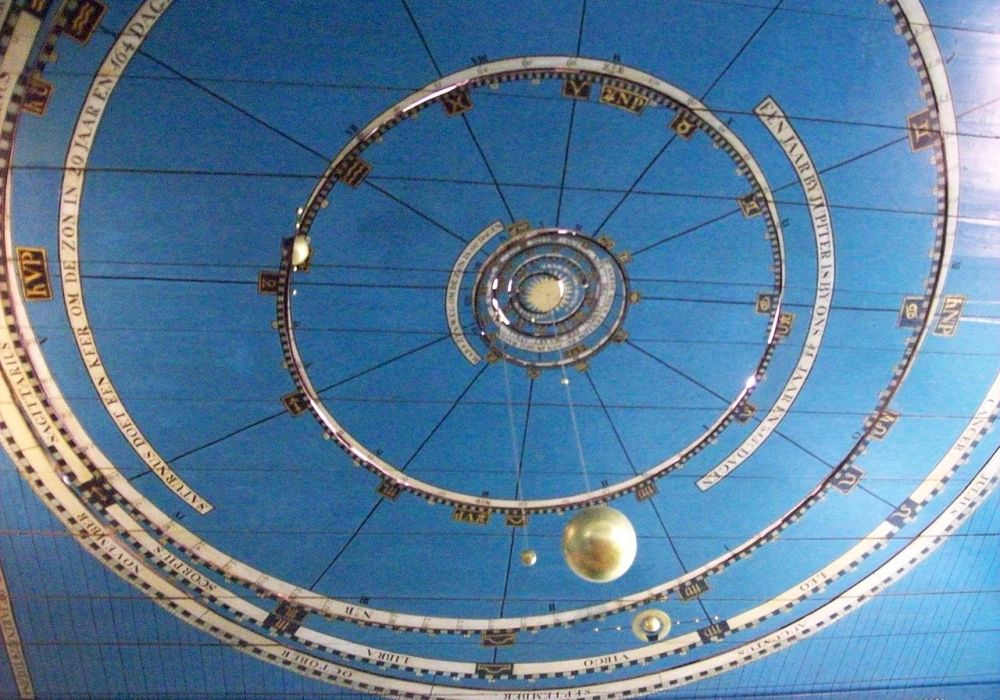
Time to pull out the sports equipment, latex paint, and fishing line, we got ourselves a planetarium to construct!


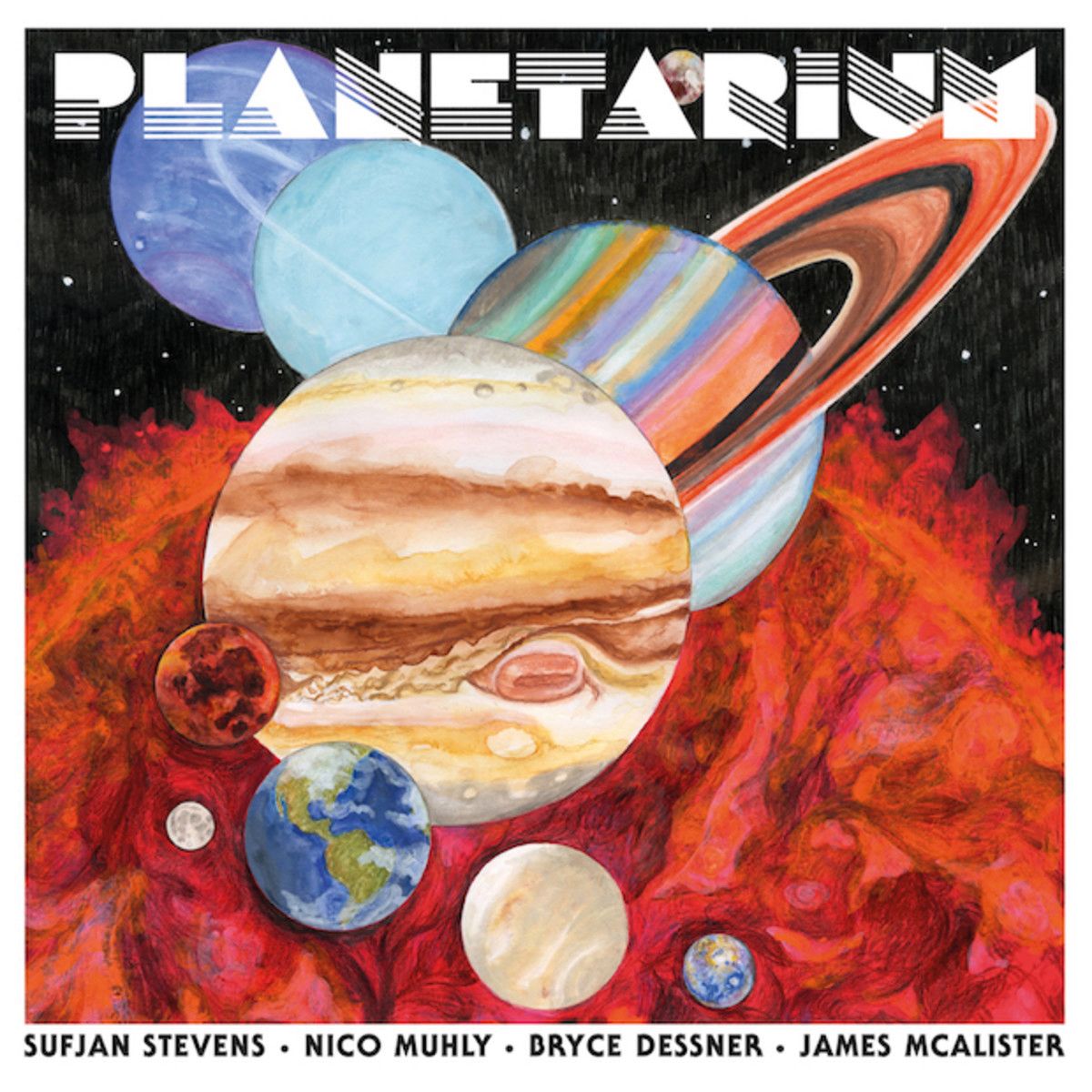
Sufjan Stevens – Planetarium

released Jun 9, 2017
******** 8/10

Planetarium is a collaboration between multi-instrumentalist Sufjan Stevens, composer Nico Muhly, drummer James McAlister, and guitarist Bryce Dessner. A supernova, modern art, super group, if you will. This album was inspired by our solar system and features tracks about black holes, tides, Halley’s Comet, black energy, the Sun, the Moon, the Kuiper Belt, creation, and each of the planets, including Pluto!

Now let’s get to the burning question on my mind – is it off for me to say that this was a weird album to review?

Running at just over seventy five minutes, and including seventeen different tracks, Planetarium takes us all over the place, both metaphorically and literally. An album chock full of ideas, it has tons of instrumentals to take advantage of, and produces epic soundscapes, while including vocals as necessary. It weaves in both the epic (Uranus, Mars, Jupiter, Black Energy) and the intimate (Venus, Mercury, Pluto, and Neptune) to good effect, but the most interesting thing to note of all of these tracks is not how they function individually, but what happens to you as you listen and experience this light show. Err, sound show.

Mythology, science and astronomy dominate this soundscape. Granted it may take a few listens to really immerse yourself in it all, but each time I sat down with it, I focused on different elements. Sometimes I focused on the melody, others were about the lyrics, and still other times I just sat with my own thoughts and contemplated life. That an album about the solar system could make me reflect on my own existence is compelling. Odd that.

And then we have sonic interludes like Halley’s Comet, Tides, the slightly longer Kuiper Belt, Black Hole and In The Beginning. These serve to dial down or ramp up as appropriate. Remember this is a dense album and not something to be taken lightly, but when you consider the scope and scale of it all, well then it just starts to make sense that it was organized this way.

Some of my favourite moments happen on Moon, with it’s many “R2-D2” like sounds, Mars and it’s to the point thoughts on love and war, and the unfettered sexuality/lust of Jupiter. By the time we get to Earth it’s already felt like everything has happened, but not worry.

Coming in at fifteen minutes, we get to experience the passage of millennia through carefully curated sequences representing formation, habitation, natural disasters, the arrival of man, and what seems like the end of civilization. This is all played tongue and cheek of course, delivered with lines like “… run Mission run, before we arrive” and ending with the more intimate Mercury.

Pros: Heady and thoughtful, the talent of its members is well demonstrated on Planetarium. It gets better and better with repeated viewings, each time with a new thing to uncover. Album closer Mercury is just brilliant.

Cons: Interestingly enough, the scale can be somewhat daunting to witness, but hopefully we get more harmony from the group in live performances or if they ever make another studio album. Sometimes Sufjan sounds like an auto-tuned parrot when he doesn’t need to be.

Runtime: 76 minutes

Points of InterestThe group was formed way back in 2012 and Planetarium actually existed as an idea way way back then, with further get togethers solidifying the songs and setting up for a full-length studio album. This is the result of those sessions. Cosmic themes make sense as globalization has flattened the Earth, but space still remains unexplored.

This is an album of abstractions, considerations, and comparative to a space opera. Maybe it won’t ever be repeated again in the history of humanity, but this record is quite a beautiful thing to behold – I just hope that it doesn’t get lost in the shuffle of 2017 releases.

theories Summarized

What else can I say about Planetarium but to listen to it for yourself creative cuties? This is a concept album through and through, and one that isn’t afraid to switch from the grandeur of the stars right down to the people on this organic jet pack hurtling through space and time. Theory or no, that’s what I think.

Tim!

Hall of Fame (Whiplash review)

Sometimes people confuse talent with potential. Potential is aptitude not yet realized, but talent is an expression which is right in front of us. Yes, talent can be reigned in, developed, focused, nurtured, etc. But the real question of the day is, can we recognize talent when it does something a little bit left of normal.

I guess we’ll find out in today’s Theatrical Tuesday review.


Whiplash (2014)

Cast: Miles Teller, J.K. Simmons, Paul Reiser, Melissa Benoist, Austin Stowell, Nate Lang
Director: Damien Chazelle
released on blu-ray February 24, 2015
********** 10/10

Whiplash-2014-tt2582802-Poster

IMDB: 8.5
Rotten Tomatoes: 95%, Audience Score 94%
The Guardian: ****/*****

Damien Chazelle is an American film director and screenwriter. He has currently served up only two feature-length films, but at thirty-one he is making a name for himself and about to release a movie called La La Land which I personally am very excited about. And the major reason for this is that Chazelle knows something about music that not many directors seem to be capable in pulling off. When you tie in the emotional and mental endurance needed to create art, people gravitate to that struggle and can see a story through to it’s conclusion.

Which is where Whiplash comes in, as Chazelle’s second effort, and preceded by the jazz musical Guy and Madeline on a Park Bench, we get to see an excellent sparing match between Miles Teller and J. K. Simmons. Though this movie was technically released almost two years back now, I’m anticipating that 2016’s La La Land will have a similar rhythm to it. Pun intended.

The movie starts with the struggle of a young jazz drummer named Andrew Neiman (Miles Teller) and his journey through school at a top music conservatory in New York called Shaffer Conservatory.

Infamous and tyrannical conductor Terence Fletcher (J. K. Simmons) stumbles upon Nieman practicing late at night and is eventually convinced to invite Nieman into his studio band after a few awkward interactions. But Fletcher is relentless and expects the absolute best of his students, pushing them around both verbally and physically, kicking individuals out on a whim. Nieman practices so hard that his hands start to bleed, and he even breaks up with girlfriend Nicole (Melissa Benoist) because he wants to be the very best.

At one point we sympathize with Fletcher because he shares that a former student of his recently died in a car crash, a student with tremendous potential, and who was quickly rising up. Which is foreshadowing for Niemans own car crash. In a rush to a competition due a broke down bus, Nieman rents a car, but forgets his sticks at the rental agency. He then rushes back and is t-boned by a large truck. Instead of seeking medical attention, he runs to the concert hall and attempts to play the piece, but cannot due to injury. Fletcher boots him from the stage, but not before Nieman attacks Fletcher in front of the audience.

After being dismissed from the conservatory, Nieman and his father (Paul Reiser) meet with a lawyer of the student that died in a car crash. It turns out that the young man hanged himself, and that Fletcher pushed the student to anxiety and depression. Nieman chooses to testify, if only to remain anonymous.

He later stumbles upon Fletcher performing at a jazz club, and is invited to a drink afterwards. Fletcher has been removed from his position, but he wants Nieman to be his drummer for a JVC Jazz Festival. Nieman agrees, but when he shows up to play Whiplash, Fletcher reveals that he knew Nieman testified against him, and has set him up for embarassment. Nieman walks off the stage, but then returns to the stage and starts up Caravan, bringing the rest of the band in with him, and finishes the song with a solo.

Nieman and Fletcher share a look, then work together to finish the set.

ProsThe movies asks the question, what are you willing to do in order to achieve greatness?, and rather deftly answers it. The two leads share an amazing set of performances and obliterate the typical student-mentor relationship trope.

Cons: We never really get to enjoy any music, which is ironic, given that it’s a movie about music. Also, the message is rather linear in it’s presentation, not much room for a supporting cast to move around.

Runtime1 hour 47 minutes

Points of Interest: The film was edited, shot, and submitted to the Sundance Film Festival in a period of ten weeks. Andrew Nieman is in every scene. It was adapted from a short film of the same name, J. K. Simmons plays in both.

This isn’t the first time we’ve seen this kind of story before. If we traded a studio band for uniforms and the drum kit for a football, boom we’d be in a sports movie. Or conversely, we could trade the studio band for a war zone and the drum kit for a rifle and all of a sudden it’s a war epic. But to spit some cheese, the song remains the same. Chazelle has done something here, something authentic, pulling from his own experience, and showing us what happens when someone really wants greatness at any cost.

Whiplash is a rare film that manages to be about music and overly romantic about music. It is considerate enough to share the screen time between it’s human characters and it’s musical ones. It should be obvious that Andrew Nieman has talent from the outset of the movie, but his drive to demonstrate his skill at any cost is what makes this a great case study of expression.

But that’s just a theory.

Tim!