The Final Frontier (Appeal To Logic, Emotions, Ethics)

I think it was about a month ago, or it could also be four weeks ago if you prefer, that I started to address a complex topic about logic, emotion and reason. I began this investigation with the intent of fleshing out the details of what a creative passion should look like on paper (read:artist statement) and using my own artistic practice as a backdrop in the means of an explanation.

At the time I promised I would come back with a series of posts outlining my theories on how to accomplish this.

And so here we are.

It Is Only Logical

This stimulating topic we’re on is the three modes of persuasion, and sometimes known as ethical strategies or rhetorical appeals. Aristotle posited that the best types of persuasion are clearly demonstrated. The ways that we accomplish a successful persuasion are by showcasing good character through credibility (ethics), stirring up feelings (emotions), and proving a truth (logic).

So if we want to be successful artists, writers, musicians, et. al., then we have to build a proper case for what we do for a living, that way whenever we are approached by a stranger, and we want to leave a good impression, we can put together the best elevator pitch ever crafted.

After all, you care about your art right? You know that your unique voice needs to be expressed and the best way to accomplish that is by gaining positive attention and proper acknowledgment. And of course, you want to do it in a way that is authentic, unfiltered and real.

Thusly I have given you your first example of using the three modes of persuasion. And through the lens of logic.

A Logical Decision? Probably. But The Right One?

Now I do have to consider that the best way to establish this artist statement for yourself can be overwhelming, and given that we are are going to be spending a far amount of time going over this, I want to make it very clear what’s at stake here. Your integrity for one.

People are most like to identify with someone who looks like and talk like them. But this character needs to be trustworthy too. In films and television, this is why the lead character always has a strong reputation with the authority to back it up. If we look for characterizations of ETHOS we can quickly identify people like Dexter Morgan from the tv show Dexter, who has clear motivations, an a stong demonstration of his skilset, and because we experience his thoughts and feelings, it humanizes him and makes him seem like a “normal guy.”

But that’s kind of a creepy example, and I think I can do it one better.

Dr. Leonard “Bones” McCoy is the chief medical officer on the Star Trek Enterprise, he is a fourth-wall breaker when the other characters are making strong decisions. He serves as a moral compass for the trio of main characters by talking Kirk off the ledge and challenging Spock’s dry and cold approach to everything.

He is more human than Spock and less of a hero than Kirk, and he is most definitely an authority figure on the ship, who everyone defers to. One of the best quotes attributed to McCoy is the old “Dammit Jim, I’m a doctor, not a [insert job of the moment]”.

I Don’t Believe In No-Win Scenarios

Without an emotional core, we have nothing to go on!

People don’t connect only to logic, nor do they respond to an authority figure just because they have a title, it’s the emotions that impassion a message and give a sense of humanity to whatever the topic at hand.

You know that because I’m fighting the good fight for all artists out there, and that I struggle with doubts but can carry on through passion and sheer force of will that I will make timotheories work and work for you. It’s about justice, imagination and painting a picture of a bright future for everyone that wants to make something beautiful.

PATHOS is for all of the artists who have a fire inside and will never give up. Or surrender.

theories Summarized

There is no way that well go over this all in two posts my friends, just I didn’t think it would happen in one post. But I do hope against hope that this is starting to come together for you.

In case the basic principles of the three modes of persuasion are not clear just yet, I’ll embellish on that Star Trek reference some more. LOGOS is probably the most obvious example and demonstrated through Spock, while I’ve just demonstrated that McCoy is ETHOS, and lastly Kirk is PATHOS. Kirk being the most impulsive and emotive of the three, he takes risks and always acts from instinct, experiences, and a sense of responsibility.

And as I’ve mentioned already, I have a pretty cool theory about how you can take the lessons from those three patron saints of Star Trek and apply their modes of thinking to your own work. But I need to power down for the night creative cuties. These theories don’t running on neverending battery.  At least not yet anyway.

Tim!
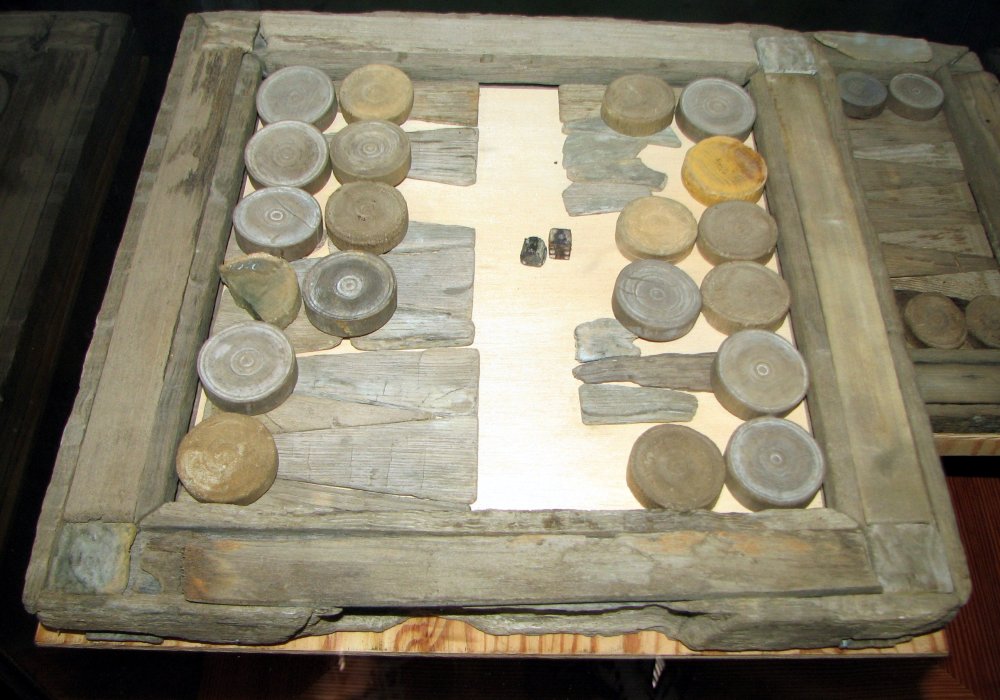
Bored? Games! (Social Value of Table Top Games)

A wise man named Roger H. Lincoln once said that

There are two rules for success…

1. Never reveal everything you know

I’ve happily been following this line of thought for the past year, slowly but surely revealing my ideas and goals for this blog. Most of which have been met with positive reception so far. I say most because I haven’t received any negative comments or messages, so I have no way of knowing if my content is creating negative waves in the local community or the great online one.

But what you don’t know can’t hurt you, right?

Dear readers, I want to share with you a theory I have about board games. I haven’t made any waves about board games since my last post about them, so this seemed as good a time as any to share with you some ideas I’ve come across with regards to the inherent value of playing them.

Board games have rules and a particular outcome. This much is obvious.

But did it ever occur to you that board games also provide a conceptual framework for us to temper our talent and untapped abilities into organized, thoughtful, and decisive results? If we can navigate the challenges of life, then we can more easily succeed.

Board games are great for spending dedicated and fun time with your loved ones. They can also build self-esteem for those seeking positive attention from people they care about, because let’s face it, most board games require you to physically interact with the person in front of you.

They are analog games, after all.

Now, and this is especially true for children, these types of games are also fantastic devices for mastering new skills in visual perception and mental reasoning, as well as fostering a sense of healthy competition.

Maybe you knew this already but these games are great vehicles for strengthening your attention span in an ever tech dependant world where instant gratification on our mobile devices is always within reach. I am especially sensitive to this issue because I believe we should never put all of our eggs in one basket.

Yeah another cliche. Let’s keep moving forward though.

And on the side of social skills, you can learn how to communicate better verbally because you have to share and/or use resources, take turns, and have shared experiences.

Philosophically, the most important message in board games can be taken from my favourite line of Galaxy Quest.

Never give up. Never surrender. Just like in life, there is a certain amount of chance to events, and if you stick it out for a few more turns, you just might roll double sixes or a D20… But you have to stay in the game.

And here we arrive dear readers, at the apex of the post, the reason I started off with that initial quote, and of which I will not reveal my entire game plan, pun intended, but which will give you creative types some ideas too, hopefully.

timotheories is about to embark on a weekly adventure, which will be held every Thursday night, just in time for the Timely Thursdays posts to drop into your inbox.

That’s right! I’ve been casually hosting a board game night with one of my brothers and friend for the past year, but the time has arrived for RTG (Real Time Games) to make it’s face known to the community. We are going to play games every week, and we are also going to occasionally share our experiences playing them, providing some theories on the games themselves, and hopefully about the pastime in its current state and our part in it.

The current plan is to post an event each week on my FB group account, with what game(s) we will be playing, and get some footage of the experience, then I will be sharing the games we play on my instagram account @timotheories and the video reviews will be available on my YouTube channel (https://www.youtube.com/user/timotheories/videos)

I promise there will be lots of laughs, some informative bits, and potentially something for anyone hoping to see something slightly different than a typical review channel.

If we stick through this, I think we will all find that we can learn something from playing these types of games and maybe some new theories will crop up. But what do you think? What kinds of board games do you play? Do you have any favourite memories with board games growing up? Do you dislike them and why? Leave some comments!

Tim!

Lost In Space (Studio Space PT 1)

Space: the final frontier. These are the voyages of the starblog Timotheories. Its continuing mission: to explore strange new worlds, to seek out new life and new civilizations, to boldly go where no one has gone before.

I love space. I seriously do!

Of course, I am probably talking moreso about the boundless three-dimensional extent in which objects and events have relative position and direction, AKA physical space. Yeah, this post is about that. Also how space works in visual art – you know, positive vs negative space? Open vs closed space? Shallow vs deep space? 2D vs 3D space? And here is another mindblower – sometimes space isn’t really there, and that’s called illusion folks. Or how about the use of areas that can be defined by edges, say on a canvas or a piece of paper?

Anyway, you get my point.

So to be infinitely clear, this post is not about space in relation to time, nor the concept of space in relation to astral bodies, also known as outer space. And if you think I could be writing about that 4 inch piece of plastic in the centre of your keyboard, you would also be mistaken. If this were a mathematics blog, we’d be thinking of dimensions as well, but there would be different structures to them, and besides its not a mathematics blog. Coming at it from a philosophical perspective,  there are questions about if space is its own entity, varying thoughts on space in terms of relationships, and my particular favourite – whether there exists a conceptual framework in existence and space fits into it somehow – Let’s put a pin in that last theory and come back to it later.

But it does give a whole new meaning to the expression – “give me some space,” doesn’t it? Next time someone says that to you, ask them what kind of space. For kicks, you know?

On a different, but related note, I moved into a new place about 2 months ago, dear readers. And with said new place, came all of the trappings of reorganizing my life into little boxes, figuring out what to keep, what to get rid of, and then setting it all up again. This new place is awesome, because I get to share it with my 2 brothers and my bro’s girlfriend! We are all creative types, so the house is being used effectively and it looks pretty good too. Right now I am focusing my own efforts on getting the studio space in the basement I have to myself to look a certain way and to start making some fucking art – Which I have been away from for far too long, and hence the strong language.

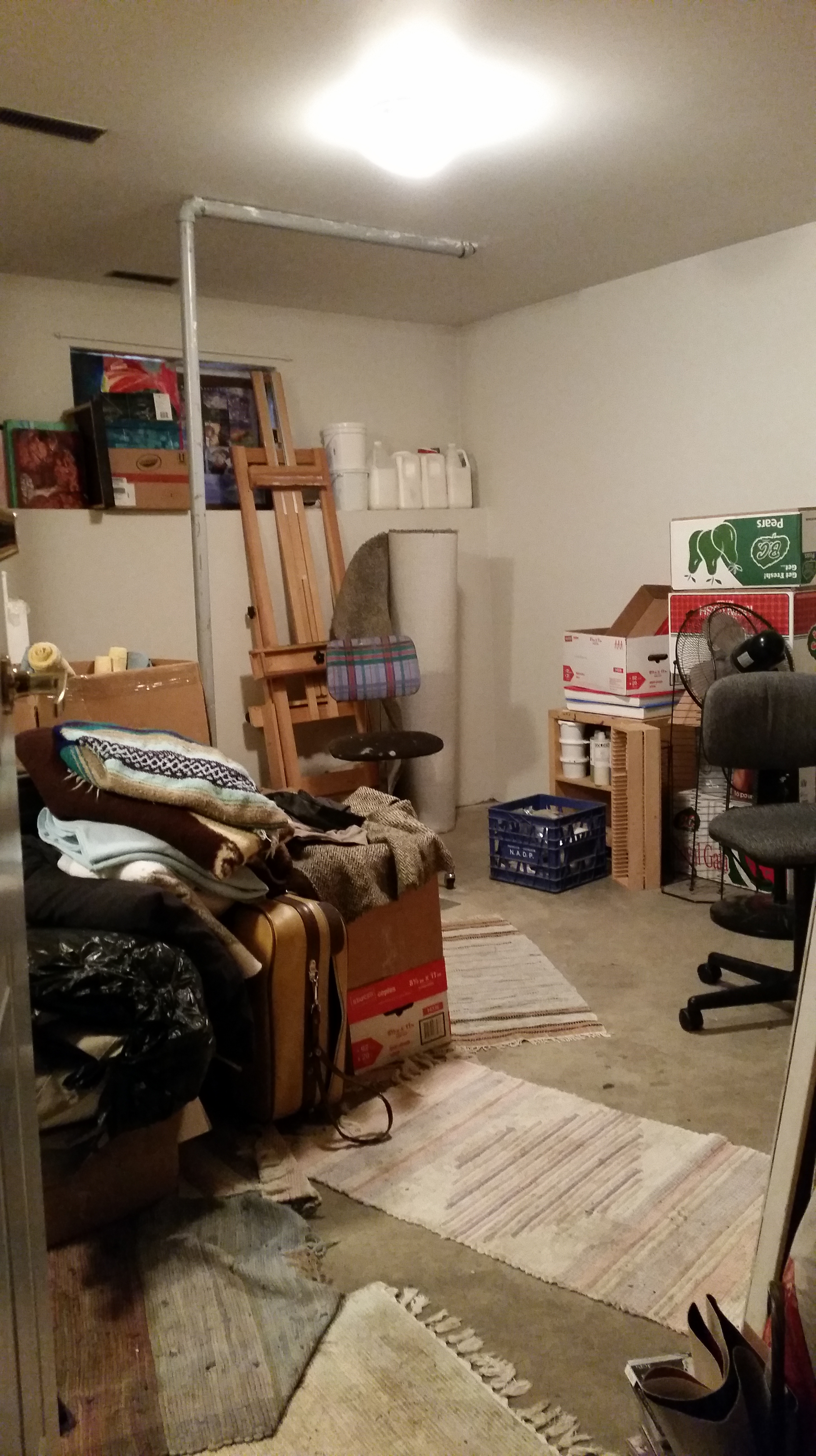
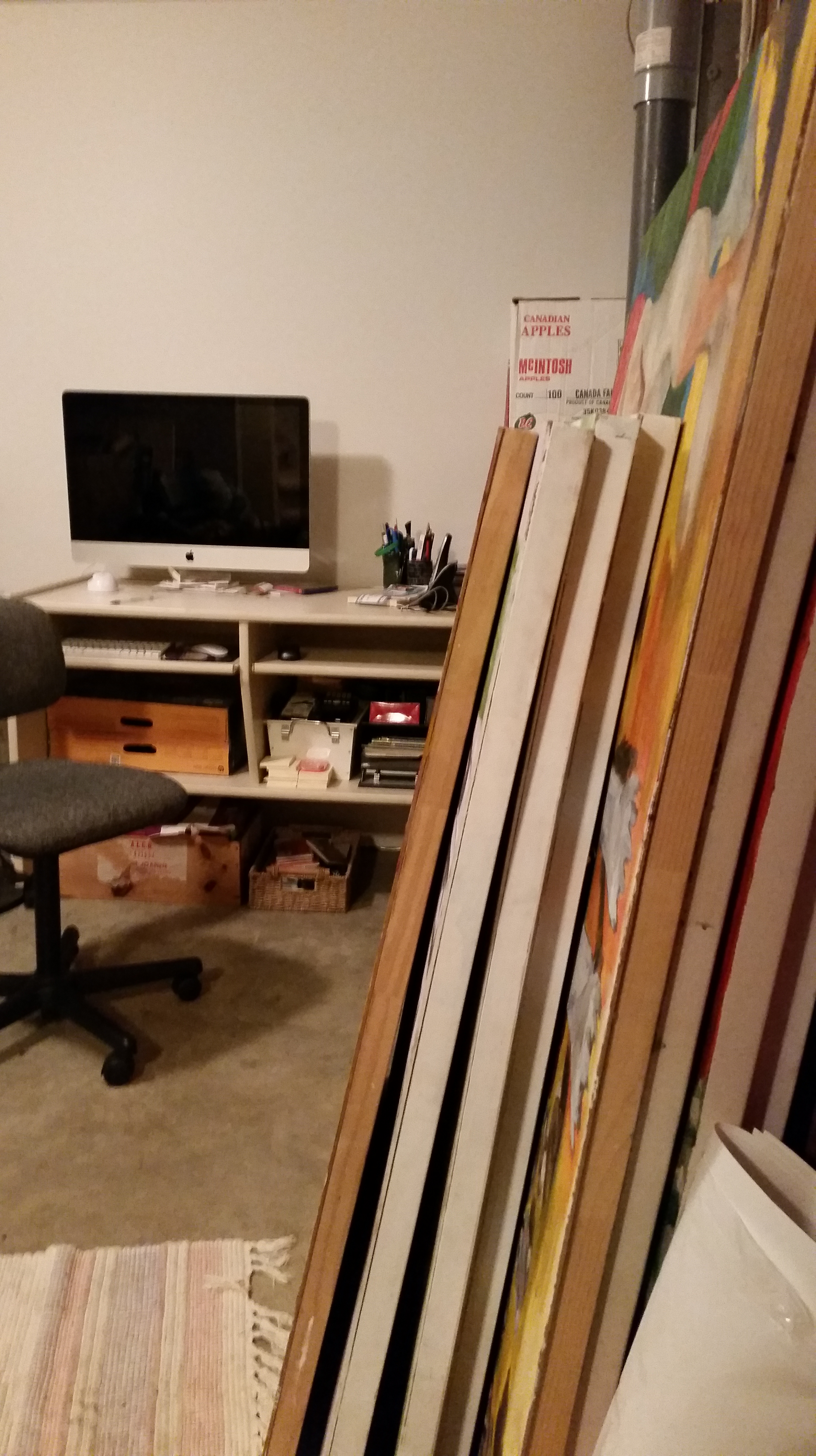
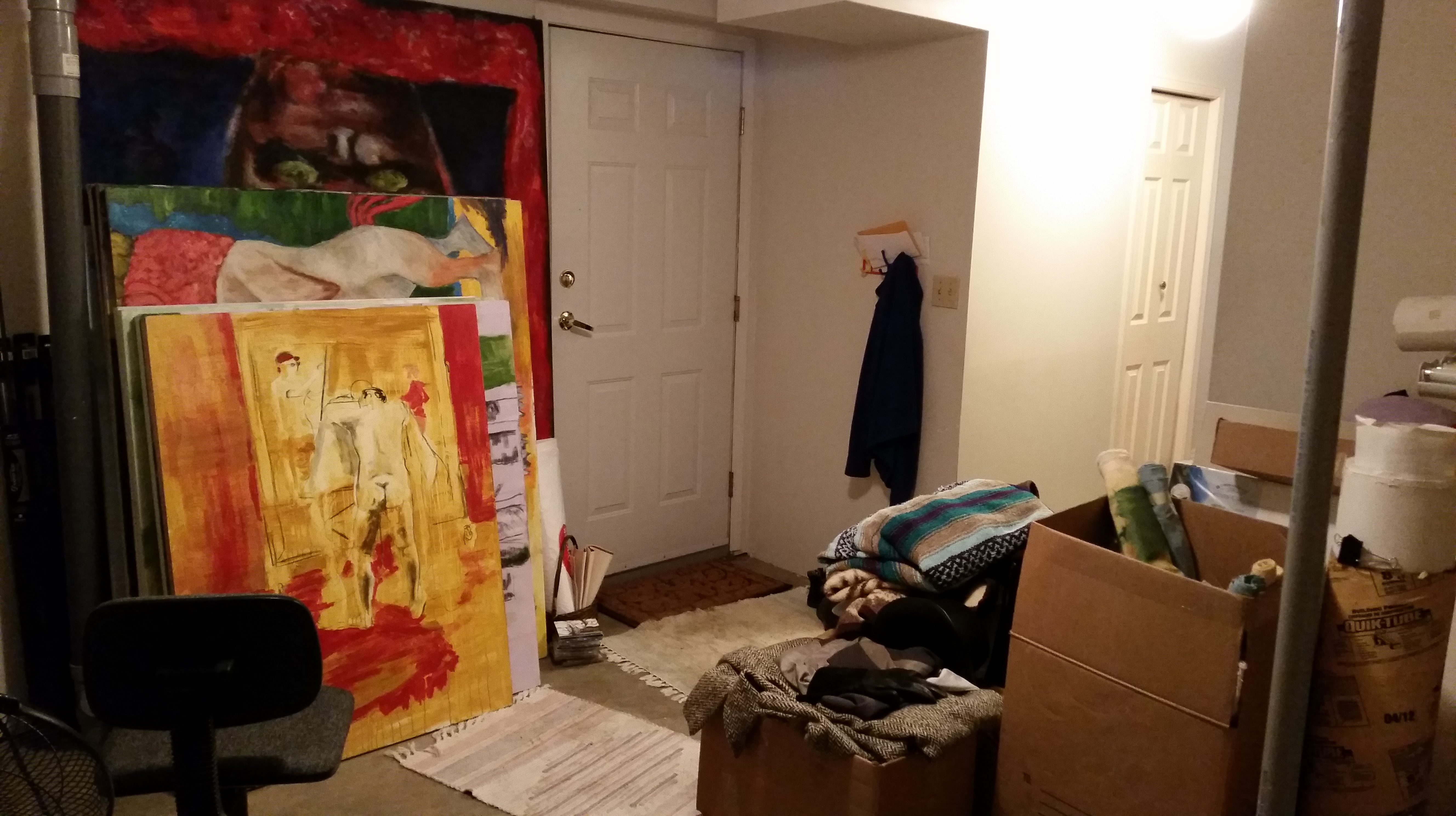
This is what the studio looked like last week.

20150328_12523620150328_12531720150328_125555

Not bad, but could be better in my opinion.

For any artist, visiting their studio space is a very intimate experience. And like being intimate in relationships, some artists may want to share that opportunity with a lot of people, while others may never allow a soul into their physical representation of thoughts, dreams, and the filtering process that makes its way into whatever vessel they so desire. Additionally, I think that looking into an artists space, you get a glimpse of their soul, to gain a better insight of what motivates them and why they care about the things that they choose to make art about.

Let me break it down a different way. I have just given the entire Internet a glimpse into my soul, people!

Moving along; I have this other belief that an artist’s space should be ever-evolving, and that it should function fluidly for that person. Whenever that is not the case, the artist has problems to contend with.

Thus, the exercise of sharing that photo with you is really sharing a candid moment in my life, and the next time I use that space, it should look different, but still provide me with the tools to articulate my vision. As soon as the studio becomes something that the artist doesn’t need, or to put it in other terms, that it doesn’t produce results that mean something, that space requires a major overhaul. Going back to the topic of philosophy and conceptual frameworks, if a studio space cannot be used to make conceptual distinctions (artworks) and organize ideas (space to store works, conduct research, experiment, et. al.)  then it is effectively a storage unit OR worse, a garbage dump. And that truly makes me sad when I think about it!

Fortunately, I am hoping to have an update soon with my progress on renovating the studio space, so you can see how I’ve shaped it up, and maybe I can even provide some insight on creative projects I have lined up in the very near future!

What do you think of creative spaces? Do you have one? How do you use it as a conceptual framework for your art?

And so, those are my theories for the day.

Tim!