Everybody In The Club Gettin’ Tipsy (Gorillaz, Humanz review)


Hosting a party is easy, as long as you can get your different friend groups to play nice, keep everyone engaged, and don’t disappear for a smoke or three.


Gorillaz – Humanz

released April 28, 2017
******* 7/10
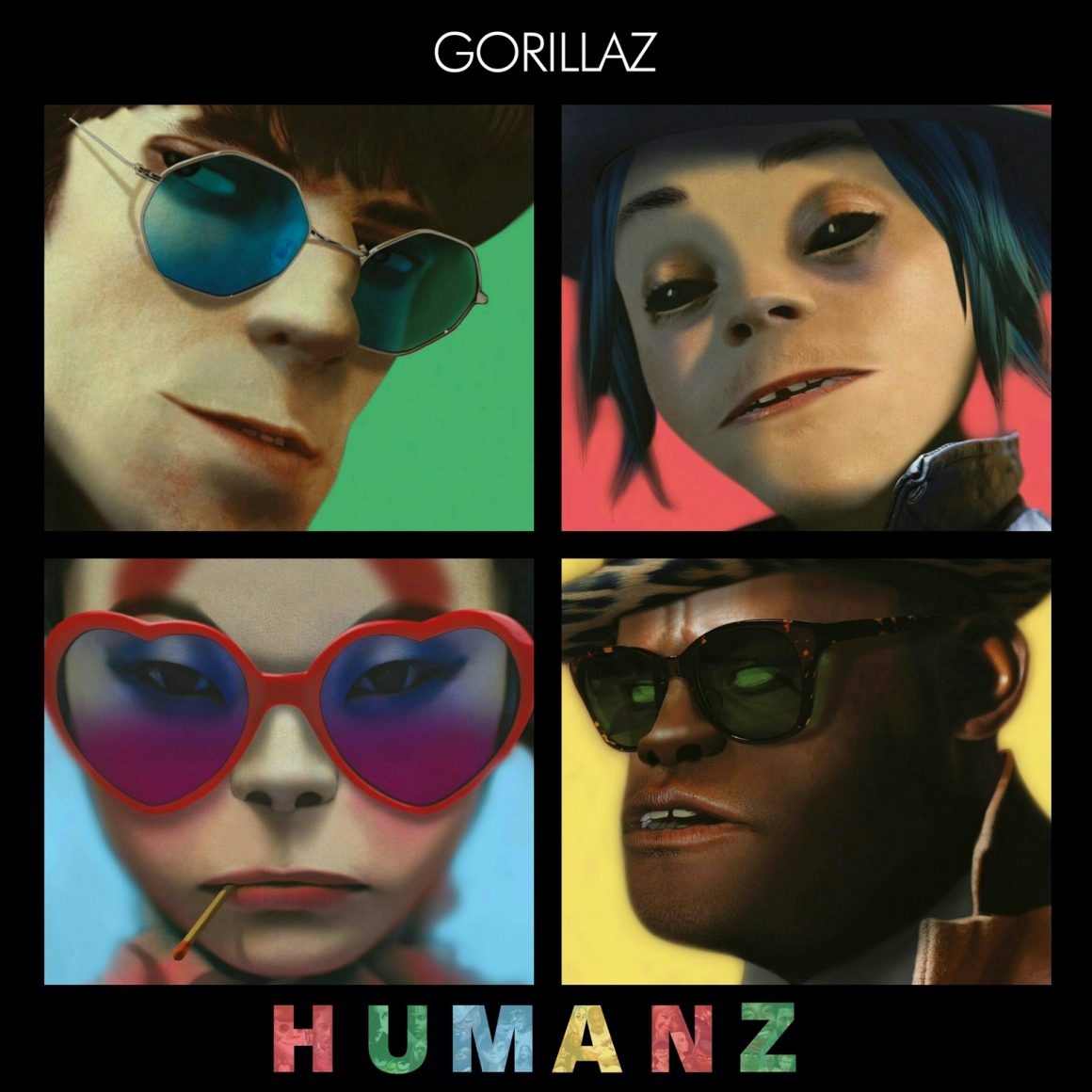
Gorillaz are an English virtual cartoon band created by Damon Albarn and artist Jamie Hewlett of Tank Girl fame. This band is made up of 2-D (lead vocals, keyboards), Murdoc Niccals (bass guitar and vocals), Noodle (guitar, keyboards), and Russel Hobbs (drums and percussion).

The fictional universe of Gorillaz is constructed by the music Albarn creates and their personas have been formed by the collaborations Albarn has orchestrated with other artists whom have made sense creatively with the otherworldly sounds of the band. Plus Hewlett adds visual flavour in album covers, concept art, and music videos, among other things. And all of this has worked over the current four phases of Gorillaz history. None of it ever feels quite real, and yet it is familiar because the quartet address issues of our time, albeit through their cartoon lens of mystery.

It’s all quite heady and fun.

And that’s because Gorillaz are combining rock, rap, electronica, reggae, pop, trip hop, and an assortment of other sounds together to evoke the feelings needed to build these worlds, and Albarn has been fairly consistent throughout this journey.

But it’s also been seven years since The Fall, and the end of Phase Three – Escape To Plastic Beach.

Phase Four – We Are Still Humanz catches us up on what has been happening with Noodle, Murdoc, Russel, and 2-D, and its been interesting. Lots of references to their time at Plastic Beach, and even incorporation of social media into their lives, but of particular note is how Gorillaz used YouTube to tease the albums release, adding new videos about a month ahead of the official worldwide release date.

Featuring performances from Anthony Hamilton, Jehnny Beth, Mavis Staples, Vince Staples, Peven Everett, D.R.A.M., Jamie Principle, Danny Brown, Grace Jones, Zebra Katz, Del La Soul, Benjamin Clementine, Kelela, Popcaan, Pusha T., and Kali Uchis, each track runs its own course; some faring better than others, but the interludes helping to form a post-apocalyptic story following the US presidency of Donald Trump.

And it’s entertaining. A party for the end of the world, with each room being all the more appealing and with its own decor. Though I have to wonder if staging a house party with club music is really the right solution to the scenario at hand, after all, you’re still at the house. On top of that consideration is the challenge that frontman 2-D is notably absent from a lot of the tracks, this seems to be more of a free-for-all than a bonafide representation of these artists as a voice for Gorillaz.

That said, it’s kinda exciting to see the younger generation getting excited about artists unfamiliar to them through the looking glass that Albarn so deftly supplies. This is his project you know, and he’ll invite whoever he wants to party with him. Plus, he’s cool enough that these new friends will rub off on you.

theories Summarized

If you’ve ever listened to Clint Eastwood or Feel Good Inc. before, you can probably forgive Gorillaz for sounding a bit disjointed on this effort. Besides, the interludes help give this record a sense of continuity, even if 2-D isn’t there often enough to keep up with his hosting duties. Maybe Murdoc will finally step in, we know he wants to be lead anyway.

Tim!

Life Is… (Li Kunwu)

Like any big meal, it takes some time to digest what you’ve consumed and let the food settle before you can fully appreciate what you just went through.

The wait for a table, the anticipation growing with every waft of food that lingers by on outstretched fingertips as the waitress hustles order number 56 off to table twelve. The decision making process of what to order itself is an experience, and then the final push comes as you promise yourself to limit the dinner roll indulgences as you sit there some more as the food is prepared.

Finally, the food arrives.

You take it all in, and consider the journey you are about to take. It’s never what you pictured in your mind, but any good chef is capable of surprising you, and hopefully she has laid a good foundation for your senses to adapt to dinner.


Or maybe this is all just a metaphor for a book I read last month, and finally got around to writing about in early April.

Tracing A Remarkable Journey

The author of about thirty books, Li Kunwu has been a central figure in The Daily in Yunnan for decades now. He is has made painting, drawn comic strips, and published his own works, one of which I personally read recently as part of my monthly book exercise.

Can you guess what theme he fits into?

It’s actually two categories – LIFE and LOVE.

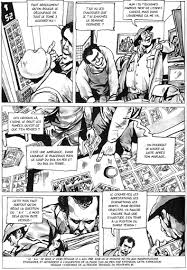
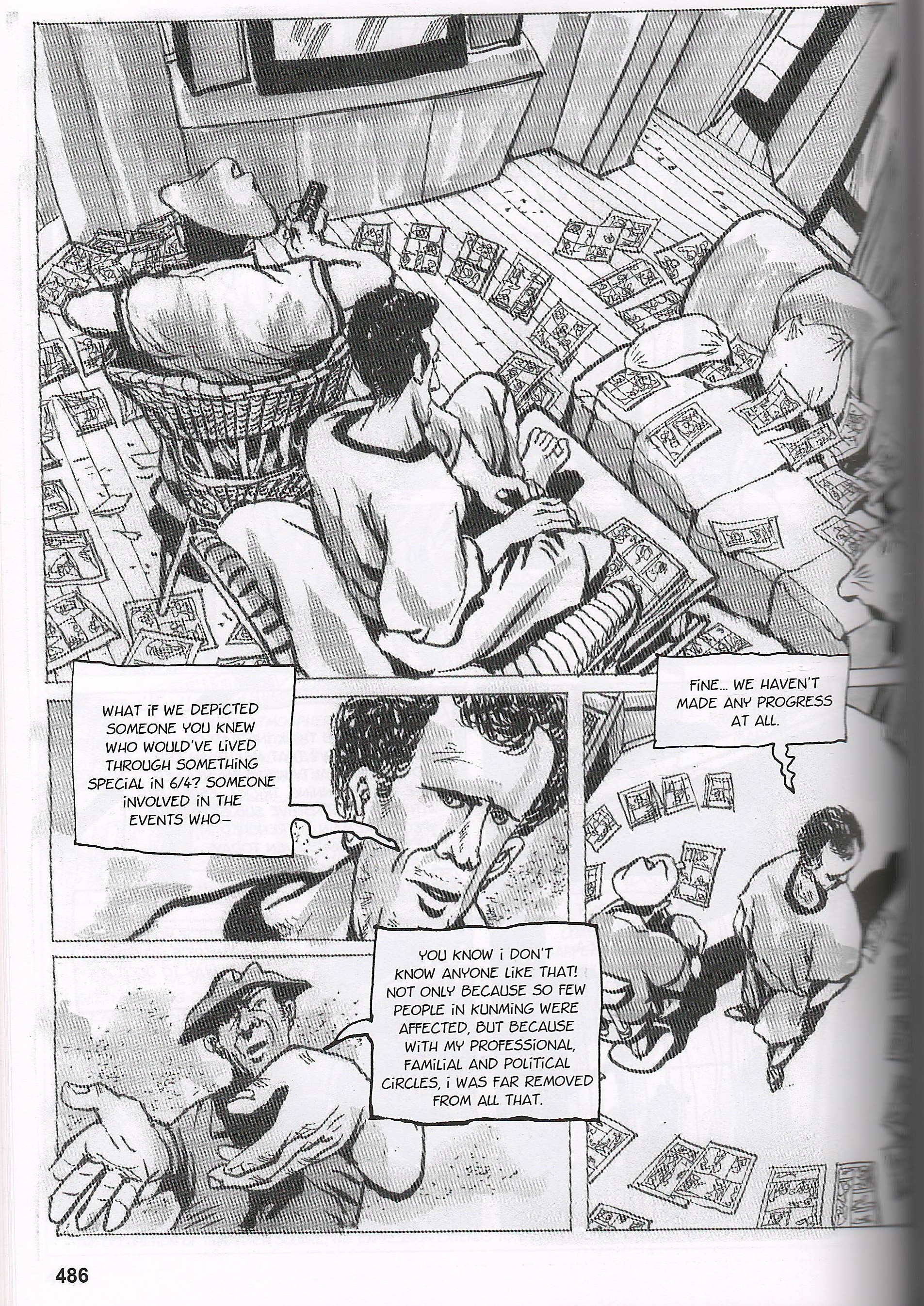
A Chinese Life is an autobiography presented in a graphic novel format, and it chronicles the journey of Li Kunwu throughout his life in China. He was born in the 1950s, so we get to experience the development of the People’s Republic of China through his youthful eyes. A member of the People’s Liberation Army, Li manages to recapture his own memories in a way that is both intimate and large enough in scale to be understood by an average historical student. There are parts filled with humour and with drama, but it never feels too heavy in one camp or the other.

It takes a few sessions of concentrated reading to get through, coming in at about 700 pages worth of content, and to be clear, the combination of text and image is at almost equivalent distribution.

Read Army


What I found most interesting in reading this story was not how little I really knew about The People’s Republic, nor how little I knew about Li himself. What I found most interesting was how well his story translated to english and how despite all of the seemingly incredible adversity he faced over his lifetime, that a lot of his struggles were universal.

From learning how to relate to his father, to finding love, to discovering his purpose in life, to simply living and experiencing a host of different things, A Chinese Life is an excellent demonstration of a life lived full. And Li does follow his purpose, all the while choosing to believe in what he has believed in from a young age.

It’s incredibly rewarding to see him make art to serve the purposes of a party member hairdresser, and how he finds ways throughout his youth all the way into adulthood which make him into a better artist, and which often tie in directly with his political climate. Illustrating for propaganda posters and newspaper cartoons alike.

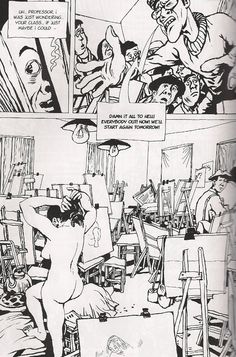
Even when Yunnan has it’s first life model class.

And eventually we reach a point well into Li’s adult life, after his father has died, he has been through a divorce, and is taking care of his child as a single parent, that he meets a French writer and diplomat at a comic book convention. This is the point when the story begins to wrap up, and we have a moment to reflect on what we’ve been witness to.

The Modern Age

This is a story all at once encompassing and yet missing details.

Much like any good story, things have been embellished, while other pieces have been glossed over and left out. For instance, as much as I enjoyed the journey from youth, to adulthood, the final 100 pages or so seem sparse and cover a great period of time. This is intention of course, otherwise we’d be left with a 1400 page graphic novel, and I’m not sure that many people would have picked it up.

It is fascinating to see the world through the eyes of someone on the other side of it, and especially of one who holds a different political viewpoint then we are used to, but then again, life is… complex.

At least that’s my theory.

Tim!

A Short History of The World (Comics, Comic Strips, Comic Books)

I think I’ve gone too far this time, dear readers. I decided to write about a topic which is far more complex and grand then I could possibly fit into the space of these 1000 words or less. And I also feel that I’m too close to it really give you an objectively focused and emotionally restrained tone.

Now to be clear that does not mean I haven’t given 110% effort here, but this is something which is close to my heart and heavily influenced my childhood decision to pursue art. Rhyme not intentional, but convenient.

I’ve written topics before which have used this model of art making in their framework, but it’s a little bit real for me friends and how this medium is starting to show up everywhere. Hell, It’s a little too surreal.

tumblr_ly2xi5uNDN1qeuuopo5_r2_250

tumblr_ly2xi5uNDN1qeuuopo3_250

tumblr_n1cr8e2pww1ql4e6oo4_250

Comics were originally thought to be a form of escapism for youth and definitely not something that could become entrenched in popular culture. Yet here we are.

History of Comics

Twenty years ago, there was almost no interest in the academic community to look at comics, but colleges and universities are now making real efforts to work with people in the industry and to study the impact the medium has had on culture. With a format that asks us to consider both text and visual information simultaneously, comics are literally sequential art. They use panels to help with pacing, while speech balloons and captions help with dialogue, private thoughts, character background, and even sound effects.

And the history of comics has been varied in different cultures as well. For instance, in Europe, Japan, and the United States, comics got their start in newspaper publications and books as secondary entertainment, in what eventually was known as a strip.

But now we have an assortment of formats to choose from. Gag cartoons and political cartoons are often single panel pieces, followed in length by the comic strip. Comic books, also known as comics, are multi-page books that are bound with staples. Collected editions of comics can come in trade paper backs, in both softcover and hardcover, and graphic novels are self-contained stories that were published in a limited run or as a one-shot. Lastly, web comics. Web comics are stories that exist first on the internet, and have no size or page limitations. Some web comic artists even incorporate animation and sound into their work.

And of course when you travel overseas… you can see Japanese manga, European bandes dessinees and fumetti or Korean and Chinese manhwa and manhua. It’s a lot to wrap your head around.

Comics Terminology

Which reminds me, did you know that there is a whole language of terms for comics? The layout is made up of panels, and the panels contain spaces which are culled the gutter. Rows of panels can also be called a tier, while an image that takes up half the page or more is called a splash page. A splash page is usually set up to emphasize a story point and gain attention, while an image that takes up two pages is called a spread.

As already mentioned, the speech bubble is used to contain character dialogue and even it’s shape let’s the reader know whether thoughts are said aloud or internally AND can even be used to indicate tone. Captions on the other hand are separated from the rest of the page and often give narration or information about the story. Sound effects are demonstrated with words that sit in the panel, and are colourful for effect.

When we consider the concepts used to engage with the reader, we cannot forget that it is the reader’s responsibility to perform closure and combine all of the panels together in their head, which means that it is the responsibility of the comic creators to capture key moments in the story, also known as encapsulation.

Roles & Responsibilities

Comic creators can have a few roles, specializing in specific aspects of creation or depending on the scale of the production, they may take on everything. For instance, they could be a writer, who handles plot, dialogue, and pacing. Or they could be an artist/cartoonist, which can be further subdivided into roles of pencilling, inking, and colouring. Lastly, the letterer fills in the blanks for speech bubbles and sound effects.

Defining Comics

Much like film and it’s big sister, literature, the definition of comics is not perfectly linear. It is an ever-expanding form, and with the variations across culture and over history, we’ve not quite nailed down what comics should look like. I would say this though, it’s an important crossover medium, that allows the reader to explore a relationship with traditional mediums of both literature and visual art, and I personally believe that we can all gain a stronger appreciation of both forms by spending time with comics. If films serve as our global cultures version of the campfire story, then the comic is a cave painting set in isolation and used for reflection. It’s not something which is only for children, there are lots of great books adults should read – I’ve got a convenient list for your reference.

I’m definitely going to come back to comics from time to time, as I think this medium is rich and full of opportunity, after all, the cave paintings are starting to move over to the campfire, so why not spend some time in reflection, friends? It’s just a theory, but I bet you’ll get something from it.

Tim!