Building Bridges, Forging Families (Community)

A new year, a new theme.

And while I’m not going to unleash that theme on you just yet, mostly because I’m saving it for the timotheories January post that’ll be released tomorrow, let’s just agree that this first Wisdom Wednesday post of the year is significant. Heck, I’ve even layered this post into an existing series on health and wellness, and influenced by The Organisation for Economic Co-operation and Development (OECD).

Let’s consider that statement one more time “new year, new theme.” We could pretty easily replace the words “year” and “theme” with almost anything really.

It’s one of those catch-all-modify-it-as-you-like phrases that I often like to say, and which many of us are guilty of sharing too. It’s such a North American thing to embrace newness. Except that you can’t hear me saying it, so looking at it through the lens of my writing will have to do, dear readers. And if you really want to see me speak you can always head over to the YouTube channel. Lots of theories over there.

You know what else? It’s been an excellent Christmas break. For me especially.

Break In The New Year

An opportunity for both reflection and decompression with a strong mix of socialization thrown in for good measure. As is the tradition, but odd for me to written as a staunch non-traditionalist, we had our typical Christmas eve Secret Santa gift exchange, then a full day of Christmas activities, Boxing Day shopping and movie watching, my annual Fast and Furious marathon, a roommate holiday party, New Years Eve, and New Years Day dinner. It was a full docket to be sure.

If you haven’t guessed it yet, I insist on taking the last week of the year off because Christmas and New Years are big holidays in my family. We always seem to have at least three or four days dedicated to the holiday season and so the preceding weeks and afterglow take both a physical and emotional toll on me. It ain’t easy being green, as the once Kermit the Frog once said.
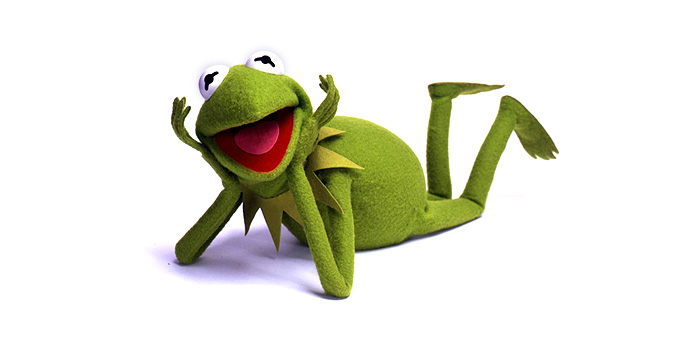
kermit

Communication Breakdown

The feedback I often get from more vocal friends who only want a cursory view of my break is “why do you even take holidays if you aren’t going anywhere?” Well my friends, I think it’s important to spend time with family and friends and I want to be in the best state possible to partake in these festivities. But honestly it’s just not simple drop in and drop out situation. I have to absorb it all and then filter the experiences. That, and I often catch some sort of seasonal illness around this time of year.

Now granted, I have been told on more than one occasion that I push myself to the limit at this time of year, but recognizing  the deadline oriented nature of the holiday and my own needs working retail (which doesn’t matter if at a store or head office), have led me towards this solution.

This is important to realize. Community is vital for a creative person, so we each need to find a way to inject it into our set of priorities.

You see creative cuties, community and communication often go hand in hand. The people who attend these events with me all bring their own unique perspective to each party, but the desire to be there and connect is important to each of us. Whether it’s bonding over a film series. the act of handmade gifts or sharing in a homemade meal that celebrates culture, there requirements for participating in these events are clear.

Advanced Community Studies

But is this really the life we should be living?

Of course, I have this theory that it all comes back to values. In fact, I call it the campfire theory. Which I’ll likely elaborate upon int’s own post sometime this year…

We all need to be in alignment with the people we spend time with, and a great shared valued is much like a campfire, we gather around it for warmth, share stories around it hours, and struggle to leave it in the wee hours of morning, even when we know we could be sleeping. This is passionate living, and one of the most important things we can do in life is find community with like-minded individuals. The world challenges us to do it on our own, but this is a fallacy, because studies have proven time and time again that giving back to others is good for us and after a certain point of success we want to give away what we have.

We need to make the time for community. Life lessons and experiences are often reverberated through the friends and family in our lives.

Once each of us realizes that we must actively work with a community, then we can begin to determine how often we engage with our communities (daily, weekly, monthly) and the best way to structure said community. It could be a Facebook group, a What’sApp groupchat, a dinner party or a campfire. But knowing what you want to offer the group(s) and receive back is essential.

I’m ecstatic to see what 2017 brings for you creative cuties, so hit me up with your own learnings and let me know what you thought of this wisdom. I’m out of theories for now, but I’ll share some more tomorrow.

Tim!

A Short History of The World (Comics, Comic Strips, Comic Books)

I think I’ve gone too far this time, dear readers. I decided to write about a topic which is far more complex and grand then I could possibly fit into the space of these 1000 words or less. And I also feel that I’m too close to it really give you an objectively focused and emotionally restrained tone.

Now to be clear that does not mean I haven’t given 110% effort here, but this is something which is close to my heart and heavily influenced my childhood decision to pursue art. Rhyme not intentional, but convenient.

I’ve written topics before which have used this model of art making in their framework, but it’s a little bit real for me friends and how this medium is starting to show up everywhere. Hell, It’s a little too surreal.

tumblr_ly2xi5uNDN1qeuuopo5_r2_250

tumblr_ly2xi5uNDN1qeuuopo3_250

tumblr_n1cr8e2pww1ql4e6oo4_250

Comics were originally thought to be a form of escapism for youth and definitely not something that could become entrenched in popular culture. Yet here we are.

History of Comics

Twenty years ago, there was almost no interest in the academic community to look at comics, but colleges and universities are now making real efforts to work with people in the industry and to study the impact the medium has had on culture. With a format that asks us to consider both text and visual information simultaneously, comics are literally sequential art. They use panels to help with pacing, while speech balloons and captions help with dialogue, private thoughts, character background, and even sound effects.

And the history of comics has been varied in different cultures as well. For instance, in Europe, Japan, and the United States, comics got their start in newspaper publications and books as secondary entertainment, in what eventually was known as a strip.

But now we have an assortment of formats to choose from. Gag cartoons and political cartoons are often single panel pieces, followed in length by the comic strip. Comic books, also known as comics, are multi-page books that are bound with staples. Collected editions of comics can come in trade paper backs, in both softcover and hardcover, and graphic novels are self-contained stories that were published in a limited run or as a one-shot. Lastly, web comics. Web comics are stories that exist first on the internet, and have no size or page limitations. Some web comic artists even incorporate animation and sound into their work.

And of course when you travel overseas… you can see Japanese manga, European bandes dessinees and fumetti or Korean and Chinese manhwa and manhua. It’s a lot to wrap your head around.

Comics Terminology

Which reminds me, did you know that there is a whole language of terms for comics? The layout is made up of panels, and the panels contain spaces which are culled the gutter. Rows of panels can also be called a tier, while an image that takes up half the page or more is called a splash page. A splash page is usually set up to emphasize a story point and gain attention, while an image that takes up two pages is called a spread.

As already mentioned, the speech bubble is used to contain character dialogue and even it’s shape let’s the reader know whether thoughts are said aloud or internally AND can even be used to indicate tone. Captions on the other hand are separated from the rest of the page and often give narration or information about the story. Sound effects are demonstrated with words that sit in the panel, and are colourful for effect.

When we consider the concepts used to engage with the reader, we cannot forget that it is the reader’s responsibility to perform closure and combine all of the panels together in their head, which means that it is the responsibility of the comic creators to capture key moments in the story, also known as encapsulation.

Roles & Responsibilities

Comic creators can have a few roles, specializing in specific aspects of creation or depending on the scale of the production, they may take on everything. For instance, they could be a writer, who handles plot, dialogue, and pacing. Or they could be an artist/cartoonist, which can be further subdivided into roles of pencilling, inking, and colouring. Lastly, the letterer fills in the blanks for speech bubbles and sound effects.

Defining Comics

Much like film and it’s big sister, literature, the definition of comics is not perfectly linear. It is an ever-expanding form, and with the variations across culture and over history, we’ve not quite nailed down what comics should look like. I would say this though, it’s an important crossover medium, that allows the reader to explore a relationship with traditional mediums of both literature and visual art, and I personally believe that we can all gain a stronger appreciation of both forms by spending time with comics. If films serve as our global cultures version of the campfire story, then the comic is a cave painting set in isolation and used for reflection. It’s not something which is only for children, there are lots of great books adults should read – I’ve got a convenient list for your reference.

I’m definitely going to come back to comics from time to time, as I think this medium is rich and full of opportunity, after all, the cave paintings are starting to move over to the campfire, so why not spend some time in reflection, friends? It’s just a theory, but I bet you’ll get something from it.

Tim!