Compatriot Music (Mary Gauthier, Rifles & Rosary Beads review)

An album that addresses the lives of active military members, veterans and their spouses? Sign me up. But don’t be surprised if I’m choking back the tears…


Mary Gauthier – Rifles & Rosary Beads

released January 26, 2018
********* 9/10
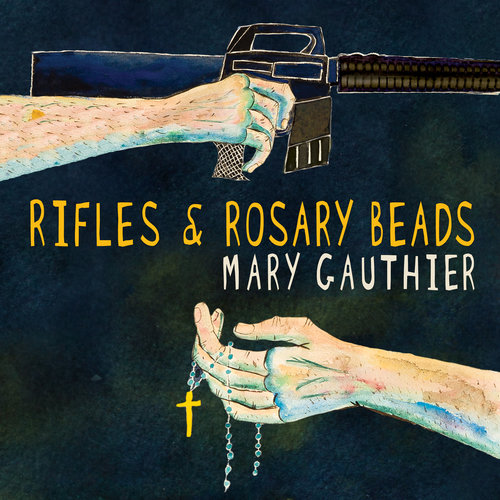
Mary Veronica Gauthier, better known by her stage name Mary Gauthier, is an American folk and country singer-songwriter.

She was adopted from the very young age of one, but struggled with the idea of being adopted as she grew up. She ran way from home at fifteen, lived on friends couches and in halfway houses, and used drugs for many years. She almost completed a philosophy degree at Louisiana State University, but dropped out her senior year. She then opened and ran a Cajun restaurant for eleven years, which coincided with the birth of her interest in music and success at sobriety after an arrest for drunk driving on her restaurant opening night in 1990.

Fast forward 28 years, 11 albums (8 studio albums) later and a lifetime of experience singing a combination of folk, Americana and country music and we land at Rifles & Rosary Beads. This is a collaborative album which was cowritten by Gauthier and members of the nonprofit, Songwriting with Soldiers, an organization that pairs veterans and active duty service members with professional musicians to tell their stories.

Sometimes healing and sweet, other times sour and full of pain, this album is super powerful and deserves top marks for telling meaningful stories in a poetic way. I’ll admit I had not heard much of Gauthier’s catalogue prior to sitting down with this concept album, but gosh this just incredible to listen to, and I’m a sucker for this kind of music to begin with. Add in a favorable mix of genres, and you have timotheories gold.

Starting off rather sober with the opening track, Soldiering On, this lyric I lifted from the song describes the tone well – what saves you in the battle, can kill you at home. Or better yet, how about this one from The War After the Warwho’s gonna care for the ones who care for the ones who went to war.  Gauthier is already a strong writer, but these are real stories we are hearing, featuring the voices of both the military types and their spouses, and all get credit in the liner notes.

Brothers describes a viewpoint of military women looking for equality, whereas Bullet Holes in Sky offers mixed emotions about Veterans Day from a navy veteran. And we get the obvious question of circumstantial death in Still On The Ride because the loss of a friend in war is unshakeable and reverberates for a lifetime.

This is not easy listening, but that doesn’t mean it isn’t beautiful to behold and when layered with a great number of profound and heartfelt stories, Gauthier provides a chilling account of military service and how it impacts everyone in those peoples lives.

This is an important album and filled with love.

The two tracks which exemplify this notion of love best are It’s Her Love and closing track Stronger Together. Both are titled appropriately, with the first demonstrating the healing power of a support system, and the second about the significance of unity, leaving us with the notion that while military life can and sometimes does break us down, it’s through compassion and love that rebuilding happens.

Pros: The authenticity behind the lyrics, and the compassion in the delivery are what drive this album forward and take it from a 7 to a 9.

Cons: The fact that an album like this exists is an amazing thing, but where are the songs specifically calling out against sending people off to war with so much regularity?

Runtime: 44 minutes

Points of InterestMary Gauthier is also an accomplished author, having had short stories published in the book Amplified, and a couple of magazines. Her songs are taught in universities and she is currently writing a book titled The Art of Songwriting.

I’ve said this before, but I cannot stress enough the importance of listening to albums in full, and an album like Rifles & Rosary Beads demands attention, because these stories are what not only snapshots into individual lives, but excellent case studies for understanding the world around us better.

theories Summarized

Prioritizing the needs of those without a voice is such a folk music thing to do, as folk music typically stems from an oral tradition, without a producers voice or even better in a public domain. Now, this music wasn’t constructed in the back woods, but it absolutely is not commercial in nature or classic, and it’s brilliant.

And on the subject of brilliance, Brendon and I have a review of the eponymous debut of alt rock group Weezer from 1994. This is a classic album, and one that also deserves some time and attention if you haven’t listened to it recently, or ever.

And if you like either of these album reviews or both of them, please like and share the video, and of course, please subscribe to the blog and channel for more awesome theories on the arts.

Tim!
You Learn From Your Brothers (Last Flag Flying review)

I think you can learn a lot about an institution from how it’s offspring take off into the world and live their adult lives. This week’s movie review addresses that idea with warmth, drama and humour.

And just like real life, is simultaneously messed and unresolved.


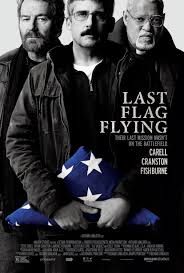
Last Flag Flying (2017)

Cast: Steve Carell, Bryan Cranston, Laurence Fishburne
Director: Richard Linklater
released on blu-ray January 30, 2018
******* 7/10

IMDB: 6.9
Rotten Tomatoes: 75%, Audience Score 70%
The Guardian: ***/*****

Richard Stuart Linklater is my all-time favourite director. And he’s been my favourite ever since I first watched Waking Life back in 2003 (even though the movie released in 2001). I was barely an adult then, so you might have to cut me some slack on the the time it took me to discover him. Point of fact, Chris and I will be sharing a Cross Talk in coming weeks about our favourite directors, so rather then dig into why I think he’s so amazing as I normally preface these posts, I’ll just share a couple of quick anecdotes now. I’ve reviewed two of Richard Linklater’s films before – Boyhood and Everybody Wants Some. And I recorded that upcoming Cross Talk episode before I watched this movie.

I’ve included the distributors synopsis below and modified it slightly to provide some context…

Thirty years after serving together in the Vietnam War, Larry “Doc” Shepherd (Steve Carell), Sal Nealon (Bryan Cranston) and the Rev. Richard Mueller (Laurence Fishburne) reunite for a different type of mission: to bury Doc’s son, a young Marine killed in Iraq. Forgoing burial at Arlington National Cemetery, Doc and his old buddies take the casket on a bittersweet trip up the coast to New Hampshire. Along the way, the three men find themselves reminiscing and coming to terms with the shared memories of a war that continues to shape their lives.

Naturalism is one of the major tools in Linklaters belt. He always manages to bring out the best and brightest of mundane aspects of life. Probably my favourite scene from the whole movie is the experience Carell’s character Doc has upon seeing his dead son when he demands that the military personal open the casket up for him. The camera pans out perfectly and we experience the secondhand emotion a third party would have normally by watching the very real and vulnerable grief someone extremely close to the recently deceased emote. I also enjoyed the interactions between Bryan Cranston’s Sal and the Colonel, that desire to challenge authority is common in many of Linklater’s characters.

And finally, the character of Doc appears very grounded in reality, though we never see him fully open up about his feelings, it is obvious how much he struggles with this unexpected turn of events.

Where the movie becomes a problem for me is in the interactions between the three main characters. They have spent a lot of time apart, and by circumstance are suddenly thrown back into each others lives, but it’s difficult to see why they ever got along or supported each other in the first place. This might be a failing on my part in not fully absorbing the awkward tension these men generate attempting to relate to each other after so much time apart. But I hope with subsequent viewings I can get to the bottom of the tone being explored here.

Pros: Linklater always manages to tell a real story, and stir up a ton of emotions running the gamet of the topic at hand. Never fully committing to one viewpoint or arc, he leaves the viewer with the choice to take something from the film or leave it. It’s difficult to swallow during a film about politics, death, and war.

ConsThat said, It does feel kind of superficial at times, and you don’t really believe the relationships these guys had could endure enough to take the road trip. Yes, they are professional actors, and they are all talented enough to sell their individual roles, but somehow it just doesn’t work thematically at all times.

Linklater has proven he can make any kind of movie, but all the elements of the film manage to conflict in such a negative way, it’s tough to accept this as film with his typical calibre of intent. It never feels especially revelatory, only sad and shallow.

And to sound even more contradictory, while I actually think the themes of patriotism, military service, and political ideologies are dealt with in a mature way, I wish at least one of the protagonists had chosen a side and let the film respond to it.

Runtime: 2 hours 5 minutes

Points of Interest: The film is supposed to be a spiritual sequel to The Last Detail. Laurence Fishburne was Richard Linklater’s only choice for the character of Mueller. Principal photography took only 32 days to complete.

The concept is strong, and I can see what Linklater would have been drawn to it in the first place, but in the end it’s not strong enough in each of it’s parts to overcome the challenges presented and commit to a real anti-war message, instead choosing comedy and drama outbursts to convey the consequences.

theories Summarized

Taken together, each of the three protagonists add their own layer to this film about enduring after war-times. Brotherhood is strong, and I am reminded of the film The Deer Hunter, if only because the challenges of psychology, disruption, and resolution echo throughout both films consistently. Showcasing how two or three men raised in the same household (so to speak) could take different paths. It’s a profound statement to make, and as I mentioned earlier, a lesser director would have definitely missed all of the subtleties and disparate viewpoints within the issue. But ultimately, Last Flag Flying falls short for me, and is only a good film, not a great one. And that’s my theory.

That said, I have a really solid Watch Culture video that directly addresses the effects of war on the soul, and it serves as an excellent metaphor for impotence and decay. Surprise, surprise, a comic book movie was able to get an R rating and tell an engaging story. Can’t you tell how excited Mike and Chris are to discuss Logan? I can!

Logan will likely make you cry, but in a good way. And better still, it resolves so many threads of The Wolverine, while paying tribute to Hugh Jackman’s tenure. Check it out! And remember… Like! Comment! Subscribe!

Tim!

Das Ist Gut (Dunkirk review)

Not every story told follows the same narrative path as what preceded it. I mention this because Christopher Nolan has been directing movies since 1989 but it wasn’t until 2008’s The Dark Knight that we began to expect a certain tone from his films.


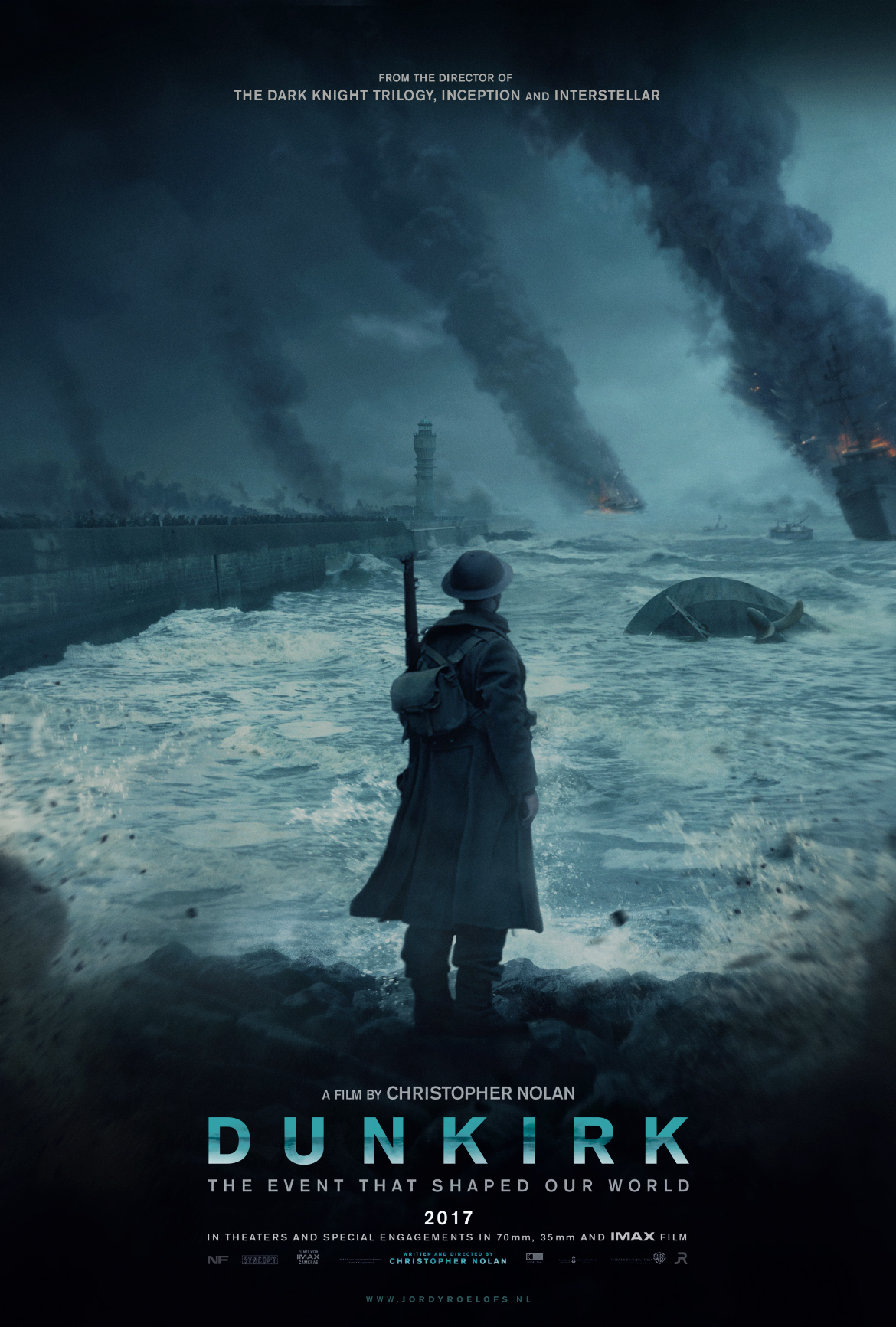
Dunkirk (2017)

Cast: Fionn Whitehead, Barry Keoghan, Mark Rylance, Tom Hardy, Cillian Murphy, Kenneth Branagh
Director: Christopher Nolan
released on blu-ray December 19, 2017
********* 9/10

IMDB: 8.1
Rotten Tomatoes: 92%, Audience Score 81%
The Guardian: *****/*****

Christopher Nolan is an English film director, screenwriter and producer extraordinaire. He also has dual citizenship in the United States. If you are unfamiliar with his work, he has also helmed the recent The Dark Knight Trilogy, Inception, Interstellar, Memento, Insomnia, The Prestige, and Following, his directorial feature length debut. There were three films he made before Following, but those were all short films.

An advocate for film preservation, Nolan’s films often explore themes of morality, the passage of time, and identity. He prefers to use practical effects where possible, incorporates wide angle shots to reduce the scale of his characters, and adjusts the narrative landscape through the use of gripping soundtracks (looking at you long-time friend Hans Zimmer) and by messing up the typical sequencing of scenes.

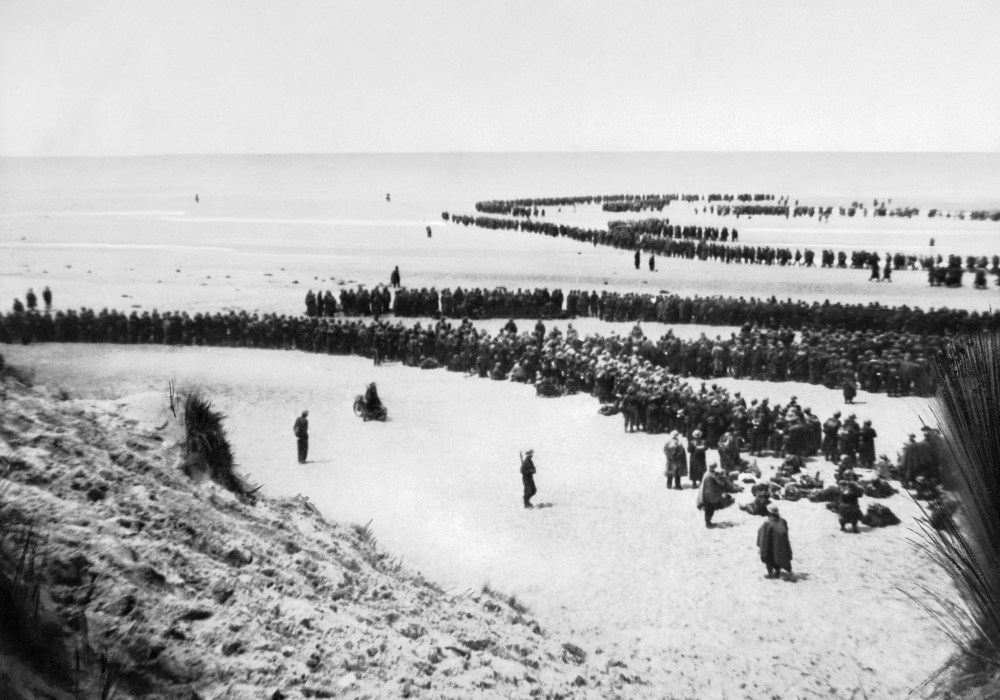
Dunkirk follows that tradition of Nolan’s films, but does so in such a way that the lead character becomes the evacuation itself, with Allied soldiers, Axis planes, and British civilians all helping to fill in for settings and props. I should be clear when I state that this is a war film, but the explosions, cries of pain, and bloodshed are not the focal points – it’s the magnitude of war and how it effects our personal decisions for right or for wrong.

Courtesy of Wikipedia

In 1940, during the fall of France, hundreds of thousands of Allied soldiers have retreated to Dunkirk. Tommy (Fionn Whitehead), a young British private, is the sole survivor of a German ambush. At the beach, he finds thousands of troops awaiting evacuation and meets Gibson (Aneurin Barnard), who is burying a body. After a German dive-bomber attack, they find a wounded man. They rush his stretcher onto a hospital ship hoping to get onboard and escape, but are denied passage themselves. The ship is sunk by dive-bombers; Tommy saves Alex (Harry Styles), another soldier. They leave at night on a destroyer, which is sunk by a torpedo from a U-boat. Gibson saves Tommy and Alex, and they are brought ashore by a rowing boat.

The Royal Navy requisitions civilian vessels that can get close to the beach. In Weymouth, Mr. Dawson (Mark Rylance) and his son Peter (Tom Glynn-Carney) set out on his boat Moonstone rather than let the navy take her. Impulsively, their teenage friend George (Barry Keoghan) joins them. At sea, they rescue a shell-shocked officer (Cillian Murphy) from a wrecked ship. When he realises that Dawson is sailing for Dunkirk, the officer demands that they turn back, and tries to wrest control of the boat; in the struggle, George falls and suffers a head injury that renders him blind.

Three Spitfires head towards France. After their leader is shot down, pilot Farrier (Tom Hardy) assumes command with a shattered fuel gauge. They save a minesweeper from a German bomber, but the other Spitfire is hit and ditches. Its pilot, Collins (Jack Lowden), is rescued by Moonstone.

Tommy, Alex and Gibson join a group of Scottish soldiers and hide inside a trawler until the tide rises. Her owner, a Dutch mariner, returns. German troops shoot at the boat for target practice; when the tide rises, water enters through the bullet holes. Alex, hoping to lighten the boat’s load, accuses Gibson, who has been silent, of being a spy and demands that he leave. Gibson reveals he is French; he had stolen the identity of the soldier he buried, hoping to evacuate with the British. Alex, Tommy and the Scottish soldiers abandon the fishing boat when it begins to sink. Gibson is entangled in a chain and drowns. Alex and Tommy swim towards a nearby destroyer, but it is sunk by a bomber. Moonstone manoeuvres to take on troops, including Alex and Tommy. Peter realises that George is dead; when asked by the shell-shocked officer, he lies that George will be fine. Farrier shoots down the bomber, which crashes and ignites the oil slick from the sinking destroyer. Peter reveals to Collins that his elder brother was a Hurricane pilot, killed early in the war.

Farrier reaches Dunkirk, his fuel exhausted. Gliding over the beach, he shoots down a dive-bomber to cheers from the troops below. He cranks his landing gear down and lands beyond the Allied perimeter. He sets fire to his plane and is taken prisoner by German soldiers.

At the beach, Commander Bolton (Kenneth Branagh) watches the last British soldiers leave. He confirms that 300,000 have been evacuated, ten times more than UK Prime Minister Winston Churchill had hoped for. He remains to oversee the evacuation of the French rearguard. Alex and Tommy cross the English Channel and board a train in Weymouth. Dawson is congratulated for having saved so many men. The shell-shocked officer sees George’s body being carried away. Peter visits the local newspaper with a photograph of George; a front-page article later commends George as a hero. Alex expects public scorn as the train approaches Woking, but they receive a hero’s welcome. Tommy reads out Churchill’s address to the nation from a newspaper.

This is nightmare fuel. Beaches filled with men with nowhere to go watch in terror as German aircraft decimate them from above – the analogy of the boot stomping ants is sickeningly accurate in this case. The movie showcases the blender full of emotions in such a thoughtful way, allowing us to give pause and see faces filled with anger, others with pride, despite not connecting with anyone long enough to root for them. It’s an odd thing, given that Cillian Murphy, Tom Hardy, Mark Rylance, and Kenneth Branagh are all excellent character actors – Nolan only gives us a taste into each man’s personality knowing full well that war dwarfs our self-importance.

Pros: The action moves up and down, like a wave crashing on a beach. The sparse storytelling and tone of failure barely concealed by dumb luck work damn strong to force a response. It’s technically brilliant.

Cons: A lack of an emotional core, might be difficult to swallow. Tom Hardy’s Farrier could have been given a slightly larger role – showing his end at the hands of Nazi soldiers even. A lot of unanswered questions.

Runtime: 1 hour 46 minutes

Points of Interest: Thirty or so Dunkirk veterans attended the Long premiere – they appreciated the accuracy of the story, but felt the soundtrack was louder then the actual bombardment. Nolan cast young and unknown actors based on accounts of how inexperienced the real soldiers of Dunkirk were.

As far as a military effort, the Battle of Dunkirk was an epic disaster on a global scale. But the evacuation of almost 300,000 soldiers and the moral victory of the British is considered by many historians as the lynchpin in the Allied story of fighting against tyranny. By giving the soldiers and citizens an equal footing, Winston Churchill was able to foster a spirit of resistance within this nation, and turn a tragedy into a triumph, which is echoed in the final moments of the film by Alex as he is welcomed home in Woking.

theories Summarized

I wasn’t quite sure what to make of this film as a I watched it, if I am being completely honest. Mysticque and I watched it together, and she was not a fan of it by any means. I try not to let other opinions effect my own interpretation of a film, but rather to enhance it. In this case it was invaluable, because Dunkirk is a film of competing emotions, many personal narratives drowned out by a larger message. I think you should see this film, especially given that stories like Saving Private Ryan and Pearl Harbour exist. A film like Dunkirk will help to expand your worldview and introduce a greater perspective on World War II, a time that that provided such cognitive dissonance for humanity, theories and all.

Tim!

Return of the Prequel (Rogue One: A Star Wars Story review)

Let me tell you a story from when I was a young lad. A story that always reminds me of the past, but not because it is of my own past, but because it is a story of another history, one of long ago and far away.

I first really and truly watched Star Wars when I was eleven years old. At Christmas time, no less. But I was actually exposed to it in would be one of many common experiences of my childhood. My dad was in the living room on a weekend evening  and I strolled in to find him just in the midst of a Star Wars marathon. I sat down and was enthralled immediately.

An odd kid looking to escape from the doldrums of youth. I had found one of my many happy places. Then again, as I mentioned, the next Christmas I found a box set of Star Wars under the tree with my name on it.

Thus began a lifetime of fandom.


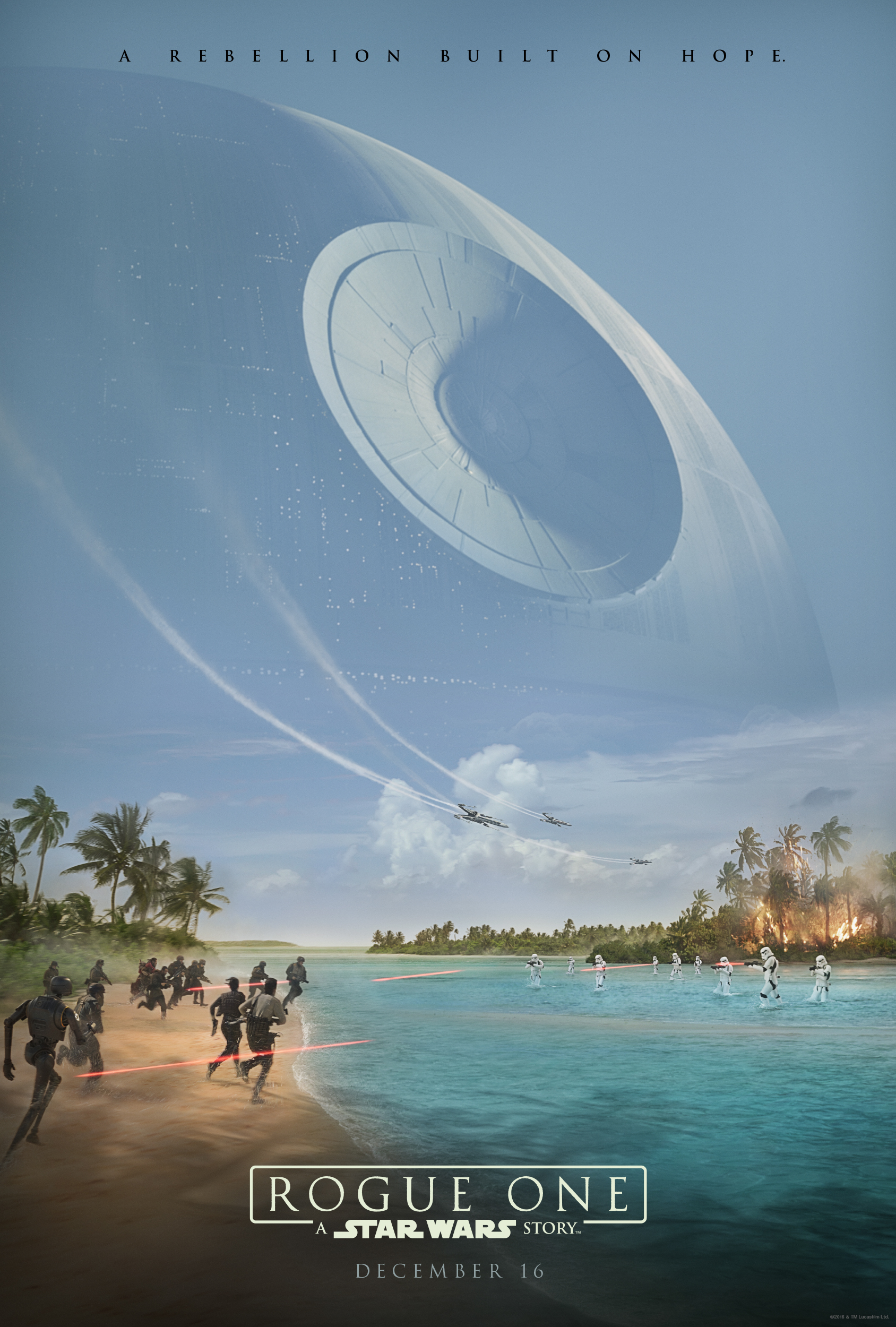
Rogue One: A Star Wars Story (2016)

Cast: Felicity Jones, Diego Luna, Alan Tudyk, Donnie Yen, Wen Jiang, Ben Mendelsohn, Forest Whitaker, Mads Mikkelsen, Riz Ahmed
Director: Gareth Edwards
released on blu-ray April 4, 2017
********* 9/10

IMDB: 8.0
Rotten Tomatoes: 82%, Audience Score 88%
The Guardian: ****/*****

Gareth Edwards is a fairly young director. At age 41 he has directed only three major films. The first was Monsters, an independently made science fiction feature, followed up by the 2014 Godzilla remake, and now, the first of the Star Wars anthology films – Rogue One.

Rogue One is the original Star Wars fan film. It hits all the major heartstrings, while providing enough visual interest to feel different than the the original trilogy – a future that has already happened.

Now, I’m going to do my best not to retell the whole plot of Rogue One, because I think that this story deserves to be seen first rather then read. But I will give you a brief overview out of consideration for what this movie does.

Galen Erso (Mads Mikkelson) has hidden his family away from the Empire. One day Director Orson Krennic (Ben Mendelsohn) arrives to get assistance in completing the Death Star. In the process Galen’s wife Lyra is killed, Galen is captured, while daughter Jyn escapes and is taken to safety by Rebel extremist Saw Gerrera (Forest Whitaker).

Jump forward fifteen years, and Empire cargo pilot Bodhi (Riz Ahmed) has defected, and smuggled a message from Galen to Saw… One that will set forward the next three films in the main Star Wars story. During this story we see adult Jyn (Felicity Jones) meet fellow rebels Cassian Andor (Diego Luna), reprogrammed Imperial droid K-2SO (Alan Tudyk), and Jedha temple monks Chirrut Imwe () and Baze Malbus ().

Cassian is on a mission to kill Galen, and prevent the Death Star from being completed, while Jyn wants to get Bodhi to the Alliance to prove her fathers worth. Because of this conflict Krennic does everything he can to tie up loose ends, destroying cities, killing members of the Empire and Rebel Alliance alike, even gaining the attention of Lord Vader.

In one of the most epic wartime sequences ever, we witness The Battle of Scarif, where the Alliance fights to gain essential intel on the Death Star. There are heavy losses on both sides, but in the end the Rebels gain a victory and set up the beginning of A New Hope – mere moments later.


This is a movie for the fans, made by someone who is a fan of the Star Wars mythology. With direct tie-ins to Episodes I, II, II, IV, and the animated series Rebels, Rogue One is Star Wars. Which probably seems vague, but what I mean is that it is so clearly miming the 1977 Star Wars film, before it became Episode IV, that it can’t help but make us happy. Because it looks new but retains that retro future aesthetic we’ve come to love.

Pros: The fast pacing and limited interactions we get with each character only further demonstrate the impact of war on life, appearing at once fully, and then suddenly gone. It expands upon the universe in a very satisfactory way.

Cons: After the bleakness and the hard won battle are over, you have to wonder if you really experienced anything new at all. Plus where is the charm? Also, I didn’t like Vaders red eyes, like at all.

Runtime: 2 hours 13 minutes

Points of Interest: The Rebel base at Yavin IV features the same kinds of cardboard cutout ships that the original movie did back in 1977. The is the first Star Wars movie to not mention the name of Skywalker in it.

Rogue One is a mad dash to the finish action-adventure film, and one where we know how it all ends. But it’s in the journey that we get to enjoy new characters like Chirrut and Baze, and witness Saw Gerrara as he fits into the mix, as a sort of de-powered Darth Vader.

theories Summarized

In light of my recent Cross Talk episode wherein we discussed movie Easter eggs, I would like to point out that this film is absolutely riddled with them – and some cameos too! Now to be clear, that doesn’t mean that I want to spoil the rest of my review by pointing them all out, but yes, R2-D2 and C-3PO do make a very brief appearance.

Is Rogue One perfect? No, but I can gladly admit that it holds true to canon, is entertaining, and if you are a fan, like the vast majority of the world is at this point, you’ll enjoy it too.

Tim!

John McCrae (Remembrance Day)

Remembrance Day is an especially trying time for veterans and surviving families of war. They recall the good times and the bad, in particular those members of the armed forces who have died in the line of duty.

This day has been in place for almost a century now – It was established on November 11th in the majority of countries to honour individuals and recall the violence sieged during World War I and resolved with the signing of the Treaty of Versailles on June 28th 1919.

In case you didn’t already know, the poppy has become synonymous with Remembrance Day due to the poem In Flanders Fields. I read this poem, and about this poem when I was growing up. It was a pretty big deal in school because it was written by a Canadian physician by the name of John McCrae. McCrae was a Lieutenant-Colonel that served as a soldier in World War I and a surgeon during the second battle of Ypres in Belgium.

McCrae was an artist through and through. He was an author and a poet, but he didn’t make it through the end of the war unfortunately. He died of pneumonia near the end.

It’s a beautiful poem, and one which reminds us all of the urgency of the war, and the eternity that the dead moved into. It’s rather sobering, but I think worthwhile to read and remember. An exemplary instance of the power of art.

In Flanders Fields

In Flanders fields the poppies blow
Between the crosses, row on row,
That mark our place; and in the sky
The larks, still bravely singing, fly
Scarce heard amid the guns below.

We are the Dead. Short days ago
We lived, felt dawn, saw sunset glow,
Loved and were loved, and now we lie
In Flanders fields.

Take up our quarrel with the foe:
To you from failing hands we throw
The torch; be yours to hold it high.
If ye break faith with us who die
We shall not sleep, though poppies grow
In Flanders fields.

As for the inspiration, it’s a rather touching story once you shed some light upon it. And though I don’t remember the exact moment I heard this poem for the first time, I do recall that it was during my secondary education, and that the concrete walls which shaped the school around my peers and I, was rather cold and old itself. It served as a great backdrop to learn that McCrae likely wrote In Flanders Fields shortly after the funeral of his close friend Lieutenant Alexis Helmer.

Helmer had been killed during the second battle of Ypres. The battlefield was home to countless poppy flowers which featured in great numbers and even in its cemeteries. Thus the poppy grew in popularity because of this poem.

Though it has been quite some time since this war broke out, there have been others since and many more brave men and women who’ve fought for peace and given their lives doing so. Whether you are a creative professional or not dear readers, I think you can recognize rather easily that art has a place in life, and that without art there is no heart. So please take some time tomorrow to honour those who died so that we might live. It’s important, it’s not just a theory.

Tim!