They’re Barking In The Wrong Key (AFI, AFI (The Blood Album) review)

When a band has been around for over 25 years, you probably should stand up when they enter the room and definitely stop talking out of respect when they say something, unless you’re a dick. If you’re a dick, you can just close your ears and pretend it never happened. Probably to your detriment.

This week we explore an album which I personally think deserves your attention. An early entry that might make my top 10 for 2017, but we’ll just have to dig in for now.


AFI – Self-titled (The Blood Album)
released January 20, 2017
********** 10/10

afi-the-blood-album

A Fire Inside, better known as AFI, are an American rock group that focuses on punk, alternative and emo music. The lineup hasn’t changed in almost twenty years, but only features two of the original four members – Davey Havok on vocals and drummer Adam Carson. Hunter Burgan provides bass support and Jade Puget is the guitarist, but all three instrumentalists share backup vocals. Having released tend studio-length albums now, AFI is the first self-titled album that AFI has completed.

Affectionately called “the blood album,” this record has been released on vinyl in four limited edition color variants matching the four blood types (A | O | B | AB). But is it any good, you ask?

Well, yeah.

I’ve been a fan of AFI since Sing The Sorrow hit the ground running, earning the band mainstream attention and Billboard attention for almost a year, just shy of a week. Then Decemberunderground came out and I was hooked, I picked up their back catalogue and haven’t looked back since. Granted, I don’t think Crash Love or Burials had quite the same visceral impact as AFI’s sixth and seventh efforts, but dammit if this self-titled album doesn’t remind me of Sing The Sorrow. And well, everything else they’ve ever done.

You see dear readers, at this point in their career AFI don’t have to take any real risks, but they are more than capable of revisiting genres they’ve already explored and giving a tempered reflection of what preceded, this even application of sonics is what reminds me of Sing The Sorrow – it’s intentional subdued but infinitely more thoughtful and considered.

Some of my favourite tracks include Aurelia, Hidden Knives, So Beneath You, Dumb Kids, Pink Eyes, and The Wind That Carries Me Away. None of these tracks are much like the other one, but each are familiar because AFI has been down these roads before.

Now before you accuse me of accepting this as a middle-of-the-road AFI and not A Fire Inside, you should know that Havok and Puget wrote over 60 songs before they got to this 14 track offering. And you need to listen to the whole album more than once, it gets better on subsequent viewings, like any good piece of art.

This is AFI committed to their art, and it’s a beautiful thing to witness.


As I sit with the realization that one of the last mega-stores of music and film is dying off and that I’ll have to change my own tactics going forward (read: goodbye HMV), it’s satisfying to know that music will still find a way. AFI are still relevant and that means more to me than cheap prices and the convenience of online shopping. But maybe I’ll learn to embrace that too. No harm in checking out a new theory.

Tim!

The Man With Many Hats (Byron Martin interview)


There is this common saying that when you are a jack of all trades, you are a master of none.

Now I don’t know if it’s true, but well, that’s what people commonly say these days.

And if you want to be like the common people, you might just accept that misnomer and carry on with your life. That’s what Pulp would do, and it’s definitely what William Shatner would do.

c_scalefl_progressiveq_80w_800


But if you were to do a little digging, like me, a rebel without a pause, you might be pleasantly surprised to learn that one of the earliest uses of jack of all trades did not include that second clause of the phrase, and that one of the earliest recorded uses of the term was applied towards William Shakespeare by Robert Greene. Greene is famous primarily for a book he wrote entitled Greene’s Groats-Worth of Wit and in which attacks Shakespeare with that phrase.

The more you know eh?

So anyways, there is this notion out there that having many talents and being something of a generalist is bad while being a specialist is good. But creative cuties, let me set the record straight once and for all, rules are made to be broken.

And as I am prone to do with timotheories interviews, I’m going to prove once again that there are many paths to artistic freedom, and that I’m friends with a visionary artist that is capable of more than just the triple threat. That’s right, this gentleman can sing, dance, act, improvise, perform magic, AND do all of the functional components of theatre too. He directs, produces and writes all while running the business of his five year running company Grindstone Theatre.

Welcome to January 2017 dear readers, because I give you Byron Trevor Martin, the artistic director and founder of Grindstone Theatre, and the soon to be owner-operator of the Grindstone Comedy Theatre building located on Whyte avenue and 104 street in Edmonton. Byron is a visionary, pure and simple. And I sat down with him to explain how he’s managed to achieve so much, all while avoiding specialization in the performance arts.

Byron inherently subscribes to the the accelerated learning “20 hour” rule. Whenever he needs to learn a new skill, he squeezes in the essentials and then spends the rest of his time on what he loves – His passion for theatre and community.

A many of many hats, Byron Martin is the perfect incarnation of what jack of all trades should mean, a means to a vision. Ladies and gentlemen, I present to you episode fourteen of timotheories interviews.

And as always, if you want to check out more timotheories interviews or the Cross Talk series please visit our YouTube channel.  And please, please, please share this post and of course subscribe to both the blog and channel!

Of course, if you REALLY want to reach Byron you can do so here – Instagram, Facebook, and Twitter.

Lastly my sincerest thanks to Byron for being beautiful, beneficent, bold, and badass. See you tomorrow with an album review by USS.

Tim!

We Dare Not Speak It’s Name (Jobs)

Let’s talk about jobs, ba-by, let’s talk about your, iden-tity.

hqdefault

A Bang Up Job

When I think about Jobs as a product, comfort immediately comes to mind. Next, would probably be security and consistency of everyday use. If I can have less anxiety, more fun, and don’t have to worry about over-performing or under-performing, the convenience factor is high, and I’m on board. I get to live my day-today with relative ease and simplicity. Yes, when it comes to Jobs I feel like my opinion is part of a landscape and repercussions are minimal. In an era when people struggle with technology uncertainty, Jobs give you a path to take and a way to get there. Fortune, gratitude, luck, these are all synonymous terms for that ideal.

Now, I bet you thought I was talking about the person for a minute there, dear readers.

No not really. I wasn’t aiming for a post on Steve Jobs, though I could make a Wisdom Wednesday post or two about him. Just like everyone else has at one point or another.

896

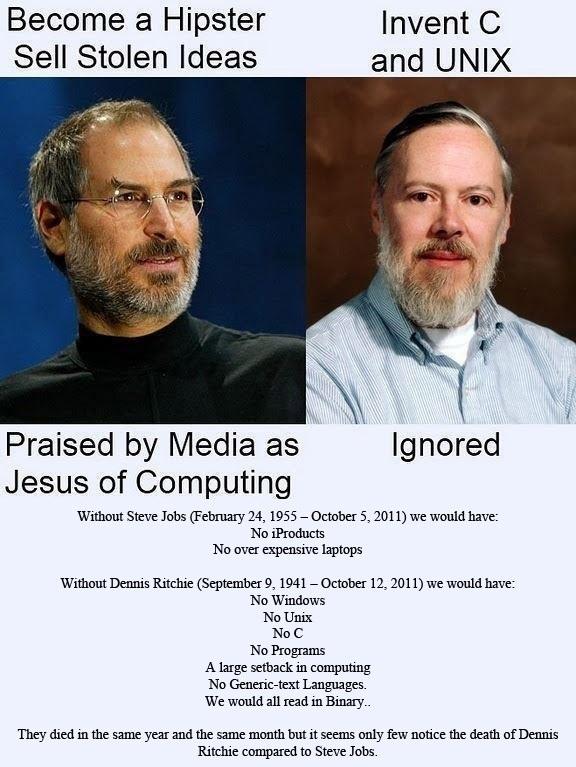
And to be clear, this is most certainly NOT a politically motivated post, I just wanted to get an association down for you. Who do you think achieved more? Steve Jobs or Dennis Ritchie? A question to ponder for sure…

As we continue to develop the series of posts about OECD, on the importance of health and well-being, the ranking factor of your job was bound to come up.

Inside Job

Let’s be honest.

You probably want to quit your day job, because your boss is a jerk, you’re sick of what your department does to address employee morale and wages, you don’t believe in the company visions, at all, and you’ve been doing this for well more than five years without much opportunity for growth and skill set expansion.

If that’s true, then you’re in luck. Because I have a few theories on your job that I’d like you to mull over.

Many people get this crazy idea in their heads that if a job is unfulfilled, that if you hate your job, it means you should quit and find another. Or maybe go back to school. Or finally start that personal business you’ve dreamt of for the past decade. And that’s quite a problematic view to hold.

A job is primarily an aspect of your career.

Maybe that’s confusing – let’s consider the definition of the word career. A career is a multi-faceted identity vehicle for an individual’s journey through life, especially as it relates to work and learning. Or in other words, a career is a person’s lifework that consists of occupations, educations and as a focus within a certain area of industry.

Surely it can be invaluable to start a business when you get fed up, but that purpose shouldn’t only be about your personal gratifications. You need to have drive, a real passion, and then build out a model to accomplish the purposes of that career you’ve laid out for yourself – getting another job could move you forward as well. An idea of success is not enough, you have to put in the blood, sweat, and tears. Never quit your day job only because you have a new idea or are sick of your work environment.

There is this really dumb idiom out there that says the grass is greener on the other side of the fence. We often rely on friends and family to supply is with support or advice on a number of different topics but bitching about work is a popular one.

Consider idea this for a moment, that friend giving you advice might not respect your industry or they be shelling out advice based on their limited understanding of your situation, but how could they possibly predict all the details of your life – you CAN keep your job and find fulfillment in other avenues or to pay for future benefits.

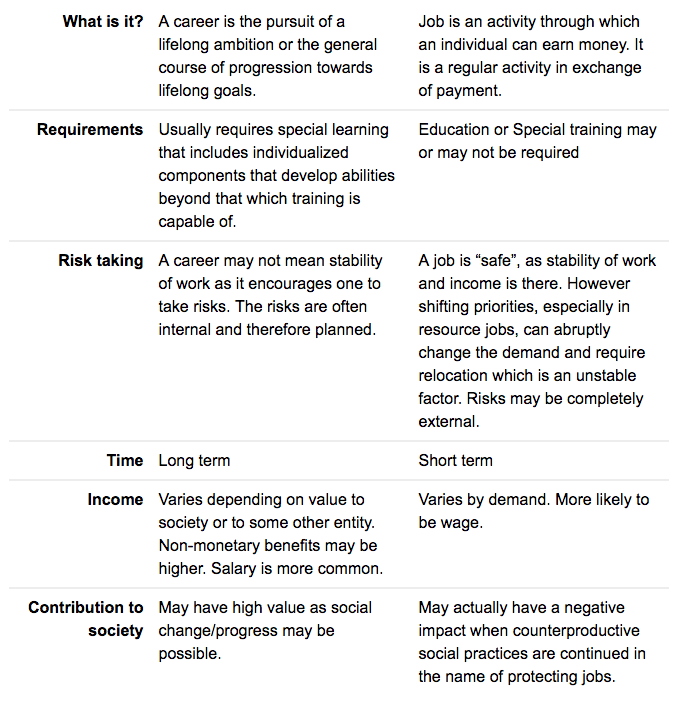
Career VS Job

To summarize this idea let’s quickly look at a chart which I found online. It’ll be a quick read, I promise.

screen-shot-2016-12-07-at-9-54-54-pm

If you begin to look at your creative work as a career, you can begin to see how a series of different jobs might help you achieve your goals and stay on purpose dear readers, so as the old adage goes, don’t quit your day job. But that doesn’t mean you can’t change the day job every now and again, and even invest in passive income(s). Though that could just be another theory.

Tim!


First Order of Business (Brad Fehr interview, Intuition)

Intuition is both mysterious and incredibly powerful. It’s also really difficult to write about.

Seriously, dear readers.

I probably spent a good three hours online trying to find a way to articulate what I wanted to write as a thematic jumping off point for this interview topic, but then I decided to instead go with my gut, which just felt right. And so here we are, left with a raw and wriggling post about my own love/hate relationship with intuition.

You see, dear readers, I’ve always been a proponent for using intuition, because it can gave you great insight about people, ideas, and places however problematic they are. It straddles the line between philosophy and psychology, and depending on how you view the internal world versus the external world, it can sync quite nicely. Frankly, we all use it whether we admit it or not. And did I mention that it can also lead us to great creative breakthroughs and forging fast friendships with those we “just click with?”

Step-Brothers-Did-we-just-become-best-friends

The same can be said of romantic relationships, sometimes everything just falls right into place, and that person you flashed a smile at that one time quickly becomes the person you join giblets with.

littlemermaid6d22a5abc1c3169f5e7f3fa39df4af53

Come on, that visual reference was funny. You should just laugh, it’s Sunday.

After all, our intuition is always there, and some of us of even rely on a visual element to our intuition, which means that those of us with this ability are likely to become artists and manifest life via symbols, images, dreams or patterns.

Which is exactly what today’s interviewee is all about. Taking existing patterns, models and visions, and applying his own unique perspective to it. Or as he so eloquently put it for me when we first spoke, his straight white CIS male perspective. Which is pretty apt considering the subject matter he works with.

Brad Fehr is an up-and-coming artist who is in the process of finishing his undergrad, but don’t let that fool you into assuming a role for him. He dabbles in painting, philosophy and videography and is comfortable switching back and forth between formats rather easily. He makes art which finds similarities between dead ideas and current ones, and then applies cultural norms to investigate what is at stake.

His comfortability with the interview theme is rather refreshing, and the time just flew by for me in discussing his views on art, life, and what it all means. I suspect you’ll want to head straight to the video from here, so I won’t drone on. Enjoy episode 10 of timotheories interviews, featuring Brad Fehr.

As always, if you want to check out more timotheories interviews or the Cross Talk series please visit our YouTube channel.  And please, please, please share this post and of course subscribe to both the blog and channel!

Please also check out Brad’s Instagram account to see his portfolio and to contact him for creative services.

Lastly my sincerest thanks to Brad for being bold, brilliant, and bemused. See you tomorrow with an album review that’s features America and love.

Tim!

The Secret Genius (Attitude Is Everything)

You want to be like Steve Jobs right?

Well, get in line dear readers.

Seriously though, a lot of people want to emulate the persona of Steve Jobs because he will always be remembered as a genius. That’s the way it is with great people; those visionaries and leaders who appeared at the right time and the right place and made it happen for themselves and conveniently for the world as well.

But what if I told you there is a theory floating around that geniuses don’t just appear?

That geniuses are a culmination of several factors? For instance, they are made up of things like genes, personality, ambition, environment, and effort.

Well you’d probably laugh at me.

Haha, you’re too funny timotheories, you think you know so much about theories and now you’ve finally proven that you don’t know jack!

jack2

Well hold up there aggressive little buddy, I’m still in the process of making a point, and you are just being rude. So please keep your comments until the end of the lecture.

Let’s address the problem of effort first. There have been studies done which indicate that major breakthroughs, whether in the arts or sciences, only appear that way to the casual observer, when in reality it takes time, effort, and energy to produce mastery of skill(s). In other words, when you can understand the rules intimately, then you are capable of bending or breaking them.

Also consider that specialization totally kills creativity because you are operating within a limited palette while looking at nothing other than the subject in front of you.

Ambition and a healthy desire to discover need to be present.

Which leads us into my next point.

Whatever your conviction, you need to ask a ton of questions: which is another way of saying, keep your mind sharp. Go to the library and take out books on a variety of topics, then grab some audio books on language, and sign up for a course or a program. It doesn’t matter if you are getting a diploma, certification, accreditation or doctorate. Exercise your mind.

That also includes physical exploration by spending time in nature or on a retreat.

But what about your genetics/personality? If those are fixed then genius is limited to those born with certain traits. Yes, those details definitely make up a part – but if you are open to experiences, driven, aggressive and can learn to look inwardly, you have just found some qualities that will help get you there, and can be learned. Interestingly enough, environment can play a role too in that progression.

Educational institutions that teach us to learn something from whatever we focus on can aid in this process, which can often be uncovered in post-secondary. This article very briefly touches upon it, but essentially the idea proposed is that cultures which encourage new forms of teaching and education foster risk-taking and that is where genius can appear, when individuals or groups can focus their vision into expression.

But truthfully, no matter what your stage or status, we all have the basic blueprint needed to accomplish these steps. Environment is just one piece. Look at what Malcolm Cowley said about the subject,

Genius is vision, often involving the gift of finding patterns where others see nothing but a chance collection of objects.

Children naturally do pattern seeking that from the time they are born until it is slowly weeded out of them in adulthood. But if we can cultivate that curiosity as already mentioned and focus our efforts on the importance of openness to experiences, i.e. look objectivity, then we’ll be in a way stronger position to see things as they are, rather than how we have been conditioned to do so.

That is what genius is, focusing on your passion, applying knowledge and experience, and continuous and never-ending improvement of self as you live your life’s purpose. You’ll make a contribution to your area of purpose which no one else can, because of your unique perspective.

It just takes some re-training.

Which is why ultimately, attitude is everything. People think there is a secret to genius, it really comes down to attitude. If you are willing to put forth the right effort and combine it with the attitude that life is a process, not a goal, you’ll experience genius.

But what do you think? Please leave some comments and subscribe to support these posts! I’m out of theories for now.

Tim!