Peek A Boo, I See You (Ghost In The Shell (1995) review)

Deus ex machina are supposed to reveal truths of the world, not leave it covered in darkness. Which is why this film is rather prophetic, and should probably be in the queue for monthly consumption, at a minimum.


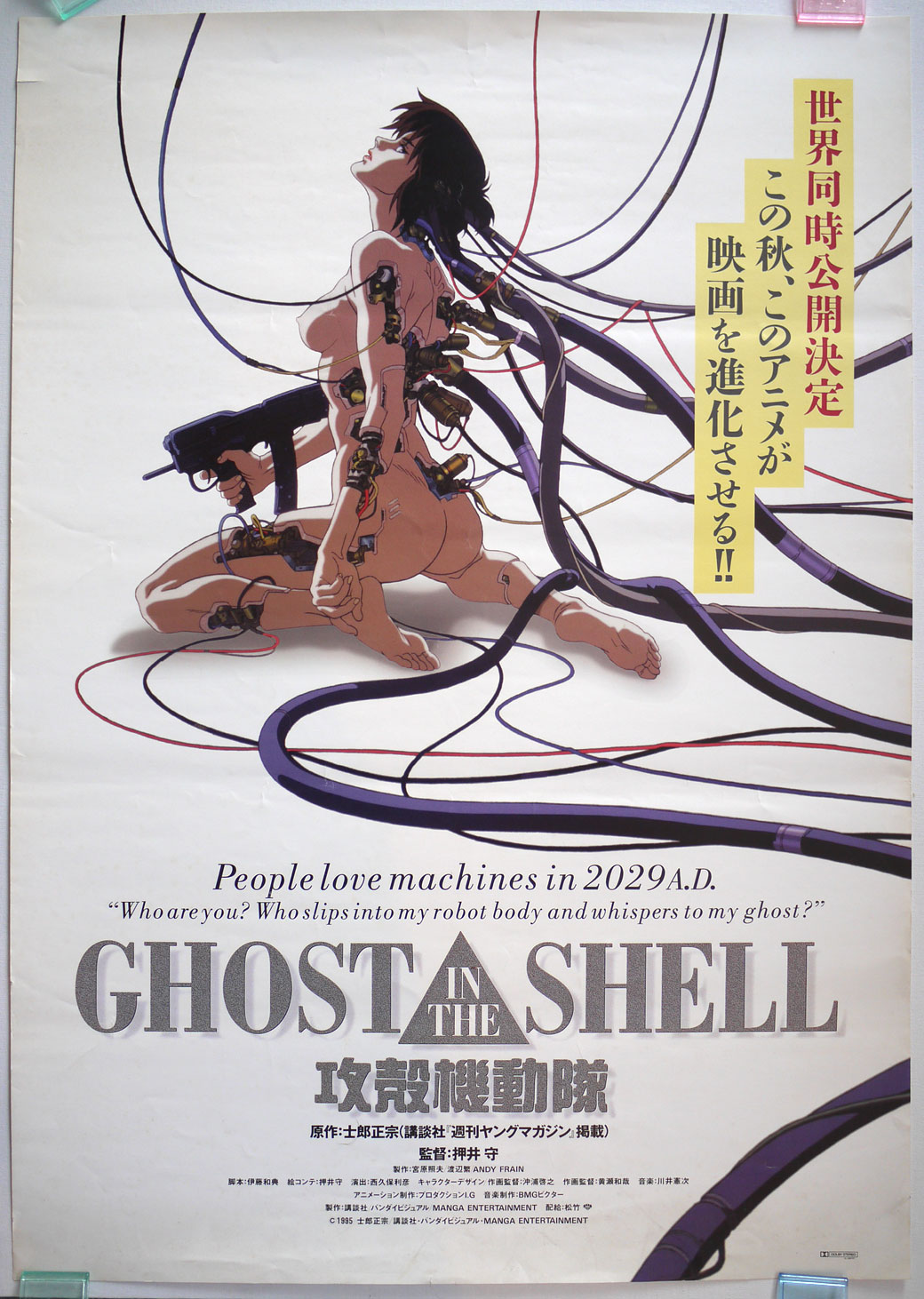
Ghost In The Shell (1995)

Cast: Atsuko Tanaka, Akio Otsuka, Koichi Yamadera, Yutaka Nakano, Tamio Oki, Tessho Genda
Director: Mamoru Oshii
re-released on blu-ray Sep 23, 2014
********* 9/10
IMDB: 8.0
Rotten Tomatoes: 96%, Audience Score 89%
The Guardian: ****/*****

Mamoru Oshii is a Japanese director and screenwriter. He has directed a ton of anime films and television shows, including Urusei Yatsura, Red Spectacles, Ghost in the Shell, Avalon, and Patlabor 2: The Movie. His directorial style has often been detailed in how different it is to most films made in the United States, with visuals being the most important element to him, followed by story, and then characterizations.

The Wachowskis and James Cameron have been in awe of his work for decades, especially with Ghost in the Shell, so I thought it fitting to time my review of the original film with the release of the live-action remake. Because, well, it’s even more relevant today than it was 20+ years ago.

Courtesy of Wikipedia

In 2029, with the advance of cybernetic technology, the human body can be “augmented” or even completely replaced with cybernetic parts. Another significant achievement is the cyberbrain, a mechanical casing for the human brain that allows access to the Internet and other networks. An often-mentioned term is “ghost”, referring to the consciousness inhabiting the body (the “shell”).

Major Motoko Kusanagi (Atsuko Tanaka) is an assault-team leader for the Public Security Section 9 of “New Port City” in Japan. Following a request from Nakamura (Tessho Genda), chief of Section 6, she successfully assassinates a diplomat of a foreign country to prevent a programmer named Daita (Mitsuru Miyamoto) from defecting.

The Foreign Minister’s interpreter is ghost-hacked, presumably to assassinate VIPs in an upcoming meeting. Believing the perpetrator is the mysterious Puppet Master (Iemasa Kayumi), Kusanagi’s team follows the traced telephone calls that sent the virus. After a chase, they capture a garbage man and a thug. However, both are only ghost-hacked individuals with no clue about the Puppet Master. The investigation again comes to a dead end.

Megatech Body, a “shell” manufacturer with suspected close ties to the government, is hacked and assembles a cybernetic body. The body escapes but is hit by a truck. As Section 9 examines the body, they find a human “ghost” inside its computer brain. Unexpectedly, Nakamura arrives to reclaim the body. He claims that the “ghost” inside the brain is the Puppet Master himself, lured into the body by Section 6. The body reactivates itself, claims to be a sentient being and requests political asylum. After the Puppet Master initiates a brief argument about what constitutes a human, a camouflaged agent accompanying Nakamura starts a diversion and gets away with the body.

Having suspected foul play, Kusanagi’s team is prepared and immediately pursues the agent. Meanwhile, Section 9 researches “Project 2501,” mentioned earlier by the Puppet Master, and finds a connection with Daita, whom Section 6 tries to keep from defecting the country. Facing the discovered information, Daisuke Aramaki (Tamio Oki), chief of Section 9, concludes that Section 6 created the Puppet Master itself for various political purposes. This is why Section 6 is desperately trying to reclaim the body.

Kusanagi follows the car carrying the body to an abandoned building. It is protected by a large walking tank. Anxious to face the Puppet Master’s ghost, Kusanagi engages the tank without backup and is nearly killed. Her partner Batou (Akio Otsuka) arrives in time to save her, and helps connect her brain to the Puppet Master’s.

The Puppet Master explains to Kusanagi that he was created by Section 6. While wandering various networks, he became sentient and began to contemplate his existence. Deciding the essence of humanity is reproduction and mortality, he wants to exist within a physical brain that will eventually die. As he could not escape section 6’s network, he had to download himself into a cybernetic body. Having interacted with Kusanagi (without her knowledge), he believes she is also questioning her humanity, and they have a lot in common. He proposed merging their ghosts, in return, Kusanagi would gain all of his capabilities. Kusanagi agrees to the merge.

Snipers from Section 6 approach the building, intending to destroy the Puppet Master’s and Kusanagi’s brains to cover up Project 2501. The Puppet Master’s shell is destroyed, but Batou shields Kusanagi’s head in time to save her brain. As Section 9 closes in on the site, the snipers retreat.

“Kusanagi” wakes up in a new cyborg child body in Batou’s safehouse. She tells Batou that the entity within her body is neither Kusanagi nor the Puppet Master, but a combination of both. She promises Batou they will meet again, leaves the house and wonders where to go next.

For me, it’s tough not to watch this movie and be reminded of The Matrix. I had the unfortunate experience of watching that movie a great many years before this classic, and the repeated viewings of The Matrix trilogy over the years haven’t helped either. And so, the story is a familiar one, exploring self-identity as we relate to machines in a time when humans and machines have become interchangeable. God praise the internet, amirite? And the timeline is not that far away either, in both the film and reality.

Consciousness, humanity, autonomy, empathy, and mortality are all explored in a relatively short hour and twenty-some minutes. In a time when international corporations have basically done away with national identity too.The ghost in the shell is literally a play on the wandering consciousness that inhabits the meaty husk, and it wants to know if we hear it’s voice.

Pros: Visually compelling and with a message which has allowed it to age far better then films like Blade Runner or Total Recall, Ghost in the Shell is violent, emotional, and poetic to experience.

Cons: The individual characters are difficult to warm up to, but it might just be all of the robot parts they have imbedded.

Runtime: 1 hour 23 minutes

Points of Interest: Motoko’s eye are intentionally animated to not blink very often, giving her a feel of a doll, rather then a human. The title of the manga which inspired the film is written as an homage to the Arthur Koestler work, The Ghost in the Machine.

theories Summarized

So is the 2017 film better than the 1995 one? I’d like to think not, and not for the obvious whitewashing allusions that have been to popular on the internet over the past year or so. In fact, Mamoru Oshii has gone on record to state that the Major may or may not be Japanese, but regardless of her current appearance, her name and body have changed numerous times, and so it is in fact acceptable to have Scarlett Johansson in that role.

But I think the problem is that the anime far better depicts the story at hand, and that the visuals are far more compelling with their mix of traditional drawing and CGI. The Matrix will never be the same for me. And that’s no theory.

And speaking of things that The Matrix tried to wreak… Andre and I have a new Watch Culture video up for your viewing pleasure. Please tell us if you agree that Equilibrium is worth a watch, and if not, your comments are appreciated.

Tim!

Film Personality Tests? (Cross Talk Ep. 11)

Have you ever taken one of those standardized personality tests, dear readers? You know the ones – Myers Briggs, Jung, Eysenck, Keirsey, Rorschach, True Colors. The list goes on, and on. There quite literally dozens of these tests. Now, I’m going to let you in on a little secret, some of these tests are rooted in psychological practices and some are less so.

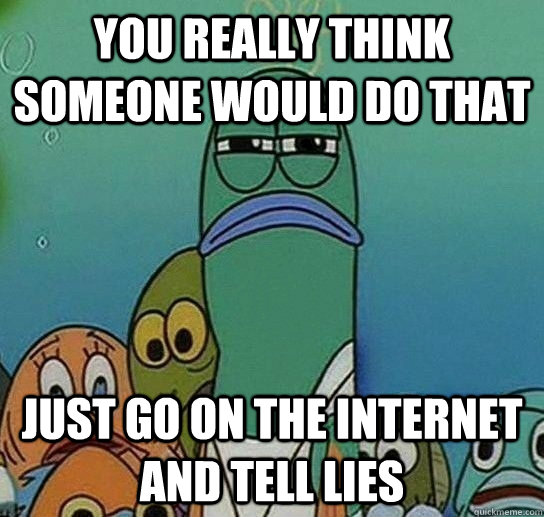
I know it’s incredibly surprising to learn that the list you love might be coming from a pseudo-science. But #realtalk. People lie on the internet.

a50ef63f25d185b36521939ea8d9ed8df18b870d29eba424541ac14f37b561d8

People love to take tests that might reveal some insight that has supposedly been hidden from them. They get really excited when they find a quiz about Game of Thrones houses, the Marvel hero they are most like, the Harry Potter patronus they should have, and heck, even the most commonly used words that are associated with their identity, based on their first name, of course. Now I recognize that most of us realize there is little validity to these pop culture related tests(at least I hope most of us), but people have fun with them. So no harm, no foul right?

Well like anything in life, the answer is mostly definitely going to be… it depends.

If you’re taking these tests to reinforce some deeply rooted ideas you have about life, then I can most assuredly tell you that you need to check yourself, before you wreck yourself. On the other hand, if taking these tests reminds you to be a better person, than I won’t stand in the way of progress.

But let’s consider another challenge with tests like this; they often make sweeping generalizations, ones that mean almost nothing intelligible. So there’s that too. Which is why this episode of Cross Talk is going to flip all of that on it’s head. We’re going to use movies, to showcase why certain movies give you emotional triggers, common generalization people make about films, how making judgments about peoples tastes in movies can hurt, and some insights into your personality versus your tastes in movies.

This is episode eleven of Cross Talk, and like any good personality test, it’ll make you laugh, smile, and think. That afterglow will be worth it, you can count on it. But don’t take my standardized word for it – Retake the test later and (C) what I would say if you chose (A) throughout.

I’m out of theories once again, but please check back tomorrow for an album review by a mathcore band… Whatever that means to you. Please comment, subscribe, and share this with friends. We want to hear your feedback!

Tim!

Liar, Liar (Snopes)

Snooping can be quite a rush.

You know you are looking at something which isn’t really for you, but it feels good to look at weird things, so you do it.

I’ve done some snooping on the internet from time to time, dear readers. It’s similar to research, but is a lot more cathartic, because I could get lost in one topic or another fairly easily, and I could spend moments or I could spend hours on said topic.

Though I’ve always been skeptical of what I learn online.

This is because I know that people lie on the internet, sometimes on purpose and sometimes by accident, and because of the scope and scale of the internet, it is very difficult to be sure when someone writes anything with authority.

a50ef63f25d185b36521939ea8d9ed8df18b870d29eba424541ac14f37b561d8

Though I’ve never been one to side with the Snopes.

In case you’ve been living under a metaphorical rock, The Snopes are a family from a triliogy of novels by William Faulkner. A really weird family to boot.

Which is probably where the website snopes.com got their name from and which I will refer to as Snopes for the rest of the blog post. Snopes is going to be the source of this post but not the source for your wisdom today.

For all of those who take Snopes at their word, if you really want to to know something and figure out the truth of the matter, I think it’s time to reconsider their value proposition.

If you really want to know the truth of a story, you need to do exactly what your teachers in primary school used to tell you – do your own damn research first and cite your sources.

You see my friends, the authors of Snopes do exactly what most of us already do, run a Google search and mark it down on their website. And that’s a good thing, researching and investigating.

Unfortunately though the team at Snopes don’t have a background in investigative journalism, so it’s not like their research skills are that much greater than your own, and it also means that there are no guarantees that what they conclude are more accurate then your own findings. Granted, they just might spend a few hours on a given topic, but how assured are you of that fact at this point?

And I’m quite confident that you have friends or colleagues that’ll run a search on Snopes, find out that the authors have debunked that theory/urban legend/story you shared, and then they’ll ultimately say “see, I told you!”

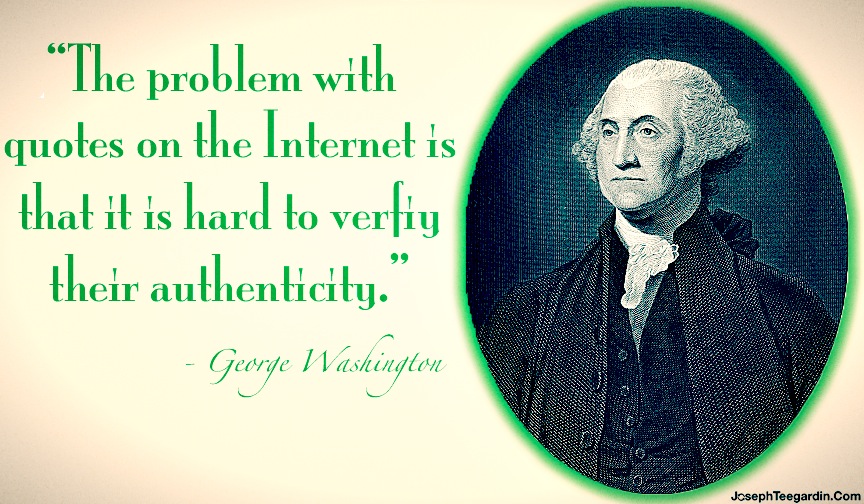
Which your friends SHOULD do, because we shouldn’t be able to just get away with shit. No one should. George Washington demonstrates it best with this quote.

washingtonswaggg

You want some more info on Snopes, now don’t you? Well, Snopes is run by a husband and wife team, no office, no bullpen, no mail room, no team of lawyers, journalists, and administrators, and definitely not a library. David and Barbara Mikkelson started their website in the early oughts, but much like Wikipedia, it’s run by two enthusiasts who are human and flawed.

Humans have spiritual, social, and political leanings, and we should celebrate that diversity, but never give absolute authority to one group.

You have to take your sources with a grain of salt, dear readers. Only then can you gain more perspective and become a better artist. After all, artists are the lens through which ideas are filtered and transmitted, and so we have a responsibility to take in the world, fully.

And those are all of the theories I have today.

Tim!


Why Captain America Turned Nazi And Other Fan Theories (Cross Talk Ep.6)

Fandom is broken.

Well, that’s what Devin Faraci of Birth. Movies. Death. would have us believe anyway.

Now, normally I don’t like to indulge the reaction post/video side of humanity on the Internet because I find doing so to be far too specific and not in the least satisfying – The problem being that creating content around a “trending topic” runs the risk of quickly becoming dated and it’s often not broad enough to build an entire timotheories sized post on.

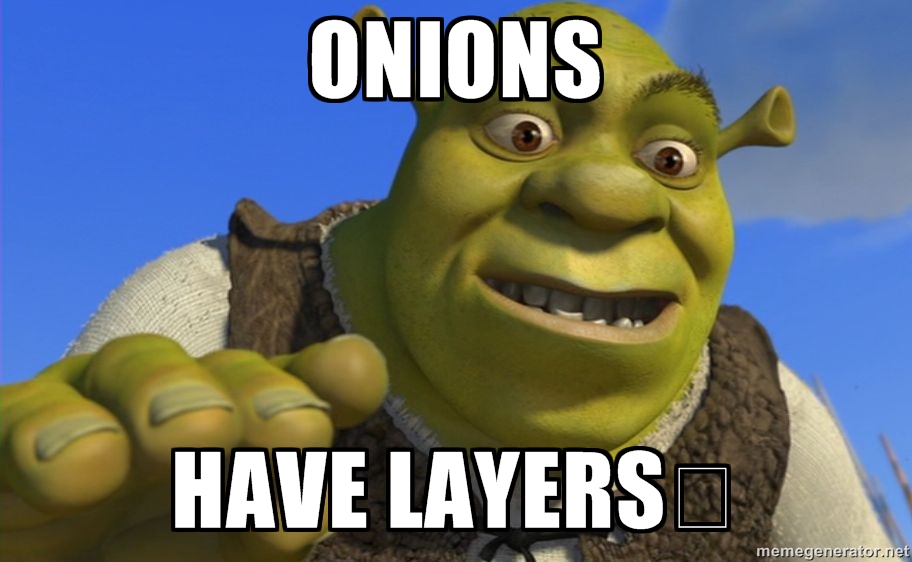
Sure, I could do something everyone likes, like speculating on the next Angry Birds movie, but I’d prefer to write like a Shrek movie, one with many layers, sort of like an onion, because I don’t care what everyone likes.

53863670

But fortunately for you, dear readers, you’re going to get your cake and eat it too, because that Faraci article is something of a whopper and conveniently related to the topic I was going to bring up this evening anyway.

It just so happens that in doing research for Episode 6 of Cross Talk, how fandom influences studio direction, Chris came across the above article and decided to share with me. And we had a good chat about it.

But let’s get into it!

Without giving too much away, Chris and I have found a way to demonstrate the value of a measured approach to the challenge that is social media, because if you follow his logic through to it’s logical conclusion, then Faraci’s fandom has always been broken.

Faraci tells us that because of the Internet, extremists like Annie Wilkes now have a way to terrorize anyone and everyone, but what about the other side of the coin? Those who never had a voice now have potentially have one, and petitioning for artistic changes just go a lot easier.  So where did we land? And how upset are we about the Steve Rogers: Captain America #1 reveal? You’re about to find out, and I’ll give you a hint, as an artist, I happen to have a few theories on this topic.

I’ve included a direct link to the full video for you here, but as always, the real action is just below for your convenience. Otherwise, please sit back and enjoy Episode 6 of Cross Talk!

I’m out of theories for now, but please check back tomorrow for an album review that is all about Simon. It should be a good one! Please comment, subscribe and share this with you friends. We want to hear your feedback!

Tim!