The Role of Art In A Spiritual Life (Dave Von Bieker, interview preview)

This happens so often to us as creative professionals – we attempt to tackle issues far greater then ourselves in the hope that we contribute something meaningful in the world around us. Which is why I personally believe that whether you hold a secular world-view, are a monotheist, or believe in many different gods, holding onto that time for reflection, contemplation, studying, devotion and ritual can inform your artistic practice and vice versa.

Now, I realize that the word spirituality actually means a great many different things to different people. So consider this for a moment.

I often like to think of spirituality as the process of getting to know yourself so that you can begin to know what is greater then yourself through commitment to an ideal. And so, that act of creation is very much tied into reflection. As we spend time with our work, contemplating the purpose of it, studying ways to make it better, devoting copious amounts of time to the act of making, and creating routines or rituals to enable good habits in ourselves.

Dave Von Bieker also believe this. He specifically told me that being an artist is about paying attention, and as a consequence we can’t but help acknowledge the sublime, being in a state of wonder. Having spent so much time in churches, art galleries, concerts, and reflections, he sees similarities in practising art versus practising spirituality. Further to that point, he recognizes that for him, God is far greater then a specific set of views and elements of life.

And I find that fascinating.

Which is why I think you’ll get some value out of spending some time with this preview of our interview on spiritual alignment. Dave Von Bieker is a musician, singer, songwriter, and arts chaplain who runs an art gallery in central Edmonton (Bleeding Heart Space). His stage name is Von Bieker, and his music defies genre, so he prefers to call it bow-tie rock to haunt your heart, for thematic purposes.

theories Summarized

But what did you think? Can art, science and spirituality work together in tandem in our lives? What artistic practices can you think of that would satisfy two or even all three of those models of thinking?

I hope you got something out of this initial discussion on the role of art in a spiritual life, and if you did, please like and share the video, and leave me some comments on future topics you’d like to see. I’ll drum up some theories we can rock out to!

With that all said, I thought it would be appropriate to follow up this post with an album review by Mary Gauthier, Rifles & Rosary Beads, so please check back in tomorrow evening for more theories! You won’t be disappointed.

Tim!

In Space, No One Can Hear You Scream (Planetarium review)

Time to pull out the sports equipment, latex paint, and fishing line, we got ourselves a planetarium to construct!


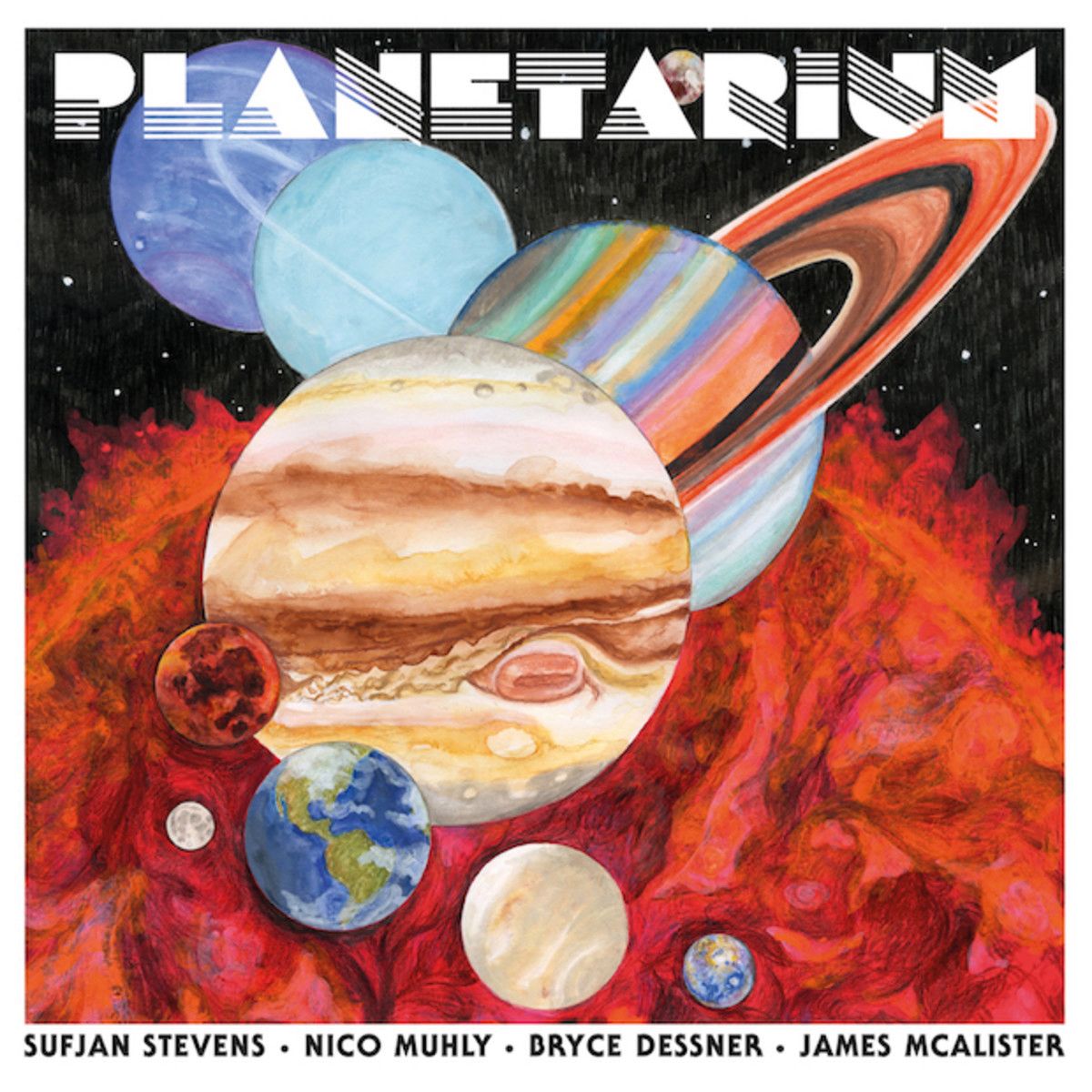
Sufjan Stevens – Planetarium

released Jun 9, 2017
******** 8/10

Planetarium is a collaboration between multi-instrumentalist Sufjan Stevens, composer Nico Muhly, drummer James McAlister, and guitarist Bryce Dessner. A supernova, modern art, super group, if you will. This album was inspired by our solar system and features tracks about black holes, tides, Halley’s Comet, black energy, the Sun, the Moon, the Kuiper Belt, creation, and each of the planets, including Pluto!

Now let’s get to the burning question on my mind – is it off for me to say that this was a weird album to review?

Running at just over seventy five minutes, and including seventeen different tracks, Planetarium takes us all over the place, both metaphorically and literally. An album chock full of ideas, it has tons of instrumentals to take advantage of, and produces epic soundscapes, while including vocals as necessary. It weaves in both the epic (Uranus, Mars, Jupiter, Black Energy) and the intimate (Venus, Mercury, Pluto, and Neptune) to good effect, but the most interesting thing to note of all of these tracks is not how they function individually, but what happens to you as you listen and experience this light show. Err, sound show.

Mythology, science and astronomy dominate this soundscape. Granted it may take a few listens to really immerse yourself in it all, but each time I sat down with it, I focused on different elements. Sometimes I focused on the melody, others were about the lyrics, and still other times I just sat with my own thoughts and contemplated life. That an album about the solar system could make me reflect on my own existence is compelling. Odd that.

And then we have sonic interludes like Halley’s Comet, Tides, the slightly longer Kuiper Belt, Black Hole and In The Beginning. These serve to dial down or ramp up as appropriate. Remember this is a dense album and not something to be taken lightly, but when you consider the scope and scale of it all, well then it just starts to make sense that it was organized this way.

Some of my favourite moments happen on Moon, with it’s many “R2-D2” like sounds, Mars and it’s to the point thoughts on love and war, and the unfettered sexuality/lust of Jupiter. By the time we get to Earth it’s already felt like everything has happened, but not worry.

Coming in at fifteen minutes, we get to experience the passage of millennia through carefully curated sequences representing formation, habitation, natural disasters, the arrival of man, and what seems like the end of civilization. This is all played tongue and cheek of course, delivered with lines like “… run Mission run, before we arrive” and ending with the more intimate Mercury.

Pros: Heady and thoughtful, the talent of its members is well demonstrated on Planetarium. It gets better and better with repeated viewings, each time with a new thing to uncover. Album closer Mercury is just brilliant.

Cons: Interestingly enough, the scale can be somewhat daunting to witness, but hopefully we get more harmony from the group in live performances or if they ever make another studio album. Sometimes Sufjan sounds like an auto-tuned parrot when he doesn’t need to be.

Runtime: 76 minutes

Points of InterestThe group was formed way back in 2012 and Planetarium actually existed as an idea way way back then, with further get togethers solidifying the songs and setting up for a full-length studio album. This is the result of those sessions. Cosmic themes make sense as globalization has flattened the Earth, but space still remains unexplored.

This is an album of abstractions, considerations, and comparative to a space opera. Maybe it won’t ever be repeated again in the history of humanity, but this record is quite a beautiful thing to behold – I just hope that it doesn’t get lost in the shuffle of 2017 releases.

theories Summarized

What else can I say about Planetarium but to listen to it for yourself creative cuties? This is a concept album through and through, and one that isn’t afraid to switch from the grandeur of the stars right down to the people on this organic jet pack hurtling through space and time. Theory or no, that’s what I think.

Tim!

The Scientific Method (Kendrick Lamar, Untitled Unmastered review)

Whatever happened to experimenting? From the time we are children to our early years as adults, we are constantly experimenting to figure out how life works and where our place in it is.

The sciences seem to have taken hold of this idea and kept it for themselves, but the reality is that experimentation belongs in the arts just as much, if not more so.

And I’m going to use this week’s Melodic Monday entry to prove it!


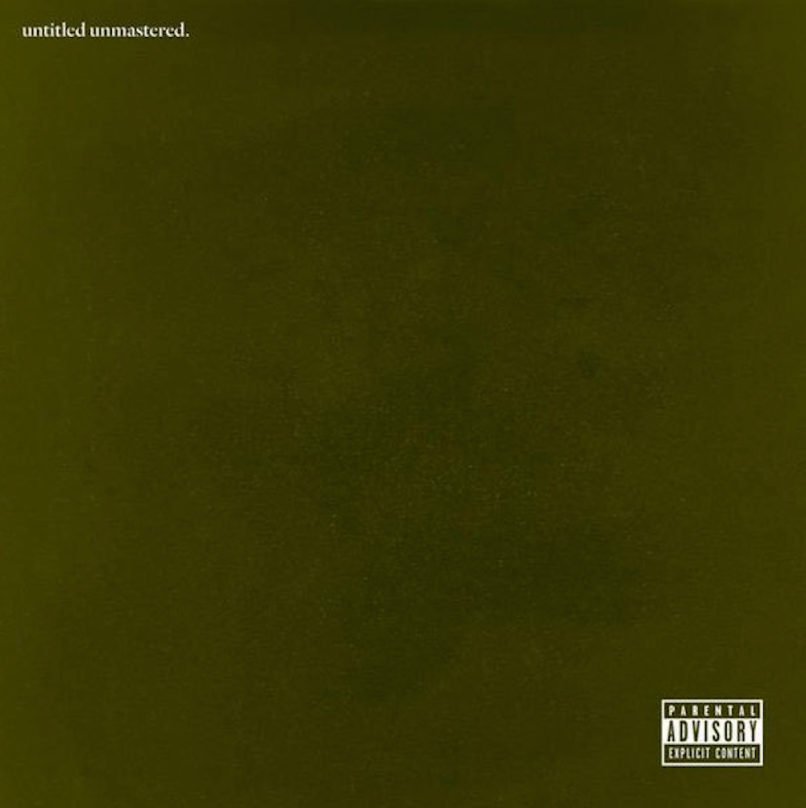
Kendrick Lamar – Untitled Unmastered
released March 4, 2016
******** 8/10

kendrick-lamar-untitled-unmastered-stream-album-listen

Kendrick Lamar (Kendrick Lamar Duckworth) is an American rapper from Compton, California. He has been rapping since he was a teenager, and started with the name K-Dot, which allowed him to release a mixtape that eventually got him signed with indie label TDE.

His first studio album came out in 2010, and then he got signed to Aftermath/Interscope in 2012 which saw the release of good kid, m.A.A.d. city.

He currently has 7 Grammies and a bunch of other awards to top it off. All thanks to last years release To Pimp a Butterfly, which came out almost exactly a year ago (I’m off by a couple of days, cut me some slack, please and thank you).

As a newbie myself to the freshness and layering of sound that is K-Dot, I’ve learned rather quickly that it is almost inevitable that I will under-appreciate his efforts, his perspective and his aspirations. But that won’t stop me from listening to untitled unmastered.

It’s essentially a prelude to To Pimp A Butterfly. Kendrick Lamar is telling us with the album title that he is borderless, capable of achieving anything, and that he has no masters. But he himself is humbled by aspects of being black which he doesn’t understand.

That’s why he pulls from so many different genres and ideas, sampling them all to better appreciate and incorporate them into himself.

It’s fucking scary. As a white man with little to no idea of what he must be experiencing as he navigates these waters, I can only imagine how much energy K-Dot has to drum up to approach these  album.

All of the tracks reference previous outings, from performances on Jimmy Fallon (untitled 8)  and The Colbert Report (untitled 3), to a three part jam session which takes places over a three period (untitled 7). It’s fun and intellectual hip-hop like this that always has a place in my collection.

Lamar has told twitter followers that this is a bunch of demos, and you get that sense. But you almost feel guilty listening to it, because it’s so much damn fun. This is an amazing mixture of hip-hop, funk, soul, jazz, spoken award, and dare I say it, subversive music.

I read somewhere recently that jazz is on the way out and that while it originated as Black music, it’s meant for everyone. I really hope that it isn’t and I have a suspicion that while jazz may not appear to be popular right now, it’s always been a musical genre that inspired deviation, experimentation and energy – If Kendrick Lamar, an artist who is helping to redefine hip-hop, uses jazz in his recording sessions, and to inspire his studio releases, I think we need to take note and learn from it. Just a theory.


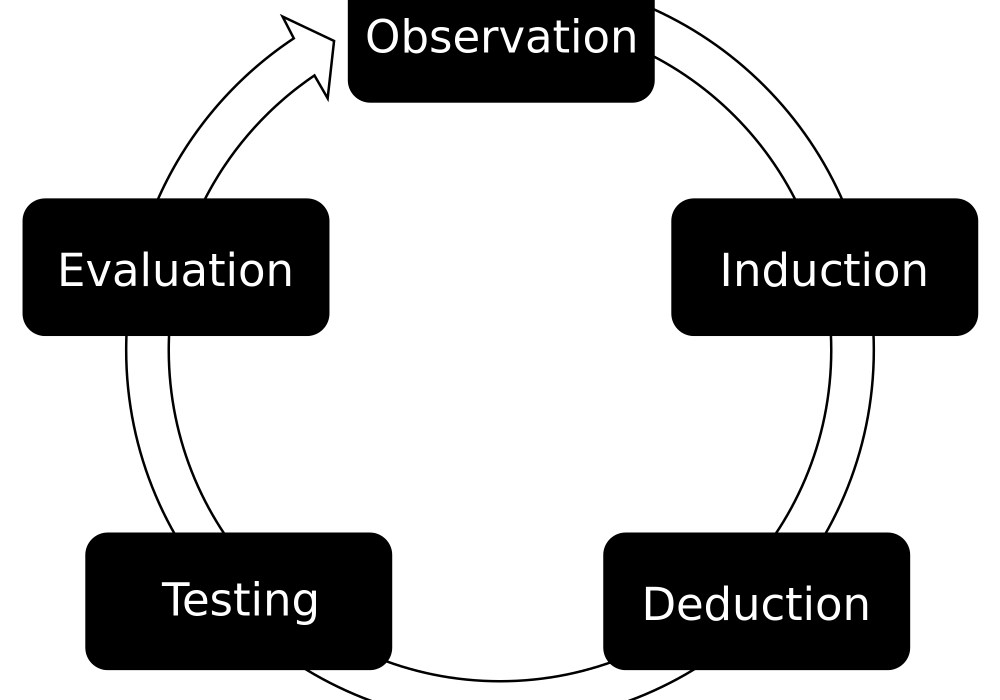
In the scientific method, experiments are done with metrics and models to find out if a hypothesis is true or not. Kendrick Lamar, knowingly or not, is constantly testing out the theory that jazz is dead, and every time he does, he proves that that is not the case. In fact, people love it all the more. As a personal advocate for theories, I believe that untitled unmastered represents empirical evidence for the value of jazz.

You need to listen to this album. I’m not going to give it a 10/10 though, because it’s not a studio release. It’s something different, but manages to still achieve a good grade regardless.

What do you think? Is my body of evidence corrupt? See you tomorrow for some theories on economics.

Tim!


The Matrix Effect (Cross Talk Ep.2)

Hey there dear readers! I hope your weekend has been excellent and full of art and all kinds of awesome and amusing things!

Oh thanks, but how are you doing Tim?

Oh, very good, thanks for asking!

Well, actually I’m feeling a little out of touch with reality, to be honest. My weekend started on the 13th of February and is finishing up tomorrow before I head back to the regular grind.

You see, I took some overdue and much needed vacation time to catch up on some of my personal to-dos, which effectively resulted in a 10 day weekend for me. I’m making that sound like I didn’t get anything accomplished, that’s note true, I got a lot done, in fact!

However, the consequences of this decision are just starting to get back to my brain.

You see, dear readers, when you break from routine too much it can cause your body to fight against you, which has been proven time and time again in various studies on the difficulties of changing habits. And this is topic is something we’ve touched on before here at timotheories. However, we haven’t really addressed the opposite side of the coin, which can also have disastrous results…

If you do too much of the same thing, you will experience what I theorize is similar to the effect Neo experienced in the first film in The Matrix trilogy (the one most everyone enjoyed), which I will very carefully call The Matrix effect for now, but not claim ownership of, for fear of long-term copyright infringement issues.

Essentially what this means is that if you see too much of the same thing, over and over again, without any careful and deliberate subtle shifts of that thing to make each entry appear unique, your brain starts to recognize the pattern and wakes up from the state of comfort, it often operates in.

This is a bad thing.

1c2b72c0-84ad-0133-b2cf-0e438b3b98d1

But luckily for you friends, I have a good thing to share with you instead!

That’s right, it’s that time of month when timotheories shares with you a new episode of Cross Talk! So strap in, hold on tight, and get ready for our discussion on the topic of – Realism VS Escapism in film, or how films deal with logic gaps that can potentially break your attention from the story.

This is going to be a great topic where Chris and I explore the successes and failures of movie tropes, typecasting, when science and art intersect, and how movies address their fantasy elements to create franchises, among other things.

I’ve included a direct link to the video for you here, but as mentioned before we now offer you embedded video on the blog so you don’t have to navigate away from the post. Please take a look below to watch Episode 2 of Cross Talk!

I’m out of theories for now, but check back tomorrow for a fun Melodic Monday entry from a group out of the Ukraine.

Tim!


Mars Attacks! (The Martian review)

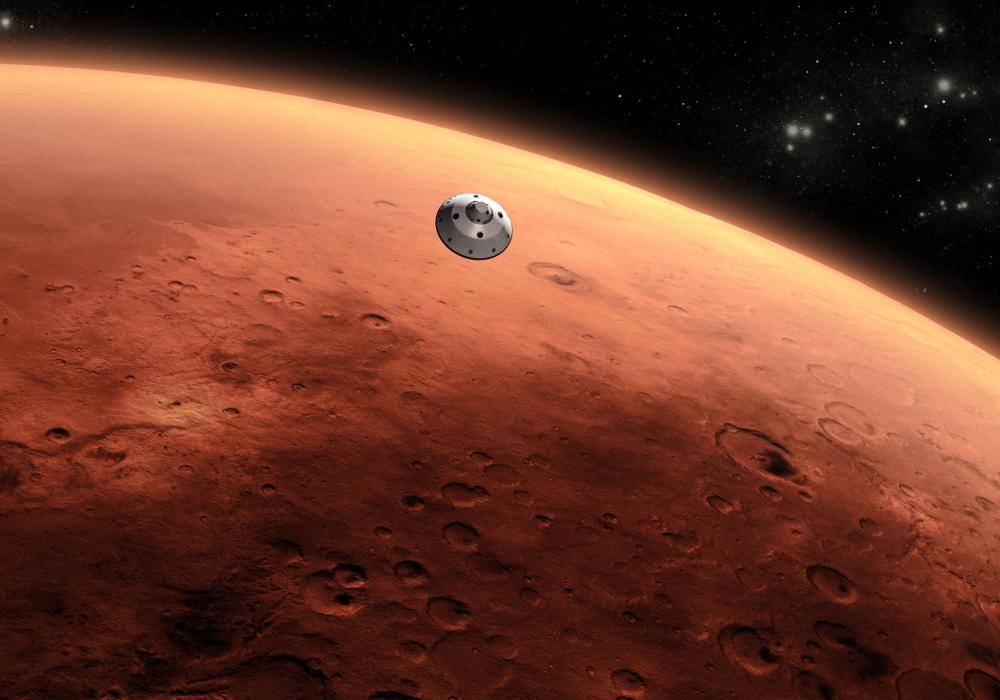
I can’t recall a time when Mars hasn’t been represented as a hostile environment – whether it is inhabited by aliens or not.

Books like War of the Worlds almost without reservation show Martians as these violent beings which want to take over our world or destroy it. But the more we learn about the red planet in outer space, the more we are all convinced that there isn’t anything there which can seriously harm us. Or is there?

That’s what this week’s film review hopes to address.


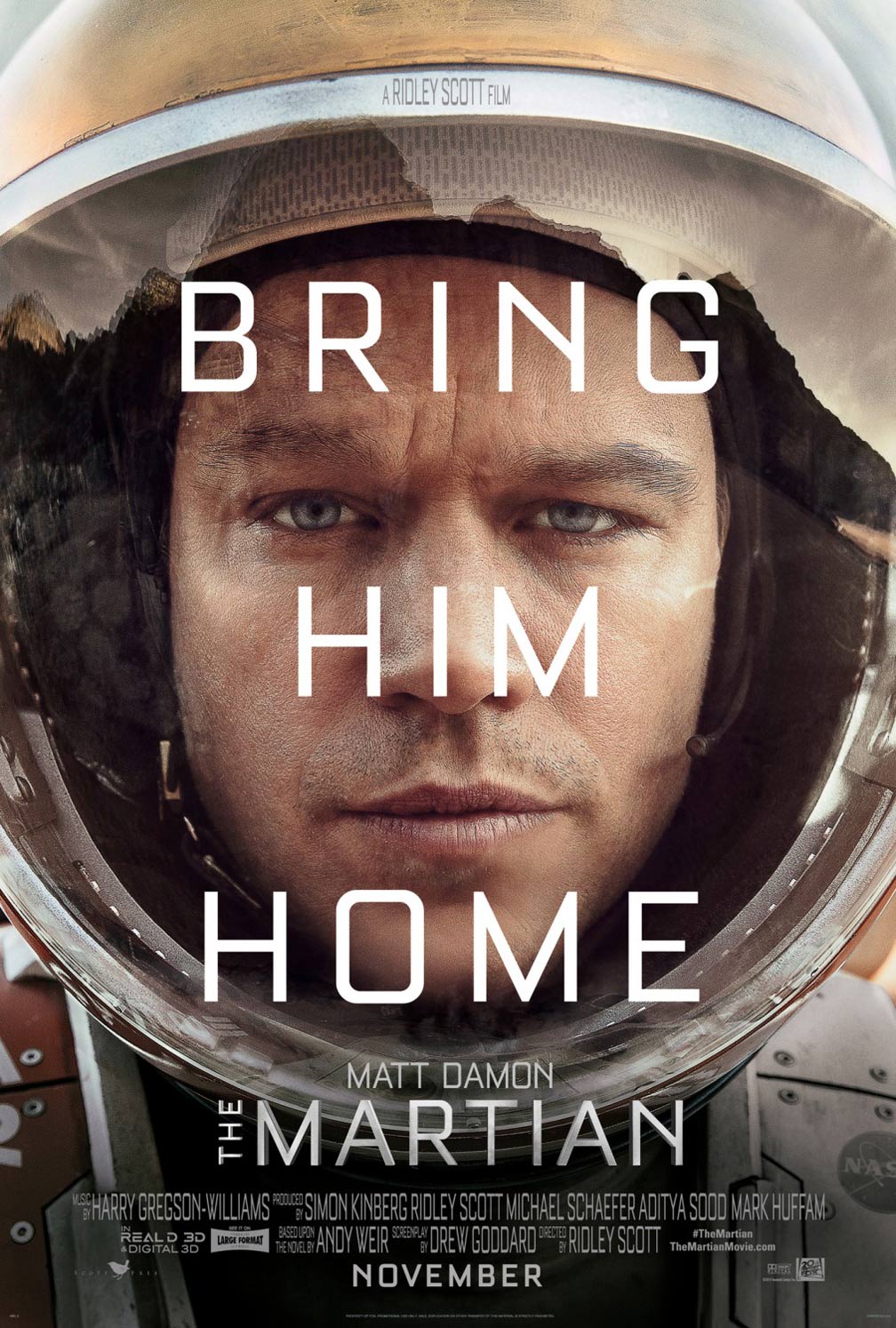
The Martian (2015)
Cast: Matt Damon, Jessica Chastain, Jeff Daniels, Kristen Wiig, Michael Pena, Sean Bean
Director: Ridley Scott
released on blu-ray January 12, 2016
******** 9/10
martian2015

IMDB: 8.1
Rotten Tomatoes: 93%, Audience Score 92%
The Guardian: ****/*****


Ah Ridley Scott, one of my personal science fiction heroes, he created Alien, which spawned the Alien franchise. And he also directed Prometheus which is less appreciated but still a really solid film.

And that’s not everything he has done. Ever seen Blade Runner? How about Thelma & Louise, Gladiator, Kingdom of Heaven, American Gangster or Robin Hood?

Oh one more the commercial failure Legend, which has effectively become a cult classic and led the way for a number of fantasy flicks that have since followed?

Yeah, that Ridley Scott. He combines science fiction and/or fantasy with realism and makes incredible dramas. Don’t believe me? Let’s check out part of the synopsis for The Martian.


The movie starts with the crew of the Ares III on Mars. Commander Melissa Lewis (Jessica Chastain), botanist Mark Watney (Matt Damon), IT guru Beth Johanssen (Kate Mara), pilot Rick Martinez (Michael Peña), flight surgeon Chris Beck (Sebastian Stan), and navigator and chemist Alex Vogel (Aksel Hennie) are in the final stages of their expedition when a storm hits.

Commander Lewis orders for the mission to abort and they all head to the shuttle, with the exception of Watney who is resistant and consequently the last one out. A satellite dish ends up knocking him away from the group and because of the intensity the crew and Lewis are forced to leave without him, presuming him dead.

Back on Earth, NASA Director Teddy Sanders (Jeff Daniels) has already released information about the mission and the loss of astronaut Watney.

Cut back to Watney who wakes up on Mars with the storm now over. The antenna from the dish impaled him, simultaneously wounding and sealing his suit. He is forced to remove the piece himself, and then explains the situation over a video log. He’ll be there for 4 years before the next mission visits the planet (he can’t contact Earth), and with the remaining food he has to make up 3 years of food. If he can grow this food he’ll make it. Good thing he’s a botanist.

Back on Earth Sanders has come back from Watney’s funeral service where we learn engineer Mindy Park (Mackenzie Davis) has satellite photos of the Ares III site, which show the rover has been moved and the solar panels are clean. Sanders and Director of Media Relations Annie Montrose (Kristen Wiig) agree that Watney is still alive.

A few days have passed on Mars already and Watney has now planted potatoes in the tent using Martian soil, some of his food, and fertilizer (vacuum-sealed feces from the crew). He then figures out how to make water by burning off rocket fuel. Now that he has the basics to survive he determines that he’ll need to modify the rover to make it to the crater where the next landing will be.

By digging up a Pathfinder probe, Watney manages to recharge it using the probes solar panels and learns that it still works. He works out a system of hand written signs and sends a message to NASA.

The team at the Jet Propulsion Lab (JPL) who built the Pathfinders, recruit members of the team that engineered the machines, pull one of storage, and set up a system to “speak” with Watney by pointing at “yes” and “no” signs. They quickly change tactics and set up a hexidecimal clock to communicate more easily. From here the team teaches Watney how to hack the rover, so that he can type and receive written messages.

The first question he asks is about the crew and how they took the news. When he learns that the crew still doesn’t know, the whole world gets to see his profanity laden response.

After some media attention and direction from PR Director Montrose, Watney is advised to make his rations last for 900 days. Then the terrible happens and the airlock on his habitat explodes backward, rattling him around and cracking his helmet. Watney manages to use duct tape to seal the helmet before he discovers that his crop is now frozen and dead. He can now only last about 300 days.


And the movie only gets more nail-biting from there!

Pros: The movie makes science both fun and exciting at the same time. Matt Damon is perfectly suited to play the role of The Martian. The supporting cast all make the story thrilling and while the science isn’t perfect (according to my physicist brother), it’s pretty damn close.

Cons: The relationship between Watney and his crew feels somewhat stressed and unauthentic at points, and the NASA preachiness does bubble up on occasion. The other challenge comes from following cliches, you know where the story is headed, but that’s a minor detail.

Runtime: 144 minutes

Points of Interest: If you believe in method acting, Matt Damon spent the rest of his schedule on solo scenes, which took five weeks of straight shooting. He didn’t see the rest of the cast until the film was cut and ready for promotion. That was a real potato farm set up in the studio, included at various stages of the growth cycle.


Whether there is life on Mars or not, you can be sure that we will continue to see films made about aliens and the possibilities available in the universe, at least until we’ve become better space explorers.

Carl Sagan has this to say about the red planet –

Mars has become a kind of mythic arena onto which we have projected our Earthly hopes and fears.

And I would have to agree with him. Much like the ocean, wilderness, and city have all held myths and legends over time, we now look to space as a curiosity which no one can claim to be an expert. Having mentioned this, I think The Martian is a great exploration of the possibilities ahead, and whatever your opinion of space, you’ll enjoy the humanity of this story.

See you tomorrow for some wisdom!

Tim!