Ukelele Anthems For Two (Vance Joy, Nation of Two review)

Not every album needs to be a chest bumper or a call to arms. Sometimes it’s nice for music to be nice, and reflective. A thread between two hearts, for starters.


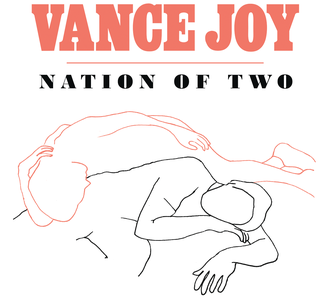
Vance Joy – Nation of Two

released February 23, 2018
******* 7/10
Vance Gabriel Keogh, better known by his stage name, Vance Joy, is an Australian singer and songwriter. He signed a five-album deal with Atlantic records back in 2013, and shortly thereafter, released his instant success, Dream Your Life Away, hopping on the back of The 1989 World Tour that Taylor Swift planned that year. Everyone and their mother knows Riptide at this point, and somehow Joy managed to ride the waves of that album for four years without anyone really noticing. Pun intended.

Lucky for us though, because his sophomore effort, Nation of Two, was worth the wait. It’s not an amazing album, but there’s something to it. Featuring the singles, Lay It on Me, Like Gold, We’re Going Home and more, Joy has managed to do even better the second time around. Garnering fans and swooning hearts all the same.

What I love most about this album, as I’ve said in previous reviews, is that it’s a concept record – Nation of Two tells the story of a couple who’s world is centred around their bedroom, their car, and other memories they share collectively. Even though it’s similar in tone to his debut album, and doesn’t push strongly in one direction or the other, I actually think it makes it a stronger record, and gives this one a pass. Love isn’t always about ups and downs, fights and makeup sex, it’s a consistent feeling of companionship and connection. Flowing from one situation to the next is real life, and this album has it too.

It’s full of romance, rainy day music, good for reflection, and even post-breakup meltdowns or whatever emotive tone you’re feeling. I’m looking at you in particular Alone with Me and I’m With You. So much heat there.

And that’s not to say there isn’t some fun in there. Saturday Sun is a great upbeat track and has good accompaniment with One of These Days showing up later. These are simple love songs, rooted in the tradition of artists like John Mayer, Jack Johnson and Ed Sheeran, and while they aren’t perfect, there is a cohesive quality that works, especially with the theme.

Pros: A solid theme, some great singles that stick to Joy’s strengths, and solid transitions between tracks, help this album feel like a complete story.

Cons: Sometimes the naivety can be a bit much, and this is where Crashing Into You would be considered a weak point. Some of the worst lyrics I’ve heard so far this year.

Runtime: 45 minutes

Points of Interest: Joy has been known to work with multiple writers, and in this case the running theme is evident throughout. The song Little Boy, is a true story about the time Joy fell off his bike as a little boy.

A welcome change from the never-ending mire of romantic crooners singing about falling in love, passionate sex, and breakups, this is an album for the long-time lovers. It’s never particularly cheesy, but it always feels sincere.

theories Summarized

I don’t expect that this will be an album for everyone, and as much as I wish that were the case (because the theme is strong), Vance Joy still has some growing to do as a musician, and so it bleeds together in the end. Give it a listen, be aware of the narrative, and have some forgiveness on hand, and I have a theory that you’ll enjoy yourself.

And if that don’t tickle your fancy, Brendon and I have a rock review from a brilliant Canadian duo known as Death from Above (formerly Death from Above 1979). The Physical World is also their sophomore album, and it kicks up everything fans of the band love. If you haven’t gotten into their sound yet, here is your opportunity to give them a much deserved listen.

Thanks for taking the time to read the review, watch the video review and hopefully you’ve left a comment or two. If you liked what you saw, click on the like button, and even better, subscribe to the channel! Come back tomorrow for a film review about Thor: Ragnarok. There’ll be more theories!

Tim!
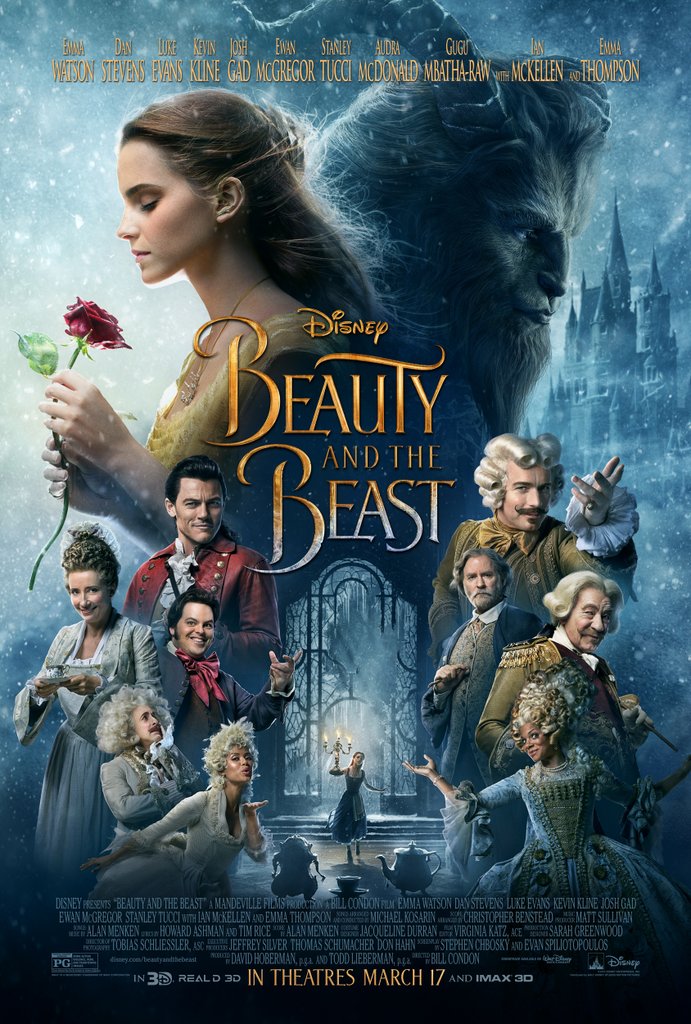
A Tale On Repeat (Beauty and the Beast review)

Rehashing a story that rehashes another story doesn’t create more hash? Sheesh, y’all. What a wonderful thing is this reimagining that it can invigorate previous fans, and draw in troves of new ones too.


Beauty and the Beast (2017)

Cast: Emma Watson, Dan Stevens, Luke Evans, Josh Gad, Kevin Kline, Ewan McGregor, Ian McKellan, Emma Thompson
Director: Bill Condon
re-released on blu-ray June 6, 2017
******** 8/10

IMDB: 7.5
Rotten Tomatoes: 71%, Audience Score 83%
The Guardian: ***/*****

Bill Condon is an American screenwriter and director, best known for his dual roles in Gods and Monsters as well as with Dreamgirls. He also had success directing Kinsey, Mr. Holmes, and very recently the 2017 version of Disney’s Beauty and the Beast.

And that is the topic I shall choose to write about. Mostly because I bought a copy and watched it last week.

Taken from Wikipedia and edited –

In pre Revolution era-France, an enchantress disguised as a beggar (Hattie Morahan) arrives at a ball and offers the prince (Dan Stevens), a rose for shelter. When he refuses, she transforms him into a monstrous beast and his servants into household objects, and erases the castle from the memories of their loved ones. She casts a spell on the rose and warns the prince that, unless he learns to love another and earn their love in return before the last petal falls, he and his servants will lose their humanity forever.

Years later, in the village of Villeneuve, Belle (Emma Watson) dreams of adventure and brushes off advances from Gaston (Luke Evans), an arrogant former soldier. Lost in the forest, Belle’s father Maurice (Kevin Kline) seeks refuge in the Beast’s castle, but the Beast imprisons him for stealing a rose. Belle ventures out in search for him and finds him locked in the castle dungeon. The Beast agrees to let her take Maurice’s place, despite her father’s objections.

Belle befriends the castle’s servants, who treat her to a spectacular dinner. When she wanders into the forbidden west wing and finds the rose, the Beast, enraged, scares her into the woods. She is cornered by a pack of wolves, but the Beast rescues her and is injured in the process. A friendship develops as Belle nurses his wounds. The Beast shows Belle a gift from the enchantress, a book that transports readers wherever they want. Belle uses it to visit her childhood home in Paris, where she discovers a plague doctor mask. Belle realizes that she and her father were forced to leave her mother’s deathbed as her mother succumbed to the plague.

In Villeneuve, Gaston sees rescuing Belle as an opportunity to win her hand in marriage and agrees to help Maurice. When Maurice learns of his ulterior motive and rejects him, Gaston abandons him to the wolves. Maurice is rescued by a hermit, Agathe, but when he tells the townsfolk of Gaston’s crime, Gaston convinces them to send him to an insane asylum.

After sharing a romantic dance with the Beast, Belle discovers her father’s predicament using a magic mirror. The Beast releases her to save Maurice, giving her the mirror to remember him with. At Villeneuve, Belle proves Maurice’s sanity by revealing the Beast in the mirror to the townsfolk. Realizing that Belle loves the Beast, Gaston has her thrown into the asylum carriage with her father and rallies the villagers to follow him to the castle to kill the Beast. Maurice and Belle escape and Belle rushes back to the castle.

During the battle, Gaston abandons his companion LeFou (Josh Gad), who sides with the servants to fend off the villagers. Gaston attacks the Beast in his tower, who is too depressed to fight back, but regains his will upon seeing Belle return. He spares Gaston’s life before reuniting with Belle. However, Gaston fatally shoots the Beast from a bridge, but it collapses when the castle crumbles and he falls to his death. The Beast dies as the last petal falls and the servants become inanimate. When Belle tearfully professes her love to him, Agathe reveals herself as the enchantress and undoes the curse, repairing the crumbling castle and restoring the Beast’s and servants’ human forms and the villagers’ memories. The Prince and Belle host a ball for the kingdom, where they dance happily.

This version of the film does well to increase the mythos of this fairy tale, all while adding in additional songs, but never losing the main story nor the music which made it so memorable in the first place, but it does fairy fail in other ways. Learning more of the princes backstory, why the servants became objects, and the reason Belle has no mother are interesting, but add a lot of time to the story.

In some ways it makes it a far more beautiful telling of the story, though it doesn’t significantly improve the stock of it’s Disney characters. Except for Gaston and Lefou… Their performances are noteworthy and feel very fresh throughout.

Pros: Luke Evans and Josh Gad provide a far more nuanced and complex relationship for their characters, and Lefou is a scene stealer to be clear. Emma Watson does well in revitalizing and addressing the persona of Belle. Heck, even the new song the Beast sings is pretty swell.

Cons: Kevin Kline just doesn’t quite cut the mustard as Maurice nor does Emma Thompson as  Mrs. Potts. Their performances seem a little phoned in and do a lot to slow the story down in addition to 45 minutes worth of new songs and the aforementioned backstory updates.

Runtime: 2 hours 9 minutes

Points of Interest: During the Be Our Guest sequence, a model of Aladdin’s Agrabah castle appears. Belle takes on the role of inventor in this film over Maurice because Emma Watson wanted Belle to have more of a back story, and a better reason for being treated differently by the villagers. And in case you didn’t already know, Le Fou is Disney’s first official gay character.

A story rehashed from a story already rehashed, 2017’s Beauty and the Beast works to window dress a film which is already well love by many, but guilty of the falling into the same philosophical challenges of its predecessor – love is the answer. The realist in me knows that love is hard work and to expect that love alone will cure sickness (read: mental health) and prejudice (read: sexism, violence and hate) is a silly aspiration, but the underpinning message of Beauty and the Beast can’t seem to shake it.

theories Summarized

I’m happy that movies are being made like Goat, Moonlight and Nocturnal Animals. They address issues of toxic masculinity and other not-so-fun global problems, so I’ll say good on Emma Watson for injecting a stronger voice and presence in to Belle, and good on Bill Condon for keeping this movie a musical, and good on Disney for updating this story, but please can we stop making the same tales as old as time?

Tim!

Love On Repeated Viewings (Cross Talk Ep. 20)

Do you believe in love at first sight? Or should I walk by again?

Some people swear by the theory that true love happens once in a lifetime, that love conquers all, that we can fall in love instantaneously, our one and only special someone is always nearby, and a host of other dreamy ideals.

But while we all love to hear a good story about someone reconnecting with an old friend and it working out, that is definitely the exception and not the rule. The rule is pretty much this, love is based on chemistry. Not the intangible ethereal substance which connects one person to another via romance, but literal chemistry based on biological sciences. We tend to be attracted to that which we already know and what we are like ourselves.

Like attracts like.

So if you spend more time understanding what initially attracts you to someone in the first place, you’ll be better equipped for companion love over a lifetime.

Art, Love, and Time Travel

Film does a great job of demonstrating the power of love, both within it’s themes and as a vehicle of interest. For instance, I love some films immediately, but others need a few sit downs before I really engage with them, still others are enjoyable at first but lose their lustre over time, and some will never have my attention.

But today we want to discuss the films which are better representations of enduring and companion type love, films which get better on subsequent viewings and which enrich you over time. These films can be instantaneous winners, slow burn thinkers OR surprising dark horses, but no matter how they hit you, they’re better on a second viewing.

One of the more impassioned debates Chris and I have had in a little while, but rightly so, we’ve discovered that aesthetics, love, and time travel often demand a second viewing before you’ll be committed fully.

Episode number twenty of Cross Talk is surely our best one yet. But don’t take my digital word for it, click on the video and see for yourself. Otherwise you might never learn what two movies got Chris up in arms over my sidewinder commentary!

Enjoy creative cuties!

I bet you weren’t expecting such a huge list of movies in a short twenty minutes were you? You’ll probably have to go back and watch this one again to really experience it all, at least that’s my theory anyway…  But honestly, what did you think of our choices? Would you have suggested something different? Who do you think won the debate? Please join the conversation and let us know what you thought!

Please comment, subscribe, and share this video with friends. We want to hear your feedback!

Tim!

The 5 Love Languages (Gary D. Chapman)

Wednesday is typically a day for wisdom here on timotheories, as you know, dear readers.

It’s the day I share ideas from famous artists, motivational pieces of art, give suggestions on things you can do to make your life more fulfilling, and sometimes I dole out my own theories of global wisdom. For example, on one post in particular, I decided to construct my own reading list and then I came up with a catchy theme to describe the different types of books I would draw from to grow and shape my own journey. Like Liu Kang.

liu_kang

I even called it The Reading List. Not like Liu Kang.

Which makes perfect sense to me, even if it is a bit obvious. Like Liu Kang. But then as mentioned I took the post a bit further and came up with a conceptual framework to flesh out the types of books I would be reading going forward.

I called that concept the The 5 L’s of Language, not to be confused with the name of a book called The Five Love Languages, and which is authored by one Gary D. Chapman. Who happens to be this week’s featured author.

Just in case you forgot, this is what The 5 L’s of Language look like –


I will read one book a month from the 5 groupings below, slowly expanding the number of books read so that I reach the point of 5 books a month. A book for each group

  1. LIFE – Biographies/Art/Music
  2. LOVE – Classic Fiction/Non-Fiction/Graphic Novels
  3. LEARN – Business/Leadership/Self-Help
  4. LABEL – Philosophy/Sociology/Psychology
  5. LEET– The Internet

If you haven’t figured it out just yet, the topic o’ the day is LEARN. As In you need to learn your own unique primary love language as well as how the other four work. You do this so that you can properly love yourself, a romantic partner, and even manage other relationships better, whether you are single, married, a child, teenager, or even just a man.

Gary D. Chapman, Five Kinds of Love

Gary D. Chapman has authored at least five books related to the concept of five love languages and co-authored two books on the languages of apology and appreciation. He originally came up with the idea of The Five Love Languages after looking into twelve years worth of his own notes on common patterns he witnessed when counselling couples. He asked a very simple question – when someone feels unloved by their spouse, what do they want from them? And thus five categories of answers emerged.

If you can learn to appreciate the difference between words of affirmation, physical touch, acts of service, quality time, and gift giving, then you’re working towards a rather positive and generous view of love and how to share it.

I bet you’re hoping for more of a definition of each term, so that you can go out and apply these ideas ASAP. Well, okay, but I recommend that you read the book first, and then run a legit profile through Chapman’s website.

With that mentioned here is a quick overview of each language –

  • Words of Affirmation: spoken affection, praise, or appreciation.
  • Acts of Service: actions, rather than words, used to show and receive love.
  • Receiving Gifts: giving gifts that are meaningful.
  • Quality Time: expressing affection with undivided attention.
  • Physical Touch: sex, holding hands, hugs – affection via touch.

As you get comfortable with the languages friends, you’ll learn which of the five is most important to you, and then you begin to implement the philosophy into your own life.

For example, if your primary love language is “quality time” like me, that means you should spend time for yourself on meaningful activities, whether those activities include another party or two is up to you, but if you make art, you’ll like enjoy doing it on your lonesome. Or if physical touch is important to you, maybe you spend time in dance classes, making theatre with friends or regularly hugging your friends and family. But that’s just a theory.

Tim!

Cold Kickin’ It Live (Brooklyn review)

I’ve never truly experienced homesickness. In all of the vacations I’ve taken, roadtrips I’ve been on, and visits with friends and family, I’ve only ever been away for a couple weeks at most.

That true sense of longing has never set in.

And so it’s difficult for me to understand what it feels like to be a fish out of water, but the beauty of film, is that sometimes, it can relay these feelings perfectly.


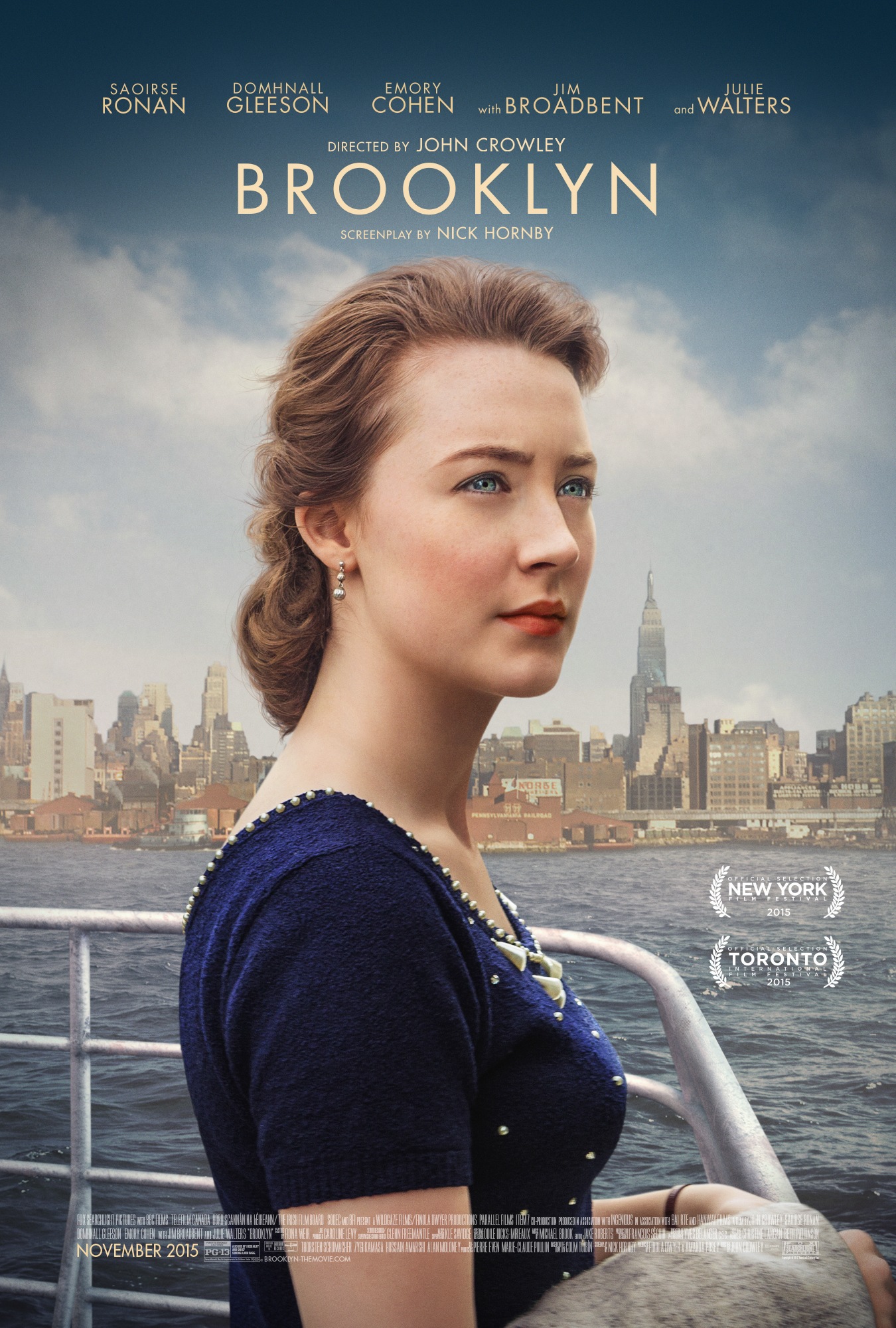
Brooklyn (2015)

Cast: Saoirse Ronan, Emory Cohen, Domhnall Gleeson
Director: John Crowley
released on blu-ray March 15, 2016
******** 8/10

Brooklyn_1Sheet_Mech_7R1.indd

IMDB: 7.5
Rotten Tomatoes: 97%, Audience Score 89%
The Guardian: ****/*****


John Crowley is an Irish television, film, and theatre director, who is best known for his first film Intermission. He has directed a handful of other dramatic films, and has slowly worked his way through theatre to film, which he believes was a natural progression.

Though his films have not seen a wide international release audience, Crowley has a strong understanding of human relationships, and the complex emotions that relate to special circumstances.

And that’s where Brooklyn shines…

Taken from Wikipedia and edited,

In 1952, Eilis (pronounced EH-lish) Lacey(Saoirse Ronan) is a young woman from Enniscorthy, a small town in southeast Ireland. She works weekends at a shop run by the spiteful Miss Kelly (Brid Brennan). Eilis’s older sister Rose (Fiona Glascott) has arranged for her to go to the US to find a better future. She departs but begins to suffer from seasickness and food poisoning and ends up being locked out of the toilet by her cabin neighbors. The woman in the bunk below her, an experienced traveler, helps her, giving her advice and support for Eilis’s entry to the US and life in Brooklyn, the new home to many Irish immigrants.

Eilis lives at an Irish boarding house where she dines each night with the landlady and her fellow residents, all young women. She also has a job at a department store but is shy and quiet when interacting with customers, earning the gentle scolding of Miss Fortini (Jessica Paré), her supervisor. Her letters from her sister Rose, back in Ireland, give her homesickness. She is visited by Father Flood (Jim Broadbent), a priest who arranged for her job and accommodation, and he tries to help by enrolling her in bookkeeping classes. At a dance she meets Tony (Emory Cohen), from an Italian family, who is quickly interested in her and becomes her boyfriend. With these developments, Eilis begins to feel more comfortable in New York, although she is slow to return Tony’s declaration of love.

Father Flood informs Eilis that Rose has died suddenly of an undisclosed illness. After a trans-Atlantic phone call with her mother reveals that she is struggling to cope, Eilis decides to return home for a visit. Tony insists that if she is leaving they must get secretly married first. They enter a civil marriage without telling family and friends. Back in Ireland, everybody seems to be conspiring to keep Eilis from returning to Brooklyn. Her best friend is getting married a week after her scheduled return journey, and her mother has already accepted the invitation on her behalf. She is set up on dates with eligible bachelor Jim (Domhnall Gleeson), who is about to inherit property. She takes her sister’s place as a bookkeeper on an emergency basis. Eilis starts to feel that she now has the future in Ireland that did not exist when she left and stops opening the letters she receives from Tony.

Miss Kelly, her former employer, meets with Eilis and says she has learned that she is already married. Eilis is reminded of the small-town mentality she had escaped, where there are no secrets. She informs her mother of her marriage and that she is leaving for Brooklyn the next day. On the crossing, she plays the role of the experienced traveler, offering words of guidance to a first-time émigrée. The film ends with Eilis and Tony reuniting and happily embracing.

This is well-scripted story that features subtle character shifts, emotional weight with intelligence, and an elegance to the backdrops. Crowley does an excellent job of showcasing how Eilis feels both at home in Ireland, as she grews in America, then again back at Ireland, and finally at the change when she returns to America, her new home with a new life.

Pros: This is an incredibly understated film which does an excellent job of evolving Saoirse Ronan’s character from timid little sister into career-oriented and capable. Yes there is romance in it and it feels integral, but surprisingly, that is not the driving force of her story.

Cons: Because it has a slow start, and is harkening to an era of film gone by, it can be a little difficult to digest for some. And the conflicts are never incredibly dramatic.

Runtime: 111 minutes

Points of InterestSaoirse Ronan was born in New York, but her parents are Irish, so she was raised in Ireland – this is her first time using her natural accent in film. Emory Cohen was the only American on set, which is odd given the film setting.

The entire film is beautifully shot, with excellent set pieces, costumes and characterizations. And though it’s already been said, this story really does work perfectly because of Saoirse Ronan’s efforts. It makes sense that she was nominated once before for an Academy Award (Atonement), because she can make everyone around her laugh, cry, or contemplate rather easily.

I couldn’t help myself while thinking about buying this movie, then while watching it, and finally as I write this review. But it has to be said – I finally get what The Beastie Boys meant when they sing the lyrics “no sleep till Brooklyn,” a song often describing as a rant about that New York borough.

Whether Eilis was terrified of leaving Ireland for Brooklyn or terrified of being away for so long, I bet that she just could not sleep on that boat ride. But that’s just my theory. What do you think?

Tim!