I Have No Words (The Killing of a Sacred Deer review)

… I have no words. That’s what I said after I watched this movie.


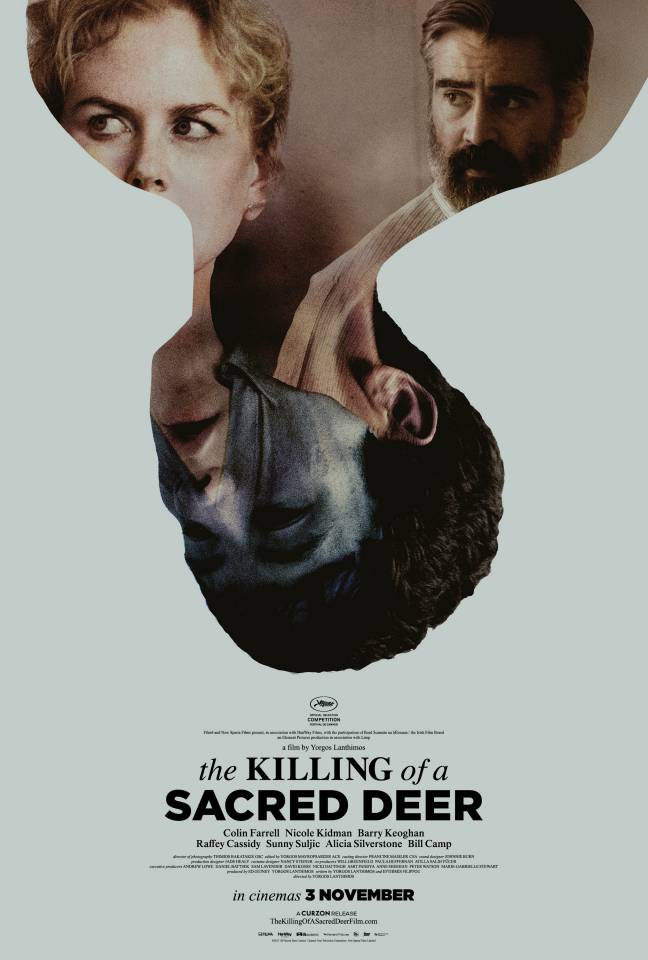
The Killing of a Sacred Deer (2017)

Cast: Colin Farrell, Nicole Kidman, Barry Keoghan, Raffey Cassidy, Sunny Suljic, Alicia Silverstone
Director: Yorgos Lanthimos
released on blu-ray January 23, 2018
******** 8/10
IMDB: 7.2
Rotten Tomatoes: 78%, Audience Score 64%
The Guardian: ****/*****

Yorgos Lanthimos is a Greek film and theater director, producer and screenwriter. I’ve written about a film of his before, but I want you to consider his background today. While Lanthimos may have made his first feature length film back in 2001, he was making experimental plays as far back as 1995, and that’s likely how this film came about.

Taken from Wikipedia and modified…

Steven Murphy, a skilled cardiothoracic surgeon, finishes an open heart surgery, and later goes to a diner where he meets a teenage boy named Martin. The precise nature of their relationship is unexplained. Afterward, Steven returns home to his wife, Anna, and their children, Kim and Bob. The next day, Steven reveals his connection to Martin, claiming he is a schoolmate of Kim’s, when Martin unexpectedly comes to speak with Steven at the hospital. Steven later privately tells Anna that Martin’s father died in a car accident ten years earlier, and that he has taken an interest in the boy to help him grieve. At Steven’s suggestion, Martin comes to the Murphy household for dinner; Kim seems particularly taken with him.

Martin returns the favor by inviting Steven to his mother’s home for dinner. After the meal, Steven attempts to leave, but Martin insists he stay and watch a movie with them. Martin leaves halfway through the film, and his mother makes a sexual advance on Steven, who quickly rebuffs her and goes home. Over the next few days, Martin’s demands on Steven’s time grow increasingly frequent and desperate, but Steven does not reply. One morning Bob awakens and finds he cannot feel his legs—he has become paralyzed. Steven and Anna rush him to the hospital, where a full neurological examination reveals that nothing is physically wrong. Though he briefly recovers, Bob remains unable to walk. While the elder Murphys tend to Bob, Kim meets with Martin for a date.

The next morning, Martin visits Bob in the hospital and demands that Steven speak to him in private. The two retreat to the cafeteria, where Martin reveals the truth: his father did not die immediately, as Steven told his wife, but during surgery that Steven himself performed after the crash. Steven failed to save Martin’s father, and the boy bluntly tells Steven that he blames the cardiologist for the death. He further explains that, to “balance” the act of destroying a family, Steven must kill one of the members of his own. Martin goes on to explain that he has placed a curse upon the Murphys that will gradually kill them through a series of stages unless Steven makes his choice and murders one of them; the paralysis is the first of these four stages. Steven attempts to dismiss these seemingly wild claims, but later finds that Bob is refusing food—this is the second stage of Martin’s curse. Kim later loses the use of her legs during a choir practice and also will not eat.

Kim receives a phone call from Martin at the hospital. During the conversation, Kim abruptly regains the use of her legs, only to lose mobility again when the connection is broken. This seems to convince Anna of Martin’s power, and she travels to his home to directly ask why she and her children must suffer for Steven’s mistakes. The unrepentant Martin cannot answer, simply remarking that “it’s the only thing I can think of that’s close to justice”. Anna, further suspecting that her formerly alcoholic husband may have imbibed on the day of the operation, speaks to Steven’s anesthesiologist, who reveals that Steven did in fact have a few drinks that morning, with Anna sexually gratifying him as payment for the information. At Anna’s insistence, the children are transported to their home, where they are continually fed though an NG tube. Anna and Steven fight over the situation, with Steven refusing to believe that anything supernatural is happening. That night, he kidnaps Martin and binds him to a chair in the basement, brutally beating him and demanding that he undo his hold on the children. Martin remains unflappable, warning Steven that time is running out.

Martin’s presence only exacerbates the tension in the household: Kim and Bob argue with each other over who their father will choose; Steven tries to gather information to make the decision; and Anna claims that killing one of the children is clearly the only option, as they can have another. Kim attempts to save herself by traveling to the basement to see Martin, demanding that he free her again so that they may run away together. Her strategy fails and she tries to escape herself by crawling through the neighborhood. Steven and Anna save her. The next morning, Anna releases Martin while Steven sleeps, pointing out that holding him captive was of no use. Later that day, Bob begins bleeding from the eyes—the final stage of the curse before death. Rather than choose, Steven binds Kim, Bob, and Anna to chairs in the living room, covers their heads, and pulls a black woolen mask over his own face. He next loads a rifle, spins uncontrollably, and fires. The first two shots miss, but the third pierces Bob’s heart and kills him.

Some time later, the family visits the same diner where Steven previously met with Martin. As they sit in silence, Martin enters and stares at them; he and the family briefly lock eyes and Kim begins eating before they stand and leave. Martin gazes after them as they walk through the door.

I’ll say this as objectively as I can, while this movie is incredibly fascinating to me, I don’t think it’s very accessible to the average film goer. Which is very sad, because I think it has a lot of interesting ideas about revenge. And for that reason alone, it’s difficult to give it a high rating. Because I think the director made conscious decisions to veil the meaning of the story, when they could have made it less beautiful and theatrical, and more cinematic.

With all that said, this movie absolutely effected me. It shifts from dark comedy, to a dense drama, weaving in elements of the myth of Iphigenia – a tale about the sacrifice of the titular princess by her father King Agemmnon after he unwittingly offended Artemis, and brought ruin upon his household.

It should be obvious that The Killing of a Sacred Deer is a tale of revenge, but the poetic choice to remove most present day vernacular in favour of emotional resonance turns this into an arthouse film. And as I mentioned, makes it immediately less accessible. But that never prevents the themes from coming through. Alicia Silverstone does an excellent cameo as Martin’s mother, and the superficial nature of the Murphy family dynamic is perfectly painful to watch.

But the best of all is Barry Keoghan as the increasingly terrifying and awkward Martin.

Pros: Lanthimos is fully capable of making his audience uncomfortable, looking at issues of guilt, compliance, and morality. No one is free of sin, but best of all, we never know if Martin is an angel of death or merely the messenger.

Cons: As I mentioned before, the film doesn’t address the scene of the crime in a direct way, nor does it identify the body immediately, but as the aftermath unfolds, we are asked to endure increasingly more shocking events, which all pale in comparison to what could have been a series of suggestions.

Runtime: 2 hours 1 minute

Points of Interest: The heart surgery scenes were of real people. A shot panning towards Bob when he starts to get sick, blurs an image of a deer behind his head, subtly foreshadowing the ending of the movie. Colin Farrell admitted to nausea after reading the first draft of the film.

All-in, the cinematography is beautiful and while it is reminiscent of 2015’s The Lobster, Lanthimos truly does have a handle on the hard emotions of life. I can almost guarantee your own reaction to this film will be different then mine, my fiancee refused to watch the ending of the film, getting all the way up until the final twenty minutes. Such is the nature of true art, it effects us.

theories Summarized

I think this movie is bizarre, disruptive and well planned. It’s likely not going to be for everyone, but if you want a gut punch and are prepared to feel unsettled, then I have a theory that The Killing of a Sacred Deer will leave you wondering deep things.

That said, Mike has a really cool solo Watch Culture video run prepared for you. What We Do In The Shadows is a film about a group of vampires that live together and are documented by a film crew. It’s a horror comedy, and in a completely different vein from any vampire movie you’ve ever seen. And I’m not sorry for the bad pun. Check it out! And remember… Like! Comment! Subscribe!

Tim!

Immaculate Liberation (The Handmaiden review)

There isn’t much glory in going after the familiar – it is only in taking risks that we are capable of experiencing the true rewards of life. When we become liberated from our expectations, that is a very unique way to become capable and fearless.

When we experience love, we can see easily how hate can exist, but the true enemy of life is not death as Elie Wiesel says, it’s indifference.


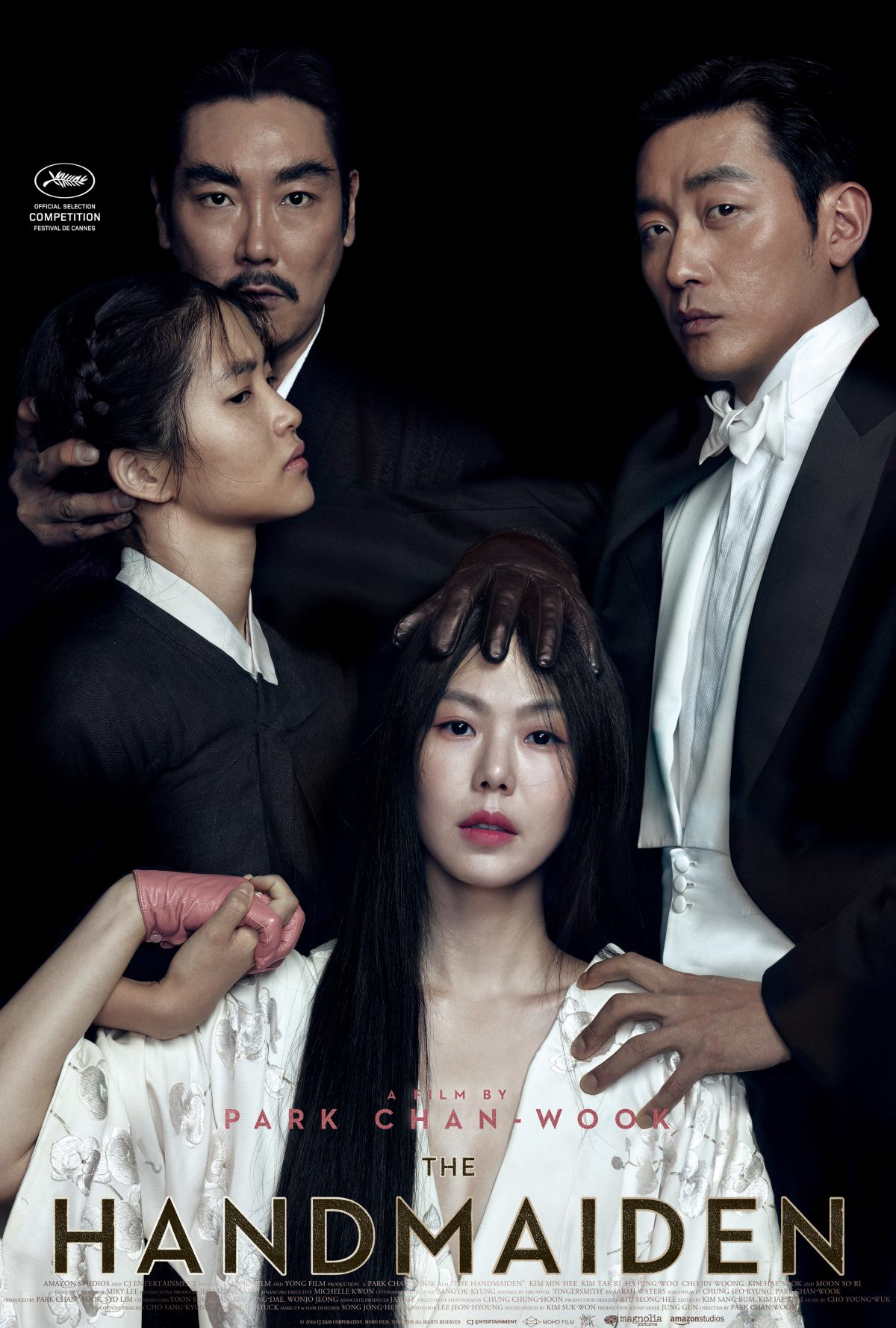
The Handmaiden (2016)

Cast: Min-hee Kim, Tae-ri Kim, Jung-woo Ha,  Jin-woong Jo
Director: Chan-wook Park
released on blu-ray January 24, 2017
***** 10/10

handmaiden_poster_2764x4096_1200_1778_81_s

IMDB: 8.1
Rotten Tomatoes: 94%, Audience Score 92%
The Guardian: ***/*****

Park Chan-wook (or Chan-wook Park) is a South Korean film director, screenwriter, producer, and former film critic. Considered to be one of the most acclaimed film makers of South Korea, Park is known for the Vengeance Trilogy (Sympathy for Mr. Vengeance, Oldboy, and Lady Vengeance), Joint Security Area, Thirst, and now The Handmaiden.

Park is particularly skilled at employing dark humour, capturing detailed scenes, and the intensity of his storytelling – The Handmaiden is a perfect case study for these traits and one of my favourite foreign language films from 2016. But let’s go over the plot to get a better sense of why I personally enjoyed it… Because this movie is really interesting, though a bit disarming to my particular palette.

Separated into three parts and set in 1930s Korea, The Handmaiden tells the story of con artist Sookee (Tae-ri Kim). Korea is under Japanese occupation, and Sookee is hired as a handmaiden to Japanese heiress Hideko (Min-hee Kim). Hideko lives with her Uncle Kouzuki (Jin-woong Jo) in a large estate and is being courted by the Count Fujiwara (Jung-woo Ha).

Part 1 – Fujiwara is a conman who has hired Sookee from a group of con artists to help him seduce Hideko. He will then marry Hideko, commit her to an insane asylum and take her inheritance. Sookee poses as Tamako and slowly gains Hidekos trust. Hideko is haunted by her aunts suicide, hesitant to marry Fujiwara, and is willing to share her jewellery, clothes and shoes with Tamako. At one point Tamako makes love to Hideko, intending to convince Hideko that her new husband will do the same, but love is unfolding between them. Fujiwara and Hideko marry, consummate their marriage, and then travel to the asylum with Tamako in hand. But Sookee is taken by the staff and told she is in fact Hideko – she has been swindled.

Part 2 – We learn of Hideko’s backstory. Her aunt is her teacher but very stern and physical discipline is common. Kouzuki has a large library of erotica in his basement, and puts on readings for aristocrats which are read by his wife: Eventually Hideko’s aunt hangs herself from this abuse. Kouzuki implies to Hideko that he had murdered his wife, and as Hideko grows up she takes her aunts place. Under different terms, Kouzuki hires Fujiwara as an art forger to replace art in his erotica collection – Fujiwara is smitten with Hideko and offers to remove her from her lifestyle by conning a handmaiden into helping them marry, and once they’ve claimed the inheritence, to have the handmaiden take Hideko’s identity and be committed to an asylum.

Hideko goes along with this at first, but builds real feelings for Sookee. On the night they make love, Hideko breaks down and exclaims she cannot marry Fujiwara. Sookee protests, and Hideko decides to hang herself from the same tree that her aunt did, but is saved at the last second by Sookee. Sookee confesses to the plan she made with Fujiwara, and Hideko shares the double-cross. The two women decides to get revenge on Kouzuki and Fujiwara, destroying Kouzuki’s library before the marriage night.

Part 3 – Thinking he has won Fujiwara talks about his plans with new wife Hideko. Sookee escapes the asylum with help from her family, and Fujiwara forces himself on Hideko but she knocks him out with an opiate she had on hand for suicide in case their intial scheme failed. Hideko and Sookee reunite and flee the country, while Kouzuki tracks down Fujiwara, brings him back to his estate and begins to torture him. Fujiwara tricks Kouzuki into letting him smoke his blue cigarettes, which are laced with mercury, and both men are killed from the gas.

Pros: A tale as old as time, both love story and revenge flick, the details and delivery are what separate this from the more common offerings we are used to. The perversion is disruptive at first, but as you sit with the story and work through it, it’s clear it couldn’t have been done any other way.

Cons: It does drag a bit in the middle, and I’ll admit that I lost focus at the moment it is revealed why Kouzuki’s wife committed suicide and how Hideko came to hate him. There is also a scene that is played and replayed over from different angles unnecessarily.

Runtime: 2 hours 24 minutes

Points of Interest: Both Japanese and Korean were spoken by the (mostly) Korean cast. For the lesbian lovemaking scenes between the two female leads, crew members were asked to leave set and only a female staff holding the boom microphone was present. The scenes were filmed with a remote controlled camera.

Without having a ton of experience with “foreign language films”, I’ve slowly been immersing myself more and more into these uncharted waters. To clarify what I mean by this statement is that it is crucial to watch films more directly, without the filter of your native tongue. If you need somewhere to start, choose The Handmaiden. I would echo the words of director Leos Carax

Foreign-language films are made
all over the world, of course, except in America. In America, they only make
non-foreign-language films.

Foreign-language films are very hard to make,
obviously, because you have to invent a foreign language instead of using the
usual language. But the truth is, cinema is a foreign language, a language
created for those who need to travel to the other side of life. Good
night.

In short, this movie blows Fifty Shades of Grey out of the water. It has intense sexual attraction, themes of love and eroticism, female sexuality viewed without the lens of male expectation. It is surprising, violent, passionate and all at once present. Liberation is important, but it takes exposure to the unfamiliar. That’s my theory anyway.

Tim!

Warning! Animal Crossing (The Revenant review)

I enjoy a revenge flick just as much as the next guy, but sometimes how my mood is well determine which type of movie I want to settle in for. If I want something violent, mysterious and twisted than I’m feeling like Oldboy (the original) or Momento is the right choice. If I want something light-hearted, then Lucky Number Slevin can’t be beat, and if I want both humour AND gratuitous violence than Inglorious Basterds or Kill Bill will do the trick.

But what if a revenge flick needs to be sweeping and feature that element of the sublime within it. Then I guess this week’s review will have to do.


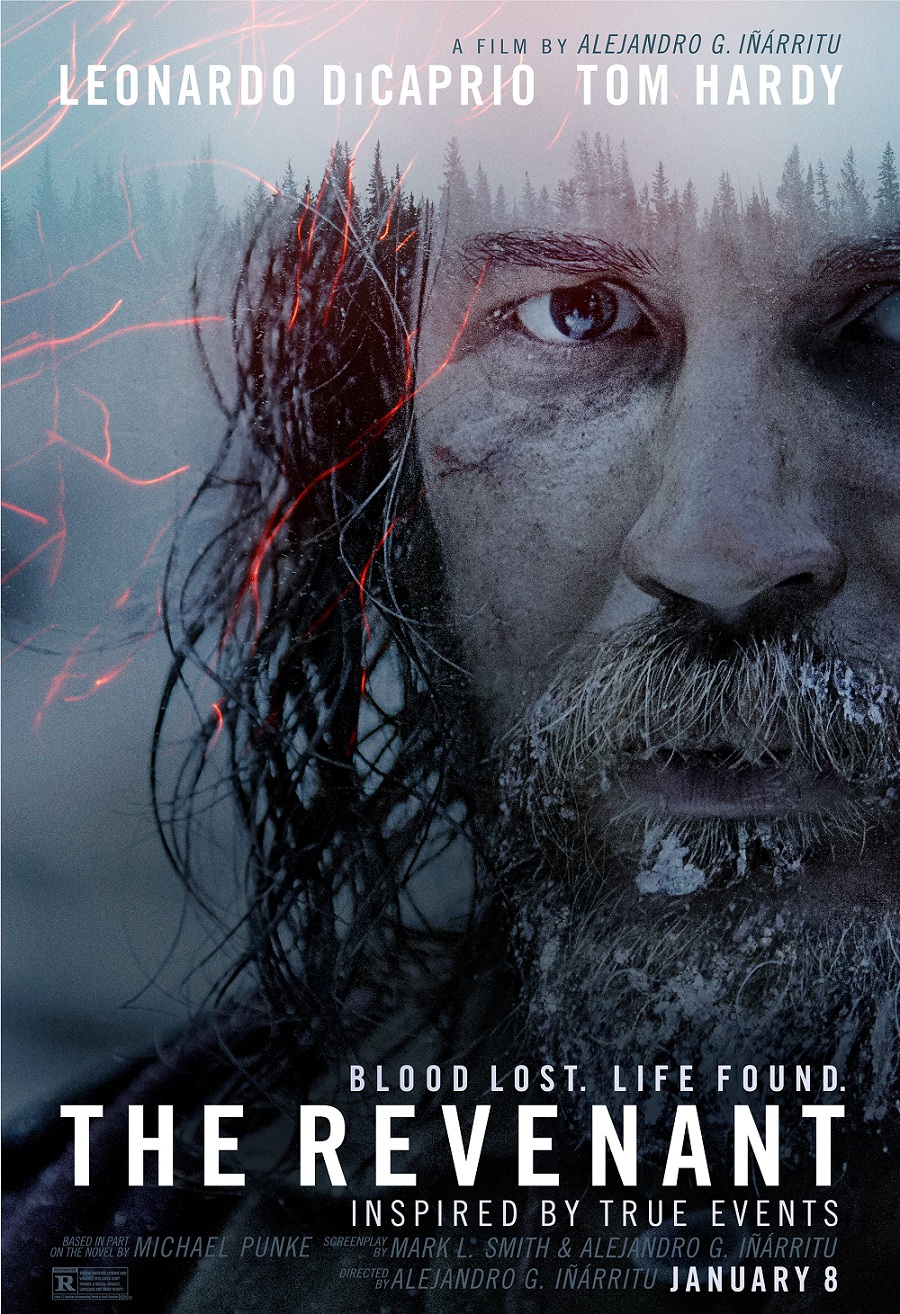
The Revenant (2015)

Cast: Leonardo DiCaprio, Tom Hardy, Domhnall Gleeson, Will Poulter, Forrest Goodluck
Director: Alejandro G. Inarritu
released on blu-ray April 19, 2016
********** 10/10

the-revenant-hollywood-film-poster-photo

IMDB: 8.1
Rotten Tomatoes: 82%, Audience Score 85%
The Guardian: *****/*****

Alejandro Gonzalez Inarritu (known as Alejandro G. Inarritu since 2014) is a Mexican film director, produce, screenwriter, and sometime composer. In other words he can almost everything but act in his films.

He is the kind of director that wins awards and receives critical acclaim in the film industry. Don’t believe me? Look at his track record – Amores perros, 21 Grams, Babel, Biutiful, Birdman or (The Unexpected Virtue of Ignorance), and now The Revenant. He won Best Director, Best Original Screenplay, and Best Picture for Birdman. And now he has won Best Director for The Revenant, along with Leonardo DiCaprio earning the award for Best Actor.

And to be quite blunt, he deserves those awards. But before we get into it, let’s do a quick overview of The Revenant’s plot.

Taken from Wikipedia and edited,

In 1823, a crew of hunters and trappers traveling through U.S. territory suffers heavy losses in an Arikara ambush. A handful escape by boat, but Hugh Glass (Leonardo DiCaprio), a veteran trapper, advises them to instead continue on foot. Their commander, Captain Andrew Henry (Domhnall Gleeson), agrees, but others, including John Fitzgerald (Tom Hardy), are furious in leaving the valuable pelts. The Arikara catch up with the boat, but find and kill only two stowaways.

While scouting ahead, Glass gets attacked by a grizzly bear, suffering severe wounds. Henry patches him up, but decides he is too much of a burden. On Fitzgerald’s advice, Henry tries to shoot Glass but ultimately relents. Instead, he pays Fitzgerald and Jim Bridger (Will Poulter) to watch over Glass until he dies and to be properly buried. Glass’s Indian son, Hawk (Forrest Goodluck), volunteers to accompany them. While Bridger is busy collecting water, Fitzgerald tries to smother Glass and stabs Hawk to death when he intervenes. Claiming that an Indian attack is imminent, Fitzgerald throws Glass in a shallow grave and is followed by a reluctant Bridger.

Upon returning, Fitzgerald informs that both Glass and Hawk died of exposure, while a guilt-ridden Bridger refuses to accept his payment. Meanwhile, Glass, on the verge of death, struggles to recover his strength. He is also pursued by the Arikara, whose chief, Elk Dog (Duane Howard), is in search of his kidnapped daughter. Glass encounters passing Pawnee Indian, Hikuc (Arthur Redcloud), who provides him with accomodations, and offers to travel with him. One morning, he wakes up to find Hikuc has been hanged by French trappers. He infiltrates their camp and rescues a captive Indian girl, unaware that she is Elk Dog’s daughter. Arikara pursue Glass and force his horse off a cliff, leaving them for dead. With no options, Glass uses the horse’s corpse as a makeshift shelter.

While preparing to depart for the season, Henry picks up a French hunter carrying Glass’s canteen. Based on his information, a search party locates Glass and brings him back to camp. Henry has Bridger arrested for treason, but learns that Fitzgerald has already fled with the expedition’s money. Seeking revenge, Glass and Henry set out to track him. When they separate, Fitzgerald ambushes Henry and scalps him to make it look like an Indian attack, hoping to throw Glass off his trail.

Using the dead Henry as a decoy, Glass tricks Fitzgerald into revealing his position and wounds him with a pistol shot. The two men engage in a brutal hand-to-hand fight, which Glass wins. He turns Fitzgerald over to the Arikara, who scalp and kill him. Grateful for Glass’s actions in freeing his child, Elk Dog spares his life.


I will say this about the movie. It manages to to construct a feature length sensory experience. You feel the pain all over when the bear decides to attack Glass, and you wince in pain as it comes back for round two after he attempts to down it. You feel the sense of loss when he is incapacitated and has to watch his son die. You shiver at the sweeping landscape of cold and exposed skin. It’s incredibly visceral.

And yes it’s a revenge story at heart, but that’s what drives the plot forward, the details of how we get there are what matter in this epic western. The length never feels unnecessary, because Inarritu understands cinematography and what to do with video and audio to make it all worthwhile.

Pros: By focusing in on less than a dozen characters and giving us over 160 minutes of well constructed interactions, we get to experience frontier life in all of it’s brutality whether by nature or by lack of nurture. Did I mention that it is beautifully shot? It somehow makes you both want to live a simple lifestyle and stand in awe of the scale of the wilderness.

Cons: I found it hard to relate to Domhnall’s character, he felt a little bit out of place as a Captain, but upon second thought, that might be all the more reason for him to let Glass live and later die himself.

Runtime: 2 hours 36 minutes

Points of Interest: The film is based off of the 2002 novel of the same name, and also from the real life story which inspired the book – the adventures of Hugh Glass, essentially. Though Glass is reported to never have had a son or wife, that element was featured to enhance his motivations in the story.

Let’s be honest, this is beautiful film with an uncompromising story. After all of the press, the internet hype and the presentations at various film award ceremonies, I get it. I get why this was the straw that broke the camel’s back and finally got Leonardo DiCaprio an Oscar. The Revenant is breathtaking, well acted, and features an appropriate cast. You should add this movie to your collection, especially if you like Leonardo DiCaprio, Tom Hardy, westerns, nature or revenge plots.

Inarritu has managed to address a lot of important issues in this film, the drive of revenge and it’s ultimate disappointment, the exploitation of nature by mankind, the inconsistencies of our character and how we are capable of great deeds, but most importantly he shows the power of the natural landscape and how it can transform us whether we are ready for it or not.

Again I would highly recommend this film to anyone, but what do you think? Have you seen it yet? Did you love it, hate it or what? I’ll see you tomorrow friends, with some wisdom and hopefully some new theories.

Tim!

Awaited In Valhalla (Amon Amarth, Jomsviking review)

Why are we so damn fascinated by Vikings? Their scandinavian hair cuts, combinations of metal, leather, and wood do depict a very specific aesthetic, don’t they dear readers?

Initially thought of as barbarians who dabbled in piracy, thuggery, and nomadic culture, we’ve slowly learned that they carried a unique culture and, though I cringe to write this, a viable counter-culture alternative to the Roman way of life that was spreading throughout the European climate of the time.

So what does that have to do with today’s Melodic Monday entry? Let’s take a look see.


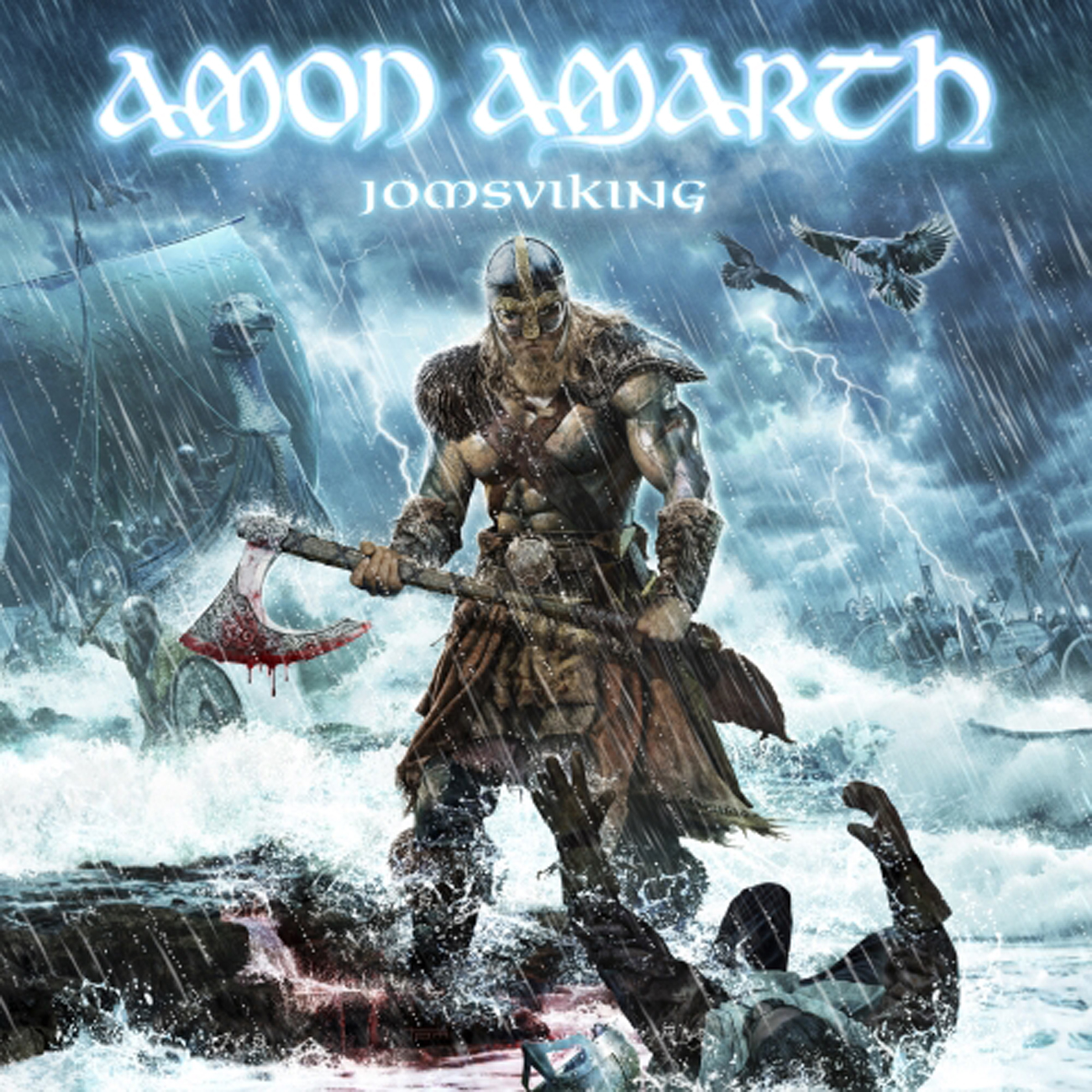
Amon Amarth – Jomsviking
released March 25, 2016
******** 8/10

original

Amon Amarth is a Swedish melodic death metal band, which has been around for the almost 25 years. Composed of vocalist Johan Hegg, with Olavi Mikkonen and Johan Soderberg on guitar, and Ted Lundstrom as the bassist.

Jomsviking is their 10th studio album, and if you haven’t guessed it yet, the lyrics and tone of the album deals mostly with the mythology surrounding vikings and the full album plays out a viking story, which is why Amon Amarth is sometimes called viking metal.

I’ve said this before, but I’m not a huge metal enthusiast, well, at least not consciously. But I can appreciate a good story, and which focus their effort to produce something with meaning and real thought behind it. Which is why it’s really cool that the band takes its name from one of the mountain which houses Sauron, in J. R. R. Tolkien’s Middle-Earth. Yeah, Mount Doom.

Interestingly enough, Jomsviking is the first concept album that Amon Amarth have ever done.

It’ts a story about the Jomsvikings and their universe of violence and revenge. Essentially the story deals with a young man who has lost his love to an arranged marriage and the consequences of his decisions to take revenge and get her back.

Having never listened to any of their other work, but knowing a decent amount about metal, storytelling, and music in general, I can tell you very assuredly that this is an excellent listen. This band has a deep love for Nordic culture and they are arranging the elements to produce an epic that portrays the world that the Jomsvikings live in. It’s incredibly easy to follow, and once you get lost in the style of music, you begin to appreciate the subtle emotions that naturally attach to the genre.

It feels genuinely authentic. Which is so refreshing and well placed.

Opening rather courageously with the track First Kill, the record is well placed to get you chanting and rooting for it’s characters. I read one reviewer say that this kind of album can increase your deadlift strength, and he just might be right.

One of my personal favourites is Raise Your Horns, which perfectly encapsulates the myth of the viking – featuring warbling vocals by Hegg, chanting in the background, and the war drums of new drummer Tobias Gustafsson. It’s quickly followed by The Way of Vikingsm, which amps up the story one more notch.

Vengeance is my name has a classic sounding death metal ring to it, and of course A Dream That Cannot Be is just so sad, and I can’t really ruin it at this point, but the tragedy captured by featuring Doro Pesch on vocals alongside Hegg is quite apt and fits well.

If you are looking for a way to ease yourself into death metal, or you are sick of substitutes, you should give Jomsviking a listen, you won’t be disappointed. I personally was so happy I bought this album, especially after a couple of listens.


Amon Amarth are in a unique position. After almost 25 years of producing the same style of music, they have become the face of viking metal, a proud and noble group which has not modified their sound to keep up with trends and tastes, if anything this concept album proves they are going to dig their heels in deeper if necessary.

What’s interesting to me though, is that they get most of their success from touring, as is often the case with most long-standing rock groups. People are willing to spend a little bit more money to support a band which stands for an ideal or a belief system, and that’s why Amon Amarth are so interesting. They celebrate a culture and an obsession of it in their music, while simultaneously providing a legacy for it.

And that’s something we should all strive for. But maybe that’s just my theory. See you tomorrow for something theatrical friends.
Tim!

A Dish Best Served Cold (The Man From UNCLE review)

The Cold War was an incredibly stressful time in the world following the fallout from WWII. And yet, there have been films set in that time period which make it seem like a time of intrigue, excitement and heat. Top Gun, X-Men: First Class, and Watchmen come to mind for me in particular.

Today’s Theatrical Tuesday entry is set in that time period too. But is the meal hot or stone cold?


The Man from U.N.C.L.E. (2015)
Cast: Henry Cavill, Armie Hammer, Alicia Wigram, Elizabeth DeBicki, Hugh Grant
Director: Guy Ritchie
released on blu-ray November 17, 2015
**** 4/10

The-Man-from-Uncle-Poster

IMDB: 7.4
Rotten Tomatoes: 67%, Audience Score 78%
The Guardian: **/*****

Guy Ritchie is well known for making crime films. He has Lock, Stock and Two Smoking Barrels, Snatch, Revolver, RocknRolla, both Downey Jr. adaptations of Sherlock Holmes, and now The Man from U.N.C.L.E. to his name.

I really wanted to get into this movie, especially after seeing the trailer. It appears to have all the elements needed for fun, but does it hold up? Let’s review the plot.


In 1960s Germany, American Napoleon Solo (Henry Cavill) heads from East to West Germany, but is followed by Russian Illya Kuryakin (Armie Hammer). Solo stops at a garage and meets Gaby Teller (Alicia Vikander). Gaby’s estranged father is building a bomb for the Nazis. It is Solo’s mission to escort her out of country and get her to her uncle Rudi (Sylvester Groth) so she can meet her dad.

They head to the border, chased by Kuryakin. They narrowly escape him and are able to zip line over the Berlin wall. With Kuryakin behind them, the escape truck backs up, shorting the line and  stranding Illya on the other side of the wall.

We learn from Kuryakin’s briefing that Solo came to Europe during WWII, but stayed to become a thief. Eventually captured, the CIA recruited him to make use of his skills.

Fast forward, CIA specialist Sanders (Jared Harris) meets Solo for a mission. Turns out it’s a set up and Illya Kuryakin appears and gets the drop on Napoleon. The KGB director Oleg (Misha Kuznetsov) then comes in and we learn Solo and Kury are teaming up on this mission.

In Rome, Kury and Gaby will pose as a couple while Solo is an antiquities dealer. The suspicion is that uncle Rudi works for a criminal organization which belongs to Alexanders but is run by his wife Victoria. A man named Waverly (Hugh Grant) checks into the hotel in Rome right before Napoleon does. When Napoleon checks in, he discovers some henchmen but then disappears. While Kury and Gaby are walking Solo shows up and warns Kury he will get mugged, but that he should let it happen to keep his cover. The mugging then happens though Kury loses his fathers watch and Gaby’s engagement ring, he keeps his cool.

We see Solo engage in sex with the desk clerk while Gaby get drunk in the other room in the hopes that Kury will dance with her. He won’t, but they wrestle, and she then passes out. The next day the two agents confront each other about bugs they found in their rooms. Kury then picks Gaby up at the hotel entrance with a brand new engagement ring.

Solo heads to a party that Victoria is throwing. On the way in, he steals an invitation from Waverly by bumping into him. He then fights security so Victoria will notice him. He also steals her necklace and a bracelet from another guest. Victoria introduces herself and Solo says his name is Deveny and that he specializes in filling in gaps in collections. He gives her the bracelet and the necklace.

While at the party, Rudi insults Kury about his ethnicity.  Kury leaves to calm down, but gets into a fight with three men in the washroom. Alexander takes this opportunity to flirt with Gaby, but Kury comes back and they leave the party.

At the hotel, Kury has developed camera film in order to pick up radiation on people at the party. They all go to sleep to ponder the information, but in the next scene we see the two agents separately break in. They decide to work together and get past all obstacles until the safe alarm goes off…


And that’s enough plot.

Pros: These are some seriously beautiful locales, sets, people, and the cinematography is top notch. We can thank Guy Ritchie for that, as he always appeals to our sense.

Cons: It’s too generic of a story which doesn’t ever get serious enough, and yet it is nowhere near as much fun or as campy as the TV show on which it was based. It’s no where near as interesting as 007, Bourne, or Ethan Hunt romps.

Runtime: 116 minutes

Points of Interest: Armie Hammer was the only cast member to watch the original show in preparation. When Henry Cavill is in the truck eating and drinking, one station on the radio is playing the original theme music. The movie takes place about a year after the Cuban Missile Crisis, which the show never revealed.

If you like spy movies enough to pay attention to the details, this one isn’t for you. But if you like fun, comedy, and stylization, check it out.


As I mentioned earlier, there is something appealing about an era film, maybe it’s the sets, the clothes and the phrases, but I keep thinking it’s because we want to make history come back to life, when sometimes it should stay in the freezer. Till next time dear readers.

Tim!