A Thousand Suns (timotheories January 2018)

January is supposed to be a month of promise, renewed hope, vigour for whatever we care about. And yet, I haven’t stopped running since August of 2017, so I’m not feeling the temporary January endorphins this year.

Which might actually be a good thing dear readers. Yes, I bought a house, and yes I got engaged, and yes I planned on getting married before this years end. But in the time that I took a forced hiatus from timotheories, I didn’t stop thinking about timotheories. I can’t stop. I won’t stop.
You see creative cuties, thinking is one of the things I do best in this world. And you give me the space to think, and man will I ever think. So I thought about things like the name timotheories, and I thought about the types of posts I write, and I thought about the different media channels I use to bring in traffic, and the people I interview to give you perspective on how to be creative, I thought about theories, and wisdom, and logos, and pretty much everything.

And that’s how I know I won’t stop. Because I still have a million and one ideas of content to share with you. And so I’m going to make a list of goals this month, and share it with you next month. Then I’m going to start to implement them. It’s an evolution of the campfire theories theme I chose last year…

The fire of a thousand suns.

*Disclaimer* As always, every week I purchase an album and movie one week ahead of the actual review release and while I have the best intentions, I don’t always get what I want… so if you follow me on instagram (@timotheories) you can actually see what’s coming.

timotheories summarized – January

Professional Theorems – (01/07) Brendon Greene interview, (01/14) Cross Talk Ep. 30, (01/21) Cross Talk Ep. 31, (01/28) Matthew Ankerstein preview interview
Sound Culture – (01/02) The Rolling Stones, (01/08) Miguel, (01/15) Sinistro, (01/22) Black Rebel Motorcycle Club, (01/29) First Aid Kit
Watch Culture – (01/01) Dunkirk, (01/03) Brawl in Cell Block 99, (01/09) American Made (01/16) IT (01/23) Blade Runner 2049 (01/30) The Killing of a Sacred Deer
School of Thoughts – (01/10) Art Stars (Mentors), (01/17) Gaining Wisdom, (01/24) Diet, (01/31) By The Book (Education)(Reading)
Art House – (01/04) timotheories January, (01/11) House, (01/18) Engagement, (01/25) Wedding

You’re right, I did rename the weekly headings folks. Too smart for me, I could never pull a fast one over you lot. I did this because I was tired of trying to get posts in exactly on the day that I envisioned them for, and I quickly realized that a lot of you are in different time zones, and the ones that aren’t wouldn’t be reading my posts until the following morning anyway, and now I’m on brand with what I’m doing over on YouTube… so bonus! Which means that I’ll need to slowly go back in time and edit any mention of the old themes.

Point number two, I’m introducing a new monthly post called Art Stars (under the old Wisdom Wednesday heading), so that I can share some of my favourite creative professionals with you regularly. Wisdom often comes from having mentors, and these are mine. Additionally, I am rebranding the book of the month post to By The Book – clever right?

As it stands, I’ll be wrapping up the Brendon Greene interview I didn’t get to finish editing in the summer, and I’ll also give you a teaser of next month’s guest… Matthew Ankerstein! Matt is a podcaster and influencer, with a ton of energy. He’ll bring some great ideas to the table.

Lots of great Watch Culture posts and vids too, of course. And maybe if you’re lucky I’ll get some Sound Culture videos published on top of the blog posts? And last, but not least, I’ll give you some personal insights into my world with Art House (formerly Timely Thursdays) which I think you’ll enjoy.

theories Summarized

Yeah there are some changes coming, but I hope that the taste I’ve given above helps reframe the tone of this website, and all related media channels. timotheories is about digital curating at hear, that means cultivating good art; whether it’s film, music, fine art or something else.

I want to hear some feedback on what you think of this years theme, and the changes I’ll be implementing. And of course, any new theories I run across. Please like, comment and subscribe so I know you’re there!

Tim!
Life Is… (Li Kunwu)

Like any big meal, it takes some time to digest what you’ve consumed and let the food settle before you can fully appreciate what you just went through.

The wait for a table, the anticipation growing with every waft of food that lingers by on outstretched fingertips as the waitress hustles order number 56 off to table twelve. The decision making process of what to order itself is an experience, and then the final push comes as you promise yourself to limit the dinner roll indulgences as you sit there some more as the food is prepared.

Finally, the food arrives.

You take it all in, and consider the journey you are about to take. It’s never what you pictured in your mind, but any good chef is capable of surprising you, and hopefully she has laid a good foundation for your senses to adapt to dinner.


Or maybe this is all just a metaphor for a book I read last month, and finally got around to writing about in early April.

Tracing A Remarkable Journey

The author of about thirty books, Li Kunwu has been a central figure in The Daily in Yunnan for decades now. He is has made painting, drawn comic strips, and published his own works, one of which I personally read recently as part of my monthly book exercise.

Can you guess what theme he fits into?

It’s actually two categories – LIFE and LOVE.

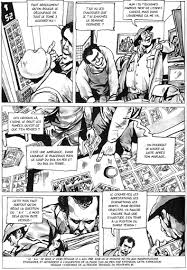
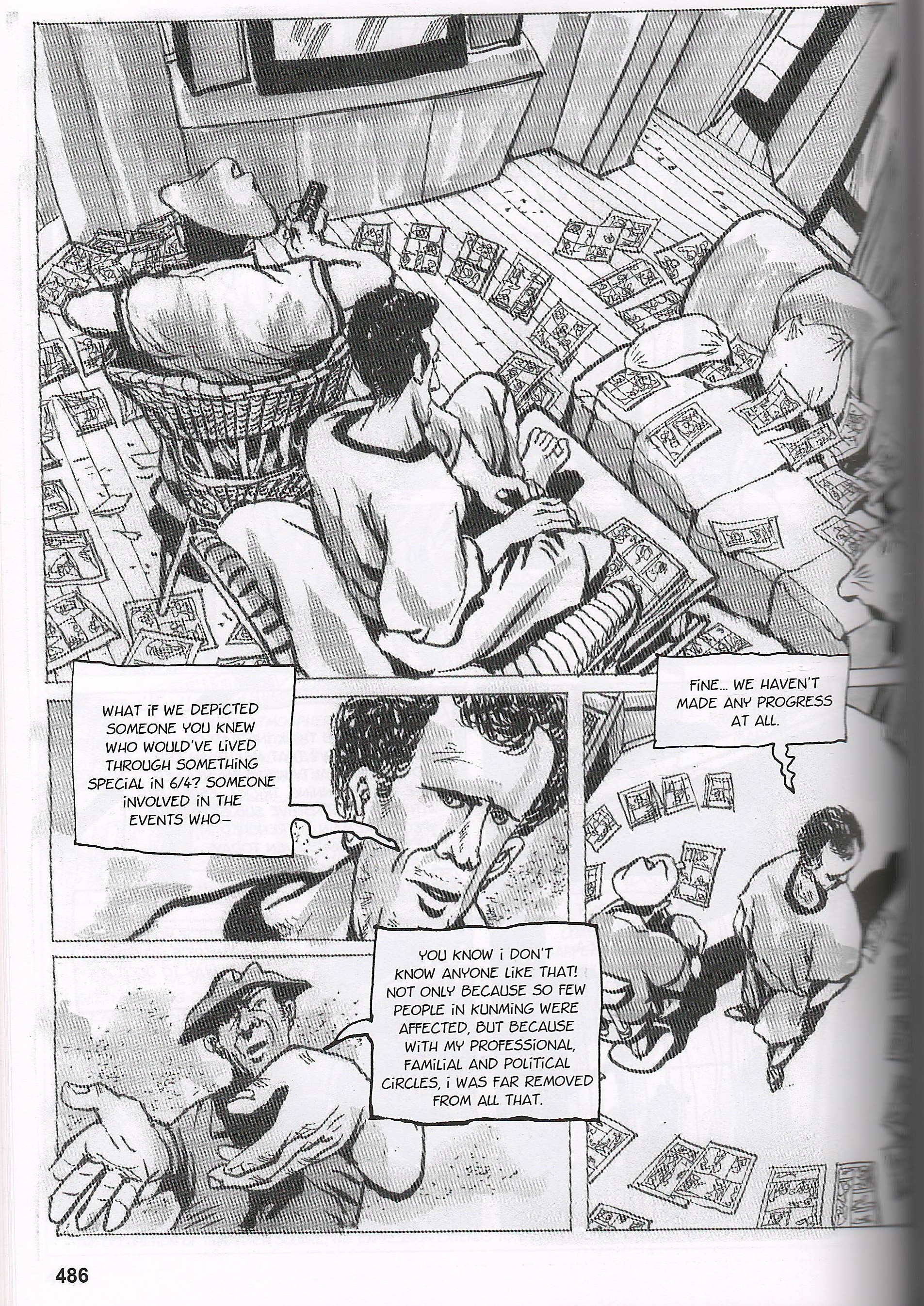
A Chinese Life is an autobiography presented in a graphic novel format, and it chronicles the journey of Li Kunwu throughout his life in China. He was born in the 1950s, so we get to experience the development of the People’s Republic of China through his youthful eyes. A member of the People’s Liberation Army, Li manages to recapture his own memories in a way that is both intimate and large enough in scale to be understood by an average historical student. There are parts filled with humour and with drama, but it never feels too heavy in one camp or the other.

It takes a few sessions of concentrated reading to get through, coming in at about 700 pages worth of content, and to be clear, the combination of text and image is at almost equivalent distribution.

Read Army


What I found most interesting in reading this story was not how little I really knew about The People’s Republic, nor how little I knew about Li himself. What I found most interesting was how well his story translated to english and how despite all of the seemingly incredible adversity he faced over his lifetime, that a lot of his struggles were universal.

From learning how to relate to his father, to finding love, to discovering his purpose in life, to simply living and experiencing a host of different things, A Chinese Life is an excellent demonstration of a life lived full. And Li does follow his purpose, all the while choosing to believe in what he has believed in from a young age.

It’s incredibly rewarding to see him make art to serve the purposes of a party member hairdresser, and how he finds ways throughout his youth all the way into adulthood which make him into a better artist, and which often tie in directly with his political climate. Illustrating for propaganda posters and newspaper cartoons alike.

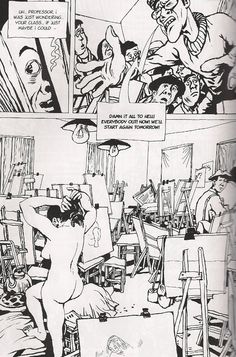
Even when Yunnan has it’s first life model class.

And eventually we reach a point well into Li’s adult life, after his father has died, he has been through a divorce, and is taking care of his child as a single parent, that he meets a French writer and diplomat at a comic book convention. This is the point when the story begins to wrap up, and we have a moment to reflect on what we’ve been witness to.

The Modern Age

This is a story all at once encompassing and yet missing details.

Much like any good story, things have been embellished, while other pieces have been glossed over and left out. For instance, as much as I enjoyed the journey from youth, to adulthood, the final 100 pages or so seem sparse and cover a great period of time. This is intention of course, otherwise we’d be left with a 1400 page graphic novel, and I’m not sure that many people would have picked it up.

It is fascinating to see the world through the eyes of someone on the other side of it, and especially of one who holds a different political viewpoint then we are used to, but then again, life is… complex.

At least that’s my theory.

Tim!

The Price To Not Pay Is Steep (Health)

Holistic health has been on my mind as of late dear readers.


You see, I have this theory that there is a strong connection between art, healing, and health. And I think holistic health holds the key to that connection.

Holistic health is a type of healing process which considers the whole human being and not just the body parts and/or symptoms. As we strive towards optimal health and wellness, considerations of the body, mind, spirit, and emotions are all relevant.

I like to believe that we can address each of those aspects of ourselves with some basic activities. For the body, there is exercise. When it comes to the mind, reading things and a variety of things covers it off, emotions are founded in both positive relationships and pursuing our passions, but spirit is the most difficult to address.

To put it simply, I think that art is key to addressing the spirit, and if we ignore this part of ourselves, we suffer all the more for it.

Medicine For The Heart


The interesting part of this theory is that there is evidence out there which suggests a healing connection between art and the spirit, but it is not given nearly as much research as other disciplines, but it certainly can provide value. The point we need to consider most in this discussion is that each of us is drawn to different forms of art, so what heals me might not heal you as easily. And I think that has to do with our preferred learning styles.

  • Visual learners prefer two dimensional forms of art like drawing, painting, and photography.
  • Kinesthetic learners should look towards performance arts, like dance, magic, and theatre.
  • Auditory learners are best served by music, writing, and narration.

Now, outlining the reasons why I think art has the power to heal our spirit will take up far more time than a single post can give, so rather than diving deeply into it today, I will share a few of my favourite videos on the power of art for affecting the spirit.

Namely this one.


And also this one.

And definitely this one.

Health Matters

If it hasn’t been made clear yet, the aim of this post is to address health as it relates to the OECD index, making this the eighth entry in the Wellness Factors of Life series inspired by Postconsumers.

Artists matter, and I know in my heart of hearts that I will always advocate for the arts, no matter where I am or whatever the context that I am making the argument in. But timotheories isn’t just about me, it’s also about providing you with the resources you need to fight the good fight. As art makers, art facilitators, art collectors, and art enthusiasts, each of us has a responsibility to share with the world the merits of working on creative projects, from economics, to health, to politics, to entertainment, you creative cuties know that art has the power to heal. Physically, mentally, emotionally, and spiritually.

The spirit is the key in all of this.


theories Summarized

It is absolutely essential to reconsider the notion of the starving artist, and start to consider the notion of the starving souls who do not support the arts nor make room for creativity within their lives, it takes time to establish yourself creatively, no different than any other specialization.

Doctors, engineers, lawyers, scientists, politicians, professors, and teachers, I’m looking squarely at you.

So let’s invest in art, because it’s good for us.

And yes, I am theoried out for the night, so I’m gonna settle into bed with a good book, after a night of exercise, writing, and communicating with my lovely girlfriend, and know that I met all of my wellness needs. Another day, another theory satisfied.

Tim!

The Bends (Decompression)

The past few weeks have just been nuts for me, dear readers. On top of it all, I got sick not once, but twice. I’ve already written about this experience in my post about community, but today I wanted to focus on the practical side of dealing with a seemingly never-ending illness, jam-packed days filled with meetings, hundreds of emails to wade through, and all of events that happen over the holidays, plus the holiday aftermath.

Normally I pride myself on being calm no matter what the circumstance, working through the pressure, deadlines, and workload. But sometimes our bodies just shut down, and we get sick.

You see friends, stress suppresses the immune system, and as a consequence it becomes easier for you to get sick. So while stress cannot “make” you sick, it definitely contributes to the environment.

You have to make time to care for yourself when in stressful situations.

Decompression

What that really means is that you have to teach yourself some decompression techniques. No, I’m not writing about decompression sickness (also known as the bends or divers’ disease) but that is another type of illness that requires treatment early on.

What I’m referring to creative cuties is decompression from stress. I may have written about this in a different capacity once before, focusing on things like self-care, taking breaks, reviewing previous successes, enlisting support and seeking inspiration, but today I want to focus on things you can do immediately to help with the decompression process.

Most of these actions are physical which is good when you’re sick or stressed. We hold a lot of tension in our bodies from stress.

Here are some of the best options:

  1. Deep breathing. Take a breath in, slowly exhale, and start over again. If you do this for about ten seconds each time and keep at it for ten minutes, you’ll feel it quick.
  2. Self-massage. Tense and then relax each muscle, from your toes to your head.
  3. Take a walk. A five minute walk in the midst of a stressful day does wonders.
  4. Exercise. This can be great for quiet thinking AND all of the chemicals your body releases while exercising are great stress relievers.
  5. Get outdoors. Just connecting with the outdoors can be helpful, but the fresh air helps too.
  6. Sex. An obvious choice. Just ask my girlfriend.
  7. Vacation day. Take the time to focus and recenter.
  8. Meditate. Be somewhere quiet, close your eyes, relax, and focus on your breathing. Your mind will be very active during this process, so embrace the thoughts and allow them to leave.
  9. Read. Whether you read fiction or something more practicaI like a biography. Taking some time with a good book is great exercise for your mind.
  10. Love. Get in some hugs and cuddles with your loved ones. It’s a win-win-win scenario and helps strengthen intimacy for all involved.
  11. Disconnect. Technology can be both a godsend and water torture. Do yourself a favour, and turn off the phones, computer, and ignore the outside world for as long as you can.
  12. Take a nap. A shot nap does wonders for refreshing the mind and the body. Thirty minutes should do the trick.

Now with that said, finding and using different ways to reduce tension is important but it should never add to your stress. You need to pick the techniques that best suit your lifestyle, but I have this theory that as you add different habits, you’ll be hungry for even more.

Another thing to consider folks.

On a really busy day it might feel like you are faced with an impossible task and that none of those techniques will do the trick. Just stick with it though. I can assure you that taking the time to unwind will be huge for your health and I have this theory that you’ll be more productive in the long run.

Tim!

Reading Is Hard (Hemingway to Orwell)

Reading is cathartic, or so I’ve heard. You get a psychological release because your mind is allowed to focus on something other than whatever it is that you had decided to be afraid of in life.

To be true to yourself, you have to uncover yourself from all that you thought you should be and finally become that which you truly are. To be courageous and graceful, under pressure. Never fearing death, but living for moments of love and greatness.

Clean and simple prose, that’s what I learned from Ernest Hemingway. He was a declarative writer and one that could turn a phrase without risk of excess.

I’m not sure if you read the first post in The Reading List series, but about a month ago I decided to meta-read The Sun Also Rises, and I learned a thing or two about Ernest Hemingway along the way.

The first thing I learned was that he had a very direct style of writing, and that style had a name – That his Iceberg Theory of writing is a beautiful metaphor for omission. If you know something, and are a strong writer, you can admit parts of a story and be assured that the reader will pick upon what you omitted because the story elements are implicit. To put it another way, icebergs only show a small portion of themselves on the surface of the water, which allows us to understand the whole of them all the better. Unless we are ignorant.

The second thing I learned is that a life half lived is not much of a life at all. Whatever Hemingway’s critics and fans would have us believe about his adventures in journalism, tragedies of war, foray’s into other countries, and personal struggles, Hemingway stood grounded in whatever activities held his attention throughout his life – And writing was the cement that held his house together. This further demonstrates the importance of focus, as an artist, but also enrichment as a human being.

And that is all I have to share on Hemingway for the moment.

Now, I turn back to the reading list for another book to read and another artist to consider. In case you forget, my goal is to read one book a month from 5 particular groupings. The 5 L’s of Language.

  • LIFE – Biographies/Art/Music
  • LOVE – Classic Fiction/Non-Fiction/Graphic Novels
  • LEARN – Business/Leadership/Self-Help
  • LABEL – Philosophy/Sociology/Psychology
  • LEET -The Internet

The author I’m going after this time around is George Orwell, and the novel is 1984. I was born in 1985, and have been influenced greatly by post-modern ideologies and post-apocalyptic stories for as long as I can remember, so I’ve decided to read a story by someone best known for a novel of dystopian life.

His influence on film is of particular note, with Orwellian ideas being explored to varying degrees in several critically acclaimed movies. Fahrenheit 451, 2001: A Space Odyssey, Planet of the Apes, THX 1138, A Clockwork Orange, Soylent Green, Blade Runner, Nineteen Eighty-Four, Brazil, They Live, The Matrix, Minority Report, V for Vendetta, Children of Men, and Land of the Blind are all excellent examples.

Whatever you opinion of George Orwell, I’ll spend some time with him so see what I can glean and then share with you, dear readers. After all, reading is cathartic and exercise for the mind.


Regardless, I STILL think it’s a pretty neat way to keep myself accountable. But what do you think? I’m out of theories for today, but I hope this wisdom finds you well. Please share, subscribe and comment. Facebook and Twitter are good starting points. Otherwise, I’ll see you tomorrow with something timely.

Tim!