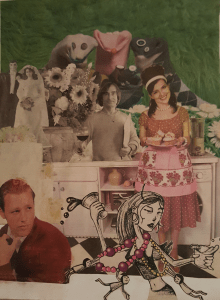
Post-Adolescent Idealism (Formalist Art)

Formalism – what is it? Why does it matter?

Formalism is a philosophy of art.

Let’s consider what formalism espouses then – It is centred around the idea that art should be judged and also created so that value can be derived solely from technical elements. Composition, symmetry, line, colour, and depth are all taken into consideration and then used to understand the work. This of course means that the artists personal pedagogy, beliefs, cultural background, and even technique are not relevant to evaluating the work.

Which is odd, because technique is the application of technical elements, but an argument could be made against theatricality then, so I can see why technique would be omitted.

And if you were to ask one of my professors from the University of Alberta, he would tell you that formalist art is the only TRUE way to look at and enjoy art.

His rationale for this belief is that feelings and emotions about art are difficult to assess, while technical aspects of a work can be very easily addressed and help to identify the strengths of a work against other works as well as determine if said artist/art is worthy of a place in art history.

Or if I were to put it another way, he was very quotable and one of his favourite sayings in response to the statement, “but I don’t like that kind of art”, was always the exact same one – “it’s not about what you like, [insert student’s name].”

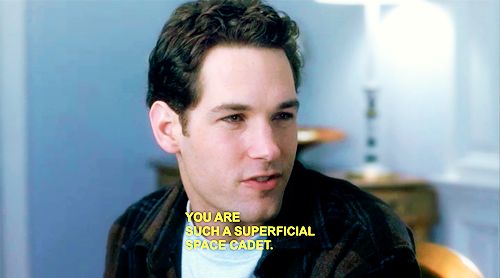
For a twenty-something going through his post-adolescent idealistic phase, that statement bothered me very deeply at the time. W teh F.
a7983d032490766a9d8d58c183ea9879

I mean, how could I possibly deal with that? Liking things had proved to be useful in other areas of life, and when it came to what was popular in culture as it related to music, movies, and comic books, what I liked (or rather what youth liked) did matter, because it led to new and significant ideas and interests. Also, I was told that formalist was an aspect of modernism, and we were well into post-modernist thought. It was stupid, to put it bluntly, and seemed regressive.

At least, that’s what I thought at the time.

But like anything in life, looking at a subject with black and white ideals, is a non-answer.

On the other side of the coin was post-modernism, and while I don’t want to get into details of post-modern thought versus modernist thought, I was fortunate to be at a university where there were effectively two tenured heads of the fine art program. One a formalist, and the other a conceptualist.

So what does that have to do with defining formalism? Well, I am getting to the point dear readers.

The idea that art should be purely formal is an absurd notion in an age when we have ease of access to both images and video. And interestingly enough, art that is purely conceptual is also impractical because as the playing field levels in a globalist economy, we are all responsible for our share of entertainment, politics, and environment.

Conveniently for us, that means that a moderate approach is likely the best solution for the time being. A transition from aesthetics or ideology to moderate formalism or as I prefer to call it modern craft is definitely the sandbox we should be playing in right now.

According to Nick Zangwill, who wrote a book called The Metaphysics of Beauty in favour of moderate formalism, all art has aesthetic properties, but not all art is defined by its context.

I can buy that for 5 bucks. There is inflation after all.
hqdefault (1)

What that means for artists is simply this, you should create art that is well made and which you dedicate considerable time in constructing, whether for volume, quality or a combination of both. Ultimately, it will provide you with expertise and ability. If you choose to seek formal education or not, your art will improve over time, and supply you with the aesthetic needed. As to the contextual claims of personal or cultural narrative, you can decide how important that is to your work.

No one has to be defined by their environment. That is the beauty of modern craft. A theory to support the current generation of artists, but not one to define them with. Though it is only a theory at the moment.

But what do you think? Would you rather your work be purely formalist in nature, purely conceptual? Share this with your peers and join the conversation. Otherwise, I’m out of theories for now. I’ll see you tomorrow with a music review about a band of brothers.

Tim!
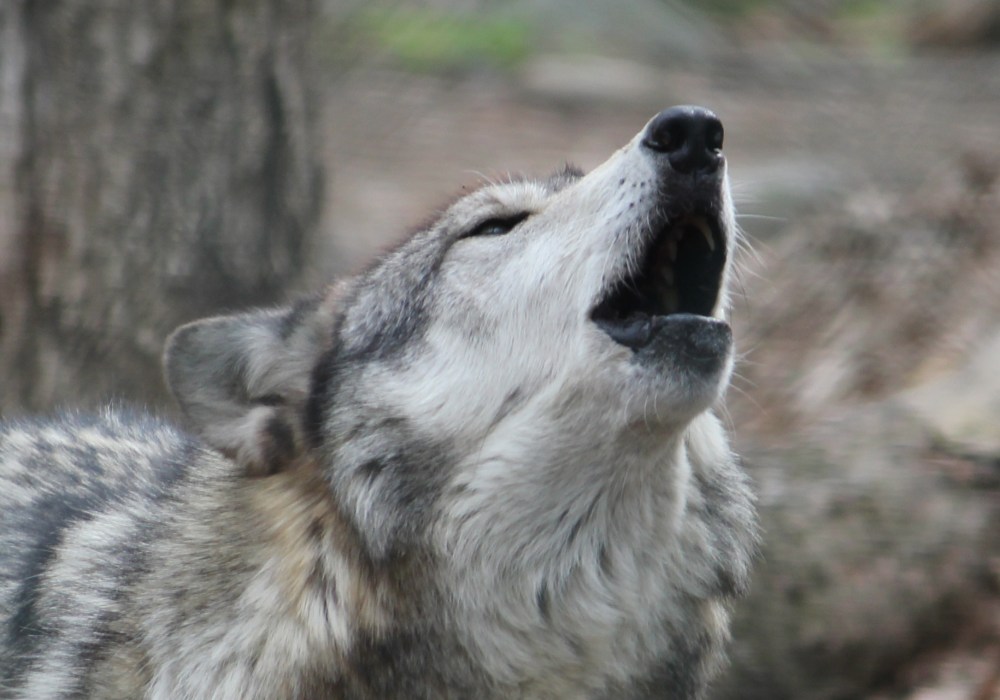
You’re Gonna Start A Howl (Wolfcop review)

I like to think I’ve seen my share of horror movies. Mainly because I’m a child of the 80’s and horror movies were in their heyday between the 1980s and 1990s, so just as I was growing up I got to know the major successes of the time and watch them in the comfort (read: discomfort) of my parents basement.

But the thing about horror movies is that they come out all the time and haven’t really slowed down by any means since that supposed heyday.

What that means for the novice movie watcher or the aged veteran, is that there are now all kinds of genre benders out there, and there is a good chance that you haven’t seen them all yet. Which is where this week’s entry comes in.


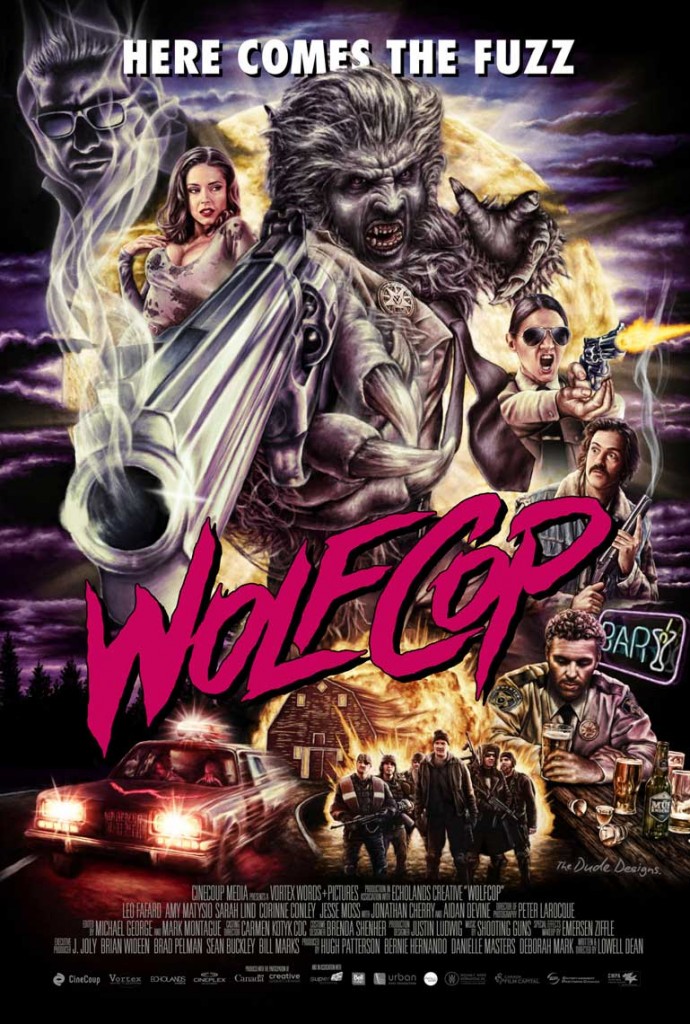
Wolfcop (2014)

Cast: Leo Fafard, Amy Matysio, Jonathan Cherry, Sarah Lind, Jesse Moss
Director: Lowell Dean
released on blu-ray March 10, 2015
******* 7/10

TDD_WC_AW_tag-690x1024

IMDB: 5.5
Rotten Tomatoes: 68%, Audience Score 46%
The Guardian: ***/*****

Lowell Dean is a Canadian film maker – yay for Canadian content! He has directed two feature films to date, 13 Eerie which was released in theatres in 2013 and Wolfcop which was released in theatres in 2014. I scoured the internet, including IMDB, Wikipedia and even his personal website, in the hopes of explaining his directorial style some more but unfortunately that was all I could find. Oh, I also know he was born in 1979 which makes him 37 or 38 years old.

So yeah. There’s not much to go on in the way of an introduction.

But sometimes that’s what happens with indie films, you don’t get a lot in the way of traditional information. And further to that point, the content often strays from your typical fare because, dammit, it can.

Taken from Wikipedia and edited,

Lou Garou (Leo Fafard), an alcoholic cop in the small community of Woodhaven, spends most of his day either asleep at work or at Jessica’s (Sarah Lind) bar. When his friend Willie Higgins (Jonathan Cherry) phones in a complaint of occult activity in the area of his gun store, the police chief (Aidan Devine) sends Garou to investigate. After meeting with Higgins, Garou dismisses his concerns as the actions of heavy metal fans. Higgins again reports a disturbance, and the chief forces Garou to investigate. When he arrives at the scene, Garou finds occultists in the middle of a ceremony to sacrifice an upstart politician who was running on a platform of reform and anti-corruption. Garou is knocked out and wakes up the next morning in his bed, not remembering how he got there, though he has a pentagram carved into his stomach.

Garou’s senses become extremely sharp, and his wounds heal near-instantly. As he investigates the case, he surprises Jessica and his coworkers, all of whom had written him off as lazy and incompetent. As he goes over his notes at Jessica’s bar, she encourages him to drink more and invites him to join her privately. Before he can, two criminals part of a local gang sneak into the bar and attack him in the bathroom. Garou, who is in the middle of a transformation into a werewolf, easily kills one and drives off the other. Angry that they did not kidnap Garou, the gang leader stabs out the eye of the escaped gangster when he claims to have seen Garou transform into a monster. Meanwhile, Garou ends up in Higgins’ house, handcuffed to the bed. Higgins explains that he captured Garou and restrained him for his own safety. Higgins later researches his condition, and they learn that occult ceremonies in which a werewolf is sacrificed can strengthen the magic of reptilian shapeshifters.

Garou and his partner, Tina (Amy Matysio), investigate the deaths at the bar and a series of seemingly unrelated armed robberies by a gang who wear pig masks. Higgins convinces Garou that he must be restrained at night, and Garou submits to being locked in the town’s jail. However, when the police station receives a call for help, Garou, who has since transformed into a werewolf but has retained his human intelligence, dons his policeman’s uniform and heads to the local supermarket, where the pig-mask gang have taken hostages. Garou savagely kills all the pig-mask robbers and heads toward a meth lab. Higgins cowers in the car as Garou again savagely kills several gun-wielding gangsters…

This movie is rather short, as most horror and comedy films are, and it takes full advantage of the runtime to slowly draw you in and assimilate your sensibilities. It does this so that all of a sudden that when the final 25 minutes start to creep in, you haven’t realized how casually you’ve invested in the construction.

This is both a good thing and a bad thing, because the movie starts slow and is somewhat confusing, but as you understand Lou, the town of Woodhaven and it’s characters you almost feel robbed of more movie. On top of that Wolfcop walks a fine balance between the nostalgia of practical effects and the impracticality of them in execution. You can tell that the crew had fun making the movie, that’s for sure.

Pros: The spin Wolfcop takes on the werewolf mythology is charming, funny, and something to be appreciated. Of course, it helps that it takes it’s cues from the campiness of the 1980s. That’s the beauty of Postmodernism though, taking dissimilar concepts like a werewolf and a police officer, combining them, and producing interesting results.

Cons: Because this is unexplored territory and the comedy uneven, not all of the jokes come through – They are particularly dry. I wish that more time was spent on developing the humour of the situation.

Runtime: 1 hours 19 minutes

Points of Interest: The film exists in distribution because Dean was awarded the 2013 CineCoup Film Accelerator, worth $1 million in financing. The main character is is named Lou Garou which is a play on words. In French loup garou means werewolf.

So there you have it, a movie about an alcoholic cop turned werewolf and filmed in Canada exists. It’s rare for Canadian film to be part of the horror landscape (think Ginger Snaps), and even stranger still for a movie to do well, but it is in a fine tradition.

The truth is that Wolfcop isn’t doing anything tremendously new or interesting as it relates to horror movies, but what it does do, it has a lot of fun doing. Sure, there are lots of horror comedies out there, but that doesn’t mean that they are Canadian born and breed. As I mentioned earlier, maybe you haven’t watched a horror movie in a while, so If you want to try something “new” Wolfcop will likely surprise you, in a good way.

But that’s just a theory. What do you think? Have you seen Wolfcop? It’s been out for a couple of years now, but it’s not stale by any means. I’m done for now friends, I’ll see you tomorrow with some wisdom.

Tim!

timotheories presents Tim Kuefler (Allegory of the Collage series)

Well, I have finally done it. My real “identity” is out there.

I had to do this because I promised you a peek into my art practice going forward, and today I deliver, dear readers.

Now is the time of great reckoning for I’m putting up personal elements of myself for display and inspection, and potentially for sale as well. It wasn’t an easy decision, but if I am going to further refine and evolve this project of curating, creating, and collaborating, I need to inject myself into the mix.

Let’s go over my back story a bit more so before I open up the floor to some of my art.

I received my Bachelor of Fine Arts in Art & Design from the University of Alberta in the spring of 2007. My major focuses during that time were painting, drawing, and sculpture. Pretty classic examples of fine art education. I didn’t always believe this, but I am very fortunate to have a university education and to have studied with professors that had invested their own art practices in both the modernist and post-modernist eras of art making. I believe this because it informed my own decisions about art.

You see dear readers, by dealing with two specific schools of thought constantly it either fueled or resulted in a great split in my mind and own practice about the very nature of art making. I began to produce work that was either conceptual or technical, and sometimes both. It felt rather like a struggle with divorcing parents, and as a child (student), I couldn’t possibly know which parent was the right one to pick (school of thought), so I did what I’ve always done in my life, I chose to do something different.

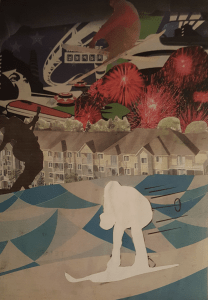
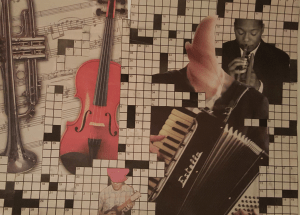
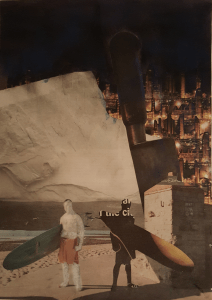
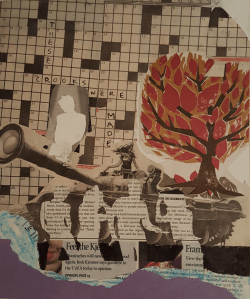
I made art for myself and specifically to both impress and disrupt my professors. This was almost ten years ago. And so I share with you an ongoing series of work I’ve been creating since my senior year of university, which has inspired paintings and drawings, some of which I will share later on in coming months.

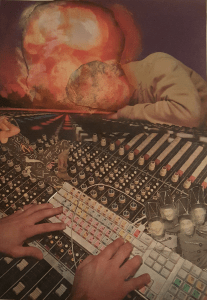
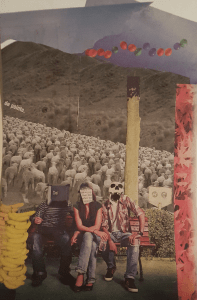
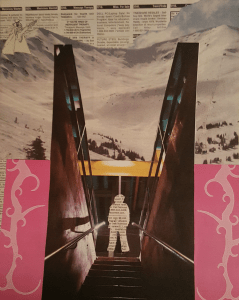
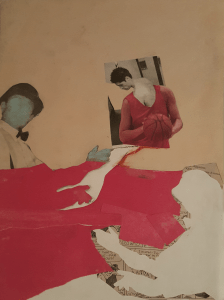
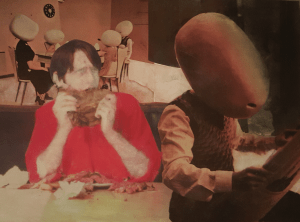
At one point I called the series below, the Allegory of The Cave, because I was self-prescribing philosophy when I first started to deal with my issues of doubt and frustration at institution and with routine. Something which comes naturally for a lot of artists. #realtalk

20160317_004403            20160317_004426            20160317_004449

Almost ten years later, I have a blog that is gaining real traction thanks to readers like you, and I am working on community with artists of all walks of life. This blog serves as a platform for my vision of more accessible community across the arts, a soapbox for my theories and other artist theories on the arts, a theatre for collaboration, now a gallery for my own art, and eventually a lounge and studio for both art enthusiasts and artists. More on that last bit in future posts. Please hold me to it.

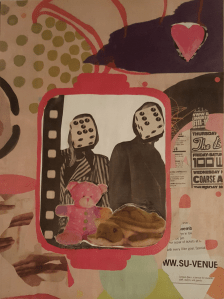
20160317_004532    20160317_004509    20160317_004550

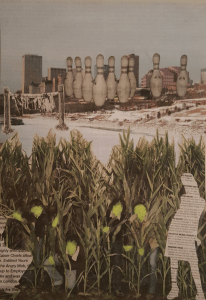
So, I recently decided to change the title of the series to the Allegory of the Collage, because This series represents the complex narrative I am weaving for myself and my local community, by using material from local publications, with local characters and events that don’t have a distinct meaning in the image just yet, but an abstract and big-picture feeling. And frankly, because it is succinct in it’s purpose and as a metaphor for timotheories itself – to create art by combining different materials together with a solid backing.

20160317_004606        20160317_004731       20160317_004646

More importantly, creating art for the purpose of joining people and ideas together has always been important to me, and because I want art that looks good in my own home, I have an obligation to produce that which is interesting and entertaining. The discipline of writing 5 days a week, and producing a minimum of 2 videos a month is all related to the passion of creating to be at peace and to fulfil what often feels like a compulsion to share.

20160317_004747 20160317_004809 20160317_004927

It is very important to me that the work a produce be authentic and related to myself and what I experience in this life, so I always make work which ties back to that creed. I learned that lesson from a professor in my second year of university, and whether he truly believes it or was just lecturing, it’s solid advice.

This series is made up of text and pictures that are taken from local events, people, and ideas, and is naturally authentic for those reasons.

In sharing my work on my blog, I want to challenge others to make their own work better, to become full-fledged entrepreneurs in a time when we are entering back into cottage industry practices because of the access the internet provides to us on a global scale; an era of modern craft. And so I developed this post, to begin the process of adding my gallery of artwork into the blog in some capacity, eventually with piece titles, prices and everything, but I felt a visual introduction and artist statement was a good start for now.

If you are interested in commissions, prices of the work I’ve included in today’s post, or if you want more information about the series, please leave some comments below or email me at timotheories@outlook.com.

And of course, please follow me to get even more awesome content in the future. I interview visual artists, designers, musicians, actors, and other creative types every month. I also write reviews on film and music as they relate to my theory of film as the great narrative of our culture, and I always have some wisdom, events, and theories to share. Have a great weekend, and I’ll see you on Sunday with a new Cross Talk episode!

Tim!