Reflections on Canadian Identity: What the 2025 Federal Election Reveals About Our Collective Story

On Monday night (April 28, 2025), Canadians didn’t just cast votes—they told a story. About who we are, what we value, and where we believe we’re going.

As the results of the 2025 Federal Election rolled in, I found myself thinking less about seats and more about symbols. Less about the politics, and more about the narrative we’re crafting together as a nation. Because at its core, an election is just another kind of storytelling—one that plays out across platforms, debates, doorsteps, and digital comment sections. And like all stories, it reveals something deep about the people who choose to tell it.

Moments like this have long inspired Canadian artists to interrogate identity, power, and place. Whether it’s Kent Monkman subverting colonial narratives or filmmakers capturing quiet rebellion, the work that emerges from cultural tension often becomes timeless.
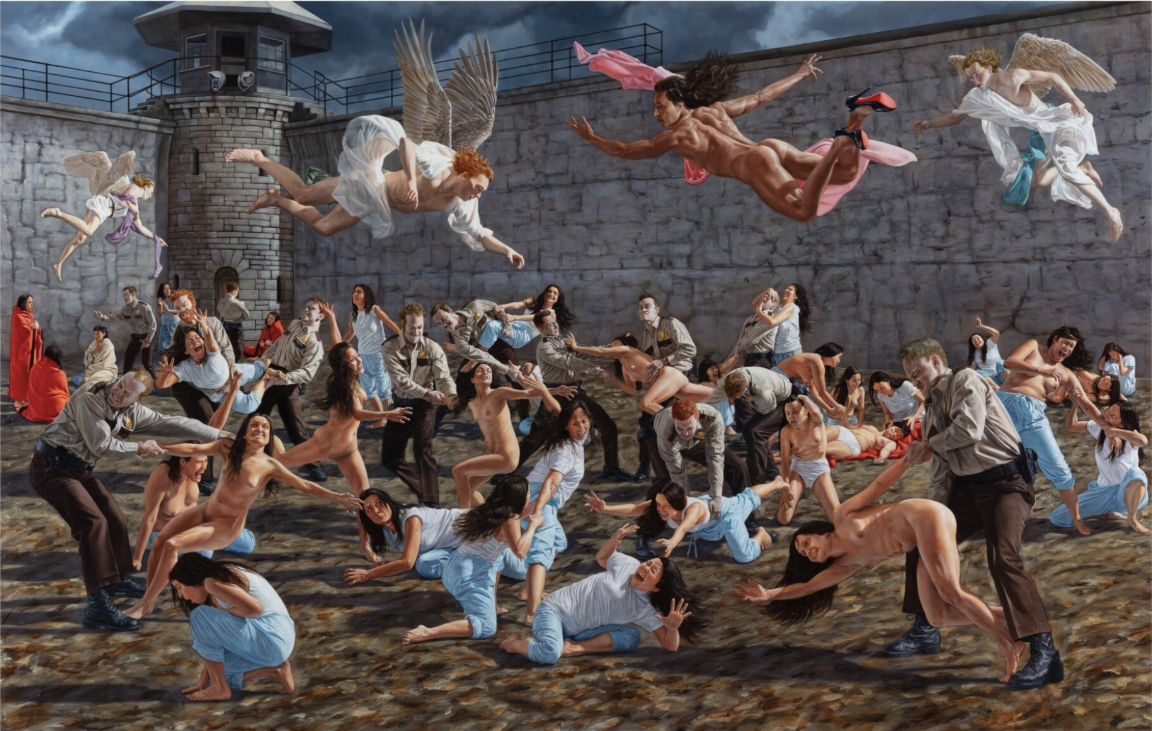
Kent Monkman, “The Madhouse” (2020). Image via Sotheby’s.

The Election as a Mirror

This year’s election was historic— a shift in leadership that saw all major parties change at the top, a resurgence of voter engagement and the emergence of new voices on the political stage.

Justin Trudeau stepped down as Prime Minister, making way for Mark Carney to step into the Liberal leadership – Carney led the party to a minority government win. Meanwhile, Pierre Poilievre gained ground for the Conservatives, solidifying their dominance in Alberta and Saskatchewan—but lost his own seat in Carleton. The Bloc Québécois saw a drop in seats but retained just enough influence to affect the balance of power. The NDP, facing its own steep decline, lost official party status, prompting Jagmeet Singh’s resignation as leader.

2025 Canadian Federal Election Results. Image via Wikimedia Commons.

The Liberal Party hold a minority government victory, securing 169 seats—just shy of the 172 needed for a majority. What’s more surprising is that this actually came to fruition; many political sources and publications have stated that the Conservatives (or Tories as they love to be called 😉 ), under Poilievre, should have won the election but Carney’s leadership played a pivotal role in reshaping the Liberal’s fortunes. In the end, the Conservatives won 144 seats, with Poilievre notably losing his own seat in Carleton. The NDP faced significant losses, securing only 7 seats and as mentioned, Singh’s resignation as party leader.

  1. “Canada’s Trudeau survives no-confidence vote in latest test for his gov’t” – Al Jazeera
  2. “Canada’s election, explained via poutine” – The Washington Post
  3. “Mark Carney Wins Canada Election, Capping Dramatic Turnaround for Liberals” – The Wall Street Journal

But beyond all the numbers and headlines, what resonated with me was the underlying tone.

The election served as a cultural mirror. The language of the campaigns, the concerns raised at town halls, and the platforms that gained traction told us that Canadians are wrestling with identity, equity, safety, and hope.

In film, we’d call this a turning point. The moment where the protagonist must decide whether to change, resist, or retreat. And I’d argue that Canada—like a character in a compelling drama—is right in the middle of that scene.

Among the many reflections I’ve come across, some of the most thoughtful have captured the nuance of this moment through unity and empathy. They point out that this election wasn’t just a division of geography, but of generations, values, and rhetoric—and that the real path forward lies in unity and empathy.

Everyone is entitled to their belief and their vote, but regardless of how they voted, they are our neighbor.

Creativity in the Shadow of Politics

Elections don’t happen in a vacuum. They shape how we create, fund, and distribute art. They influence the stories that get amplified—and those that get buried.

As someone who built a platform rooted in cultural critique and creative expression, I’ve always believed that artists have a responsibility to pay attention. Not necessarily to be political in the traditional sense, but to be attuned. To reflect, to question, to push. What we create in response to the world matters—and this election may mark a shift in tone for many Canadian creators.

Whether you’re a filmmaker, a writer, a painter, or simply someone who consumes art with intention, you’ve probably felt this undercurrent before: that moment when politics start to bleed into the palette. For me, I think back to films that captured national identity in flux—like Gangs of New York, Incendies, Waltz with Bashir or District 9. Granted, District 9 is a sci-fi set in South Africa, but it does a fantastic job exposing the legacy of apartheid.

A country’s soul is often best understood through its art.

What Artists and Thinkers Can Do Next

So what now?

We make things. We stay present.
We interpret this moment and give it texture. Whether we agree with the outcome or feel disappointed, we don’t go quiet. Creativity is resistance, but it’s also restoration.

timotheories ethos has always been about uncovering truths through culture—digging into film, art, and ideas not just for entertainment, but for connection. And this is one of those times when connection is crucial. We need the dreamers and the realists, the critics and the community-builders, the hopeful and the heartbroken. Because storytelling doesn’t end at the polls. It starts again the next day.

Films That Speak to Our Political Soul

Confession time: I haven’t seen most of these films coming up.
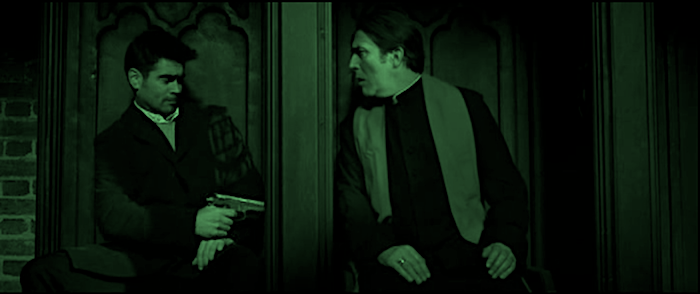
But in reflecting on this election, I found myself wondering—how has Canadian cinema captured moments like this? What stories of resistance, quiet rebellion, or cultural reckoning have we already told?

So I did what any artist would do: I dug in.

The list below isn’t a list of films I’ve mastered—yet. It’s a set of culturally significant Canadian works that I’m adding to my own Watch List. Stories that speak to identity, resilience, and the subtle ways people push back against systems, silence, or expectations.

If you’re curious too, maybe this is your invitation to watch with me:

  • Antigone (2019, dir. Sophie Deraspe) – A bold reimagining of the Greek classic, rooted in a teenage girl’s fight for justice in Quebec’s immigration system.
  • Sleeping Giant (2015, dir. Andrew Cividino) – A quiet but potent exploration of masculinity, grief, and adolescent rebellion in Northern Ontario.
  • Meditation Park (2017, dir. Mina Shum) – A Vancouver grandmother begins quietly reclaiming her autonomy after decades of self-sacrifice.
  • The Body Remembers When the World Broke Open (2019, dirs. Tailfeathers & Hepburn) – A real-time portrait of Indigenous womanhood, class divides, and unexpected compassion.
  • Firecrackers (2018, dir. Jasmin Mozaffari) – Two teenage girls on the edge of adulthood push against the limits of control and small-town life.

These aren’t loud stories—but they’re full of power. And maybe, like this election, they remind us that the undercurrents matter just as much as the headlines.

theories Summarized

The 2025 Federal Election is now part of Canada’s cultural archive. A chapter closed, but far from the end. What comes next—how we respond, create, and relate—matters just as much. Maybe even more.

So I’ll keep watching, writing, and wondering. And I hope you will too. Let’s continue to make sense of the world together—one story at a time.

What did the 2025 election mean to you? What story do you see unfolding in your community, your creativity, or your own life? Let’s talk in the comments.
You Learn From Your Brothers (Last Flag Flying review)

I think you can learn a lot about an institution from how it’s offspring take off into the world and live their adult lives. This week’s movie review addresses that idea with warmth, drama and humour.

And just like real life, is simultaneously messed and unresolved.


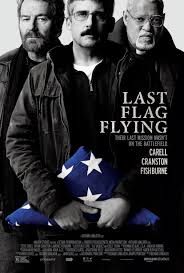
Last Flag Flying (2017)

Cast: Steve Carell, Bryan Cranston, Laurence Fishburne
Director: Richard Linklater
released on blu-ray January 30, 2018
******* 7/10

IMDB: 6.9
Rotten Tomatoes: 75%, Audience Score 70%
The Guardian: ***/*****

Richard Stuart Linklater is my all-time favourite director. And he’s been my favourite ever since I first watched Waking Life back in 2003 (even though the movie released in 2001). I was barely an adult then, so you might have to cut me some slack on the the time it took me to discover him. Point of fact, Chris and I will be sharing a Cross Talk in coming weeks about our favourite directors, so rather then dig into why I think he’s so amazing as I normally preface these posts, I’ll just share a couple of quick anecdotes now. I’ve reviewed two of Richard Linklater’s films before – Boyhood and Everybody Wants Some. And I recorded that upcoming Cross Talk episode before I watched this movie.

I’ve included the distributors synopsis below and modified it slightly to provide some context…

Thirty years after serving together in the Vietnam War, Larry “Doc” Shepherd (Steve Carell), Sal Nealon (Bryan Cranston) and the Rev. Richard Mueller (Laurence Fishburne) reunite for a different type of mission: to bury Doc’s son, a young Marine killed in Iraq. Forgoing burial at Arlington National Cemetery, Doc and his old buddies take the casket on a bittersweet trip up the coast to New Hampshire. Along the way, the three men find themselves reminiscing and coming to terms with the shared memories of a war that continues to shape their lives.

Naturalism is one of the major tools in Linklaters belt. He always manages to bring out the best and brightest of mundane aspects of life. Probably my favourite scene from the whole movie is the experience Carell’s character Doc has upon seeing his dead son when he demands that the military personal open the casket up for him. The camera pans out perfectly and we experience the secondhand emotion a third party would have normally by watching the very real and vulnerable grief someone extremely close to the recently deceased emote. I also enjoyed the interactions between Bryan Cranston’s Sal and the Colonel, that desire to challenge authority is common in many of Linklater’s characters.

And finally, the character of Doc appears very grounded in reality, though we never see him fully open up about his feelings, it is obvious how much he struggles with this unexpected turn of events.

Where the movie becomes a problem for me is in the interactions between the three main characters. They have spent a lot of time apart, and by circumstance are suddenly thrown back into each others lives, but it’s difficult to see why they ever got along or supported each other in the first place. This might be a failing on my part in not fully absorbing the awkward tension these men generate attempting to relate to each other after so much time apart. But I hope with subsequent viewings I can get to the bottom of the tone being explored here.

Pros: Linklater always manages to tell a real story, and stir up a ton of emotions running the gamet of the topic at hand. Never fully committing to one viewpoint or arc, he leaves the viewer with the choice to take something from the film or leave it. It’s difficult to swallow during a film about politics, death, and war.

ConsThat said, It does feel kind of superficial at times, and you don’t really believe the relationships these guys had could endure enough to take the road trip. Yes, they are professional actors, and they are all talented enough to sell their individual roles, but somehow it just doesn’t work thematically at all times.

Linklater has proven he can make any kind of movie, but all the elements of the film manage to conflict in such a negative way, it’s tough to accept this as film with his typical calibre of intent. It never feels especially revelatory, only sad and shallow.

And to sound even more contradictory, while I actually think the themes of patriotism, military service, and political ideologies are dealt with in a mature way, I wish at least one of the protagonists had chosen a side and let the film respond to it.

Runtime: 2 hours 5 minutes

Points of Interest: The film is supposed to be a spiritual sequel to The Last Detail. Laurence Fishburne was Richard Linklater’s only choice for the character of Mueller. Principal photography took only 32 days to complete.

The concept is strong, and I can see what Linklater would have been drawn to it in the first place, but in the end it’s not strong enough in each of it’s parts to overcome the challenges presented and commit to a real anti-war message, instead choosing comedy and drama outbursts to convey the consequences.

theories Summarized

Taken together, each of the three protagonists add their own layer to this film about enduring after war-times. Brotherhood is strong, and I am reminded of the film The Deer Hunter, if only because the challenges of psychology, disruption, and resolution echo throughout both films consistently. Showcasing how two or three men raised in the same household (so to speak) could take different paths. It’s a profound statement to make, and as I mentioned earlier, a lesser director would have definitely missed all of the subtleties and disparate viewpoints within the issue. But ultimately, Last Flag Flying falls short for me, and is only a good film, not a great one. And that’s my theory.

That said, I have a really solid Watch Culture video that directly addresses the effects of war on the soul, and it serves as an excellent metaphor for impotence and decay. Surprise, surprise, a comic book movie was able to get an R rating and tell an engaging story. Can’t you tell how excited Mike and Chris are to discuss Logan? I can!

Logan will likely make you cry, but in a good way. And better still, it resolves so many threads of The Wolverine, while paying tribute to Hugh Jackman’s tenure. Check it out! And remember… Like! Comment! Subscribe!

Tim!

Truth, Records, and Goodwill (Brendon Greene, musician and record label owner interview)

We already know that vinyl records have seen a resurgence in recent years. Likely because collecting music is still an incredible enjoyable hobby, and even though music is even more readily accessible then it ever has been in the history of humankind, people are going to focus on specific sources of musical talent and just absorb what is within their radar. After all, it takes a lot of work to go diving for new music.

Believe me I would know. I Source the internet every week to find a new album to review, one that’s interesting, accessible and just plain entertaining to listen to. But the reality is that music taste is even more subjective then film or fine art.

So imagine being someone who manage a record label. You have to be fairly relaxed, forward thinking, and dedicated to the art in order to keep up with all of the demands. Plus if you’re a grass roots organization like Conscious Collective Entertainment you’ll also want to promote local up and comers, and hopefully maintain a community based imaged.

A musician himself, Brendon Greene has a lot say about why he has decided to have a record label – He started playing guitar 17 years ago, and began teaching guitar 14 years ago. In 2015 he also ran in the provincial and federal election for the Green Party. Immediately deciding upon the end of the campaign that he wanted to learn more about the management of artists, and production. So he incorporated Conscious Collective Entertainment. And he works for Goodwill Industries. AND has slowly been adding artists to his label. Don Bartlett (Modern Fingerstyle, Harp Guitar), Christiana Munch (Classical Fingerstyle), and a punk band called For The County.

If it’s not apparent yet, Brendon loves to teach music and he’ll do you one better. He also wants to help you get a record mixed and distributed for a realistic price too. He believes in stewardship and the value of a good mentor. I personally think he is a pillar for the community but I’ll leave that up to your discretion.

Plus, the interview has even more detail on how to get out there as a musician.

It was a a lot of fun talking with this guy about his business, he has so much passion, and a lot of great insights. I learnt a lot from him too!

I’d love it if you left a comment, and if you liked this artist interview leave one and then share it with a friend or two. Better yet, go visit Conscious Collective and Brendon on Facebook and Instagram, respectively – he’ll appreciate the visit.


And special thanks to Brendon for being bold, brave and brilliant. When it comes to passionate mentorship for burgeoning musicians, this Greene knows how to party with the best of them. It’s a new theory for 2018.

Tim!

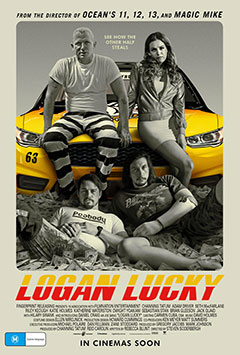
Dear Diary, Jackpot (Logan Lucky review)

Sometimes greatness is thrust upon us, whether we are willing to accept it or not. I often think of this adage when I watch an exceptionally brilliant piece of cinema, one that takes its time to prove itself. This weeks movie review is an excellent example of a great movie hidden within the context of its time.

When everyone is complaining about entrenched politics, Steven Soderbergh has proven that judging a book by its cover can be fatal.


Logan Lucky (2017)

Cast: Channing Tatum, Adam Driver, Daniel Craig, Riley Keough, Farrah Mackenzie, Katie Holmes, Seth MacFarlane
Director: Steven Soderbergh
re-released on blu-ray November 28, 2017
********* 9/10

IMDB: 7.1
Rotten Tomatoes: 93%, Audience Score 76%
The Guardian: ****/*****

Steven Soderbergh is an American director, producer, and screenwriter. His debut film, Sex, Lies, and Videotape garnered huge attention for him in 1989, and ever since then, he has gone to great success with titles like Erin Brockovich, Traffic, the Ocean’s Eleven remakes, Side Effects, and Magic Mike. Soderbergh has also produced and been  involved in a host of other commercial and critically successful movies.

Logan Lucky marks a return to directing for him after a four year hiatus, and I think with this gem, he has proven that he still has a good handle on filmmaking. It’s actually quite a brilliant story.

Courtesy of Wikipedia

Jimmy Logan (Channing Tatum), a blue collar laborer whose once promising football career was ruined by an injury, is laid off from his construction job at the Charlotte Motor Speedway. While visiting his ex-wife Bobbie Jo (Katie Holmes) to pick up their daughter Sadie (Farrah Mackenzie) for a beauty pageant, he learns that Bobbie and her new husband intend to move to Lynchburg, making it even harder for him to visit.

Angry, Jimmy goes to a bar run by his brother Clyde (Adam Driver), an Iraq War veteran who, on account of losing part of his left arm, wears a prosthetic hand. Max Chilblain (Seth MacFarlane), a pretentious British businessman & NASCAR team owner, and his friends arrive and insult Clyde before getting in a fight with Jimmy. Meanwhile, Clyde sets fire to their car with a molotov cocktail. On his way out, Jimmy yells “cauliflower”, which Clyde recognizes as an old code word from when they used to commit crimes as young boys. Next day, Jimmy explains his plan to rob the Speedway, exploiting his knowledge of their pneumatic tube system for moving money.

Clyde agrees to the plan, and he and Jimmy recruit Joe Bang (Daniel Craig), a convicted safecracker, as well as Joe’s dimwitted brothers Sam and Fish (Brian Gleeson and Jack Quaid), and their own sister Mellie (Riley Keough). They plan to break Joe out of prison and return him as soon as the heist is complete before anyone notices. Clyde gets sent to prison on a minor charge. Mellie, Sam, and Fish infest the Speedway’s main vault with cockroaches, forcing it to be cleaned and allowing them to measure it. While gathering supplies, Jimmy meets former schoolmate Sylvia (Katherine Waterston), who runs a mobile clinic in desperate need of donations; Sylvia provides Jimmy with a tetanus shot and the two strike up a conversation. Later, Jimmy learns that construction at the speedway is being finished ahead of schedule, forcing them to commit the heist earlier, during the much busier Coca-Cola 600 race on Memorial Day weekend.

Joe and Clyde arrange for the prison’s inmates to stage a riot, the lockdown hiding their absence. They escape through the infirmary and exit the prison by hiding under a delivery truck. Mellie meets them with Bobbie’s husband’s stolen sports car, and drives them to the Speedway. Meanwhile, Sam and Fish destroy the main generator with an explosive, forcing all vendors to switch to cash. Joe improvises an explosive from bleach, gummy bears, and a dietary salt substitute to detonate the main pneumatic pipe, and the crew begins vacuuming the money. The staff notice smoke coming out of the tubes, and security guards are dispatched to investigate, but a diversion set up by Jimmy and one of Clyde’s bar patrons prevents them from discovering the heist. Complications arise when Clyde loses his prosthetic hand during the vacuuming, and he and Joe are spotted by Chilblain and his sponsored NASCAR driver Dayton White (Sebastian Stan) while making their way back to prison. Nevertheless, the job is a success, and Jimmy makes it to his daughter’s pageant just as she performs a rendition of his favorite song, “Take Me Home, Country Roads”. Jimmy abandons the money and anonymously alerts the police so they can retrieve it.

FBI agent Sarah Grayson (Hilary Swank) investigates the heist but – due to the unwillingness of the prison authorities to disclose the extent of the riot, the refuting of Chilblain’s eyewitness account by White (disgruntled as he crashed during the Coca-Cola 600 due to his drinking some of Chilblain’s energy drink as part of the sponsorship deal), and the Speedway administration’s satisfaction with their insurance settlement – the case is closed after six months. Joe is released and returns to his old home where, prompted by a red shovel, he finds part of the money buried by a tree in his yard. During the heist, Jimmy purposely separated several bags from the rest of the loot and sent them to the local dump with the regular trash. The rest he returned to throw off any potential investigations. Jimmy also retrieved Clyde’s prosthetic hand from the vacuum machine. Now working as a Lowe’s salesman and with a house he bought next to his daughter’s, Jimmy happily reunites with his family at Clyde’s bar, where they and the rest of the gang share drinks. Sylvia also arrives and shares a kiss with Jimmy. Clyde doesn’t recognize one of the patrons, who turns out to be Grayson.

What is absolutely brilliant about this movie was revealed to me upon my second viewing of this film with my parents.

They are avid movie watchers, and my dad has probably seen more movies in his lifetime then I have albeit spread out over years of casual watching. So when they both told me that this movie surprised them because they weren’t expecting it to be entertaining, it confirmed a theory I have about a bias many people have – Just because a movie has a slow start, with seemingly boring and simplistic characters, does not mean that it will be a “bad movie.” In fact, the cast of this film demonstrated perfectly how a caper flick should work. If you are watching the flick with the expectation you know what is happening, but are inevitably surprised at how the protagonists pulled off the job, and then movie explains it smartly, you as an audience get to share in the accomplishment. In that case it’s been executed properly. Period.

Pros: It’s a stylish movie, but not for obvious associations of style – these are salt of the earth southern Americans, who have dry humour, and a subtle confidence in their own identities. And consequently the stakes are never raised to distract, because it’s not how these people carry themselves. We get to identify with the principal leads because they act like how we might act at any given moment.

Cons: When the dust clears and all of the mad-cap moments have been revealed, I have to wonder if there were too many one shot characters helping orchestrate the heist behind the scenes. That reminded me too much of Oceans 11 and took me out of it.

Runtime: 1 hour 58 minutes

Points of Interest: This is the first film Soderbergh has directed since his announcement to retire from film. The movie ends on a seemingly ambiguous note, but stops on Clyde’s prosthetic hand, indicating the Logan Curse might not have been lifted, after all.

theories Summarized

There is a newscast scene towards the film which dubs the robbers as Ocean’s 7-Eleven. I thought this was a fitting description of the film for people who haven’t seen it yet, and clever bit of self-depreciation on Soderbergh’s part. But that doesn’t mean this movie should be dismissed as just a riff on what has come before. It stands all on it’s own, and has heart, much like the anthemic Take Me Home, Country Roads, which dovetails the story nicely.

Ultimately, I think that what really matters about this film is that it does what it promises intelligently, without putting on airs. And maybe I’m seeing more there then the average filmgoer, but you can tell me if my theory pans out.

Oh and that reminds me! Speaking of tolerance, heart, and disarming movies… Chris and I totally have a recommendation for a great movie to watch with the whole family, one that’ll put a hop in your step. Pun intended.

Tim!

Thunder Buddies (Broken Social Scene, Hug of Thunder review)

Every once and a while, we all need a hug. Especially when it gets weird and dark.


Broken Social Scene – Hug of Thunder

released July 7, 2017
********* 9/10

Broken Social Scene are a Canadian indie rock band (yay for Canadian content!) formed by Kevin Drew and Brendan Canning. Sometimes they have six members, and sometimes they have nineteen band members, because above all, Broken Social Scene are a musical super group of popular Canadian indie rock acts and solo artists…

Metric (Emily Haines, James Shaw), Feist (Leslie Feist), Stars (Amy Millan, Torquil Campbell, Evan Cranley), Apostle of Hustle (Andrew Whiteman), Do Make Say Think (Ohad Benchetrit, Julie Penner, Charles Spearin), KC Accidental (Kevin Drew), Valley of the Giants (Brendan Canning), Land of Talk (Elizabeth Powell), Raising the Fawn (John Crossingham), Reverie Sound Revue (Lisa Lobsinger), Treble Charger (Bill Priddle), Jason Tait, Justin Peroff, Jason Collett, Ariel Engle and a few other people have all featured at one time or another.

Altogether, they have released a whopping five studio length albums since their inception in 2001, which I think is pretty admirable given that all of these artists are in at least one other full-time band.

Despite misgivings that no band can be this big and still sound like the individual artists within, BSS manages to do just that. Sometimes they are chaotic and experimental, other times they are orchestral, sometimes they are sad and introspective, and still other times they are celebratory, but they are never timid in their presentation. Hug of Thunder is no weak sauce either.

This isn’t your Spider-Man album, no pulled punches people, please.

BSS spend most of the album letting us know that they are counter-culture, and by that, I mean that they refuse to share dream pop tracks and emotionally abuse people on the internet. This is a community of people shouting the importance of community, when most of us are screaming about politics into our phones. It resonates with the hipster nihilism we started to experience in the early 2000s, the stuff that took root in popular culture and grew into a field of bullshit weeds.

Ideas of love, community, sexuality, and honest to goodness rock and roll seem to have been completely forgotten about in recent years, but BSS refuse to give up on us ingrates. They’ll elevate us up, despite the incredible effort it takes to produce tracks like Gonna Get Better, tittle track Hug of Thunder, and Vanity Pail Kids.

I’m not gonna lie, this album deserved better than the world it’s been brought up in. Our celebrations of libertarianism are so common now that it’s tough to stomach the idea of pulling together and getting along, but Please Take Me With You and Skyline insist, almost plainly that we do. Though never quietly.

But here’s the catch, while you can consume this album in parts and pieces, it’s actually best viewed as a whole. Recognizing that a stable of musicians reunited after a seven year hiatus in order to combat against global indifference is a far stronger statement than Protest Song can deliver all on it’s own. Broken Social Scene have come together to release a pragmatic optimism, and that is probably the best antidote we could receive. Unabashed positivity isn’t realistic in 2017, but stating that the world is ending is foolish too.

We need to keep up the fight and keep working, vigilant without naivety. A challenge to be sure, but I wouldn’t have the message delivered any other way.

Pros: Halfway Home, Gonna Get Better and Protest Song are all excellent demonstrations of the gentle-hearted politics of this album, Hug of Thunder being a personal favourite.

Cons: At certain intersections the lack of a frontwoman or frontman is difficult to digest, and leaves the album feeling disjointed, like a compilation or a soundtrack, rather than an album. But this rare.

Runtime: 52 minutes

Points of Interest: In March of 2017, Broken Social Scene made an appearance on the Late Show with Stephen Colbert, featuring past members Emily Haines, James Shaw, Amy Millan, and Evan Cranley, indicating we would see the a return to form. Ariel Engle is a new member of the band, and she has worked with Andrew Whiteman on AroarA previously, which is how she was introduced to the rest of the troupe.

The best and worst parts of Broken Social Scene come from their ability to work together as a group, and in taking it a bit safer with this record, those aspects become more apparent. This is still an excellent record, but not perfect because the exploration isn’t quite where it has been previously. Their message is amazing though, which makes up for a lot of that safety net.

theories Summarized

To put it in brief, this is an anthem for a new generation of apathy. The WIIFM (what’s in it for me) drone need not apply themselves in this case, because Broken Social Scene are all about that open concept of love, empathy and pulling together as a greater community. I’ve not much else to say, except that you really should listen to this album. And those are all of my theories on the matter.

Tim!