I Can’t Get No Satisfaction (Syndication)

Sometimes I wonder if I’ll ever have it all, dear readers.

I want to have a successful blog, publish a few bestseller novels, create & feature in at least 3 popular YouTube video series, maintain a healthy diet that include meals, meditation, exercise, & affirmations, create meaningful & beloved paintings, and operate a community driven app for the arts.

Now you might say that that is crazy, but a lot of that those ideas tie in and relate to each other, which means that I’ll be sharing my brand across a number of channels, and working together with others to produce a brand that is viable and collaborative.

But in order to do that I need to syndicate – which happens to be a major part of marketing.

This is post number three in the Importance of Marketing series. We already have the business plan post ready for your absorption, so be sure to check that one out as well. But I digress, let’s now focus on today’s Wisdom Wednesday topic – A post about the importance of content syndication.

What’s content syndication timotheories?

Well my dear, sweet readers, content syndication is a way to put your name and ideas out there into the ether. It helps you build your reputation and generate leads which then generate sales for your business. If you can figure out a healthy mix of syndication, you’ll be rewarded with search rankings, increased traffic, and better exposure to your personal brand. Did I mention that it will also help promote you as an industry leader too? And when you become a leader, people start back linking to your blog.

That’s when you know you’ve hit the big time.

RYkMMK8

But in order to get your name out there, you should set up a strategy first. Set some goals and determine the results you need in order define that content strategy. You need to be honest with yourself and ask the hard questions. Like whether you’re positively impacting the community around you with your syndication methods or if you’re really going to drive traffic with your current plan.

What it comes down to is quality content and quality resources to manage your syndication. You could use the carousel method and increase your traffic by publishing to established websites like Hubpages or you could go the advertising route and use something like Newstex to get paid when other publishers source your material. Having said that, you aren’t assured to get paid right away if you share your material for a fee, your content has to be of a certain calibre.

And we haven’t even touched the tip of the iceberg when it comes to promotion. Just using a syndication delivery method isn’t going to get you there alone. Yes, you have to take advantage of the networks mentioned already, but you’ll also have to start guest blogging on websites that already have success in a wide breadth. And of course you need to consider where social media and forums fit into the mix. Every social media application and forum has a different tone, so be very mindful of how you construct your tweets, posts, shares etc.

But before I get too far into the weeds and begin the process of telling you in detail how to syndicate your content, I’m gonna stop the post and let these theories sink in.

After all, at timotheories, we are about digital curating at heart, and that means giving you content in bite size pieces. We would never expect you to swallow the elephant all at once.

And so I’m out of theories for today, I hope you enjoyed this peek into syndication, and I look forward to releasing the remaining introductory points on the importance of marketing. I’ll see you tomorrow friends, with something timely and rather tasteful.

Tim!

Innovation Is A Work Of Art (Lisa Jones interview, Innovation)

Innovation is difficult.

It forces you to stretch yourself and expose yourself in ways that you never expected to. You make sacrifices too, which can feel like hot wax on bare skin. Painful, but that initial commitment makes the overall process less painful. Unless of course you delay. Then the wax cools and the hair pull hurts more than the first wax application.

Whether a fast or slow decision, you eventually do have to pull the hairs out… but the aesthetic benefit soon becomes apparent. You see, those hairs can grow, but it is only with focus and determination that we can shape them into a beautiful set of eyebrows, a glowing beard, or even with clean shaven legs.

Only then can we become a work of art.

This might seem like kind of a weird example to lead into this month’s AMAZING interview, and an amazing interview it is, but I promise the metaphor will make sense shortly. You see dear readers, true innovation doesn’t come from no where.

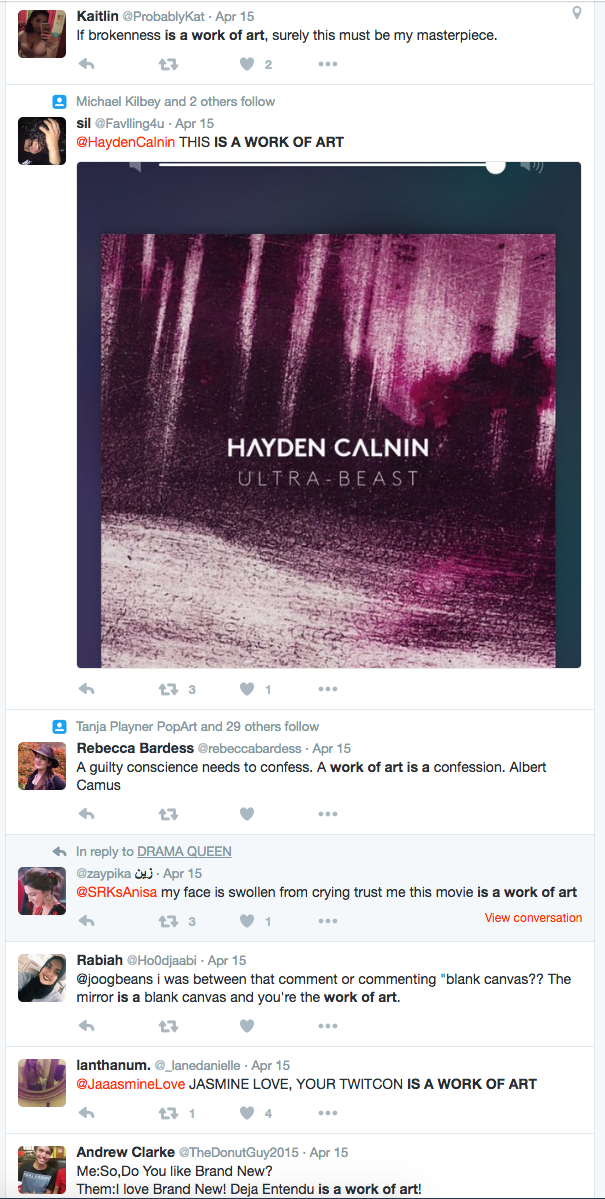
Even if a statement like “… [is] a work of art” sweeps the Twitterverse on a particular day or over the course of a week (April 15, 2016), someone spent the time crafting a public persona and was able to authenticate that statement and help make it noteworthy for millions. The masses are fickle, but the artist can be committed to innovation.

Screen Shot 2016-04-24 at 11.04.06 PMScreen Shot 2016-04-24 at 11.04.35 PMScreen Shot 2016-04-24 at 11.05.03 PMScreen Shot 2016-04-24 at 11.05.24 PM

Yeah that “… [is] a work of art” actually did became a popular thing to tweet for a bit there. Whether I decide to make a great metaphor for growth and the beauty of humanity.

But, as I mentioned already, it’s not true innovation. And a work of art is steeped in more than just hair pull metaphors that suggest people’s bodies can simply be works of art on their own. Or can art do that?

Can art build off of what already exists, and cause self-reflection? Or better yet, cultural shifts?

That’s where episode 8 of timotheories interviews comes in.


Lisa Jones is a visual artist with abilities to rival the best of them – painting, drawing, sculpture, and printmaking. But she prefers to specializes in painting with oils. And she makes images through her own personal metaphors, both refining and simultaneously obliterating narratives and materials at the same.

She recognizes that becoming an artist and maintaining a practice requires a combination of effort, innovation through necessity, and building a future for herself that doesn’t include regular visits to the local watering hole.

But you should take a look at the interview for yourself, because it’s literally just below you. It’s my most innovative interview yet. I promise.

And as always, if you want to check out more timotheories interviews or the Cross Talk series please visit our YouTube channel.  And please, please, please leave some comments and of course subscribe to both the blog and channel!

Please also check out Lisa’s website to see her portfolio and to contact her for her creative services.

And of course my sincerest thanks to Lisa for being lively, likeable, and legitimately lovely. See you tomorrow with a hymn worthy music review.

Tim!

Kill Your Darling Mother Goose (History of Easter Eggs)

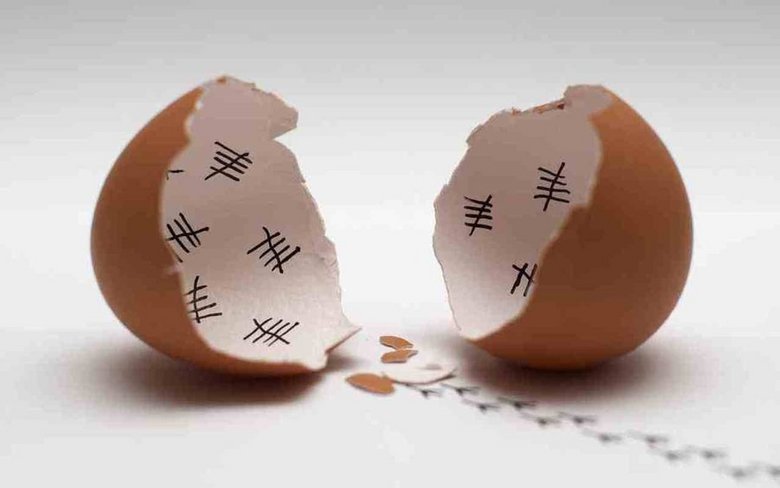
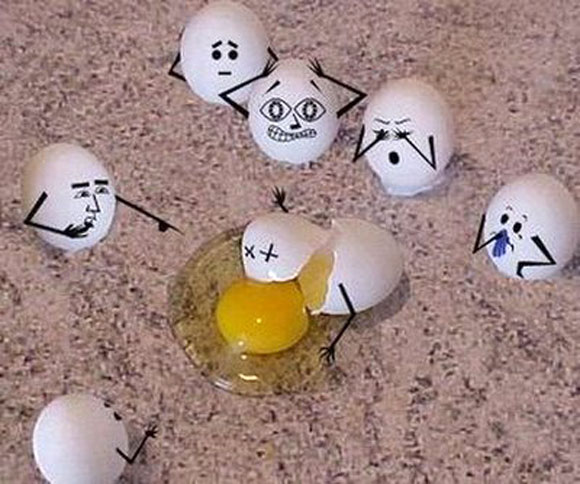
Now that the chocolate withdrawal has begun to rear it’s ugly head, I thought this was a good time to take some time and discuss the Easter tradition, as it relates to art. It is Timely Thursday after all, dear readers.

funny-pictures-auto-egg-birth-480271

Whether you are gung ho for Easter or not, it is a commonplace event in Western culture and is celebrated for a few different reasons. Some do it to celebrate a tradition, others feel obligated to keep their children included and their colleagues in a state of uniformity, still others really really like the ideas espoused in the messages (family, charity, giving, togetherness, etc.) both from a religious or secular viewpoint.

The reality is that there is more than meets the eye to the tradition of Easter, both from a Christian perspective and a secular one.

It has a lot do with notion that whatever the dominant religion is in a culture, most people won’t reference the detailed aspects of the tradition, they just do what their families and friends have always done, and that is how events like this slowly evolve over time.

Look at the history of the Easter egg for example, a lot of people believe that Easter eggs are decorated and given out to symbolize the empty tomb of Jesus (death and rebirth), others believe it is a symbol of spring time, represented by the Easter Bunny. Which makes a lot of sense, but isn’t necessarily realistic.

The reality is kinda a combination of the two beliefs, and they just layer right in there. The tradition of the Easter egg stretches as far back as to ancient Africa, over 60,000 years ago. And we have evidence that eggs were symbols of fertility, death and rebirth, via the Sumerians and Egyptians about 5000 years ago – being placed in graves and decorated with gold and silver.

2

Christians in Mesopotamia started the practice of staining eggs red, as a symbol of the blood of Christ. And this invariably spread throughout the different Christian communities over the centuries. Which is why Russians and Greeks got ahold of this practice, and it eventually made it’s way through different European countries…

Taken from Wikipedia and edited,

In the Orthodox churches, Easter eggs are blessed by the priest at the end of the Paschal Vigil (which is equivalent to Holy Saturday), and distributed to the faithful. The egg is seen by followers of Christianity as a symbol of resurrection: while being dormant it contains a new life sealed within it…

In Greece, women traditionally dye the eggs with onion skins and vinegar on Thursday (also the day of Communion). These ceremonial eggs are known as kokkina avga. They also bake tsoureki for the Easter Sunday feast. Red Easter eggs are sometimes served along the centerline of tsoureki (braided loaf of bread)…

The dying of Easter eggs in different colours is commonplace, with colour being achieved through boiling the egg with either natural colours (such as getting brown by using onion peels, black by using oak or alder bark or the nutshell of walnut, or pink by using beetjuice), or using artificial colourings.

When boiling them with onion skins leaves can be attached prior to dying to create leaf patterns. The leaves are attached to the eggs before they are dyed with a transparent cloth to wrap the eggs with like inexpensive muslin or nylon stockings, leaving patterns once the leaves are removed after the dyeing process...

Pysanky are Ukrainian Easter eggs, decorated using a wax-resist (batik) method. Many other eastern European ethnic groups decorate eggs using wax resistant batik methods for Easter. The word comes from the verb pysaty, “to write”, as the designs are not painted on, but written with beeswax.

As you can see from the excerpt above there is an incredibly storied history to the Easter egg, and a ton of opportunity to contribute to it’s future. But what do you think? Do you decorate eggs every spring and have you ever considered using eggs as symbols in your art? Know any expert egg painters? Please leave some comments and we’ll eggsecute a discussion.

Sorry I had to, I mean I had all this unused internet to write on… Please don’t leave, I can eggsplain, I was recently eggshiled from my family and I make yolks when I’m lonely.

Okay, I’m done. I got all the fun I could get out of that joke. And I’m out of theories for now friends, so please have an eggsellent weekend, and I’ll catch you on Sunday evening for something stimulating!

Tim!

Problems With Art Galleries That No One Talks About (Take Photos All The Time)

Now here’s a little story I’ve got to tell, about an artist blogger you know so well.
It started way back in history, with a museum, a guard, and NYC – you see?

And that dear readers, is how you make a transitional joke from one post into the next one. Please see previous post for reference if you want to get the joke, but I’m going to move along so that I don’t lose this post’s momentum.

Let’s visualize for a moment here.

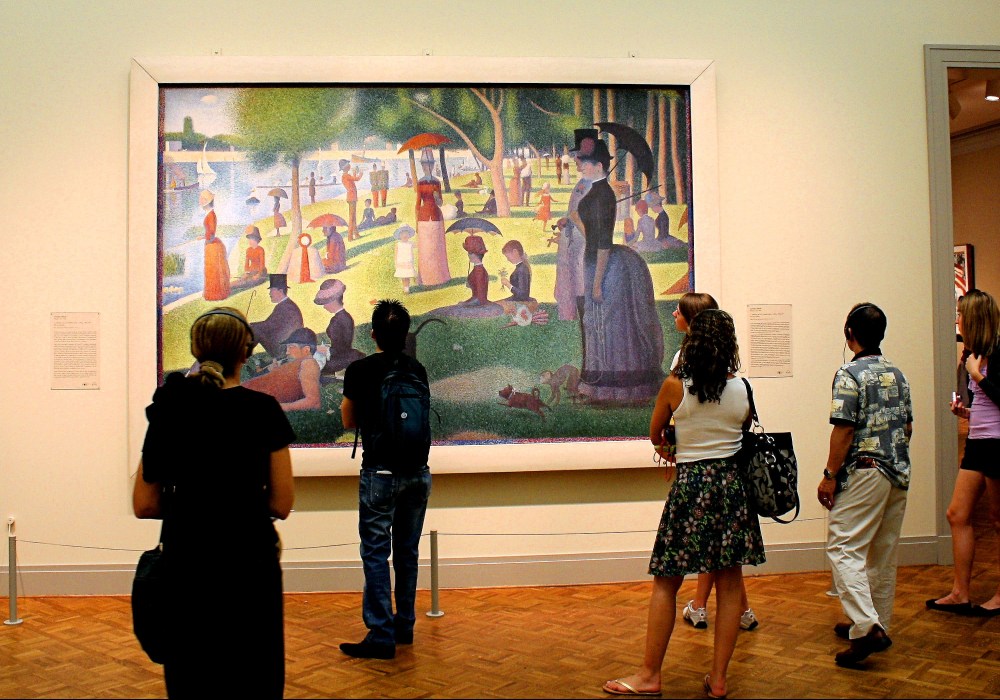
This is a situation that seems to happen all the time across the world in various museums and art galleries alike. You are seeing a-one-of-kind piece of history for the first time (often a famous art-work) and you want to take a photo of it for posterity and so that you can remember what you saw when you return home. Let’s be honest here, you’re done have an eidetic memory and you definitely aren’t getting any younger.

So you snap a photo.

Kinda like I did when I was visiting the New York Metropolitan Museum for the first time back in 2006. Yes, this story is 10 years old, and for you recent graduates and Millennials on the edge of the age generation cut off, that time probably doesn’t mean much to you.

But for the sake of the story let’s pretend you all do understand me. So you snap a photo with your digital camera (not your phone), and get the warm and fuzzies almost immediately, because you now have proof that you’ve been in the presence of greatness, and your loved ones can be excited or feign excitement when they see you again, and you both show and tell.

And this was definitely part of my intent, but not the whole plan. The whole plan was to get some photos, so I could reference them in my own art later on, and because folio pictures from art books aren’t always the best quality. And at as much as 100 bucks a pop, the costs add up quickly.

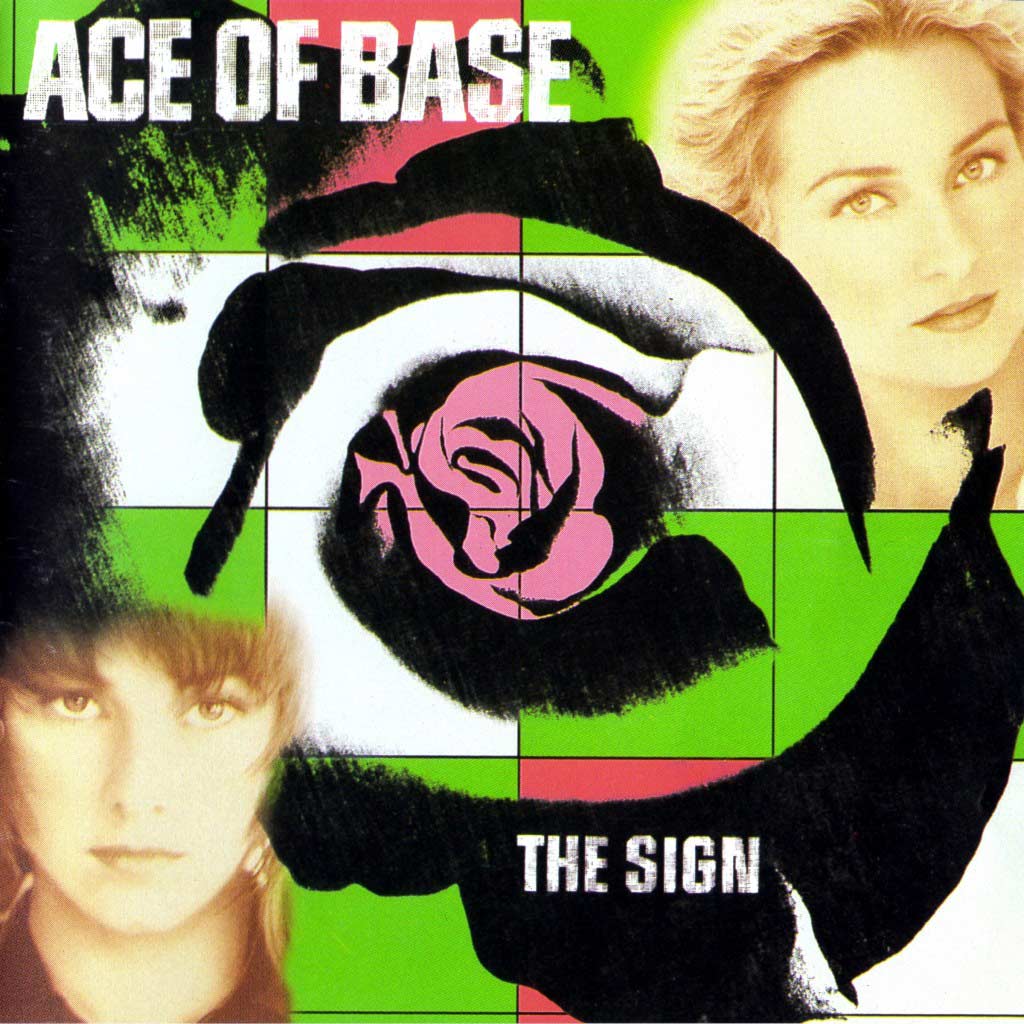
But then I felt it, a warm hand on my left shoulder. Ever so slowly followed by a deep voice. “You can’t take photos in here son, read the sign.”

Ace-of-Base-The-Sign-1024x1024

I had read the sign, I saw the sign, and it told me that these works were over a hundred years old and in a dark room to preserve their colour. And I thought I was being clever, because I know all about lightfastness in painting, and I made sure to turn my flash off on my camera (not my phone), because I was being respectful.

It didn’t matter though, I had been caught.

And the guilt quickly set in. But why should I feel this way, it was 2006 and people love to take photos, in fact, digital cameras were making it easier by the day for people everywhere to get into the photography hobby. So all I have are a couple of blurry memories of one room, and I can barely remember which artists I saw in there, so that sucks.

Luckily for us today though, because museums and galleries are loosening the reins on this particular restriction. Because people take photos everywhere, of anything, and all the time. We can thank smart phones for that phenomenon. It’s really difficult for a venue to justify taking away someones’s phone, because it’s not socially acceptable, and phones can save lives.

And from the perspective of the venue they have to decide if it’s more important to have guards paying attention to visitors touching antiquities or snapping photos. That and the challenge of social media. When organizations use social media to show work going up and down, can they really complain when people are using social media to generate traffic for them? The way we think about communication and conversation is changing, visual communication is becoming hot topic once again.

But of course the biggest challenge is the issue of copyright and fair use. I think that institutions need to protect themselves by asking for permission to take photos of work, but for the layman, taking photos for noncommercial use is a lot more permissible, which may be the first indicators of a culture shift.

As time changes peoples opinions about gender, sexuality, and race, and we become more compassionate, my theory is that we will also become better communicators because we need to and our ideas about images will shift too.

What do you think? Comments? Questions? Please leave some and also subscribe! See you tomorrow with a theory about a rabbit.

Tim!