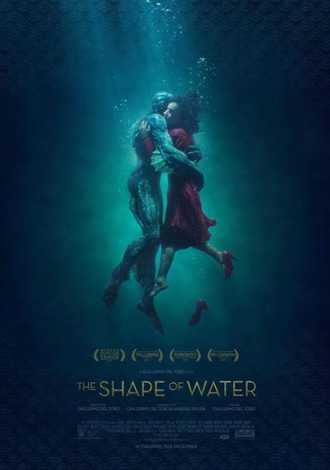
The Shape of Water, A Filet or A Flop? (Cross Talk EP 35)


This should be a fairly straightforward post.

I’ve already written a fairly in-depth review on the movie The Shape of Water – and I made my love of the film known pretty clearly there. But too be perfectly honest, Chris doesn’t care for the movie, and I value his opinion a lot, so we decided it would be fun to put together a deep dive episode on the movie and talk about our differing opinions. Which as some of you know, is one of the reasons why I started Cross Talk in the first place.

To discuss movies, music, board games etc. and present topics in a more meaningful way then your average review or criticism video.

Don’t get me wrong, there are lots of great channels out there where the presenters have a degree in film criticism, others where the reviews are purely based on if the movie is enjoyable or not, and still others where the film is dissected and all of the symbolism is put on display. But that’s not how people really talk about movies necessarily.

When you are chatting about a movie like The Shape of Water with your friends, you’ll get lost in incidental details like the way the government facility looked, or the musical score choices, or whether Doug Jones did a better job playing Abe Sapien, the Faun, the Pale Man or  “the Asset.” And if you’re a movie geek like us, you might even start entertain interesting theories about why the movie is a fairy tale, and not an alternate reality where mermen exist.

Or maybe you’ll point out how there are so many more movies that do star-crossed lovers in a better way, with more compelling characterizations. And you’ll get passionate about it. Wondering why an amazing film like Get Out only got attention for it’s screenplay.

And so this is episode thirty five of Cross Talk.

theories Summarized

Do you think my theory about Giles having invented the majority of the story is right? Or am I completely off the rails with this one dear readers? Chris has a better appreciation of why I relate to the story so well now, but maybe I’m projecting, and the movie isn’t anything more then what you see on screen.

In that case, maybe the submerged bathroom scene is completely ludicrous.

But that doesn’t mean the film isn’t worth talking about, we managed to fill a 20 minute space talking about it, and you didn’t even see all of the outtakes we have! Until next time, please like and share the content! And subscribe to the mailing list if you haven’t yet. I’ve got a blue review on Jack White coming up tomorrow!

Tim!

In Love With The Shape Of You (The Shape Of Water review)

Join us for a very special film review on this week’s episode of Watch Culture.

I say this because I’m about to drop some knowledge on why The Shape of Water holds a special place in my heart, so much so that I’ll also be running a deep dive on Cross Talk with Chris later in the month (read: sooner).

The Shape of Water (2017)

Cast: Sally Hawkins, Octavia Spencer, Michael Shannon, Richard Jenkins, Michael Stuhlbarg, Doug Jones
Director: Guillermo del Toro
released on blu-ray March 13, 2018
********* 10/10

IMDB: 7.5
Rotten Tomatoes: 92%, Audience Score 74%
The Guardian: ****/*****

Guillermo del Toro is a Mexican film director, screenwriter, producer and novelist. His films have a strong fantasy element running through them, often using dark themes and gothic backdrops to convey both subtle and overt messages about human nature. Some of his more mainstream films are Pacific Rim, Blade II and the two Hellboy adaptations, but he also dabbles in spanish language focused stories like The Devil’s Backbone and Pan’s Labyrinth.

Looking back, his most recent film before The Shape of Water was Crimson Peak, a strong indicator and launching point toward fairy tale narratives.

Special thanks to Huggo for the IMDB summary.

1962 Baltimore. Elisa Esposito (Sally Hawkins), found abandoned as a baby with scars on her neck, has been mute all her life, that disability which has largely led to her not having opportunities. Despite being a bright woman, she works a manual labor job as a cleaner at a military research facility where she has long been friends with fellow cleaner, Zelda Fuller (Octavia Spencer), who often translates her sign language to others at the facility. And she has had no romance in her life, her major emotional support, beyond Zelda, being her aging gay artist neighbor, Giles (Richard Jenkins), the two who live in adjoining apartment units above a movie theater. Like Elisa, Giles is lonely, his homosexuality complicating both his personal and professional life, the latter as a commercial graphic artist. Elisa’s life changes when Colonel Richard Strickland (Michael Shannon) brings a new “asset” into the facility, Elisa discovering it being a seeming mixed human/amphibious creature found in the waters of the Amazon. Secretly visiting with the creature, Elisa is immediately drawn to him, and despite he having a violent side as part of his inherent being, the two find a way to communicate with each other and end up forming a bond with each other. Elisa has to decide what to do when she discovers that although the reason for bringing the creature to the facility is to test the possibility of him being sent into space, Colonel Strickland, who has always had antagonistic feelings toward the creature, ultimately wants to kill him, this following the systematic torture he has inflicted on him. Elisa may have to balance her feelings on wanting to be with the creature against what may be the greater benefit to him of being set free back into the wilds of the water. Complicating matters are that the Soviets are also aware of the creature, they having a secret agent who has infiltrated the facility.

Smarter people then I have reviewed this film to death already.

So I won’t pretend to impart the same learnings as them in my review of this film, but I will acknowledge that there is some derivation at work here. As Chris will rightly point out in his own thoughts on our upcoming Deep Dive; this is a story that effectively borrows from other films. The Beauty and the Beast story arc is the bones of this film, it also throws in homages to monster movies (Creature from the Black Lagoon), musicals (Shirley Temple, That Night in Rio) and biblical stories (The Story of Ruth).

But where the brilliance comes in is in altering the arcs of these stories. The beast doesn’t transform to be loved, the creature from the black lagoon doesn’t die AND gets the girl, the mute girl and her two minority friends save the day, and love of the arts is celebrated.

That said, even if you don’t know these things, this film challenges the notion of fearing the other – it fights fear with love, and I think it smartly uses Giles (an artist), as a narrator of this ideal, in a time when those ideas couldn’t even exist in popular culture. Giles is a closeted homosexual, someone who dreams and imagines how things could be, and I have a theory that a lot of the film actually happens in his mind.

Pros: It carefully crafts all of it’s themes and ultimately tells a universal story of acceptance, love, and celebrating what is, rather then what should be. del Toro is at his personal best, and he poses some great questions.

Cons: While beautiful to behold, and universally clear in the truths it wants to share, to fully appreciate the story, you might actually need to love all of the things it references – the subtle historical shifts at play. And if you want character nuance, the characterizations could be frustrating to watch.

Runtime: 1 hour 55 minutes

Points of Interest: Guillermo del Toro wrote lengthy backstories for each of the major characters, giving them each the option to use the information or ignore it. Some opted to take the direction, while some, like Richard Jenkins, refused it. The poem at the end of film has been paraphrased from works by Persian poet Rumi and his predecessor Hakim Sanai.

I really do see why Chris struggles with this film. And believe it or not, I’m not picking apart his thesis before he’s had a chance to defend himself, but rather I want to show you that his perspective is key in understanding my own theory.

The derivative themes, the abstracted characterizations, and the reliance on style as a vehicle for the underlying substance are important. If we consider that the whole story is told from the perspective of an artist character (Richard Jenkins) who has had to hide so much of himself in a time and space of persecution and judgment, then I think the story takes on new meaning. Not to mention the fact that his chosen form of expression, painting, is being supplanted by photography in advertising. Giles loves musicals, lives above a theatre that shows biblical films, and draws the creature he does not understand lovingly. He wants to see a fairy tale realized because his own story did not come through as he wished.

Additionally, he is the most detailed of the characters, which is often how we see ourselves, as opposed to how we simplify others in our own life stories.

theories Summarized

I think The Shape of Water is an amazing film, and to be honest, I haven’t even given you the full expression of my thoughts on it yet, but I believe that the upcoming Cross Talk deep dive episode will reveal even more about it. A fairy tale for adults is an amazing thing to behold, indeed.

If you want another fairy tale for adults, then you should check out this video review of 2010’s Scott Pilgrim VS the World, an anti-thesis to rom-coms told from the perspective of a video game geek. It’s a blast to watch, and whether you grew up between the 1980s to 1990s or not, the nostalgia callbacks are insightful.

So please let me know what you thought of our review, like and share the video, and subscribe to the channel if you haven’t already. There are even more theories coming up next week, y’all come back now.

Tim!
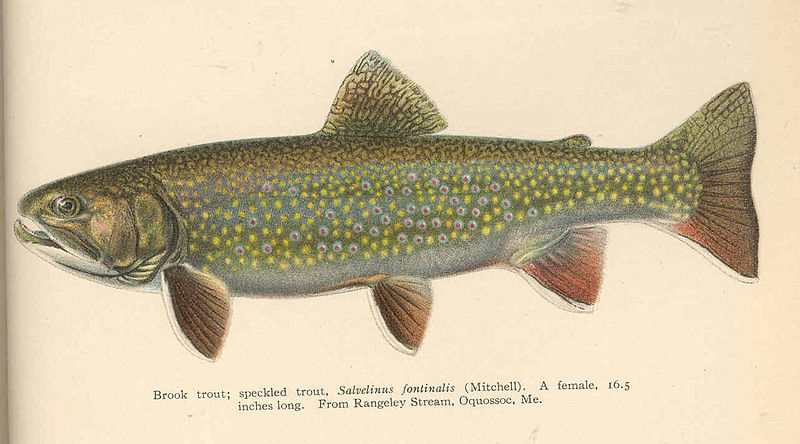
A Figure Of Speech (Hidden Figures review)

When given the space to work, we are capable of incredible things. So how is it that skin and gender are still considered barriers to greatness?


Hidden Figures (2016)

Cast: Taraji P. Hensen, Octavia Spencer, Janelle Monae, Kevin Costner, Kirsten Dunst, Jim Parsons, Mahershala Ali, Aldis Hodge, Glen Powell
Director: Theodore Melfi
re-released on blu-ray April 11, 2017
******* 7/10

IMDB: 7.8
Rotten Tomatoes: 93%, Audience Score 93%
The Guardian: ****/*****

Theodore Melfi is an American director, producer, and writer of whom I could dig up very little information on. Melfi has only recently stepped up into the role of director, with the Billy Murray film St. Vincent being his first time at the helm, and Hidden Figures as his second outing.

Luckily for us, his involvement with the film industry has been a fairly measured one, which began in 1998, on a whim, by helping raise money for the film Park Day. So humble and full of admiration for this story is Mefli that he turned down the opportunity to direct Spider-Man: Homecoming over Hidden Figures…which blows me away, personally.

That mentioned, what follows is a very brief overview of the film, and to give a sense of how it unfolds.


Set in 1960s America, and taking place near Cape Canaveral, we watch the stories of mathematician Katherine C. Johnson (Taraji P. Hensen) (formerly Goble), engineer Mary Jackson (Janelle Monae) and computer supervisor Dorothy Vaughan (Octavia Spencer) as they work for NASA during the space race to put a man into orbit around the Earth. Taking place at NASA primarily, we watch these human computers fight for equal rights as both women and minority figures on campus.

All three woman are in the midst of proving themselves to their peers, and especially outperforming many of them, much to the shock of the average NASA scientist, like lead mathematician Paul Stafford (Jim Parsons), head supervisor Vivian Mitchell (Kirsten Dunst) and floor director Al Harrison (Kevin Costner), though Harrison is not portrayed with prejudice, only as stern in his approach to success.

We also see into these women’s lives and watch them address family matters and challenges associated with romantic relationships. For instance, Goble eventually enters into a romantic relationships with the recently returned Colonel Jim Johnson (Mahershala Ali), who initially repels her with an ill-made comment about women and mathematics.

Based on true stories surrounding these three legendary women who helped John Glenn (Glen Powell) up until his launch date, Dorothy Vaughan, Mary Jackson, and Katherine Johnson truly are well deserved pillars for any of us who struggle with gender, race, and professional boundaries but have a desire to to bring something good into the world.

A familiar story of triumph over adversity, Hidden Figures offers a unique slant in the tone being set with the content and the performances that drive the action forward. All three arcs work well together, with a little more time being spent on the growth of Katherine Johnson and her supporting cast-mates. It never holds your hand on the issues of the day, but instead faces them indirectly so that you can might better glide through a key moment in history.

Yes, it is incredibly heart-warming and very much an easy to digest movie, but the fact that it is able to look at crucial women in the history of NASA without pandering too heavily to us, is a very odd thing to experience.

Pros: An uncomplicated story which gives some well merited screen time to people that did great things for humanity. It also does well to elevate the profiles of Hensen, Spencer and Monae; with Monae stealing the show every turn she gets.

Cons: I can’t help but wonder if a story about great people deserves greater treatment for its characters and more details coming through each scene… And if it has any real staying power in coming years.

Runtime: 2 hours 7 minutes

Points of Interest: The coffee brand used in Katherine’s work area is significant, it was Chock Full o’Nuts, which was one of the first corporations to hire a black executive at a VP level. The man Chock Full o’Nuts  hired was retired baseball legend Jackie Robinson, the first person to break the color barrier in professional baseball. Also, the set used for Dorothy Vaughan’s house is actually an historic house in Atlanta, where civil rights pioneers Ralph Abernathy and Martin Luther King met.

Hidden figures manages to entertain and showcase great performances from its three leads, but I have to wonder if the feel-good angle was the right way to to go with this story.

theories Summarized

Overall, Hidden Figures is an excellent film from an entertainment perspective and does great work in highlighting the efforts of those black women who made major contributions to the space race happening during the Cold War. Odd that echoes technological advancement and racism throughout it’s story in a time when that is exactly what we seem to be experiencing a lot of of.

And man do I ever wish that was only a theory, but we really do need to be vigilant in the face of these injustices.

Tim!