Notoriously Problematic (Income)

Money is money is money is money. Everything likes to think that if they had more money all of their problems would be solved. And maybe there is some truth in that statement. But have you ever heard the old adage by the poet The Notorious B.I.G.

Mo money, mo problems.

I’m not going to point out all the obvious analogies being made in the song, I instead want to focus on a specific one, which is that as you gain more money you indeed do solve the current problems you have, but you trade up for new ones, and the risk of those problems is sometimes greater than the reward.

Which means, is it really within your means to aim for more means?

Income The Problems

I may have already written about this once or twice before, but there are a myriad of factors to consider in the OECD Better Life Index. You know what I am referring to dear readers? Where you rank housing, income, jobs, community, education, environment, governance, health, life satisfaction, safety, and work-life balance. Those are all pieces of the puzzle, and as I’ve mentioned previously, they vary by importance from country to country in how we measure well-being.

Inspired by this concept and following the footsteps of a post I wrote up on the website Postconsumers and how they view health and wellness, I realized there is a great way to address these factors. Writing dedicated posts to each topic. And today I want you to consider the second of these points, your income. This is a difficult topic to write about because, generally speaking, we are very protective of sharing what we make with others, and for good reason.

When we reveal our incomes certain things can happen. You associate your identity with your income for starters, and depending if you make more or less than others it can swing you upwards into arrogance or downwards into submission or depression. People will target you as a source of wealth and liquidity, which means you might get gamed by strangers or expected by friends, not to top judgment on how you spend your money. And it also puts you into the spotlight with business and agencies.

And if you have to share you income be prepared. If you make within a certain median grade for your job description, it’s less likely for you to be targeted when the situation calls for a share and care session.

Incoming

It is important to figure out what a health income is for you, you don’t want to make money just so you can now spend it on things that you don’t really need. That’s counter to the purpose of the wisdom being imparted. However, I do disagree with the notion that you should settle for a certain income just because you don’t know how to get to it.

But maybe that’s not the issue here, you could just not see the value of additional income. Consider this theory for a minute.

If you spend more than you earn, you have negative money, correct? Conversely, if you spend less than you earn, you have a positive flow of cash into your personal finances. Which means you can pay off debts if you have them OR if that is not the case you can begin to invest into retirement or other personal goals you have. As a for instance, you could buy a car outright and avoid the financing costs OR get a brand new iMac upfront with no credit card fees.

Being frugal allows you to move towards wealth, which can make you independent and allow you to focus on your positive contributions in the world. Say by travelling to areas of the world, making art, performing in theatre or going on a comedy tour.

I’m not going to dive deep into how exactly you increase your income, a lot of the time it’s a result of limiting spending and investing money, but here are some key examples that you can look into, and an article that details it better than I could do in this post space.


  1. Max out your salary – negotiation, raises, and planning are key, maybe a second job
  2. Get an education – stats prove those with better education earn more
  3. Monetize your hobbies – mystery shopping, photography, and baking for starters
  4. Start a side business – you choose the commitment level, and can earn much or little, blogging too
  5. Real estate – it’s complex but you can be an investor, landlord or combination thereof
  6. Selling old things – it’s not a one-to-one return, but old items get new use, and you get some money

Again, I’m not rolling in the dough by any means dear readers, but I’ll let you in on a secret, I have done or am currently doing all of the six things I’ve listed out for you. You can live the lifestyle you want, you just have to commit to it and like the author of this GetRichSlowly article I referenced says, if you are willing to make some sacrifices, you can make more money than you do now. But hey, that’s just a theory.

Tim!

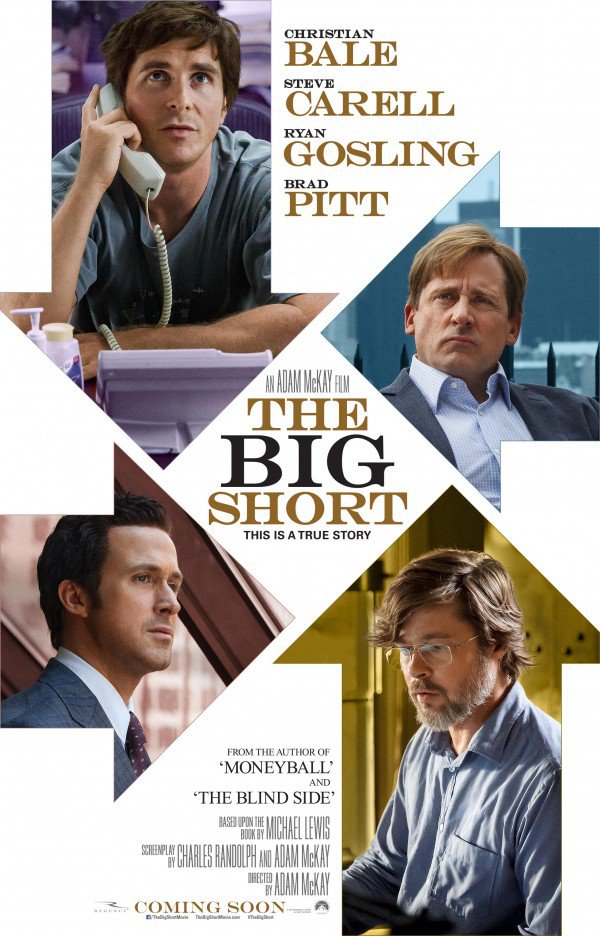
The New Anti-Heroes On The Block (The Big Short review)

The financial crisis of 2007-2008 was no laughing matter. A lot of people lost their jobs, homes, and hope because of the short-sided greed of those in much higher positions of wealth.

It threatened the potential collapse of the largest financial banks, which some feared would send us into a new dark ages, and was eventually prevented by monetary aid of national governments.

In brief, it was fucked up.

The aftermath was that we experienced a global recession for four years, and even now businesses are hesitant to share wealth and distribute resources as readily as they were before. This Theatrical Tuesday entry looks at the “heroes” who saw it coming, and how they dealt with it.


The Big Short (2015)

Cast: Christian Bale, Steve Carell, Ryan Gosling, Brad Pitt
Director: Adam McKay
released on blu-ray March 15, 2016
********* 9/10

The-Big-Short-600x936

IMDB: 7.8
Rotten Tomatoes: 88%, Audience Score 88%
The Guardian: ****/*****

Adam McKay is an American film director, producer, screenwriter, and actor. Known for his comedic chops, he has directed both Anchorman movies, Talladega Nights, Step Brothers, and The Other Guys, which are were all lead by his creative partner, Will Ferrell.

The Big Short is the first film McKay has directed which doesn’t star Will Ferrell, and while it is considered a more dramatic story, it has a lot of his typical satire elements, which fit nicely in the McKay fabric.

Taken from Wikipedia and edited,

In 2005, eccentric hedge fund manager Michael Burry (Christian Bale) discovers that the U.S. housing market is extremely unstable, being based on subprime loans that are high risk and providing fewer and fewer returns. Predicting that the market will collapse sometime in the second quarter of 2007, he realizes that he can profit from this situation by creating a credit default swapmarket, allowing him to bet against the housing market. He visits several major banks and investment dealers with this idea; these firms, believing that the housing market is secure, accept his proposal. This earns the ire of Burry’s clients who believe that he is wasting their money and demand that he stop his activities, but he refuses. As the predicted time of the collapse approaches, his investors lose their confidence and consider pulling their money out, but Burry places limitations on withdrawals, much to his investors’ anger. However, the market collapses just as he predicted and he produces 489% profits from the plan.

Trader Jared Vennett (Ryan Gosling) hears of Burry’s actions from one of the bankers Burry dealt with, and soon realizes that Burry’s predictions are likely true. He decides to put his own stake in the credit default swap market. A misplaced phone call alerts hedge fund manager Mark Baum (Steve Carell) to his plans, and Baum is convinced to join Vennett. The two discover that the impending market collapse is being further perpetuated by the sale of collateralized debt obligations (CDOs), groups of poor loans that are packaged together and given fraudulent AAA ratings due to the conflict of interest and dishonesty of the rating agencies.

When Baum attends the American Securitization Forum in Las Vegas, he interviews CDO manager Mr. Chau (Byron Mann), who has created synthetic CDOs, making what is described as a chain of increasingly large bets on the faulty loans. Baum realizes, much to his horror, that the scale of the fraud will cause a complete collapse of the economy. Baum’s business partners convince him to go through with the credit default swaps, profiting from the situation at the banks’ expense.

Eager young investors Charlie Geller (John Magaro) and Jamie Shipley (Finn Wittrock) accidentally discover a prospect by Vennett and also decide to become involved in the credit default swaps. Since they are below the capital threshold for an ISDA Master Agreement needed to pull off the trades necessary to profit from the situation, they enlist the aid of retired banker Ben Rickert (Brad Pitt). The three visit the Mortgage Securities Forum in Las Vegas, where they manage to successfully make the deals. Shipley and Geller are initially ecstatic, but Rickert is disgusted by their essentially celebrating an impending economic collapse and soon-to-be-lost lives. The two are horrified, and take a much more emotional stake in the collapse by trying to tip off the press and their families about the upcoming disaster. Ultimately, they profit immensely, but are left with their faith in the system broken.

How this movie manages to be both detail oriented and funny, while approaching a still raw subject, is kind of amazing, and what is more impressive is the fact that it does this while featuring an ensemble cast.

Pros: Steve Carell has a fantastic turn as neurotic and disenfranchised hedge fund manager Mark Baum. Christian Bale, Ryan Gosling, and Brad Pitt do okay too. Also the Margot Robbie bit, that kind of pokes fun at The Wolf of Wall Street was hilarious.

Cons: The movie runs a little long, and the slow start featuring fourth-wall breaking pieces feels strange at first, but then the movie tosses that out, speeds up really quick, and crams a lot in towards the end.

Runtime: 130 minutes

Points of Interest: No special effects were used for Michael Burry’s glass eye. That is all Christian Bale, and kinda mesmerizing. The character Mark Baum is based on real-life money manager Steve Eisman. This is the second Michael Lewis book that Brad Pitt has helped produce and acted in. The first was Moneyball.

This is both entertaining and engaging, with the heroes of the story being flawed and real, because they are based on real people and adaptations of real people who were involved in the housing crisis of 2008. The fact that The Other Guys is a McKay movie makes a lot of sense, as that movie features the same types of villains as this one.

The fact that The Big Short depicts it’s leads as heroes is a bit ridiculous if you ask me. It assumes that these men actually did something for the greater good. Yes, they dealt with danger, adversity, and their personal reputations to expose and react to the impending housing crisis, but most of them profited from it.

Michael Burry and Mark Baum “kind of” walked away, but they made a lot of money in the process. And even Brad Pitt’s financial guru pariah got something out of it.

I read a review that said you’ll leave the movie feeling angry, and that is true, but I get a sick feeling in my stomach when I think that we get excited about people making money in a situation when so many lost out. Something to chew on.

No more theories today, friends. Come back on Wednesday for some Wisdom.

Tim!

Here For A Good Time, Not A Long Time (Pomodoro Technique)

Wednesday is very easily becoming my favourite day of the week, dear readers! I get to share with you resources to better yourselves, ways work on your skill set, inspiring figures to keep you motivated, and all the while provide you with a framework to build your art around so that you are creating work that you care about.

No easy task, for sure. But damn if it isn’t a fun challenge for me!

Today’s post is no different as I have another great element of the skills to invest in series that I want to spend some more time on.

Get it, because we are going to focus a bit more on Time Management. That’s right, time management, the area of life that we all feel a lack of control over. I may have been inspired by Daylight Savings Time or it may have been conveniently timed, but time is precious, and there are a number of people that would tell you “time is money,” which is the equivalent of saying, use up your time and get value out of life.

vc5y58j

I would argue the opposite way on this topic. Time is precious, money comes and goes, so don’t trade your time for money. Instead learn to work with time and be conscious of it, so that you can respect it properly. Time wont wait for you – much like common sense, everyone has a different perception of the concept, and reality is far different than what we usually think.

b442b638de69594f9821731b875c70e6dc70474152deff32a4d2d7268d87212e

So what does that mean for us, timotheories? How do we become better at respecting time and understanding the value of it?

Well, I am glad you asked friends, because this week’s post is all about one of my favourite time management tools. It’s incredibly easy to pick up, improves your results quickly, and is a decent amount of fun. Which is hard to believe, I know.

4087d5ee489e56ad50fb958ff051ecfaed5998e2b29fd9cf7273d351fb5e7b2d

I read about it on Reddit of all places a few years ago. Shocker, I know. It’s called the Pomodoro technique, and according to their official website more than 2 million people have already read and benefited from its teachings.

It really is an interesting process and I would be doing the process a disservice by detailing it myself, so I’ve decided to use Wikipedia’s break down for you, exactly as how it works.


There are six stages in the technique:

  1. Decide on the task to be done.

2. Set the pomodoro timer to n minutes (traditionally n=25)

3. Work on the task until the timer rings. If a distraction pops into your head, write it down, but immediately get back on task.

4. After the timer rings, put a checkmark on a piece of paper.

5. If you have fewer than four checkmarks, take a short break (3-5 minutes), then go to step 1.

6. Else (i.e. after four pomodoros) take a longer break (15-30 minutes), reset your checkmark count to zero, then go to step 1.

But that’s not the only important part of the technique – the elements of planning and tracking are key to making it work too.

You have to put your tasks for the day into a “to-do” list and estimate time needed for each task. As you complete your pomodoros, you add checkmarks, icons, or whatever visual symbol you like to each task. This is to identify how long the task truly takes as well as provide yourself with positive feelings about your commitment to working in this way. If you complete a task inside of a pomodoro, you spend the remaining time overlearning the task, to help aid in automation of the task and further reinforcement of the technique.

The breaks also help to maintain focus during the periods of work and keep your mind and body active throughout the work period, avoiding burnout and managing distractions better.

I think the coolest aspect of the Pomodoro technique though is that you are learning to work with time, rather than finding it as an adversary. And if you are stuck for ideas of how to spend your short breaks, you can do some simple desk exercises, organizational chores, short self-administered hand or neck massages, or getting a light snack in.

But what do you think?

24f9f65f2a1d912ad542b35eb4357bd6aec17c0ddd451572f3f393c4b11592c7

Please leave some comments, subscribe to the blog if you haven’t yet, and if you want to get social, please like my Facebook page, follow my Instagram, and follow my Twitter too! See you tomorrow with something timely my friends.

Tim!