Do The Right Thing, At The Wrong Time – Good VS Evil In Film (Cross Talk Ep. 26)


What is the true meaning of good? And what is meaning of evil?

People have been trying to demonstrate the qualities of these diametrically opposed concepts for millennia now. And so many different art forms try to describe the ideas as best they can, digging into the details and pulling out some great notions of what each means, and more importantly, their effects on life.

If we were to look at a text-book definition of good, there are a number of aspects to filter in. For instance, the need to be desired or approved of while having the desired qualities of a higher standard. The word sacrifice is commonly featured over and over too. Ultimately this all stems from a sense of empathy, benevolence, selflessness and going beyond the superficial aspects of life to find humanity at every turn.

That altruism is so very necessary in corner of good when looking at the battle of good versus evil.

Evil is that much more simple. If something is profoundly immoral and wicked, often represented by or directly embodying a force of harm and undesirable outcomes. People who are evil lack empathy, acting upon their own needs and desires about all else. To be selfish in this way prevents real connections, and often leads to the suffering of many, for the wishes of the few. An inability to see the world from another perspective can be attributed to evil, but in many cases, the conscious disregard of others is all the more sickening.

As always on Cross Talk, there are many fantastic examples of good versus evil in film, but we decided to dive into more details on less obvious examples. We did this to really hammer home the idea that some themes defy genre, that science fiction, horror and drama can address this just as easily as an action-adventure flick.

This is episode 26 of Cross Talk. This is good versus evil, as represented in film.


Not sure if you can tell from the introduction or not, but we had a lot of fun with this one as a team. And we all couldn’t help but get excited when it came to presenting our individual case studies. I mean, come on, Prince of Darkness, The Fifth Element, AND Training Day all being discussed in the same conversation?

Just one of the many perks of Cross Talk. We bring the theories to you, so you can mull over the moral implications of these films too.

As always it would be great to hear what you think creative cuties? Spend some time with shorter video and then please like, share, and comment on both timotheories.com and the YouTube channel. We want your feedback! Join the conversation and tell us what we’re doing right, and if you have any better examples on hand that we should have considered.

And now I’m out of theories. Once again I’m off to La La Land. Not the movie, but the analogy for sleep. Ain’t no rest for the wicked, at least that’s what they say. But what about the good? Beauty sleep for everyone? Mull it over and get cak to me!

Tim!

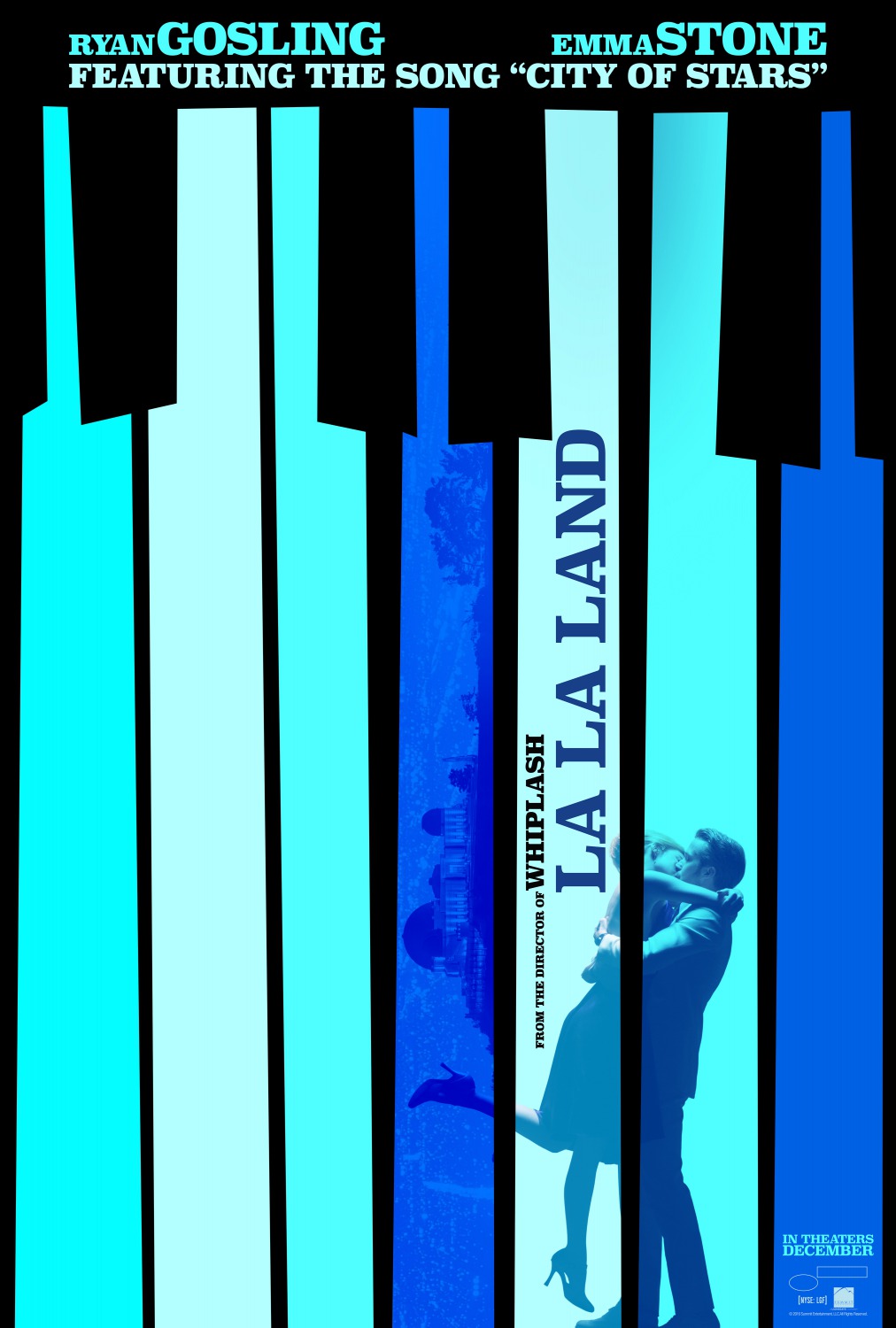
City of Stars (La La Land review)

What do you mean you don’t like jazz?

It just means that when I listen to it, I don’t like it.

The most candid of responses, mixed with sweetness and optimism. That’s the kind of movie you can really get behind, you know? The kind that will propel film into the 21st century and get us out of our hum drum lives, the lives we need to escape from after the great war.

Just kidding, this movie happened in 2016, and it’s about the future.

La La Land (2016)

Cast: Ryan Gosling, Emma Stone, Rosemarie DeWitt, J.K. Simmons, John Legend
Director: John Lee Hancock
released on blu-ray April 25, 2017
********** 10/10
IMDB: 8.3
Rotten Tomatoes: 93%, Audience Score 83%
The Guardian: *****/*****


I’ve written about American director Damien Chazelle before, when I decided to review Whiplash last August. So yeah, we already know that Chazelle is a musical whiz, and that he can bring music and film to life in an epic pairing. Owed to his own musical background of course. Which he fully and completely does with the construction of 2016’s La La Land.

Here is a brief overview of the plot, courtesy of Wikipedia.

 Stuck in traffic on a Los Angeles highway (“Another Day of Sun”), Mia Dolan (Emma Stone), an aspiring actress, has a moment of road rage with Sebastian Wilder (Ryan Gosling), a struggling jazz pianist. Her subsequent audition goes poorly, where the casting director takes a call in the middle of an emotional scene. That night, Mia’s roommates take her to a lavish party in the Hollywood Hills (“Someone in the Crowd”). She walks home after her car is towed.

During a gig at a restaurant, Sebastian slips into a passionate jazz improvisation despite warnings from the owner (J. K. Simmons) to stick to the setlist of traditional Christmas songs. Mia overhears the music as she passes by (“Mia and Sebastian’s Theme”). Moved, she enters the restaurant, but Sebastian is fired. As he storms out, Mia attempts to compliment him, but he brushes her off.

Months later, Mia runs into Sebastian at a party where he plays in a 1980s pop cover band; she teases him by requesting “I Ran (So Far Away)”, a song he considers an insult for “a serious musician”. After the gig, the two walk to their cars, lamenting each other’s company despite the chemistry between them (“A Lovely Night”).

The next day, Sebastian arrives at Mia’s work, and she shows Sebastian around the movie lot, where she works as a barista, while explaining her passion for acting. Sebastian takes Mia to a jazz club, describing his passion for jazz and desire to open his own club. They warm up to each other (“City of Stars”). Sebastian invites Mia to a screening of Rebel Without a Cause; Mia accepts, forgetting a commitment with her current boyfriend. Bored with the double date with her boyfriend, she runs to the theater, finding Sebastian as the film begins. The two conclude their evening with a romantic dance at the Griffith Observatory (“Planetarium”).

After more failed auditions, Mia decides, at Sebastian’s suggestion, to write a one-woman play. Sebastian begins to perform regularly at a jazz club (“Summer Montage”), and the two move in together. Sebastian’s former classmate Keith (John Legend) invites him to be the keyboardist in his fusion jazz band, where he will be offered a steady income. Although dismayed by the band’s pop style, Sebastian signs after overhearing Mia trying to convince her mother that Sebastian is working on his career. Mia attends one of their concerts (“Start a Fire”) but is disturbed, knowing Sebastian does not enjoy his band’s music.

During the band’s first tour, Mia and Sebastian get into an argument; she accuses him of abandoning his dreams, while he claims she liked him more when he was unsuccessful. Mia leaves, insulted and frustrated. Sebastian misses Mia’s play due to a photo shoot with the band that he had forgotten. The play is a disaster; few people attend, and Mia overhears dismissive comments. Despondent and unable to pay the theater back, she moves back home to Boulder City, Nevada.

Sebastian receives a call from a casting director who attended Mia’s play, inviting her to a film audition. Sebastian drives to Boulder City and persuades Mia to attend. The casting directors ask Mia to tell a story; she sings about her aunt who inspired her to pursue acting (“Audition (The Fools Who Dream)”). Sebastian encourages her to devote herself to the opportunity. They profess they will always love each other but are uncertain of their future.

Five years later, Mia is a famous actress and happily married to another man (Tom Everett Scott), with whom she has a daughter. One night, the couple stumbles upon a jazz bar. Noticing the “Seb’s” logo she had once designed, Mia realizes Sebastian has opened his club. As Sebastian notices Mia in the crowd, he plays their love theme and the two imagine what might have been had their relationship worked perfectly (“Epilogue”). Before Mia leaves with her husband, she shares a smile with Sebastian.

What a whirlwind! I’ve seen this movie three times now, and I still can’t but smile when I think about it. Gosling and Stone have some of the best chemistry of all time, better than Ethan Hawke and Julie Delpy, Clarke Gable and Vivien Leigh, Meg Ryan and Billy Crystal, Katherine Hepburn and Cary Grant, Jennifer Lawrence and Bradley Cooper. I could go on for a while.

Point being, that while this appears to be a film about Hollywood, it’s moreso a film about love and the dangers of it, but despite those dangers, it’s far better to experience love and live a full life than to wait for life to happen.

Pros: The two leads play well off of each other, as they always do. Stone is beautiful and heartbreaking in her authenticity, and Gosling is too warm hearted to really be that rakish. The homage to the passage of time is so well done you’ll get all the feels.

Cons: There are an ever-present string of cliches to snip through as you watch, but you have to know the musicals that came before to be truly effected by it.

Runtime: 2 hours 8 minutes

Points of Interest: Emma Watson turned down this role to film the live adaptation of Beauty and the Beast. Ryan Gosling learned to play piano for this role, and John Legend learned to play guitar.

This is a love affair fully realized, passing through seasons, time and space, and ending on a high note. No, it is not a happily ever after scenario, but La La Land doesn’t need to be in order to showcase the starry idealism of today’s youth. Talented and romantic, these kids are paying homage to what has proceeded them, without falling into the tropes of the musical genre. Admittedly, I struggled with the very first sequence of the film, but I think like any good musical, Chazelle is capable of drawing you into this world and getting you to settle into it’s rules.

theories Summarized

There are musical numbers throughout this love story, but what I find most interesting of all is the love story that Chazelle has with this city. La La Land is so happy and sweet in it’s outpouring of emotion, that you have to wonder what Los Angeles did right to have this director fall so hard for her. I have a few theories, but I don’t kiss and tell.

Tim!

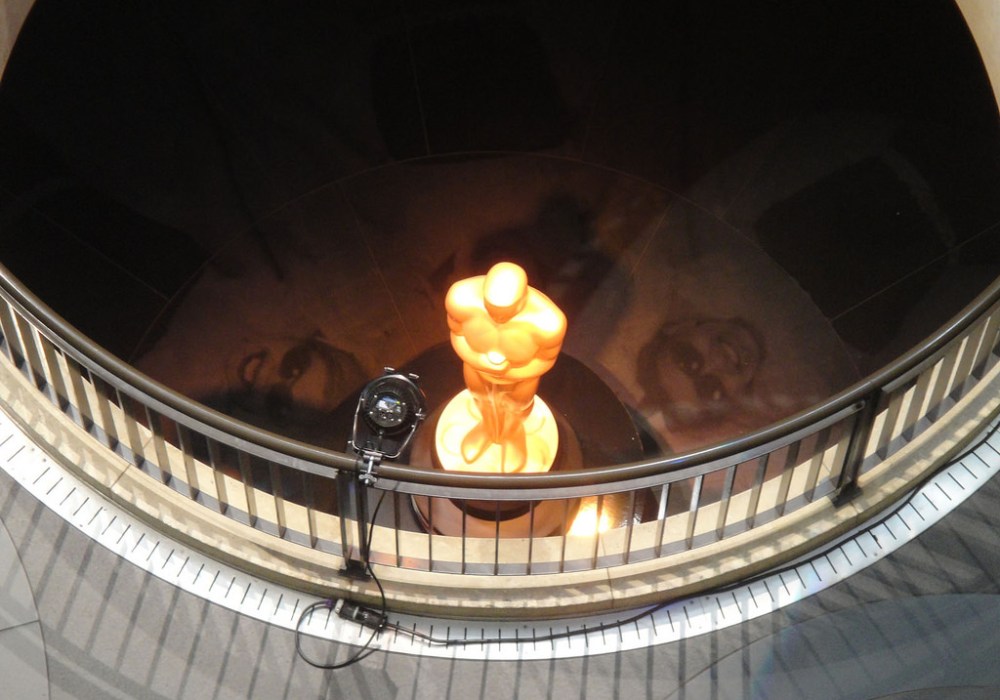
On The Shoulders Of Giants (89th Annual Academy Awards)

Last year the two words whitewashing and oscars seemed to be synonymous with each other. I wrote a rather exhaustive post about it, point of fact. To be fair, I am an artist though, so it’s quite difficult not to be a lens for the big issues I find wrapped around my heart. Sigh.

Now, I have written about this theory before, but let me remind you that there is an idea out there which states that creative professional experience the highs and lows of life even more deeply than an average person. I want to posit something different from that.

We all feel things very deeply, and humans are capable of amazing things when we work together. In fact, I think it’s because we should work together that we achieve greatness.

Children start out with the same basic abilities and aptitudes, as we age, personalities come through and environments shape us into complex individuals.


The Full List of Nominees

I’ve always been a fan of film. Cinema. The movies. Whatever you want to call it, I’ve celebrated motion pictures in my life.

Sitting here at my desk, I’m watching the trailers for the nine films which have been nominated for Best Picture 2017. La La Land, Moonlight, Manchester By The Sea, Arrival, Hacksaw Ridge, Hidden Figures, Hell or High Water, Lion, Fences. I’ve seen more than half of these movies already and I cannot wait to watch the remaining ones I’ve missed. Films make my heart ache with joy, fear, sadness, compassion, anger, excitement, achievement and a number of other emotions.

It’s because so many creative people come together to engage our sense that films mean something. And I think that this year in particular, the academy has done an excellent job listening to the public. 4 of the 9 choices are headed by minority actors, and that’s a big deal.

La La Land has the most votes by far, and while it is an excellent film, it is something of a self-congratulatory piece about Hollywood. So I really hope that this movie doesn’t take it, because we’ve been there, and done that. And Arrival is my new favourite first contact film. On the other side of the coin, Hell or High Water is a classic film on all accounts – I reviewed it late last year and I loved it. It perfectly serves as to what film making is all about. It would be an excellent dark horse entry.

But looking more closely at the nominees, I have to notice something. I’ve only seen the 5 films with white actors headlining them, and that’s an important point.

Award Winning

When you give an award you are truly GIVING something as payment, compensation or as prize. Consider that statement for a second. How many billions of people are there in the world? 30? And how many different ethnicities make up that total?

The challenge we face is that for decades the Academy Awards (like many other institutions) have focused on certain types of people, non necessarily because those people were the most deserving, but because they were singled out for compensation. As the global community expands, it makes sense that we continue to honour those who do the best job, but in instances where many are deserving, it’s those who go over and above should be awarded. By default these means minority groups which need more representation. I haven’t seen Moonlight or Fences, but could easily see them taking it.

I hope they do. Hidden Figures and Lion would be fantastic as well, but based on what I’ve read, Moonlight and Fences are better films. Guess we’ll find out in three days though.

theories Summarized

#OscarsSoWhite was a necessary rebellion against disrespectful authority. I think with it came even more artists working together this year to create films that represent life as it is, and even better, the voters now have an opportunity to choose recipients that better depict humanity. We may be standing on the shoulders of giants, but while every statue has a head of gold, the feet are always made of clay, and liable to crumble towards the end. It’s time to choose a different champion, and that’s my theory.

Tim!

Hall of Fame (Whiplash review)

Sometimes people confuse talent with potential. Potential is aptitude not yet realized, but talent is an expression which is right in front of us. Yes, talent can be reigned in, developed, focused, nurtured, etc. But the real question of the day is, can we recognize talent when it does something a little bit left of normal.

I guess we’ll find out in today’s Theatrical Tuesday review.


Whiplash (2014)

Cast: Miles Teller, J.K. Simmons, Paul Reiser, Melissa Benoist, Austin Stowell, Nate Lang
Director: Damien Chazelle
released on blu-ray February 24, 2015
********** 10/10

Whiplash-2014-tt2582802-Poster

IMDB: 8.5
Rotten Tomatoes: 95%, Audience Score 94%
The Guardian: ****/*****

Damien Chazelle is an American film director and screenwriter. He has currently served up only two feature-length films, but at thirty-one he is making a name for himself and about to release a movie called La La Land which I personally am very excited about. And the major reason for this is that Chazelle knows something about music that not many directors seem to be capable in pulling off. When you tie in the emotional and mental endurance needed to create art, people gravitate to that struggle and can see a story through to it’s conclusion.

Which is where Whiplash comes in, as Chazelle’s second effort, and preceded by the jazz musical Guy and Madeline on a Park Bench, we get to see an excellent sparing match between Miles Teller and J. K. Simmons. Though this movie was technically released almost two years back now, I’m anticipating that 2016’s La La Land will have a similar rhythm to it. Pun intended.

The movie starts with the struggle of a young jazz drummer named Andrew Neiman (Miles Teller) and his journey through school at a top music conservatory in New York called Shaffer Conservatory.

Infamous and tyrannical conductor Terence Fletcher (J. K. Simmons) stumbles upon Nieman practicing late at night and is eventually convinced to invite Nieman into his studio band after a few awkward interactions. But Fletcher is relentless and expects the absolute best of his students, pushing them around both verbally and physically, kicking individuals out on a whim. Nieman practices so hard that his hands start to bleed, and he even breaks up with girlfriend Nicole (Melissa Benoist) because he wants to be the very best.

At one point we sympathize with Fletcher because he shares that a former student of his recently died in a car crash, a student with tremendous potential, and who was quickly rising up. Which is foreshadowing for Niemans own car crash. In a rush to a competition due a broke down bus, Nieman rents a car, but forgets his sticks at the rental agency. He then rushes back and is t-boned by a large truck. Instead of seeking medical attention, he runs to the concert hall and attempts to play the piece, but cannot due to injury. Fletcher boots him from the stage, but not before Nieman attacks Fletcher in front of the audience.

After being dismissed from the conservatory, Nieman and his father (Paul Reiser) meet with a lawyer of the student that died in a car crash. It turns out that the young man hanged himself, and that Fletcher pushed the student to anxiety and depression. Nieman chooses to testify, if only to remain anonymous.

He later stumbles upon Fletcher performing at a jazz club, and is invited to a drink afterwards. Fletcher has been removed from his position, but he wants Nieman to be his drummer for a JVC Jazz Festival. Nieman agrees, but when he shows up to play Whiplash, Fletcher reveals that he knew Nieman testified against him, and has set him up for embarassment. Nieman walks off the stage, but then returns to the stage and starts up Caravan, bringing the rest of the band in with him, and finishes the song with a solo.

Nieman and Fletcher share a look, then work together to finish the set.

ProsThe movies asks the question, what are you willing to do in order to achieve greatness?, and rather deftly answers it. The two leads share an amazing set of performances and obliterate the typical student-mentor relationship trope.

Cons: We never really get to enjoy any music, which is ironic, given that it’s a movie about music. Also, the message is rather linear in it’s presentation, not much room for a supporting cast to move around.

Runtime1 hour 47 minutes

Points of Interest: The film was edited, shot, and submitted to the Sundance Film Festival in a period of ten weeks. Andrew Nieman is in every scene. It was adapted from a short film of the same name, J. K. Simmons plays in both.

This isn’t the first time we’ve seen this kind of story before. If we traded a studio band for uniforms and the drum kit for a football, boom we’d be in a sports movie. Or conversely, we could trade the studio band for a war zone and the drum kit for a rifle and all of a sudden it’s a war epic. But to spit some cheese, the song remains the same. Chazelle has done something here, something authentic, pulling from his own experience, and showing us what happens when someone really wants greatness at any cost.

Whiplash is a rare film that manages to be about music and overly romantic about music. It is considerate enough to share the screen time between it’s human characters and it’s musical ones. It should be obvious that Andrew Nieman has talent from the outset of the movie, but his drive to demonstrate his skill at any cost is what makes this a great case study of expression.

But that’s just a theory.

Tim!