Folding Paper Into Shape (In This Corner of the World review)

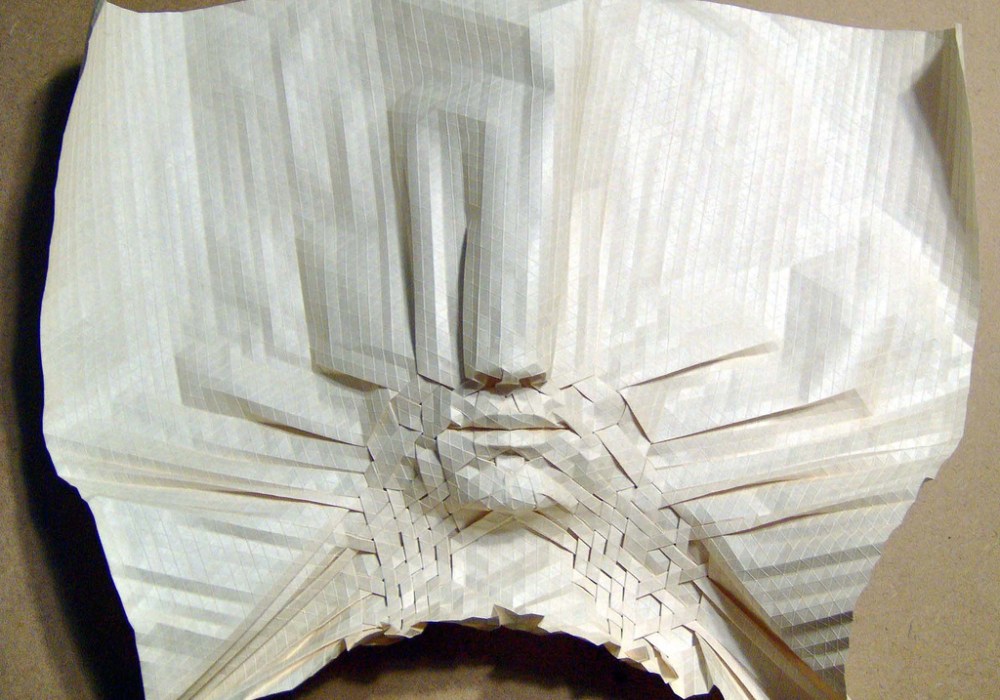
Paper is such a beautiful substance. Capable of so much expression, but entirely dependant upon communication and engagement support from whoever it interacts with. This film is like paper in all of it’s glory.


In This Corner of the World (2016)

Cast: Yoshimasa Hosoya, Laura Post, Jason Palmer, Todd Haberkorn, Rena Nounen
Director: Sunao Katabuchi
released on blu-ray November 14, 2017
********* 9/10

IMDB: 7.9
Rotten Tomatoes: 98%, Audience Score 95%
The Guardian: ***/*****

Sunao Katabuchi is a Japanese director, writer and voice actor of anime film, with over 30 years of experience in both film and television production. Having been active since the mid 1980s, Katabuchi is best known for his work on Kiki’s Delivery Service, Black Lagoon, Mai Mai Miracle, and most recently In This Corner of the World. He is married to fellow director of anime Chie Uratani, and keeps a fairly modest life outside of the lime light.

In This Corner of the World was co-written by Katabuchi and his wife, but he did take upon full directorial duties for this film. It is set in between 1930s-1940s Japan, focusing on areas of Kure and Hiroshima. It is a brilliantly executed film that depicts how war changes the traditional culture of Japan through the eyes of house-wife Suzu. While it might seem quite mundane in it’s depiction of life in a generational home, the emotional weight of what takes place during those years demands a complete cross-section.

Courtesy of Wikipedia

A young woman named Suzu, who is innocent and loves drawing, lives in a seaside town called Eba in Hiroshima City. In 1944, 18-year-old Suzu, working for her grandmother’s small family business of cultivating Nori (edible sea weed), is told by her parents that an unknown young man has come to propose marriage to her. The man, whose name is Shūsaku, lives in Kure City, a large naval port city 15 miles away from Hiroshima City, as a navy civilian. Suzu decides to marry him and moves to join Shūsaku’s family in Kure. As Suzu adjusts to her new life in Kure, the threat of the Pacific War slowly begins to encroach on the daily lives of the townspeople.

Suzu, as a young housewife in a Tonarigumi,[c] takes turns overseeing food distribution and attends training against air raids. Like other Japanese housewives, she makes women’s trousers fit for emergency evacuation by cutting traditionally designed clothing, such as kimonos, into parts. As officially allocated food becomes scarce, Suzu looks for any way to feed her family, picking edible plants and trying recommended recipes. The family build the air-raid shelter in the garden. Her daily lives are full of humorous and lovely episodes.

The family house of Suzu & Shūsaku is located on a hillside in the suburbs of Kure, with a view of the Japanese Naval Fleet in the harbor, including the largest battleships, Yamato and Musashi. One day, as Suzu draws pictures of floating warships, the military police accost her and come close to accusing her of espionage. In December 1944, a navy sailor named Tetsu comes to visit Suzu: he was a childhood friend of hers, and he has been assigned to the Japanese cruiser Aoba, which is stationed in Kure. Understanding it might be Suzu’s last chance to see Tetsu alive, Shūsaku leaves them alone to talk without a chaperone. The next spring, Shūsaku is drafted by the Navy and temporarily quartered with troops in Otake City, 40 miles away from Kure.

In July, urban areas of Kure are firebombed, and most of the city burns. Suzu is nearly killed by a U.S. low-level strafing run, but saved by Shūsaku. Like many other Japanese, Suzu is unable to avoid tragedy; in addition to the death of her brother Yōichi, Suzu loses her niece, Harumi, and her right hand, which she describes as an “irreplaceable” part of her body due to its dominance. As she suffers from depression, Suzu debates returning to the relative safety of her hometown (Eba) in Hiroshima City in time for the local summer festival on August 6; when she is unable to see a doctor, however, she decides to stay an extra week in Kure.

Soon, Suzu learns what has occurred in Hiroshima City; a new, devastating bomb has fallen on the town, destroying countless citizens and buildings in Hiroshima City. For a while, Suzu is unable to enter or get information about her hometown.

A few days later, in a radio address, the Emperor of Japan announces the end of the War. Soon, the times begin to change rapidly: US occupation forces, no longer the enemy, come to Kure and provide food for its citizens. Suzu visits her grandmother Ito’s family house in Kusatsu,[d] a rural town to the west of Hiroshima and out of the affected area, to see her sister Sumi, who took refuge from deserted Hiroshima and is the only survivor of Suzu’s family. Sumi informs Suzu of the fate of their parents; Sumi herself has fallen seriously ill from the radiation left behind by the atomic‐bomb radiation. Shūsaku, who returns from his naval service, meets with Suzu by chance in a deserted area of Hiroshima and tells her that he has found a new job. They come across a little girl, a war (atomic bomb) orphan struggling to survive in the ruins after losing her mother, and adopt her into their home in Kure. Suzu regains her passion for life slowly, with the courage and affection of her friends and family. As the credits roll, their adopted daughter is shown growing up in Suzu & Shūsaku’s family home, sewing clothes with her own hands, aided by Suzu in peaceful post-war Japan.

It is an affecting and carefully constructed story which does an excellent job of showcasing Suzu’s life before and during the second World War. I’ll admit that it is challenging to watch the story and not immediately predict how it will impact Suzu, knowing she is from Hiroshima, but that doesn’t make the events any less significant, or emotional.

Pros: Beautifully animated, with deliberate detail drawn upon from historical photographs and documentation, including those families that live on the hills above the city. The daily routines of the family are entertaining and painful to observe with the change.

Cons: As much as I hate to say this, the film does seem to drag on, it might be because the plot is so plain in construction without much detail of goings on a national or international scale. But it intriguing to see how the surrender of Japan feels through Suzu’s eyes – one of anger rather then relief.

Runtime: 2 hours 10 minutes

Points of Interest: The movie was inspired by a graphic novel, and there is an extended cut of the film in the works which hopes to expand upon the details of supporting characters and Suzu’s own feelings about her unique circumstances in time.

What I also enjoyed about this film so much was the relationship established between realistic animation and more expressive surreal moments. This is intentional as Suzu is herself an artist and a daydreamer. It might seem trivial, but when a film can capture the essence of a character through other tools then dialogue, it’s a huge win in my books.

theories Summarized

Movies don’t always have to be full of astounding visual effects, violence or ambient sound to produce a result. For a film to be gentle and unfocused like it’s protagonist Suzu is as much of a conscious decision with consequence as giving an unfeeling assassin or a zany pirate the microphone. I didn’t know I wanted to hear this story, but I’m glad I gave it a chance. Otherwise I would have missed a historical drama that happens to be animated.

That said and speaking of paper, we need to do an about-face and get back into the realm of comedy ASAP because Andre and I have an amazing review to make on the cult classic Office Space. Seriously such a funny movie. It’s so funny that both of us cracked up at several moments as we fumbled our way through it. Watch it!

Tim!

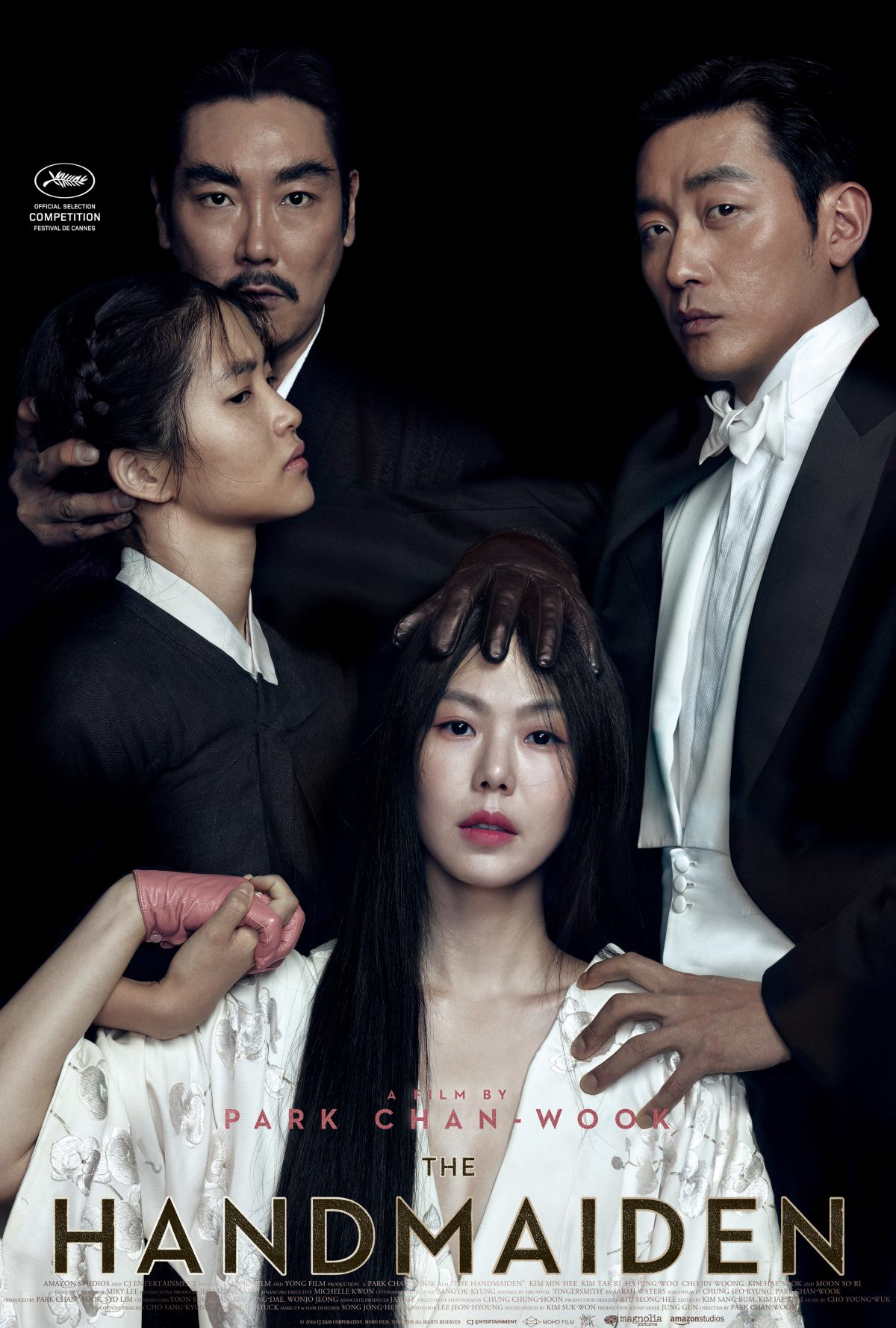
Immaculate Liberation (The Handmaiden review)

There isn’t much glory in going after the familiar – it is only in taking risks that we are capable of experiencing the true rewards of life. When we become liberated from our expectations, that is a very unique way to become capable and fearless.

When we experience love, we can see easily how hate can exist, but the true enemy of life is not death as Elie Wiesel says, it’s indifference.


The Handmaiden (2016)

Cast: Min-hee Kim, Tae-ri Kim, Jung-woo Ha,  Jin-woong Jo
Director: Chan-wook Park
released on blu-ray January 24, 2017
***** 10/10

handmaiden_poster_2764x4096_1200_1778_81_s

IMDB: 8.1
Rotten Tomatoes: 94%, Audience Score 92%
The Guardian: ***/*****

Park Chan-wook (or Chan-wook Park) is a South Korean film director, screenwriter, producer, and former film critic. Considered to be one of the most acclaimed film makers of South Korea, Park is known for the Vengeance Trilogy (Sympathy for Mr. Vengeance, Oldboy, and Lady Vengeance), Joint Security Area, Thirst, and now The Handmaiden.

Park is particularly skilled at employing dark humour, capturing detailed scenes, and the intensity of his storytelling – The Handmaiden is a perfect case study for these traits and one of my favourite foreign language films from 2016. But let’s go over the plot to get a better sense of why I personally enjoyed it… Because this movie is really interesting, though a bit disarming to my particular palette.

Separated into three parts and set in 1930s Korea, The Handmaiden tells the story of con artist Sookee (Tae-ri Kim). Korea is under Japanese occupation, and Sookee is hired as a handmaiden to Japanese heiress Hideko (Min-hee Kim). Hideko lives with her Uncle Kouzuki (Jin-woong Jo) in a large estate and is being courted by the Count Fujiwara (Jung-woo Ha).

Part 1 – Fujiwara is a conman who has hired Sookee from a group of con artists to help him seduce Hideko. He will then marry Hideko, commit her to an insane asylum and take her inheritance. Sookee poses as Tamako and slowly gains Hidekos trust. Hideko is haunted by her aunts suicide, hesitant to marry Fujiwara, and is willing to share her jewellery, clothes and shoes with Tamako. At one point Tamako makes love to Hideko, intending to convince Hideko that her new husband will do the same, but love is unfolding between them. Fujiwara and Hideko marry, consummate their marriage, and then travel to the asylum with Tamako in hand. But Sookee is taken by the staff and told she is in fact Hideko – she has been swindled.

Part 2 – We learn of Hideko’s backstory. Her aunt is her teacher but very stern and physical discipline is common. Kouzuki has a large library of erotica in his basement, and puts on readings for aristocrats which are read by his wife: Eventually Hideko’s aunt hangs herself from this abuse. Kouzuki implies to Hideko that he had murdered his wife, and as Hideko grows up she takes her aunts place. Under different terms, Kouzuki hires Fujiwara as an art forger to replace art in his erotica collection – Fujiwara is smitten with Hideko and offers to remove her from her lifestyle by conning a handmaiden into helping them marry, and once they’ve claimed the inheritence, to have the handmaiden take Hideko’s identity and be committed to an asylum.

Hideko goes along with this at first, but builds real feelings for Sookee. On the night they make love, Hideko breaks down and exclaims she cannot marry Fujiwara. Sookee protests, and Hideko decides to hang herself from the same tree that her aunt did, but is saved at the last second by Sookee. Sookee confesses to the plan she made with Fujiwara, and Hideko shares the double-cross. The two women decides to get revenge on Kouzuki and Fujiwara, destroying Kouzuki’s library before the marriage night.

Part 3 – Thinking he has won Fujiwara talks about his plans with new wife Hideko. Sookee escapes the asylum with help from her family, and Fujiwara forces himself on Hideko but she knocks him out with an opiate she had on hand for suicide in case their intial scheme failed. Hideko and Sookee reunite and flee the country, while Kouzuki tracks down Fujiwara, brings him back to his estate and begins to torture him. Fujiwara tricks Kouzuki into letting him smoke his blue cigarettes, which are laced with mercury, and both men are killed from the gas.

Pros: A tale as old as time, both love story and revenge flick, the details and delivery are what separate this from the more common offerings we are used to. The perversion is disruptive at first, but as you sit with the story and work through it, it’s clear it couldn’t have been done any other way.

Cons: It does drag a bit in the middle, and I’ll admit that I lost focus at the moment it is revealed why Kouzuki’s wife committed suicide and how Hideko came to hate him. There is also a scene that is played and replayed over from different angles unnecessarily.

Runtime: 2 hours 24 minutes

Points of Interest: Both Japanese and Korean were spoken by the (mostly) Korean cast. For the lesbian lovemaking scenes between the two female leads, crew members were asked to leave set and only a female staff holding the boom microphone was present. The scenes were filmed with a remote controlled camera.

Without having a ton of experience with “foreign language films”, I’ve slowly been immersing myself more and more into these uncharted waters. To clarify what I mean by this statement is that it is crucial to watch films more directly, without the filter of your native tongue. If you need somewhere to start, choose The Handmaiden. I would echo the words of director Leos Carax

Foreign-language films are made
all over the world, of course, except in America. In America, they only make
non-foreign-language films.

Foreign-language films are very hard to make,
obviously, because you have to invent a foreign language instead of using the
usual language. But the truth is, cinema is a foreign language, a language
created for those who need to travel to the other side of life. Good
night.

In short, this movie blows Fifty Shades of Grey out of the water. It has intense sexual attraction, themes of love and eroticism, female sexuality viewed without the lens of male expectation. It is surprising, violent, passionate and all at once present. Liberation is important, but it takes exposure to the unfamiliar. That’s my theory anyway.

Tim!

Origami That’s Fun And Easy (Kubo and the Two Strings review)

Sometimes a movie does something new, using something old, and reminds you why you love the format so damn much. That’s what this weeks’ movie review is all about, duality, memories and recognizing the importance of story.

It’s kind of baffling that I would get so excited about a good story, but it really is integral in any art form.


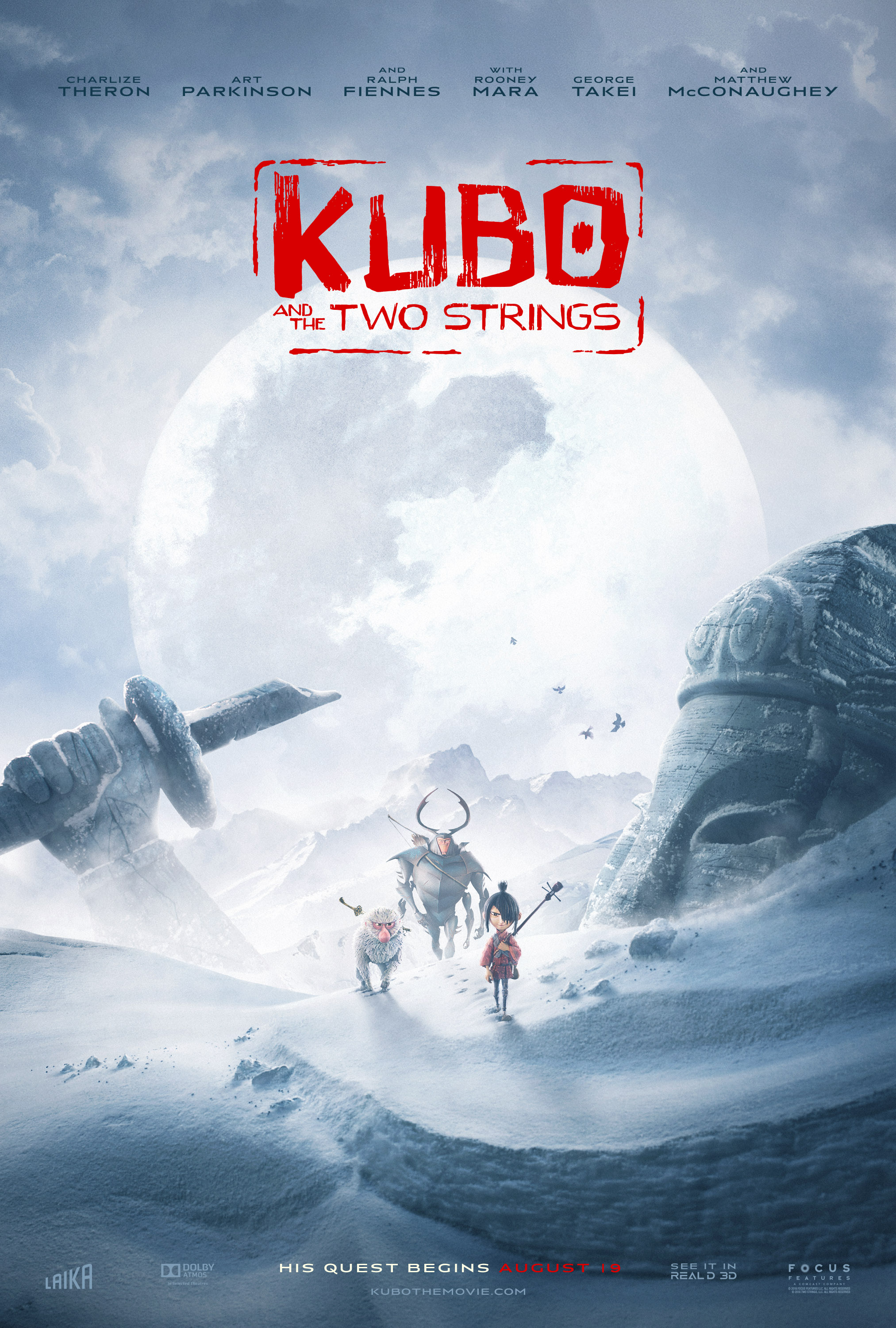
Kubo and the Two Strings (2016)

Cast: Charlize Theron, Art Parkinson, Matthew McConaughey, Ralph Fiennes, Rooney Mara, George Takei
Director: Travis Knight
released on blu-ray November 22, 2016
********** 10/10

the-ice-fields

IMDB: 8.0
Rotten Tomatoes: 97%, Audience Score 87%
The Guardian: *****/*****


Travis Knight is an American animator, producer and known for his work as lead animator for Laika Entertainment. And now he is known for directing Kubo and the Two Strings, which is his directorial debut.

Since 2005, Knight has been essential to the stop motion animation of the Laika team, wearing several hats and contributing to both CGI and stop-motion animation for its productions. Namely feature length films such as Coraline, ParaNorman and The Boxtrolls. He also serves as a member of Laika’s board and was recently nominated for Best Animated Feature on his work for The Boxtrolls.

But what do I think, you ask? Well, this is an amazing film dear readers. Brilliantly animated, with excellent voice acting, and an original story.

Kubo (Art Parkinson) is a one-eyed boy who lives with his sick mother, Sariatu (Charlize Theron), in a cave atop a mountain. He tells stories to the local villagers by magically invigorating origami through his three string shamisen. His favourite story is about a warrior named Hanzo who goes on a quest to fight the Moon King. Kubo must head home before sunset each day or her Sisters (Rooney Mara) and his grandfather the Moon King (Ralph Fiennes) will come for his remaining eye.

One day, Kubo attempts to communicate with his father, the deceased Hanzo… Nothing happens and he becomes angry, staying out past sunset. Sariatu’s Sisters arrive and attack Kubo, but his mother defends him, and impassions him to find Hanzo’s armour. When Kubo awakens the next day he learns that his little wooden monkey charm has been given life by his mother’s magic. Monkey tells him that his mother is dead and that he needs to move to survive. One of Kubo’s origami has come to life in the form of a little Hanzo, and during the quest they find an amnesiac named Beetle (Matthew McConaughey), a cursed samurai apprentice of Hanzo’s that has taken the form of a beetle. He offers his services to Hanzo’s son.

The first leg of the quest has the three battling a giant skeleton for the sword unbreakable. Next, Kubo uses magic to create a boat of leaves and the expedition sails across Long Lake for the breastplate impenetrable. Beetle and Kubo dive in to retrieve the breastplate. One of the Sisters attacks and Monkey manages to defeat her, but is badly wounded in the process. Kubo realizes Monkey is his mother reincarnated.

Monkey reveals that originally she and her sisters were meant to kill Hanzo, but she fell in love with him, which incensed her family. Kubo dreams and is greeted by Raiden, a blind old man who shows him the location of the helmet invulnerable, the final piece of armor. They head to his father’s damaged fortress, but are ambushed by the remaining Sister, she reveals Beetle is Hanzo, whom the cursed. Beetle is killed, and Monkey sacrifices herself. Two strings of the shamisen are broken in the process Kubo learns his village’s bell is the helmet, breaking the last string and flying back home.

He takes the helmet, but Raiden appears, now the Moon King. He wants Kubo to become blind and immortal like him. Kubo refuses and fights the Moon King, but loses badly. Shedding the armor and re-stringing his shamisen, Kubo uses its magic to recruit the spirits of the deceased villagers, proving memories are more powerful. The spirits shield him engulf Raiden in their magic. The Moon King is defeated, becomes human, and has no memories of his past. The remaining villagers and Kubo create a positive new identity for him. Kubo then communes with his parents spirits and sets their lanterns afloat.

Pros: The themes of spirit, memories, and death are strong, delivered with great emotional care. The animation slowly pulls you into this story, and once you are there it’s impossible not to appreciate the depth of characterization and inspiring message.

Cons: If you like your narrative delivered to you in direct terms, quickly establishing roles and character arcs, this film will not serve it up to you on a silver platter.

Runtime:  1 hour 41 minutes

Points of Interest: The boat sequence took 19 months to shoot, and the entire film consists of at least 145.000 photographs turned into a stop-motion film. The two strings of the film’s title is a theme of duality featured throughout: Mother and father. Night and day. Life and death. Creativity and destruction.

It’s refreshing to see an animated family film that features a prominent and mystical quality to it. A film that prefers to be driven by narrative first and then demand for visual quality, and as a consequence achieve something rare in cinema. An engaging story that pretty much any age group could enjoy thoroughly, but you have to be prepared to listen to it.

Let’s consider something for a second. Have you ever seen origami used so effectively in an animation that is about stories within stories? Kubo is a storyteller that uses song, performance and paper to make stories. That he and his cast of characters are made of the same materials is a point not to be trivialized, these forms can be understand by any age group or culture for that matter. And it makes the use of magic seem that much more significant. I loved this movie, and I hope you take the time to go see it for yourself creative cuties. I’m out of theories for now, but rest assured, I’ll be back tomorrow with something about what’s coming.

Tim

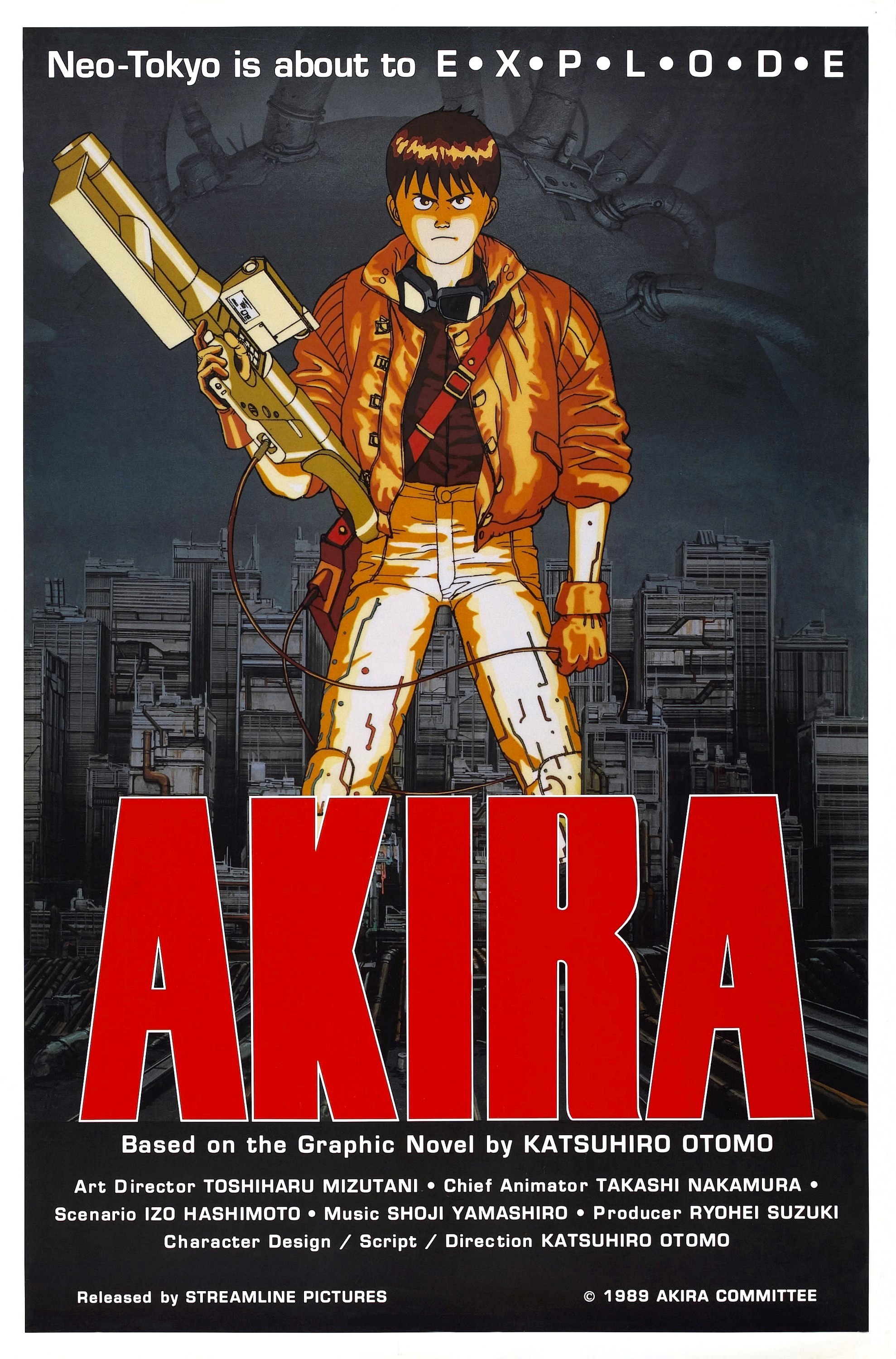
Set The Stage (Akira review)

I grew up on a lot of interesting anime cartoons. Dragon Ball Z, Samurai Pizza Cats, Sailor Moon, Pokemon, Digimon, Yu-Gi-Oh, and lots of live-action Japanese themed shows like Mighty Morphin’ Power Rangers and Super Human Samurai.

The one thing in common with most of these shows though, is that they didn’t really have an audience over here until the early 90’s, when I was a kid, because we just didn’t know the art existed. Thankfully we have a particular movie to thank for ushering in this culture before globalization was a thing.

Hence we are starting off this years movie reviews with a classic…


Akira (1988)
Cast:Cam Clarke, Jan Rabson, Lara Cody, Tony Pope, Lewis Arquette, Michelle Ruff, Bob Buchholz
Director: Katsuhiro Otomo
rereleased on blu-ray November 12, 2013
****** 8/10

90cc8eb2abbefc0696f94407f2c26701

IMDB: 8.1
Rotten Tomatoes: 87%, Audience Score 90%
The Guardian: *****/*****

Akira was a groundbreaking animated film (or anime) which was directedby Katsuhiro Otomo. Akira the movie is a variation on it’s manga namesake which was also written by Otomo.

The movie focuses heavily on the first half of the book, and takes key elements from the second half in order to tighten the story up and fit it in a two hour window.

But is it any good?

On July 16, 1988 we see an atom bomb destroy Tokyo.  Roughly 30 years the resulting WWIII, a Neo-Tokyo has been built and is both beautiful and desolate. The Capsules gang is hanging out at a bar and getting ready to take on the Clowns. Kaneda (Cam Clarke), is the leader of the group and heads outside where Tetsuo (Jan Rabson) is admiring his red bike.

After meeting, they chase the Clowns through the city, eventually knocking most of them out. Tetsuo loses control of his bike during this fight and is abandoned when the police show up.

Elsewhere a man is wounded and leading a small green skinned child through the streets. He shoots a dog during this run and is gunned down by the police. A building collapses and the crowd disperses, revealing a mustached man and a young lady named Kei (Lara Cody), who are are split up.

Meanwhile, the Capsules continue to fight the Clowns. During this Tetsuo gets into it with one Clown in particular and beats on him. When Tetsuo looks up, he sees the green person standing in his path and narrowly misses him, causing a crash and explosion. Tetsuo is unconscious and Kaneda and friends arrive to see the green person leave. Another green person in a hoverchair tells the fleeing person there is no escape and a tall military man, Colonel Shikishima (Tony Pope), emerges from a helicopter, picks up Tetsuo, while the Capsules are taken into custody. The Colonel then leaves with the two green children.

At the police station, Kaneda and his gang are interrogated, but eventually released. Kaneda notices Kei and arranges to have her released as well. It turns out she is part of a terrorist group, but teases him for flirting with her.

At the hospital Tetsuo is examined by  Doctor Onishi (Lewis Arquette), who realizes that Tetsuo has similar psychic potential to Akira, a young esper like the green children. Akira caused the explosion 30 years prior. Shikishima is informed by Onishi that Tetsuo is the key to solving the problem of Project Akira, a secret mission that was organized by an underground terrorist group. However, Shikishima is not convinced and will kill Tetsuo if he gets out of control.

Tetsuo wakes up and heads back to school. The rest of the Capsules are chatting with their girlfriends about the fight, the arrest and their messed up hideout. Kaori (Michelle Ruff), is concerned about her boyfriend, Tetsuo. He decides that they should run away and they steal Kaneda’s bike. But Kaneda and the others see this.

The bike eventually stalls. Then Clowns appear and assault Kaori. Luckily Kaneda and the others show up just in time. Tetsuo, is upset about being rescued yet again. And decides to beat on a Clown who is on the ground already. Tetsuo then gets an intense migraine and hears the word “Akira.” Military people suddenly appear and Doctor Onishi has Tetsuo taken back to the hospital. The gang is visibly confused.

Almost simultaneously we see another building explode and a group of men flee the scene. Kaneda then sees the mustached man and Kei fleeing. He follows her as the police close in. Kaneda then aids Kei in her escape and is taken to the terrorist headquarters where the leader, the mustached man named Ryu (Bob Buchholz), reveals the plan to capture the first green esper child has failed. He wants to capture the newest government subject, Tetsuo. Kaneda has been listening in and explains that he and Tetsuo are friends, he can help them out.

There is a lot more to it, and I’m not stopping to avoid spoilers – the statute of limitations on spoilers is a year or two tops, and this movie is over 25 years old. I’m stopping because there is a lot of plot left and your appetite should be whet by now.


Pros: It is so tightly packed with plot, action, and interesting ideas, it was incredibly ambitious for it’s time. And it still holds up today. You’ve got cyberpunk visuals aplenty too.

Cons: Because it moves at such a quick pace, is content heavy, and visually dense. If you don’t pay close attention it can feel rushed and you’ll lose interest.

Runtime: 124 minutes

Points of Interest: It cost over a million dollars to re-dub and layer in a new soundtrack when the film was rereleased in 2001. There have been talks of putting together a live-action version of the film, but it’s been difficult to get it off the ground.

If you enjoy The Matrix series, Kill Bill and many other sci-fi action films, this is the anime that brought these ideas to western culture and influenced the makers of those movies. The plot is great, the visuals are stunning, and it is just as interesting today.


Sure there have been other brands like Studio Ghibli that offer anime in a digestible format, but if it had not been for Akira, we wouldn’t have seen the darker and more mature side of animated film. When CGI is the hot topic of the day, anime continues to let us see hand drawn art come to life.

My hope is that we learn from the eastern culture and begin to marry the 3D content with the traditional 2D artwork and move forward with awesome stories.

Similar to what the big studios are doing by reintroducing practical effects into film and combining it nicely with computer effects. *Cough* Star Wars The Force Awakens *Cough*. Our eyes enjoy it better.

And that’s all I’ve got to say about that folks. I hope you take some time to check this classic out.

Have a good night, and I’ll see you tomorrow for some wisdom.

Tim!