
Discover Their Stories (Women’s History Month)
Today I wanted to write about some cool cats I know. Well not personally, but nonetheless, individuals who make great art and inspire all of us to be better human beings.
Memes aside, a moment for all of the ladies who make art despite facing incredible challenges every day, is not nearly enough.
I’m doing this in acknowledgement and praise of Women’s History Month. Which is a pretty big deal if you stop to think about it.
This is not going to be a post where I pretend to know the details of women’s history, because quite frankly, I’m not an expert on any kind of history, save maybe art history, and even then I’m not actively thinking about it often enough to claim mastery. No, this is a post for me in which I get to share with you some artists which I think need more attention and why I like them. Not “like” like them, just like them as professionals. Some of them are more known than others, but regardless of stature, these creatives are important and make great art.
Now I should address some hesitations my Canadian readers will likely have first. Yes I live in Canada, and technically that means I should be celebrating this event in October with the rest of my ilk, but quite frankly, I needed something to share this week and we share a border with Americans. And in case you didn’t know they’ve been running this event nationally since 1987, whereas we only picked it up in 1992. Shocking I know.
Insert Privilege Here
It’s a privilege for me to be able to write about these women, primarily because of the internet and a post-secondary education which taught me better. And that is a sad sad thing, so my hope is that you read these little snippets and take some time yourself to learn about these artists.
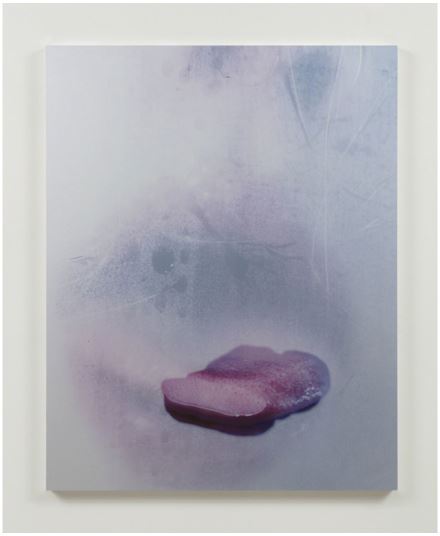
Marilyn Minter is an American artist who has been active since the 1980s. Her work often features sexuality and erotic imagery. Working in both photography and painting, Minter looks at the various roles of feminism, fashion and celebrity as they relate to idealizations of identity. Having published works in major American magazines and television she is known for being controversial and never loyal to one brand, medium or group. Minter has had exhibitions all over the world including Les Rencontres d’Arles festival in France, shows in Spain and Germany, being showcased in MoMa frequently. She teaches at the MFA department at the School of Visual Arts in New York and recently had a retrospective of her work in 2015. http://www.marilynminter.net/
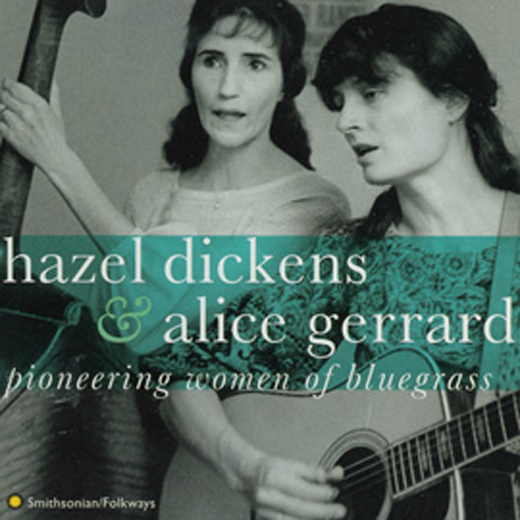
Hazel Dickens & Alice Gerrard were musical re-pioneers of what was a defunct form of music now popular once more – folk. The genre was given a boost back in the 1950s, and the duo of Dickens & Gerrard were at the forefront making friends and breaking hearts. Dickens, focused on bluegrass and acted as double bass, while Gerrard, also a singer, played both banjo and guitar, making them rather successful as both solo recording artists and as a pair. Their varied singing styles made use of both Dicken’s high-pitch and Gerrard’s love for crooning and shouting. The pair performed late into their lives but Dickens passed on in April of 2011.
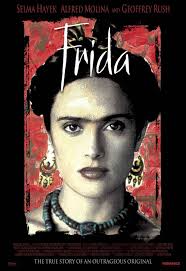
Julie Taymor is an American director of theater, opera and film. She is definitely best known for directing the stage, as she has been responsible for The Lion King musical, which netted her two Tony Awards, a first for a woman at the time. She has also directed broadway musicals for Spider-man and A Midsummer Night’s Dream. Taymore has an Emmy Award, a Drama Desk Award and an Oscar nomination, which is how I got to know her work. Directing films like Titus, Frida, and Across The Universe, Taymor has a natural aptitude for theatre which has spread throughout the performance arts. Taymors work on Frida was substantial and got the film two Academy Awards – one for makeup and the other for costume design.
This might seem like a small sampling of professional women to showcase for this post dear readers, but my hope here is to demonstrate that women permeate throughout the arts, and that this is merely a drop in the bucket of talented creatives out there. And these are some of my personal favourite artists too, I could’ve listed off Tracy Emin, Cindy Sherman, Sofia Coppola, Sarah Polley, Debra Granik, Taylor Swift, Ellie Goulding, Leslie Fiest, La Roux, Adele, and tons of others, but then I would just be making lists, and this is about celebrating women.
A privilege in and of itself.
theories Summarized
So where’s the wisdom you ask? Well, I’ll leave you with this quote by Susan B. Anthony and see if you can glean something from it. And I hope for damn sure that it’s absorption rate is quick, thorough and positively altering, and not a wasted theory.
It was we, the people, not we, the white male citizens, nor yet we, the male citizens, but we, the whole people, who formed this Union. And we formed it, not to give the blessings of liberty, but to secure them; not to the half of ourselves and the half of our posterity, but to the whole people — women as well as men.– Susan B. Anthony


 timotheories