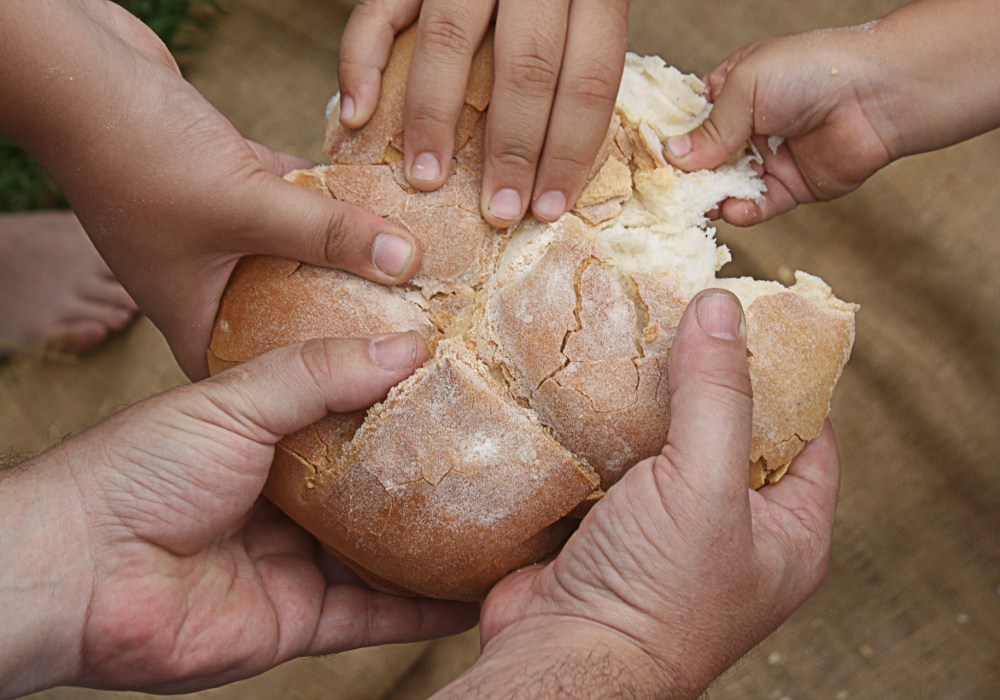
The 5 Love Languages (Gary D. Chapman)

Wednesday is typically a day for wisdom here on timotheories, as you know, dear readers.

It’s the day I share ideas from famous artists, motivational pieces of art, give suggestions on things you can do to make your life more fulfilling, and sometimes I dole out my own theories of global wisdom. For example, on one post in particular, I decided to construct my own reading list and then I came up with a catchy theme to describe the different types of books I would draw from to grow and shape my own journey. Like Liu Kang.
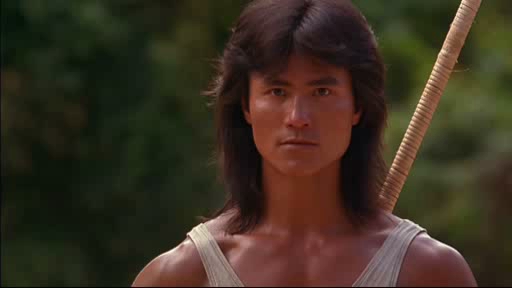
liu_kang

I even called it The Reading List. Not like Liu Kang.

Which makes perfect sense to me, even if it is a bit obvious. Like Liu Kang. But then as mentioned I took the post a bit further and came up with a conceptual framework to flesh out the types of books I would be reading going forward.

I called that concept the The 5 L’s of Language, not to be confused with the name of a book called The Five Love Languages, and which is authored by one Gary D. Chapman. Who happens to be this week’s featured author.

Just in case you forgot, this is what The 5 L’s of Language look like –


I will read one book a month from the 5 groupings below, slowly expanding the number of books read so that I reach the point of 5 books a month. A book for each group

  1. LIFE – Biographies/Art/Music
  2. LOVE – Classic Fiction/Non-Fiction/Graphic Novels
  3. LEARN – Business/Leadership/Self-Help
  4. LABEL – Philosophy/Sociology/Psychology
  5. LEET– The Internet

If you haven’t figured it out just yet, the topic o’ the day is LEARN. As In you need to learn your own unique primary love language as well as how the other four work. You do this so that you can properly love yourself, a romantic partner, and even manage other relationships better, whether you are single, married, a child, teenager, or even just a man.

Gary D. Chapman, Five Kinds of Love

Gary D. Chapman has authored at least five books related to the concept of five love languages and co-authored two books on the languages of apology and appreciation. He originally came up with the idea of The Five Love Languages after looking into twelve years worth of his own notes on common patterns he witnessed when counselling couples. He asked a very simple question – when someone feels unloved by their spouse, what do they want from them? And thus five categories of answers emerged.

If you can learn to appreciate the difference between words of affirmation, physical touch, acts of service, quality time, and gift giving, then you’re working towards a rather positive and generous view of love and how to share it.

I bet you’re hoping for more of a definition of each term, so that you can go out and apply these ideas ASAP. Well, okay, but I recommend that you read the book first, and then run a legit profile through Chapman’s website.

With that mentioned here is a quick overview of each language –

  • Words of Affirmation: spoken affection, praise, or appreciation.
  • Acts of Service: actions, rather than words, used to show and receive love.
  • Receiving Gifts: giving gifts that are meaningful.
  • Quality Time: expressing affection with undivided attention.
  • Physical Touch: sex, holding hands, hugs – affection via touch.

As you get comfortable with the languages friends, you’ll learn which of the five is most important to you, and then you begin to implement the philosophy into your own life.

For example, if your primary love language is “quality time” like me, that means you should spend time for yourself on meaningful activities, whether those activities include another party or two is up to you, but if you make art, you’ll like enjoy doing it on your lonesome. Or if physical touch is important to you, maybe you spend time in dance classes, making theatre with friends or regularly hugging your friends and family. But that’s just a theory.

Tim!
Contest, Context, Concept (Fairness In Art)

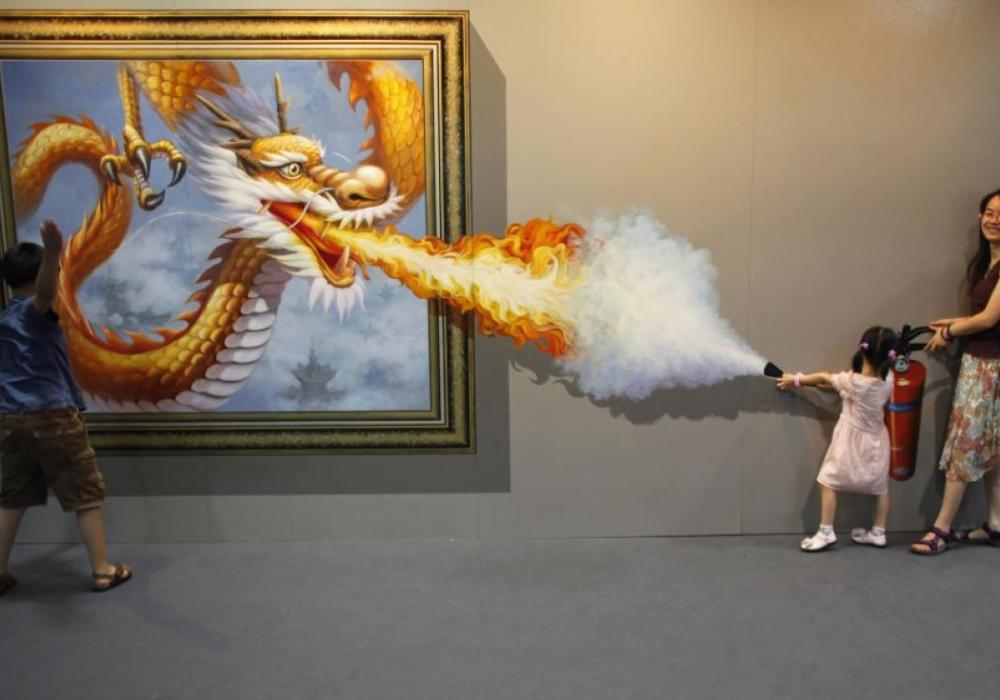
My parents tried their very hardest to impart ideas of fairness in us from a young age. “Share with your brothers and sister”, “make sure that everyone gets a taste of that pizza”, “you all need to do your part to keep the house clean”, “don’t forget that it’s your turn to do the dishes”, and so it went, on and on.

joeydoesntsharefood

Every family deals with these challenges.

But I more time I spent with fairness and other moralizations as I grew into adulthood, the more I struggled with that notion of fairness, because each of the four of us had unique interests, talents, and levels of influence within the family hierarchy.

Fairness is supposed to represent a way of making value judgments that are impartial, and many well defined roles and responsibilities are given their own value sets to help establish fairness, in particular for activities and institutions which revolve around instruction.

For example, I often think of teachers and their responsibility to uphold an objective. Yes, anyone can take on a teaching role, but professional teachers are the group I’m going to focus on.

Back to the objective of teachers.

The objective of teachers is to educate students in skills and knowledge. Where it falls down for me though is through the method of instruction employed (pedagogy) by many teachers – that they know best because they’ve been trained to know the best. Pedagogy assumes that there is an ideal way to learn and an ideal way to teach, and thus the practice concerns itself primarily with how best to teach. Professional teachers are trained in pedagogy. Now, let’s put a pin in that idea for a second.

When we come out of post-secondary education, no matter our specialization, many students with a bachelors, masters or doctorate, assume an expertise in that particular field.

And we each gain a sense of fairness particular to that subset of knowledge, but going back to the family example from earlier, the problem is that if you have four children who all grew into unique roles, for example a BFA Art & Design, a BSc Psychology, a BFA Drama and BE Drama and Chemistry, and lastly a BSc Physics and BE Physics and Drama, each family member has refined their “fairness” through a different learnt pedagogy.

So almost all university graduates walk away with a sense of rightness or righteousness, depending on how you look at it. Then some time passes, and hopefully that code eases off somewhat, because another skill that post-secondary education is supposed to teach you is to continue to pursue education throughout your life.

Which leads me to my theory for the day.

I don’t think that fairness exists in life. Shock. Gasp. Awe.

whoa_ho_ho_omg_double_rainbow-14301

From a young age we are told to do our best and worry about ourselves, but that still stimulates us to try harder, and in a family setting, it can simultaneously instill a sense of competition amongst siblings.

Which is actually a good thing. Because life is competition.

We compete for grades, jobs, sexual partners, games (sport, video, tabletop), and status. But that ideation of fairness is just part of the conscious desire to simplify the world around us. Which lets us determine what is right and wrong, and gain a sense of control over the world.

But the world functions purely on those levels of success, so whatever morality we put into art making, education, business, and any other aspect of life is purely personal. When we stop to reflect on the problem at hand and look at the scale, it comes down exactly that.

Individually we might love something or someone, but that doesn’t mean that song is a popular song or that person should love us back. Decision-making is not resigned to one person or one subset of people, but to the broader picture of humanity.

So stop considering what you internally feel is correct or worthy, and consider what you have done for your community or the people around you and that will help guide the art you create.

It’s about impact.

The greater the impact, the more people who want to reward the efforts of the person who created that ripple. If you can move a stadium of people with your music, or entertain a crowded street with your improvised unicycle and ball juggling act, or even divide a whole city with your graffiti that addresses the automation of industry and complacency associated with it, you’re going to get recognition.

If you share your song with one person, one person cares, but if you shared it with influencers on YouTube, then you are all of a sudden an instant success.

Someone once said that life is unfair, but that’s not really true. Life is very fair, but we try and assume authority over fairness and change it. Fairness is competition, realized by what we are able to accomplish in our community.

Going back to the point I made earlier about families and fairness, I think families should work to achieve the workload, but we should cut that word right out of instruction, children need to learn their strengths and contribute to society in a way that they are best capable, and educators need to facilitate this via models of instruction, with tempered positions of authority.

But that’s just a theory.

Tim!

 

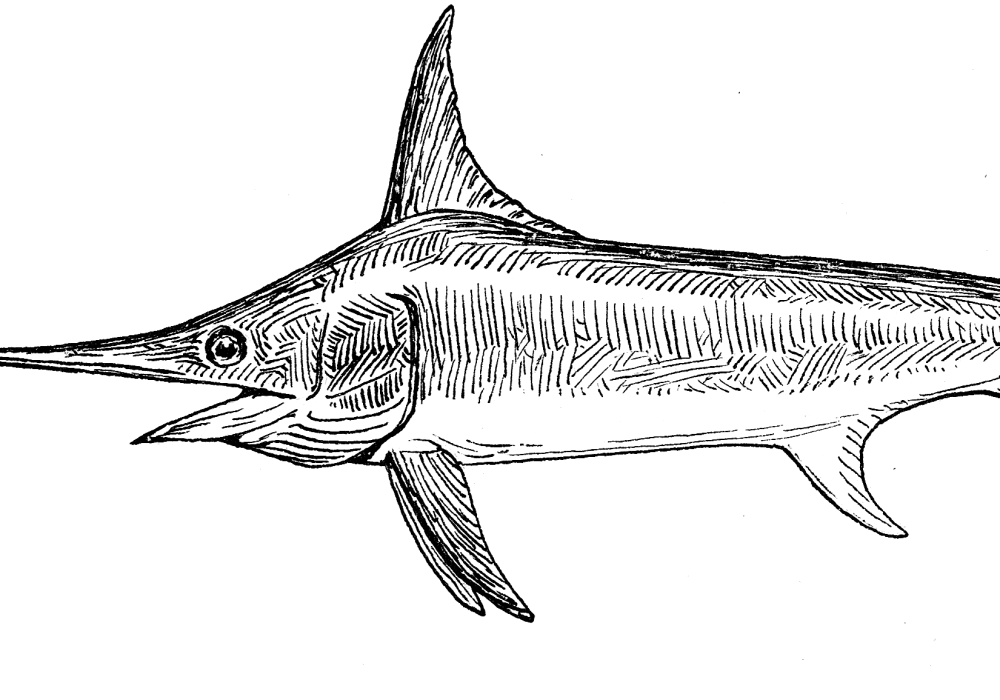
Swordfish Doesn’t Even Taste Good Anyway (The Fast and the Furious 15th Anniversary)

Fifteen years ago my life changed, and for the better.

Last Wednesday marked the anniversary of that transformative experience and so I sat down in a theatre by myself to watch my favourite movie of all time and reflect on it’s impact on my own life – I remember that first experience like it was yesterday, dear readers.

My best and oldest friend, who we’ll call Rick for the sake of the story, was living in the city of Airdrie and I was visiting him for a couple of weeks at the start of the summer. We had grown up on the same block, living in mirrored houses of all things, and we spent most of our free time together, though we did go to different schools and had somewhat different hobbies, we were inseperable. Life was pretty good for two young boys, and we got into all kinds of adventures until he moved to Drumheller for his dads new job after the final year of elementary school.

So Rick and his family lived in Drumheller for the next 3 years and we would hang out for at holidays and in the summer, and we did our best to keep in touch. Initially with letters and phone calls, migrating to MSN messenger as new tech become available. And then Rick and his family moved a second time – now to Airdrie for another 3 years, right at the start of high school. I mention this because it helps bookend those memories for Rick and I and it REALLY helps me in the recall of this tale.

In the summer of 2001 Rick and I had both finished grade 10, hormones raging away. We decided to sneak into an 18A movie, but because we weren’t 18 yet, we needed to buy tickets for another movie first. What did we want to see you ask? Well if your memory is as good as mine, you’ll know that Swordfish had just come out that summer, and Halle Berry was paid an additional $500,000 to go topless in the movie. $250,000 per breast if you want to be specific.

As straight CIS males in the midst of puberty, and who didn’t have high speed internet, money, or legal adult status, nudity was in high demand for us. To put it another way the sexuality supply was short. And so, context given.

But we chickened out, and ended up in the theatre for The Fast and the Furious instead. Thus, my first taste of this franchise was born. On first pass I thought it was a fun action movie, but I didn’t make too big of a deal out of it, because I didn’t drive yet, and the actors were unknown. It was quotable though.

The summer concluded, and I went back to school, though I decided it was high time to get a part-time job at an arcade called Playdium. I learnt a lot about retail, people, and West Edmonton Mall working there, but most of all I watched a lot of partial movies on my breaks. I must of seen The Fast and the Furious in 30 and 15 minutes pieces over 15 complete times that year. This is because one of the older techs at Playdium lived on his own and would record movies from the movie channel onto VHS and bring it in for the staff. And so the quotes and culture of the first Fast became ingrained in my mind.

It was tough to invest in the franchise though, because as the as the first couple of sequels came out, I was entering into university, and getting involved with hipsters and philosopher king types. So my love of movies and brooding love for Vin Diesel and Paul Walker took a back seat. I would tell people it was my favourite movie, mostly under the thin veil of irony, and I also proclaimed that it was a standalone film.

Then I graduated from university and a couple of years later Fast & Furious came out in April of 2009 – I finally had a true sequel with the original cast and the beginnings of a tie-in with the 2nd and 3rd entries. As movies were added, the ensemble cast grew and the relationships between characters evolved. And then I realized that I had grown as well.

As a cultivators of the arts, a student of film, and a fan of this franchise, I can say confidently that The Fast and the Furious instills values of friendship, love, and family from it’s first few minutes all the way throughout its films and into the culture.

Best of all, in watching this limited release I had an opportunity to see advance footage from the set of the 8th instalment, and I was not disappointed. This is a franchise that has grown organically and so has it’s fanbase. I was so happy to see a packed theatre last Wednesday, and you really do feel like part of a family sharing with these actors and their characters.

Most of the already existing posts on this re-release have focused on the scale of the franchise and the “improbability” of it’s success. But what has been ignored time and time again is that at it’s core The Fast and the Furious is about heart and honour, it started out as films about car thieves, and slowly evolved into superheroes, but the heart has always been there, and I think that’s why it’s beaten the odds. But hey, that might just be a theory.

Tim!

Mage User VS Art Producer (Artist As Genius, Assumptions PT 2)

Are you ready?

For this week’s instalment of Stimulating Sundays, I’m going to write about the fantasy genre and provide a relationship between it and the development of creative ability between family members, dear readers.

The story I’m about to weave could very well be rather complex or overly simplistic, the only way to know is to stick with me and see this through. I have no doubt that you will get there.

I also know that by the end of it, when all is writ and your minds are full, not only will you be satisfied with the results; you will be just a tad more knowledgeable and considerate about the subject we’re covering this evening.

That’s right, this is part 2 of last week’s entry on assumptions.

When I think of fantasy, I cannot help but stop to ponder the Vertigo comics title Fables – I was first introduced to these stories by my mom (who never reads comics) back in either the summer of 2004 or 2005, I can’t remember which, but that isn’t super important for the purpose of this point.

538153

It does provide a cool anecdote about the length this series has been in my mind though.

If you haven’t read the title before, I would highly recommend the series because it takes characters from the public domain of folklore and mythology and gives them a fun new twist. Regardless if you loved these kinds or stories or not growing up, one of two things will happen when you invest some time in the series (or possibly both). First, you will get reacquainted with familiar characters and have a grand time. Alternatively, you’ll enjoy the stories and the artwork, thus gaining an appreciation for their source material. Or as I said, both things.

So what does this have to do with artist families you ask? I’m getting there, I promise.

Now that I’ve got you thinking about magic, castles, princesses, and morality tales, it shouldn’t be too much of a stretch to bring up the concept of classes within the form. As we know, fantasy is a genre of fiction that uses magic and the supernatural to help tell a story or which features it in the theme.

The classes of fantasy are pretty straightforward, comprising fighter, magician, rogue, cleric, and ranger, with several variations thereof, as well as specific classes that exist in certain worlds. If you want a more detailed list – check out TV Tropes for more info. Just don’t get stuck there.

Great, so for the purpose of the remainder of this post, let’s assume that artists represent the magician class of a fantasy story, okay?

Which also helps because magic is central to the universe these characters inhabit.

Well, there are a number of reasons why people become magicians, and while most of the time it has to do with natural ability, authors recognize that said ability doesn’t just appear out of thin air. It takes significant time and/or another type of sacrifice in order to gain the experience needed to wield that ability.

Just look at this handful of resources I found about the topic. They all suggest different reasons for why creativity abounds in certain individuals, but the conclusions that nurture plays a role in the development of artists in truth throughout.

  1. Is creative ability determined by our DNA?
  2. Is Art Hereditary? The Mounts, A Family of Painters
  3. What Makes a Family of Artists
  4. Decoding Creativity – It’s In the Genes!
  5. Are some people born creative?

And just for fun, an article for you to check out and for us to come back to regarding artistic spaces. Cleanliness versus mess.

Article number 5 raises an excellent point about why creativity exists

But while creativity may appear to be a spontaneous burst of new ideas, it is really the art of deriving the new from the old – the relentless reassembly of information we already possess.

So for the sake of argument, maybe magicians exist in fantasy because that material needs to be assembled and reassembled, to be used in a way that it takes form and has function. Whether aesthetic or practical. It’s potentially an obvious association, but one that helps to tie back into creativity and why it continues to persist in our genetics.

We need people to exist who help us innovate and evolve. Who move us onward and upwards. As culture shifts, we need pioneers who can help define the way and take problems head on.

5277256-Excited-Old-Wizard-Mascot-Holding-A-Paint-Brush-Stock-Photo-wizard-cartoon

Environments that produce generations of artists can provide that role, but the parents/predecessors need to be especially cognizant of their stake in the process.

I think we will also discover that out of opportunity do artists find ways to exist. For example, my loving childhood home of convention and specific moral qualities allowed not only myself to pursue the arts but both of my younger brothers. But that’s a theory for another day.

What do you think of that theory folks? That creativity harnesses from the created world and furthers the creative cycle?

Tim!