Empire State of Mind (Environment)

I have probably played way to much Magic: The Gathering and other fantasy based games growing up my friends, because I always want to equate myself with a particular element of nature and just run in the general direction of that thing to better equip myself for the stresses of life. According to astrology and palmistry fire seems like the natural choice, while other personality tests and chinese zodiac results lead to that of the earth. So I guess that means I’m geared for the life of the country AND the city, but not so much high up or near water.

Whatever that means.

To be honest I think that we should make decisions about our physical environment based upon our interests and what inspires us. So if you need to be out in nature in order to be creative, do so, and what that natural environment looks like to you is also relevant, then seek it out.

Today, we go over the importance of your habitat, climate, scenery, terrain or surroundings.

Your Friendly Neighbourhood

That’s right friends, a new month,  a new post inspired by the OECD index which I was initially led to in the first place by the folks at Post Consumers. But this time dear readers, I have decided to focus on the importance of environment for artists and give you some options to consider in your quest towards health, wealth, and happiness. Because while frugality and conservation of resources are important for the planet, your mental space needs to be taken into account too.

Yes, believe it or not, if you look out for yourself and a lot of other things begin to fall into place.

i5tvtvm

But what does that look like, you ask?

Well, like anything in life that depends on what you are about. So why don’t I give you the rundown of some things to consider, via a handy list, and you can decide for yourself if you’re on the right track to health, wealth, and happiness.

Welcome To New York, It’s Been Waiting For You

Before we get too far along, I need to clarify something. While I do think that New York city is a great place to live, and while my subject headings in this post so far are really hinting at NYC as a one stop shop, that’s just not true. And no, I’m not leading you towards Los Angeles either.

Instead I want you to look over some questions and the corresponding key words, and think on what kind of creative professional you need to be. All of these factors will help lead you towards an answer, and lead you towards creating a sustainable lifestyle.

  1. Is it important to you to attend parties? Think street parties, exhibitions, murals, fairs, and citywide events.
  2. What about a structured living situation? This could include open-concept loft apartments, industrial towns, and attending art museums as well as galleries.
  3. Does the place you live in need to be warm all the time? A daily does of street performers, dancing, food eaten outdoors, curbside coffee shops, and urban graffiti go a long way.
  4. Could you experience a wide variety of activities and room for contemplation? Where does live music, onsite food trucks, post-secondary education, libraries or urban sprawl fit in?
  5. Would economic stability be essential? If you like quirky shops, breweries, cheap rent, and post-grad couture.
  6. How organic is your palette? Farm-to-table, organic groceries, yoga, countryside views… Do those terms grab your attention?
  7. Are you inspired by other mediums? If film, audio recording, performance, and site specific works are your thing, consider your location.
  8. Does interacting with your immediate space matter? For when you need to make guerilla art, partake in festivals, induce public art participation, and convert odd spaces.
  9. When do you choose to collaborate? Artist run centres, art collectives, creative clubs, and meet-ups are all options.
  10. Who do you collaborate with? Whether musicians, hippies, hipsters, scensters, hip-hop lovers, electronic record spinners, cowpokes , entrepreneurs, writers, theatre artists, photographers, and techies all have their homes too…

While not comprehensive, these are all great factors to consider in the much larger picture that is the artistic environment which you call home. I can dedicate a lot of time to any number of these aspects, but you need to start somewhere after all.

theories Summarized

Well creative cuties, have you got your terrain locked down yet? I hope you spend some time with this one because we all need to work in spaces which are inspiring, comfortable and accessible. Like so many of these themes that tie into the OECD, environment has value. It may be my theory, but it should be yours too. That’s it for now, I’ll see you tomorrow with a timely update.

Tim!
 

Your Weight In Gold (Postconsumers)

We live in an age where most people in western society have more than enough. If you really stop to think about it, all we require to live is air, water, food, and shelter – everything else is unessential.

Now, many people would argue that the standard of living in Canada dictates what is enough to get by. According to the Organisation for Economic Co-operation and Development Better Life Index, the average Canadian household brings in $40,000 net each year. Which is slightly higher than the OECD average of $38,000 CAD.

Wellness Factors of Life

I for instance, am just below the national average all on my lonesome. But that’s not a clear indicator of excess. Where you live, what you eat, and how you spend the rest of your money will be a contributing factor in your lifestyle of choice. And let’s be perfectly honest, whether you are a creative professional or not, but definitely someone who is in the midst of the hustle, pursuing their passions with the intent of making a living at it, you will definitely feel the pinch associated with living below the standard of living most enjoy. But what happens when you start to “make it?”

To give it even more consideration – where you rank housing, income, jobs, community, education, environment, governance, health, life satisfaction, safety, and work-life balance in that beautiful mix that we call living are big factors. And they vary from country to country.

When you begin to ask these questions for yourself, you’ll get a better idea of what you should be doing as a creative professional to live in health and wellness. And in fact, these themes just might be the beginnings of an area of exploration for timotheories readers in the coming months.

But we’re getting ahead of ourselves friends.

Right now I want to focus on the concept of living with enough. Much like the spiritual concept of being enough, living with enough is important for you to stay on the creative path and block out the white noise of life.

The Path To Post-consumerism

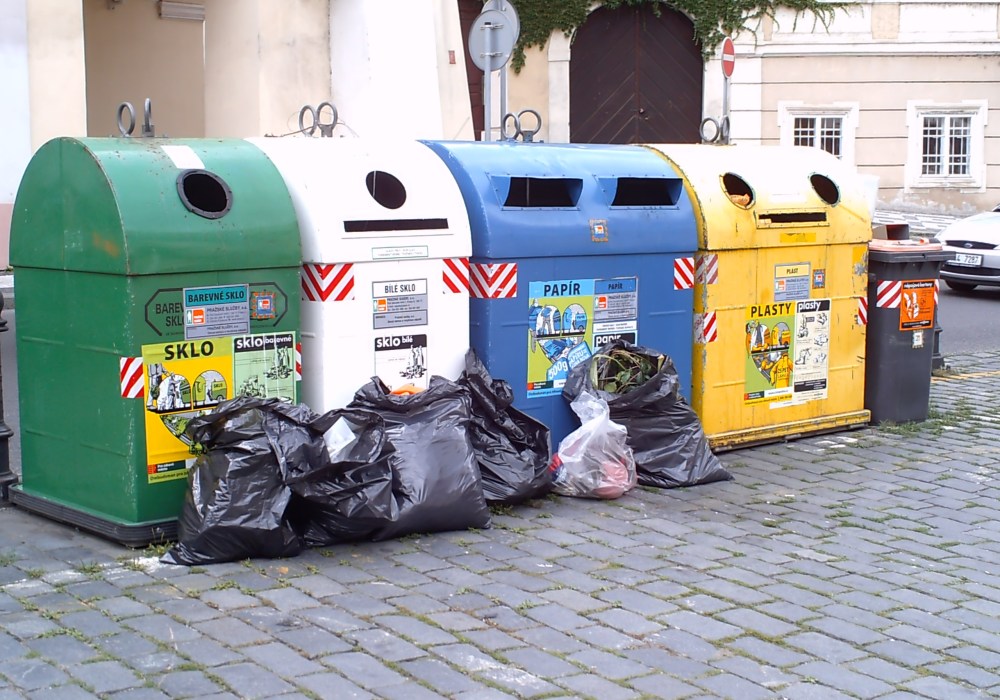
I want to introduce the concept of post-consumerism. Post-consumer waste is that which comes after a consumer of a material stream, Wikipedia’s words, not mine. Examples include, but are not limited to, packaging, fruit skins, meat bones, dust, weeds, outgrown toys, feces, clothing, advertising materials.

In other words, it is the garbage that people discard: the stuff that ends up in the dump, poured down the drain or thrown away as litter.

Now postconsumers.com is a website that addresses the concept of post-consumerism in a practical way. The practice of purchasing as a form of therapy, the media machine, feeling love for objects, are all topics that Postconsumers tackles on the regular. Quite frankly, people can very easily become addicted to consumerism and it will have negative impacts on their health, communities, and satisfaction. And we haven’t even considered how it impacts education, environment, jobs, housing, income, and governance.

So my first question for you dear sweet readers is this – are you falling into the vice-grip that is an identity determined by your things?

Seriously though, do you think that brands are important? What about trends and styles? And hello, have you considered that vacuous hole in your life yet? The one where you think having more of something will make you more important or “better.”

Think on these things my friends, as we begin the journey of exploring what that can mean as a creative professional. For now, I’m out of theories, and also a little weighed down. Might need to shed some couture.

Tim!

The Best Laid Plants (Plan To Make Plans)

Remember a week ago when I said we were done with the preliminary series of Life Hacks AKA Skills To Invest In?

Well while that was true, I wasn’t telling you that we were done altogether, only that we were done with the basic concepts.  This is because we did touch on each concept in one way or another dear readers, but we didn’t spend dedicated time on 2 topics in particular, and I want to get to them this month.

Which is why today we’re going to focus the first topic – Planning To Make Plans. Before we dig into it, let’s take a peek at the skill summary:

Plan regularly! Build routines to start your day AND end your day. You are going to have to organize throughout the day too, so make an outline to insure you aren’t starting from scratch over and over. Please also set deadlines for major projects by planning ahead. You’ll benefit from organizing your desk/workspace, minutes save hours, believe me.

We will definitely hit all four of those highlighted points dear readers, but if you’re patient with me, you just might foresee the great plan being laid out.

1. I don’t care who you are or what stage of life you are at, it’s important to have a daily routine and to schedule your days in a way so that they always start & end the same. How do you accomplish this you ask? Try theming your days

Monday – production and creating
Tuesday – management, company identity, and running your business
Wednesday – production and creating
Thursday – marketing, communications, and partnerships
Friday – production and creating
Saturday – FUN, aka relaxation
Sunday – reflection, feedback, strategy for the upcoming week

2. Organizing throughout the day can be daunting, especially with all the various forms of distraction we have so handy in our lives. But if focus on what exactly you want to accomplish that day, or to put it another way, what positive influence do you need to make on the world and that follows your passions for life, you can then set up an outline that will cover your needs. Especially with so many internal or external distractions, model your days (on Sunday) so that you hit four or five points throughout the day each day of the week

WORK – 2-3 tasks you need accomplished that day
PLAY – dedicated time for fun and recharging activities
FOOD – both prep and eating should be identified
HEALTH – to slot in exercise and self-care
MIND – for reading, learning, and simple reflections

3. Deadlines always seem scary, but guess what? You’ve already started to lay the groundwork to fit them into your routine. By coming up with a weekly and daily schedule, you can very easily develop a monthly schedule too. This is where deadlines can be helpful – You should never set deadlines for the non-creative work, as a creative professional, but you should set deadlines for projects, within reason. Where the reason comes in is somewhat subjective, but essentially you don’t want the deadline to be so far out that it loses meaning, or so close that it overwhelms, you need to find that 2-4 week sweet spot.

4. Organizing your desk and/or work space: Or how to keep your creative space inspirational. No matter what kind of creative person you are, you must know that your environment effects your creativity. But the question remains, how do you make your space both visually interesting & comfortable to work in?

– Have beautiful objects around you and music that motivates
– Organize based on your personal aesthetic and make it functional, -with stocked supplies
– You need to control the light – have access to daylight, but be able to to dim for abstract thought
– Comfort is crucial – your seat, your clothes, your shoes, the temperature… all important
– Remove distractions (phone, social media, TV, children) and troublesome clutter

This might seem like news to you, common sense or somewhere in between, but no matter what stage of planning your life is in, we all benefit from these types of theories because our current technologies are incredibly efficient at depriving us from focus – Dangerously so. But that’s just a theory after all.

I’m out of theories for now, but be sure to check back tomorrow when I examine something timely and lay out the monthly schedule.

Tim!

Eco-Friendly Arts (Earth Day)

Every Thursday I write something timely for you “near and dear to my heart” readers, because I recognize the importance of time-sensitive events, consistency of effort in delivery of those ideas, and the impact that well-communicated knowledge can have on the spread of said positive ideas in the world.

In fact, conveniently enough (almost too conveniently), I watched a TED Talk video earlier this week about the common thread of successful of TED Talks, as delivered by Chris Anderson. Anderson tells us that the key to a good communication is bringing singularly focused ideas to the table and within a context the general populace can understand. Then new patterns can form and you can positively effect someone’s personal world view. If you can provide examples to make them care all the better.

You see dear readers, an idea is effectively a pattern of information that helps you understand and navigate the world. Not unlike a set of instructions. If you’re more visual think of a blueprint or a road map. If you are more tactile think of a puzzle. And if you’re an auditory learn, the best example I can drum up is a group of musicians using music and lyrics to formulate a song.

If ideas are communicated properly and worth sharing, they have the ability to change how someone thinks about the world. And so today I want to write about something rather serious and also kinda polar bear-izing. I mean polarizing.

your-pun-is

And that’s “probably” the only joke I’m going to make today.

Did you know that today marks the 46th eve of the first Earth Day? Earth Day was invented on April 22 in 1970 amongst Americans as a way of consolidating the efforts of various activist groups who were fighting for environmental issues; mainly through protest. It was long overdue even then but what was most fascinating about the first Earth Day is that it woke up so many people to the idea of pollution from major industry (oil spills, toxic dumps, pesticides), deforestation, and ozone loss.

People make fun of celebrity activists like Pearl Jam, Leonardo DiCaprio, James Cameron, Brad Pitt, Darryl Hannah, and Cate Blanchett for supporting these types of causes, but the reality is that human beings do mess up their environment. All the time. And it’s not exclusive to individuals nor is it entirely the fault of large organizations.

Earth Day is important because it reminds us to celebrate the planet Earth. We live on it and use it, and no regardless of religion, colour, creed, nationality or political leanings, we all have to work together to keep this place liveable. Around the world many cities have community service initiatives in place on April 22 to ensure that we can each do our part to plant trees and nurture the landscape, especially in areas heavy with litter and pollution. The phrase “think globally and act locally” is pretty useful to help provide context.

And for the sake of learning, I will use visual artists to demonstrate the importance and ease in which you can implement these strategies. If you can cut down on your own eco footprint, you should do it. Recycle your paper based source material, make trips to pick up art supplies infrequent to save on gas use, and properly dispose of your oils and mediums by visiting eco stations rather than dumping in the garbage. In fact, if you are subtle you could probably even find scrap materials AT the eco stations which can be used in art work. Which in my books, is a win-win.

But what do you think? Do you have strategies to cut down on your eco footprint that I haven’t mentioned? What are your concerns with Earth Day and how do you celebrate? Please leave some comments, I don’t bite!

I’m out of theories for the week friends, so I’ll see you on Sunday with something stimulating.

Tim!

Red VS Blue! (How Environment Effects Creativity)

I’ve said it before, and I’ll definitely say it again after this post… but throughout human history creativity has often been thought of by the masses as a gift from another world, not something that comes from the brain and which can be developed and cultivated.

I bet you thought I was making a reference to TMNT, nah, I would never do that.

Michelangelo's_comical_scream

Moving right along; as a creative person I’m sure that this concept of creative influence is both fascinating and horrifying for you, because you want to succeed and get support to accomplish your creative goals, but if anyone can be creative, then that means you are no longer a special snowflake.

And I’ll let you decide which one fascinating, and which one is horrifying.

But what if I told you that your environment can be controlled in such a way as to effect your creativity either positively or negatively? What would you do? I bet most of you would jump at the chance to make subtle shifts in how your environment operated.

For instance, did you know that colour can elevate different kinds of creativity? According to this study, red can promote analytical aspects of memory retrieval and proofreading, whereas blue is good for brainstorming and innovation. Also in the same study, researchers have uncovered a correlation between noise levels, distraction, and types of work done – moderate noise and high noise produce more abstract processing vs low noise, but high noise impairs information processing, so moderate noise is the sweet spot for creativity, something which I touched upon in a previous post.

The most interesting thing about this study, of course, is that it demonstrates the correlation between creativity and improvement.

Another article I found recently references other aspects of life which can impact creativity. This is another one which Professor Juliet Zhu has looked into, and is a huge advocate for. Apparently dim lighting vs bright lighting an produce different results. Believe it or no, dim lighting has a positive association with abstract thinking and creativity.

cave-painting

Maybe that’s why cave painting started us off on this creative pathway in the first place?

But the article goes on to demonstrate that temperature and space make a difference too. Choose a cool setting for simple tasks and a warm place for complex ones. Clutter creates less self-control (binge eating for example), whereas organization creates self-regulation and persistence, both useful in their own situations. And that latter topic also happens to be something I’ve written about previously.

Still another article I read described the importance of writing out ideas by hand, which helps with idea generation, learning, and memorization. And apparently taking walks and working in rooms with high ceilings helps to promote creativity too.

But what you may not have considered is the importance that comfort can play in creativity both physical and mental. Having a space which has both small areas of intimacy and large open areas can stimulate different kinds of thought. And of course, you also need to be able to experiment and fail at projects. No one is capable of perfection, but surrounding yourself with individuals that do not support risk-taking stifles creativity quite a bit, so do what you can limit those kinds of interactions.

Jim Rohn said it best with the following quote

You are the average of the five people you spend the most time with.

It is imperative that you consider your relationships carefully, and to be closely surrounded by positive, supportive people who want you to succeed, and it’s also necessary to have critics. Though I suspect we can touch on that last point in a lot more detail and so I shall save it for another day.

What did you think of that theory? Does your environment fit the conditions above? Have I missed anything? Please leave some comments below, like and share this post, and of course please subscribe to my blog for more stimulating ideas about the arts.

Tim!