Das Ist Gut (Dunkirk review)

Not every story told follows the same narrative path as what preceded it. I mention this because Christopher Nolan has been directing movies since 1989 but it wasn’t until 2008’s The Dark Knight that we began to expect a certain tone from his films.


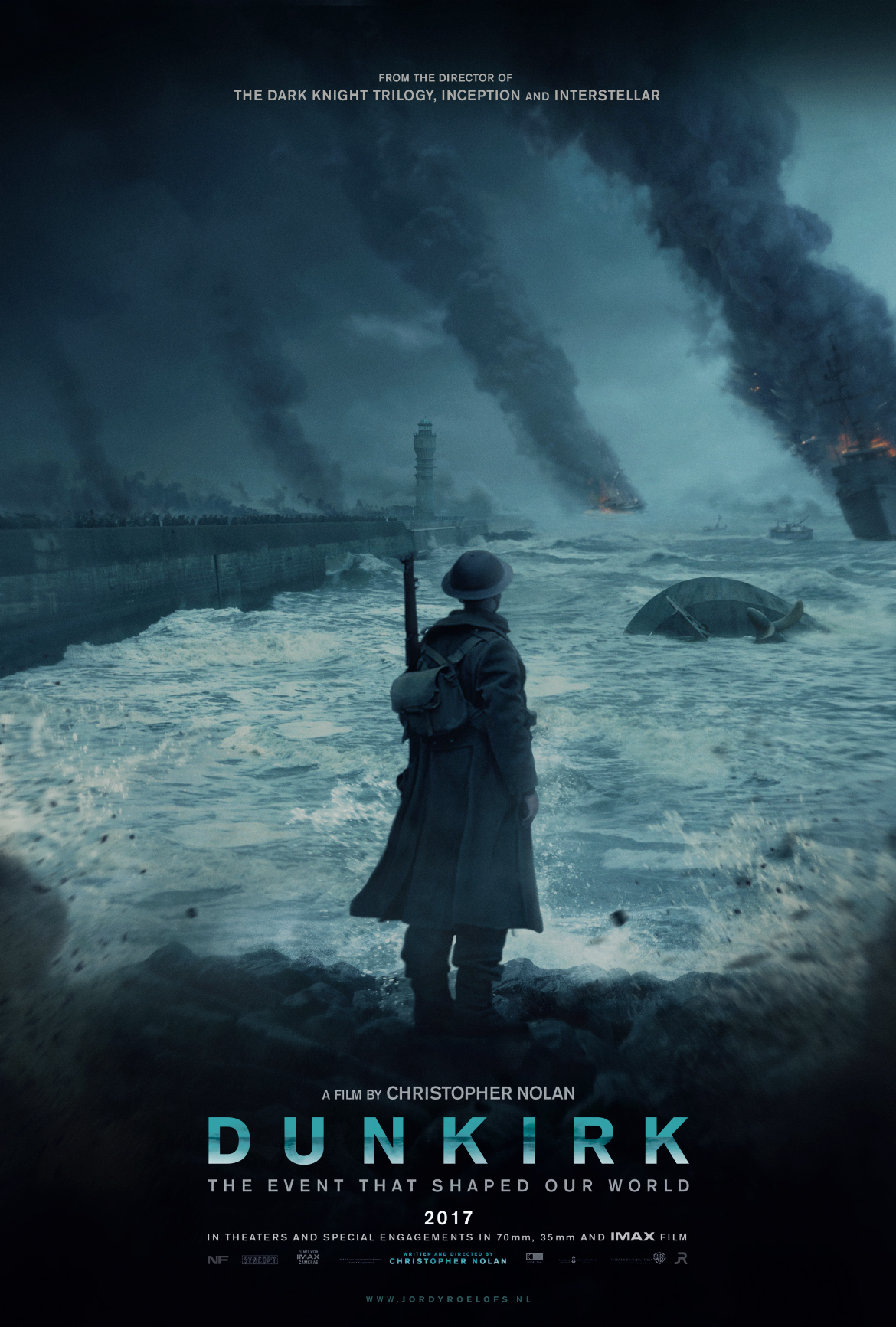
Dunkirk (2017)

Cast: Fionn Whitehead, Barry Keoghan, Mark Rylance, Tom Hardy, Cillian Murphy, Kenneth Branagh
Director: Christopher Nolan
released on blu-ray December 19, 2017
********* 9/10
IMDB: 8.1
Rotten Tomatoes: 92%, Audience Score 81%
The Guardian: *****/*****

Christopher Nolan is an English film director, screenwriter and producer extraordinaire. He also has dual citizenship in the United States. If you are unfamiliar with his work, he has also helmed the recent The Dark Knight Trilogy, Inception, Interstellar, Memento, Insomnia, The Prestige, and Following, his directorial feature length debut. There were three films he made before Following, but those were all short films.

An advocate for film preservation, Nolan’s films often explore themes of morality, the passage of time, and identity. He prefers to use practical effects where possible, incorporates wide angle shots to reduce the scale of his characters, and adjusts the narrative landscape through the use of gripping soundtracks (looking at you long-time friend Hans Zimmer) and by messing up the typical sequencing of scenes.

Dunkirk follows that tradition of Nolan’s films, but does so in such a way that the lead character becomes the evacuation itself, with Allied soldiers, Axis planes, and British civilians all helping to fill in for settings and props. I should be clear when I state that this is a war film, but the explosions, cries of pain, and bloodshed are not the focal points – it’s the magnitude of war and how it effects our personal decisions for right or for wrong.

Courtesy of Wikipedia

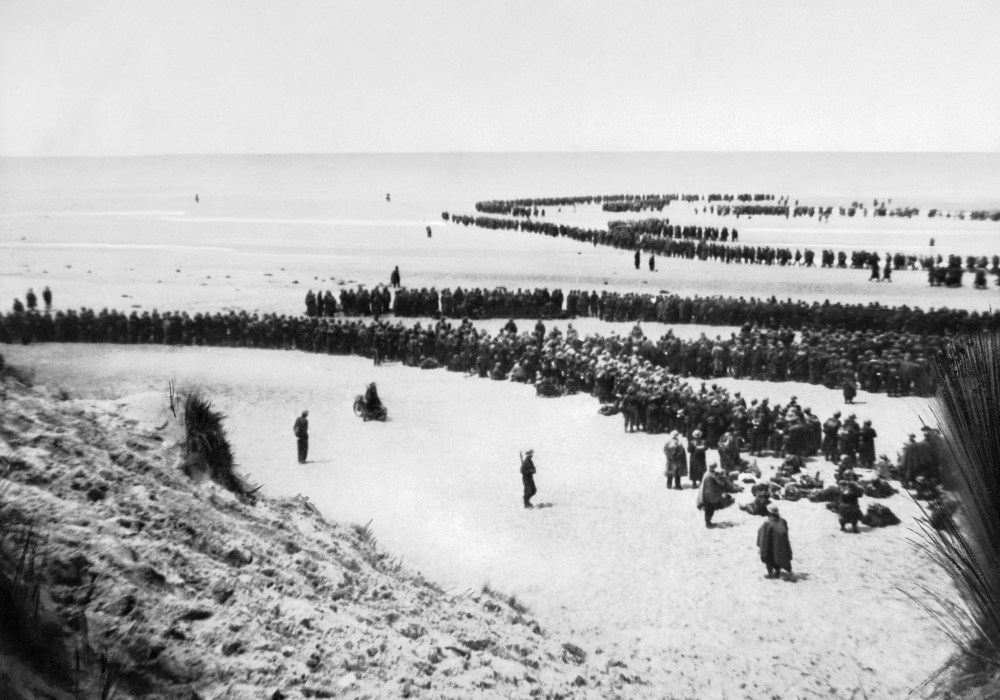
In 1940, during the fall of France, hundreds of thousands of Allied soldiers have retreated to Dunkirk. Tommy (Fionn Whitehead), a young British private, is the sole survivor of a German ambush. At the beach, he finds thousands of troops awaiting evacuation and meets Gibson (Aneurin Barnard), who is burying a body. After a German dive-bomber attack, they find a wounded man. They rush his stretcher onto a hospital ship hoping to get onboard and escape, but are denied passage themselves. The ship is sunk by dive-bombers; Tommy saves Alex (Harry Styles), another soldier. They leave at night on a destroyer, which is sunk by a torpedo from a U-boat. Gibson saves Tommy and Alex, and they are brought ashore by a rowing boat.

The Royal Navy requisitions civilian vessels that can get close to the beach. In Weymouth, Mr. Dawson (Mark Rylance) and his son Peter (Tom Glynn-Carney) set out on his boat Moonstone rather than let the navy take her. Impulsively, their teenage friend George (Barry Keoghan) joins them. At sea, they rescue a shell-shocked officer (Cillian Murphy) from a wrecked ship. When he realises that Dawson is sailing for Dunkirk, the officer demands that they turn back, and tries to wrest control of the boat; in the struggle, George falls and suffers a head injury that renders him blind.

Three Spitfires head towards France. After their leader is shot down, pilot Farrier (Tom Hardy) assumes command with a shattered fuel gauge. They save a minesweeper from a German bomber, but the other Spitfire is hit and ditches. Its pilot, Collins (Jack Lowden), is rescued by Moonstone.

Tommy, Alex and Gibson join a group of Scottish soldiers and hide inside a trawler until the tide rises. Her owner, a Dutch mariner, returns. German troops shoot at the boat for target practice; when the tide rises, water enters through the bullet holes. Alex, hoping to lighten the boat’s load, accuses Gibson, who has been silent, of being a spy and demands that he leave. Gibson reveals he is French; he had stolen the identity of the soldier he buried, hoping to evacuate with the British. Alex, Tommy and the Scottish soldiers abandon the fishing boat when it begins to sink. Gibson is entangled in a chain and drowns. Alex and Tommy swim towards a nearby destroyer, but it is sunk by a bomber. Moonstone manoeuvres to take on troops, including Alex and Tommy. Peter realises that George is dead; when asked by the shell-shocked officer, he lies that George will be fine. Farrier shoots down the bomber, which crashes and ignites the oil slick from the sinking destroyer. Peter reveals to Collins that his elder brother was a Hurricane pilot, killed early in the war.

Farrier reaches Dunkirk, his fuel exhausted. Gliding over the beach, he shoots down a dive-bomber to cheers from the troops below. He cranks his landing gear down and lands beyond the Allied perimeter. He sets fire to his plane and is taken prisoner by German soldiers.

At the beach, Commander Bolton (Kenneth Branagh) watches the last British soldiers leave. He confirms that 300,000 have been evacuated, ten times more than UK Prime Minister Winston Churchill had hoped for. He remains to oversee the evacuation of the French rearguard. Alex and Tommy cross the English Channel and board a train in Weymouth. Dawson is congratulated for having saved so many men. The shell-shocked officer sees George’s body being carried away. Peter visits the local newspaper with a photograph of George; a front-page article later commends George as a hero. Alex expects public scorn as the train approaches Woking, but they receive a hero’s welcome. Tommy reads out Churchill’s address to the nation from a newspaper.

This is nightmare fuel. Beaches filled with men with nowhere to go watch in terror as German aircraft decimate them from above – the analogy of the boot stomping ants is sickeningly accurate in this case. The movie showcases the blender full of emotions in such a thoughtful way, allowing us to give pause and see faces filled with anger, others with pride, despite not connecting with anyone long enough to root for them. It’s an odd thing, given that Cillian Murphy, Tom Hardy, Mark Rylance, and Kenneth Branagh are all excellent character actors – Nolan only gives us a taste into each man’s personality knowing full well that war dwarfs our self-importance.

Pros: The action moves up and down, like a wave crashing on a beach. The sparse storytelling and tone of failure barely concealed by dumb luck work damn strong to force a response. It’s technically brilliant.

Cons: A lack of an emotional core, might be difficult to swallow. Tom Hardy’s Farrier could have been given a slightly larger role – showing his end at the hands of Nazi soldiers even. A lot of unanswered questions.

Runtime: 1 hour 46 minutes

Points of Interest: Thirty or so Dunkirk veterans attended the Long premiere – they appreciated the accuracy of the story, but felt the soundtrack was louder then the actual bombardment. Nolan cast young and unknown actors based on accounts of how inexperienced the real soldiers of Dunkirk were.

As far as a military effort, the Battle of Dunkirk was an epic disaster on a global scale. But the evacuation of almost 300,000 soldiers and the moral victory of the British is considered by many historians as the lynchpin in the Allied story of fighting against tyranny. By giving the soldiers and citizens an equal footing, Winston Churchill was able to foster a spirit of resistance within this nation, and turn a tragedy into a triumph, which is echoed in the final moments of the film by Alex as he is welcomed home in Woking.

theories Summarized

I wasn’t quite sure what to make of this film as a I watched it, if I am being completely honest. Mysticque and I watched it together, and she was not a fan of it by any means. I try not to let other opinions effect my own interpretation of a film, but rather to enhance it. In this case it was invaluable, because Dunkirk is a film of competing emotions, many personal narratives drowned out by a larger message. I think you should see this film, especially given that stories like Saving Private Ryan and Pearl Harbour exist. A film like Dunkirk will help to expand your worldview and introduce a greater perspective on World War II, a time that that provided such cognitive dissonance for humanity, theories and all.

Tim!

Flower Powers (Brendan Canning, Home Wrecking Years review)

Have you ever jumped into a pile of leaves dear readers? Fallen into a snow drift? Tumbled into a pool? Slipped in the mud?

Yeah I have too. Nature has a surprising amount of built in padding for both kids and adults alike. And yet we never seem to take advantage of it – Especially in summer. Consider this idea for a second… What if you were to dive into a bed of flowers?

I bet it would feel a lot like this album.


Brendan Canning – Home Wrecking Years
released August 12, 2016
******** 8/10

brendandhomewrec

Brendan Canning has been making indie music for a long time – 24 years to be exact. I know this because the year that he became active is the same year that my baby brother was born. Which in music years, means he is old as fuck. Just kidding Brendan! Anyway, Canning is a co-founder of Arts & Crafts sweeties Broken Social Scene, yay for Canadian content! Canning has also been a part of such acts as Blurtonia, By Divine Right, hHead, Len, and Vally of the Giants.

Yeah that Len, the Len that performed Steal My Sunshine.

But this isn’t a group record, it’s a one man show. Speaking of which, Canning has now made three solo albums, the most recent being Home Wrecking Years.

It is immediately accessible and feels like an album you should listen to on vinyl with some incense, hummus, and your most breezy shirt. You shouldn’t expect anything less than a comfortable and heartwarming experience with this record. That is, if you’re familiar with Broken Social Scene’s experimental, shoegazing, and noise infused sounds. Because most of the guest spots feature regular BSS members Sam Goldberg and Justin Peroff

It’s not quite as epic in scale of course; But that combination of guitars, horns, woodwinds, and string instruments is definitely there for you get a good feeling about.

Now, I could spend time picking apart each individual track and tell you the strengths and weaknesses found on the songs contained within this album, but to be perfectly honest, that’s not the way that I ultimately took this album in. I listened to it in my car throughout the week, on the way to work, on the way home, going to see friends, onto a date, taking my brother to the medi-centre, basically just out living life. I tried to set it down and pay really close attention to it, I swear, but it never felt right to do so.

As I mentioned already, this is music you put on to feel good about yourself and your unfolding story.

It’s a weird thing, as much experimentation as Canning puts us through in his shoegazing efforts, that’s okay. It’s allowed. We have music so many kinds of music out there on the market, it’s nice when an artist pulls back some of his cords and unplugs. And that’s what Home Wrecking Years is a raw and simple record, which is experimental for this artist. Ever heard the expression, hiding in plain sight? Yeah, pretty much that’s what this is. A great album, hiding in plain sight.


People get so concerned about stopping to smell the flowers, that they never think to dive right in. But I bet you that if you did take that chance, you’d find Brendan Canning just hanging out in your neighbours flowerbed, hiding in plain sight. A notion of summer well remembered.

I’m out of musical theories for now my friends, but you should check back tomorrow, when I share a movie review about another natural occurrence.

Tim!

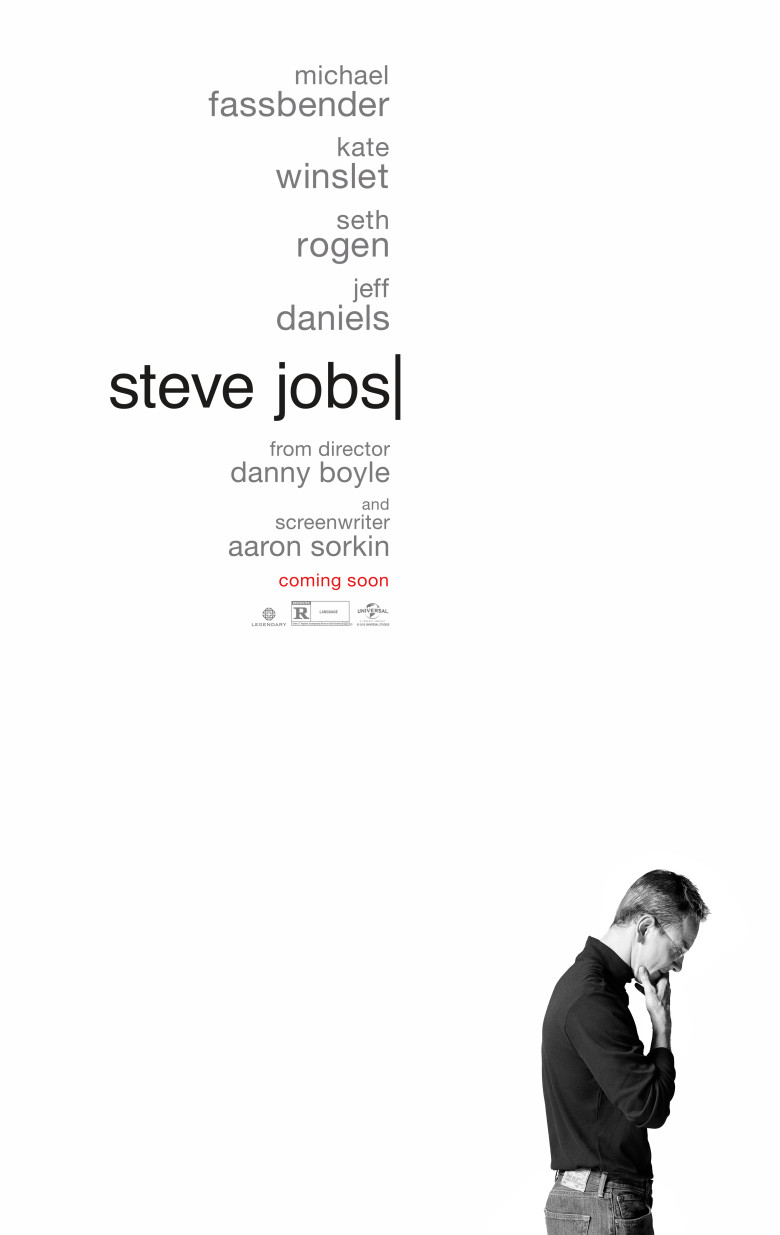
The Cult of Apple (Steve Jobs review)

Great men and women are always to fascinating to the world. It’s almost as if people expect that by analyzing them, they’ll get insight into how to achieve their level of success and become them, without doing any real work.

Almost cult-like behaviour.

How fitting, given this week’s movie review topic.


Steve Jobs (2015)
Cast: Michael Fassbender, Kate Winslet, Seth Rogen
Director: Danny Boyle
released on blu-ray February 16, 2016
******** 8/10

SJB_Tsr1Sht5_RGB_0818_1-780x1235

IMDB: 7.3
Rotten Tomatoes: 85%, Audience Score 76%
The Guardian: ****/*****

Danny Boyle is an English stage and film director, producer, and screenwriter, with a spiritual atheist belief system. Raised in an Irish-Catholic home and in line for the priesthood until he was 14, Boyle was persuaded by a priest to consider a different path.

He decided to enter into drama and I think we are the better for it.

Boyle has directed Trainspotting, The Beach, 28 Days Later, Slumdog Millionaire, 127 Hours, among others. His belief in the connection between theatre and spiritual expression has likely influenced his project choices, but let’s dig into the plot a bit to see what I mean.

The movie starts in 1984 California with a young Steve Jobs (Michael Fassbender) and his marketing executive Joanna Hoffman (Kate Winslet), discussing the failure the Macintosh computer demo is currently facing. Andy Hertzfeld (Michael Stuhlbarg) is also there and tells them it cannot say hello because they need special tools to open up the computer.

Joanna wants Steve to stay calm and lower his voice because a GQ journalist is present and could get them bad press. Steve not only wants the computer to say hello, he wants total darkness in the theatre to focus the audience attention, which is not allowed due to safety reasons with the exit signs. Joanna suggests delaying, but Steve says that a tech company MUST start on time.

Joanna and Steve go backstage. She tries again to convince him to leave out the voice command, but Steve needs it to show the world that computers are not scary, even though Hollywood says that they are. Joanna is also upset about the price tag and limited memory but Steve explains that the computer is intuitive and innovative. While discussing this, Steve finds boxes of TIME magazine, and is upset because he should have been Man of the Year, but the journalist didn’t like him. Joanna is more concerned about the fact the article mentioned Steve has an illegitimate daughter which reminds her that his ex Chrisann (Katherine Waterston) and daughter Lisa (Makenzie Moss) are there – He should go talk to them and calm Chrisann down.

Backstage, Chrisann and Steve start to fight and Joanna leads Lisa out of the room. Chrisann is upset that Steve implied she is a slut and slept with 28% of the population but Steve corrects her and say he is only 94% likely the father which means 28% of the population could be as likely. Lisa knows that Steve named one of the computers after her, but Steve tells her its coincidence. Chrisann knows Apple stock is up 441 million and yet she and Lisa are on welfare.

Enter cofounder Steve Woz Wozniak (Seth Rogen), who is wants recognition for the Apple II team in the speech, which Steve also brushes off later.

Steve wants someone to find a white shirt with a pocket so he can pull out a floppy disk. Joanna asks “why white?”, but Steve has an answer ready. He knows that the white will offset the beige of the computer casing. Andy comes back and tells Steve he still can’t fix the voice feature. Steve threatens Andy by telling him he will list of the the team of developers and each off their roles in the creation, and he will be the one team member with a feature that didn’t work.

What a good place to stop, just as the first act is about to end.

Pros: Much like the real life Steve Jobs, the film flows with genius and visually constructs the setting to showcase Fassbender in this role. Also like Fassbender the pace and the builder have you wondering if it’s going to work out, but it does.

Cons: We can tell that Steve Jobs was flawed, but we don’t get to see much more than that. It feels a little stiff and structured at times.

Runtime: 148 minutes

Points of Interest: Each of the acts were shot slightly differently. 1984 in 16mm. 1988 in 35mm, and finally digital to symbolize the development of Apple technology and focus of Jobs over the 16 year period. The shareholder meeting and product launch from 1984 was recreated at the original location of the Flint Center of De Anza Community College in Cupertino, California.

The movie features an excellent ensemble cast which is directed quite well by Boyle, but it might just be writer Aaron Sorkin who is organizing the details of the film. The film is structured in three acts, features a lot of standing and walking between actors, and elements of satire. This is what pulls you in and engages you with characterized Steve Jobs. It’s fun, thoughtful, and interesting, to say the least.

I wouldn’t ever accuse someone of belonging to the cult of Steve Jobs. I would accuse them of over-indulging in his personal philosophies and believing that the brand he built with Apple is capable of being peanut-buttered over anything. But that is often how it is with genius. We want to reach out and grab it, and hope that it will rub off on us.

Maybe a good lead-in for some wisdom tomorrow? I do have some theories after all.

Tim!