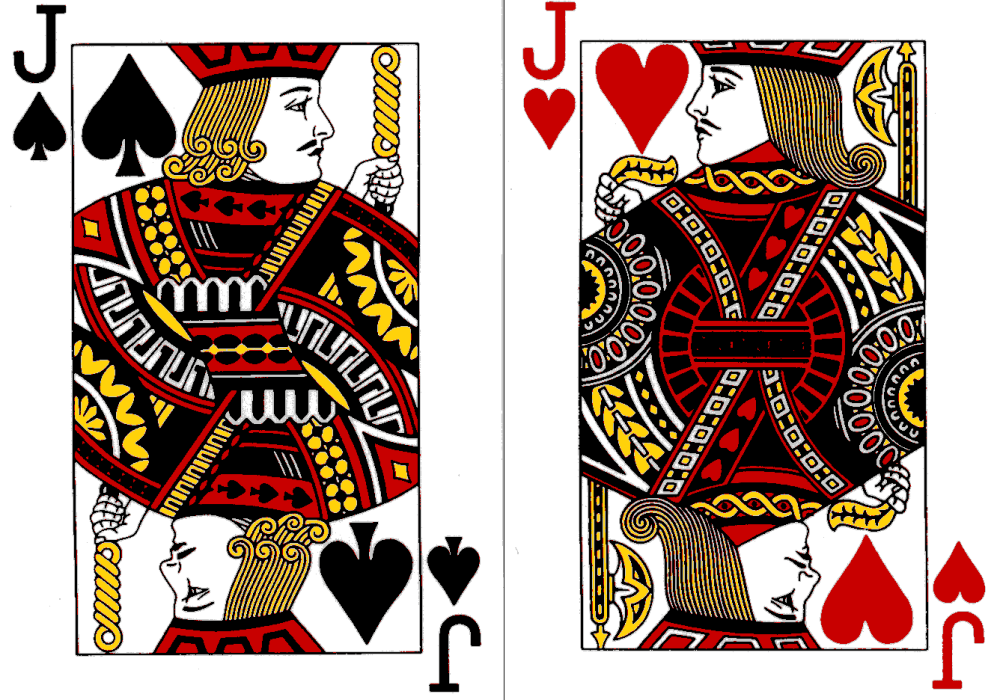
Master of None (Multi-Tasking Misery)
Remember that time when I wrote about the Pomodoro Technique?
That was definitely one of my favourite posts of the Life Hack series that we’ve had so far – it addressed time management and cutting out multi-tasking. But I know that a lot more can be written about both concepts, especially as solo posts, which is why I’ve decided to dedicate today’s post specifically to the topic of Multi-Tasking Misery.
In case you need a refresher, here is what I had to say the first time around when it came to … Multi-task misery. Learn to multi-task the right way, by cutting it out of your life. If you keep a million tabs open on your browser, you’re gonna have a bad time. Please remove distractions while you work and spend time with others. Turn off your phone, close your tablet, and focus on the task at hand.
If you do your homework on the topic of multi-tasking, you will discover rather quickly that there are a few schools of thought on the subject. For the sake of simplicity, we are going to break them down into two groups – believers and researchers.
Believers act as if.
The idea behind the phrase “act as if” is straightforward. It uses the Law Of Attraction, which is the idea that if we act as if something already exists for us, whether that thing is a physical or mental possession, we will somehow create conditions to have that thing be realized in our lives.
It’s a cool idea in theory, but I have to wonder how realistic that expectation is.
What I am getting at dear readers, is that believers act as if multi-tasking works and therefore they set up the conditions for them to accomplish multiple tasks at any given time. Whether this is good or bad, believers often get what they expect.
On the other side of the coin are the researchers. Researchers have used experience and testing to determine if multi-tasking is really the way to go. I’ll give you a hint as to the answer, I’m covering this group off second, and I was taught to end a point with your stronger argument.
Multi-taskers are in fact truly guilty of task-switching, because people cannot physically do more than one task at a time. What they are really doing is using up precious energy jumping between tasks, never really getting in the zone, and ultimately wasting important productivity. This loss comes in the forms of longer individual task completion time, error increases, and wasted brain power.
Let’s talk more about that wasted brain power. According to this article, research shows that while multi-tasking does slow you down, it also effects your IQ points. People can experience drops of 15 points from multi-tasking, which is equivalent to staying up all night or smoking marijuana. What this means is that your cognitive function goes down and your decision making ability is limited.
And there is also research that indicates that using your phone, laptop, and tablet while on another activity, say television for instance, can permanently reduce your brain density in the anterior cingulate cortex, AKA the place where you experience empathy and emotional control.
So what’s a creative to do? Especially when we are so used to jumping back and forth on multiple projects, emails, and visual stimuli? I have another article that will help, but below is a nice short list.
- Plan your day in blocks – which I’ve written about at length recently
- Manage your interruptions by taking a deep breath every time an external OR internal prompt comes up, then use 5 minutes to refocus
- Turn off computer notifications and flip your phone to be back side up
- If you have a wandering mind, especially in meetings, acknowledge the thought or thoughts, but quickly remind yourself where you are and get back to the task at hand
- Emergencies happen – instead of using the dreaded multi-task, stop and note where you were, especially what you were going to do next. Then deal with the problem at hand. Once done you can refresh the other task more easily.
Another life hack covered, and another tool to put on your belt my friends. But what do you think of this theory, is it whack or a great hack? Please share, subscribe, and comment if you’re up to the challenge. Otherwise, I’m theoried out for the day, so I’ll hit you back tomorrow with Nextfest.
Tim!

 timotheories