Time Of Your Life (timotheories April 2017)


April is one of my favourite months of the year, for a few reasons.

It’s the month I was born, which every other year is the same time as the Easter holidays, and it reminds me of my family. You see, dear readers, when I was growing up, every Easter, my family of six would all cart ourselves from one province to another to visit the grandparents. We called our grandparents Papa and Nana, of course. Because of the Ukrainian ancestry.

Which is why this month I decided to focus a lot of my posts on things that matter to me personally. Music, film, the arts, and how to be successful as an artist.

Just kidding, I do that every month. A little late for an April Fools joke, but you can’t say I didn’t try. Terribly.

Also, I mentioned this in my HMV post, but technically I won’t have a problem with reliable forecasting on film and music choices, now that I’ve converted to Amazon Prime, but for the sake of humility, I’ll keep this disclaimer up… just in case.

*Disclaimer* As always, every week I purchase an album and movie one week ahead of the actual review release and while I have the best intentions, I don’t always get what I want… so if you follow me on instagram (@timotheories) you can actually see what’s coming.

timotheories summarized – April

Stimulating Sundays – (04/02) …, (04/09) Cross Talk Ep. 21, (04/16) Cross Talk Ep. 22, (04/23) Cross Talk Ep. 23, (04/30) Alex Racine interview
Melodic Mondays – (04/03) Sampha, (04/10) The Mavericks, (04/17) Arca, (04/24) Father John Misty
Theatrical Tuesdays – (04/04) Fantastic Beasts and Where to Find Them, (04/11) Rogue One: A Star Wars Story, (04/18) A Monster Calls (04/25) The Founder
Wisdom Wednesdays – (04/05) Li Kunwu, (04/12) Life Satisfaction, (04/19) David Deida, (04/26) Facebook Success Stories
Timely Thursday – (04/06) timotheories April, (04/13) Easter, (04/20) Fate of the Furious, (04/27) Birthdays

So I missed the mark on the first Sunday of this month – it’s been a bit of a challenge to stay focused with all of the personal changes going on, and my day job, and a new(ish) relationship. Not making excuses, just letting you see that I too am mortal and fully capable of failing.

But let’s focus instead on the fact that I’ve got three Cross Talk episodes coming your way, one of them about Easter Eggs in film (super fun topic), plus the beginning of a series further exploring how certain themes exist in film, but defy genres.

And no, I didn’t forget about Amanda Wall creative cuties. We’ve been trying to figure out a way to make her interview happen. She is a freelancer and full-time mom after all, and scheduling has proven more challenging than originally anticipated. That said, I do have something in the works with a local game designer by the name of Alex Racine – I promise that’ll be fun.

The rest of the topics are gonna be amazing too, from films set in the Star Wars universe, Harry Potter lore, and an adaptation of the beginnings of McDonalds, plus some Mavericks from my past, I have a ton of theories to share on books I’ve read and social media too. Also, did I mention it’s my birthday month? And that the eighth instalment of my favourite film franchise opens in less then a week?

So many theories, so little April to shower you with ideas. But I’ll do my darnedest!

Tim!

Time Moves Slowly (Boyhood review)

It can be tough to overcome a traumatic childhood. We are slow to realize when things have gone wrong and can even normalize recurring behaviour that we shouldn’t. Closure can be difficult, especially when we have to remember the past and our brains can easily alter our chemistry in order to “protect” us.

That said, the human brain and soul is resilient, and when we consider matters concerning love and emotion, those tragedies of life can become lessons and turn the ugly into something far more beautiful.


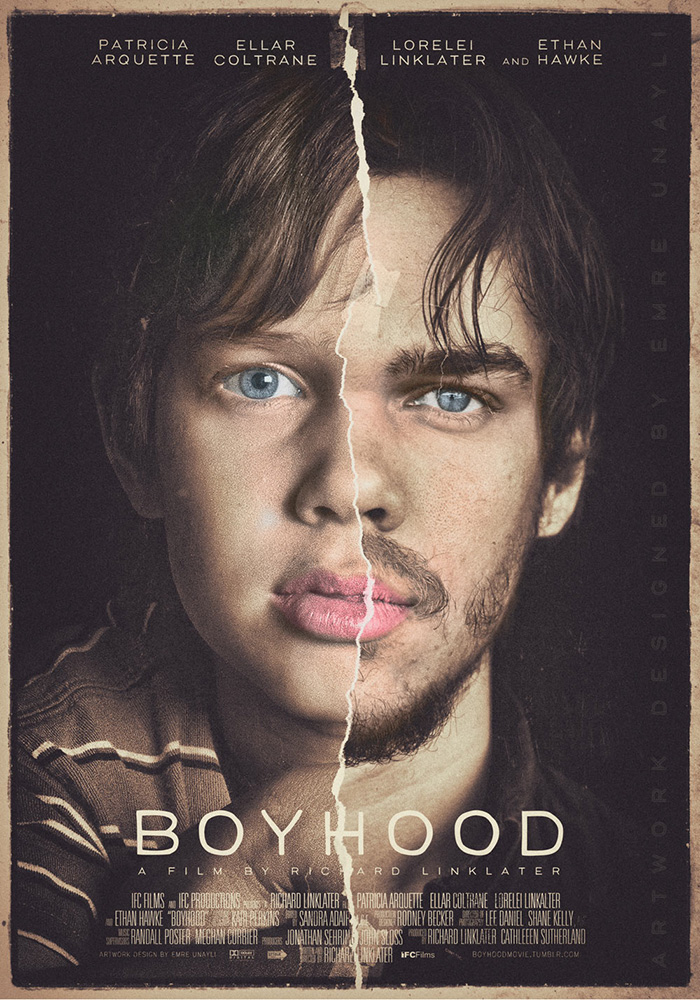
Boyhood (2014)

Cast: Ellar Coltrane, Patricia Arquette, Ethan Hawke, Lorelei Linklater
Director: Richard Linklater
released on blu-ray January 6, 2015
********** 10/10

emreunayli_boyhood700

IMDB: 7.9
Rotten Tomatoes: 98%, Audience Score 81%
The Guardian: *****/*****


I’ve already told you about Richard Linklater once before. He’s one of the greatest directors of all-time in my personal opinion and he has inspired my imagination in more than one instance. I had originally planned on writing about this new movie Don’t Think Twice this week, but then I found out that it wasn’t available on blu-ray, and I was super bummed. So I decided to pick up Boyhood instead, because I still hadn’t seen it, and boy am I glad that I did. I’ve yet to be disappointed by Linklater, and this movie is no exception.

I’m going to go over the plot as best I can, just to give you a taste for it, but please, please, please do me a solid dear readers, and check this movie out for yourselves. This is a unique movie in the scope of movies in that it takes place over a twelve year period inside the film and was literally filmed with the same actors over a twelve year period in oder to demonstrate the rate of change as one grows up.

Taken from Wikipedia and edited somewhat…

In 2002, eight-year-old Mason Evans, Jr. (Ellar Coltrane), and his older sister Samantha (Lorelei Linklater) live with their single mother Olivia (Patricia Arquette) and watch her fight with her boyfriend. In 2003, Olivia moves the family to Houston, to get a degree and better job. Mason’s father, Mason Sr. (Ethan Hawke), visits them and promises to be more involved in their lives. Mason Sr. and Olivia argue about the kids. Olivia takes Mason to class, where Mason sees her flirt with professor Bill.

In 2004, Olivia and Bill have married and blended their two families, including Bill’s children from a previous marriage. They share experiences and learn to get along. In 2005, Mason and Samantha bond with their father. Olivia continues school and is initially supportive of Bill’s strict parenting style, up until the forced cutting of Mason’s long hair. Bill becomes an abusive alcoholic. In 2006, Bill assaults Olivia and endangers the kids, Olivia leaves him and takes her kids.

In 2007, Mason Sr. learns that Samantha has a boyfriend and talks to her and Mason about contraception. He and Mason go camping at Pedernales Falls State Park. In 2008, Mason is bullied by other students at school and teased on a camping trip but starts receiving attention from girls. Olivia teaches psychology at college and moves in with Jim, a student and Bosnian/Iraq War veteran.

By 2009, 15-year-old Mason has experimented with marijuana and alcohol. Mason Sr., who has remarried and now has a baby, takes Mason and Samantha to visit his wife’s parents. In 2010, Mason is lectured by his photography teacher, who sees his potential but a lack of ambition. Mason meets Sheena, who becomes his girlfriend. After a late night, a drunk Jim confronts Mason about partying. Olivia and Jim eventually split up.

In 2011, Mason and Sheena visit Samantha at the UofT, where they share their hopes and fears about college. Samantha’s roommate discovers them asleep together in her dorm room.

In 2012, Mason breaks up with Sheena, wins the silver medal in a state photography contest, and is awarded college scholarship money. Mason Sr. gives him advice about his breakup. In 2013, as Mason prepares to leave his mother’s new apartment for college, Olivia breaks down, disillusioned by how fast life’s milestones seem to have passed by.

At Sul Ross State University in Alpine, Mason moves into his dorm room and meets his new roommate Dalton, Dalton’s girlfriend Barb, and Barb’s roommate Nicole. Mason eats a marijuana brownie given to him by Barb and the group goes hiking at Big Bend Ranch State Park. Nicole shares with Mason her belief that, rather than people seizing moments, moments seize us, to which Mason agrees.

Pros: It is amazing to think that something which is a series of footage taken over a twelve year period has the ability to tell a cohesive story and resonate so strongly what it feels like to grow up. It is ambitious and successful in its aspirations.

Cons: You may struggle to find a tight narrative, and on that account you’d be right. Overall it functions as a series of reflective experiences, it’s only in the credits that we begin to see the connections. The runtime could also potentially take you out of it.

Runtime:  2 hours 45 minutes

Points of Interest: If Richard Linklater died at any point during the shoot, Ethan Hawke would have taken over the directorial duties. The film was shot over 45 days but because it happened between May 2002 and August 2013, it works out to over 4000 days. Each year of Mason’s life gets approximately 14 minutes of screen time.

It manages to capture several intersecting ideas all at once, the moments in time from the perspective of an estranged father, the string of stepfathers and odd relationships the children and mother endure as she struggles with her responsibilities, the half-remembered experiences of a youth looking back on his life, the highlights of childhood. The time-lapse method is incredibly well served here and could easily be applied to another other member of the family if you seriously spend the time with each character.

Boyhood is experienced predominantly from the perspective of Mason Jr. but I found myself observing MJ’s relationship with his mother and how they interacted with each other quite often as the film progressed. Suffice to say, I think that is intentional on the part of Linklater, asking us to consider the effect that we have on others in our lives no just our own impact upon the world at large. But that’s just a theory.

Tim!

Alienating Film Critics (Cross Talk Ep. 12)


Film criticism is one of my favourite skill sets, but it’s been a hard won battle to acquire it. Even more so to know when to use it.

Let me explain something dear readers – I haven’t always felt the love when I have shared my opinions on film. Even now I don’t always getting excited when an opportunity comes up to discuss what makes for good pacing, why certain actors are better role models, and why cataloguing films is a helpful practice when hosting your party.

I think it’s predominantly because of a perception on criticism in general that I’m cautious when talking about movies. I also think this is a safe place to make a generalization that almost no one wants to be corrected when it comes down to it – we would much rather be told that our work is excellent and well received. No matter what medium we choose to create in.

9083244097_5d44793865_z

It’s important to contribute to the world, but as the saying goes there is a time and a place for it. It doesn’t matter if you are discussing sex, politics, religion or business, everyone has an opinion and it won’t always line up with the other person (or people) in the room. The arts are not removed from this either.

And that’s okay.

It just means learning to read the room.


Which is why we decided to focus on film criticism in general for this week’s episode of Cross Talk. We are going to explore some of our own experiences as film critics andtalking with other critics, ways that people alienate each other when it comes to film, and how to bridge the gap to create a healthier environment. Because the reality is that criticism is here to stay, and I believe that it’s a useful tool both for protecting your time and for experiencing great content. Which is why it’s time to consider how you can alienate others with a critical approach to film, both as an expert and a casual participant.

This is episode twelve of Cross Talk. We are going to make some mistakes, have some laughs, and getting incredibly personal with this conversation. Which reminds me, Cross Talk is exactly that, a conversation about film (and potentially other mediums), it’s a way for us to take the heady academic thoughts on this art form and bring it back into the realm of the everyday, because it’s not just professionals that consume this content. We all have a stake in it.

I’m about theoried out for now friends, but I’ve got a Halloween themed album review lined up for your tomorrow. I think you’ll enjoy this one, it’s a thriller. Otherwise, please comment, subscribe, and share this video with friends. We want to hear your feedback!

Tim!

Quality Control (Cross Talk Ep. 8)

My day job is interesting, dear readers.

I work for a major Canadian retailer, at their corporate office, coordinating marketing efforts. To be more specific, I’m responsible to ensure all of the product photography, marketing related images, online product catalogue, and any written content associated with the brand stays on track and keeps on keeping on.

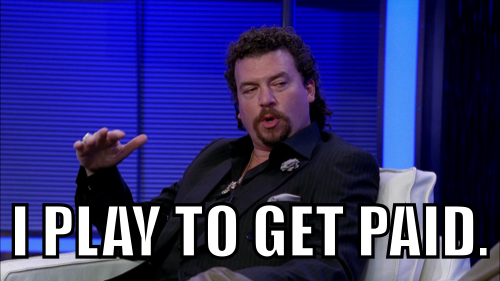
Though I am ultimately a creative being at heart, and my major life interests lie with the arts, my unique skill set also features analytical abilities of project management, planning, organization, leadership, and communication. And so I’ve made decisions to use those skills to get paid.

play-get-paid

What this means is that quality control and process development are in my bones.

And while it’s my job to contribute to a healthy brand image to the company I work for, I also believe in that ideal, and so I have internal and external alignments. But just because these types of development inevitably lead to consistency and then business maintenance, that does not mean that innovation is without energy spent and emotional investment.

Some elements of quality production and process lend themselves to automation, but still others will always need vigilance in attention.

Which conveniently gets us on track for this month’s episode of Cross Talk. I think that quality movies all demand a certain level of attention the first time you view them, but over time, some movies fall into the camp where they become rewatchable and part of our pop culture slang, whereas other movies are definitely necessary for the experiences they can provide, but you can’t easily queue them for repeated viewings, and this is for a myriad of reasons.

To give you a more concrete example of a rewatchable movie, I would say that 21 Jump Street is a great example because the laughs and content are memorable, fun, and the chemistry between its leads is insane.

Whereas an intense movie like Requiem for a Dream cannot be watched every couple of weeks because it is so visceral, full of dark themes, and difficult to stomach. Darren Aronofsky refuses to pull any punches and thusly we can only stay with his vision for a short while.

What this means for the audience at home is that Chris and I recognize there are solid examples of both movies, but it’s not always obvious which is which, and so episode 8 of Cross Talk is a conduit for the difference between a quality movie and one that turns into a rewatchable one.

As always, I’ve included a direct link to the full video for you here, but I want you get your hands on the video ASAP, so we’ve harnessed the power of technology to embed the video directly below. Please sit back and enjoy Episode 8 of Cross Talk!

I’m out of theories for now, but please check back tomorrow for an album review that features arts & crafts. It should be a good one! Please comment, subscribe, and share this with friends. We want to hear your feedback!

Tim!

Reflection Injection (Positive Affirmations & Happiness)

Our days our filled with observations and analysis.

Whether it’s dealing with social hoops of family and friends, the inherent differences between the opposite sex or the tedium of the work week, we have to take in a ton of information and process it rather rapidly, so that we can then move onto the next thing.

As someone who is always thinking about things critically, this can be especially frustrating for me to personally deal with, and I know that we are all victims of our own over-analysis. What we really should be doing, is separating ourselves from our problems and reflecting on the week, REGULARLY, so that we can apply the critical model to ourselves.

But in order to get there, we have to be receptive to the process.

6FUl7

That means looking into healing practices so that you can properly begin the process of self-reflection, and I just so happen to have a couple of tricks up my sleeve to make that happen for you without too much effort, and right out of the gate to boot!

Positive Affirmations and Mindful Meditations

Introspection is an amazing thing dear readers, but you don’t know what you don’t know, as they say. Who are they anyway? Well, let’s not get sidetracked, the word they is just a generalization to avoid citing sources.

So you want to be more introspective folks, because as you examine those negative thoughts, feelings, and insights, you’ll start to feel overwhelmed. And listening to pre-recored audio affirmations that you voice yourself will train your brain to listen to yourself in a different way. As you do this each day, when you wake up and then before you go to bed, your brain sub-consciously takes in these ideas and shifts away from negative self-talk to more positive self-talk.

This next part is important – You need to make declarations, especially ones that you don’t believe at the moment.

The reason for this is that these statements will slowly become things that you believe about yourself over time, and because it is as simple as listening to the statements, you aren’t working to accomplish anything. But they need to be statements that without an end or a goal. Statements of being, identity and purpose.

It’s kind of difficult to explain so rather than dwell on it, I’ll show you. For example, this is my list and it’ll help contextualize the purpose of the exercise.

I am a child of God with infinite worth.
I am always taken care of.
God loves me and accepts me.
I am always more than enough.
The worth of my soul is great.
I now fully accept myself.
My body is now in perfect balance.
I am always healthy and strong.
Everything I touch prospers.
Other people experience their worth when they are in my presence.
Everything works together for my good.

Now I don’t think you need any of the points around a spiritual purpose, but it is important to be balanced in terms of mental, emotional, physical, and spiritual needs. So if you have a belief system or you have no belief system, you can replace “God” with whatever works for you. If you are an atheist for instance turn “I am a child of God with infinite worth” into “I am child of humanity with infinite worth”, and “God loves me and accepts me” into “I am loved and accepted.”

Another key component to consider is that when you are recording these statements, you should replace I with you where appropriate so that you are saying these messages back to yourself, and it has been shown that classical music elevates the mind, so why not put some Mozart, Bach, or Beethoven as a backing track?

Next, loop the audio track so that it comes in at about 15 minutes, and export the mp3. You have the basis for your positivity. If you can commit to this process over a month, you’ll be shocked at how much of a difference it makes in your mood, and then see how you feel after three months.

Yes, I know that this wasn’t entirely a “timely” post friends, but this is routine something that I recently got back into myself, and coming off the heels of a break-up, I’ve felt significantly better following this protocol than I would’ve if I had just kept my thoughts to myself.

The results are truly staggering, but that’s just a theory.

Tim!