Das Ist Gut (Dunkirk review)

Not every story told follows the same narrative path as what preceded it. I mention this because Christopher Nolan has been directing movies since 1989 but it wasn’t until 2008’s The Dark Knight that we began to expect a certain tone from his films.


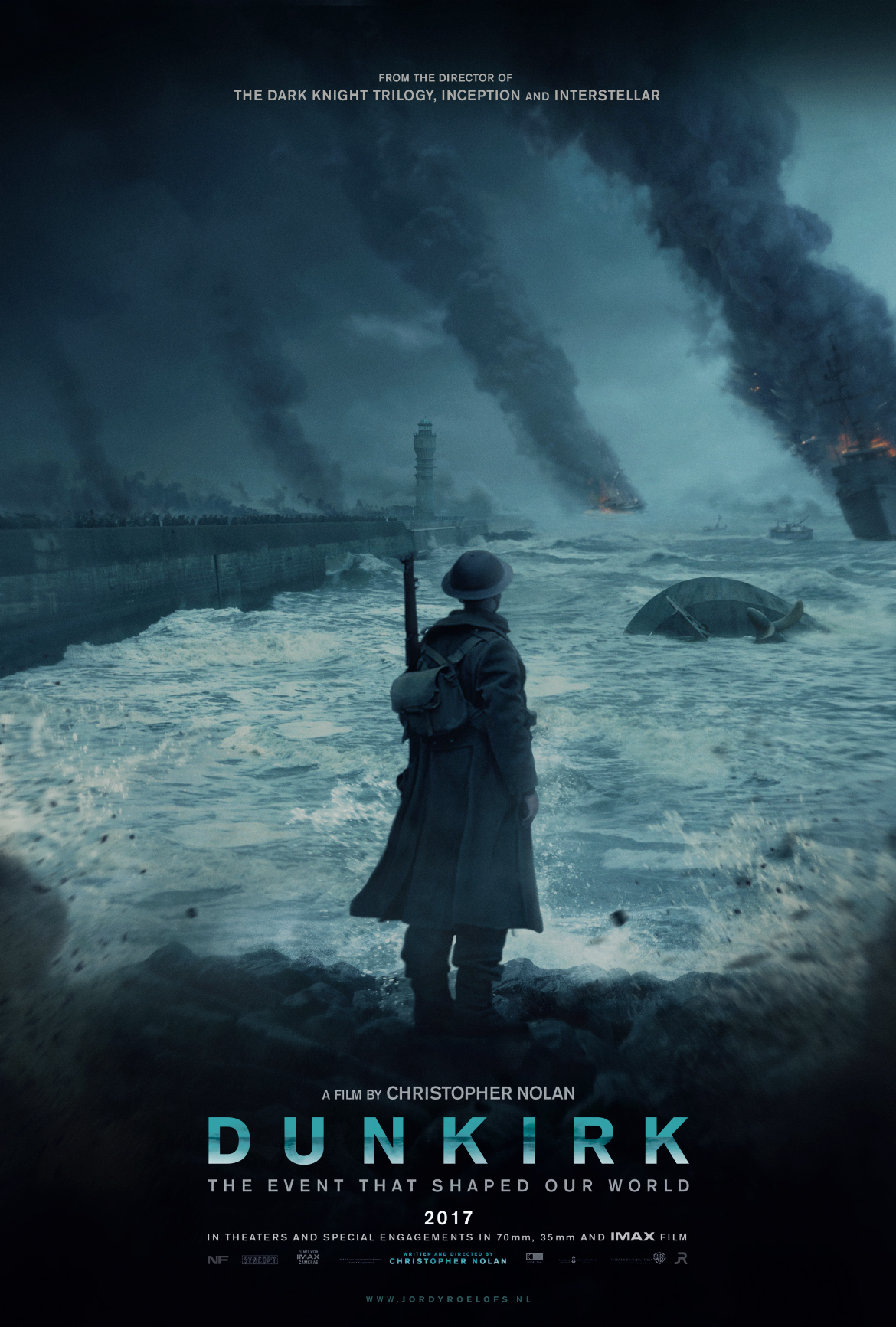
Dunkirk (2017)

Cast: Fionn Whitehead, Barry Keoghan, Mark Rylance, Tom Hardy, Cillian Murphy, Kenneth Branagh
Director: Christopher Nolan
released on blu-ray December 19, 2017
********* 9/10
IMDB: 8.1
Rotten Tomatoes: 92%, Audience Score 81%
The Guardian: *****/*****

Christopher Nolan is an English film director, screenwriter and producer extraordinaire. He also has dual citizenship in the United States. If you are unfamiliar with his work, he has also helmed the recent The Dark Knight Trilogy, Inception, Interstellar, Memento, Insomnia, The Prestige, and Following, his directorial feature length debut. There were three films he made before Following, but those were all short films.

An advocate for film preservation, Nolan’s films often explore themes of morality, the passage of time, and identity. He prefers to use practical effects where possible, incorporates wide angle shots to reduce the scale of his characters, and adjusts the narrative landscape through the use of gripping soundtracks (looking at you long-time friend Hans Zimmer) and by messing up the typical sequencing of scenes.

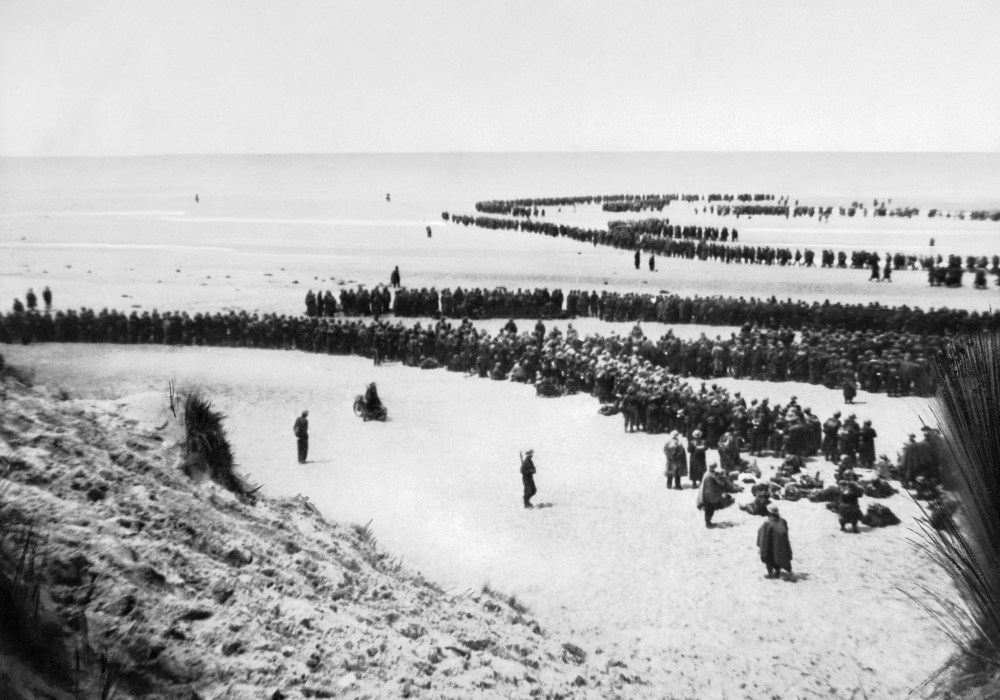
Dunkirk follows that tradition of Nolan’s films, but does so in such a way that the lead character becomes the evacuation itself, with Allied soldiers, Axis planes, and British civilians all helping to fill in for settings and props. I should be clear when I state that this is a war film, but the explosions, cries of pain, and bloodshed are not the focal points – it’s the magnitude of war and how it effects our personal decisions for right or for wrong.

Courtesy of Wikipedia

In 1940, during the fall of France, hundreds of thousands of Allied soldiers have retreated to Dunkirk. Tommy (Fionn Whitehead), a young British private, is the sole survivor of a German ambush. At the beach, he finds thousands of troops awaiting evacuation and meets Gibson (Aneurin Barnard), who is burying a body. After a German dive-bomber attack, they find a wounded man. They rush his stretcher onto a hospital ship hoping to get onboard and escape, but are denied passage themselves. The ship is sunk by dive-bombers; Tommy saves Alex (Harry Styles), another soldier. They leave at night on a destroyer, which is sunk by a torpedo from a U-boat. Gibson saves Tommy and Alex, and they are brought ashore by a rowing boat.

The Royal Navy requisitions civilian vessels that can get close to the beach. In Weymouth, Mr. Dawson (Mark Rylance) and his son Peter (Tom Glynn-Carney) set out on his boat Moonstone rather than let the navy take her. Impulsively, their teenage friend George (Barry Keoghan) joins them. At sea, they rescue a shell-shocked officer (Cillian Murphy) from a wrecked ship. When he realises that Dawson is sailing for Dunkirk, the officer demands that they turn back, and tries to wrest control of the boat; in the struggle, George falls and suffers a head injury that renders him blind.

Three Spitfires head towards France. After their leader is shot down, pilot Farrier (Tom Hardy) assumes command with a shattered fuel gauge. They save a minesweeper from a German bomber, but the other Spitfire is hit and ditches. Its pilot, Collins (Jack Lowden), is rescued by Moonstone.

Tommy, Alex and Gibson join a group of Scottish soldiers and hide inside a trawler until the tide rises. Her owner, a Dutch mariner, returns. German troops shoot at the boat for target practice; when the tide rises, water enters through the bullet holes. Alex, hoping to lighten the boat’s load, accuses Gibson, who has been silent, of being a spy and demands that he leave. Gibson reveals he is French; he had stolen the identity of the soldier he buried, hoping to evacuate with the British. Alex, Tommy and the Scottish soldiers abandon the fishing boat when it begins to sink. Gibson is entangled in a chain and drowns. Alex and Tommy swim towards a nearby destroyer, but it is sunk by a bomber. Moonstone manoeuvres to take on troops, including Alex and Tommy. Peter realises that George is dead; when asked by the shell-shocked officer, he lies that George will be fine. Farrier shoots down the bomber, which crashes and ignites the oil slick from the sinking destroyer. Peter reveals to Collins that his elder brother was a Hurricane pilot, killed early in the war.

Farrier reaches Dunkirk, his fuel exhausted. Gliding over the beach, he shoots down a dive-bomber to cheers from the troops below. He cranks his landing gear down and lands beyond the Allied perimeter. He sets fire to his plane and is taken prisoner by German soldiers.

At the beach, Commander Bolton (Kenneth Branagh) watches the last British soldiers leave. He confirms that 300,000 have been evacuated, ten times more than UK Prime Minister Winston Churchill had hoped for. He remains to oversee the evacuation of the French rearguard. Alex and Tommy cross the English Channel and board a train in Weymouth. Dawson is congratulated for having saved so many men. The shell-shocked officer sees George’s body being carried away. Peter visits the local newspaper with a photograph of George; a front-page article later commends George as a hero. Alex expects public scorn as the train approaches Woking, but they receive a hero’s welcome. Tommy reads out Churchill’s address to the nation from a newspaper.

This is nightmare fuel. Beaches filled with men with nowhere to go watch in terror as German aircraft decimate them from above – the analogy of the boot stomping ants is sickeningly accurate in this case. The movie showcases the blender full of emotions in such a thoughtful way, allowing us to give pause and see faces filled with anger, others with pride, despite not connecting with anyone long enough to root for them. It’s an odd thing, given that Cillian Murphy, Tom Hardy, Mark Rylance, and Kenneth Branagh are all excellent character actors – Nolan only gives us a taste into each man’s personality knowing full well that war dwarfs our self-importance.

Pros: The action moves up and down, like a wave crashing on a beach. The sparse storytelling and tone of failure barely concealed by dumb luck work damn strong to force a response. It’s technically brilliant.

Cons: A lack of an emotional core, might be difficult to swallow. Tom Hardy’s Farrier could have been given a slightly larger role – showing his end at the hands of Nazi soldiers even. A lot of unanswered questions.

Runtime: 1 hour 46 minutes

Points of Interest: Thirty or so Dunkirk veterans attended the Long premiere – they appreciated the accuracy of the story, but felt the soundtrack was louder then the actual bombardment. Nolan cast young and unknown actors based on accounts of how inexperienced the real soldiers of Dunkirk were.

As far as a military effort, the Battle of Dunkirk was an epic disaster on a global scale. But the evacuation of almost 300,000 soldiers and the moral victory of the British is considered by many historians as the lynchpin in the Allied story of fighting against tyranny. By giving the soldiers and citizens an equal footing, Winston Churchill was able to foster a spirit of resistance within this nation, and turn a tragedy into a triumph, which is echoed in the final moments of the film by Alex as he is welcomed home in Woking.

theories Summarized

I wasn’t quite sure what to make of this film as a I watched it, if I am being completely honest. Mysticque and I watched it together, and she was not a fan of it by any means. I try not to let other opinions effect my own interpretation of a film, but rather to enhance it. In this case it was invaluable, because Dunkirk is a film of competing emotions, many personal narratives drowned out by a larger message. I think you should see this film, especially given that stories like Saving Private Ryan and Pearl Harbour exist. A film like Dunkirk will help to expand your worldview and introduce a greater perspective on World War II, a time that that provided such cognitive dissonance for humanity, theories and all.

Tim!

I’m Not Listening (Verbal Communication)

I’ve I’ve said it once, I’ve said it twice, and I’ll probably say it a few more times for good measure.

Basic communication is essential, whether you are a painter, photographer, graphic designer, actor, musician or any other kind of creative professional. If you can become an expert of communication, then the sky is limit in terms of success with your business, hobbies or however you choose to pursue your art. Want to nail that audition? Communicate. Have to organize a meeting for a grant proposal? Communicate. Need to put time in at a trade expo and you want to gain some prospects? Communicate.

Just ask Descendents. They know.

We’ve covered it before, but there are four kinds of communication – written (I chose email as our example), verbal, non-verbal, and interpersonal.

Today we are going to focus on verbal communication and I’ll cite some specific examples from pop culture, and maybe one from my life, that demonstrate the importance of following etiquette as best we can. Now, granted, there have been countless books written on the topic of verbal communication alone, so we can’t expect to simplify the topic in one post, but I think this will be a great primer for anyone who needs some guidance. Whether you are well versed in the subject or merely a spectator.

Move Or Be Moved

Verbal communication, just like the three other forms of communication, requires the sender to convey needs, thoughts and feelings – feelings being what I personally think are central to a lot of communication problems. Conveying what you need can be just as difficult, but for many people it is even more difficult to express emotions in a healthy way. It’s not something which can be easily taught either

It seems as if emotions are either over-expressed in outbursts of anger and sorrow OR held back and expressed non-verbally.

This is why so many families fall into cyclical habits of rebuffing each other with the same arguments and literal arguments over and over again. Without having an alternative strategy to communicate, we persist at explaining our ideas, thoughts, and feelings, without making room for the other party to understand from their position.

When we are capable of emphasizing then dialogue opens up, otherwise the adage of rocks versus hard places presents itself. The Dark Knight sums it up perfectly in fact – within the context of the Nolan Dark Knight trilogy, The Joker and Batman were always going to interlocked in perpetual battle because they couldn’t relate to each other. This also applies to the Batman mythos in general, but more importantly, it applies to those situations where people are at consistently at odds.

Missing You(r Point)

Effective verbal communication really comes down to clarity of speech, a calm and focused delivery, following conventional etiquette while simultaneously correcting for environment etiquette, and being polite and encouraging in dialogue. Simple right?

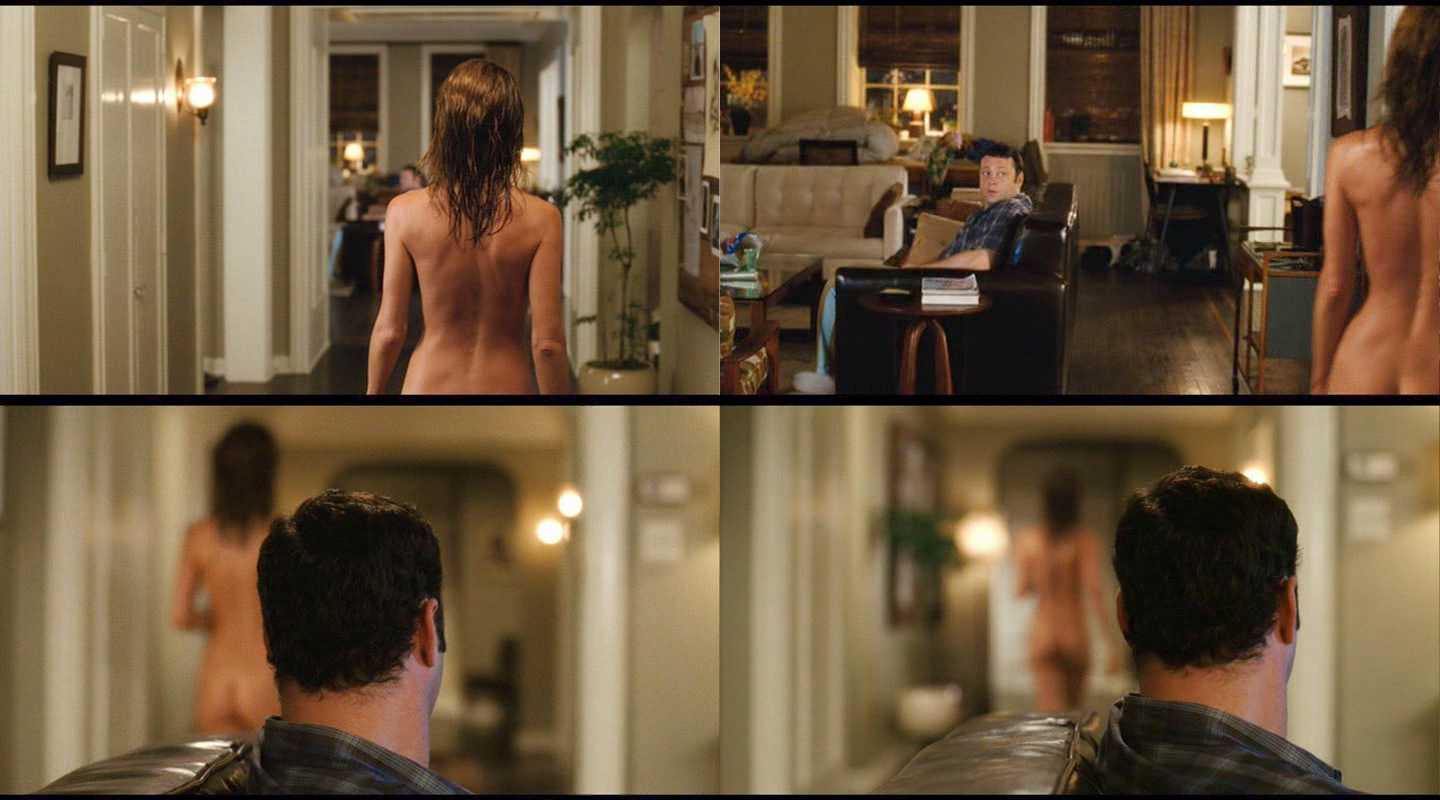
If you’ve ever seen the movie The Break-up, featuring the under-appreciated talents of Vince Vaughan and Jennifer Aniston, then you are likely familiar with the scene where the very much mismatched Gary and Brooke finally have the relationship ending fight that leads to Brooke saying “I’m done.”

Yes, it’s tough to watch, because we’ve all been there at one time in our lives. Whether the male or female in the relationship (or masculine energy VS female energy for our non-hetero friends). I challenge you to watch the movie for the dynamic between the two before the break-up and immediately preceding the break-up, but before the movie falls apart into rom-com shenanigans.

Those kind of shenanigans.

The main point I want you to walk away with dear readers, is that as much as talking is important in a conversation, listening is far more valuable because it endears each party to the other, allows for a more thorough discussion, and limits conversations stoppers like judgment, self-centredness, derailing the topic, or ignoring the other speaker.

theories Summarized

All that said, no I didn’t leave you with a proper road map on verbal communication.

But I did warn you that this was a heavier topic then one post could cover. I fully expect to cover more tips and strategies for proper communication in coming months. Developing character and honing the correct life skills is absolutely essential in your communications, and if it wasn’t, I wouldn’t be able to run timotheories at all. This is a community based vision, and honouring differences of others through respectful discussion is key to that end.

Put these theories to work creative cuties, and you’ll see the positive results for yourselves.

Tim!

Court of Cowls (Scott Snyder)

I like comic books – Always have. Always will.

The surface reason is pretty straight forward. I really appreciate a good narrative, and because I’m fascinated by visuals, comic books can’t be beat when it comes to pulling off a spectacle of visuals and for providing that sense of satisfaction. Correction, I probably shouldn’t call it satisfying, instead I should call it gratification, because the nature of the comic book is a continuing story. Gratification is something we are thankful for, while satisfaction is a feeling of enough.

You see, dear readers, the comic book by its very nature never finishes, so you cannot experience the fullness of pleasure, you’re left wanting.

This is great for sales, when a book has a strong story and great visuals. Less so when the book isn’t picked up. After all, the comic book industry is perpetually dying.

The Batman Writer We Deserve

If you haven’t seen Christopher Nolan’s The Dark Knight yet, I’m sorry to hear that. It came out almosta decade ago and it’s probably one of the best comic book based movies of all time, if not the best… possibly sharing the limelight with Iron Man no.1 and the first The Avengers movie for my top picks.

6300929807_fb32d68411_b

Anyways, there is this great scene at the end of the movie wherein the newly appointed Commissioner Gordon gives a speech at Harvey Dent’s funeral. He describes Batman as a dark knight, a watchful protector, what the city of Gotham deserves, but not what it needs. The city needs a white knight in shining armour, flawless and serving as a beacon of hope. The city doesn’t deserve a flawless hero, but Batman is willing to become the villain in order to help his community rise up out of the darkness. In fact, Batman is flawless in that he is a true hero, he loses his parents and the love of his life, but he continues forward as a warrior for justice. But Harvey Dent is very flawed, and when the chips are down, he reveals that he is capable and willing to go to The Joker’s level, becoming Two-Face.

Now, let’s talk about Scott Snyder.

Scott Snyder is known for his comic book writing skills, having worked with DC and Vertigo on various books – American Vampire, Detective Comics (part of The New 52 relaunch), Batman, and Swamp Thing.

A lot of people have said that Snyder’s work on Batman has been exemplary, and I would tend to agree. I recently read the hard cover volume of The Court of Owls, and was pleasantly surprised at how well he was able to combine new storytelling with flourishes of what came before.

batsignal_at_highmark_building

Scott Snyder is the Batman writer we deserve, because he spent five years working with artist Greg Capullo to give a new perspective to Batman, respectful of what preceded, but willing to explore. This is something that all comic fans really want to see, and it’s a difficult line to walk.


I think he was able to accomplish this by building upon key moments and seeing the story through to whatever direction it took. Kind of amazing when you stop to think about it. Even his twists and turns on The Joker is one to remember.

Disney and Stephen King VERSUS Detective Comics

Scott Snyder attributes a lot of his writing to an early exposure to horror writer giant Stephen King and later when he was able to work for Walt Disney World after he graduated from university.  He describes it as such 

All the things I ended up writing about, those things that are deeply frightening to me—fear of commitment and growing up, fear of losing loved ones, the wonder and terror of falling in love—all of it was constantly being played out all around me in this weird, cartoonish, magnified way at Disney.

Which tells me that he deserved to write for Batman, and we deserved to have him. Not to sound like a broken record, but yeah – a labour of LOVE is what it comes down to friends. And this is why Scott Snyder is this month’s featured author for my 5 L’s of Language post. His massive love for the subject material he writes about comes through no matter what. And this is something you too should take to heart.

No matter what the occasion or the reason, always be headed towards you purpose and be authentic in your feedback, if you can do this, you’ll be like Batman. But that’s just a theory.

Tim!