Art Tricks, Money Traps (Work-Life Balance)

We did it dear readers. We finally got through it.

We made it to the end of my series on the Wellness Factors of Life, AKA addressing the OECD index, or if you prefer, the Postconsumers series. What started out as a wild bid on my part in considering how to live a life with less and yet fuller than you could ever imagine, is now closing out with a topic more then fitting – work-life balance. The last factor that can directly effect your over-all state of being in this world of ours.

Because let’s face it, the average global citizen doesn’t even realize they have a creative component of who they are. Creativity that should be nurtured like all of the other things.

Your creative spark absolutely needs to be considered, and it connects quite well with areas of health, spirit, work, family/friends, environment, and personal fulfilment. When all of these things come together, your life will sing with excellence. Or maybe it’ll all fall apart if you ignore any one of those things for too long.
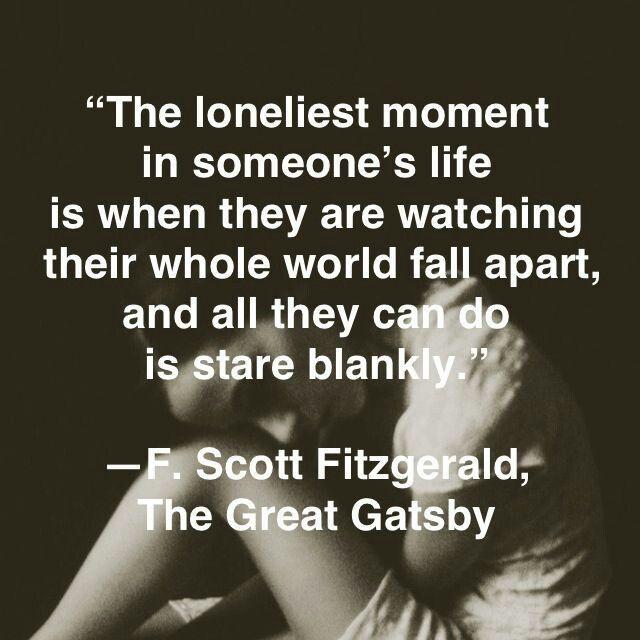
Yikes, that is a depressing thought to fathom. But I’ve been there creative cuties, and yes I may share that story in full one day. The story which led to one of my greatest theories on the importance of pursuing your purpose, it could be a campfire theory even, but not today is not that day friends.

I’ve got a different kind of wisdom to impart.

But first, let’s put a cap on that pen, and bring out the fundamental of life once more.

The Bare Knuckle Necessities

I’m going to make a bold statement.

You cannot achieve the perfect balance of life:
career (work),
spirituality (spirit, creativity),
space (home, studio, environment),
relationships (romantic, family, friends),
health (exercise, meditation, reading),
and fulfillment (hobbies, recreation)

All of these are noble pursuits, and completely attainable, but most definitely not all at once, and never more then two or three at a time. I know you’ve tried to accomplish this on your own, and you may have even fought against the theory because you wanted to disprove it. But like many idioms, adages, and metaphors of life, life hits back, over and over.

It’s not about besting life friends, it’s about taking it all in, giving it your best shot at a few areas at a time, and then continuing onward.
So for you that might mean getting a grip on health, and career for quite a while. At least until you’ve seen some positive gains and have set up some new healthy habits for yourself. I’m not going to devolve this post into going over theories I’ve discussed before on health, productivity and habit setting, but those topics do exist on timotheories.com. This is about you being okay with striving for progress in certain areas, and then moving into progress in other areas.

Automation Station

Effectively you are creating rhythms and routines for yourself that your body, mind, and soul will be grateful for. Think about it for a minute, we are so comfortable falling into the same shitty habits every day after work? Ever wonder why we do that? Hint: it’s not because we want to.

Instead of beating yourself up because you didn’t do everything on your list today, focus on a few things to accomplish each day and follow through on them. Once the systems are in place to make those good decisions a reality every day (usually after a 90 day commitment), you will eventually create your own ideal, and balance will now have a new meaning.

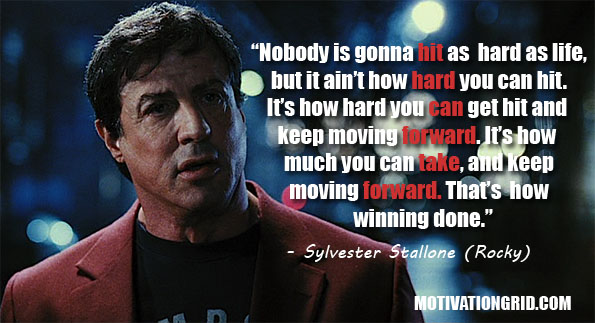
It becomes less about having everything in equal measure, and more about shifting attentions on these areas of wellness as needed. So put the time in, build your lists, schedule tasks, and make one concrete action towards your area of focus each day. As Rocky says, that’s how winning’s done.

For me, what that means right now is making art every week, and marketing my business. Those are two simple things, but I’ve been neglecting them for relationships, work, and health. It’s time to focus back on the art and my own purpose.

theories Summarized

Artists of all stripes have to face the same pressures of work-life balance as do those that ignore the creative path. There is nothing wrong with going one way or the other, but when you make art, never assume your failings at balance are due to the pursuit of creativity – we all struggle with this. Skill, determination and a commitment to improvement are essential in moving towards success within the arts, as is true of any field.

The difference is that your path is not set in stone, therefore the risks and rewards are much greater. But I have a theory that you already know what you need to chase.

Tim!

We Dare Not Speak It’s Name (Jobs)

Let’s talk about jobs, ba-by, let’s talk about your, iden-tity.

hqdefault

A Bang Up Job

When I think about Jobs as a product, comfort immediately comes to mind. Next, would probably be security and consistency of everyday use. If I can have less anxiety, more fun, and don’t have to worry about over-performing or under-performing, the convenience factor is high, and I’m on board. I get to live my day-today with relative ease and simplicity. Yes, when it comes to Jobs I feel like my opinion is part of a landscape and repercussions are minimal. In an era when people struggle with technology uncertainty, Jobs give you a path to take and a way to get there. Fortune, gratitude, luck, these are all synonymous terms for that ideal.

Now, I bet you thought I was talking about the person for a minute there, dear readers.

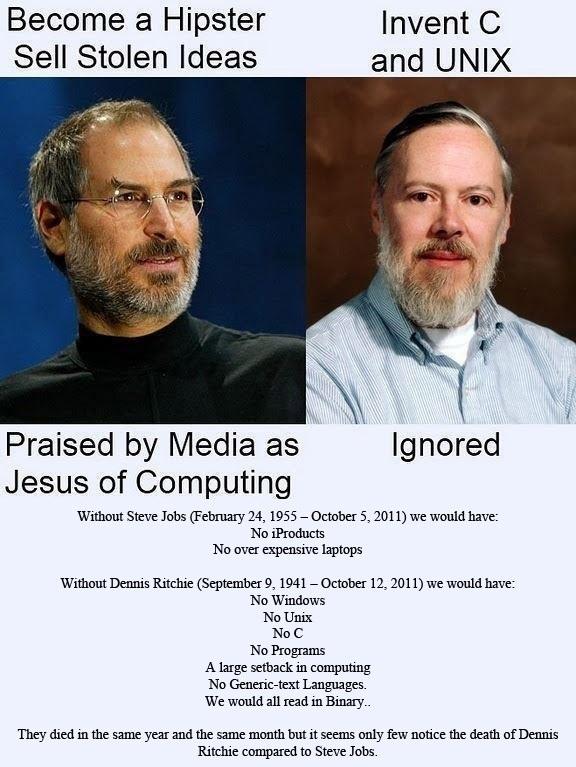
No not really. I wasn’t aiming for a post on Steve Jobs, though I could make a Wisdom Wednesday post or two about him. Just like everyone else has at one point or another.

896

And to be clear, this is most certainly NOT a politically motivated post, I just wanted to get an association down for you. Who do you think achieved more? Steve Jobs or Dennis Ritchie? A question to ponder for sure…

As we continue to develop the series of posts about OECD, on the importance of health and well-being, the ranking factor of your job was bound to come up.

Inside Job

Let’s be honest.

You probably want to quit your day job, because your boss is a jerk, you’re sick of what your department does to address employee morale and wages, you don’t believe in the company visions, at all, and you’ve been doing this for well more than five years without much opportunity for growth and skill set expansion.

If that’s true, then you’re in luck. Because I have a few theories on your job that I’d like you to mull over.

Many people get this crazy idea in their heads that if a job is unfulfilled, that if you hate your job, it means you should quit and find another. Or maybe go back to school. Or finally start that personal business you’ve dreamt of for the past decade. And that’s quite a problematic view to hold.

A job is primarily an aspect of your career.

Maybe that’s confusing – let’s consider the definition of the word career. A career is a multi-faceted identity vehicle for an individual’s journey through life, especially as it relates to work and learning. Or in other words, a career is a person’s lifework that consists of occupations, educations and as a focus within a certain area of industry.

Surely it can be invaluable to start a business when you get fed up, but that purpose shouldn’t only be about your personal gratifications. You need to have drive, a real passion, and then build out a model to accomplish the purposes of that career you’ve laid out for yourself – getting another job could move you forward as well. An idea of success is not enough, you have to put in the blood, sweat, and tears. Never quit your day job only because you have a new idea or are sick of your work environment.

There is this really dumb idiom out there that says the grass is greener on the other side of the fence. We often rely on friends and family to supply is with support or advice on a number of different topics but bitching about work is a popular one.

Consider idea this for a moment, that friend giving you advice might not respect your industry or they be shelling out advice based on their limited understanding of your situation, but how could they possibly predict all the details of your life – you CAN keep your job and find fulfillment in other avenues or to pay for future benefits.

Career VS Job

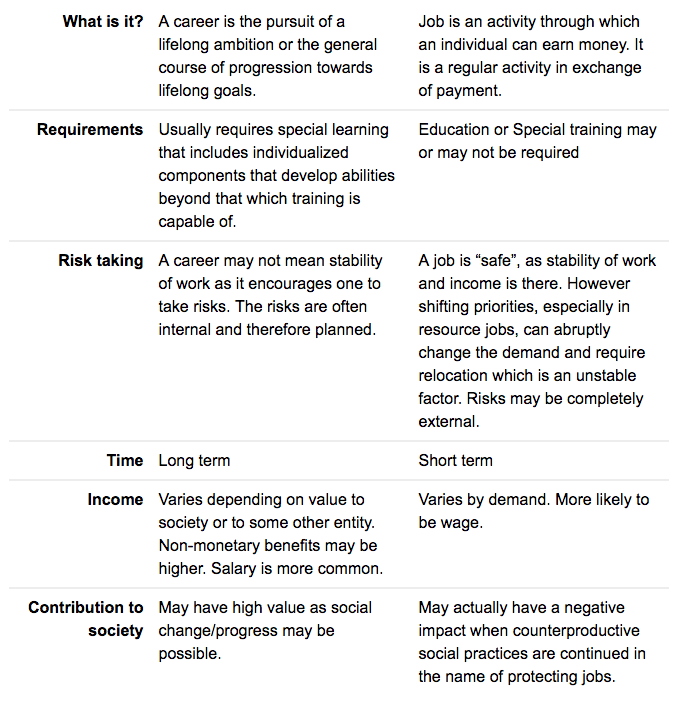
To summarize this idea let’s quickly look at a chart which I found online. It’ll be a quick read, I promise.

screen-shot-2016-12-07-at-9-54-54-pm

If you begin to look at your creative work as a career, you can begin to see how a series of different jobs might help you achieve your goals and stay on purpose dear readers, so as the old adage goes, don’t quit your day job. But that doesn’t mean you can’t change the day job every now and again, and even invest in passive income(s). Though that could just be another theory.

Tim!


Real Talk (Bridging The Talent VS Vision Gap)

What if you only had a few more months left to live? How would YOU spend YOUR time? Would you stay at the shitty job you took to get your career started or because you didn’t know what to do with yourself, or would you restructure pretty much everything so that you could finally do the things you’ve been saying you’ll do for years? And that probably means travelling, time with family, and projects that might not work out.

Seriously think about that for a minute.

Think about the dreams you have in the back of your mind and which ones (yes plural) you are not pursuing right now. I’m sure you’re scared about them too, right?

But that’s not gonna cut the mustard anymore!

I’m going to share a list of ten things you likely haven’t considered simultaneously but seriously need to if you want to get out of your funk and start contributing to society proper. That means you need to take a good hard look at your life and what it is made up of and start dissecting many things and nurturing other less obvious things.

This is real talk! And not the creepy kind from R Kelly.

Shitjustgotreal

10 Sentences That Can Change Your Perspective On Life

  1. People aren’t against you; they are for themselves.
  2. Climb mountains not so the world can see you, but so you can see the world.
  3. You learn more from failure than from success. Don’t let it stop you. Failure builds character.
  4. The most dangerous risk of all – the risk of spending your life not doing what you want on the bet you can buy yourself the freedom to do it later.
  5. Go where you’re celebrated not where you’re tolerated.
  6. The person that you will spend the most time with in your life is yourself, so better try to make yourself as interesting as possible.
  7. If you accept your limitations you go beyond them.
  8. People often say that motivation doesn’t last, Well, neither does bathing. That’s why we recommend it daily.
  9. Everyone you meet is afraid of something, loves something, and has lost something.
  10. Comfort is the enemy of achievement.

I originally found this list from imgur a few years back, so I can’t properly source it, other than the link itself, but here is the link if you want to do some investigating.

Today’s post dear readers is about this theory I have that most people are only willing to do the bare minimum to get through life.

You, yes you, as a creative person have a choice though – decide if you are willing to accept this as reality, or if you are going to fight with everything you have to stay passionate, to burn to produce something real, and to keep doing it until the day you die.

You see my friends, nobody is going to tell you the most obvious thing, they expect you to figure it out yourself.

We all have a reach that it is much longer than our grasp, in terms of asethetics/ability and our vision of what we will accomplish. We will always have this vision, from youth to our old age; but you have to work through potentially years of work in order for your talent to reach your vision.

Admittedly that last point is not my own idea, it comes from Ira Glass, host and producer of This American Life. I paraphrased it, but here is the quote I took the idea from.

Nobody tells this to people who are beginners, I wish someone told me.

All of us who do creative work, we get into it because we have good taste.

But there is this gap.

For the first couple years you make stuff, it’s just not that good. It’s trying to be good, it has potential, but it’s not. But your taste, the thing that got you into the game, is still killer. And your taste is why your work disappoints you.

A lot of people never get past this phase, they quit. Most people I know who do interesting, creative work went through years of this. We know our work doesn’t have this special thing that we want it to have.

We all go through this.

And if you are just starting out or you are still in this phase, you gotta know its normal and the most important thing you can do is do a lot of work. Put yourself on a deadline so that every week you will finish one story.

It is only by going through a volume of work that you will close that gap. And your work will be as good as your ambitions.

And I took longer to figure out how to do this than anyone I’ve ever met. It’s gonna take awhile. It’s normal to take awhile. You’ve just gotta fight your way through.

Ira is right though. And I am gonna expand on his idea –  when we have nothing to lose AND we are physically able, we finally hunker down and start making beautiful things. And that’s when we start to close the gap.

Take for instance this song Clouds about a young man who was an incredibly talented musician.

As delicately as I can say it, the point I am making with Zach Sobiech is not that he FINALLY started to make art and follow his passion because of his cancer (though that is true), my point is that many of us finish school or enter the workforce and give up on our dreams. That was not Zach’s story, but look how much he accomplished in 4 years because he had a purpose and committed to it.

As I mentioned, most of us wait.

But if we wait until we get sick or when we retire and show signs of age, then decide to take up “hobbies” and finally start to share our unique visions with the world, we might not close that gap.

And that’s my theory for the day. Leave some comments or reach out to me with your thoughts! I’ll see you tomorrow with a Melodic Monday review.

Tim!

Lifting Bro (Work Hard & Work Smart)

So I have this theory, right? I know, crazy of me to suggest this – I never have those.

But just hear me out alright?

I have this theory that hard work does pay off, but in order for it be worthwhile, you do have to work smart too.

One of my painting professors in my university fine arts program made this really solid point about the importance of getting a career in my second year.

He told the class on the first day, during a review of the syllabus and what we would need to in terms of supplies, that we should probably get a well paying day job if we wanted to be successful artists.

Wait, what?

I know, hear me out though! He said that becoming either a plumber or an electrician were a sure way to ensure we got paid while we stuck to the course of honing our craft and making connections in the marketplace and eventually finding a way to sell our work and make an impact in the art world.

I mentally recorded that idea because I thought it was an odd one, but also because I believed what he said almost right away. I had heard my share of comments about the futility of becoming successful as an artist, from loved ones and the general public. I needed to do what was necessary and make it happen for myself, I didn’t want to starve!

The idea of a starving artist isn’t exactly a new one. And where the heck did that idea of the starving artist come from anyway, and why is so pervasive in our culture?

That’s something that I want to talk about in the future dear readers, but which I will leave for another post.

However, let’s get back to this idea that my professor spoke about earlier.

He continued on to say to the class that the really talented people in school can never seem make it through the real challenges of life and so they stop making art. It’s the students who struggle initially in school and don’t get top marks, the ones that have to keep at it to get a win, and fight some hard won battles.

Those are the ones that typically become art superstars.

Now, this particular idea bothered me. Because I had always been good at art and was naturally gifted at it from a young age. I liked to draw and sculpt, to make family movies and so on. So I immediately thought to myself, “great, so I’m not going to make it because I have talent but I don’t have the commitment to stick it out.” And I was a little crushed. I carried that idea with me for the duration of my program and for a few years after I graduated too.

Granted, I did make steps to ensure I got a well paying job, but I kinda shrugged it off and made excuses for myself for a long time.

It was only recently that I realized what he was really trying to say!

No matter if you have natural talent at painting, music, comedy or dancing or if you simply enjoy it, the people who assume they know nothing and work hard to learn everything and continue learning as they go, are the ones who will eventually look back and see the formation of a career behind them and also see limitless opportunity ahead of them.

Richard St. John explains this idea particularly well in this clip about “why it pays to work hard.”

The real gift is not talent
It’s the ability to work hard
And we tend to underestimate work
And overestimate smarts
But in the end, work wins over smarts

Bold stuff right? It’s not entirely new, I’m sure lots of educators and coaches have stated this idea before, but let’s go back to my original theory for a minute again.

As I mentioned, I have this theory that hard work does pay off, but in order for it be worthwhile, you do have to work smart too.

Notice how I said you have to work hard abut you also have to work smart? That means you should always be working, no matter what. But unfocused work is not necessarily going to get you the results you need. No, you need to be prepared to fail. And to fail a lot.

Some people will tell you work does help, but that luck is a major factor in success. I would disagree with that statement, because if you keep trying, and try lots of different strategies, you will succeed.

It’s what some people call the numbers game. You see, the attitude of being in the right place at the right time also creates a scarcity mindset, and follows that same progression of thought which “talented” people have – that things are the way they are, and will work themselves out, with or without their direct involvement.

But that’s another idea which we can flesh out in the future.

What do you think of that theory dear readers? Should we work harder? Work smarter? Or a combination of the two? Leave some comments! Check back tomorrow for a movie review and maybe a theory too!

Tim!