Eco-Friendly Arts (Earth Day)

Every Thursday I write something timely for you “near and dear to my heart” readers, because I recognize the importance of time-sensitive events, consistency of effort in delivery of those ideas, and the impact that well-communicated knowledge can have on the spread of said positive ideas in the world.

In fact, conveniently enough (almost too conveniently), I watched a TED Talk video earlier this week about the common thread of successful of TED Talks, as delivered by Chris Anderson. Anderson tells us that the key to a good communication is bringing singularly focused ideas to the table and within a context the general populace can understand. Then new patterns can form and you can positively effect someone’s personal world view. If you can provide examples to make them care all the better.

You see dear readers, an idea is effectively a pattern of information that helps you understand and navigate the world. Not unlike a set of instructions. If you’re more visual think of a blueprint or a road map. If you are more tactile think of a puzzle. And if you’re an auditory learn, the best example I can drum up is a group of musicians using music and lyrics to formulate a song.

If ideas are communicated properly and worth sharing, they have the ability to change how someone thinks about the world. And so today I want to write about something rather serious and also kinda polar bear-izing. I mean polarizing.
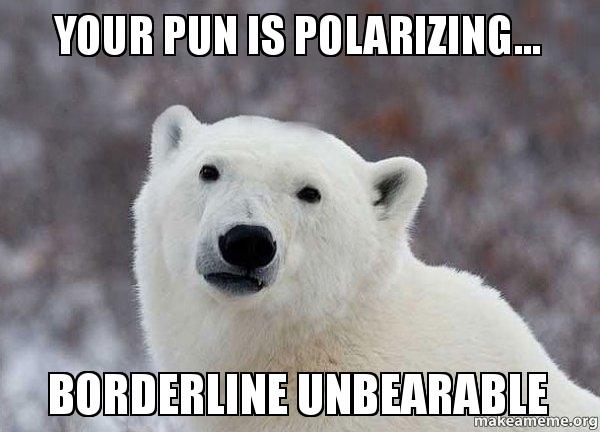
your-pun-is

And that’s “probably” the only joke I’m going to make today.

Did you know that today marks the 46th eve of the first Earth Day? Earth Day was invented on April 22 in 1970 amongst Americans as a way of consolidating the efforts of various activist groups who were fighting for environmental issues; mainly through protest. It was long overdue even then but what was most fascinating about the first Earth Day is that it woke up so many people to the idea of pollution from major industry (oil spills, toxic dumps, pesticides), deforestation, and ozone loss.

People make fun of celebrity activists like Pearl Jam, Leonardo DiCaprio, James Cameron, Brad Pitt, Darryl Hannah, and Cate Blanchett for supporting these types of causes, but the reality is that human beings do mess up their environment. All the time. And it’s not exclusive to individuals nor is it entirely the fault of large organizations.

Earth Day is important because it reminds us to celebrate the planet Earth. We live on it and use it, and no regardless of religion, colour, creed, nationality or political leanings, we all have to work together to keep this place liveable. Around the world many cities have community service initiatives in place on April 22 to ensure that we can each do our part to plant trees and nurture the landscape, especially in areas heavy with litter and pollution. The phrase “think globally and act locally” is pretty useful to help provide context.

And for the sake of learning, I will use visual artists to demonstrate the importance and ease in which you can implement these strategies. If you can cut down on your own eco footprint, you should do it. Recycle your paper based source material, make trips to pick up art supplies infrequent to save on gas use, and properly dispose of your oils and mediums by visiting eco stations rather than dumping in the garbage. In fact, if you are subtle you could probably even find scrap materials AT the eco stations which can be used in art work. Which in my books, is a win-win.

But what do you think? Do you have strategies to cut down on your eco footprint that I haven’t mentioned? What are your concerns with Earth Day and how do you celebrate? Please leave some comments, I don’t bite!

I’m out of theories for the week friends, so I’ll see you on Sunday with something stimulating.

Tim!
The New Anti-Heroes On The Block (The Big Short review)

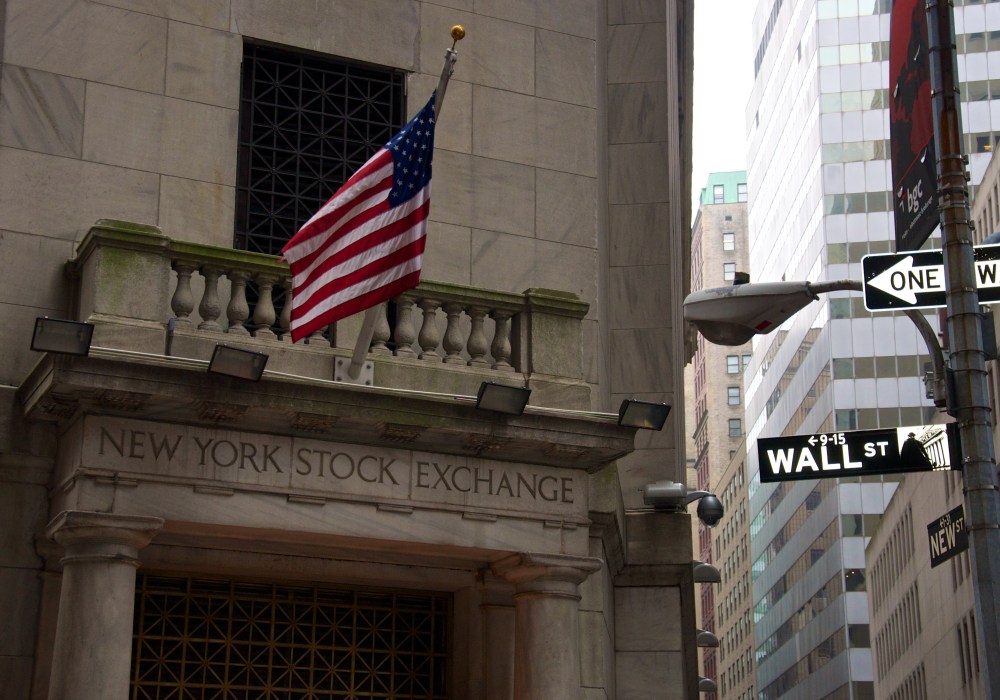
The financial crisis of 2007-2008 was no laughing matter. A lot of people lost their jobs, homes, and hope because of the short-sided greed of those in much higher positions of wealth.

It threatened the potential collapse of the largest financial banks, which some feared would send us into a new dark ages, and was eventually prevented by monetary aid of national governments.

In brief, it was fucked up.

The aftermath was that we experienced a global recession for four years, and even now businesses are hesitant to share wealth and distribute resources as readily as they were before. This Theatrical Tuesday entry looks at the “heroes” who saw it coming, and how they dealt with it.


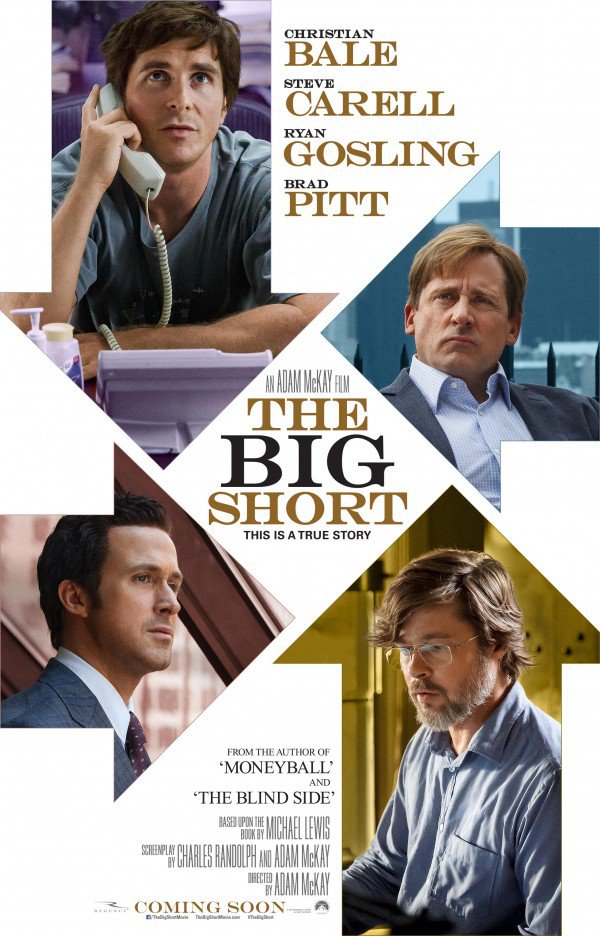
The Big Short (2015)

Cast: Christian Bale, Steve Carell, Ryan Gosling, Brad Pitt
Director: Adam McKay
released on blu-ray March 15, 2016
********* 9/10

The-Big-Short-600x936

IMDB: 7.8
Rotten Tomatoes: 88%, Audience Score 88%
The Guardian: ****/*****

Adam McKay is an American film director, producer, screenwriter, and actor. Known for his comedic chops, he has directed both Anchorman movies, Talladega Nights, Step Brothers, and The Other Guys, which are were all lead by his creative partner, Will Ferrell.

The Big Short is the first film McKay has directed which doesn’t star Will Ferrell, and while it is considered a more dramatic story, it has a lot of his typical satire elements, which fit nicely in the McKay fabric.

Taken from Wikipedia and edited,

In 2005, eccentric hedge fund manager Michael Burry (Christian Bale) discovers that the U.S. housing market is extremely unstable, being based on subprime loans that are high risk and providing fewer and fewer returns. Predicting that the market will collapse sometime in the second quarter of 2007, he realizes that he can profit from this situation by creating a credit default swapmarket, allowing him to bet against the housing market. He visits several major banks and investment dealers with this idea; these firms, believing that the housing market is secure, accept his proposal. This earns the ire of Burry’s clients who believe that he is wasting their money and demand that he stop his activities, but he refuses. As the predicted time of the collapse approaches, his investors lose their confidence and consider pulling their money out, but Burry places limitations on withdrawals, much to his investors’ anger. However, the market collapses just as he predicted and he produces 489% profits from the plan.

Trader Jared Vennett (Ryan Gosling) hears of Burry’s actions from one of the bankers Burry dealt with, and soon realizes that Burry’s predictions are likely true. He decides to put his own stake in the credit default swap market. A misplaced phone call alerts hedge fund manager Mark Baum (Steve Carell) to his plans, and Baum is convinced to join Vennett. The two discover that the impending market collapse is being further perpetuated by the sale of collateralized debt obligations (CDOs), groups of poor loans that are packaged together and given fraudulent AAA ratings due to the conflict of interest and dishonesty of the rating agencies.

When Baum attends the American Securitization Forum in Las Vegas, he interviews CDO manager Mr. Chau (Byron Mann), who has created synthetic CDOs, making what is described as a chain of increasingly large bets on the faulty loans. Baum realizes, much to his horror, that the scale of the fraud will cause a complete collapse of the economy. Baum’s business partners convince him to go through with the credit default swaps, profiting from the situation at the banks’ expense.

Eager young investors Charlie Geller (John Magaro) and Jamie Shipley (Finn Wittrock) accidentally discover a prospect by Vennett and also decide to become involved in the credit default swaps. Since they are below the capital threshold for an ISDA Master Agreement needed to pull off the trades necessary to profit from the situation, they enlist the aid of retired banker Ben Rickert (Brad Pitt). The three visit the Mortgage Securities Forum in Las Vegas, where they manage to successfully make the deals. Shipley and Geller are initially ecstatic, but Rickert is disgusted by their essentially celebrating an impending economic collapse and soon-to-be-lost lives. The two are horrified, and take a much more emotional stake in the collapse by trying to tip off the press and their families about the upcoming disaster. Ultimately, they profit immensely, but are left with their faith in the system broken.

How this movie manages to be both detail oriented and funny, while approaching a still raw subject, is kind of amazing, and what is more impressive is the fact that it does this while featuring an ensemble cast.

Pros: Steve Carell has a fantastic turn as neurotic and disenfranchised hedge fund manager Mark Baum. Christian Bale, Ryan Gosling, and Brad Pitt do okay too. Also the Margot Robbie bit, that kind of pokes fun at The Wolf of Wall Street was hilarious.

Cons: The movie runs a little long, and the slow start featuring fourth-wall breaking pieces feels strange at first, but then the movie tosses that out, speeds up really quick, and crams a lot in towards the end.

Runtime: 130 minutes

Points of Interest: No special effects were used for Michael Burry’s glass eye. That is all Christian Bale, and kinda mesmerizing. The character Mark Baum is based on real-life money manager Steve Eisman. This is the second Michael Lewis book that Brad Pitt has helped produce and acted in. The first was Moneyball.

This is both entertaining and engaging, with the heroes of the story being flawed and real, because they are based on real people and adaptations of real people who were involved in the housing crisis of 2008. The fact that The Other Guys is a McKay movie makes a lot of sense, as that movie features the same types of villains as this one.

The fact that The Big Short depicts it’s leads as heroes is a bit ridiculous if you ask me. It assumes that these men actually did something for the greater good. Yes, they dealt with danger, adversity, and their personal reputations to expose and react to the impending housing crisis, but most of them profited from it.

Michael Burry and Mark Baum “kind of” walked away, but they made a lot of money in the process. And even Brad Pitt’s financial guru pariah got something out of it.

I read a review that said you’ll leave the movie feeling angry, and that is true, but I get a sick feeling in my stomach when I think that we get excited about people making money in a situation when so many lost out. Something to chew on.

No more theories today, friends. Come back on Wednesday for some Wisdom.

Tim!