Faithful Blue, Strong Pink (Peggy Orenstein)
I work in marketing. And as of this July I will have worked in marketing for a decade.
That’s longer than I’ve committed to pretty much anything in my life. To this point, my longest romantic relationship was eight years, and the most physical hours I’ve put into being an artist is definitely less than a decade, maybe six years if I’m being generous. And interestingly enough, I’ve worked in marketing longer than many of my active friendships. Yes, I have a few friendships that have stood the test of time, but the point is, I’ve put a lot of time into this way of life.
Secret Secret, I’ve Got A Secret
I’m gonna let you in on a secret too. I originally planned on pursuing a marketing job so that I could learn the ins and outs of the industry, and then go back to school for a masters degree in either sociology, anthropology or fine arts. Because I wanted to research, write, and lecture for a living. Spoiler: I still do.
Somewhere along the line, I got comfortable with what I was doing, and so I stuck it out. My life became automated, like a robot, for about five years. Then I decided to change gears, and really commit to this marketing thing as a career… and I’ve had different marketing related jobs every year since I made that commitment, slowly climbing the corporate ladder.
And this year I finally found something that I enjoyed enough to really want to do it for years, but I’m not going to do this forever either.
Dear readers, I’ve realized that this is a phase, one that I need to grow out of.
But that’s one of the most terrifying and fascinating things about marketing. It’s ability to convert your intentions ever-so-subtly towards something which you don’t really needs, making you believe that the desires are innate and that possession will satisfy.
These Are Not The Toys You’re Looking For
I want you to consider the idea that blue is for boys and pink is for girls is not inherent, for instance.
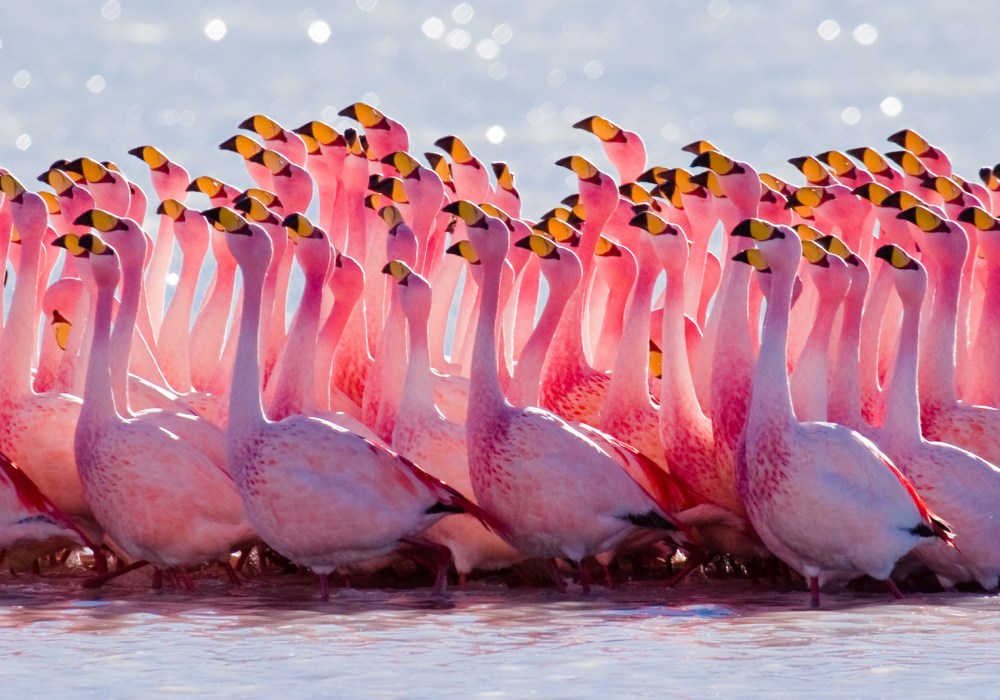
We are told early on (by pretty much everyone) that boys gravitate to blue and pink is what girls love. But I read an article a while back that stated that it wasn’t until the late 19th century or early 20th century that pastel colours were introduced by manufacturers for babies, and many retailers had actually decided that pink was more suitable for boys because it was a variation of red, and red conveys strength. Blue was long associated with faithfulness, purity, and the Virgin Mary, a symbol of femininity. By the 1940s many manufacturers had flipped the script and settled on pink for girls and blue for boys.
And then I read this month’s 5 L’s Of Language book – Cinderella Ate My Daughter. My girlfriend recommended it to me, and I read it on a whim, not realizing what I was getting back into.
In the book, author Peggy Orenstein takes us down a road about gender norms for girls and identifies the phenomenon of princess culture, dominated by Disney merchandise, and how it has permeated through our girls lives, in television, film, at school, in pageantry, and especially online. One section in particular focuses on the development of the colour pink into everything, and how many marketers emphasis the point of pink and blue to assure parents buy two of everything.
Something Like A Phenomenon
Orenstein has authored several books on women’s identities, sexuality, and how to function in a world conflicted with feminism and femininity. She has also written bestsellers Girls & Sex and Waiting for Daisy. She writes for the New York Times and has been honoured by The Colombia Journalism Review as one of its “40 women who changed the media business in the past 40 years.”
One of my favourite moments of the book came towards the end. I’ll share the quote with you for simplicity.
That said, pointing out inaccurate or unrealistic portrayals of women to younger grade school children-ages five to eight-does seem to be effective, when done judiciously:taking to little girls about body image and dieting, for example, can actually introduce them to disordered behavior rather than inoculating them against it. I may be taking a bit of a leap here, but to me all this indicated that if you are creeped out about the characters from Monster High, it is fine to keep them out of your house.”
Small children are tied in strongly to external signs of identity – clothing, colour, haircut, toys. But as they reach puberty, they’re drawn more strongly by internal factors, that of being accepted by their peers and are also more willing to reject traditional authority from their parents. In other words, when children are small, it’s okay for them to be tied into simple notions of gender, but you shouldn’t mask how you feel for them, and as they age, they should be given opportunities to explore boundaries, especially ones they grew up with.
It’s a rare thing for me to read a book cover to cover in less than 24 hours, but I was able to do that for Cinderella Ate My Daughter.
It contains more than enough meaningful content to sift through, and frankly Orenstein has an ability to break down complex concepts into digestible pieces and do so with a self-reflexive analysis of the minutiae, questioning herself and gaining insights along the way.
I’ve decided this book fits rather neatly into the LABEL category of The 5 L’s Of Language, and at just over 200 pages it’s something you could burn through in a week or two. Or one day if you are insane and want to read for several hours straight.
This books opens with a question about the princess phase, and then rightly closes with a demonstration of the end of the phase delivered via Orenstein’s daughter Daisy. You see creative cuties, Daisy loves Mulan, and one day Daisy questioned the world that Mulan inhabits as featured in the Mulan sequel, Mulan II. Daisy asked her mom why the princesses in the film would sing about freedom, not realizing that it isn’t always easy to be a princess.
And that’s also why it’s called the princess phase, because kids grow out of it, as they develop critical thinking and healthy skepticism. But I guess that could just be a theory?
Tim!

 timotheories