Am I The Only One Around Here Who Gives A Shit About The Rules? (Anger Management)

Almost two years ago, I wrote a post entitled The Secret Genius (Attitude is Everything).

It was a Wisdom Wednesday topic I wanted to broach about the importance of both vision AND application in becoming the “you” that you want to be in life. And yes, factors of genetics, ambition, effort, personality and environment are all to be considered when you decide to change your attitude and become the master of your destiny.

Without regurgitating the entire article, I’ll simply state that genius can be cultivated, and geniuses cultivate their curiosity by learning new things, visiting unfamiliar territory, and asking a lot of questions. Or to put it in Dean Keith Simonton’s words – geniuses tend to be open to experience, introverted, hostile, driven and ambitious. Also, geniuses can find patterns where others won’t (Erika Andersen on Malcolm Cowley).

It’s a compelling argument, and something about taking ownership of your life and putting together the pieces, is very appealing to me on a personal level. But there is some required reading in-between the lines too here. In order to be a successful “genius” a positive attitude is essential in relation to your personal motivation and when communicating your ideas. But what I didn’t discuss in that article I wrote two years ago, is that controlling your emotions is just as important of a component when you finally decide to commit to the house rules.

Don’t Look Back In Anger

It can be difficult to admit when you are lacking in a quality. I myself struggle with my emotions, daily. I’m not an emotive person by nature, but I am an emotional person. I feel things deeply and though I operate from a place of analysis, knowledge, and conceptualization, my second-most dominant motivator in life is meaning, significance and compassion.

What this has meant for me is that as I grew into adulthood, I learned to communicate through the lens of my own experience, but often accomplished it by either denying my feelings or holding them at arms length.

In reality I still had the emotions, and when they did surface, they would often come out as anger. I cannot begin to describe all of the reasons why I believe anger is the emotion I gravitate towards in expressing myself, but even more frustrating is the impact it can have on my loved ones. While I may not truly feel angry at the time I am addressing my emotions, it doesn’t mean those people don’t feel the heat from my internal process, and more often then not, those feelings come from a place of victimization.

As I wrestle with my feelings, I go through the entire emotional gamut, often landing at a place of compassion and understanding. But the emotional violence that I and my audience endure is difficult to wrestle with.

Last night Mysticque and I had a good long chat about the way I process new information, my emotional reactions, and how it effects her, and I came to the realization (with her help), that I do this so often, that I am not even aware of it’s impact on my life – I want to be clear that I while I start off this way, it never finishes with the same feelings, because I do process the feelings.

However, I have decided to make a conscious effort to become better in touch with my emotions and express them in a more balanced and moderate manner.

Which is why I am going to take responsibility for my anger going forward.

Anger Is As Anger Does

In a world where anger is often seen as a negative characteristic, it can be difficult to see it for what it is – potential unfulfilled.

We can channel anger into productivity, and we can use it as a source of personal power. But that means recognizing you have anger, and that you are not a master of it. Yet.

If you move through your feelings, you can prevent emotional toxic buildup, but anger needs an output to be constructive, just like any other dangerous tool. Proceed with caution! Exercise, meditation, creative writing, art making, and even driving can become major contributors to releasing anger; because they give the anger purpose and focus it.

Additionally, your mental head space needs to be receptive to change. If you can identify the source of the anger and why you were triggered, you can begin to separate yourself from your emotions and choose when to engage them. By looking at your past history with key events, people, and topics, as an outsider looking in (by literally viewing it as a story) you can learn how to let go and focus on the present.

And one other thought – it is completely up to you to make this change. No one can do it for you, because this is a paradigm shift. Yes, YOU can learn to access and express your anger in a healthy way. Yes, YOU can choose to see that anger doesn’t have to be a destructive force, but a warning signal that something is wrong when you feel it, and also a tool for appropriate self-defence when expressed.

theories Summarized

I still have a long way to go in my mastery over anger. But even the smallest act of saying out loud to someone I trust that this is a challenge in my life, means that I can move forward and look at the situation differently. Anger is a tool to be used in both recognition and implementation, just like any other dangerous object.

A theory to consider, at the very least.

Tim!

I’m Not Listening (Verbal Communication)

I’ve I’ve said it once, I’ve said it twice, and I’ll probably say it a few more times for good measure.

Basic communication is essential, whether you are a painter, photographer, graphic designer, actor, musician or any other kind of creative professional. If you can become an expert of communication, then the sky is limit in terms of success with your business, hobbies or however you choose to pursue your art. Want to nail that audition? Communicate. Have to organize a meeting for a grant proposal? Communicate. Need to put time in at a trade expo and you want to gain some prospects? Communicate.

Just ask Descendents. They know.

We’ve covered it before, but there are four kinds of communication – written (I chose email as our example), verbal, non-verbal, and interpersonal.

Today we are going to focus on verbal communication and I’ll cite some specific examples from pop culture, and maybe one from my life, that demonstrate the importance of following etiquette as best we can. Now, granted, there have been countless books written on the topic of verbal communication alone, so we can’t expect to simplify the topic in one post, but I think this will be a great primer for anyone who needs some guidance. Whether you are well versed in the subject or merely a spectator.

Move Or Be Moved

Verbal communication, just like the three other forms of communication, requires the sender to convey needs, thoughts and feelings – feelings being what I personally think are central to a lot of communication problems. Conveying what you need can be just as difficult, but for many people it is even more difficult to express emotions in a healthy way. It’s not something which can be easily taught either

It seems as if emotions are either over-expressed in outbursts of anger and sorrow OR held back and expressed non-verbally.

This is why so many families fall into cyclical habits of rebuffing each other with the same arguments and literal arguments over and over again. Without having an alternative strategy to communicate, we persist at explaining our ideas, thoughts, and feelings, without making room for the other party to understand from their position.

When we are capable of emphasizing then dialogue opens up, otherwise the adage of rocks versus hard places presents itself. The Dark Knight sums it up perfectly in fact – within the context of the Nolan Dark Knight trilogy, The Joker and Batman were always going to interlocked in perpetual battle because they couldn’t relate to each other. This also applies to the Batman mythos in general, but more importantly, it applies to those situations where people are at consistently at odds.

Missing You(r Point)

Effective verbal communication really comes down to clarity of speech, a calm and focused delivery, following conventional etiquette while simultaneously correcting for environment etiquette, and being polite and encouraging in dialogue. Simple right?

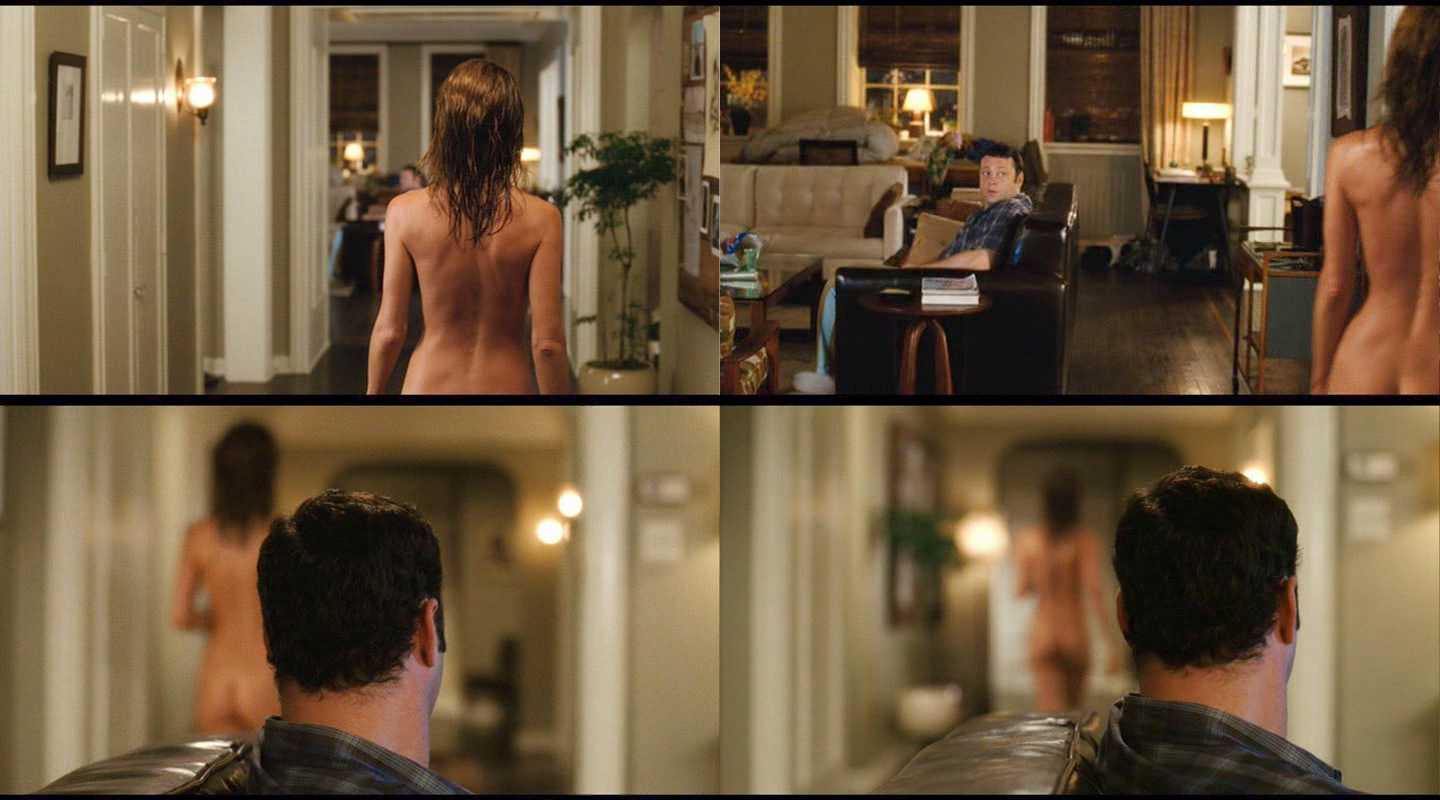
If you’ve ever seen the movie The Break-up, featuring the under-appreciated talents of Vince Vaughan and Jennifer Aniston, then you are likely familiar with the scene where the very much mismatched Gary and Brooke finally have the relationship ending fight that leads to Brooke saying “I’m done.”

Yes, it’s tough to watch, because we’ve all been there at one time in our lives. Whether the male or female in the relationship (or masculine energy VS female energy for our non-hetero friends). I challenge you to watch the movie for the dynamic between the two before the break-up and immediately preceding the break-up, but before the movie falls apart into rom-com shenanigans.

Those kind of shenanigans.

The main point I want you to walk away with dear readers, is that as much as talking is important in a conversation, listening is far more valuable because it endears each party to the other, allows for a more thorough discussion, and limits conversations stoppers like judgment, self-centredness, derailing the topic, or ignoring the other speaker.

theories Summarized

All that said, no I didn’t leave you with a proper road map on verbal communication.

But I did warn you that this was a heavier topic then one post could cover. I fully expect to cover more tips and strategies for proper communication in coming months. Developing character and honing the correct life skills is absolutely essential in your communications, and if it wasn’t, I wouldn’t be able to run timotheories at all. This is a community based vision, and honouring differences of others through respectful discussion is key to that end.

Put these theories to work creative cuties, and you’ll see the positive results for yourselves.

Tim!

The 5 Love Languages (Gary D. Chapman)

Wednesday is typically a day for wisdom here on timotheories, as you know, dear readers.

It’s the day I share ideas from famous artists, motivational pieces of art, give suggestions on things you can do to make your life more fulfilling, and sometimes I dole out my own theories of global wisdom. For example, on one post in particular, I decided to construct my own reading list and then I came up with a catchy theme to describe the different types of books I would draw from to grow and shape my own journey. Like Liu Kang.

liu_kang

I even called it The Reading List. Not like Liu Kang.

Which makes perfect sense to me, even if it is a bit obvious. Like Liu Kang. But then as mentioned I took the post a bit further and came up with a conceptual framework to flesh out the types of books I would be reading going forward.

I called that concept the The 5 L’s of Language, not to be confused with the name of a book called The Five Love Languages, and which is authored by one Gary D. Chapman. Who happens to be this week’s featured author.

Just in case you forgot, this is what The 5 L’s of Language look like –


I will read one book a month from the 5 groupings below, slowly expanding the number of books read so that I reach the point of 5 books a month. A book for each group

  1. LIFE – Biographies/Art/Music
  2. LOVE – Classic Fiction/Non-Fiction/Graphic Novels
  3. LEARN – Business/Leadership/Self-Help
  4. LABEL – Philosophy/Sociology/Psychology
  5. LEET– The Internet

If you haven’t figured it out just yet, the topic o’ the day is LEARN. As In you need to learn your own unique primary love language as well as how the other four work. You do this so that you can properly love yourself, a romantic partner, and even manage other relationships better, whether you are single, married, a child, teenager, or even just a man.

Gary D. Chapman, Five Kinds of Love

Gary D. Chapman has authored at least five books related to the concept of five love languages and co-authored two books on the languages of apology and appreciation. He originally came up with the idea of The Five Love Languages after looking into twelve years worth of his own notes on common patterns he witnessed when counselling couples. He asked a very simple question – when someone feels unloved by their spouse, what do they want from them? And thus five categories of answers emerged.

If you can learn to appreciate the difference between words of affirmation, physical touch, acts of service, quality time, and gift giving, then you’re working towards a rather positive and generous view of love and how to share it.

I bet you’re hoping for more of a definition of each term, so that you can go out and apply these ideas ASAP. Well, okay, but I recommend that you read the book first, and then run a legit profile through Chapman’s website.

With that mentioned here is a quick overview of each language –

  • Words of Affirmation: spoken affection, praise, or appreciation.
  • Acts of Service: actions, rather than words, used to show and receive love.
  • Receiving Gifts: giving gifts that are meaningful.
  • Quality Time: expressing affection with undivided attention.
  • Physical Touch: sex, holding hands, hugs – affection via touch.

As you get comfortable with the languages friends, you’ll learn which of the five is most important to you, and then you begin to implement the philosophy into your own life.

For example, if your primary love language is “quality time” like me, that means you should spend time for yourself on meaningful activities, whether those activities include another party or two is up to you, but if you make art, you’ll like enjoy doing it on your lonesome. Or if physical touch is important to you, maybe you spend time in dance classes, making theatre with friends or regularly hugging your friends and family. But that’s just a theory.

Tim!