Death Of The Superhero (Alan Moore)

Another month, another post about The Reading List, my ever-faithful and dear readers!

In case you haven’t read that article yet, which is okay, because I’ve only been writing about it once a month, I’ll give you a quick update.

The Reading List

Every month, I turn back to The Reading List for another book to read and another artist for you to consider in your own personal journey. My goal with this project is simple, I am challenging myself to read one book a month from 5 particular groupings. The 5 L’s of Language as I’ve come to call it.

  • LIFE – Biographies/Art/Music
  • LOVE – Classic Fiction/Non-Fiction/Graphic Novels
  • LEARN – Business/Leadership/Self-Help
  • LABEL – Philosophy/Sociology/Psychology
  • LEET -The Internet

But before I dig into this month’s grouping, I’m going to share with you something of an anecdote.

Alan Moore and The Killing Joke

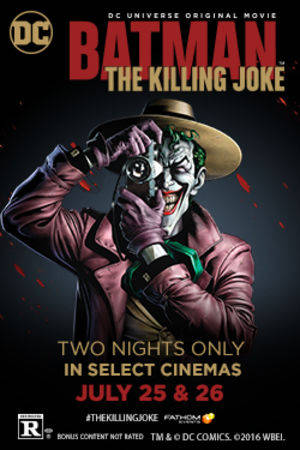
A few weeks ago, I wrote a film review about a movie which had finally been adapted from a beloved stand-alone graphic novel. A story which has since inspired a generation of artists and furthered an ethos about the importance of Batman as a popular cultural icon. That review was on The Killing Joke, originally created by Alan Moore and Brian Bollard.

You see friends, the movie I reviewed was not endorsed by either party, and is definitely not a faithful adaptation.

The Killing Joke is well known in the comics community and has slowly been incorporated into other Batman media outlets like film and video games. Many critics considerate it to be the best Joker story of all time and one of the key Batman stories to read. I happen to agree with that last statement. And as I also mentioned in that review, Alan Moore has expressed personal regrets about ever having written it.

The logic from Moore being that he wanted to expand upon ideas of what superheroes were and could be, to reinvigorate the industry with silly and fun stories, radical stories, stories that made you consider them and recognize how bizarre comic books truly are. A challenge to the continuity and mythos of superheroes. But after Alan Moore made that story, the industry continued to darken and darken as a consequence, and the industry has never really snapped back since that dramatic shift.

But did you know that The Killing Joke was made in 1988 and is preceded by two other well known stand alone stories that Moore wrote? V For Vendetta also came out in 1988, and the  Watchmen series had previously wrapped up in 1987. Watchmen is in fact the first story to really breakdown the superhero genre in an epic way.

And both of those films enjoyed their own adaptations, also criticized by Moore for stripping the source and energy of the original stories. You see, dear readers, Alan Moore is the type of artist that believes in comic books, but has such a respect for them that he would rather he remove has name from any film adaptations then work with movie studios to produce a variation.

As a consequence of that rationale, rights have been sold for other Alan Moore works – From Hell, The League of Extraordinary Gentlemen, and Constantine.

This demonstrates rather well the power of his storytelling ability, the success he has had in the comic industry, and also the confidence he has in not compromising his art in order to make money.

Which is why if you haven’t guessed it yet, the grouping of the month is LOVE, because I love Alan Moore’s graphic novels. His spiritual and political views are somewhat different than my own,  him being a ceremonial magician and anarchist, but I think that adds to his value as an artist you should watch, because he brings an incredible dedication to his work and the best way to become a well rounded individual is to remove barriers and ignorance.

I’ll leave you with this quote from The Mindscape of Alan Moore, and let you ponder his frankness.

Yes, there is a conspiracy, indeed there are a great number of conspiracies, all tripping each other up … the main thing that I learned about conspiracy theories is that conspiracy theorists actually believe in the conspiracy because that is more comforting. The truth of the world is that it is chaotic. The truth is, that it is not the Jewish banking conspiracy, or the grey aliens, or the twelve-foot reptiloids from another dimension that are in control, the truth is far more frightening; no-one is in control, the world is rudderless.

What do you think? Have you read any of his work? Do you think he’s a genius, a lunatic or a bit of both? I have a theory or two on it.

Tim!

A Non-Comical Book, Err Film (Batman: The Killing Joke, review)

Sexuality is a complicated thing, dear readers. People of all sexual orientations exist in this world – heterosexual, homosexual, bisexual, asexual, polysexual, pansexual, and transexual. And those are just the baseline, it gets more intricate then that. Which is a difficult thing to address because we have so much cultural material out there that mostly address heterosexuals, and to a lesser extent, homosexuals.

Every other persuasion gets considerably less attention.

Now, I’m writing about this challenge as a straight white male, so I realize my opinion is pretty limited, and that I am quite privileged in my perspective, but I will mention this, I have no idea how the actual percentages shake out on this sexuality matter.

Regardless, when we are reduced to our sexual motivations, that sucks. And not in a good way. Especially when it comes to art.


Batman: The Killing Joke (2014)

Cast: Kevin Conroy, Mark Hamill, Tara Strong, Ray Wise
released on blu-ray August 2, 2016
***** 5/10

batman_250x375_r5

IMDB: 6.8
Rotten Tomatoes: 48%, Audience Score 56%
The Guardian: N/A

Sam Liu is a Chinese American animation director, artist, and designer. He has directed several animated superhero films at both Marvel Entertainment and Warner Bros. Animation. I could list the heavy CV of films he has had a hand in, but it’s rather exhausting to look at, so let’s just take my word for it, okay?

As Bob Dylan once sang, the times, they are a changin’.

And this story probably didn’t need to be retold, especially the way it did, but before I tell you about the story, I’ll give you a bit of background first.

Batman: The Killing Joke is an adaptation of a rather slim graphic novel of the same name, which was originally created by Alan Moore and Brian Bolland in 1988, and which was itself also an adaptation of another story from the 1950s called The Man Behind the Red Hood which originally served as an origin story for Batman’s greatest foe, The Joker.

It has been widely lauded as one of the greatest Batman stories of all time, and has been critically reviewed as the definitive Joker story. It is a story describing both how The Joker came to be and for him to prove that anyone can sink into madness.

The flashbacks show a failed comedian and his very pregnant wife, and the comedian eventually decides to work with criminals to steal from a playing card company. It’s adjacent to his former work, which is a chemical plant. But his wife dies in a household accident, and he is forced to help the criminals anyway. The criminals dress him up as The Red Hood to implicate him if cops arrive. Cops do arrive, and then Batman. The comedian escapes from Batman, but is flushed out the chemical was pound lock – this turns his skin white, his lips red, and his hair green. He loses his sanity.

In the current timeline, The Joker invades the Gordon’s home, shoots Barbara (Batgirl), and kidnaps Commissioner Gordon. He then subjects him to sexualized images of his naked and bloody daughter, ridiculing him, and parading him through an abandoned amusement park. His hope is that Gordon will go insane just as he did, but this does not happen. Then Batman arrives, fights The Joker and proves to The Joker that he is the only insane one. The comic closes with Batman attempting to rehabilitate his foe, and The Joker responding with a joke that insights laughter from both parties, then the comic ends with an empty panel. Leaving the question of what happened to the reader.

It was a powerful story for the time, and still an interesting read, but Alan Moore has admitted that it lead superheroes down a dark road, and that while he wanted to show that comic books could be anything, all it did was darken the industry, and it hasn’t really recovered since. He regrets having written the story.

Now, let’s get to the update. Without diving too much into it, the new animated movie adds a prologue to help introduce us to Batgirl, even showcasing her challenges with a villain of her own, and a strained relationship with her mentor. The villain is sexually attracted to her, and of course gets in her head, which has Batman take Batgirl off the case. The story eventually shifts to a sexual tryst between Batman and Batgirl. Then Batgirl intervenes in the case anyway, and she ultimately resigns from crimefighting. Thus setting up the rest of the movie, which is a beat for beat repeat of the original story.

And so the story shifts the motivations of Batman and Batgirl, while removeing the weight of both The Joker and Gordon’s role in it’s outcome.

Pros: When the story sticks to the source material, it is engaging and an interesting account of both The Joker and his role with Batman.

Cons: We didn’t need to see a sexualized Batgirl. And we definitely didn’t need to see a 30 minute prologue story, when Batgirl should have gotten her own feature length animated film. Also, the animation is quite bad in many places.

Runtime1 hour 16 minutes

Points of Interest: Mark Hamill had retired from voicing The Joker, and would only come back if this story was adapted for film. The movie received a limited theatre release a week before it dropped in stores and online; the last time this happened was with the 1993 Batman: Mask of the Phantasm.

The fact that Alan Moore didn’t want his name on this adaptation might have been considered a sign that DC shouldn’t have green-lit this story, but that’s the perpetual struggle with comic book publishers, it’s a constantly dying industry, and they have to do something to inject life back into their business. And so an adaptation of an almost 30 year old Batman story was made into a movie. You can watch it, but I’m not sure that it’s worth it.


I really wish this movie didn’t turn out the way it did. I mean, the original story is interesting and noteworthy for a morality tale and cross-examination of Batman and The Joker as they relate to each other. And yes, Batgirl does plays a victim role in the original story, so it’s not like it’s the most brilliant piece of writing ever, but man did they screw up the adaptation with that prologue. It went from being an interesting story to something completely different. It just doesn’t mean the same thing with those changes. A story reduced to sexual motivations, and unnecessary sexualization of a female character.

Tim!